REVIEW · COOKING CLASSES
Rome: Rooftop Cooking Class with Wine Tasting near Vatican
Book on GetYourGuide →Operated by Cook and Eat Rome · Bookable on GetYourGuide
A rooftop kitchen makes Rome taste different. In this small-group class near the Vatican, I love the hands-on cooking and the fact you get to sit down and eat your results. The wine tasting also turns your 2.5 hours into a real Roman meal, not just a demo. One drawback to note up front: it’s not suitable for wheelchair users, and the setup is in a private apartment space with luggage limits.
You’ll be cooking with an English-speaking instructor (often listed as Chef Alfons/Alphonse), and the teaching style is built around clear steps and practical guidance. The vibe is friendly and organized, with enough structure that beginners can keep up and families can join without feeling lost.
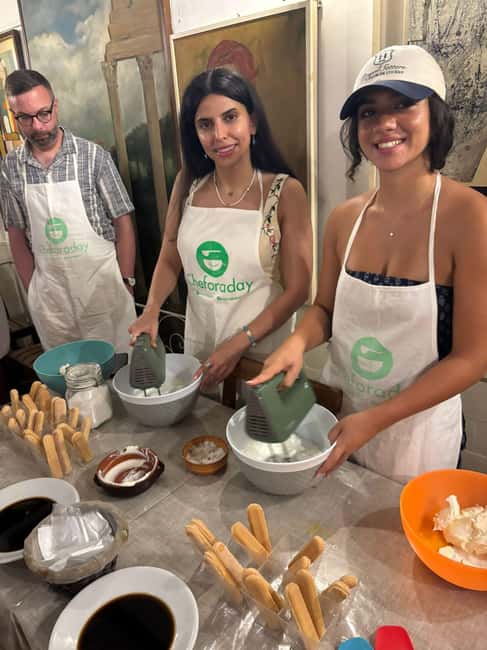
Expect a tight, delicious flow: start with an Italian antipasto (bruschetta with extra virgin olive oil from a local farm), then make fresh fettuccine and classic sauces, and finish with traditional tiramisù. It all happens on an exclusive rooftop setting near the Vatican, and you’ll wrap things up with wine tastings, a limoncello toast, and a certificate plus recipes to recreate the dishes at home.
In This Review
- Quick take: what makes this class worth it
- A Rooftop Apartment Near the Vatican: Setting, Timing, and How the Day Moves
- The First Bites: Bruschetta, Olive Oil, and an Italian Start Line
- Make Fresh Fettuccine and Choose Your Sauce Like a Local
- Traditional Tiramisu: What You Make, Why It Matters, and What You’ll Taste
- Wine Tasting + Limoncello Toast: Pairing Without Pretending You’re an Expert
- Eating What You Cook on a Rooftop: The Part Many Classes Forget
- Value Check: Is $78.73 Worth It in Rome?
- Who This Cooking Class Fits Best (and Who Should Pass)
- Should You Book It? My Practical Advice for Your Rome Week
- FAQ
- What dishes will I make?
- How long is the class?
- How many people are in the group?
- Is the instruction in English?
- Is wine tasting included?
- Do I get limoncello?
- Are water and other drinks included?
- Can I take the recipes home?
- What if I have dietary restrictions?
- Is the experience wheelchair accessible?
- What items are not allowed?
- FAQ
- What’s the cancellation policy?
- What happens if the weather is bad?
Quick take: what makes this class worth it
- Rooftop dining near the Vatican: you cook in a private rooftop apartment setting, then dine right after.
- Real “hands-on” pasta work: you learn fresh fettuccine from scratch, not just assemble ingredients.
- Tiramisu technique you can repeat: you make it the traditional way and take the recipes home.
- Wine tasting built into the meal: you’ll sip a selection of whites, reds, and rosé while you cook and eat.
- Small group (limited to 8): more attention at the counter, less waiting around.
- Limoncello toast plus a participation certificate: small extras that make the experience feel complete.
A Rooftop Apartment Near the Vatican: Setting, Timing, and How the Day Moves
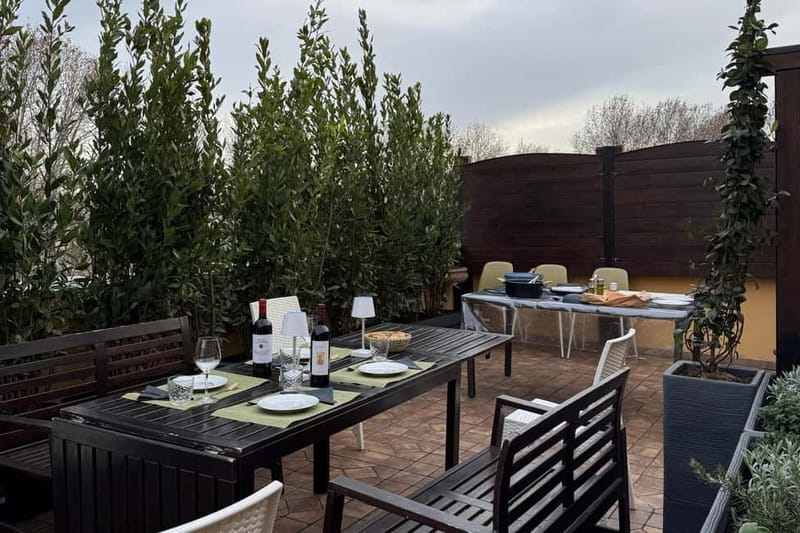
This is the kind of Rome activity that changes the pace of your day. Instead of racing between sights, you spend a focused 2.5 hours working with food, hands covered in flour, and a view that feels special because it’s not just another restaurant table. The class is set in a private rooftop apartment near the Vatican, so you get that elevated, slightly tucked-away feel.
Group size is capped at 8 participants, which matters more than you’d think. In bigger classes, you get a lot of looking and not enough doing. Here, you can actually stay involved while the instructor guides you step by step.
Timing is also part of the experience. You’re asked to arrive 15 minutes early, then wait outside while staff bring you in. Late arrivals can be refused and may require rescheduling, so I’d treat this like a dinner reservation: plan to be on time, even if you’re already in Vatican-area wander mode.
Practical heads-up before you go:
- No oversize luggage, baby strollers, or large bags.
- English instruction only, so it’s straightforward if you’re traveling without much Italian.
- The class is not suitable for wheelchair users, likely because of the private apartment layout.
You can also read our reviews of more food & drink experiences in Rome



The First Bites: Bruschetta, Olive Oil, and an Italian Start Line
The class begins with an antipasto moment that sets the tone: bruschetta with extra virgin olive oil from a local farm. It’s simple, but that’s the point. Rome’s food culture often starts with basics done correctly—good bread, good oil, and flavors that don’t need disguises.
You’ll also have water available throughout, which makes a difference when you’re cooking and moving around. And then come the first sips. This isn’t a separate wine tour tacked on at the end. Wine is woven into the meal as you work, so you’re tasting in the right context: while your kitchen routine is already underway.
One thing I like about this structure is that it avoids the awkwardness of trying to drink “on an empty stomach.” You’re eating early, you’re cooking early, and you’re learning early.
Make Fresh Fettuccine and Choose Your Sauce Like a Local
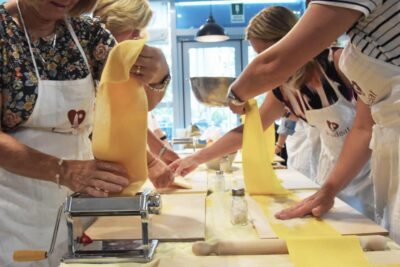
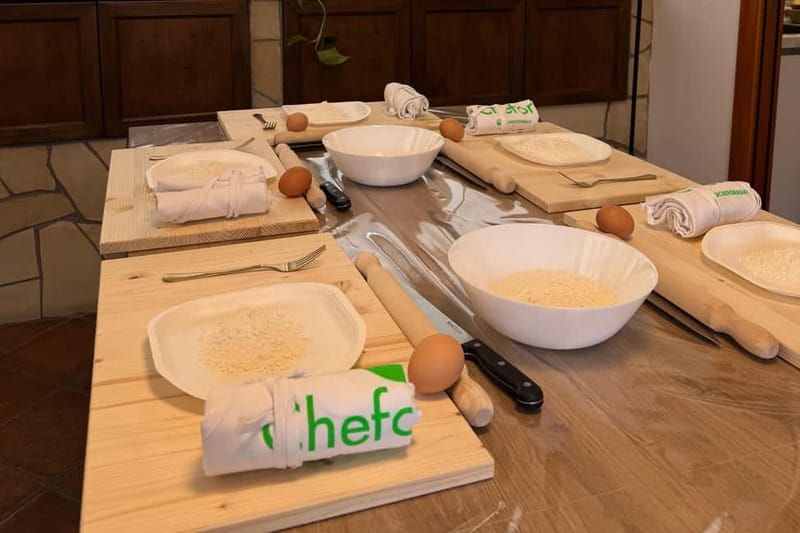
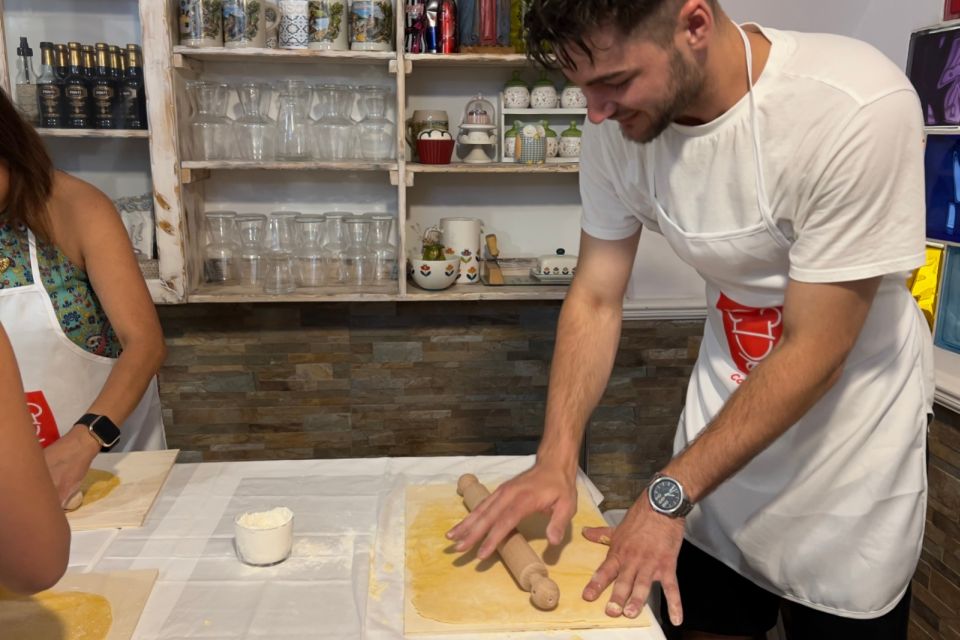
The main event is fresh pasta—specifically fettuccine—plus the classic sauce(s) that go with it. This is hands-on from start to finish. You’re not just rolling something pre-made; you’re learning how the dough comes together and how to handle it properly.
The chef’s guidance is step-by-step, and the class is designed so you can keep up even if it’s your first time. One repeated theme from people who’ve done this is how clear the demonstrations are, including the little “why it works” moments that make pasta less mysterious.
Here’s what you can expect in the pasta phase:
- You’ll learn fresh fettuccine preparation from scratch.
- You’ll pair your pasta with classic Italian sauces.
- You’ll have time to cook, not just watch.
A clever little detail you might experience: sauce selection can include keeping things organized with simple tags. In at least some sessions, you may write your name on a small paper tag so your chosen sauce stays matched to your pasta. It’s not flashy, but it’s the kind of small operational idea that keeps the class moving smoothly.
Also, you’ll likely get practical tips during the dough process—things like how gently you should work the dough—because the instructor’s role isn’t just to teach steps, it’s to help you avoid common first-timer mistakes.
Traditional Tiramisu: What You Make, Why It Matters, and What You’ll Taste
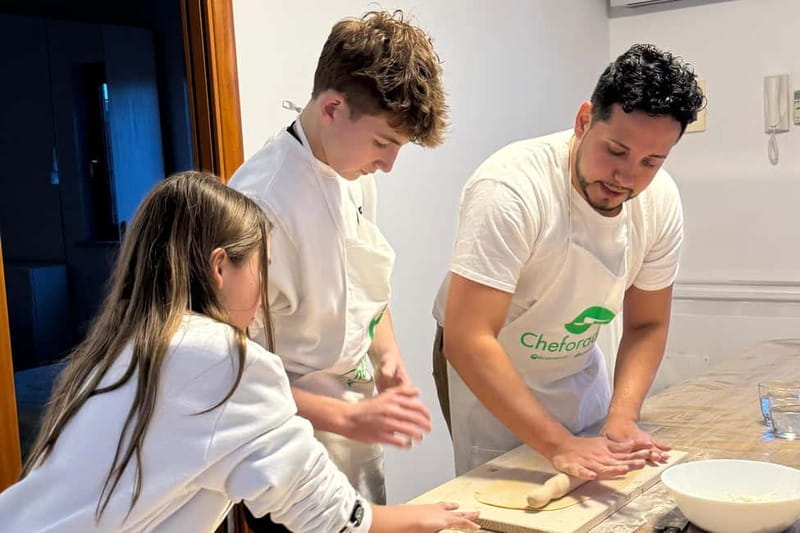
Then you shift gears to dessert: traditional Roman tiramisù. If you’ve only ever had tiramisù from a menu, making it yourself is where the learning really lands. The class focuses on technique and timing—because tiramisù isn’t just ingredients, it’s how they interact.
You’ll craft the tiramisù using authentic methods, guided by the instructor. One reason people love this part is that it’s hands-on but not complicated in a scary way. You’ll follow the process, and then you’ll get to enjoy the results as part of your meal.
A real bonus here: you’ll take recipes home, so this isn’t a once-off memory. You can recreate it later, and tiramisù is one of those desserts where the results improve fast once you’ve done it once or twice.
Also, since the class includes time for preparation, you’re not stuck waiting around forever. The pacing keeps the whole session feeling like a meal you’re actively participating in, not a cooking lecture that runs long.
Wine Tasting + Limoncello Toast: Pairing Without Pretending You’re an Expert
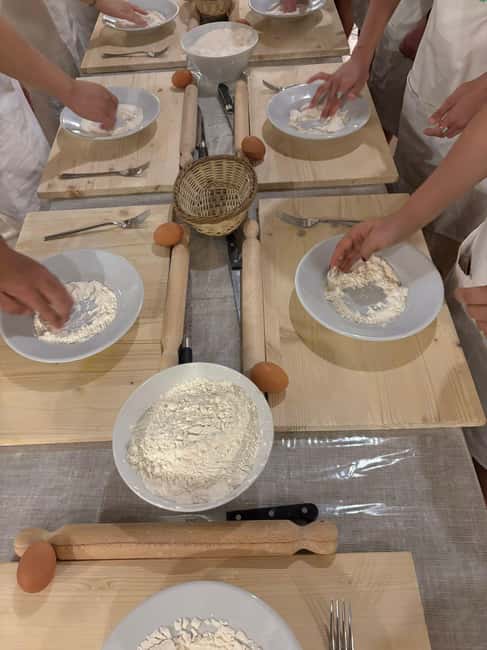
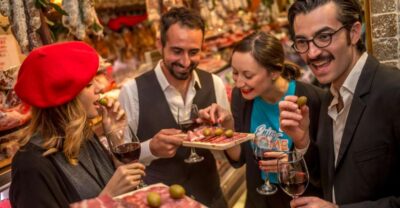
The wine component is one of the big reasons this class works for both food people and non-wine people. You’ll taste a selection that includes 2 white wines, 2 red wines, and 1 rosé, plus a traditional Roman wine mentioned as part of the class flow. So you’re getting range: crisp whites for the earlier bites and richer pours that fit the pasta and dessert rhythm.
A smart detail is that you taste as you cook and eat. That turns wine from a formal lecture into a lived pairing. You’ll be tasting while you still have fresh flavors in your mouth, which makes the experience feel more intuitive.
Then the class ends with a limoncello toast, a classic Italian digestif moment that feels festive without turning into a full-on party. It’s also a nice way to mark the end of work in the kitchen: you finish the meal, you sip, you celebrate the fact you made two Italian favorites from scratch.
You can also read our reviews of more cooking classes in Rome



Eating What You Cook on a Rooftop: The Part Many Classes Forget
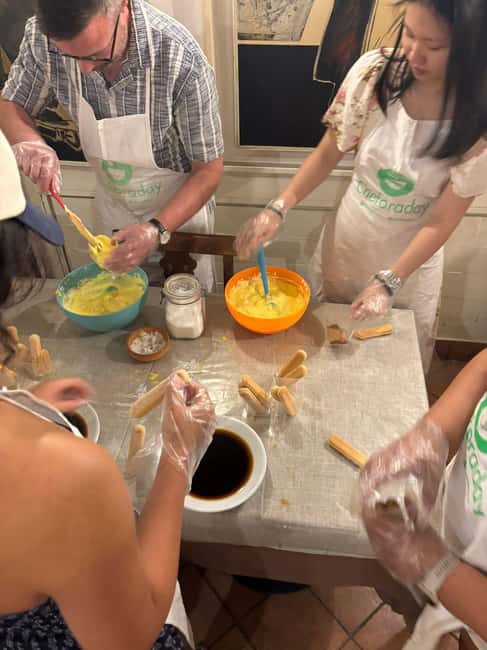
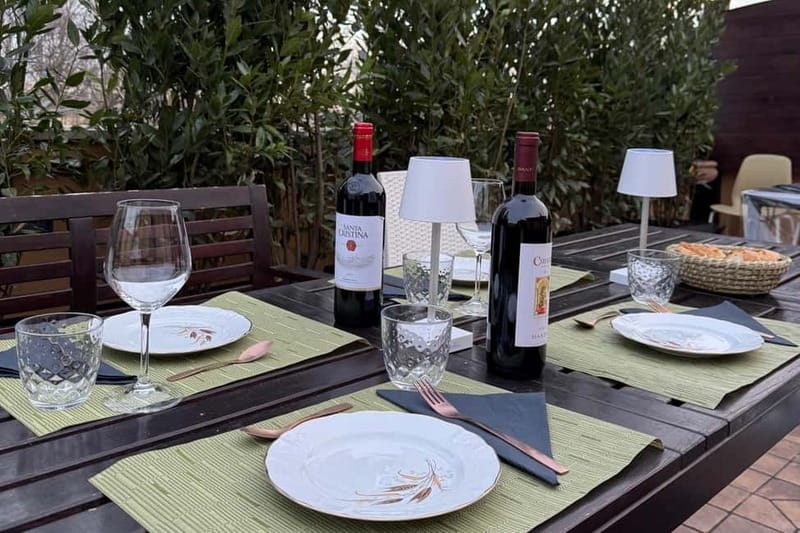
A lot of cooking classes teach you how to cook and then… let you go. This one does the opposite. You cook, you prepare, and then you eat what you made—served restaurant style once you’ve finished the steps.
That matters. Food learning sticks when your brain links technique to taste. You’ll likely notice the difference between dough you handled yourself versus something store-bought. Same goes for tiramisù: once you assemble it, you understand how it should feel and taste.
The rooftop setting near the Vatican also makes the meal feel like a reward. You’re not trapped inside a classroom. Even if the view isn’t the only selling point, the change of scenery helps the class feel like a true Roman experience.
Value Check: Is $78.73 Worth It in Rome?
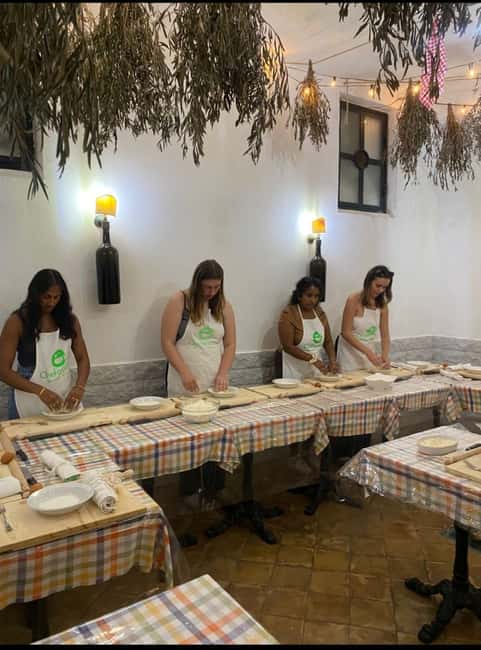
At $78.73 per person, you’re paying for a few things at once:
- Instructor-led, step-by-step cooking instruction
- Small-group attention (limited to 8)
- Ingredients and equipment (so you’re not hunting down cooking supplies)
- The full meal you make: bruschetta, fresh pasta with sauce, and tiramisù
- Wine tasting (multiple whites/reds plus rosé, and a Roman wine as part of the flow)
- Limoncello toast
- Recipes to recreate the dishes at home
- A participation certificate
What you’re not paying for:
- Extra food beyond what’s included
- Additional drinks beyond the tasting and toast
- Take-away olive oil or take-away limoncello
For me, the strongest value driver is that the price includes the meal, the wine tastings, and the recipes. In Rome, that combination can be hard to match with a standard dinner where you get food but not skills. Here you leave with both: a full sit-down meal and a practical cookbook-like takeaway written from your own work at the counter.
And yes, it’s 2.5 hours. That’s a good length for travelers who want something meaningful without losing half a day to logistics.
Who This Cooking Class Fits Best (and Who Should Pass)
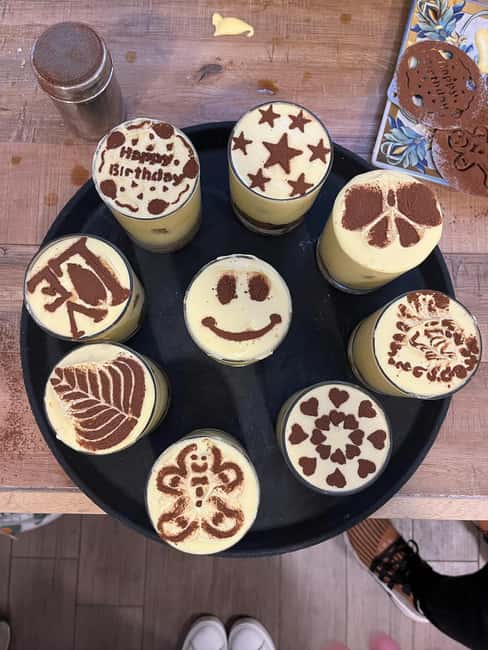
This is a great fit if you:
- Want to learn fresh pasta and tiramisù rather than only taste Italian food
- Prefer a small group with real guidance
- Like the idea of pairing cooking with a wine tasting in the same session
- Travel with kids who can handle a hands-on activity (the class notes children under 7 can join for free if sharing a workstation with an accompanying adult)
It may not be a great fit if you:
- Need wheelchair accessibility (it’s not suitable)
- Expect to roll in with lots of luggage (oversize luggage, strollers, and large bags are not allowed)
- Want a purely observational experience—this is designed for doing
The chef style also seems to work well with mixed ages, because the teaching is structured and patient. If you’re bringing a family, this kind of clear instruction usually beats vague “watch me” cooking demos.
Should You Book It? My Practical Advice for Your Rome Week
Book it if you want one of your Rome meals to come with a skill you can actually repeat at home. The combination of rooftop setting near the Vatican, hands-on fresh fettuccine, traditional tiramisù, and wine plus limoncello makes this feel like more than a class. It’s an afternoon meal with a plan.
Skip it if you’re:
- Short on time and need something under an hour
- Looking for an accessible venue for wheelchair users
- The type of visitor who doesn’t want to roll up your sleeves (this is hands-on)
If you’re on the fence, here’s a quick test: if you’d rather learn how Roman pasta and tiramisù are built than just collect photos, this is your kind of booking.
FAQ
What dishes will I make?
You’ll start with bruschetta (with extra virgin olive oil from a local farm), then make fresh pasta with sauce (including fettuccine), and finish with traditional tiramisù.
How long is the class?
The class runs for about 2.5 hours.
How many people are in the group?
The small group is limited to 8 participants.
Is the instruction in English?
Yes, the instructor teaches in English.
Is wine tasting included?
Yes. The class includes a wine tasting with a selection of 2 white wines, 2 red wines, and 1 rosé, along with a traditional Roman wine as part of the flow during the session.
Do I get limoncello?
Yes. You’ll have a limoncello toast at the end.
Are water and other drinks included?
Water is available throughout. Wine tasting and the limoncello toast are included, but extra drinks beyond that are not included.
Can I take the recipes home?
Yes. You’ll receive recipes to recreate the dishes at home.
What if I have dietary restrictions?
You should inform the provider in advance of any dietary needs or allergies so they can plan for you.
Is the experience wheelchair accessible?
No. It’s not suitable for wheelchair users.
What items are not allowed?
Oversize luggage, baby strollers, and luggage or large bags are not allowed.
FAQ
What’s the cancellation policy?
You can cancel up to 24 hours in advance for a full refund.
What happens if the weather is bad?
In bad weather, the session is rescheduled to the next available date. If rescheduling isn’t possible, you’ll receive a full refund.