REVIEW · POMPEII & AMALFI COAST DAY TRIPS
From Rome: Pompeii and Herculaneum by High-Speed Train
Book on GetYourGuide →Operated by Askos Tours · Bookable on GetYourGuide
One day. Two doomed cities. That’s the draw here: you get Pompeii and Herculaneum in a single outing, with an archaeologist guiding you through what life looked like before Vesuvius and what the eruption preserved afterward. I like the smart mix of fast rail, shared minibus transfers, and timed guided blocks so you’re not stuck guessing your way around. The best part is meeting your guide after the train ride and then moving through both sites with headsets and real explanations from guides such as Michele, Raphael, Sergio, and Jasmi.
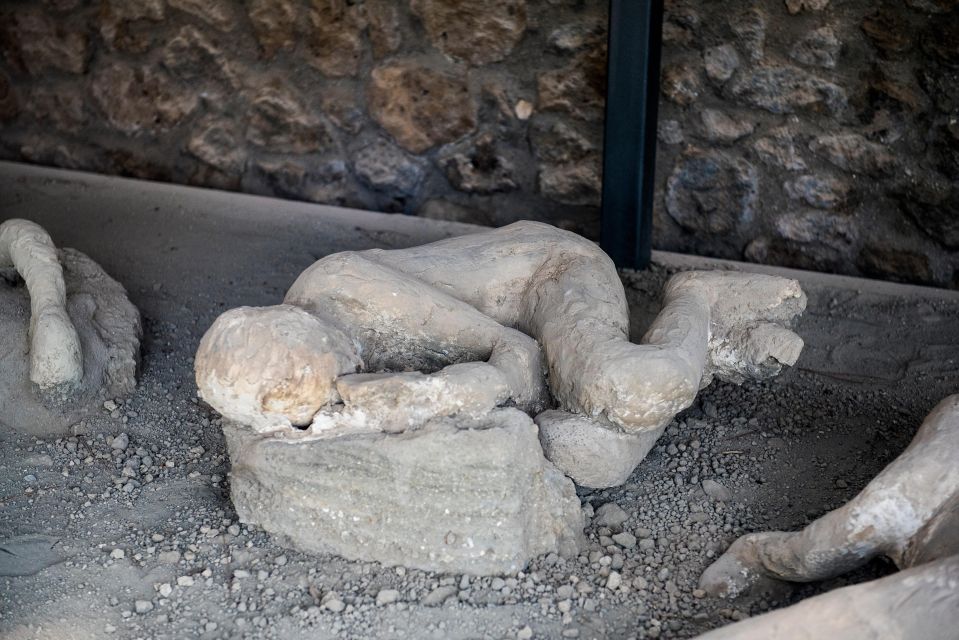
What I especially like is the focus on the details that make each place different: Pompeii’s larger public city and its famous plaster casts, then Herculaneum’s more intimate, preserved homes and the beach area where skeletons were found. The second big plus is how the tour uses a mix of structured stops and breathing room, including dedicated time to wander, snack, and take photos without feeling totally rushed.
One drawback to consider: it’s a long day of ruins and walking on uneven stone, and it’s not recommended for people with limited mobility or anyone who needs wheelchair-friendly routes.
In This Review
- Key things that make this day trip work
- High-Speed Train from Rome: getting out without losing the day
- Naples to Pompeii: the minibus ride and what you should notice
- Pompeii guided highlights: plaster casts, a brothel, and big-city layout
- The plaster casts: why they stick in your mind
- Beyond the famous street scenes
- A realistic pacing note
- Pompeii free time: lunch and browsing without derailing Herculaneum
- Herculaneum guided visit: Neptune and Amphitrite plus the beach with skeletons
- House of Neptune and Amphitrite
- The beach remains: skeletons preserved in ash
- Back to Naples and up to Rome: rail timing and the comfort factor
- Price and value: what you’re really paying for at $222.77
- Who should book, and who should skip this plan
- A few tips that make the day smoother
- Should you book this Pompeii and Herculaneum day trip from Rome?
- FAQ
- How long is the Pompeii and Herculaneum day trip?
- What is the train part of the itinerary?
- How do I meet the guide in Naples?
- Is entry to Pompeii and Herculaneum included?
- Are meals included?
- Does this tour run in bad weather?
- How much walking is involved?
- What should I bring?
- Is this tour suitable for wheelchair users or limited mobility?
Key things that make this day trip work
- Fast train time-saver: Rome to Naples in about 70 minutes, so the day stays about ruins instead of road traffic.
- Archaeologist-led tours at both sites: not just a photo stop—guides explain the story behind what you see.
- Pompeii plaster casts, including animals and people: a vivid way to understand what ash and time did.
- Herculaneum house highlights: a stop at the House of Neptune and Amphitrite plus a look at the preserved beach remains.
- Headsets for everyone: makes it easier to hear your guide in busy, echoing areas.
- Two-guided-blocks pacing: Pompeii gets a guided circuit plus a separate free-time window, then Herculaneum follows with its own guided visit.
High-Speed Train from Rome: getting out without losing the day
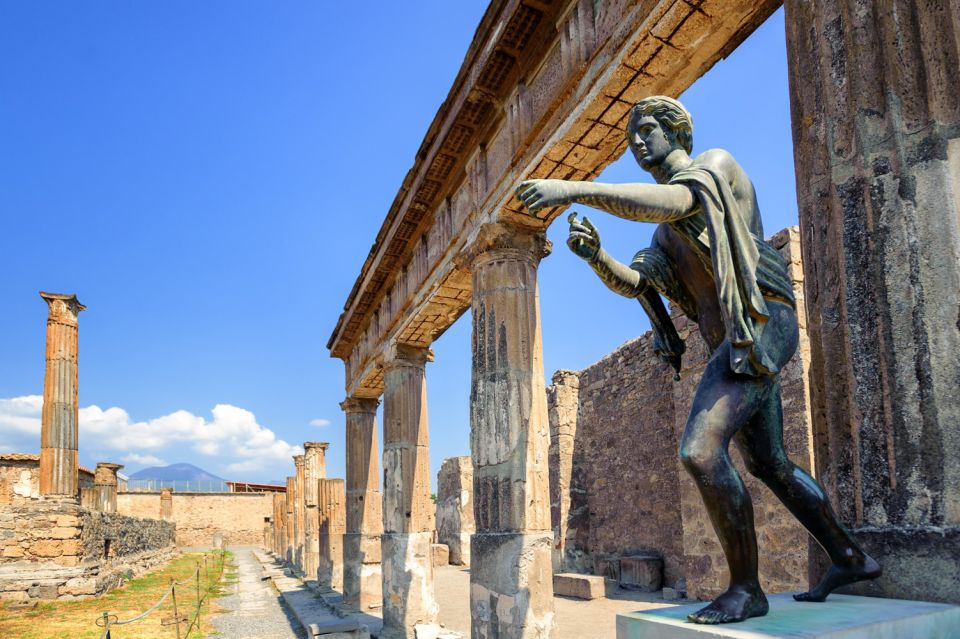
If you’re doing Pompeii and Herculaneum from Rome, the logistics can make or break the trip. This one is built around a simple idea: use high-speed rail to protect your time. You start at Roma Termini, ride to Naples Central Station (about 70 minutes), then meet your guide right by the station area.
Naples is the hinge point. That’s where the day becomes smooth instead of stressful. The meeting place is in front of the STARHOTEL TERMINUS entrance across from the station, looking for an ASKOS TOURS sign held by your guide. Once you’re matched up, you move as a group and you avoid the common trap of arriving in Naples and then wasting time trying to figure out where everyone is supposed to go next.
One more practical touch: the tour uses shared minibus between Naples and the sites. That means less waiting than a private setup, and it also keeps the plan realistic for a day that has to fit two archaeological visits.
You can also read our reviews of more tours and experiences in Rome.



Naples to Pompeii: the minibus ride and what you should notice
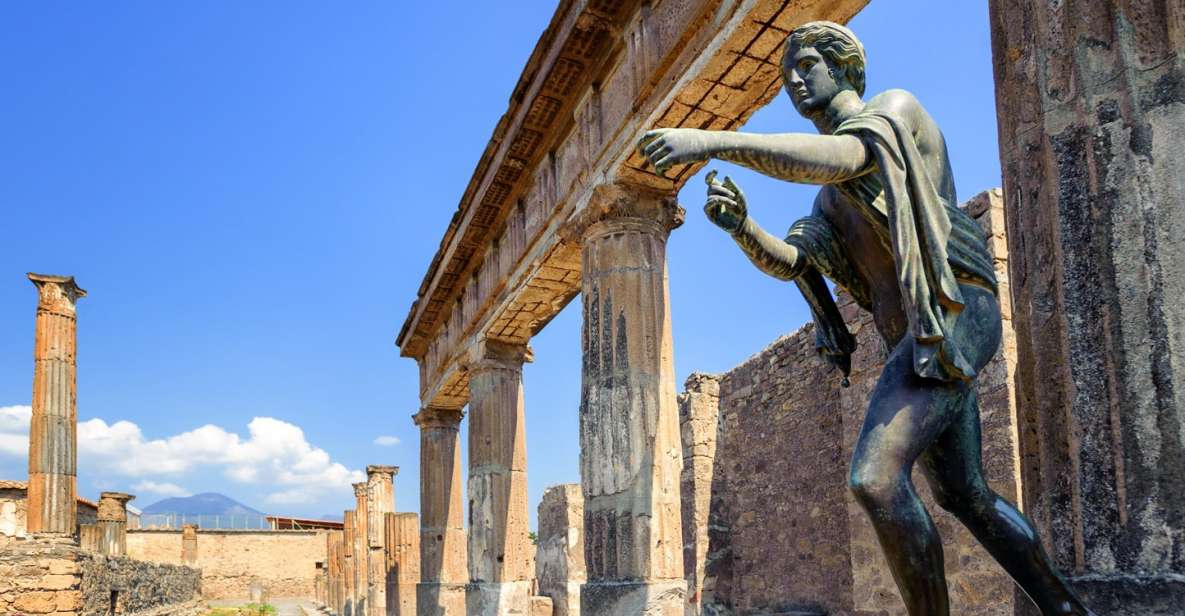
After you connect with the guide, you take a comfortable drive toward Pompeii. The exact minutes vary a bit depending on timing, but the overall plan reserves about 30 minutes for the van transfer.
This part matters more than it sounds. When you land in Pompeii, you want your energy up and your brain ready for the visuals that come fast: street grid, columns and arches, then the haunting plaster casts. A smooth transfer helps you hit Pompeii in a focused way rather than arriving annoyed and cold-tired.
Also, keep your expectations grounded. This is a ruins day. You’ll spend more time outside your camera view than inside it. Think of this ride as your reset before the city shows you how people lived.
Pompeii guided highlights: plaster casts, a brothel, and big-city layout
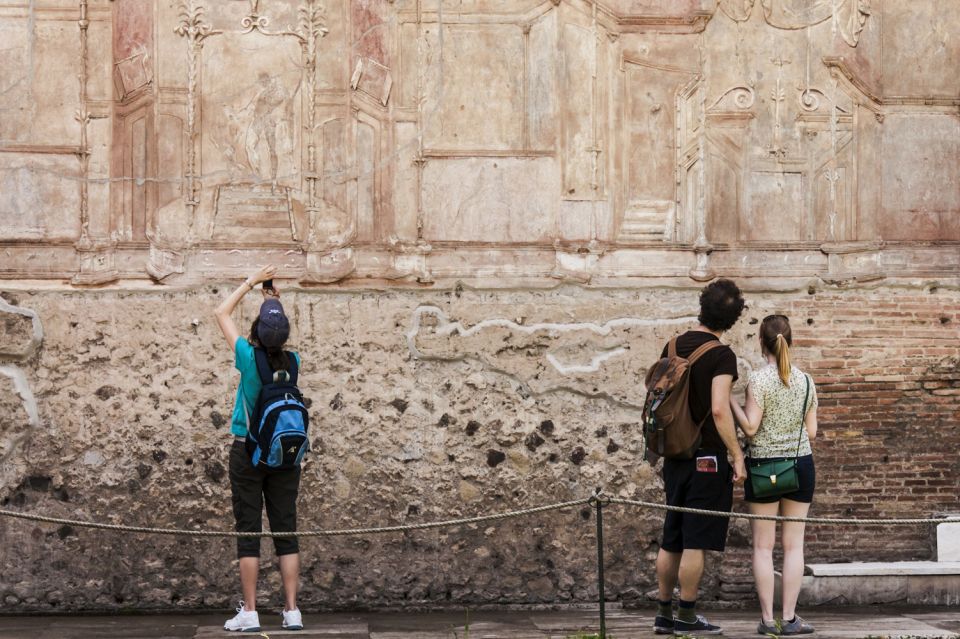
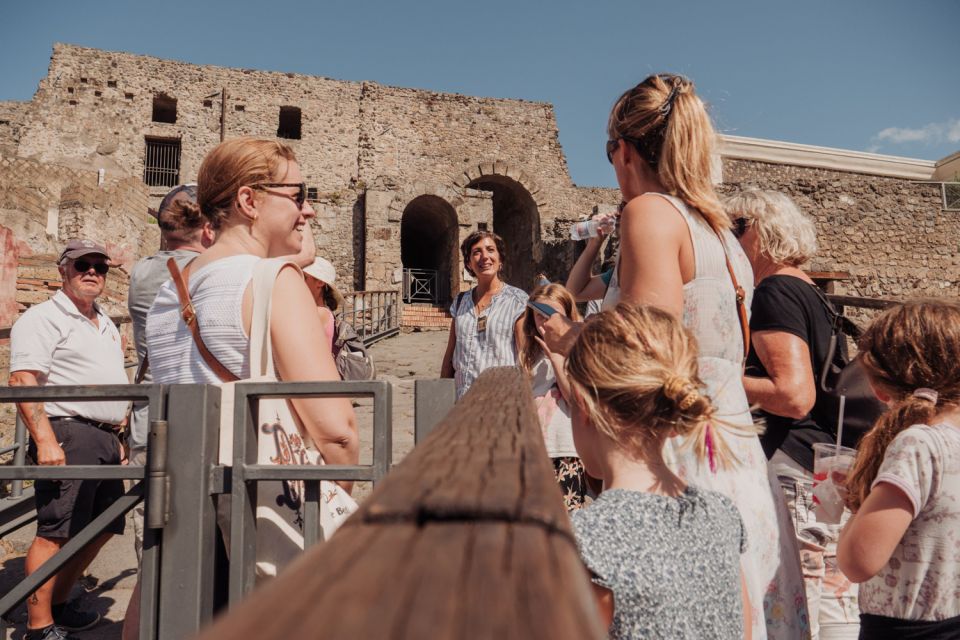
Pompeii gets a guided 2-hour visit that’s designed to show the story in a clear arc. Then you get an extra 30 minutes of free time for lunch or a quick browse, depending on your priorities.
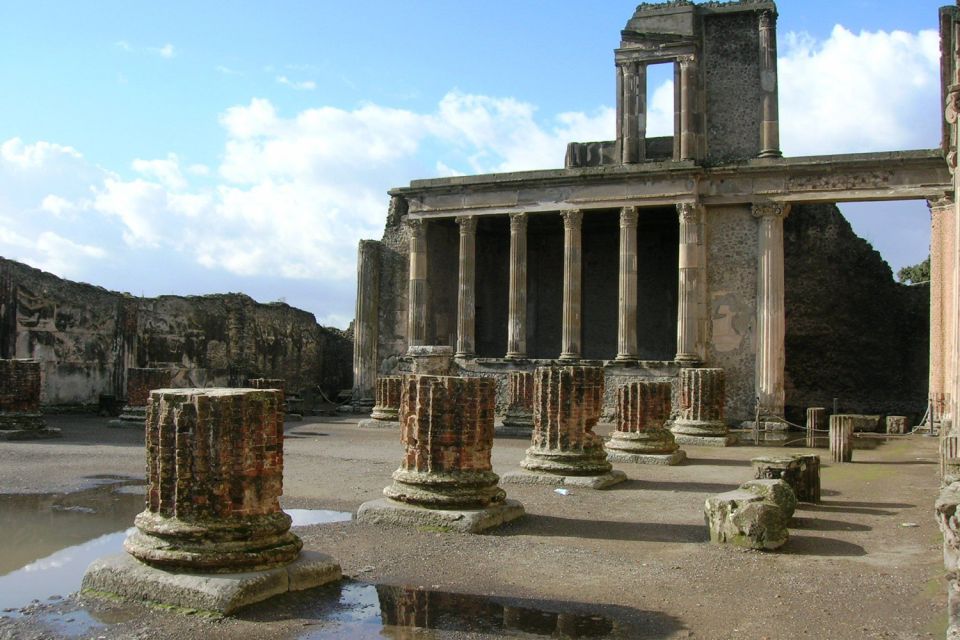
What stands out most in Pompeii is the way the tour points you to the buildings that explain how the city functioned. You’ll see key areas of the Roman urban plan with help from an archaeologist guide who ties layout to daily life and to the disaster itself.
The plaster casts: why they stick in your mind
The headline highlight is the plaster casts of people and animals preserved by the ash and excavation process. Even if you’ve read about Pompeii before, the casts change the emotional math of the site. You’re not just looking at ruins. You’re looking at the shapes of last moments—presented through a technique that turns the intangible into something your eyes can track.
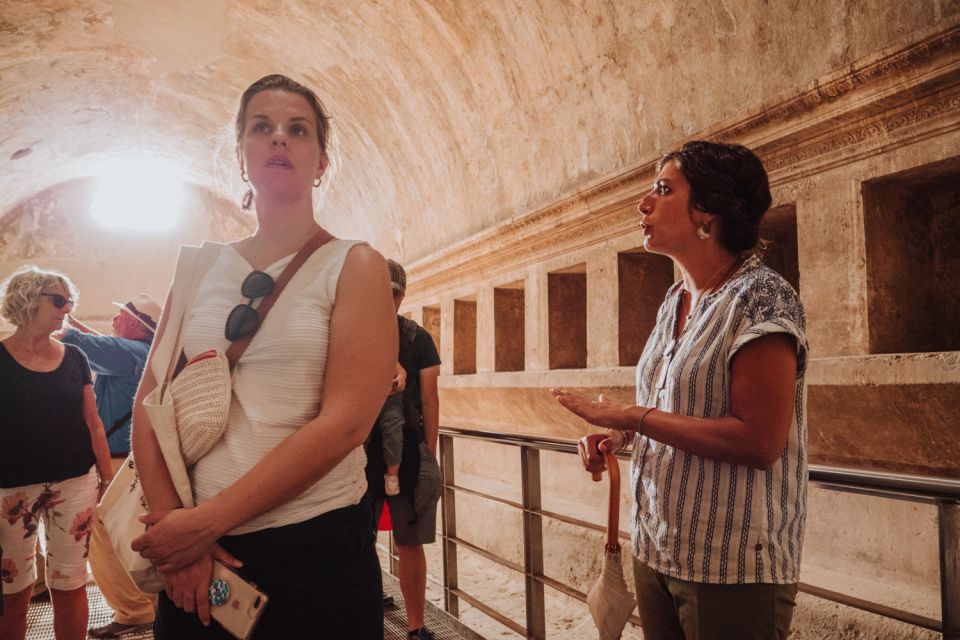
Guides such as Michele and Raphael have been especially praised for explaining what the casts show and what scholars think happened during the eruption and its chaotic aftermath. That kind of framing is what turns a scattered walk into a coherent experience.
Beyond the famous street scenes
The tour also includes stops that many first-time visitors don’t know to hunt for on their own, like a brothel and other major Pompeii highlights. The point isn’t just shock value. It’s context: Roman sexuality, commerce, and social life were part of the city’s everyday rhythm, and Pompeii is one of the best places on earth to understand that.
If you love details—materials, public spaces, and the logic of how people moved around—Pompeii is where you’ll feel most rewarded.



A realistic pacing note
Pompeii includes about one mile of walking. That’s not huge on paper, but the ground can be uneven and you’re moving through crowds, doorways, stairs, and open-air sections. Wear shoes you trust. The tour also specifically asks you not to wear sandals or flip-flops, and it forbids high-heeled shoes. In other words: plan for comfort first, style second.
Pompeii free time: lunch and browsing without derailing Herculaneum
Pompeii gives you a 30-minute break after the guided portion. This is the window to eat or shop, but it’s also the part you should manage carefully.
Here’s what I’d do if you want the day to feel smooth: treat free time like a sprint, not a stroll. Pick one simple goal—either a quick bite or a couple of quick souvenir stops—then move back toward where your guide will regroup. The reason is simple: the tour still has to reach Herculaneum, and that second site is usually the one that surprises people with how intact it feels.
If you linger too long, you’ll end up rushing in Herculaneum, which is exactly the opposite of what you want from this trip.
Herculaneum guided visit: Neptune and Amphitrite plus the beach with skeletons
Herculaneum is the quieter half of the day, and that’s why it’s so powerful.
You travel from Pompeii to Herculaneum by minibus (about 30 minutes) and then spend around 2 hours on a guided tour. Expect about half a mile of walking here. Less distance, but still uneven surfaces and plenty to look at.
House of Neptune and Amphitrite
One of the scheduled stops is the House of Neptune and Amphitrite. This is where the site’s “small scale” really lands. Pompeii can feel like a huge map of a city; Herculaneum can feel like stepping into a neighborhood.
An archaeologist guide often uses these homes to talk about status, layout, and daily routines—how spaces worked from cooking areas to living quarters. Guides like Sergio and Diego have been praised for explaining differences between Pompeii’s broader city feel and Herculaneum’s more preserved residential character.
The beach remains: skeletons preserved in ash
The tour also includes a stop at the beach area where many skeletons were preserved. This is the kind of visual that you can’t replicate with a book. The ash and conditions helped preserve remains that would normally have vanished, and seeing that physical evidence makes the scale of the eruption feel immediate.
Your guide’s role matters here. Without context, it can become just another grim photo stop. With context, it becomes a lesson in how people responded and where the city’s geography funneled events.
If you want the emotional center of the whole day, Herculaneum is often where it settles.
Back to Naples and up to Rome: rail timing and the comfort factor
After Herculaneum, you head back by minibus to Naples Central Station, again about 30 minutes, then catch the fast train back to Rome Termini. The rail time is listed at about 70 minutes, so the full day returns you to the meeting point area near where you started.
This is where the earlier plan pays off: high-speed rail keeps the return predictable. That reduces the chance you’ll miss connections that can happen on the slower routes some people choose from Rome.
If the day runs rain or shine, plan for it. The tour is scheduled rain or shine, and you’re advised to bring a raincoat if needed. Herculaneum and Pompeii involve lots of outdoor ground and stone surfaces, so slippery conditions are something you should prepare for with the right shoes and a light layer.
Price and value: what you’re really paying for at $222.77
At $222.77 per person, this isn’t a budget-only day trip. But it’s also not just “paying for a seat on a bus.”
Your price includes:
- round-trip fast-train tickets between Rome and Naples
- guided tours with an archaeologist at both Pompeii and Herculaneum
- Pompeii Express entry tickets
- Herculaneum entry tickets (listed as 16 euros each)
- transfers by van/minibus between Naples and the sites
- headsets so you can actually hear your guide
For me, the best way to judge value here is to ask what you would spend if you tried to DIY it. Tickets and entry fees add up quickly, and DIY plus timed archaeological site visits usually becomes a scheduling headache. By bundling the train, entry, and two guided blocks into one plan, you’re paying for less friction and more interpretation—exactly what you want with Pompeii and Herculaneum, where details matter.
Where the value can drop a bit is if you hate long days or if you’re not interested in guided explanations. If you just want a quick look for photos, the fixed timing and walking may feel like too much.
Who should book, and who should skip this plan
This tour makes the most sense for people who want:
- two sites in one day from Rome without juggling trains and entry lines
- an archaeologist-led explanation rather than only self-guided wandering
- a structured plan with time for both major highlights and some breathing space
It’s also a good fit if you enjoy guides who keep moving and explaining. Many of the highest marks come from guides such as Michele, Raphael, and Diego, praised for staying sharp, communicating well, and keeping the day understandable.
It’s not the best match if:
- you have limited mobility or use a wheelchair (the tour is not recommended for limited mobility and is not suitable for wheelchair users)
- you’re sensitive to uneven ground and long outdoor stretches
- you expect a relaxed, slow-paced day
The good news: the walking distances are clearly stated, about one mile in Pompeii and half a mile in Herculaneum. The day still feels full because of the time spent inside guided routes, not because you’re doing marathon hiking.
A few tips that make the day smoother
- Arrive early to Roma Termini. The station can be confusing, and you want your brain in “vacation mode,” not “find the platform” mode.
- Bring a passport or ID card. The tour specifies ID is required.
- Wear closed-toe shoes you trust. The tour bans sandals and high heels.
- Pack for rain even if the forecast looks calm. It runs rain or shine, and wet stone can slow your pace.
- If you care about photos, plan to move with your guide first, then use free time to capture what you missed.
Should you book this Pompeii and Herculaneum day trip from Rome?
I’d book it if you want the most efficient way to connect Pompeii’s big-city story to Herculaneum’s intimate preservation, with real archaeological interpretation and a clear plan that uses high-speed rail. The combination of train logistics done for you, two archaeologist-led tours, and priority entry is the core value here.
Skip it if you need a wheelchair-friendly route, if your mobility is limited, or if you want a slow, leisurely day with lots of unscheduled time. This is a structured day trip. When you accept that, it delivers. When you don’t, it can feel like too much asphalt and ash in one sitting.
FAQ
How long is the Pompeii and Herculaneum day trip?
The total duration is listed as 8.5 hours.
What is the train part of the itinerary?
You take a high-speed train from Roma Termini to Naples Central Station, which takes about 70 minutes each way.
How do I meet the guide in Naples?
After you arrive at Naples Central Station, meet the guide in front of the STARHOTEL TERMINUS entrance, located opposite the station, and look for the guide holding an ASKOS TOURS sign.
Is entry to Pompeii and Herculaneum included?
Yes. The tour includes Pompeii Express entry tickets and Herculaneum entry tickets (16 euros each), along with skip the ticket line.
Are meals included?
No. Meals are not included.
Does this tour run in bad weather?
Yes. The tour takes place rain or shine, and it’s recommended that you bring a raincoat if needed.
How much walking is involved?
The tour requires about one mile of walking in Pompeii and half a mile of walking in Herculaneum.
What should I bring?
Bring a passport or ID card.
Is this tour suitable for wheelchair users or limited mobility?
No. It is not recommended for people with limited mobility, and it is not suitable for wheelchair users.