REVIEW · MOTORBIKE & SCOOTER RENTALS
Morning Vespa Sidecar Tour with Cappuccino
Book on GetYourGuide →Operated by Vespa Sidecar Tour · Bookable on GetYourGuide
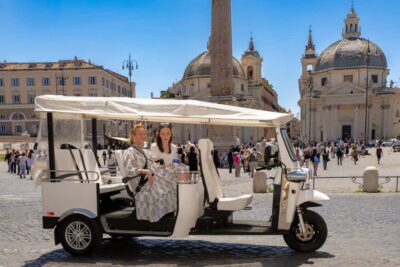
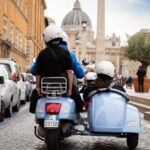
Rome wakes up fast on a sidecar. This 3-hour morning loop swaps traffic stress for live guide narration and a cappuccino breakfast as you hit Rome’s biggest hitters. You’ll also ride tight lanes and reach viewpoint spots that most walking days can’t touch.
What I like most is how the whole experience is built around you not thinking about logistics. Drivers handle the tricky parts, and you get headphones so the story stays with you at each stop. The one real drawback to consider: it’s not recommended if you have back problems, heart conditions, or if you’re pregnant, and there are weight/height rules for passengers.
In This Review
- Key highlights worth getting excited about
- A sidecar ride that actually helps you understand Rome
- Meeting at Piazza della Repubblica and getting set up for the ride
- The breakfast part: cappuccino and cornetto first, sightseeing after
- Quirinale to Fontana di Trevi: Rome’s postcard scenes, delivered with context
- Pantheon stop: why the entry ticket matters
- Piazza Navona and St Peter: you’ll see the power shift in real time
- Gianicolo Hill and the Trastevere / Jewish Ghetto streets
- Piazza Venezia to the Colosseum: ending with impact
- How the guide narration changes the whole experience
- Price and value: $152.93 for a guided loop, not a DIY scramble
- Safety, comfort, and who should reconsider
- When this tour is the best fit
- Should you book the Morning Vespa Sidecar Tour with Cappuccino?
- FAQ
- How long is the Vespa sidecar tour?
- What time does the tour start?
- Where do we meet for the tour?
- What’s included in the breakfast?
- Is the Pantheon ticket included?
- What safety gear and weather gear are provided?
- Are children allowed, and are there height rules?
- Is the tour suitable for pregnant travelers or people with medical conditions?
Key highlights worth getting excited about
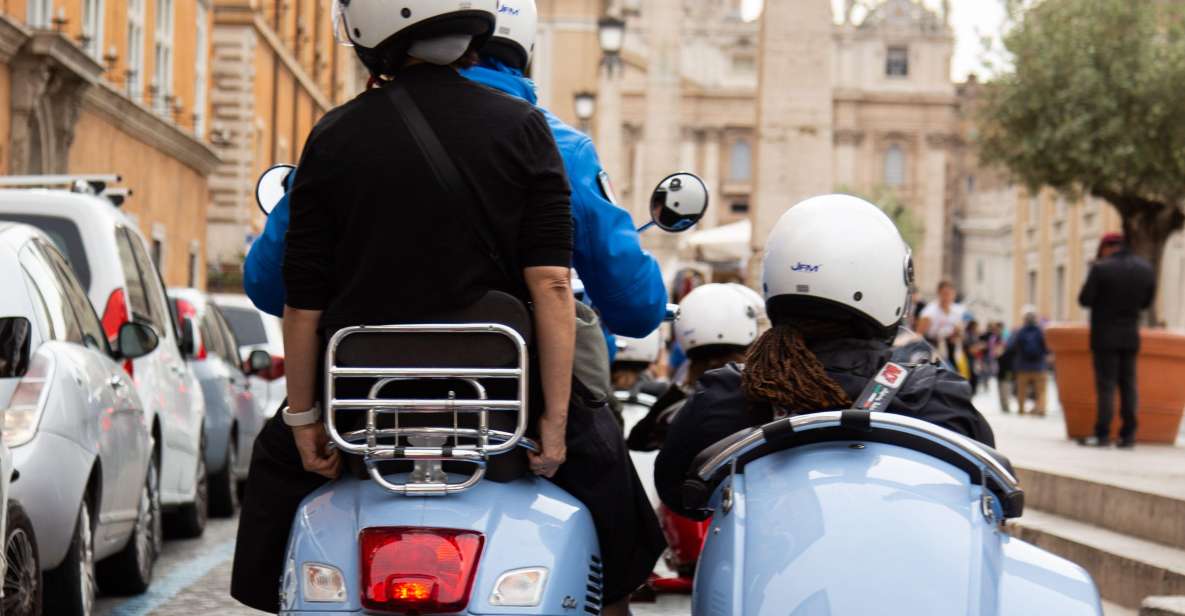
- Headphones + live commentary mean you get context right at each site, not after the fact
- No driving, no parking stress: sit in the sidecar while your driver handles everything
- 12 must-see attractions in one run across Roman eras, with extra sight stops beyond the main list
- Pantheon entry included, so you’re not juggling tickets on your best morning window
- Safety and comfort gear: CE helmets with disposable covers, seat belts, ponchos for rain, and winter warmth options
A sidecar ride that actually helps you understand Rome
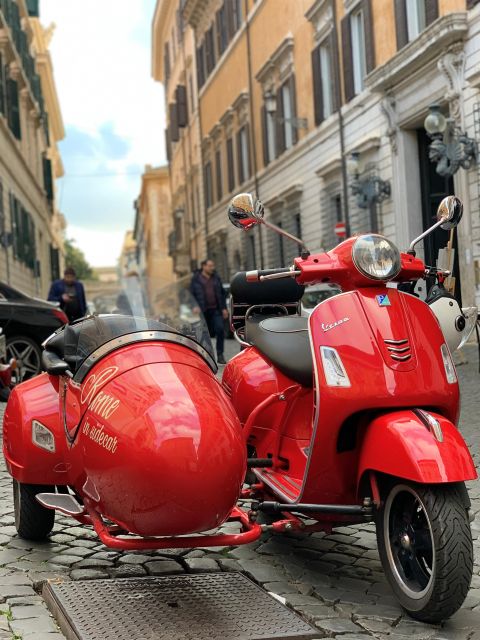
Rome can feel like a pile of monuments until someone puts the pieces in order. This tour is designed to do that quickly. You’ll see major landmarks across thousands of years, and your guide fills in the who-what-why while you’re still in the right place and lighting.
The other big win is pace. In about three hours, you’re hitting spots that would take you most of a day by foot—without turning the day into a stamina test. I also love that the route includes panoramic lookout points and chances to slide through narrow side streets, the kind of Rome you can miss if you only follow big boulevards.
You can also read our reviews of more tours and experiences in Rome
Meeting at Piazza della Repubblica and getting set up for the ride
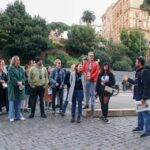
You’ll meet at P.za della Repubblica, 41, Roma, near the green newspaper kiosk. The start is 09:00 AM, and the tour ends back at the meeting point.
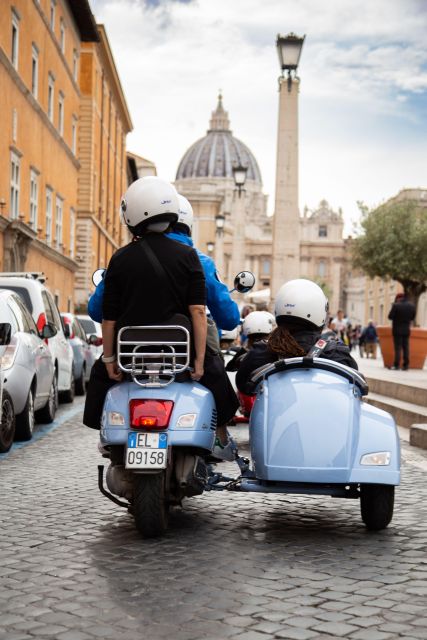
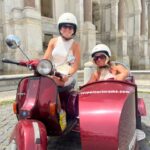
Before you roll, you’ll get properly fitted with the ride essentials. That includes CE helmets with sterilized disposable head covers for hygiene, plus seat belts for the passenger riding in the sidecar. If it’s wet, waterproof ponchos are included, and in winter you can get blankets and electric water bottles for warmth.
This is one of those details that makes a real difference. Rome weather can shift fast, and when you’re moving on a motorbike-style setup, being prepared matters more than you’d think.
The breakfast part: cappuccino and cornetto first, sightseeing after
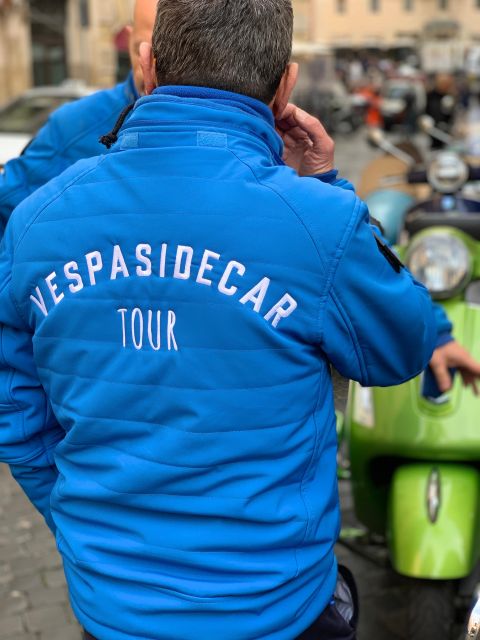
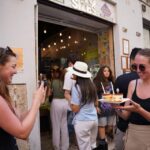
This tour starts with a traditional breakfast built around cappuccino and cornetto. It’s an easy way to keep the morning from feeling like a scramble, especially if you arrived early or you’re still waking up.
Practical tip: eat at a normal pace and leave time for a quick sip of coffee before you gear up. You’ll be outside and moving soon, and having a settled stomach makes the ride more comfortable, especially if the streets are busy.
Quirinale to Fontana di Trevi: Rome’s postcard scenes, delivered with context
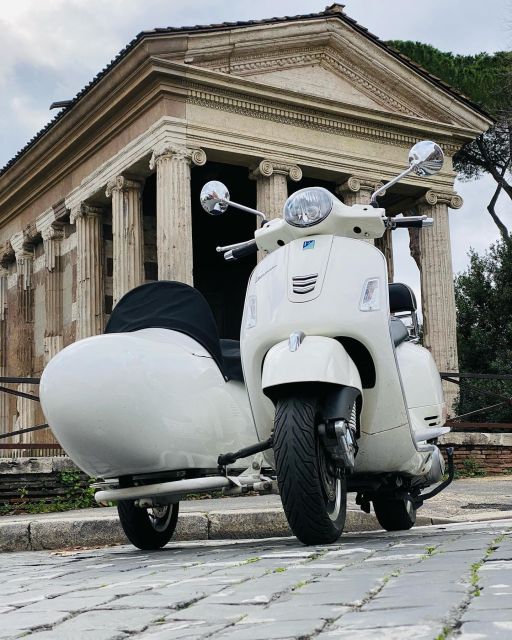
Your standard route begins with Quirinale, then moves to Fontana di Trevi. From the sidecar, these moments feel a little cinematic: you’re close enough to see the scale, but you also get the “why” behind what you’re looking at thanks to the live narration through headphones.
At Trevi, the main attraction is obvious, but the payoff is in understanding what you’re seeing and how it fits into Rome’s changing power centers. Instead of just taking photos, you get a running explanation that makes the fountain more than an Instagram stop.
A small consideration: Trevi is a heavy-traffic pedestrian zone in the real world, so you’ll want to stay focused on your guide’s instructions and follow the timing closely. This is exactly where headphones help, because you’ll be listening while you shift positions and move with the group.
Pantheon stop: why the entry ticket matters
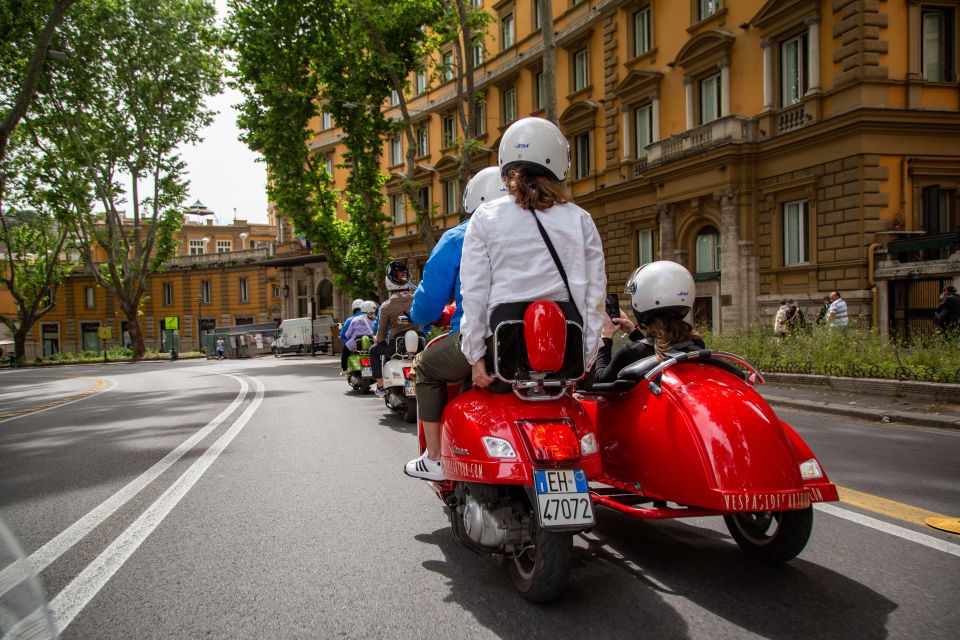
Next up is Pantheon, and the best part is that entry tickets are included. That means you’re not burning time figuring out lines or paying separately while you’re already on a tight morning schedule.
The Pantheon is one of those places where the interior details do most of the talking. With this tour, your guide’s narration doesn’t just name-drop. It helps you notice scale, design logic, and how this building became a reference point for later architects. You’ll likely spend just enough time to see the key features clearly without feeling rushed in the way a too-short stop can feel.
If you’re sensitive to crowds, go in with realistic expectations. This stop can be busy on many mornings, but the headphone guidance helps you keep your bearings even when the space is crowded.
You can also read our reviews of more tours and experiences in Rome

Piazza Navona and St Peter: you’ll see the power shift in real time
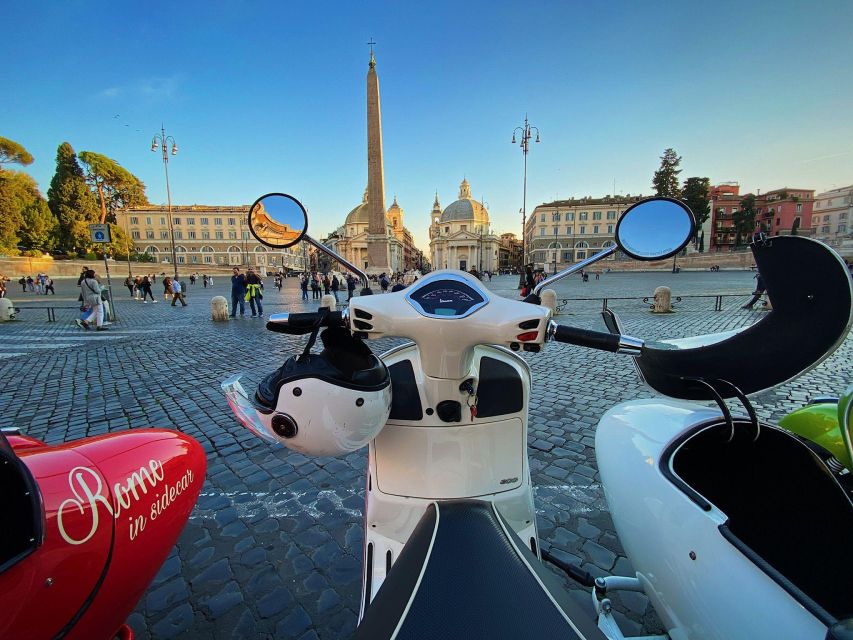
From there the tour continues to Piazza Navona and S. Peter. Piazza Navona is all about the street-level experience—squares, activity, and the way the city’s architecture frames open space. St Peter is the other kind of experience: monumental and spiritually charged, with a scale that’s hard to absorb if you’re only looking at it from one angle.
What makes this leg worth it on a sidecar tour is that you’re moving through different Rome moods fast. You don’t just jump from one famous site to another. You feel the shift between civic life and religious Rome, while your guide keeps you oriented through the highlights.
Gianicolo Hill and the Trastevere / Jewish Ghetto streets
The next part leans into neighborhoods and viewpoints. You’ll hit Gianicolo Hill, then ride toward Trastevere & the Jewish Ghetto. Gianicolo is ideal for a quick reset: a panoramic perspective helps you understand the city’s layout, even if you’re only seeing part of it.
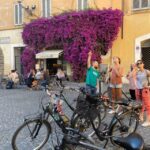
Then the vibe turns street-level. Trastevere and the Jewish Ghetto areas reward slow observation, and the sidecar format helps here because you can get access to tighter corners and smaller streets that big buses can’t handle. It’s not about turning every block into a long walk. It’s about letting you see enough atmosphere to understand why these areas feel distinct.
One practical note: because these streets can be uneven or narrow, comfort matters. Stick close to your setup rules (helmets on correctly, seat belt secured) and let the driver choose the best line.
Piazza Venezia to the Colosseum: ending with impact
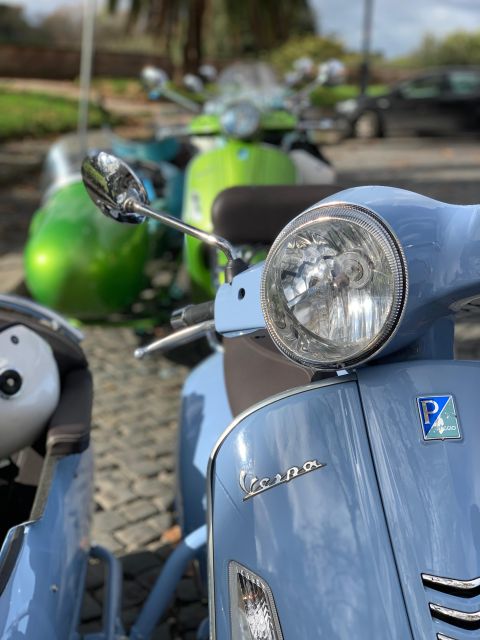
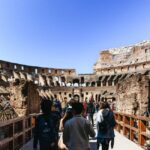
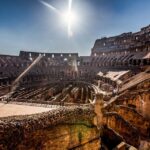
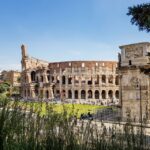
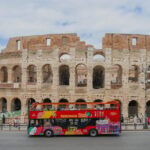
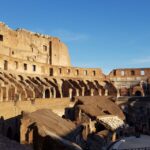
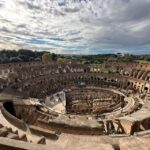
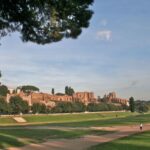
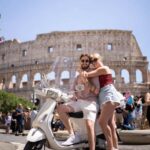
The tour rounds out with Piazza Venezia and then the Colosseum. This is a smart closer because you end on Rome’s big visual anchor. The Colosseum can be overwhelming if you show up cold, with no context. On this tour, your narration ties it to what you saw earlier—so the final stop lands with more meaning.
From the sidecar, you’ll also get angles that feel different from a standard front-facing viewpoint. The movement matters: you’re not just looking at a monument, you’re seeing it as part of the living city around it.
How the guide narration changes the whole experience
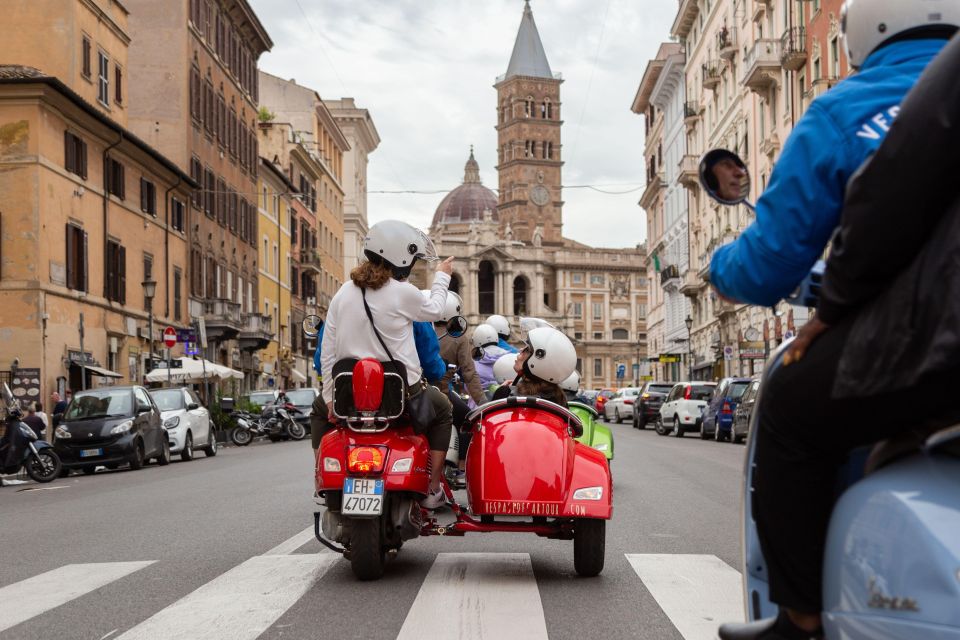
The live narration is the secret sauce here. You’re wearing headphones, so you’re not waiting for a group moment or trying to read signs while everyone is moving. Your guide can connect what you’re seeing now to bigger historical threads, and that makes the route feel like one story instead of a checklist.
It also keeps the ride calm. When you’re not focusing on navigation or parking or figuring out where to stand, the tour becomes more relaxing. The best mornings in Rome are the ones where you feel oriented, and this format gets you oriented quickly.
Price and value: $152.93 for a guided loop, not a DIY scramble
At $152.93 per person for a 3-hour experience, you’re paying for structure and reduced stress. This isn’t just transportation; it includes a licensed guide with live English narration, professional drivers, Pantheon entry, breakfast, full insurance, and safety gear.
Here’s the value angle I’d think about: if you tried to stitch together this many major stops on your own, you’d spend real time on transit, ticketing, and figuring out where to wait and how to coordinate in traffic. Here, you’re paying to remove those friction points so you can spend your energy on sights and understanding.
If you’re short on time—like, you only have a morning free—this price starts to look more reasonable. It turns a tough logistics day into a guided highlights day.
Safety, comfort, and who should reconsider
This tour is built with safety gear and clear rules. Helmets are provided (CE approved), passenger seat belts are used, and ponchos are available if weather turns.
But you should also take the restrictions seriously. It’s not permitted for pregnant travelers. It’s not recommended for travelers with back problems or heart problems. There are also weight and height limits for sidecar seating, including a maximum height of 1.90 m and weight limits for different riding positions. Children must be at least 5 years old, and height affects seating.
If you fit the requirements, you’ll probably find it comfortable and well managed. If you don’t, it’s better to choose a different format that matches your body and medical needs.
When this tour is the best fit
I’d point this toward you if:
- You want Rome highlights in a short morning window
- You like learning on the spot, not after you’re home
- You enjoy motion and views more than slow wandering
- You’d rather let someone else handle traffic and parking
I’d point you away if:
- You need a low-movement, fully accessible format
- You have medical limits that the operator flags as unsafe
- You want to drive yourself (passengers are not allowed to drive)
Should you book the Morning Vespa Sidecar Tour with Cappuccino?
I think this is a strong book if your goal is simple: get your bearings fast and see the biggest Roman landmarks without the usual planning headache. The combination of headphones, a structured route, and a relaxed sit-and-ride format is exactly what makes the tour feel fun and efficient.
Book it if you want a morning that blends comfort (no driving, helmets, ponchos) with real context at the sites that matter. Skip it if you fall into the medical or pregnancy restrictions, or if riding in a sidecar doesn’t sound like your kind of Rome.
FAQ
How long is the Vespa sidecar tour?
The tour lasts 3 hours.
What time does the tour start?
The start time is 09:00 AM (you should check availability for starting times).
Where do we meet for the tour?
Meet at P.za della Repubblica, 41, Roma RM, Italy, near the green newspaper kiosk.
What’s included in the breakfast?
You get a traditional breakfast with cappuccino and cornetto.
Is the Pantheon ticket included?
Yes. Entry tickets to the Pantheon are included.
What safety gear and weather gear are provided?
You’ll receive CE helmets with sterilized disposable head covers and seat belts for the sidecar passenger. Waterproof ponchos are provided for rain. In winter, there are blankets and electric water bottles available.
Are children allowed, and are there height rules?
Children must be minimum 5 years old and accompanied by an adult. If a child is taller than 150 cm, they can sit behind the driver; otherwise they ride in the sidecar with the seatbelt on.
Is the tour suitable for pregnant travelers or people with medical conditions?
Pregnant travelers are not permitted. The tour is also not recommended for travelers with back problems or heart problems or other serious medical conditions.