REVIEW · ROME
Renaissance Women of Caravaggio and the Borgia Family
Book on GetYourGuide →Operated by Storytelling Rome Tours & Walks · Bookable on GetYourGuide
Rome gets scandalous in three hours. I love the women-first storytelling that turns art history into street-level drama, and I love how the stops connect directly to the models behind Caravaggio and Raphael. The only real drawback is that church stops mean you’ll deal with dress-code rules.
You meet at Trajan’s Column, and the vibe is witty and energetic from the start. I also like the Massimo factor: his pacing keeps it fun without losing substance, and the walk ends in Piazza Farnese, a good place to grab a drink or linger as the light changes over the city.
In This Review
- Key highlights you should know before you go
- Renaissance courtesans, not dry lectures: the whole premise
- Meeting at Trajan’s Column near Piazza Venezia
- Piazza Venezia to Galleria Doria Pamphilj: where art meets power
- Sant’Agostino: story-first church time
- Dress-code reality check before you go
- Santa Maria sopra Minerva: symbolism you can actually “read”
- Santa Maria della Pace: where politics and personality overlap
- “Scarlet Ladies” meet the Borgia thread: why the stories feel connected
- Still-standing 16th-century homes: the quiet reality behind the drama
- Finale in Piazza Farnese: turn the last stories into an evening plan
- Is it worth $44 for a 3-hour walk?
- Who this tour fits best (and who might want a different style)
- Should you book Renaissance Women of Caravaggio and the Borgia Family?
- FAQ
- Where is the meeting point?
- How long is the tour?
- How much does it cost?
- Is the tour in English?
- Is the tour wheelchair accessible?
- Which sites are included?
- What should I wear for the church stops?
- Are there restrictions on clothing like short pants or skirts?
- Is there a place to buy snacks or drinks?
- Is free cancellation available?
Key highlights you should know before you go
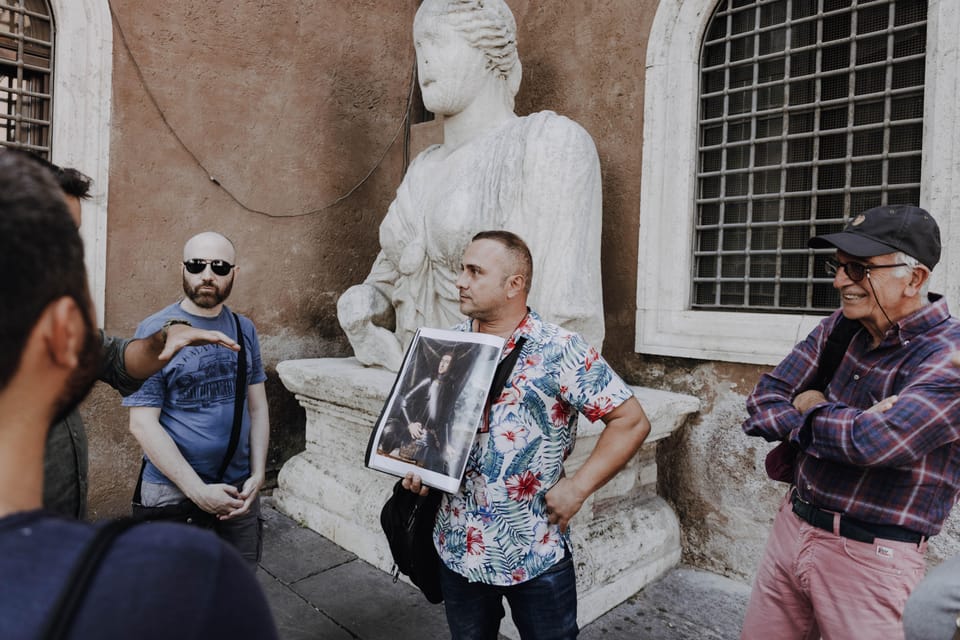
- Seven “Scarlet Ladies” take center stage, inspired by paintings and church walls across Rome.
- Caravaggio and Raphael models are treated like real people, not just footnotes in museum labels.
- The Borgia connection brings in mistresses and political intrigue that explain why Rome both worshipped and condemned.
- A church-focused route hits major sites like Sant’Agostino, Santa Maria sopra Minerva, and Santa Maria della Pace.
- You’ll also see 16th-century homefronts and Renaissance-era city-center settings, not just big monuments.
- A relaxed finish in Piazza Farnese makes it easy to turn the tour into an evening plan.
Renaissance courtesans, not dry lectures: the whole premise
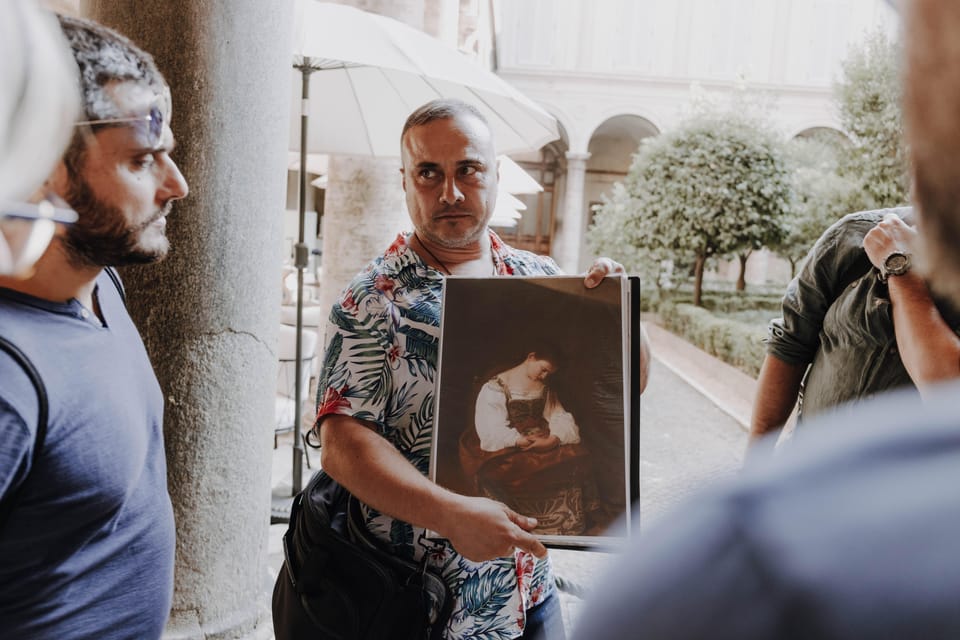
This tour is built around one big idea: Rome’s most famous women in art weren’t just decorative. They were muses, survivors, and power players. Instead of a timeline march, you get character-driven storytelling, where the lives behind the images matter as much as the images themselves.
If you like art but get bored when it turns into a lecture, this format helps. You’re walking through the city while the guide connects what you see to the kinds of choices Renaissance women had to make. The tour leans hard into the fact that formal education for women was off-limits, so many of the smartest women found another route to influence: becoming courtesans. Not as a stereotype, but as a survival strategy in a world run by men.
And yes, it leans into scandal. The Borgia family’s mistresses are part of the story, along with forbidden love and political tension. The key is that it’s not trying to be soap opera. It’s using the drama that’s already in the historical record to make the setting click.
You can also read our reviews of more tours and experiences in Rome.

Meeting at Trajan’s Column near Piazza Venezia
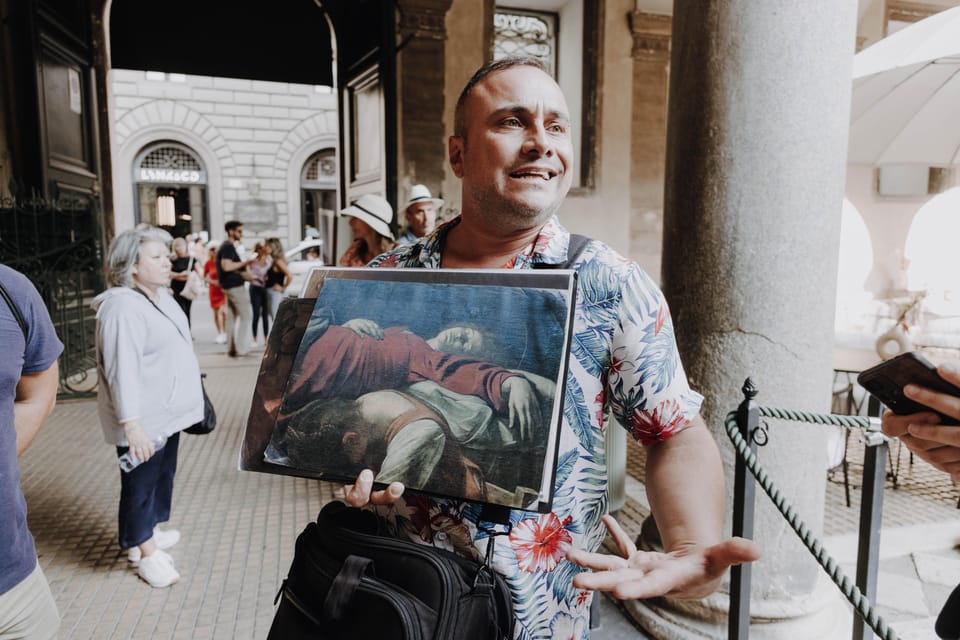
You start at Trajan’s Column, right by Piazza Venezia. The guide stands next to it holding a sign for the Renaissance Scarlet Ladies Tour, so it’s hard to miss once you spot the group.
This starting point matters. It drops you into central Rome fast, with enough landmarks nearby that you feel oriented before the storytelling gets going. From there, the route moves through the city center in a way that keeps you looking up and around instead of staring at the pavement.
Expect a steady walking pace for a total of about 3 hours. If you’re hoping for lots of long sits and museum-level breaks, this isn’t that kind of tour. But the tour is built for motion, with stories designed to land while you’re passing the relevant places.
Piazza Venezia to Galleria Doria Pamphilj: where art meets power
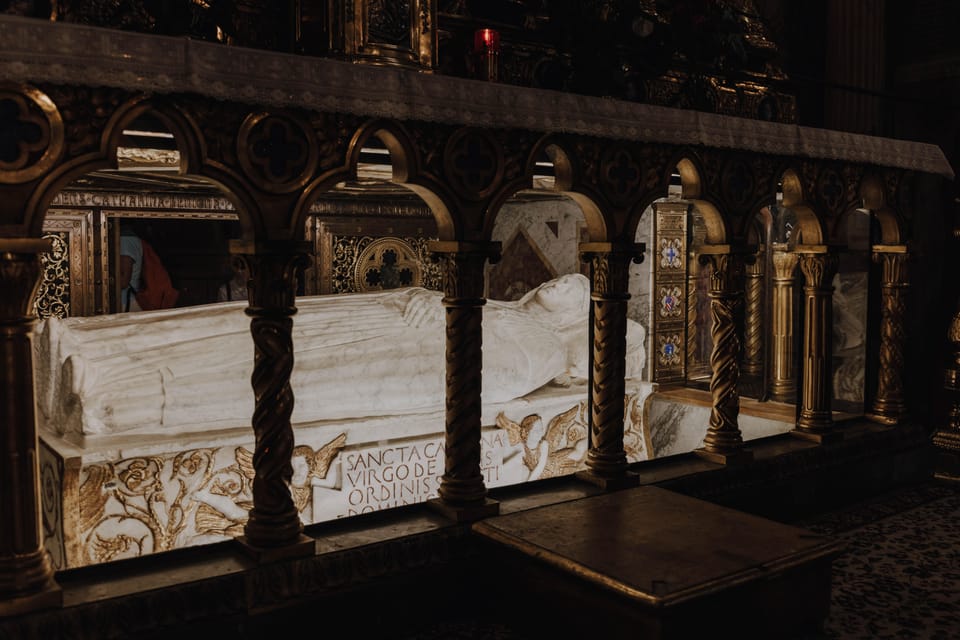
Right out of the gate, you’re in the part of Rome where Renaissance and earlier layers overlap. The tour walks from Piazza Venezia and passes by spots like the Galleria Doria Pamphilj.
You won’t get a “look at this ceiling” moment here as the main event. The value is what the guide does with context: you learn how patrons, politics, and reputation shaped what artists painted and what subjects could be shown. In other words, you’re not just learning about women. You’re learning about the machinery around them—who had money, who had influence, and who could make a story visible.
One smart side effect for first-time visitors: you’re seeing central Rome at walking speed. You’ll pick up a feel for the geography, which makes the rest of your trip easier.
Sant’Agostino: story-first church time
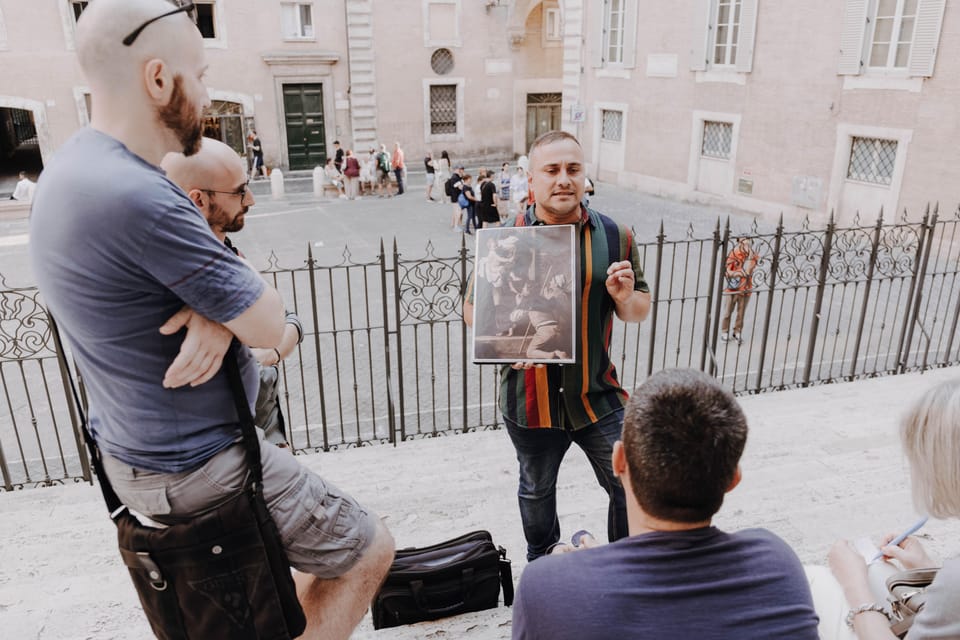
Sant’Agostino is one of the anchor churches on the route. When you step inside, the tour shifts tone: this is where the women’s stories start to feel like they belong to the walls themselves.
In practice, you’ll spend time listening rather than photographing. The guide uses what’s in and around the church to connect the “Scarlet Ladies” to the way Rome remembered them—through art, through symbol, and through the church’s own gaze. This is one of the best places for the tour’s theme to land: Rome couldn’t decide whether to worship or condemn these women, so it did both.
Dress-code reality check before you go
Because this is an Italy church visit, plan ahead. Shoulders need to be covered when you’re inside. That includes deltoids. Short pants are not automatically a problem, and short skirts are allowed only if they end just above the knee. Sleeveless shirts and short skirts are not allowed on the tour, and churches may refuse entry if you show up dressed inappropriately.
If you want this experience to stay fun (not stressful), wear something church-friendly from the start. It’s the easiest way to keep the pacing smooth.





Santa Maria sopra Minerva: symbolism you can actually “read”
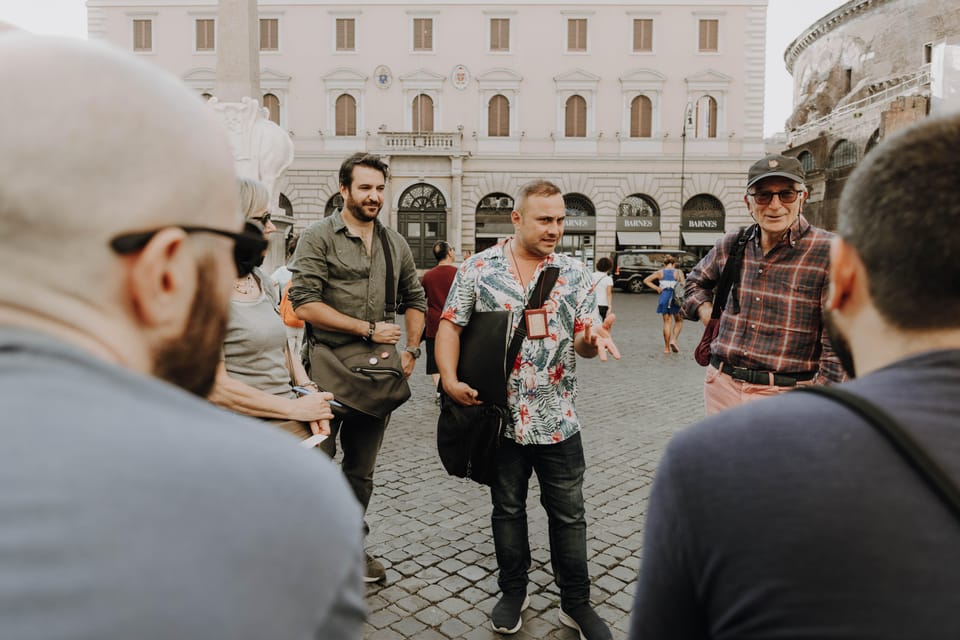
Another major stop is Santa Maria sopra Minerva. This church is a classic Rome location, and on this tour it’s treated like a map for meanings—especially the kind that get coded into art.
The tour’s promise is that you see the women now made famous by Caravaggio and Raphael as real historical figures. So in Santa Maria sopra Minerva, you’ll likely spend time on how those women were viewed and how artists turned their identities into imagery. The practical payoff for you: you stop seeing Renaissance art as something distant and start seeing it as a set of decisions—how to present power, how to manage reputation, how to tell a story without saying everything out loud.
This is also a good moment for people who love details but hate dry lectures. The guide’s style is story-first, so you learn by following the characters, not by memorizing dates.
Santa Maria della Pace: where politics and personality overlap

Santa Maria della Pace is another key church on the walk. This is where the tour’s “sizzle” theme makes sense in a new way. You’re still in a sacred setting, but the guide connects the women’s lives to the political world that sat behind the culture.
That’s the big shift. Courtesans in this telling aren’t only about romance. They’re about influence. You learn why education limits mattered, why reputation mattered, and why some women—smarter and bolder—managed to navigate a male-dominated society using the only routes they were allowed.
A fun part for many people is that the stories feel like they belong to Rome’s gossip column energy. The tour doesn’t need sensationalism because the historical context already contains it. You leave with a clearer picture of how social status worked and how women could gain leverage even in constrained circumstances.
“Scarlet Ladies” meet the Borgia thread: why the stories feel connected
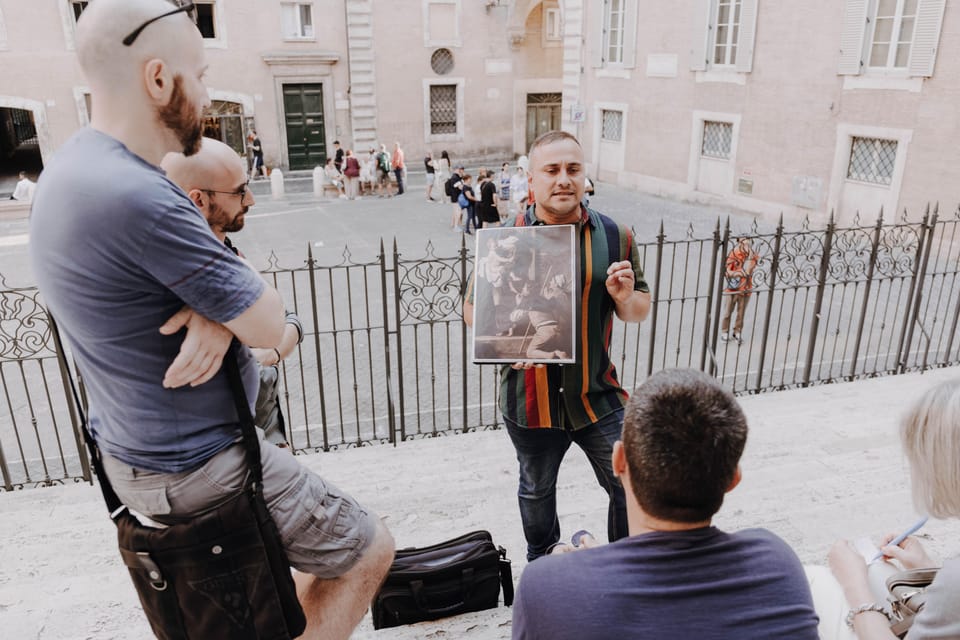
The tour isn’t only about individual biographies. It’s also about patterns—how women could be admired and used, supported and punished, all in the same city and often in the same decade.
The Borgia family angle brings in a specific kind of power: not just romance, but political webs. The tour frames some of these relationships as part of how influence moved through Renaissance society. That helps you understand why the art isn’t neutral. A painting is also a message, and the models behind it were often navigating real consequences.
This is also one of the places where stories widen beyond the obvious. In the experience I read about most, guides bring in famous ancient figures as part of the thematic thread—stories like Cleopatra and Julia Domna come up in the storytelling. Even if you’re expecting strictly Renaissance names, you’ll probably appreciate how the guide uses earlier imperial power to explain the kinds of reputations Renaissance artists and audiences enjoyed.
Still-standing 16th-century homes: the quiet reality behind the drama
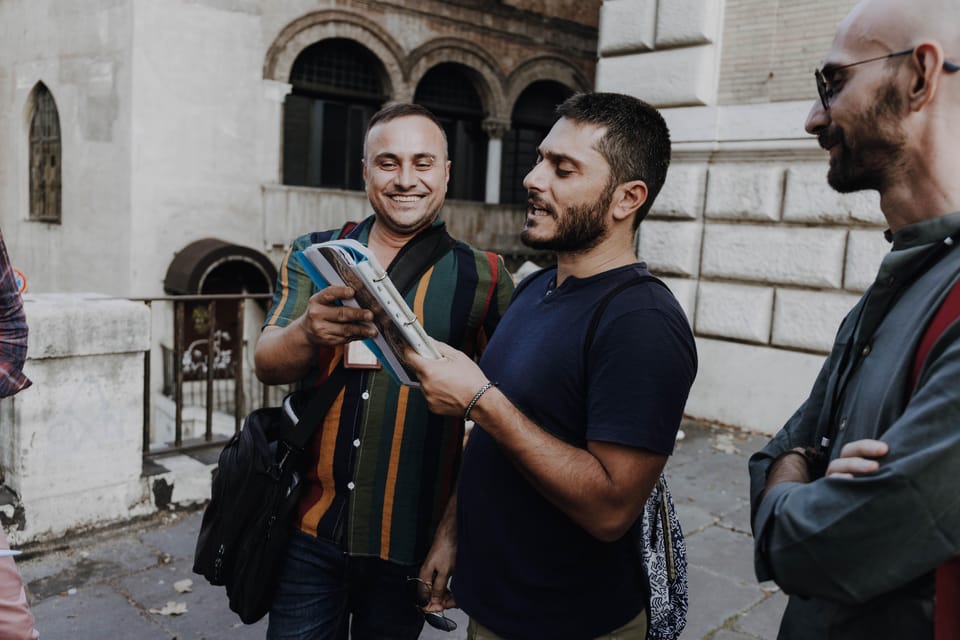
One of the tour’s underrated advantages is that it includes some still-standing 16th-century homes. You might not go inside, but you’ll see enough of the streetscape to understand how close everything was. This matters because courtesan life wasn’t lived on a stage far away from normal people.
From a reader’s point of view, these stops make the tour feel grounded. It’s easy to treat the Renaissance as “over there,” behind museum glass. But when you’re looking at buildings that survived into modern Rome, the stories stop feeling abstract. You begin to imagine the movement: meetings, negotiations, reputation-building, and the constant pressure of being watched.
If you like history that makes you picture the everyday setting, these street-level sections are where you’ll feel it most.
Finale in Piazza Farnese: turn the last stories into an evening plan
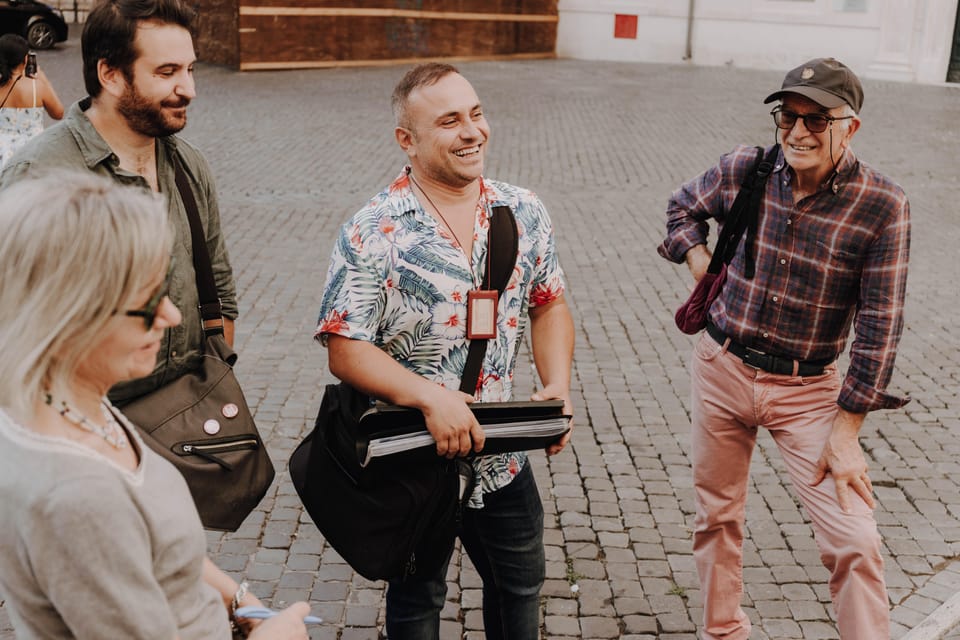
The tour ends in Piazza Farnese, which is a smart place to finish. It’s central, photogenic, and practical. After a 3-hour walk packed with character stories, you’ll want an easy option to keep the mood going without planning anything complicated.
The guide’s wrap-up gives you room to reflect on what you learned—women as artists’ subjects, women as political actors, women as survivors. Then you can naturally switch from “listening mode” to “Rome mode.”
Some people also mention enjoying a gelato and spritz moment along the way, which fits the overall tone: this is history you can do without killing your afternoon. If you’re traveling with food or drink as part of your schedule, this tour gives you enough breaks in energy and timing to add your own pause.
Is it worth $44 for a 3-hour walk?
At $44 per person for about 3 hours, this sits in the sweet spot for Rome experiences that feel tailored rather than generic. You’re paying for two things most standard tours don’t offer well: a strong narrative angle and a focus on one specific theme—historical women—rather than trying to cover the whole city.
You’re also getting church visits and multiple central stops, plus the walking format that lets you see Rome without needing transportation. The value is strongest if you’ll actually enjoy listening and connecting art to people. If you only want big monuments or silent photo time, you might not feel the same value.
Who this tour fits best (and who might want a different style)
This is a great choice if you fall into one or more of these groups:
- You love Renaissance art and want the stories behind the faces.
- You like history that moves fast and avoids heavy lectures.
- You’re curious about how women created influence under strict limitations.
- You’ve been to Rome before and want new angles, not just repeats of the same sites.
It may feel less perfect if you:
- Prefer museum-style explanations with fewer characters and more facts-only structure.
- Want to avoid churches and dress-code constraints.
- Don’t enjoy a clearly playful, sassy tone in the storytelling.
Should you book Renaissance Women of Caravaggio and the Borgia Family?
Book it if you want Rome that feels human. This tour uses art and architecture as a backdrop, but the main event is people: seven Renaissance courtesans turned into unforgettable stories. The guide, Massimo, comes through as a high-energy storyteller, and the stops are chosen to make the theme visible—Caravaggio and Raphael’s muses, the Borgia mistresses, and the places where Rome remembered (and judged) them.
Think twice only if church rules and outfit planning would derail your day. If you’re prepared with covered shoulders and knee-appropriate clothing, you’ll likely find this one of the more memorable, distinctive walks in central Rome.
If you want a lively, character-driven history experience that still respects the setting, this is an easy yes.
FAQ
Where is the meeting point?
The tour guide waits by Trajan’s Column, adjacent to Piazza Venezia, holding a sign for the Renaissance Scarlet Ladies Tour.
How long is the tour?
The tour lasts 3 hours.
How much does it cost?
The price is $44 per person.
Is the tour in English?
Yes, the tour is in English.
Is the tour wheelchair accessible?
Yes, it is wheelchair accessible.
Which sites are included?
The tour includes stops such as Piazza Venezia area, the Galleria Doria Pamphilj (walk by), Santa Maria sopra Minerva, Sant’Agostino, Santa Maria della Pace, plus additional city-center sites and still-standing 16th-century homes, and it ends in Piazza Farnese.
What should I wear for the church stops?
You need to cover your shoulders (including deltoids). Short skirts and sleeveless shirts are not allowed, and short skirts must end just above the knee.
Are there restrictions on clothing like short pants or skirts?
Short pants are not automatically prohibited, and short skirts are allowed only if the end is just above the knee. Short skirts and sleeveless shirts are not allowed on the tour.
Is there a place to buy snacks or drinks?
Yes, you have the chance to buy a snack or beverage at your own expense.
Is free cancellation available?
Yes. You can cancel up to 24 hours in advance for a full refund, and you can also reserve now and pay later.