REVIEW · COLOSSEUM
Best of Colosseum Experience: Exclusive Tour in 40 Languages
Book on GetYourGuide →Operated by VEDITALIA · Bookable on GetYourGuide
Rome feels huge and rushed. Not on this tour.
I like how this one is built for real time-saving: you get skip-the-line access and a guide who walks you through what you’re seeing, instead of letting you wander in the noise. I also love the option for AI real-time translation, which can turn the guide’s narration into many languages delivered right to your earphones. One thing to plan for: bringing your passport or ID is mandatory for entry to the Colosseum.
This is a solid 3-hour format that hits the highlights without pretending Rome is small. It does involve stairs and uneven steps, and it’s not suitable for wheelchair users, so wear good shoes and expect a brisk pace.
In This Review
- Key things to know before you go
- Why This Colosseum Tour Feels Faster Than You Expect
- Meeting Point and What to Bring (Passport Matters)
- Stop 1: Getting Into the Colosseum (and Why the Guide Time Counts)
- The Colosseum Story You’ll Actually Remember
- Palatine Hill in 45 Minutes: Rome’s Birth Myth Plus the Big View
- Via Sacra and the Roman Forum: Where Power Was Put on Display
- Julius Caesar’s Cremation Spot: A Small Moment With Big Impact
- AI Real-Time Translation: How It Works and Who It Helps
- Group Size, Pace, and Comfort: The Stuff That Can Make or Break It
- Value for $45.55: What You’re Getting for Your Money
- Should You Book This Colosseum Tour With AI Translation?
- FAQ
- How long is the tour?
- Does this tour include skip-the-line tickets?
- Is AI real-time translation included?
- Is a passport or ID required?
- What group size is it?
- Is the tour wheelchair accessible?
Key things to know before you go
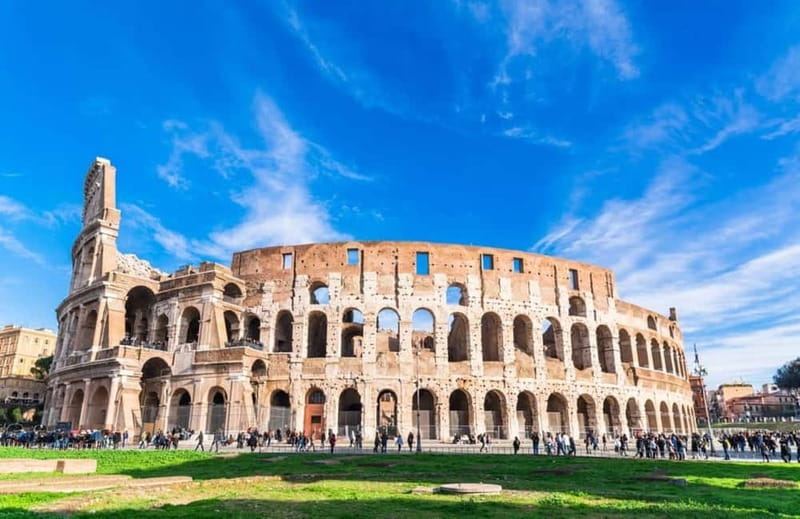
- Skip-the-line entry to the Colosseum plus Roman Forum and Palatine Hill
- AI real-time multilingual translation if you select that option
- Small group size (no more than 20/25), with audio headsets when needed
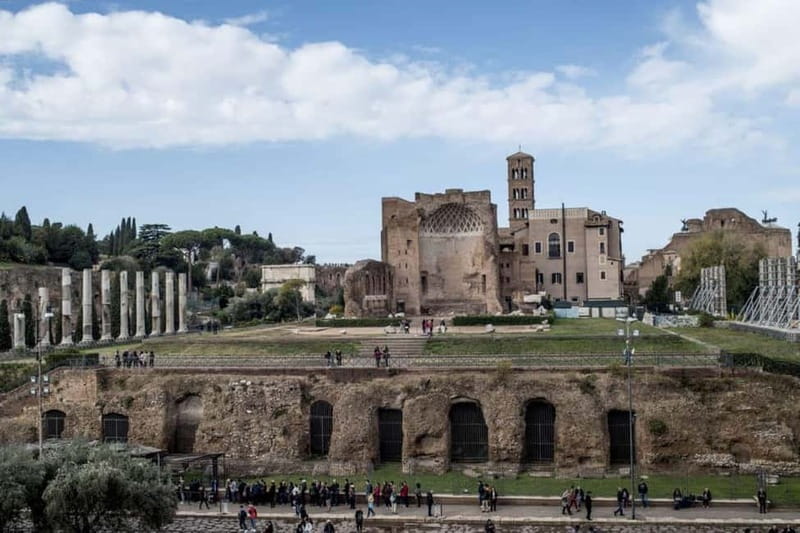
- A clear route through the myth and the ruins: Palatine Hill, Via Sacra, Roman Forum
- Julius Caesar’s cremation altar stop for a memorable, specific moment
- Bring passport or ID because it’s mandatory for access
Why This Colosseum Tour Feels Faster Than You Expect
The Colosseum is one of those places where the queue alone can steal your morning. Here, the big win is that you’re using a separate skip-the-line entrance, so you get moving faster and spend more time inside where it matters.
You’re also not stuck with a generic “stand here and look” tour. A licensed guide keeps the story going, tying gladiator life, imperial power, and Roman myths together as you walk. That makes the stones feel like a timeline instead of random walls.
You can also read our reviews of more tours and experiences in Colosseum.


Meeting Point and What to Bring (Passport Matters)
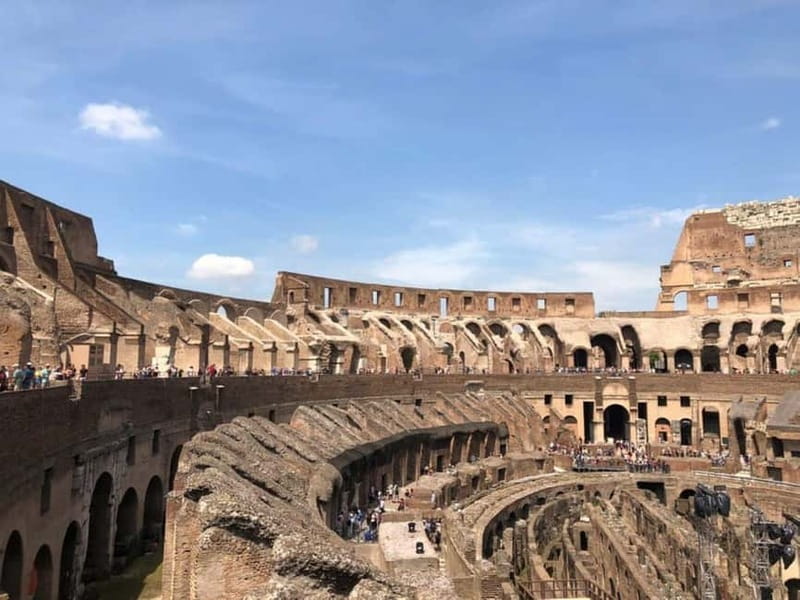
You’ll meet at one of two spots around the Colosseo area, such as Colosseo / Piazza del Colosseo, depending on which option you booked. The tour ends back at Piazza del Colosseo, so you’re not left navigating Rome’s streets at the end of a long walk.
Bring your passport or ID. This is mandatory to access the Colosseum, not a “nice-to-have.” Also pack a bottle of water and plan for moderate walking, including stairs and uneven ground.
Stop 1: Getting Into the Colosseum (and Why the Guide Time Counts)
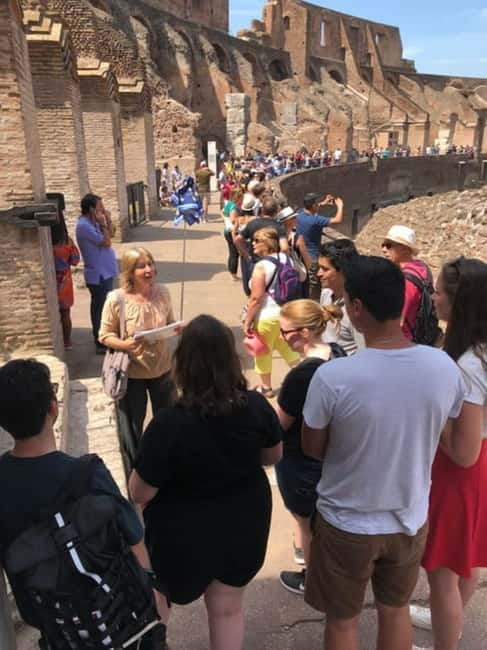
Your Colosseum portion runs about 1.5 hours with a guided walkthrough. That time window is long enough to see key areas and learn what they meant, but short enough that the pacing stays strong. If you want a slow, photo-only session, you might feel the clock a bit, because this is a “see, learn, move” format.
In the real experience, the guide helps you connect details to meaning. You’re not just looking at arches; you’re hearing why Romans built this as a machine for spectacle and state power.
Guides on this tour have a reputation for keeping the energy up, with names you might recognize like Laura, Marco, Elena, Valentina, Helen, Luciana, Kiara, Hanna, Simon, Marko, and Vasco. Different styles, same goal: make the place understandable fast.
The Colosseum Story You’ll Actually Remember
This tour’s Colosseum highlights are built around the stuff people come for: gladiators, spectacle, and the gritty places you don’t always get to notice.
You’ll see the holding cells where gladiators were kept before fights. That detail changes how you feel about the arena. It’s one thing to admire the architecture; it’s another to realize this is where tension waited right before the crowds erupted.
You’ll also learn about the entertainment side of the show. The tour covers the idea of wild-animal spectacle and how crowds came to expect major performances. Even if you’ve read about Roman games before, having it explained while you’re standing in the right context makes it stick.
Palatine Hill in 45 Minutes: Rome’s Birth Myth Plus the Big View
Next comes Palatine Hill for about 45 minutes. This is the legendary birthplace of Rome, tied to the myth of Romulus and Remus and that famous she-wolf story. The point here isn’t just trivia. The myth sets the mood for what Palatine Hill represents: the place Romans connected with origin, power, and legitimacy.
You’ll also get a panoramic view of Rome from the hill. If you’ve ever seen photos and thought, sure, nice view, this is where you’ll understand why Palatine matters. From above, the city stops looking like a modern sprawl and starts looking like a landscape with layers.
A practical note: Palatine Hill includes walking on uneven ground. You’ll cover enough ground to feel like you went somewhere, but it’s not a half-day hike. Good shoes make this stop feel easy; bad shoes make it annoying.

Via Sacra and the Roman Forum: Where Power Was Put on Display
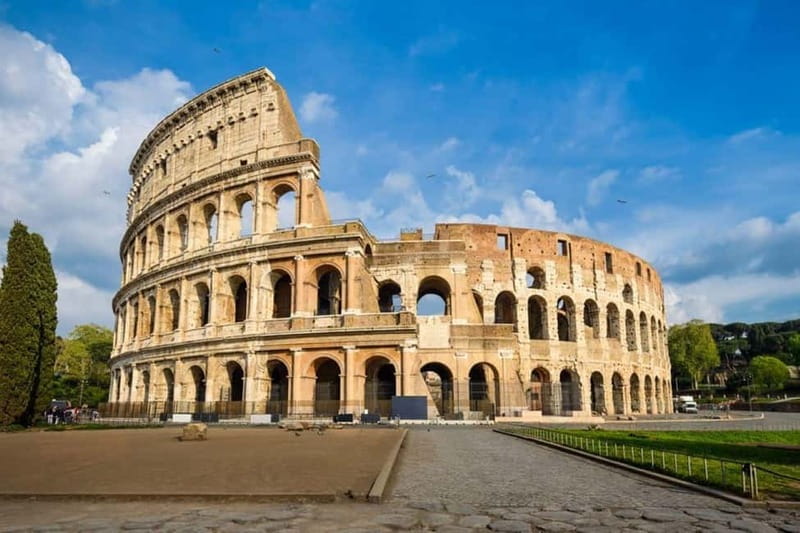
Then you head to Via Sacra and the Roman Forum, with about 45 minutes of guided time. This is where Rome goes from legend and stadium drama into politics, public life, and imperial messaging.
One of the tour’s best moves is walking along the Via Sacra, the historic road associated with Roman processions. You trace the path of Rome’s mighty armies and understand why this corridor was so important. It’s not just a street name; it’s part of how Rome projected strength.
In the Forum, you’ll see the ruins of temples and marketplaces. These are the kinds of remains that can feel flat if you don’t know what you’re looking at. With a guide, they become functional spaces: where people gathered, traded, worshiped, and made political moves in plain sight.
Julius Caesar’s Cremation Spot: A Small Moment With Big Impact
A standout feature here is the visit to the altar where Julius Caesar was cremated. That’s a very specific stop, and it helps the larger story feel personal instead of abstract.
You’re not just hearing that Caesar mattered. You’re standing at the point in the narrative where his death becomes a turning point for Rome. It’s the kind of moment that makes you pause, look around, and realize you’re looking at the framework of political mythology.
If you’re the type who enjoys exact details—names, dates, and “this happened here”—this is likely one of your favorite parts of the tour.
AI Real-Time Translation: How It Works and Who It Helps
If you pick the AI real-time translation option, the guide’s narration can be translated into many languages delivered directly to your earphones. The system is designed around the idea that the guide speaks naturally in their native language, and you receive a smooth translation straight to your audio device.
A key practical point: you rent the device, listen during the tour, and return it at the end. So you’re not trying to figure out an app setup mid-walk. You simply listen, which makes the experience feel calmer for everyone.
The translation accuracy is stated as tested in the 90% to 100% range across multiple languages. That matters because with history tours, “close enough” isn’t enough. You want the meaning, not a rough vibe.
This feature is also especially useful for mixed groups. If you’re traveling with friends or family who speak different languages, you avoid the constant splitting up and regrouping. Everyone can hear the same story.
Group Size, Pace, and Comfort: The Stuff That Can Make or Break It
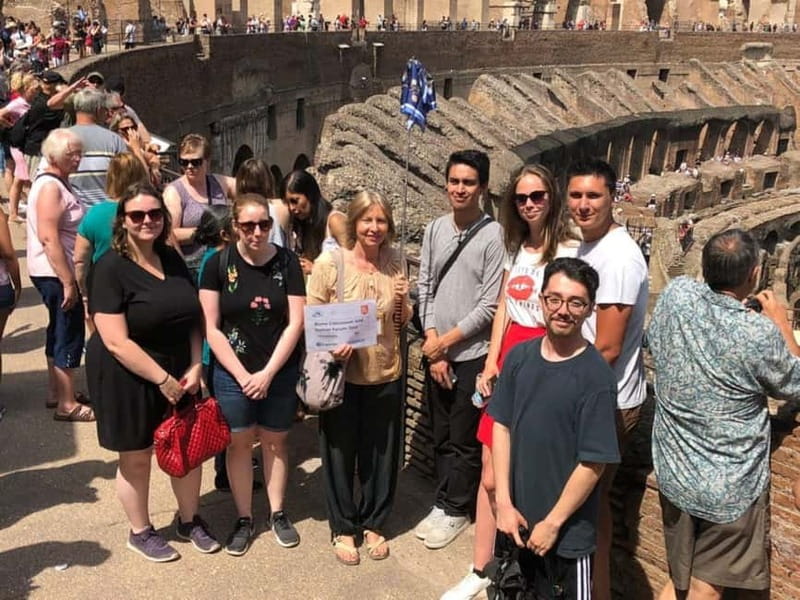
This tour keeps groups fairly small—no more than 20/25 people. When groups get bigger than 6, audio headsets are included, which helps you hear clearly without leaning in all the time.
The walking is moderate, but it’s real. Expect stairs, uneven steps, and some time on stone surfaces. If you’re sensitive to foot travel, you’ll feel the pace more than the distance.
Also, it’s not suitable for wheelchair users. If you need mobility assistance, it’s worth asking about alternatives before you book anything.
One thing to watch: because the full experience is 3 hours, the stops are timed. You’ll get the essentials at each location, but you won’t have unlimited wandering time at any single site.
Value for $45.55: What You’re Getting for Your Money
At $45.55 per person, the value comes from how the tour bundles the important parts.
You’re paying for:
- A licensed guide
- Skip-the-line entrance tickets to the Colosseum, Roman Forum, and Palatine Hill
- A small-group experience
- Audio headsets when needed
- Optional AI translation, if selected
If you tried to piece this together on your own, you’d likely spend time managing tickets and timing, and you’d miss the “why this matters” explanations. With this format, you trade some freedom for structure—and in the Colosseum, that structure is the difference between a great visit and a confusing one.
Also, the tour duration (3 hours) is long enough to feel like you “did” Rome’s core landmarks, but short enough to keep the rest of your day workable. That’s good value in a city where queues and crowds can eat your schedule.
Should You Book This Colosseum Tour With AI Translation?
I’d book it if you want three big wins: skip-the-line entry, a guided explanation that makes the ruins coherent, and the option for AI translation if language access matters for your group.
You should think twice if you’re chasing a slow, sit-down museum pace or if walking stairs and uneven steps is difficult for you. This tour is built for movement, not lingering.
If your group includes different language speakers, the AI earphone option can turn the tour into a shared experience instead of a “translate for me” task. And if you love specific details—gladiator prep areas, the Forum’s political spaces, and the Caesar cremation altar—this route gives you those moments in one package.
In short: this is a practical, high-impact way to hit Rome’s headline sites without losing your morning to lines.
FAQ
How long is the tour?
The tour lasts about 3 hours.
Does this tour include skip-the-line tickets?
Yes. It includes skip-the-line entrance tickets to the Colosseum, Roman Forum, and Palatine Hill.
Is AI real-time translation included?
AI real-time multilingual translation is included if you select the option. The guide’s narration can be translated into many languages delivered through earphones.
Is a passport or ID required?
Yes. Bringing your passport or ID is mandatory to access the Colosseum.
What group size is it?
The group is kept to no more than 20/25 people. Audio headsets are provided for groups of more than 6.
Is the tour wheelchair accessible?
No. It’s not suitable for wheelchair users.