REVIEW · COLOSSEUM
Rome: Colosseum Access and Self-Guided Virtual Reality Tour
Book on GetYourGuide →Operated by Ancient and Recent · Bookable on GetYourGuide
Time travel is surprisingly practical here.
This Colosseum experience pairs interactive 3D VR with a real ticket hop into the monument. I love the way it sets the scene in 72 AD before you even step fully into the ruins, and I also like the clear payoff: after the headset time, you get your entry and can roam Colosseum + Roman Forum + Palatine Hill on your own schedule. One thing to plan for: the VR part happens outside the monument for security, and some people can feel queasy with headsets.
If you want a calmer, more self-directed way to tackle Rome’s biggest ancient sites, this format helps. You still get a guided-style structure (staff, headset setup, audio commentary), but you’re not stuck with a long, tiring group shuffle.
In This Review
- Key points to know before you go
- VR at the Colosseum: why this plan works
- Where to meet and how the headset handoff works
- The 72 AD reconstructions: Square, Arena Floor, Undergrounds
- Colosseum Square: life before the first shout
- Arena Floor: standing in the center of the action
- Undergrounds: the hidden world beneath the seats
- After VR: skipping the line and touring at your own pace
- What you can and cannot access (and why VR helps)
- VR comfort and motion-sickness reality check
- The price: where the $66 goes (and the value math)
- Who should book this Colosseum VR plan
- Tips to make your visit smoother
- Should you book this Colosseum Access and Self-Guided VR Tour?
- FAQ
- Where is the meeting point?
- How long does the experience take?
- Is there a live guide?
- What languages are available for the audio commentary?
- What sites can I visit after the VR portion?
- Is the VR experience inside the Colosseum?
- Is access to the Underground, Arena Floor, or Third Ring included?
- Is this tour wheelchair accessible?
- What are the rules on bags and minors?
Key points to know before you go
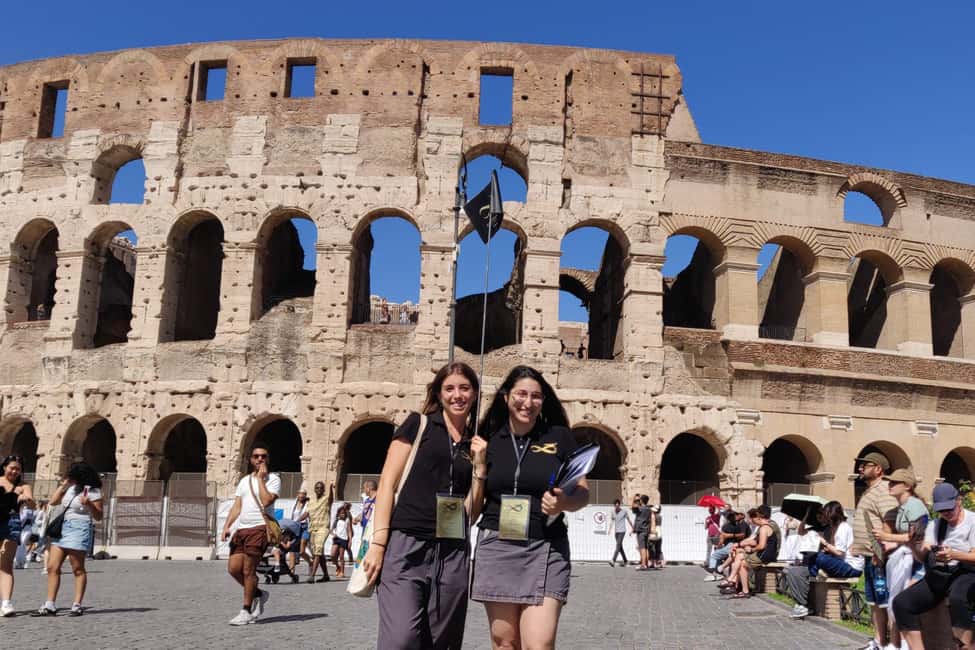
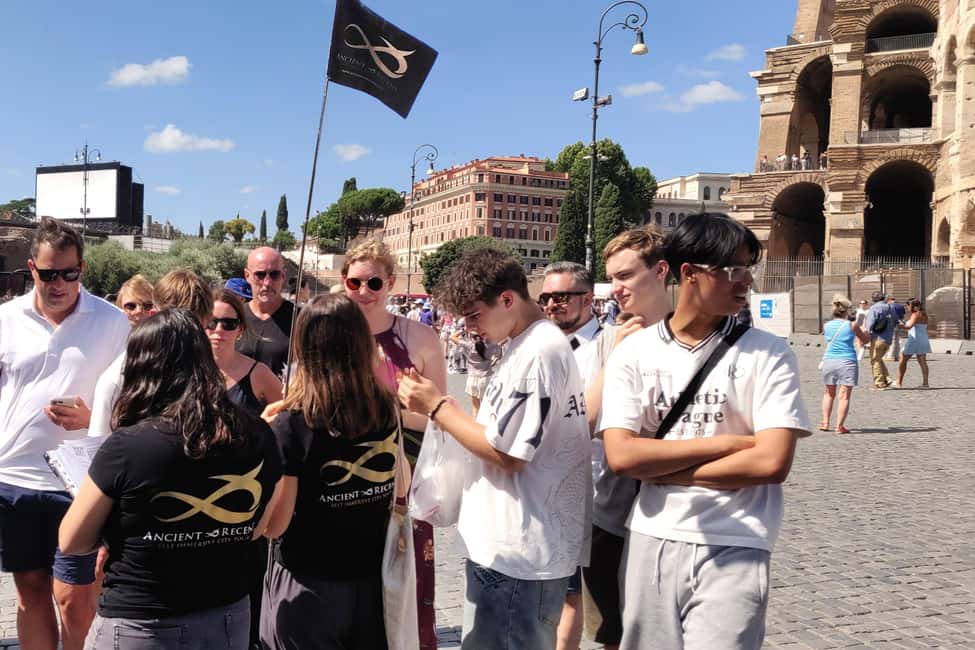
- Meet at the Arch of Constantine with staff holding a black flag that says Ancient and Recent
- VR reconstruction in three chapters: Colosseum Square, Arena Floor, and the Undergrounds
- Oculus VR + audio commentary with multiple language options during booking
- Skip the long ticket line after the VR session so you can get moving fast
- Physical access is self-guided: Colosseum, Roman Forum, and Palatine Hill at your own pace
VR at the Colosseum: why this plan works
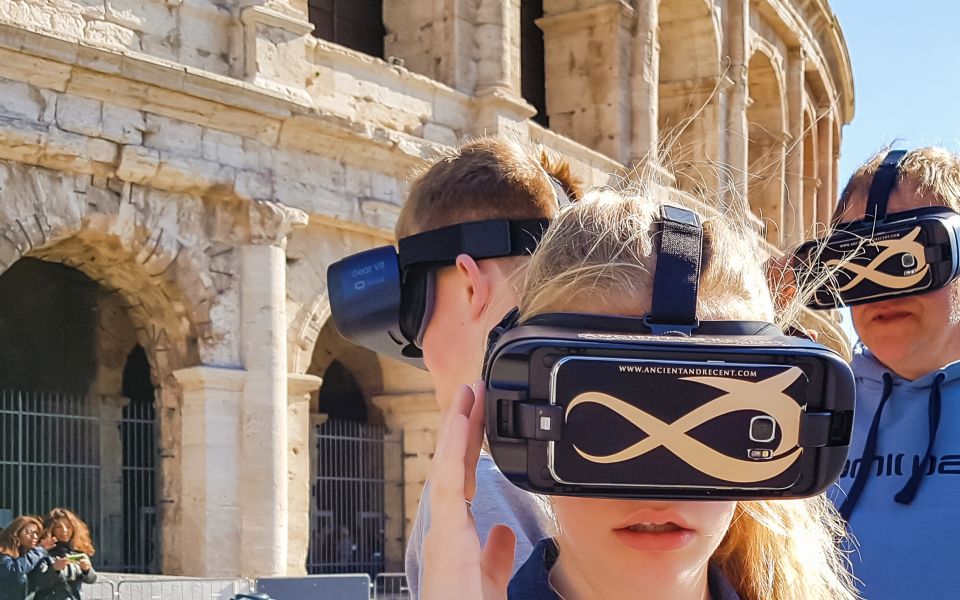
Rome does queues like it’s a civic sport. This tour helps you beat that by front-loading the “wow” factor with a VR time machine, then letting you use your energy inside the actual sites.
The big idea is simple: before you’re elbow-to-elbow at the Colosseum, you get a structured visualization of what it looked like in 72 AD. The VR experience is designed as interactive 3D reconstruction with audio, so you’re not just watching a screen. You’re given a mental model for what you’re about to see—arena scale, street-level life, and the hidden underworld beneath the seating.
And then the day does its practical job. Once you finish the VR portion, you collect your ticket entry from staff and head in to explore the Colosseum, Roman Forum, and Palatine Hill under your own timing. That mix is what makes it feel good value: you’re paying for both the VR narrative and a real site ticket.
You can also read our reviews of more guided tours in Colosseum
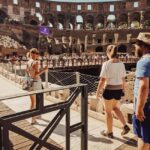


Where to meet and how the headset handoff works
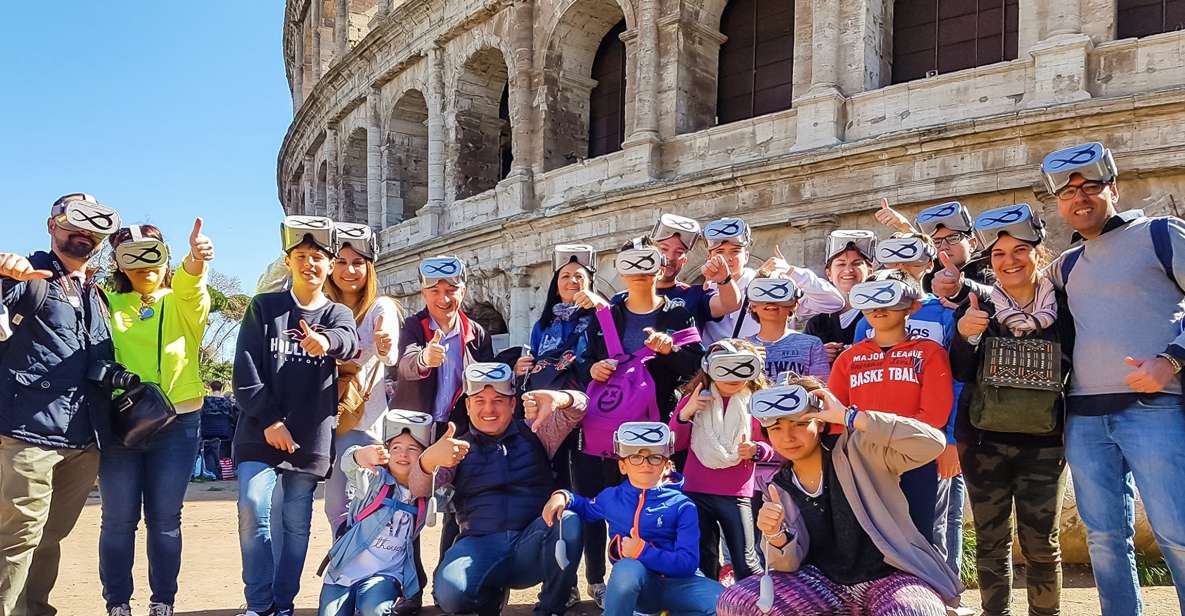
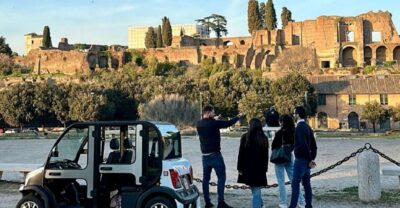
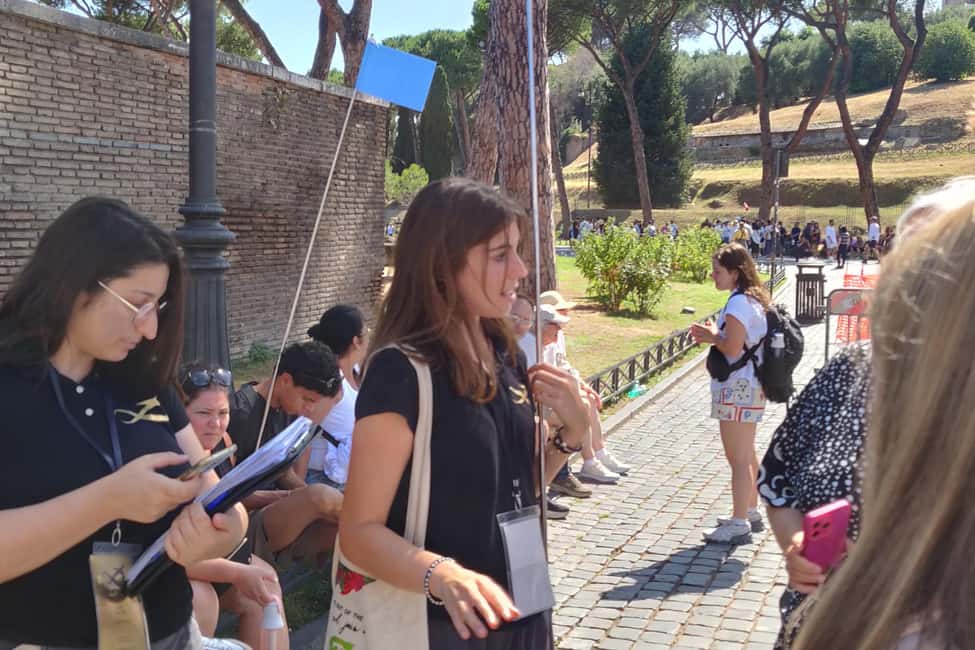
You start at the Arch of Constantine, on the side of the Colosseum. Look for staff holding a black flag with the words Ancient and Recent.
From there, it’s a straightforward handoff: you’ll meet friendly staff at the designated point, get your next-generation VR headset, and receive a quick orientation on how to use it. The experience includes an English-speaking VR assistant, so you’re not left to figure it out with broken translations and a confused face.
A nice detail from how the experience is run is that the VR headset time is protected from chaos. The VR is held outside the monument for security reasons, which matters because the Colosseum area is tightly controlled. Translation: you’re getting this high-tech part in a predictable zone, and the “go in and explore” part is what happens next.
If you’re traveling with kids or anyone who gets overwhelmed in crowds, this pacing can be a real win. Some groups even mention that staff helped them reposition to a better spot while setting things up, which suggests the team pays attention to comfort and timing.
The 72 AD reconstructions: Square, Arena Floor, Undergrounds
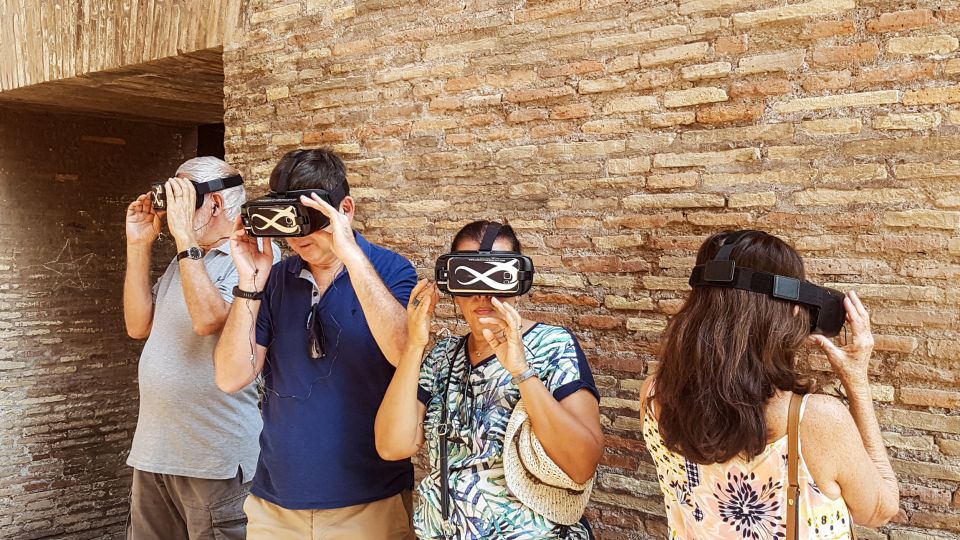
Plan on about an hour in VR within the overall 2-hour experience time. The VR portion is built around three reconstructions, each one giving you a different angle on life around the Colosseum.
Colosseum Square: life before the first shout
The first scene is the Colosseum Square. This part is useful because it answers a question you’ll have once you’re standing in the real area: what was happening there beyond stone and shadows?
Instead of treating the Colosseum like a single building, the VR brings in the idea of a busy public setting—merchants, citizens, and gladiators preparing for battle. Even if you’re not an ancient-history superfan, this helps you interpret what you’re seeing later. You’re less likely to view it as just a big arena and more likely to see it as an event machine.
Arena Floor: standing in the center of the action
Next comes the Arena Floor. In VR, you get the feeling of being in the heart of the spectacle—where fighters once met and where crowds once leaned in.
This scene matters because the Colosseum’s scale can be confusing at ground level. With the arena view in your head, you’ll better understand why the seating looks the way it does and how the action would have moved. It also helps kids (and adults) get past the “I know it’s famous” feeling and into “I can picture it.”
You can also read our reviews of more tours and experiences in Colosseum
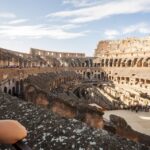
Undergrounds: the hidden world beneath the seats
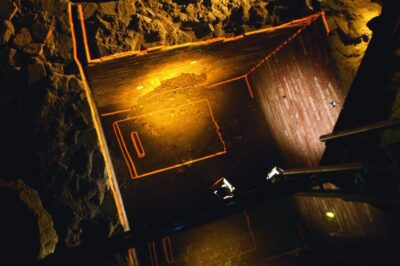
The third reconstruction is the Undergrounds. This is where the tour gives you a big storyline payoff: the hidden staging area where animals and fighters awaited their fate.
Here’s the smart part: even though underground access is not included for your physical visit (more on that below), VR is used to explain what you can’t always see in person. So you still walk away with the full theatre-in-the-round concept, not just the top layer.
The narration includes audio commentary, with language options depending on what you selected at booking. You can get it in English, Spanish, Portuguese, German, French, or Italian.
After VR: skipping the line and touring at your own pace
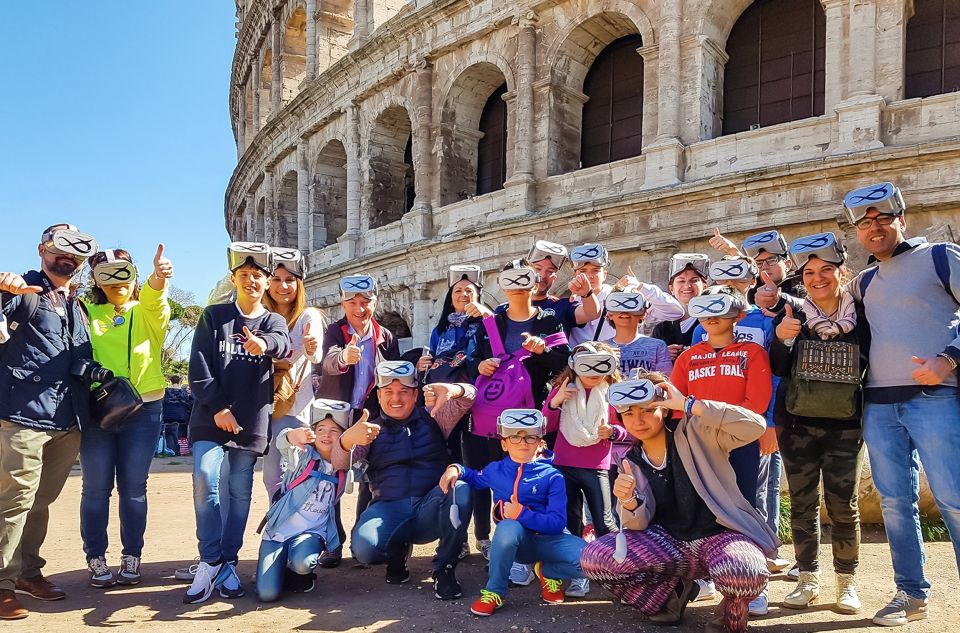
The tour is built to transition smoothly from VR to the real sites. After the headset experience, you’ll collect your ticket entry from staff and head into the Colosseum area.
Your included access covers:
- Entry to the Colosseum
- Entry to the Roman Forum
- Entry to the Palatine Hill
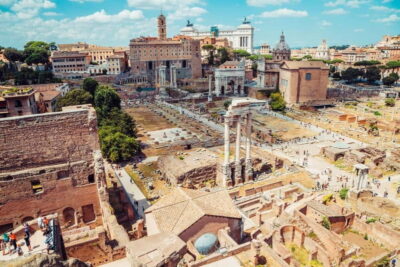
Then it’s on you. You can wander the Colosseum, pause where you want, and connect the VR scenes to the real stones. This is a big deal because the Colosseum, Forum, and Palatine Hill each reward slow looking. If you’re forced into a tight group route, you lose that “oh wow” moment when details click.
Also, skipping the ticket line is part of the value. You’re not paying extra just to hear history. You’re paying to save time and energy so you can spend that time where it counts: actually seeing the ruins.
One practical tip: this is a lot of space and a lot of walking. If your group splits energy levels (one person wants every viewpoint, another wants the next shade patch), self-guided time helps. You can do your own pace without feeling like you’re falling behind a live guide.
What you can and cannot access (and why VR helps)
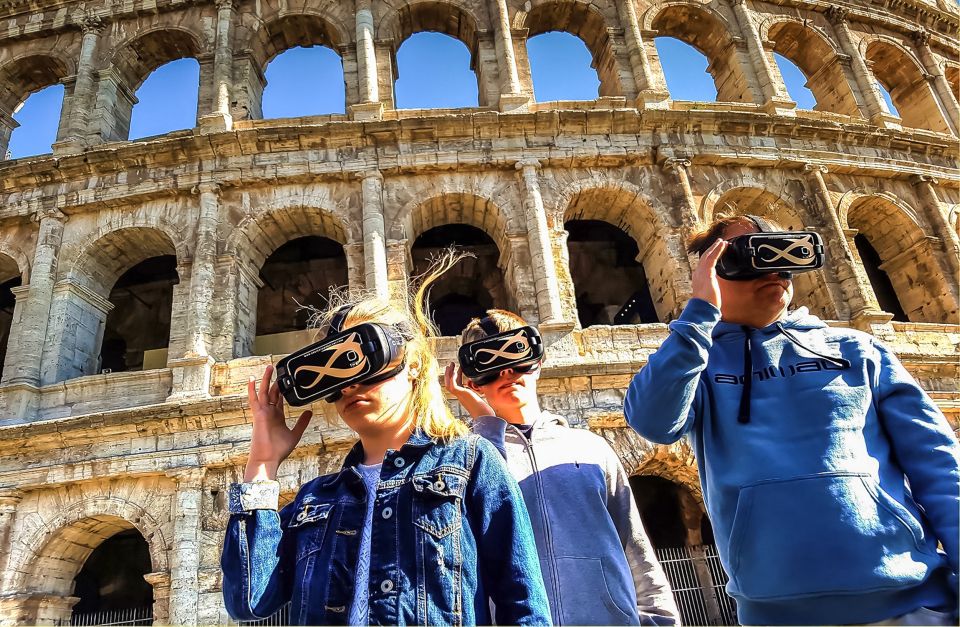
This matters for setting expectations.
Included physical access is to the Colosseum, Roman Forum, and Palatine Hill. What is not included:
- Access to the Underground
- Access to the Arena Floor
- Access to the Third Ring
So you’re not getting special behind-the-scenes access in real life. But here’s how the VR still justifies itself: the VR reconstructions cover the underground and arena perspective. You get the story and spatial understanding of those restricted zones without needing the more expensive physical access.
It’s a smart trade for many people. You get the “what’s under the floor” and “how it looked in action” context, then you can enjoy the included real areas without overpaying for limited entry.
VR comfort and motion-sickness reality check
Let’s be adults about it. VR can feel weird.
Some people can feel queasy with VR headsets. That doesn’t mean the experience is bad—it’s just a body response. If you’re prone to motion sickness in general, consider taking it slowly during the VR sequence. Stay hydrated, and know that the headset session is time-limited.
On the positive side, the VR experience is also praised for being well set up and supported. Hosts are described as friendly and professional when helping families and when explaining how to use the headset. Names that come up include Sara, Rebekah, Claudia, Eleonora, Claudia again (in a different context), and Kristina, along with others like Valeria and Ruben. The consistent theme is support and setup, which is what reduces the “I’m stuck wearing this thing” stress.
The price: where the $66 goes (and the value math)
At $66.07 per person, this can look like a big number until you break down what’s included.
Your booking includes:
- Oculus VR headset rental
- Audio commentary in multiple languages (English, Spanish, Portuguese, German, French, or Italian)
- An English-speaking VR assistant
- Entry to the Colosseum, Roman Forum, and Palatine Hill (an 18 euro ticket cost is included)
- A physical ticket and associated fee
- Booking service and fee
- Third-party insurance
Now add the benefit that you skip the ticket line for the Colosseum segment. The time you save matters in Rome. When you’re standing in the wrong line under the wrong sun, history feels less like history and more like endurance training.
So the value here is not only the ticket. It’s the ticket plus a structured pre-visit “visual education” that makes your self-guided exploring more meaningful.
Who should book this Colosseum VR plan
This fits best if you’re one of these types of travelers:
- Families with kids and teens. The VR approach can turn a monumental site into something people can actually picture. Multiple families mention great reactions from children around 8–13, and teens also seem to get it.
- People who want less group pressure. You get a guided-feeling setup and headset time, but the actual site exploring is self-paced.
- History fans who still want a modern storytelling tool. The VR is a way to “see it as it might have been,” without spending all day trying to imagine details from photos.
- Anyone trying to dodge peak chaos. Priority entry and line-skipping reduce the most painful part of the Colosseum visit.
It may not be ideal if your group strongly prefers an all-live, traditional guided tour every minute. This experience specifically does not include a live guide for the onsite time. The audio and VR assistant are your main interpretive tools.
Tips to make your visit smoother
A few practical notes will help you enjoy this more:
- Wear comfortable shoes. You’ll do real walking after the VR portion.
- Don’t bring luggage or large bags. These aren’t allowed, so keep it light.
- Bring ID for children (passport or ID card).
- Know the VR happens outside. For security, the VR portion is not inside the monument.
- If you’re sensitive to VR, plan accordingly. Take it at an easy pace and be ready to pause.
Should you book this Colosseum Access and Self-Guided VR Tour?
Yes, if you want a smoother start and a more meaningful visit. I think this works especially well when you’re visiting multiple big sites in one day, because the VR helps you make sense of what you’ll see next. The combination of structured 72 AD storytelling and real access to the Colosseum plus the Forum and Palatine Hill is a strong value play.
Book it if you:
- want to skip long lines,
- like self-paced exploring,
- and enjoy visual explanations that make ancient spaces click.
Skip it if you:
- need a live guide for the entire onsite experience,
- or know you’re very prone to VR motion sickness and can’t tolerate headsets.
If you’re in the middle—curious, time-conscious, and ready to picture ancient Rome—the VR lead-in is exactly the kind of modern tool that makes a classic site feel new.
FAQ
Where is the meeting point?
You meet at the Arch of Constantine, on the side of the Colosseum. Look for staff holding a black flag with the words Ancient and Recent.
How long does the experience take?
The full experience is 2 hours. Start times vary, so check availability for the specific slot you want.
Is there a live guide?
No live guide is included. You get VR audio commentary and help from an English-speaking VR assistant.
What languages are available for the audio commentary?
Audio commentary is available in English, Spanish, Portuguese, German, French, or Italian, depending on what you choose during booking.
What sites can I visit after the VR portion?
Your ticket includes entry to the Colosseum, Roman Forum, and Palatine Hill, and you explore them at your own pace.
Is the VR experience inside the Colosseum?
No. The virtual reality experience is held outside the monument for security reasons.
Is access to the Underground, Arena Floor, or Third Ring included?
No. Access to the Underground, Arena Floor, and Third Ring is not included for the physical visit.
Is this tour wheelchair accessible?
Yes, the activity is wheelchair accessible.
What are the rules on bags and minors?
You can’t bring luggage or large bags. Unaccompanied minors are not allowed.