REVIEW · LE DOMUS ROMANE DI PALAZZO VALENTINI
Rome: Palazzo Valentini Roman Domus Multimedia Experience
Book on GetYourGuide →Operated by TOURISTATION · Bookable on GetYourGuide
Rome’s gone quiet. Then the Domus wakes up.
I love the way the VR reconstruction brings Roman rooms, mosaics, and decorated floors into view without you needing to guess what you’re looking at. I also like the built-in learning flow: a multimedia video first, then headset-guided exploration where everything feels linked—Ancient, medieval, and modern layers of the same area. One thing to consider: this is technology-forward, and it comes with limits. It’s not suitable for claustrophobia and not for wheelchair users, and there’s a built-in gap between the video and the Domus start.
Before you do anything Roman, you’ll meet at TOURISTATION ARACOELI in Piazza D’Ara Coeli. Look for the fountain and orange flags in front of the office entrance. After a 25-minute multimedia video shown inside the office, the Domus visit begins an hour later, so plan your schedule accordingly and don’t stack another must-do right after you think the tour ends.
At $35 per person for a 2-hour experience, you’re paying for access plus the full VR/audio setup: admission to the Ancient Roman Domus museum, a multimedia video, and an audioguide headset (with a city app audio download too). If you select the FOROF option, you add an archaeology-meets-contemporary-art stop with an olfactory element—worth it if you like art, sensory experiences, and the story behind preservation.
In This Review
- Key Things You’ll Notice Right Away
- Finding The Meeting Point Like a Local
- The Pre-Video: Your 25-Minute Rome Reality Check
- VR At Palazzo Valentini: Where The Domus Comes Back to Life
- The Trajan’s Column Feature: Bas-Reliefs With a Close-Up Plan
- Optional FOROF: Archaeology, Art, and Even the Sense of Smell
- What You Actually Get in the $35 Ticket
- How Long It Takes, and How to Fit It Into Your Day
- Who This Domus VR Experience Is For (and Who Should Skip)
- Should You Book Palazzo Valentini’s Roman Domus?
- FAQ
- Where do I meet for the Palazzo Valentini Domus experience?
- How long is the experience?
- What’s included in the ticket price?
- Is the FOROF experience included automatically?
- What languages are available?
- Do I need to download anything on my phone?
- Is it wheelchair accessible or suitable for claustrophobia?
- Are pets or large bags allowed?
Key Things You’ll Notice Right Away
- VR rooms and Roman interiors: You’ll see virtual reconstructions of walls, peristyles, kitchens, baths, furnishings, and decorations.
- Mosaics and polychrome floors: These are front and center, not background details.
- A video warm-up inside the tourist office: A 25-minute multimedia overview connects major Rome sights like the Colosseum and Roman Forum.
- Trajan’s Column close-up: A virtual reconstruction lets you observe the bas-reliefs and the story of the Dacian campaign.
- Optional FOROF experience: Archaeology + contemporary art + a specific scent designed to evoke place.
- Tech means limits: No wheelchairs, and claustrophobia is a deal-breaker for this setup.
Finding The Meeting Point Like a Local
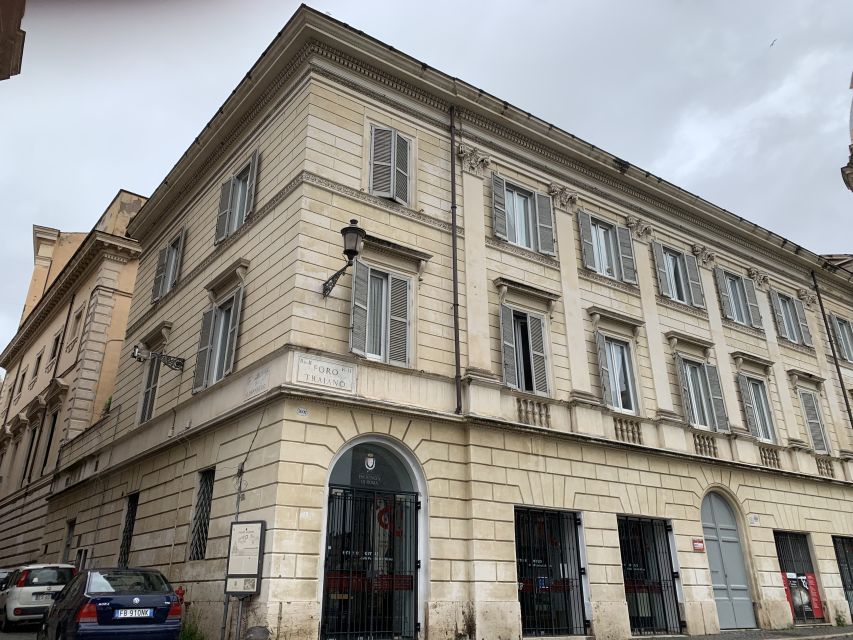
You start at TOURISTATION ARACOELI, Piazza D’Ara Coeli, 16. The easiest clue is right in front: a fountain and orange flags by the entrance. It’s one of those locations where you can waste time if you arrive late or start searching after your time slot.
Once you’re in, expect the rhythm to be simple. You’ll watch a 25-minute multimedia video inside the office first. Then your Domus visit begins one hour later. That timing matters. If your plan is to sprint across Rome like a human stopwatch, build in slack here. I’d treat that hour as part of the experience block, even if you’re itching to get started.
Wear comfortable shoes. You’re outdoors in Rome before you ever put on the headset, and the museum entry expects you to move around enough to make footwear count. Also note the rules: pets are not allowed, and no luggage or large bags. If you’re traveling light, you’ll feel less stressed.
The Pre-Video: Your 25-Minute Rome Reality Check
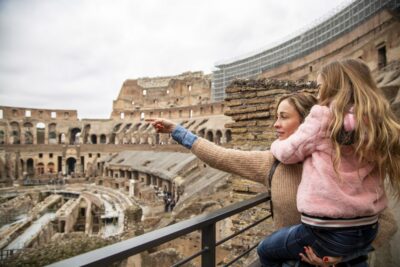
Inside the Touristation office, you begin with a multimedia video that frames what you’re about to see. It compares the past and the present through major Rome monuments: the Colosseum, Roman Forum, St. Peter’s Basilica, Castel St. Angel, Circus Maximus, and Ara Pacis.
This is more than a warm-up. It helps you understand something important: you’re not just viewing “ancient stuff.” You’re viewing one small slice of Rome that has changed its shape, role, and meaning over time. The experience aims to piece together how the area relates to ancient, medieval, and modern Rome, so the video sets the mental map.
Practical tip: if you speak one of the listed languages, pick it carefully for the best flow. The audio options include English, French, German, Italian, Spanish, and the broader headset list also includes Russian and Japanese. If you’re multilingual, choose the language that lets you catch the small context points without effort.
VR At Palazzo Valentini: Where The Domus Comes Back to Life
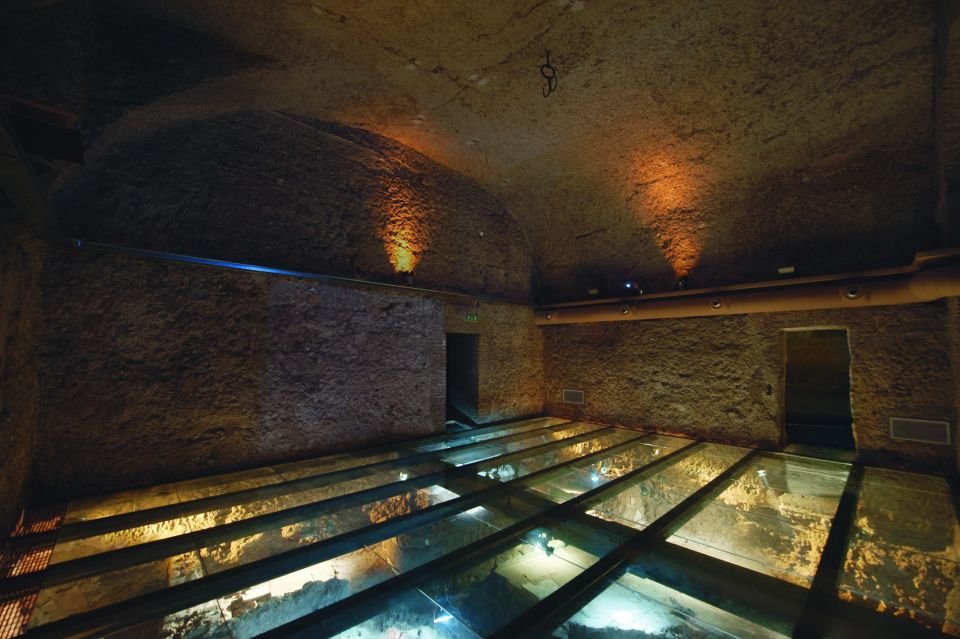
The main event is the VR headset tour of the ancient Roman Domus. This is where the experience stops being a lecture and starts being visual.
What you’ll see is the virtual reconstruction of spaces and details that are hard to imagine from ruins alone. Expect rooms, decorated walls, mosaics, polychrome floors, and a tour through functional areas like kitchens and baths. There’s also a look at peristyles and furnishings and decorations, which matters because Roman domestic life wasn’t just walls and floors—it was the whole layout and how people used it.
The big value here is clarity. Roman sites can be fragmented: stones remain, but the original colors and room connections often don’t. VR fills in those missing links, so you can follow the logic of a home—where people gathered, how spaces flowed, and what decorative choices signaled status.
One consideration: if you’re hoping for a classic guided walkthrough where a human guide points out details you can physically inspect, this is not that format. You’re doing a museum admission plus headset tour, with audio guidance and a city app download. That can be fantastic for understanding the whole structure, but it’s also a reminder that the most detailed part is the reconstruction you see through the headset.
The Trajan’s Column Feature: Bas-Reliefs With a Close-Up Plan
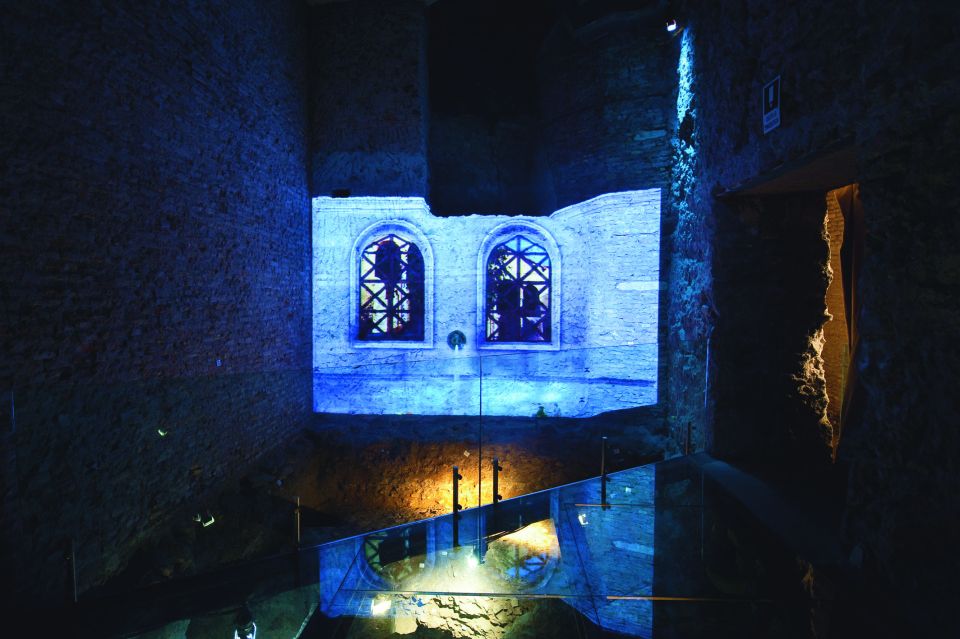
Another standout component is the virtual reconstruction related to Trajan’s Column. You get a way to observe how the column looked in earlier times, plus an emphasis on close-up bas-reliefs.
The story element is clear: the bas-reliefs depict the Roman military campaign, specifically the conquest of Dacia—modern-day Romania. If you’ve ever stared at marble from a distance and wondered what you were actually looking at, this is the kind of setup that solves that problem.
Even if you know the basics of Trajan’s era, you may find that the bas-relief storytelling lands better when it’s presented as a visual sequence rather than a distant monument. It helps you connect sculpture to history as something narrated, not just admired.
Optional FOROF: Archaeology, Art, and Even the Sense of Smell
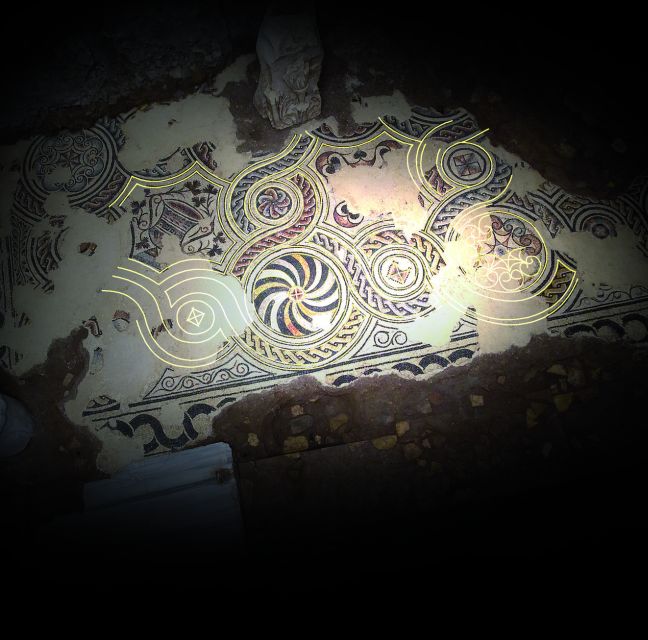
If you want more than the Domus, check the FOROF option. This is a separate layer added to your visit, and it has a distinct personality.
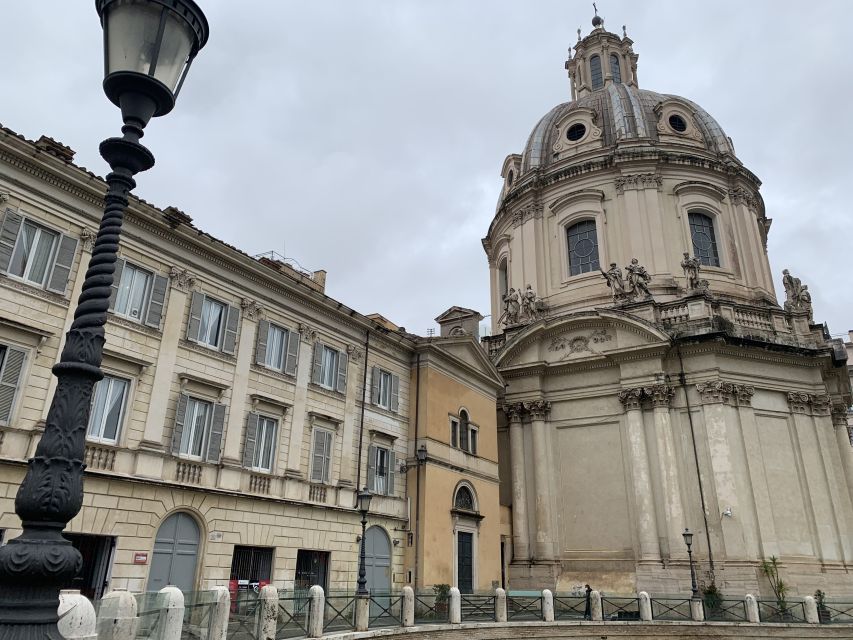
FOROF (founded by Giovanna Caruso Fendi) is described as the first permanent and continuous reality in Rome that links contemporary art and archaeology through mutual regeneration. It’s located at Palazzo Roccagiovine, opposite Trajan’s Column at the Imperial Fora.
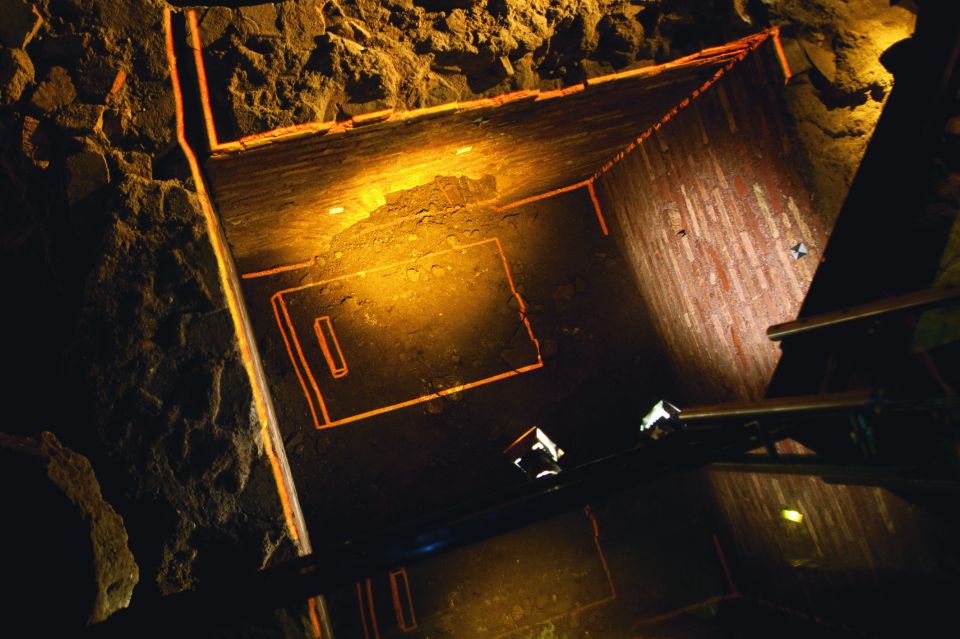
Inside FOROF, there are preserved archaeological elements in the hypogeum environments. You’ll find colored marble connected to the Basilica Ulpia pavement, plus remains of the eastern apse dating to the 2nd century A.C. That detail matters: this isn’t just a gallery sitting next to archaeology. It preserves part of it, and the art is presented in dialogue with the site.
On the art side, the experience also references an exhibition project called Nimbus Limbus Omnibus by Bartolomeo Pietromarchi, described as collective and site-specific in dialogue with the Basilica Ulpia setting.
Then there’s the part that turns heads: ol-factory storytelling. FOROF includes an olfactory experience developed by Laura Bosetti Tonatto, known as a professional nose. The idea behind FOROF ESSENZA is to return the spirit of a place, shaped as a cultural and social tale of universal value tied to freedom.
If you like experiences where art doesn’t just look pretty but tries to build a memory, the FOROF add-on is where you’ll feel it most. If you’re not into sensory art, you might treat it as optional flavor rather than the core course.
What You Actually Get in the $35 Ticket
Let’s talk value with real numbers and real components.
Your ticket price is listed at $35 per person, and the scheduled experience is 2 hours. Included items are the practical stuff that makes or breaks a plan like this:
- Admission ticket to the Ancient Roman Domus museum
- A 25-minute multimedia Ancient Rome video
- An audioguide headset for the Domus
- A smartphone city app audioguide download
- The FOROF experience only if you select that option
What’s not included:
- Food and drinks
- Transportation
- Any guided tour at Palazzo Valentini (so you’re relying on the headset/audio format rather than expecting a separate human-led tour included)
Is it worth it? For me, the answer depends on how you like to learn.
If you enjoy turning confusing ruins into a full scene, this is strong value. You’re paying for access plus a guided reconstruction experience that helps you see mosaics, floor colors, and room layouts as they likely looked. If you prefer hands-on, classic interpretation with minimal tech, you may feel like a chunk of your money goes toward VR rather than toward a traditional guided walk.
How Long It Takes, and How to Fit It Into Your Day
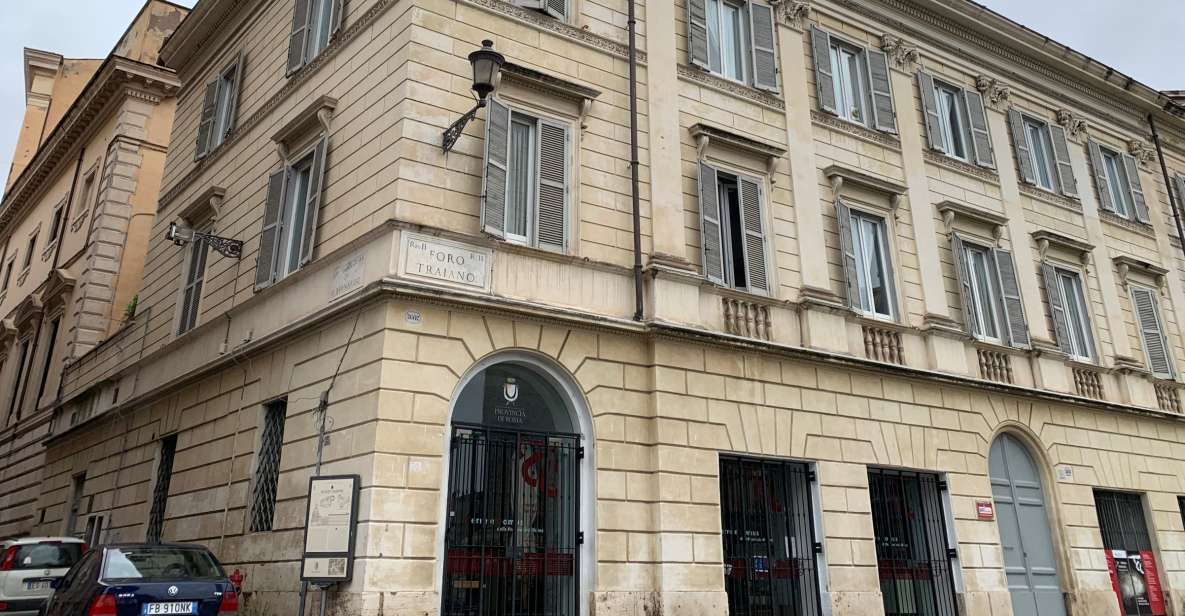
The total duration is 2 hours, but the experience is split by design. You watch the 25-minute multimedia video, then the Domus visit begins one hour later. That means the full block on your schedule feels like it starts earlier than your Domus headset moment.
So when should you place it in your Rome day?
- Great for mornings or early afternoons when your energy is higher and lines or crowds are manageable.
- Also a solid option if weather or heat makes outdoor exploring unpleasant, because the VR/audio portion is indoors.
If you’re the type to overbook, resist. The built-in waiting means you’ll want a nearby plan that doesn’t require you to rush.
Who This Domus VR Experience Is For (and Who Should Skip)
This is a great fit if you:
- Like VR-style reconstructions that help you visualize what ruins might have looked like
- Want to understand domestic Roman life through layout and decoration—mosaics, peristyles, baths, kitchens
- Enjoy history connected to specific storytelling, like the bas-reliefs on Trajan’s Column
It’s not a great fit if you:
- Have claustrophobia, since you’ll be wearing a VR headset
- Use a wheelchair, since it’s not suitable for wheelchair users
- Want a traditional guided tour as the main format, since the experience is built around audio and VR rather than a separate included guide
Also, keep in mind the rules: no large bags, and pets aren’t allowed. If you’re traveling with daypack only, you’ll have a smoother time.
Should You Book Palazzo Valentini’s Roman Domus?
I’d book it if you’re excited by reconstructions and you want a clear view of Roman interiors—especially the mosaics, polychrome floors, and everyday spaces like baths and kitchens. The Trajan’s Column component is also a strong reason to choose this ticket, because it makes bas-reliefs feel readable rather than distant.
I’d think twice if you’re sensitive to VR (claustrophobia is the key red flag here) or if you strongly prefer a classic guided walk with minimal technology. In that case, the reconstruction-focused format may not match what you’re craving.
If you can handle VR comfortably and you want a structured way to understand one of Rome’s domestic-world layers, this is a solid use of time—and a good value for the amount of interpretation you get in 2 hours.
FAQ
Where do I meet for the Palazzo Valentini Domus experience?
Meet at TOURISTATION ARACOELI, Piazza D’Ara Coeli, 16. There is a fountain and orange flags in front of the office entrance.
How long is the experience?
The duration is listed as 2 hours. Starting times depend on availability.
What’s included in the ticket price?
Included are admission to the Ancient Roman Domus museum, a 25-minute Ancient Rome multimedia video, an audioguide headset, and a city app audioguide download on your smartphone.
Is the FOROF experience included automatically?
No. FOROF is included only if you select the FOROF option.
What languages are available?
The audio is listed as available in English, French, German, Italian, Spanish, Russian, and Japanese. For the Palazzo Valentini experience specifically, the languages listed are English, Italian, Spanish, French, and German.
Do I need to download anything on my phone?
Yes. The city app audioguide is available as a download on your smartphone.
Is it wheelchair accessible or suitable for claustrophobia?
No. It is not suitable for wheelchair users, and it is not suitable for people with claustrophobia.
Are pets or large bags allowed?
Pets are not allowed. Luggage or large bags are also not allowed.