REVIEW · COLOSSEUM, FORUM & PALATINE TOURS
Colosseum Underground All Access Tour with Ancient Rome
Book on GetYourGuide →Operated by T&T Empire · Bookable on GetYourGuide
Underground Rome feels unreal, and this skip-the-line Colosseum tour also lets you stand on the arena floor with big views from Palatine Hill. You’ll get a tight route with expert guidance plus headsets so you don’t miss the stories while you’re walking. One catch: the phrase all access can be confusing, because some tour options include the Colosseum/Forum/Palatine but not the underground.
I especially liked the practical guidance style—your guide keeps the group together and sets a manageable pace, which matters when the Colosseum is packed. Guides like Manuela, Georgia, and Mandela are mentioned for pointing out the best vantage spots and using visuals to help you picture what you’re looking at.
Still, plan for a lot of steps and uneven ground, and this tour is not suitable for wheelchair users. Also, double-check your booking option for the underground, because that’s the difference between a good Colosseum visit and the one that hits your history bucket list hard.
In This Review
- Key things I’d plan around
- What the Colosseum Underground All Access Tour Really Includes
- Meeting Point at Largo Gaetana Agnesi: Find the Yellow Flag
- Colosseum Dungeons and Underground Chambers (30 minutes)
- Stepping onto the Arena Floor (20 minutes)
- Colosseum Exploration and the 1st/2nd Levels (45 minutes)
- Palatine Hill: Imperial Residences and Views over the Forum (45 minutes)
- Roman Forum on Foot: Via Sacra, Temples, and Politics (30 minutes)
- Why This Tour Feels Like Real Value at $93.57
- What to Bring, What to Expect, and What to Skip
- Who Should Book This (and Who Might Want a Different Tour)
- Should You Book This Colosseum Underground Tour?
- FAQ
- How long is the Colosseum Underground All Access tour?
- What does the tour include besides the Colosseum?
- Does every option include the Colosseum underground?
- Where do we meet and how do we find the group?
- What should I bring for the tour?
- Is the tour refundable if plans change?
Key things I’d plan around
- True underground access depends on the exact option you select
- Arena floor time gives you a rare perspective on where gladiators fought
- Palatine Hill panoramic views connect the elite homes with the Forum below
- Via Sacra + key landmarks help you understand how Rome worked
- Small-to-mid-sized groups (up to about 14) keep the experience more personal
- Headsets and radios make the tour easier to follow in a loud crowd
What the Colosseum Underground All Access Tour Really Includes
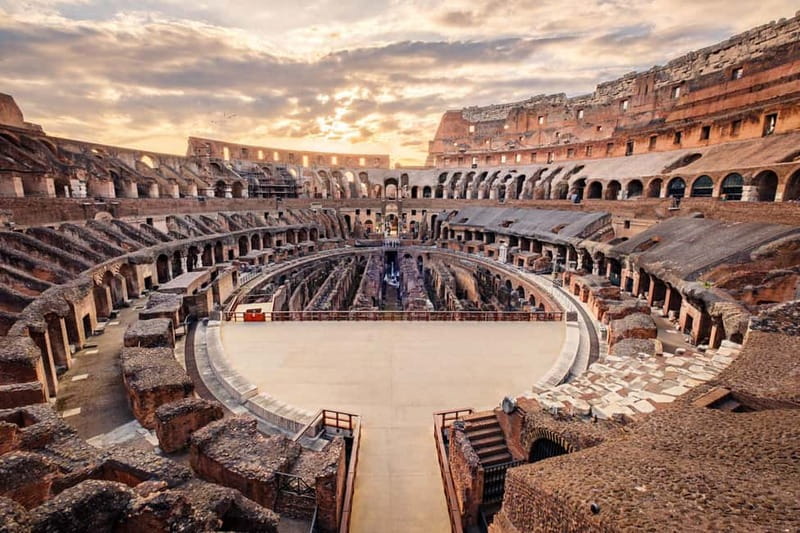
This tour is built around one goal: getting you past the usual “standing around” experience and into the Colosseum’s more restricted spaces.
The big headline is the Colosseum Underground portion—tunnels, dungeons, and chambers where animals and gladiators awaited their fate. But here’s the part that can trip people up: the “underground” access is not automatically included in every version of the Colosseum tour name.
If you choose an option described as arena + Roman Forum + Palatine Hills only, it may not include the underground at all. So before you pay, confirm you selected the version that explicitly includes underground access. If you don’t, you can end up with a fantastic tour that simply misses the most distinctive part.
Once you have the right option, the route is straightforward and efficient: Colosseum underground → arena floor → Colosseum exploration → Palatine Hill → Roman Forum.
You can also read our reviews of more tours and experiences in Rome.
Meeting Point at Largo Gaetana Agnesi: Find the Yellow Flag
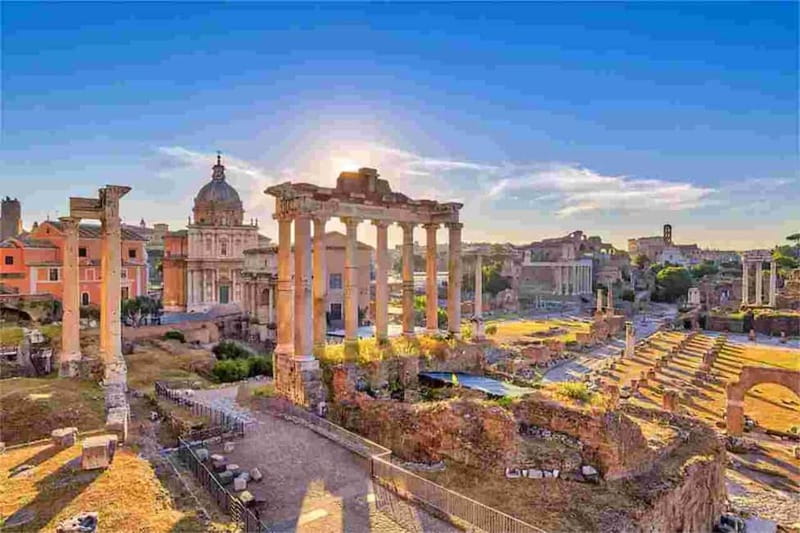
You start at Largo Gaetana Agnesi, at a terrace above the Colosseum Metro Station. The meeting point is on the raised area in the center of the square, and your staff member will be holding a yellow flag with a black T.
Practical tip: if you’re standing at street level in front of the Metro entrance, go upstairs first. A lot of stress in Rome tours comes from meeting-point confusion, and this one is easier if you arrive a little early and locate the flag before you move on with your day.
The tour ends back at the meeting point area, but your itinerary also notes two drop-off locations at the Roman Forum and Palatine Hill—so you’ll likely finish with an easy next step to keep exploring on your own.
Colosseum Dungeons and Underground Chambers (30 minutes)
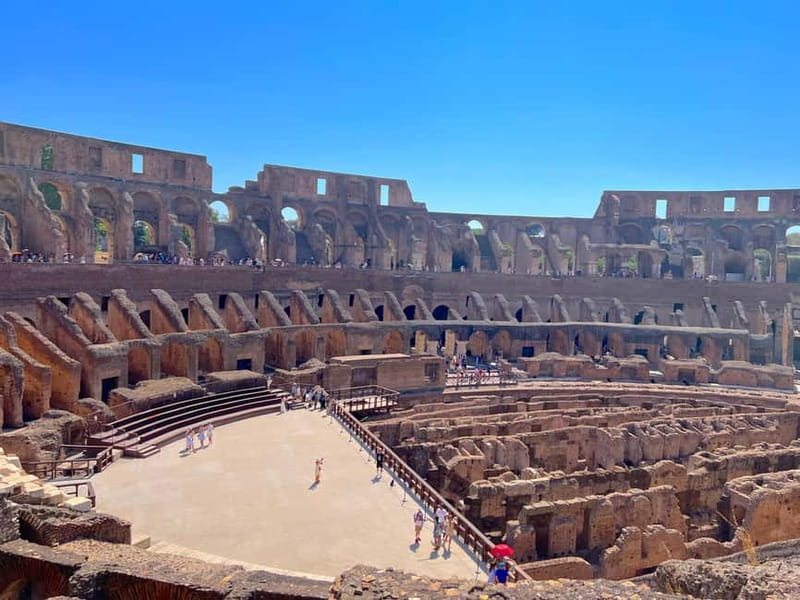
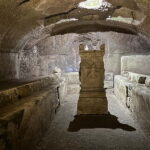
Stop 2 is the Colosseum Underground segment, with about 30 minutes led by your guide. This is where the mood shifts. The Colosseum becomes less postcard and more machine: corridors, holding areas, and the physical reality of staging ancient spectacles.
This section works best if you go in with a simple mindset: look for the pathways—where performers and animals would have moved—then connect it to what you later see above ground.
Expect tight storytelling that helps you understand why the underground mattered. The Colosseum wasn’t just an arena; it was a whole system. And with your guide explaining the purpose of different spaces, you get a clearer sense of how the day’s show likely ran.
Because Rome sites can be loud, you’ll have headsets and radios. That matters here. You don’t want to keep asking your guide to repeat details while you’re standing in the dimmer, more enclosed parts of the complex.
Stepping onto the Arena Floor (20 minutes)
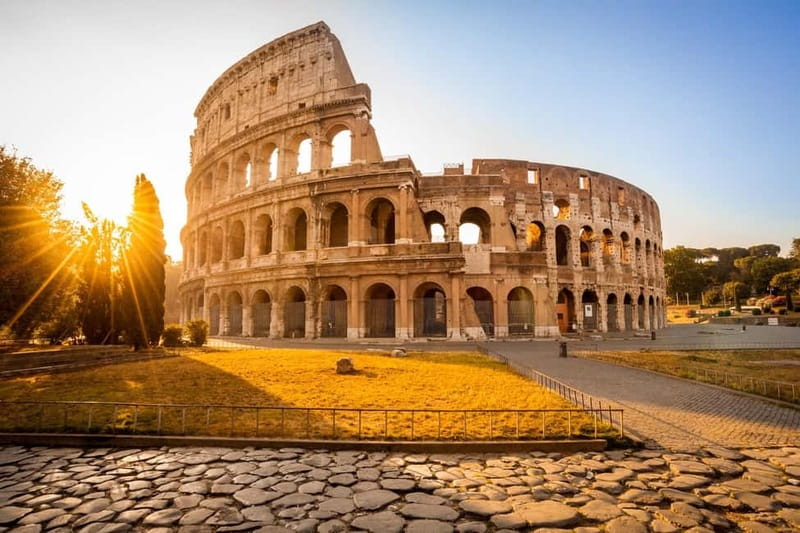
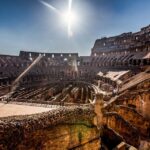
Stop 3 is the arena floor experience, about 20 minutes. This is the part that makes people go quiet for a moment.
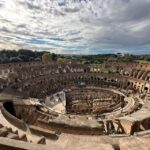
Standing inside the Colosseum’s ground-level view puts scale into perspective. You’re closer to the reality of the space, so the architecture stops being abstract. Instead, you can imagine the choreography of a fight: where crowds would have been focused, where sightlines funnel attention, and how the design magnifies drama.
It’s also a strong photo moment, but aim for memory over camera speed. The best use of this time is to glance up at the tiers, then look back down and think: where would the fighters have entered, and how would the noise have carried?
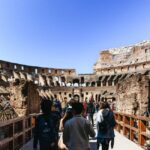
Colosseum Exploration and the 1st/2nd Levels (45 minutes)
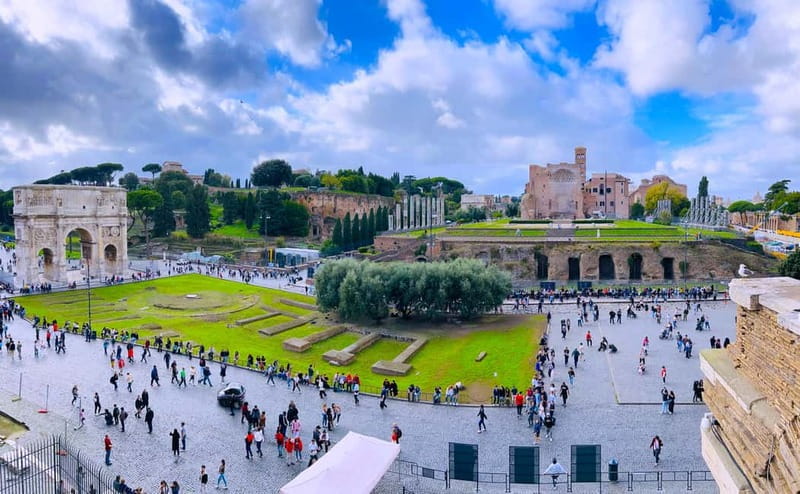
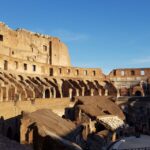
Stop 4 is the classic “Colosseum above ground” portion, about 45 minutes. This is where your guide typically brings the building’s story together—how the levels functioned for spectators and how the design shaped the crowd experience.
You’ll also get access to areas that many visitors don’t see. The tour is positioned as restricted-area access, and you should feel that in the route. It’s not just walking the main floor loop; you’re getting a fuller sense of the Colosseum’s layout and audience geometry.
One of the best things you can do during this part is slow down for the transitions. The guide’s narration often explains what you’re seeing right at the moment you can actually connect it—rather than throwing facts at you while you’re rushing between landmarks.

Palatine Hill: Imperial Residences and Views over the Forum (45 minutes)
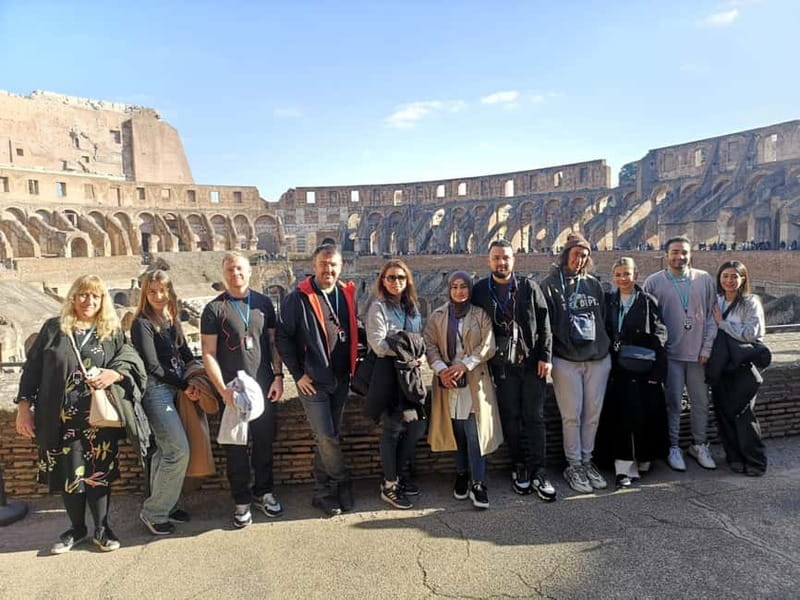
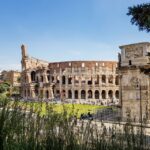
After the Colosseum, you climb to Palatine Hill for about 45 minutes. Palatine is Rome’s “power address.” This is where emperors and aristocrats built grand residences, and you’ll walk among remnants of imperial homes, temples, and gardens.
Your guide focuses on the mythology too—think Romulus and Remus—and then ties it to how Palatine became the elite center of the city. Even if you’re not a mythology person, it helps because it explains why Palatine sits at the emotional center of Rome’s origin stories.
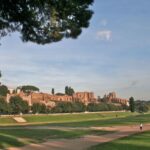
And yes, the views are a major payoff. You’ll look down toward the Roman Forum and also toward Circus Maximus. These viewpoints give you the geography. Without them, it’s easy to treat the Forum like a collection of ruins. With them, you see how the city spaces relate.
Practical note: Palatine is uphill and the route includes steps. If you’re traveling with someone who gets tired on slopes, plan to take water breaks when your guide pauses for grouping.
Roman Forum on Foot: Via Sacra, Temples, and Politics (30 minutes)
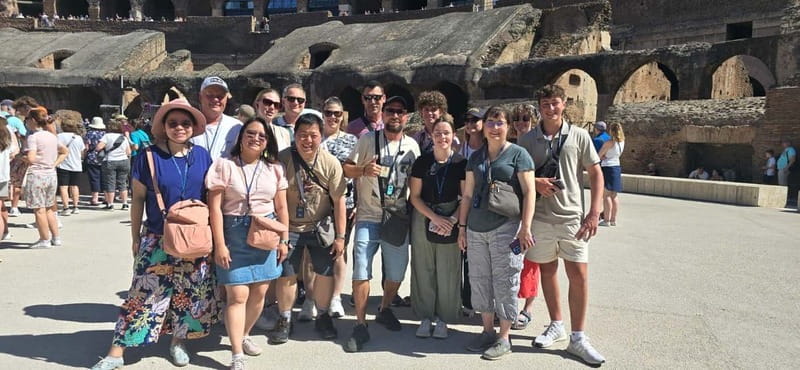
Stop 6 is the Roman Forum, about 30 minutes. If Palatine is power and status, the Forum is the working engine—political, social, and religious life packed into one area.
Your guide leads you along the Via Sacra, the street of triumphs. It’s a simple concept that makes a big difference: once you know this road is where victors paraded, it becomes easier to visualize ceremonies and processions instead of just looking at stones.
You can expect stops or mentions of major landmarks such as the Temple of Saturn, the Arch of Titus, and the Curia (Senate House). Your guide’s job is to connect these to the stories of how decisions were debated, power was displayed, and Rome ran day to day.
This is also where the headset advantage really shows. The Forum is an open-air maze. With clear guidance, you don’t waste time guessing which direction is the point.
Why This Tour Feels Like Real Value at $93.57
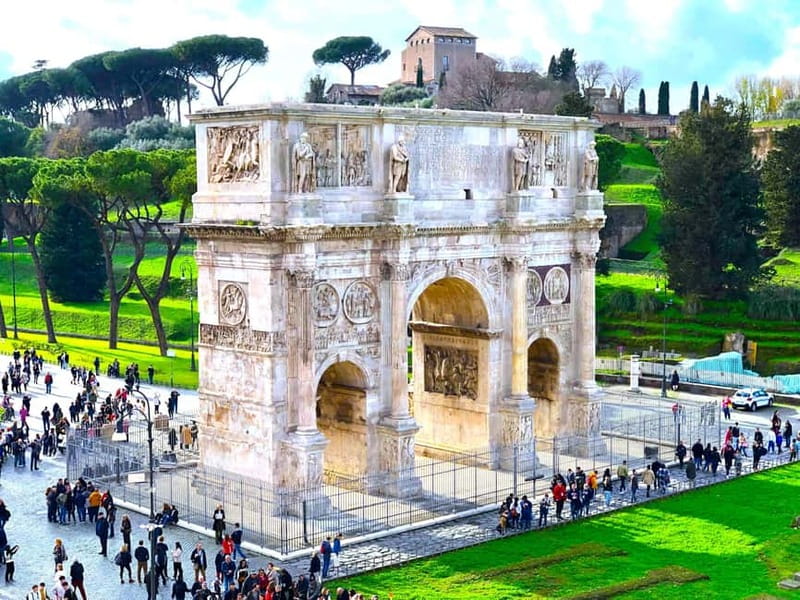
At $93.57 per person, this isn’t a budget experiment. It costs money because you’re paying for a lot of things that are hard to get any other way:
- Skip-the-line entry through a dedicated entrance
- Access to restricted spaces, including the underground areas (for the right option)
- Arena floor time, not just a pass-through
- Guided coverage of three big headline areas: Colosseum, Palatine Hill, and the Forum
- Headsets and radios, which improve the quality of the experience
So yes, you’re paying for convenience and access. But the real value is that you don’t have to assemble the whole day yourself. You get an ordered route and a guide who can explain what you’re seeing while it still makes sense in your head.
A good test for value: if you’d rather spend your first Colosseum visit in the wrong places—lines, crowded photo spots, and generic explanations—then self-guided might tempt you. If you want the Colosseum’s underground and the Forum’s street-level stories, paying for a guided plan usually wins.
What to Bring, What to Expect, and What to Skip
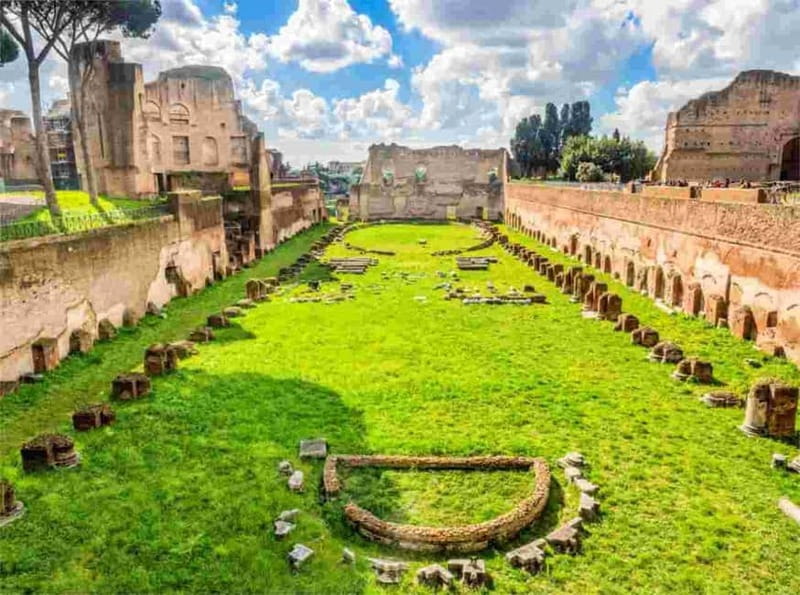
This is a walking-heavy outing. The tour structure is around 2.5 to 3 hours, but your body will likely feel it because of steps, uneven ground, and the need to keep pace with the group.
Bring:
- Passport or ID card (required)
- Comfortable shoes (non-negotiable)
- Hat and sunscreen
- Water
Not allowed:
- Luggage or large bags
- Drones
Accessibility note: it’s not suitable for wheelchair users. Even for visitors who use mobility aids, the combination of steps and uneven terrain can be challenging.
One more real-world tip: wear clothes you can move in. Rome ruins are beautiful, but they don’t care about your comfort plan.
Who Should Book This (and Who Might Want a Different Tour)
Book this if you want:
- The underground story and not just the main Colosseum route
- A guided explanation that connects architecture to how events worked
- A structured visit to Palatine Hill + Roman Forum in one go
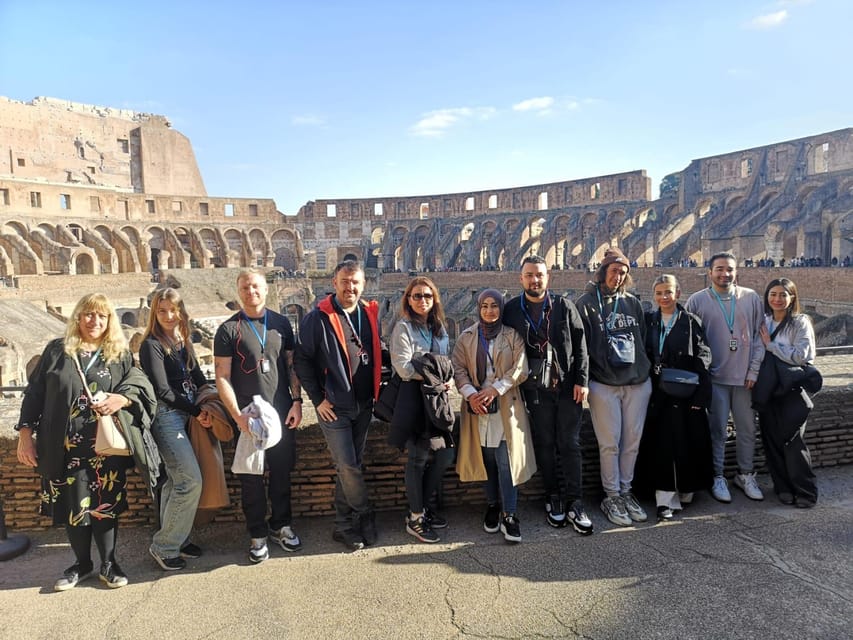
- A small-to-mid-sized group experience (around 14 guests) so the guide can keep track of everyone
You might choose something else if:
- You’re expecting a relaxed stroll with minimal steps
- You’re booking without carefully checking the underground option
- You need wheelchair-friendly access (this one isn’t set up for that)
If you’re traveling with kids or teens, this can still work well because the gladiator and spectacle angle usually grabs attention. Just keep in mind the walking pace—plan for breaks.
Should You Book This Colosseum Underground Tour?
Yes—with one big condition.
If you confirm your booking includes exclusive underground access, then this is one of the best ways to see the Colosseum’s “behind the curtain” side. The combination with Palatine Hill viewpoints and a guided Roman Forum walk turns it from a single sight into a connected story of how Rome organized power and spectacle.
If the underground isn’t included in your option, you’ll still get a meaningful tour of the arena and the two hills/Forum areas. But you’ll miss the most distinctive experience—the part that makes you feel like you’re walking through the building’s operational heart.
So: pick the right option, wear good shoes, bring your ID, and arrive early at the terrace with the yellow flag.
FAQ
How long is the Colosseum Underground All Access tour?
The tour lasts about 2.5 to 3 hours. Starting times depend on availability.
What does the tour include besides the Colosseum?
You also get guided visits to Palatine Hill and the Roman Forum, with entry included for both.
Does every option include the Colosseum underground?
No. One option includes the underground areas, while another option may be limited to the Colosseum arena plus Roman Forum and Palatine Hill only. Double-check your selected option to make sure underground access is included.
Where do we meet and how do we find the group?
Meet at Largo Gaetana Agnesi, on the terrace above the Colosseum Metro Station. Look for staff holding a yellow flag with a black T in the center of the raised area.
What should I bring for the tour?
Bring your passport or ID card, plus comfortable shoes, hat, sunscreen, and water.
Is the tour refundable if plans change?
You can cancel up to 3 days in advance for a 50% refund.