REVIEW · CATACOMBS & CRYPTS TOURS
Rome: Capuchin Crypt to Pantheon Tour
Book on GetYourGuide →Operated by Estaalia · Bookable on GetYourGuide
Bones and beauty in Rome, quickly. This Capuchin Crypt to Pantheon route turns a spooky start into a grand finish, with a real sense of how Rome keeps changing outfits. You’ll walk historic streets, hear legends, stop for the Trevi Fountain moment, and end inside one of the city’s most impressive buildings.
What I like most is how the tour strings together three very different experiences without feeling random. The Capuchin Crypt is the kind of place that makes you rethink what “art” can mean, and the Pantheon brings you back to scale—giant, ancient, and oddly comforting. Also, guides like Fabiana, Sarah, and Estefania got praised for making the stories clear, organized, and easy to follow.
One drawback to keep in mind: pacing and language can vary. In one instance the guide left people at the Pantheon due to a sudden Vatican moment, and in another, the French wasn’t strong enough to land every point. If you’re picky about timing or you need excellent French/English, I’d confirm language quality with the operator when you book.
In This Review
- Key Points You’ll Care About
- Why This Two-Hour Route Works (Capuchin Crypt to Pantheon)
- Capuchin Crypt: Bones, Symbols, and What to Expect Inside
- Trevi Fountain Stop: The Coin Moment Without Losing the Plot
- Finishing at the Pantheon: A Temple, a Church, and a Tomb
- The Guide Makes (or Breaks) the Experience
- Tickets, Skip-the-Line, and Value at $82
- What to Wear: Restrictions That Affect Comfort and Entry
- Who Should Book This Tour (and Who Should Skip It)
- Should You Book This Rome Capuchin Crypt to Pantheon Tour?
- FAQ
- FAQ
- How long is the Rome Capuchin Crypt to Pantheon tour?
- What stops are included on this tour?
- Are tickets included?
- Is hotel pickup and drop-off included?
- Are food and drinks included?
- What languages are available for the live guide?
- Is there a skip-the-line option?
- Is the tour suitable for wheelchair users?
- What should I wear or bring?
- Is free cancellation available?
Key Points You’ll Care About
- Skip-the-line access helps you spend time looking, not waiting.
- Capuchin Crypt + Pantheon are both ticketed highlights, so you’re not guessing how to get in.
- Trevi Fountain is included as a planned stop, not just a photo-op.
- Local storytelling focus: expect legends and history tied to what you’re seeing.
- Languages offered: English, Spanish, French (and the guide matters).
- Tight timeline: it’s a 2-hour walk, so comfortable shoes are non-negotiable.
Why This Two-Hour Route Works (Capuchin Crypt to Pantheon)
This tour works because it follows the way Rome itself feels. One minute you’re in a strange, macabre place that turns death into craftsmanship. The next you’re under Rome’s most famous dome, watching centuries overlap in one building. And in between, you get the Trevi stop—so you end with something people actually recognize.
You’ll also get value from the structure. A two-hour walking format means you get three big sites, plus a guide to connect the dots. Without that guide, you’d see two attractions and miss the “why this matters” thread running through both.
You can also read our reviews of more tours and experiences in Rome.
Capuchin Crypt: Bones, Symbols, and What to Expect Inside
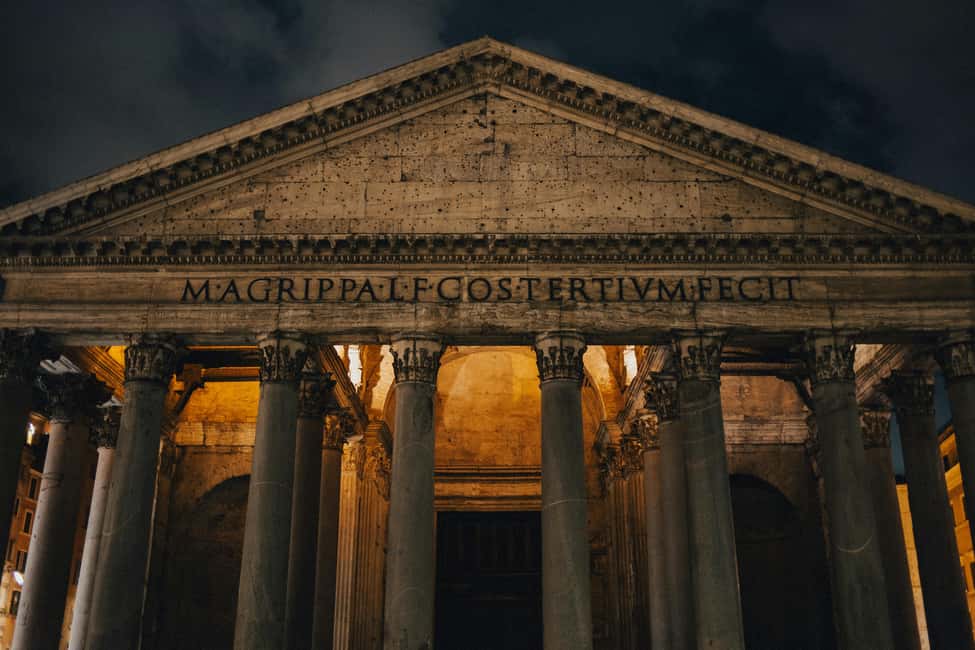
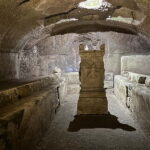
The tour starts at the Capuchin Crypt, where bones and religious artistry are arranged with an unsettling kind of purpose. It’s not just a collection. The way the materials are used turns the place into a conversation about mortality, faith, and visual storytelling.
What makes this stop special is that you’re walking into a fully themed environment. You can’t really “speed run” the crypt. Even if you keep moving, your brain keeps asking questions: Why is this arranged like that? What’s the intention behind these details? A good guide helps you notice the symbolism instead of just absorbing the shock.
One practical thing: the rules can affect your experience. In at least one case, an audio guide wasn’t accepted inside the crypt when someone tried to use it. If you’re thinking of bringing your own audio device, keep it simple and follow whatever the site staff allows during your visit.
What to watch for
- Expect a slower mental pace even if the tour moves quickly overall.
- Bring comfort for close, indoor viewing—this isn’t a quick “look and leave” stop.
- If you’re sensitive to the topic, consider how you handle dark subject matter in enclosed spaces.
Trevi Fountain Stop: The Coin Moment Without Losing the Plot
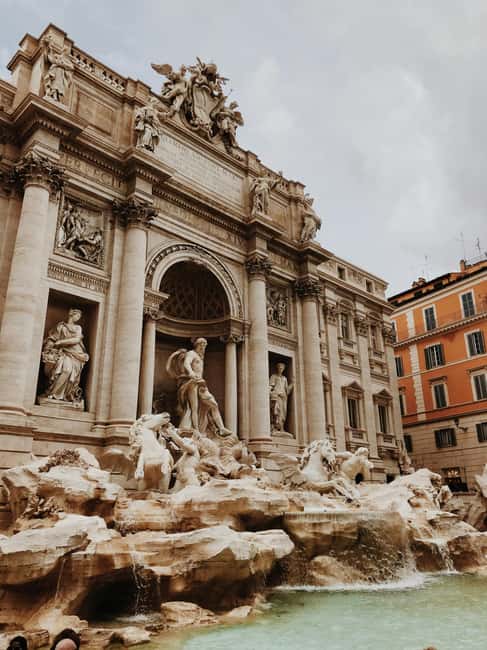
The Trevi Fountain stop is brief, but it’s positioned perfectly in the route. After the crypt’s heavy symbolism, Trevi feels like a reset. You get motion, crowd energy, and that grand baroque drama that Rome does so well.
You’ll be there at the moment people love: the tradition of tossing a coin for luck and return. The guide’s job here is to keep it from becoming only a ritual. You’ll get context for why this fountain matters and what to look for beyond the obvious photo angle.
Also, since it’s a guided tour, you’re not just herded from point A to point B with no explanation. The guide can help you understand how Trevi fits into Rome’s broader story—religion, power, and public art meeting at street level.
How to enjoy Trevi during a tour
- Don’t plan to “own” the perfect viewpoint. Plan to enjoy what you can see while you’re there.
- Wear shoes that handle crowd shuffle. You’ll be on your feet.
- If you want a second look, you’ll likely need to step out of the main flow after the tour group moves.
Finishing at the Pantheon: A Temple, a Church, and a Tomb
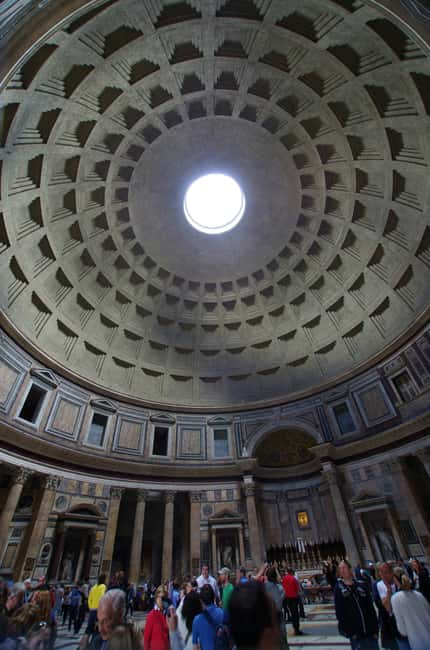
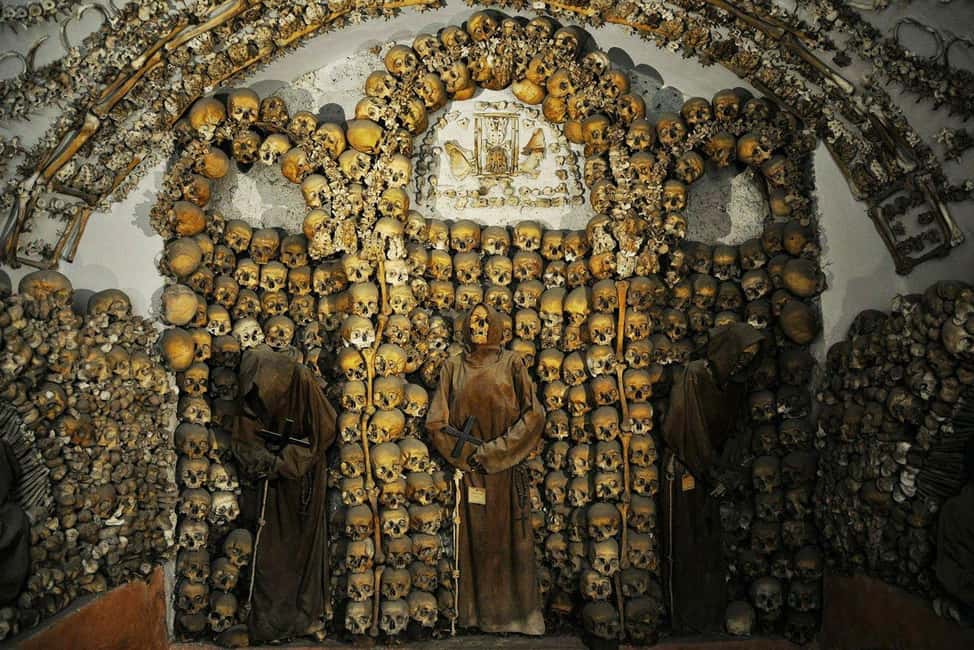
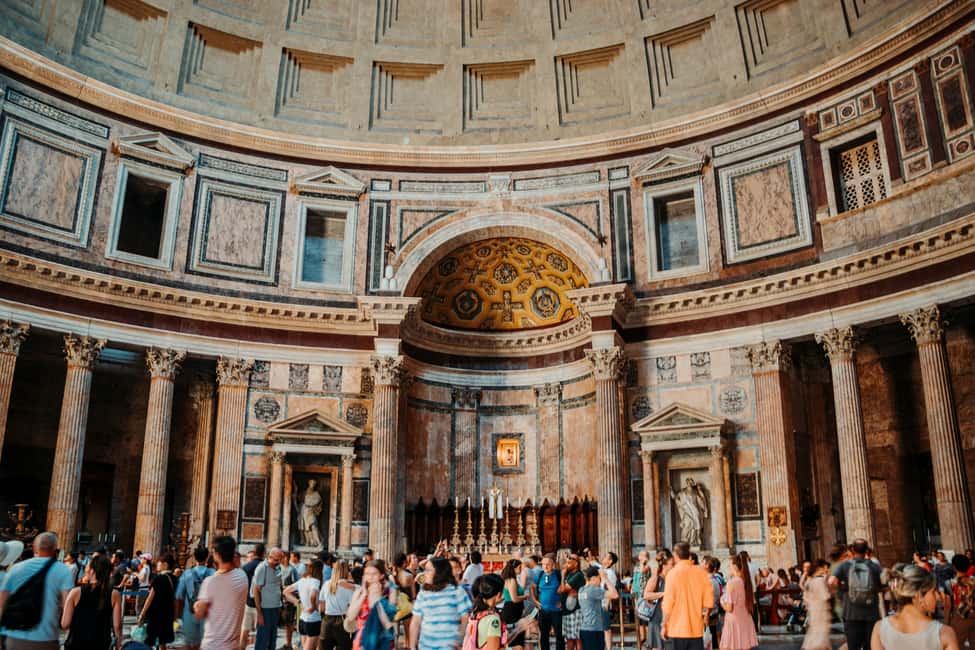
The tour ends at the Pantheon, and it’s a strong finish. This building dates to the period around 25–27 B.C., and the story of its survival feels like a miracle of architecture and reuse. It started as a temple for pagan gods. Later, it became a church—and it’s also tied to burial, which adds another layer to why it feels emotionally different than a typical ruin.
Inside, the Pantheon’s scale hits you fast: the dome, the space, the light. Even when you think you know what it looks like from pictures, your body still reacts when you’re standing there. A guide helps you connect the design choices to the building’s long life—what changed, what stayed, and what those shifts say about Rome’s priorities.
The most helpful part is usually the “from divine to mortal” thread. When you hear those stories in the right order, the Pantheon stops being a single monument and starts feeling like a timeline you can walk through. That’s what makes the ending land.
A useful expectation
- The Pantheon is big on awe, but it’s also big on rules. You’ll want to move with the group and respect site behavior so the whole tour keeps flowing.
- Because it’s a final stop, the tour can feel a little tighter. Don’t plan on lingering forever unless the guide gives you that flexibility.
The Guide Makes (or Breaks) the Experience
The tour lives and dies by interpretation. The crypt and the Pantheon are both visually powerful. But it’s the guide who helps you understand what you’re looking at and why it mattered to people back then.
From the guide names that came up, you can see the style they were praised for. Fabiana was highlighted for very instructive explanations. Sarah was described as friendly and part of why the visit felt like discovery. Estefania delivered lots of information in Spanish and stayed attentive to questions, which made people feel comfortable.
That said, language and pacing can vary. In one situation, the guide spoke French poorly enough that part of the commentary didn’t land. In another, the guide moved very fast from one crypt section to another and then left abruptly at the Pantheon because a new pope had been elected. Those aren’t typical “tour complaints” so much as reminders that Rome can surprise you—and your guide might have to adjust.
What you can do to protect your experience
- If you’re booking in English, Spanish, or French, make sure you’re comfortable with that language level.
- If you have questions, ask early. The later you leave them, the less likely you’ll catch the guide in a calm moment.
- If you want a slower pace, say so on the spot. A guide may be able to slow down without derailing the group.


Tickets, Skip-the-Line, and Value at $82
At $82 per person for 2 hours, you’re paying for more than a stroll. You’re paying for an expert guide plus entrance tickets to the Capuchin Crypt and the Pantheon, plus a planned Trevi Fountain visit. That matters because these aren’t just free-photo spots. You need access, and timed entry can be the difference between enjoying a site and stressing about getting in.
The skip-the-line note also helps your time math. In Rome, waiting can quietly eat up half your “sightseeing window.” With guided tickets and a smooth flow, you get more looking and less managing.
Is it “cheap”? Not really. But it’s fair if you value two things: expert storytelling and not spending your limited time figuring out logistics. If you already know Rome well and you’re comfortable navigating ticket rules on your own, you might be able to do this cheaper. But for most visitors, the guide + ticket combo is what turns three famous stops into a coherent experience.
What’s not included
- No food or drinks. Plan a snack break before or after.
- No hotel pickup/drop-off. You’ll need to get yourself to the start point and be ready for walking.
What to Wear: Restrictions That Affect Comfort and Entry
This is a walking tour, and the site rules matter. You’ll want comfortable shoes because you’re on foot through historic streets and inside attractions. The tour also lists restrictions on clothing and bags, which you should treat seriously.
Not allowed:
- Luggage or large bags
- Short skirts
- Sleeveless shirts
So pack like a minimalist. If you’re traveling with a bigger day bag, you may need to rethink it before arriving.
Not suitable for:
- People with mobility impairments
- Wheelchair users
Even if you’re generally mobile, keep the “tight and steady” mindset. This is a compact experience, and the route depends on movement and group coordination.
Who Should Book This Tour (and Who Should Skip It)
Book this if you want a time-efficient Rome hit that blends three standout sites. It’s especially good for first-timers who want both the famous and the odd: bones in one place and a soaring ancient dome at the end. If you like stories—legends, transformations, and why buildings changed over time—this tour format fits your brain.
It’s also a good match if you like structure. Two hours is long enough to get meaning, but short enough to keep you from burning a whole day on just one area.
Consider skipping if:
- You need step-by-step accessibility support beyond typical sightseeing.
- You’re very sensitive to dark or macabre themes like the crypt.
- You need a specific language quality guarantee. Because languages are offered in English, Spanish, and French, and the guide can vary, it’s worth choosing the language you’re most confident understanding.
Should You Book This Rome Capuchin Crypt to Pantheon Tour?
I’d book it if you want a guided, ticketed way to see the Capuchin Crypt and the Pantheon in one compact outing, with Trevi Fountain handled as part of the story instead of just a stop to rush through. The $82 price makes sense when you count guide time and paid entry, and the skip-line help is a practical bonus.
I’d hesitate only if you’re worried about pace, language consistency, or you’re using mobility aids. Otherwise, this is a solid “two hours well spent” option in Rome—spooky at the start, awe at the end, and plenty of legends in the middle.
FAQ
FAQ
How long is the Rome Capuchin Crypt to Pantheon tour?
It’s listed as 2 hours.
What stops are included on this tour?
You’ll visit the Capuchin Crypt, Trevi Fountain, and end at the Pantheon.
Are tickets included?
Yes. The tour includes entrance to the Capuchin Crypt and Pantheon.
Is hotel pickup and drop-off included?
No, hotel pickup and drop-off are not included.
Are food and drinks included?
No. Food and drinks are not included.
What languages are available for the live guide?
The live guide is available in English, Spanish, and French.
Is there a skip-the-line option?
Yes. The tour includes skip-the-ticket-line access.
Is the tour suitable for wheelchair users?
No. It is listed as not suitable for people with mobility impairments and wheelchair users.
What should I wear or bring?
Bring comfortable shoes. Avoid short skirts and sleeveless shirts, and don’t bring luggage or large bags.
Is free cancellation available?
Yes. You can cancel up to 24 hours in advance for a full refund.