REVIEW · COLOSSEUM, FORUM & PALATINE TOURS
Rome: Colosseum, Forum and Palatine Hill
Book on GetYourGuide →Operated by BIBBO TOURS · Bookable on GetYourGuide
Three monuments, one efficient plan. This tour strings together the Colosseum, Roman Forum, and Palatine Hill so the names you see on maps turn into places you can picture. I love the skip-the-line approach with a separate entrance, because you lose less time to ticket chaos and more time soaking up the scale.
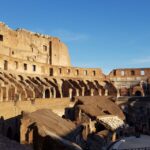
I also love how the route is built around viewpoint moments. You start at the Colosseum’s first and second levels, where you get a feel for who sat where and what Rome looked like from inside the amphitheater.
One drawback to plan around: the meeting point can be a little tricky to spot, and you must arrive about 15 minutes early. If you show up late, you may not make the group and your spot won’t be adjusted on the spot.
In This Review
- Key highlights worth booking for
- A route that makes Ancient Rome make sense fast
- Getting in smoothly: skip-the-line and the meeting-point reality
- Colosseum walkthrough: first-floor seating to second-floor views
- First level: understanding the crowd and the hierarchy
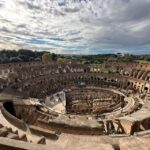
- Second level: panoramas and the amphitheater scale
- What to expect during the walk
- The Roman Forum: the day-to-day center of power
- Why the Forum section is worth your time
- A tip that makes the Forum more enjoyable
- Palatine Hill: imperial palaces and legend-level views
- Why this stop closes the loop
- Guides, pacing, and headsets: the stuff that changes everything
- Price and value: is $126.88 a good deal?
- What to bring and what not to pack
- Who this tour is best for
- Should you book the Colosseum, Forum, and Palatine Hill tour?
- FAQ
- How long is the Colosseum, Roman Forum, and Palatine Hill tour?
- Does the tour include skip-the-line entry?
- What’s included in the price?
- Where do we meet, and where does the tour end?
- Which languages are offered for the live guide?
- What do I need to bring for entry?
- Is transportation included to the meeting point?
Key highlights worth booking for
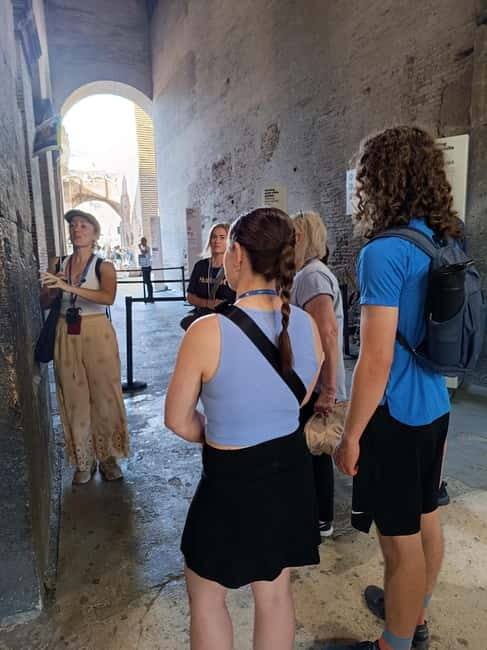
- Separate entrance skip-the-line access through licensed entry into the Colosseum
- Colosseum first and second levels focused on seating areas and panoramic views
- Guided Roman Forum walk through the ruins that shaped public life
- Palatine Hill stops for imperial context and city views
- Headsets included so you can actually hear the guide in crowded spaces
- Top guide rotation is a real pattern, with names like Marcello, Ricardo, Laura, Ilianara, and Claudia showing up often
A route that makes Ancient Rome make sense fast
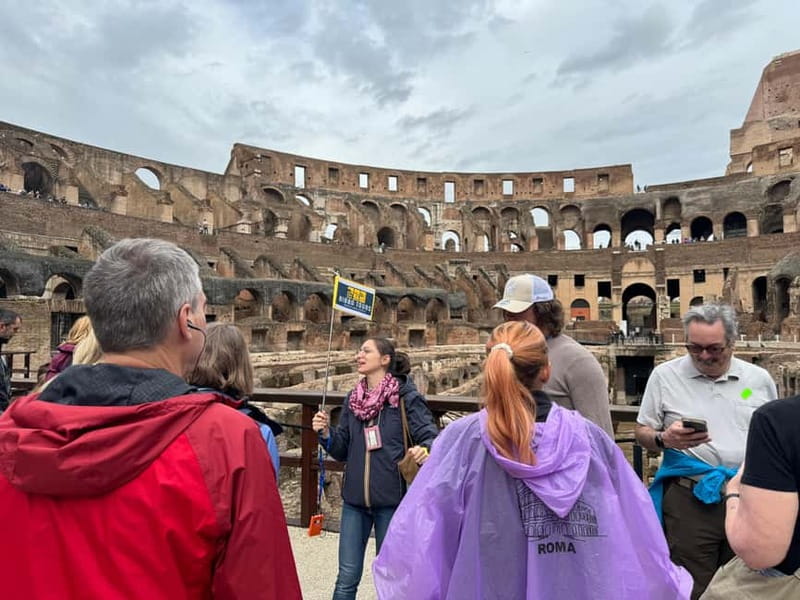
The Colosseum can be impressive on its own. The Forum can be haunting in a quiet way. Palatine Hill can feel like a “wait, this is where Rome began?” moment. What makes this specific tour work is the sequence and how the guide uses it to tell a single story across three spaces.
You’re not just moving from ruin to ruin. You’re getting a guided thread that links spectacle (the Colosseum), public power and daily life (the Roman Forum), and the imperial “who lived here” layer (Palatine Hill). That is what turns a checklist visit into something you can talk about after the tour.
The pacing is also designed for real visitors. The total time is about 2.5 hours, split into focused blocks, so you don’t feel stuck in one place for too long.
You can also read our reviews of more tours and experiences in Rome.
Getting in smoothly: skip-the-line and the meeting-point reality
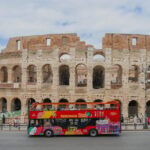
This tour includes Colosseum entry and uses a separate entrance to help you avoid the worst of the lines. You also get headsets, which matters a lot here. When you’re inside a crowded historic site, talking over groups without amplification is a losing game, and headsets fix that.
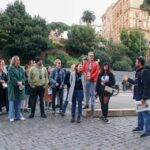
The other practical piece is where you meet. The starting point can vary depending on the option you choose. The two listed starting locations are Fontana del Colosseo and Caffè Roma. Either way, give yourself a buffer.
One recurring detail from people is that the meeting point can be easy to miss because of stairs and how the group is positioned. The fix is simple: use the photo and the BIBBO flag instructions you receive beforehand, and aim to be there early. Plan to arrive 15 minutes before the scheduled time, because late arrivals won’t be accommodated.
At the end, the tour returns you back to the meeting point area.
Colosseum walkthrough: first-floor seating to second-floor views
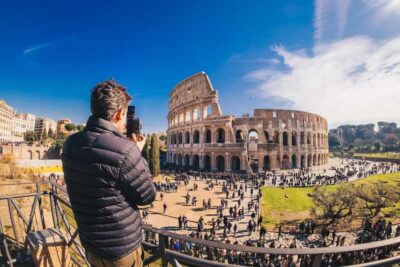
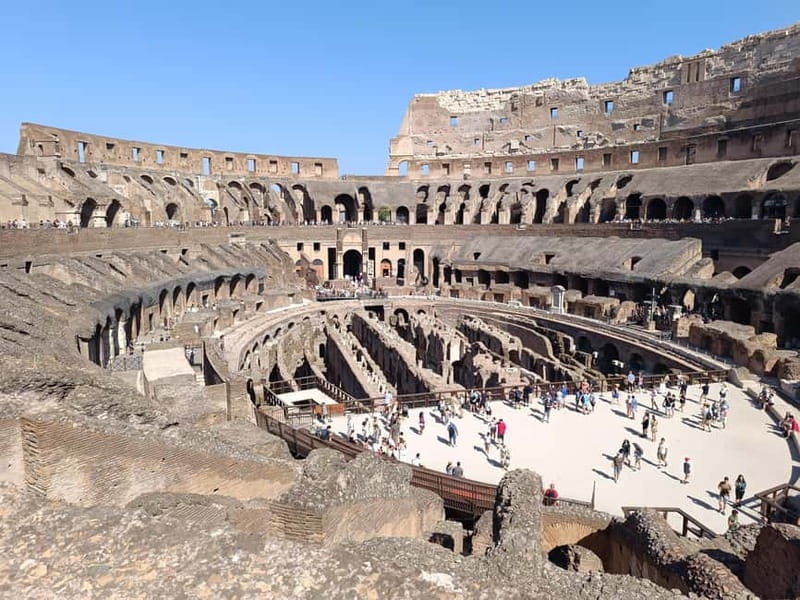
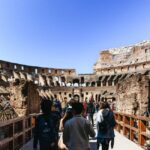
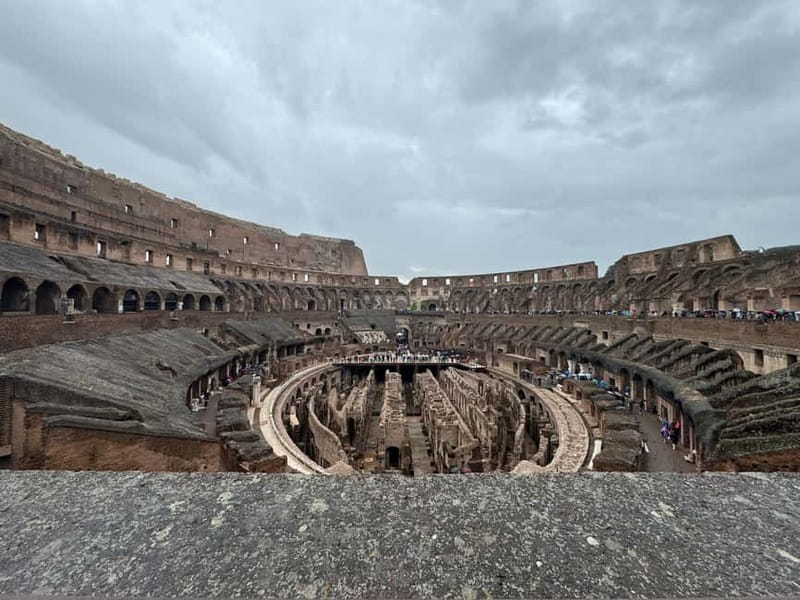
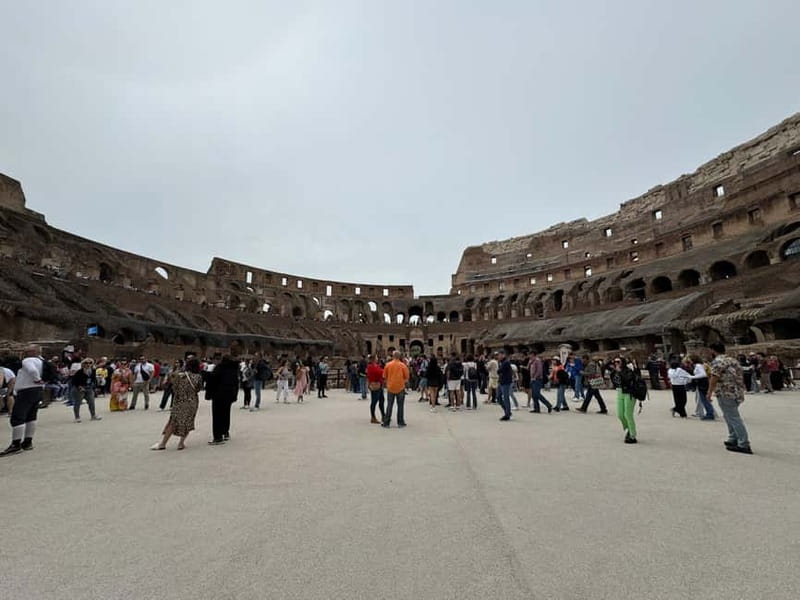
Your first real immersion is the Colosseum itself, guided for about 75 minutes. You’ll explore areas on the Colosseum’s first and second levels, which is the key difference between a “stand and look” visit and a “understand what you’re seeing” visit.
First level: understanding the crowd and the hierarchy
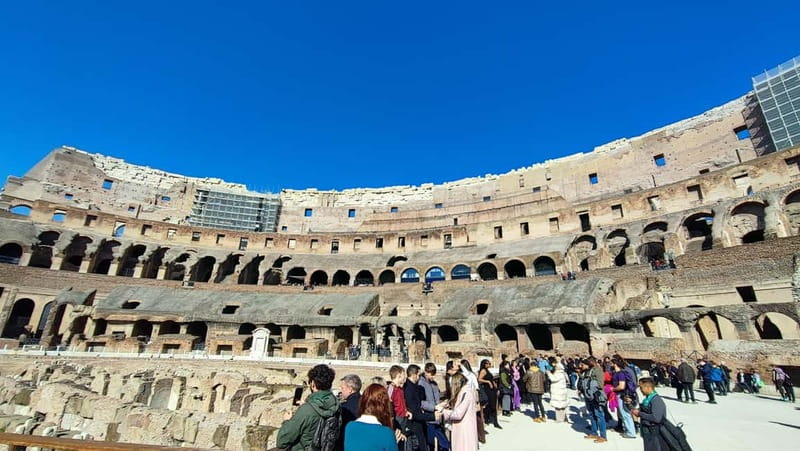
On the first level, the guide helps you see how seating worked and what the different areas represented. One of the highlights is getting a sense of where the wealthiest and most important spectators sat. That detail matters because the Colosseum wasn’t just a big bowl; it was a social machine. Knowing the idea behind the layout makes the architecture feel less random.
Second level: panoramas and the amphitheater scale
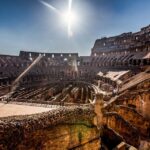
Then you move up to the second level, where the experience shifts. The stories stay, but the visual payoff grows. The tour includes panoramic views of the amphitheater and the city of Rome from inside the structure.
This is also a good time to slow down mentally. Look out and connect what you see inside to what you see outside. That mental bridge is what helps you later when you spot other ruins and understand why they’re placed where they are.

What to expect during the walk
Crowds are part of the deal at the Colosseum. With headsets and a guide leading the flow, you spend less time guessing where to go next. The guide also has time to answer questions without derailing the tour, which makes the 75 minutes feel structured instead of rushed.
The Roman Forum: the day-to-day center of power
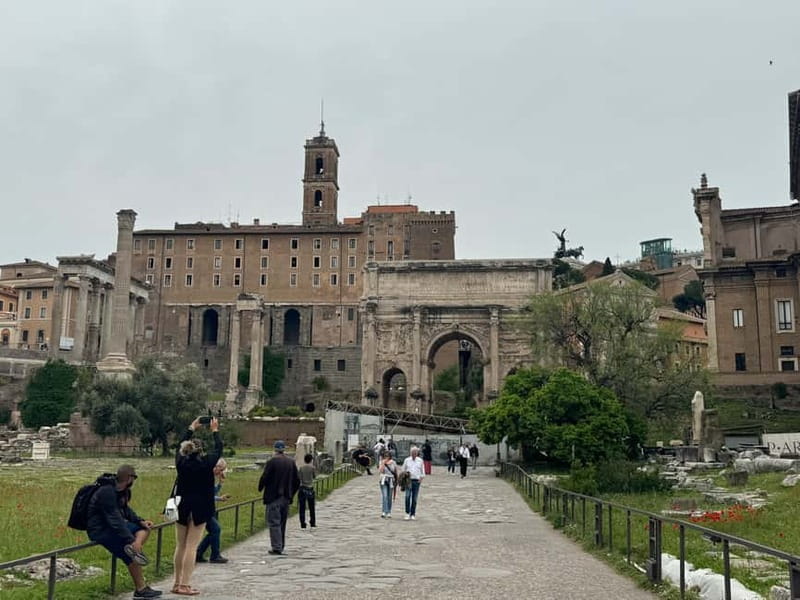
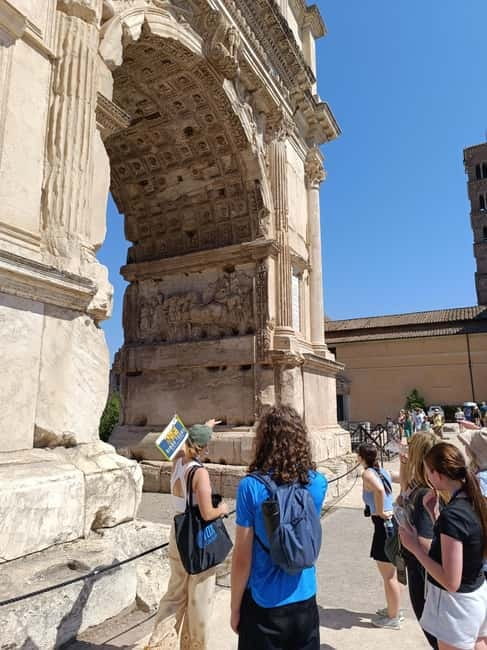
Next comes the Roman Forum, guided for about 45 minutes. This is where the tour helps you shift gears. In the Colosseum, you’re thinking spectacle. In the Forum, you’re thinking public life.
The Forum was the heart of Rome’s public world, where politics, commerce, and religion overlapped in the same spaces. You walk through ruins of temples and monuments and get context for daily customs and civic priorities.
Why the Forum section is worth your time
The Forum is easy to misunderstand if you only treat it as a place with “cool columns.” A good guided route gives you a sense of what each space likely meant—what kind of meetings happened there, what kind of decisions got made, and how the city organized itself around public spaces.
This is also the part where you’ll likely appreciate the route’s time balance. Forty-five minutes is long enough for context, short enough that you’re not stuck staring at stone while everyone else melts in the heat.
A tip that makes the Forum more enjoyable
You’ll move through areas where it’s easy to lose the thread when things get crowded. If you’re tempted to take lots of photos, do it—but keep one ear open for what the guide is saying. The Forum rewards attention to small cues like placement and layout.
Palatine Hill: imperial palaces and legend-level views
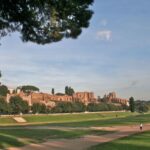
Your last stop is Palatine Hill, guided for about 30 minutes. This is the legendary birthplace layer of Rome, plus the imperial residence layer where you get the sense of power made visible through architecture.
You’ll see archaeological remains connected to imperial palaces, and you’ll get breathtaking views of the city. Even in a short visit, Palatine Hill can feel like the emotional closer: it’s where the tour’s earlier pieces start to snap into a bigger idea of how Rome grew from myth and settlement into an empire with monuments everywhere.
Why this stop closes the loop
The Colosseum gives you the crowd and the spectacle. The Forum gives you the system and the civic life. Palatine Hill ties it together with the people at the top—both in legend and in lived power.
If you’re short on time in Rome (and most of us are), this sequencing helps you leave with more than just photos. You leave with a mental model.
Guides, pacing, and headsets: the stuff that changes everything
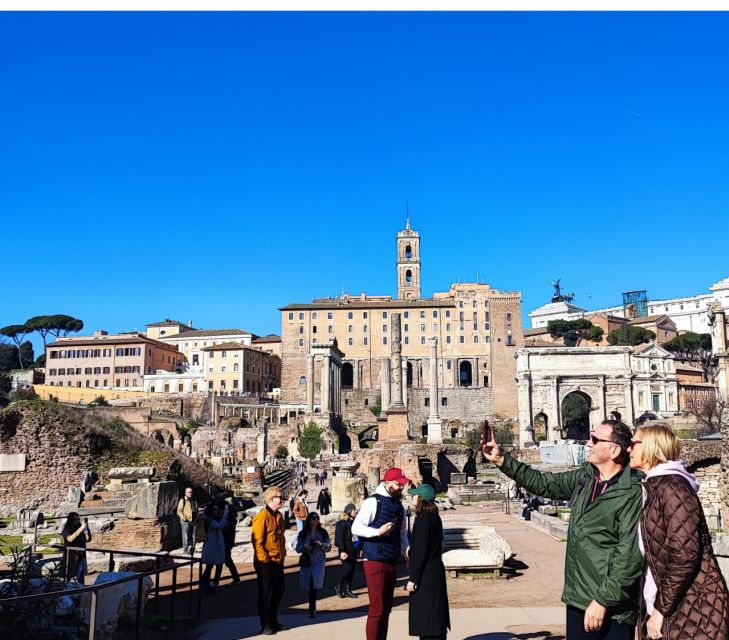
This tour stands or falls on the guide. The names that come up repeatedly—Marcello, Ricardo, Laura, Ilianara, and Claudia (as a coordinator)—share a common approach: clear explanations, a pace that doesn’t feel frantic, and the willingness to keep things engaging.
A few small details matter here:
- Headsets help you hear without craning your neck.
- The guide appears comfortable using illustrations to help you visualize how structures looked when they were whole.
- The pacing is described as right-sized, with stops that keep the group together even when certain areas get packed.
There’s also a practical “human” factor. One guide described in the feedback, Marcello, worked to keep the group in the shade when temperatures were extreme, and that kind of effort can make the difference between a tiring tour and a memorable one.
Price and value: is $126.88 a good deal?
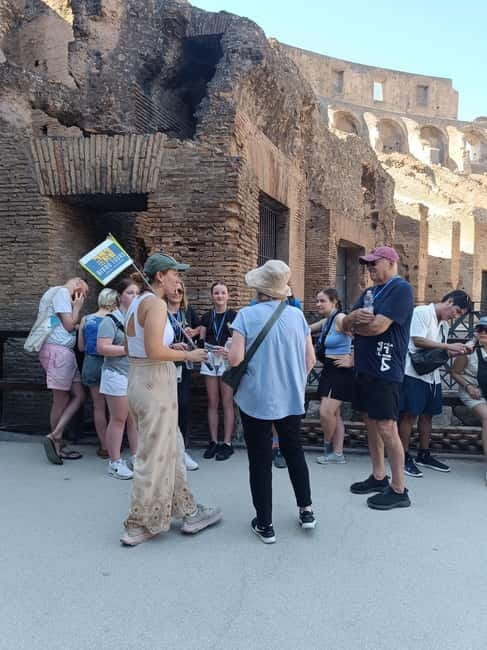
At $126.88 per person for about 2.5 hours, you’re paying for access, interpretation, and time savings.
Here’s why that price can feel fair:
- You get licensed guidance across all three major sites, not just one.
- Entry to the Colosseum, Roman Forum, and Palatine Hill is included.
- You get skip-the-line handling through a separate entrance, which is often the difference between a pleasant morning and a half-day lost to queues.
- Headsets reduce the frustration factor in crowded spaces.
The main cost you don’t control is your own schedule. Transportation to the meeting point isn’t included, so you’ll want to plan your day so you’re not rushing across town at the last second. If you build your Rome day around this tour, the value tends to click.
If you’re the kind of person who can walk around ruins for hours with no context, you could save money on self-guided tickets. But if you want the fastest path to understanding why these places mattered, this price starts making sense.
What to bring and what not to pack
Keep it simple. You’ll need a passport or ID card (a copy is accepted), and you’ll want to have the correct documents with the exact name used during booking.
A few restrictions are worth taking seriously because you might not be able to bring what you planned:
- No baby strollers
- No bikes
- No bags
- No alcohol or drugs
- Non-folding wheelchairs and electric wheelchairs not allowed
- The tour is listed as not suitable for wheelchair users
If you’re traveling with kids, note that infants (ages 0–4) are charged differently only if they are carried. If an infant walks, they’re charged the full child fare.
Also, it’s important to provide the names of all participants exactly as shown on passport/ID, including middle names, and include ages for anyone under 18.
Who this tour is best for
This is a strong fit if you:
- Want a guided, time-efficient introduction to three anchor sites in Ancient Rome
- Prefer structured sightseeing over wandering
- Appreciate a guide-led route where seating areas and layouts get explained
- Want headsets to stay connected even in crowds
It may be less ideal if you:
- Need an itinerary with lots of flexibility to linger in one spot for a long time
- Rely on bringing a bag or stroller, since the tour does not allow them
- Use a wheelchair, since it’s not suitable for wheelchair users
If you’re traveling as a small group or as a couple, the short duration can feel especially good because you’re more likely to get your questions answered without feeling swallowed by the crowd.
Should you book the Colosseum, Forum, and Palatine Hill tour?
I’d book it if your top priority is getting the most meaning out of limited time, and you like the idea of skip-the-line entry plus a guided walk that connects Colosseum spectacle to Forum civic life to Palatine power and views.
I might skip or compare if you already know a ton about Roman architecture and politics and you’re comfortable reading ruins on your own. In that case, the guided value might feel less urgent.
My practical bottom line: if you want to leave Rome feeling like you understood what you saw—not just that you saw it—this tour’s structure, headsets, and focus on first/second-floor perspectives make it a smart way to spend your hours.
FAQ
How long is the Colosseum, Roman Forum, and Palatine Hill tour?
The tour runs about 2.5 hours total, with the Colosseum guided for 75 minutes, the Roman Forum for 45 minutes, and Palatine Hill for 30 minutes.
Does the tour include skip-the-line entry?
Yes. It includes entry to the Colosseum, and skip-the-line access is handled through a separate entrance.
What’s included in the price?
The tour includes a licensed guide, Colosseum entry, Roman Forum entry, Palatine Hill entry, and headsets.
Where do we meet, and where does the tour end?
Meeting point options can vary by booking. The listed options are Fontana del Colosseo and Caffè Roma. The tour ends back at the meeting point.
Which languages are offered for the live guide?
The guide is available in English, Spanish, French, German, and Italian.
What do I need to bring for entry?
Bring a passport or ID card. A copy is accepted. The name on your booking must match your ID document.
Is transportation included to the meeting point?
No. Transportation to the meeting point is not included.