REVIEW · 1-HOUR EXPERIENCES
Rome: Basilica of St John Lateran & Holy Steps 1-Hour Tour
Book on GetYourGuide →Operated by Crucis Tours · Bookable on GetYourGuide
The Holy Steps stop you in your tracks. In this 1-hour Rome tour, I like the way it connects the Scala Sancta devotion with the major Papal Basilica of St John Lateran so you get big spiritual meaning without wasting time.
Two things I really appreciate: a small-group feel (limited to 5) that keeps questions practical, and guides such as Wen and Tom who explain what you’re looking at, from saints to sacred images, at a pace that actually makes sense.
One consideration: the full knee-climbing devotion for an indulgence takes much longer (about 45 minutes), and it’s not part of the timed tour—so if that’s your main goal, plan to do it on your own outside the 1-hour window.
In This Review
- Key highlights to know before you go
- The Holy Steps meet St John Lateran in one tight hour
- Meeting at the Scala Santa: quick orientation, minimal fuss
- Scala Sancta: what you’ll do in the 20 minutes that actually counts
- Sanctorium Sancta: the tiny chapel and why it’s a big deal
- St John Lateran in 40 minutes: Rome’s highest-ranking church, fast and focused
- The Holy Door connection (and the 2025 timing)
- Venerating Saints Peter and Paul: what you’re actually doing
- Art, symbolism, and the guides that make it click
- Price and value: is $65 for one hour worth it?
- Dress code and etiquette: plan your outfit before you arrive
- Practical timing: the day-planning reality of a 1-hour tour
- Where it leaves you: finishing near the basilica façade
- Should you book this St John Lateran and Holy Steps tour?
- FAQ
- How long is the Rome Basilica of St John Lateran & Holy Steps tour?
- Where do I meet the guide?
- Is the tour wheelchair accessible?
- Are the Holy Steps knee-climbing indulgence prayers included?
- What will I see at Scala Sancta and the Sanctorium Sancta?
- What dress code do I need to follow?
- What languages are offered?
- Is the tour free for clerics?
- What’s included in the price?
- How big is the group?
Key highlights to know before you go
- Scala Sancta start: you begin at the Holy Stairs area and get guided context right away
- Ordinary-stair access + peek inside: you’ll climb the regular stairs and view the Sanctorium Sancta (not the full knee devotion)
- Acheiropoieta tradition: the tour connects what you can see with the belief tied to St Luke and angels
- San Giovanni Lateran in a short visit: you get a guided pass through Rome’s highest-ranking church, fast but meaningful
- Relics of Saints Peter and Paul: you’ll have a chance to venerate the skulls tied to the Church’s pillars
- Guides who handle real questions: reviews consistently praise Wen and Tom for clear explanations and strong pacing
The Holy Steps meet St John Lateran in one tight hour
If you’re in Rome for a short time, it’s easy to feel like you’re rushing from sight to sight. This tour is different. It’s built around two places that belong together: the Scala Sancta (the Holy Stairs) and the Arch-Basilica of St John Lateran (San Giovanni in Laterano). Together, they give you a quick, guided “why this matters” that you won’t get by just walking in and guessing.
The Scala Sancta part is the emotional center. The Holy Steps are tied to Christ’s condemnation, and Catholic tradition has a strong devotional practice attached to climbing them on your knees. The Lateran Basilica part is the institutional center. St John Lateran is treated as the Mother Church of the world, and it’s also linked to the Holy Doors that open during Jubilee Years—one of which is expected to open again in 2025.
What makes this tour feel good is the balance: you get theology, symbolism, and history, but you’re not trapped in museum-mode. It’s a guided walk through sacred space, with time kept purposely short.
You can also read our reviews of more tours and experiences in Rome

Meeting at the Scala Santa: quick orientation, minimal fuss
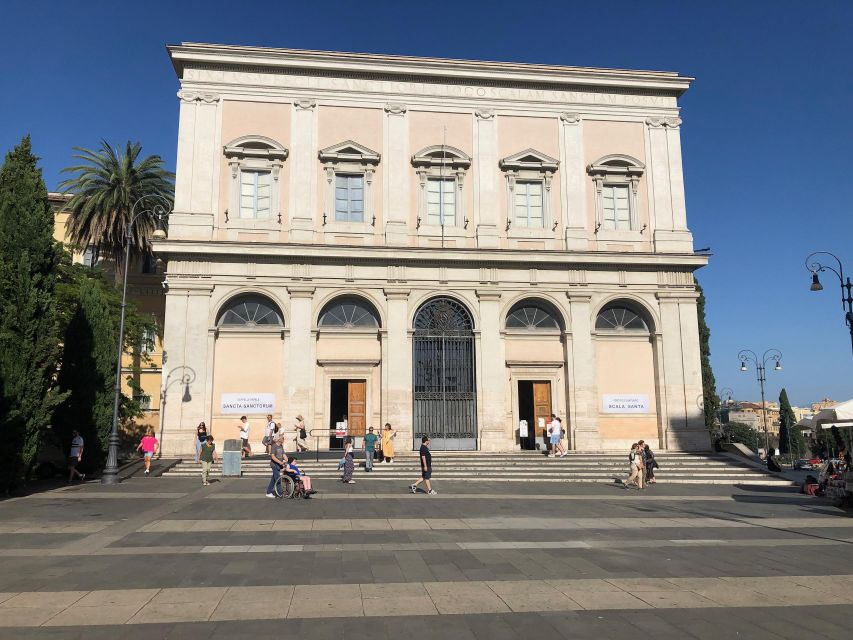
You meet the guide at the bottom of the stairs to the left of the entrance of the Pontifical Sanctuary of the Holy Stairs (Scala Santa). This matters because the area is busy and easy to misread at first glance. If you’re the type who likes to arrive early and get your bearings fast, you’ll feel better here.
They also ask you to have WhatsApp installed so they can stay in real time in case of issues. That’s a small thing, but it’s genuinely useful in Rome, where two entrances can look identical to your tired brain.
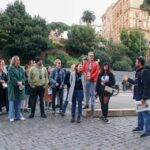
The tour is designed for a small group (limited to 5 participants). In practice, that usually means you can ask follow-up questions without having to shout over a crowd.
Scala Sancta: what you’ll do in the 20 minutes that actually counts
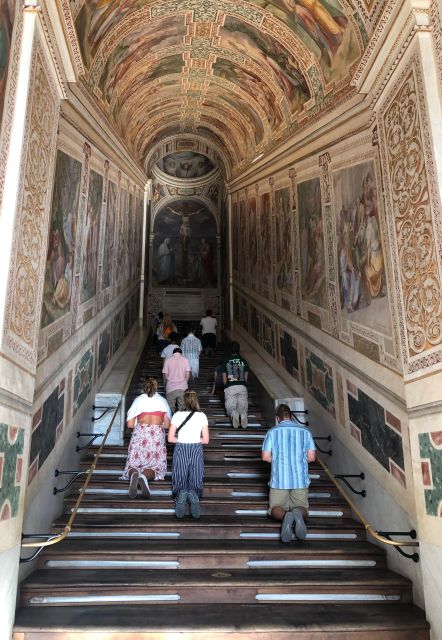
You’ll start with the Scala Sancta area and move into the guided portion of the Holy Stairs sanctuary. The time window is about 20 minutes here, which is just enough to understand the story behind the place and to experience it respectfully.
Here’s the key point: the tour does not include the full knee-climbing devotion. That tradition takes around 45 minutes, so it’s intentionally left out of this hour-long format. Instead, the tour focuses on what you can do within the schedule: you’ll climb the ordinary stairs and receive guided context while you’re there.
So, think of this as the “best first taste” of Scala Sancta. If you later want the full devotional climb, the tour information makes it clear you can do that on your own after the tour at no charge. The staff tone here feels practical rather than pushy: they’re not pretending the knee devotion fits into an hour.
Sanctorium Sancta: the tiny chapel and why it’s a big deal
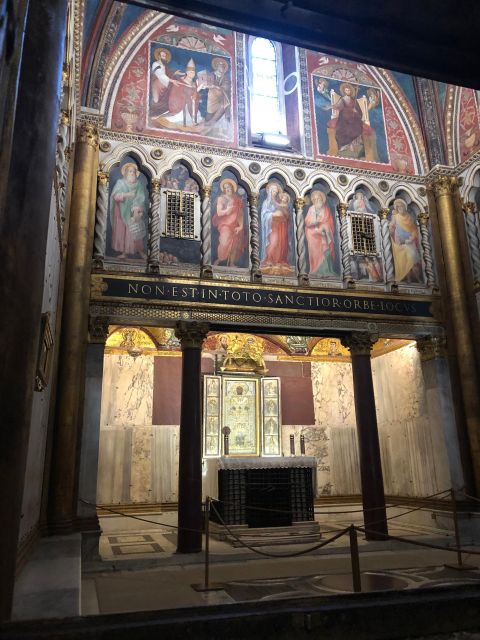
While at Scala Sancta, the tour includes a guided peek into the Sanctorium Sancta, also called the Holy of Holies. This is described as a tiny chapel where only the Pope was previously allowed to enter.
Within that setting, the guide also helps you notice the connection to the miraculous acheiropoieta tradition—an image associated with being begun by St Luke and finished by angels. That may not sound like “tour-speak,” but it’s actually important. Without context, you might see details as decoration. With the guide’s framing, those details become part of a story about how Catholics understand sacred images and sacred memory.
You’ll also hear about wood from the table of the Last Supper kept in the same chapel space. Again, if your interest is religious art and relic tradition, this is the kind of detail that changes how you look at everything around you.
St John Lateran in 40 minutes: Rome’s highest-ranking church, fast and focused
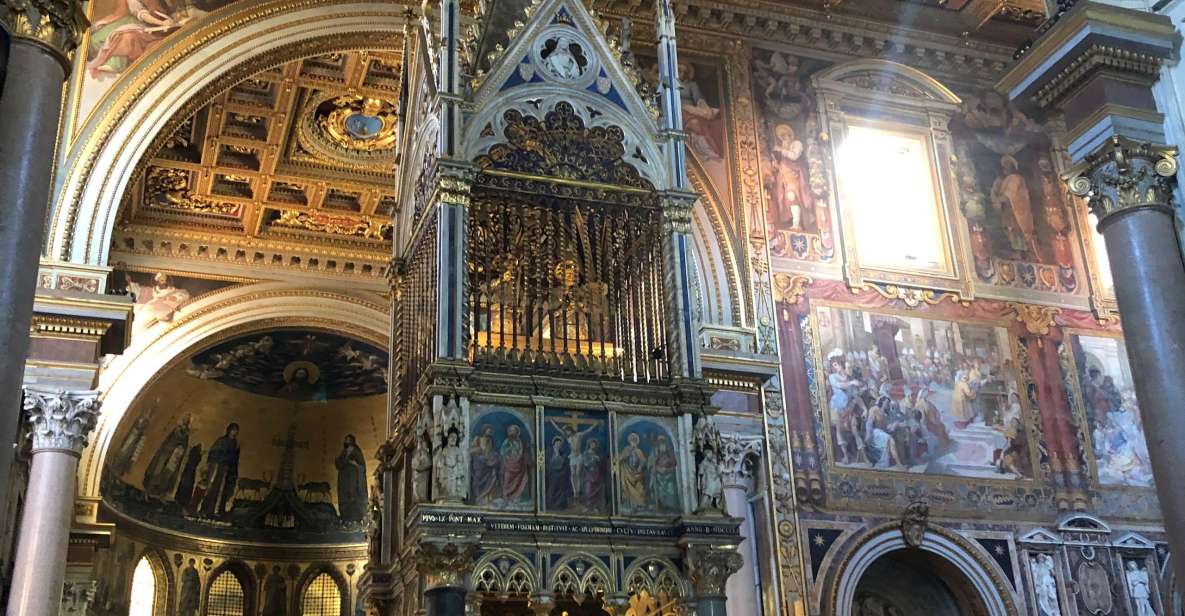
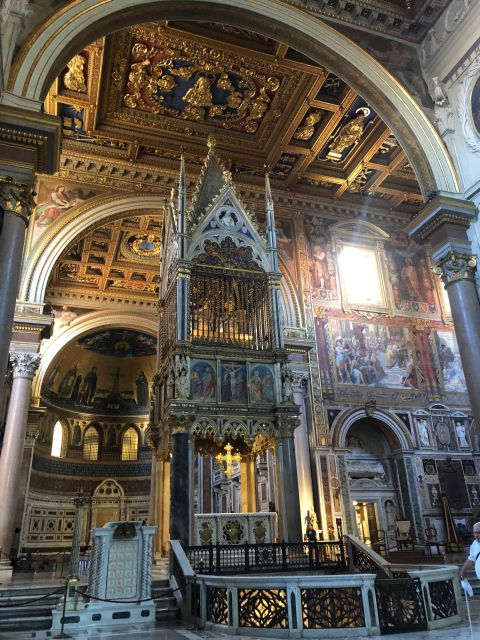
After Scala Sancta, you cross the road to the Arch-Basilica of St John Lateran for the main church visit (about 40 minutes). This is where the tour shifts from intimate devotion to a larger “cathedral scale” experience.
St John Lateran is often described as the highest-ranking church in Christendom, and you’ll feel that in how the site is treated. The tour frames it as part of Rome’s core Christian story: it’s closely tied to how Christianity became legal within the Roman Empire, and the basilica has a history marked by ups and downs.
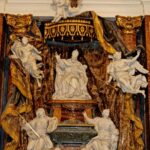
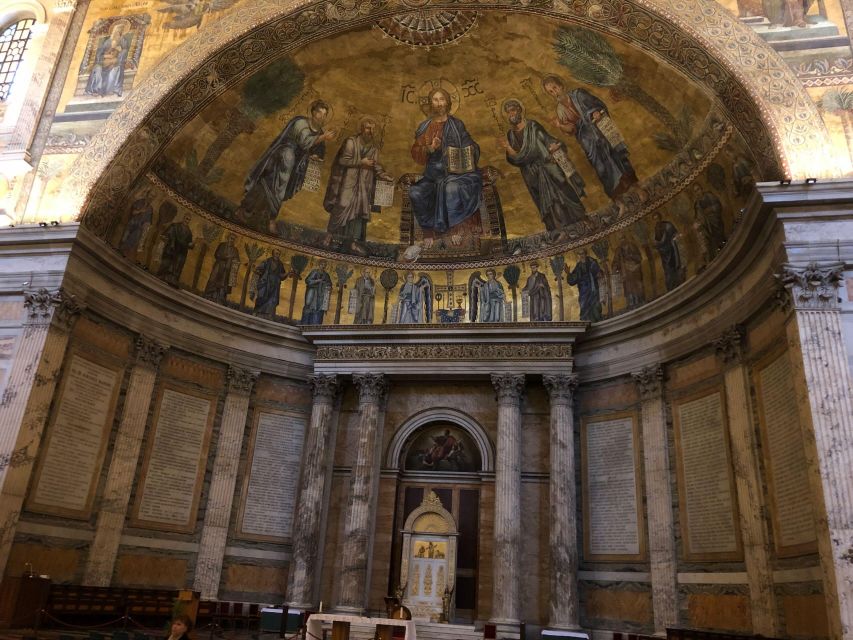
You’ll get a guided look at what makes this basilica special beyond the obvious size: symbolic art, mosaics, and architectural details that point back to major themes of the Catholic Church. And because you’re in a time-limited tour, the guide will steer you to the most meaningful parts first, instead of asking you to wander until you find something interesting by luck.

The Holy Door connection (and the 2025 timing)
One of the most time-sensitive pieces of context here: St John Lateran is one of the four Holy Doors that open during Jubilee Years for pilgrims. The tour notes that a Holy Door is expected to open in 2025.
Even if you’re not traveling for the Jubilee itself, knowing that this basilica is tied to that tradition helps you understand why the site feels like more than just a church stop. It’s a place connected to pilgrimage rhythms that extend beyond one visit.
Venerating Saints Peter and Paul: what you’re actually doing
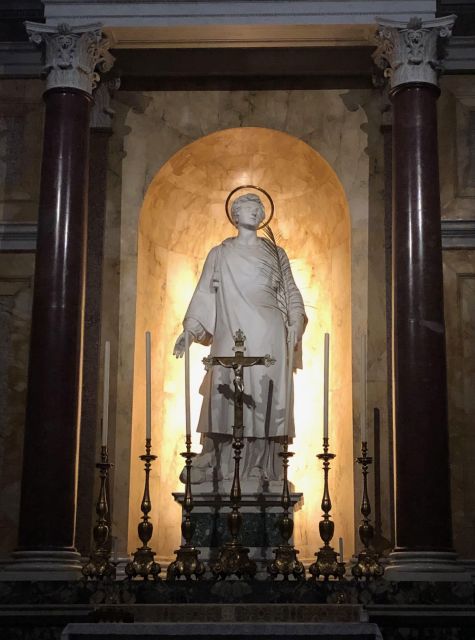
Near the Lateran portion of the tour, you’ll have a chance to venerate relics of the saints Peter and Paul, described here specifically as the skulls of Saints Peter and Paul, identified as the pillars of the Church.
For many visitors, relic veneration can feel confusing. This tour helps you avoid the “is this just tourism?” mindset by explaining the Church’s approach: relics are treated as tangible points of connection, reminders of witnesses, and ways believers keep faith grounded in history.
If you’re coming as a non-Catholic visitor, you’ll still likely appreciate this section because it’s not presented like a trick. It’s framed as a practice that has shaped Roman Catholic devotion for centuries.
Art, symbolism, and the guides that make it click
This is where the reviews really come through, and it’s also where this tour tends to beat self-guided visits. Guides such as Wen and Tom are repeatedly praised for connecting small details to bigger meaning—especially in sacred art and the symbolism of structures and saints.
What I’d take from that pattern: ask questions if you have them. The guides here are good at handling curiosity, including theology questions, not just “what is this building” facts. Many people also highlight pacing—meaning the information doesn’t come at you so fast that you can’t absorb it.
This matters because St John Lateran and Scala Sancta both have layers. If you’re not sure where to look first, a guide can help you see the right things in the right order.
Price and value: is $65 for one hour worth it?
At $65 per person for a 1-hour guided experience, you’re paying for three things: a tight schedule, a guided explanation, and a focused route. You’re not buying “time in the building,” because the tour deliberately limits time on-site.
So, what makes it good value? For me, the best value signals are:
- Small group size (max 5), which usually improves the quality of the Q&A
- Guided context that helps you understand relics, sacred images, and symbolism
- A route that hits both major anchor sites—Scala Sancta and St John Lateran—without turning your day into a scavenger hunt
If your travel style is fast and you want a spiritual-art orientation in one go, it’s a fair trade. If your goal is purely devotional time (like the full knee-climb), you may feel like the tour is too short. That’s not a flaw—it’s a mismatch of priorities.
Dress code and etiquette: plan your outfit before you arrive
This tour has a clear rule: shorts and short skirts are not allowed. In practice, that means you should dress in a way that keeps your knees covered.
This is common in Italian churches, but it matters more here because you’re visiting sacred spaces that expect reverence. Bring a light layer if you get warm easily, and keep it simple.
Also, because the tour includes relic veneration and sacred image context, it’s worth being mentally ready for a religious experience. You don’t have to share the faith to show respect, but you should come with an open mind.
Practical timing: the day-planning reality of a 1-hour tour
The tour is tight by design. You’ll be moving from Scala Sancta to St John Lateran, and you’ll only have time to do what fits the schedule: guided viewing, short climbs, and brief veneration opportunities.
That’s why it works best when:
- You have limited time in Rome
- You want an organized introduction to the two most connected Lateran sites
- You enjoy explanations that turn art and architecture into meaning
It’s less ideal if:
- You want the full knee-climb devotion as the main event
- You want long, quiet time inside the basilica to wander without prompts
- You need lots of free time for shopping or extra detours
A smart approach is to treat the tour as your guided “setup,” then stay longer on your own if you want the extra devotional depth.
Where it leaves you: finishing near the basilica façade
The tour ends at Basilica of San Giovanni in Laterano, with you finishing in front-adjacent space near the façade. The tour description also notes that you’ll be close to public transport options and taxis.
That matters because after a religious visit, you’ll likely be ready to move on. Ending near major access points makes it easier to keep your Rome day flowing instead of getting stuck planning your next move from the wrong side of the city.
Should you book this St John Lateran and Holy Steps tour?
Book it if you want:
- A guided, faith-and-art explanation in one hour
- A structured look at Scala Sancta followed by St John Lateran
- The chance to venerate Saints Peter and Paul without needing to research every detail first
Consider skipping (or adding extra time) if:
- Your top priority is the full knee-climbing devotion for an indulgence, since that takes much longer than this format
- You prefer to explore purely on your own, with minimal guidance
My take: this is one of those Rome stops that’s genuinely easier with a strong guide. If you want your visit to feel purposeful instead of random, this one-hour format is a solid way to do it.
FAQ
How long is the Rome Basilica of St John Lateran & Holy Steps tour?
It lasts about 1 hour.
Where do I meet the guide?
Meet at the bottom of the stairs to the left of the entrance of the Pontifical Sanctuary of the Holy Stairs (Scala Santa).
Is the tour wheelchair accessible?
Yes, it’s listed as wheelchair accessible.
Are the Holy Steps knee-climbing indulgence prayers included?
No. The knee-climbing practice takes around 45 minutes and is not part of this tour, but pilgrims can arrange to do the tradition on their own free of charge at the end.
What will I see at Scala Sancta and the Sanctorium Sancta?
You’ll visit Scala Sancta, climb the ordinary stairs, and get a peek into the Sanctorium Sancta (the Holy of Holies), which includes references to the acheiropoieta tradition and wood from the table of the Last Supper.
What dress code do I need to follow?
Shorts and short skirts are not allowed.
What languages are offered?
The live tour guide is available in English and Chinese.
Is the tour free for clerics?
Yes, it’s listed as free for clerics.
What’s included in the price?
The price includes all taxes and fees. Radio headsets are included for groups of 7 or more.
How big is the group?
It’s a small group limited to 5 participants.