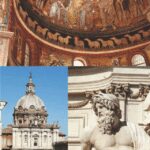
Three hours, and your Rome map gets better fast. This guided walk strings together famous names like Piazza Navona and the Trevi Fountain, then keeps going into less-obvious places that most first-timers miss. I especially like how the route balances the headline sights with smaller stops like the Vicus Caprarius excavations.
Two moments I’d call the real wins are the chance to see the Stadium of Domitian and the way the tour uses a live guide to connect what you’re seeing to what life in Roman times would’ve looked like. It’s not just pictures-on-a-wall. You get context you can actually use.
One thing to consider: the tour runs rain or shine, and you’ll be walking between sites for about 3 hours, so comfortable shoes matter.
In This Review
- Key Things You’ll Notice on This Tour
- Starting at the Bernini Fountain: Your Rome Anchor Point
- Piazza Navona: Where the Landmarks Have Layers
- Domitian’s Stadium: Roman Sports at Big-Stadium Scale
- The Pantheon: Temple to Church, Still Turning Heads
- Saint Ignazio’s 3D Ceiling Frescos: Art That Plays Tricks
- Trevi Fountain Stroll: Baroque Grandeur on Foot
- Vicus Caprarius Museum: Underground Aqueduct Remains
- Where the Tour Ends: La Rinascente and an Easy Next Step
- How This German-Guided Walk Works in Real Life
- Value and Fit: Who This Tour Is Best For
- Should You Book This Rome CityCenter Hidden Highlights Tour?
- FAQ
- What language is the guided walking tour offered in?
- How long is the tour?
- Where do I meet the guide?
- Does the tour run in bad weather?
- Is there a way to skip ticket lines?
- What should I bring?
- Are there any dress code restrictions?
- Can I cancel for a full refund?
- Can I reserve without paying immediately?
Key Things You’ll Notice on This Tour
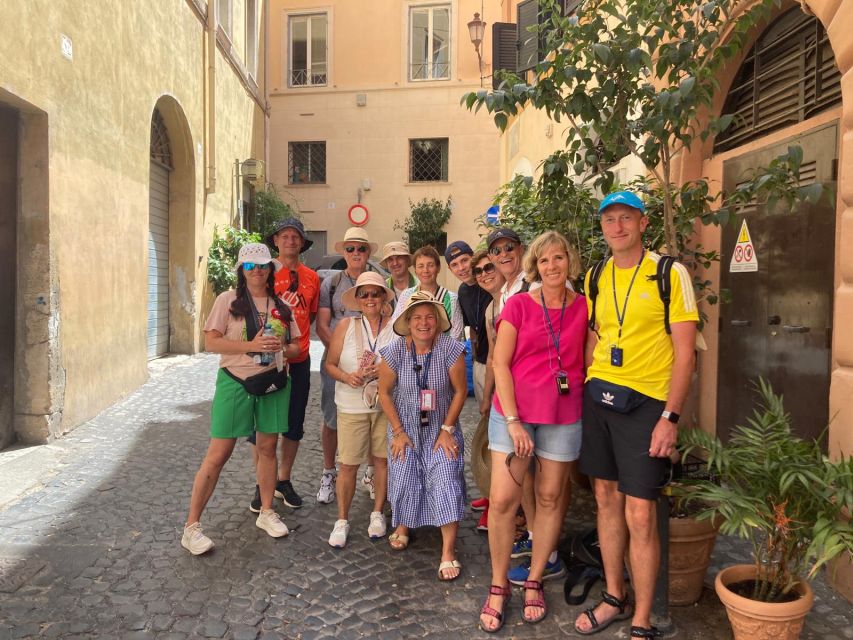
- Headsets for clear listening, so you can focus on the street-level details instead of straining
- Underground aqueduct remains at Vicus Caprarius, giving you a real change of pace from the big squares
- The stadium of Domitian, including the scale it held for 15,000–20,000 spectators
- Saint Ignazio’s 3D fresco ceiling, the kind of church stop that flips your brain from history mode to art mode
- A guided path through top sights like the Pantheon and Trevi Fountain without feeling like you’re sprinting
Starting at the Bernini Fountain: Your Rome Anchor Point
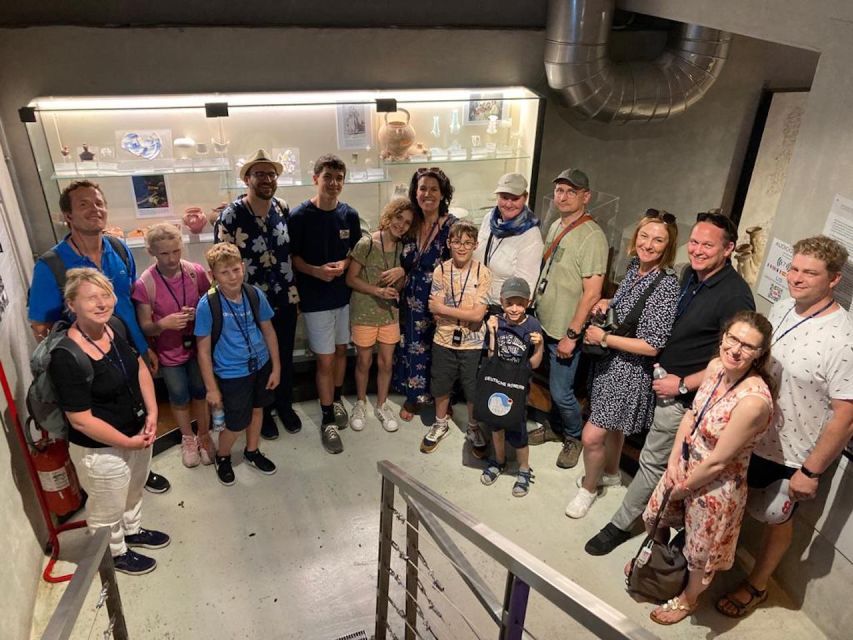
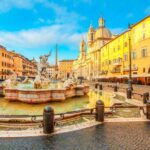
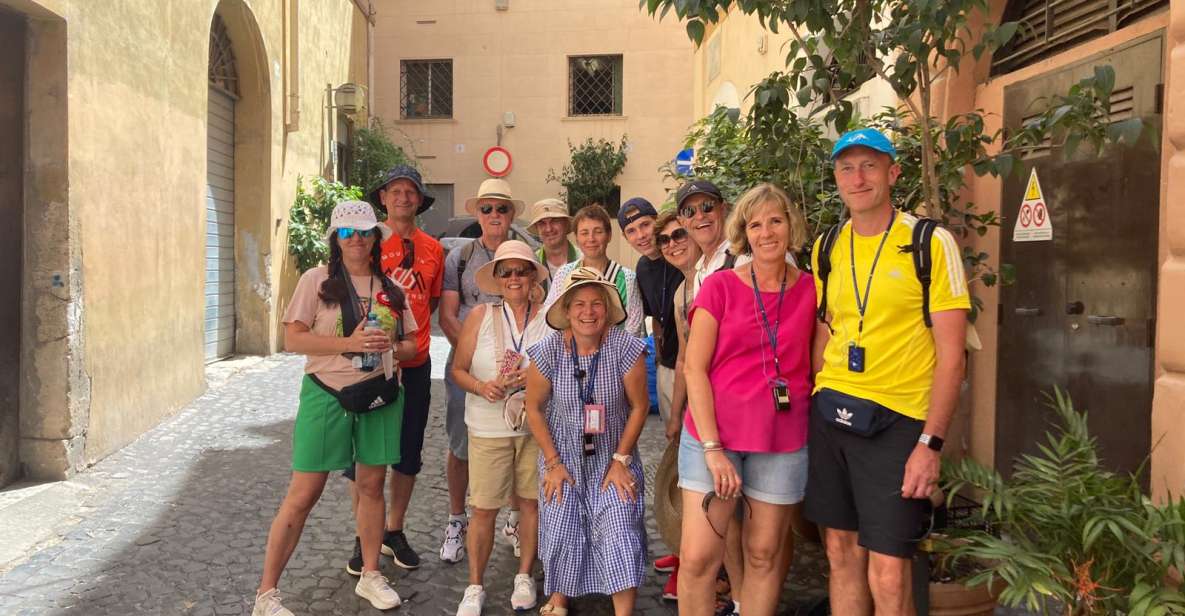
Your tour meets at the fountain of Bernini in Piazza Navona, and you’ll find your group by looking for the Deutsche Römerin sign. This matters more than it sounds. Piazza Navona can feel like one big open-air set, and having that clear starting pin helps you get oriented immediately.
From the first steps, the guide sets the tone with an introduction to the square and what you should watch for. And because the tour includes headsets, you can hear the guide even when the area gets noisy. You won’t have to keep stepping aside or turning your body like you’re trying to catch a snippet.
This is the kind of start that helps you enjoy the rest of the day. You go from wandering to understanding.
You can also read our reviews of more walking tours in Rome
Piazza Navona: Where the Landmarks Have Layers
Piazza Navona is one of those Rome places that looks instantly famous. But the guide helps you see it as more than a postcard. Expect commentary tied to the layout and the role the square played in the city’s public life.
You’ll also get a practical sense of how the route will flow. The tour is structured so you’re not only waiting at one busy monument after another. Instead, you’re learning how to move through central Rome efficiently, while still having time to stop and look up.
A big plus here: you’re not left to figure it out alone. The guide points out what to notice in the moment, so you can leave with specific memories instead of a foggy list of places.
Domitian’s Stadium: Roman Sports at Big-Stadium Scale
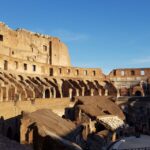
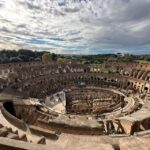
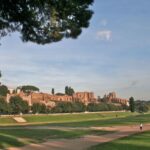
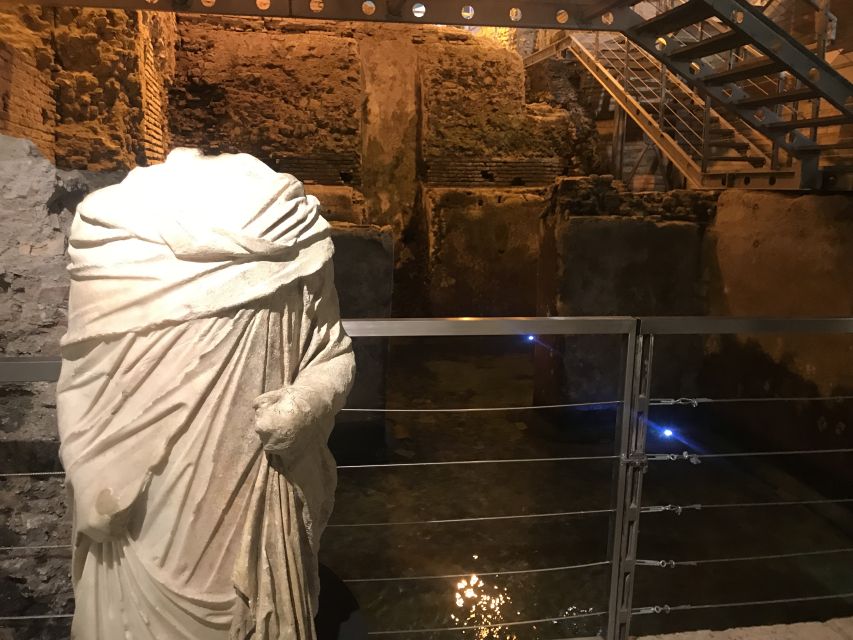
Next up is the stadium of the emperor Domitian. Even if you’ve never cared much about ancient sports, this stop helps you picture Rome as a place where large crowds gathered for real events.
The guide focuses on the venue’s scale, including that it seated about 15,000–20,000 spectators. That number isn’t just trivia. When you stand in the area, it gives you a feeling for how massive public life was in the empire.
This part of the tour also does something clever: it breaks the rhythm of “square, fountain, church.” It gives you a different kind of ancient structure—one built for spectators—and it helps you understand how Romans used public space for more than ceremonies and politics.
If you like archaeology that’s tied to everyday life, this is the kind of stop you’ll appreciate.
The Pantheon: Temple to Church, Still Turning Heads
Then you reach the Pantheon, described here as a place that began as a Roman temple and was later converted into a Catholic church. That transformation is one reason the Pantheon still hits so hard today. You can literally read the building’s history in its continued use.
The guide helps you look at it the way people do when they’ve studied it for a while—where to focus your eyes, what parts matter, and how the structure fits into Roman engineering. You’ll also get a sense of why this building became so central to Roman and later Catholic identity.
One caution: the Pantheon area is famous, so it can get crowded. The benefit of doing it in a guided setting is that you’re not improvising your time. You’re more likely to see what you came for without losing your place in the flow.
Saint Ignazio’s 3D Ceiling Frescos: Art That Plays Tricks
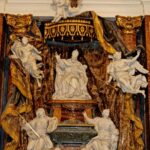
If you’ve ever walked into a church and thought, fine, it’s pretty, you should pay attention to Saint Ignazio. This stop is built around its 3D ceiling frescos, which are the kind of artworks that make your perspective feel slightly wrong—in a good way.
The tour frames this as a memorizing visual experience, and that’s exactly what it can be when you slow down. Rather than just rushing through, you’ll be there long enough to see the illusion from the best angles your feet will allow.
Why this works on the tour: it shifts you away from stone-and-dates history and into something more human—how artists used light, perspective, and your position in space to make you react.
Bring your patience here. This isn’t a quick stop. It’s the sort of church visit that turns into a moment you’ll remember on your flight home.
You can also read our reviews of more guided tours in Rome

Trevi Fountain Stroll: Baroque Grandeur on Foot
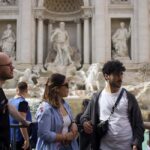
After Saint Ignazio, you’ll stroll to the Trevi Fountain. Trevi is the “yes, I’ve seen it in photos” stop. But what the tour gives you is a guided way to experience it without treating it like a simple photo hunt.
You’re not just arriving and leaving. The guide helps you connect the fountain to the surrounding city setting and gives you context so it feels like part of a bigger story rather than a single monument.
This also helps with the emotional side of sightseeing. Trevi can be overwhelming if you’re trying to do it solo. With a guide, you can relax into the flow—look around, take it in, then move on when it’s time.
Vicus Caprarius Museum: Underground Aqueduct Remains
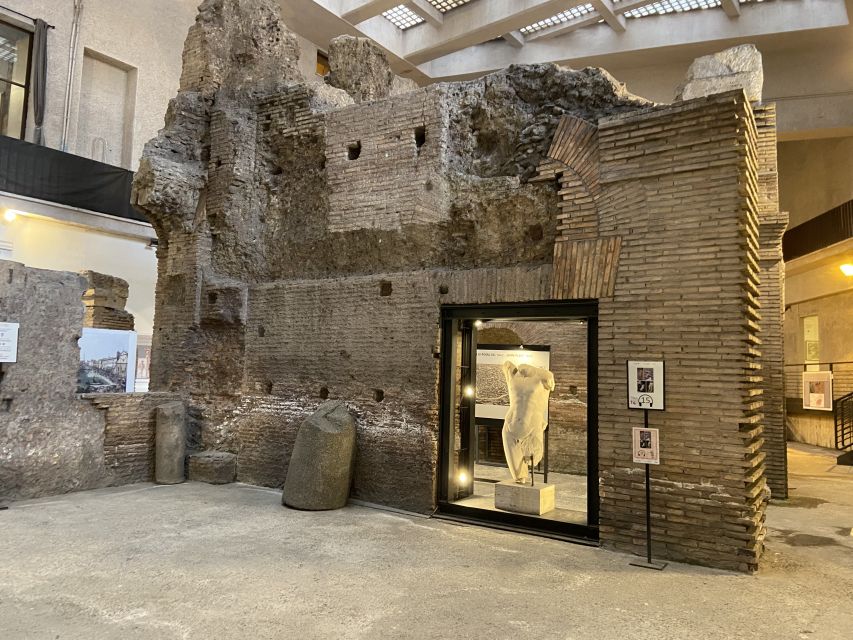
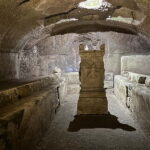
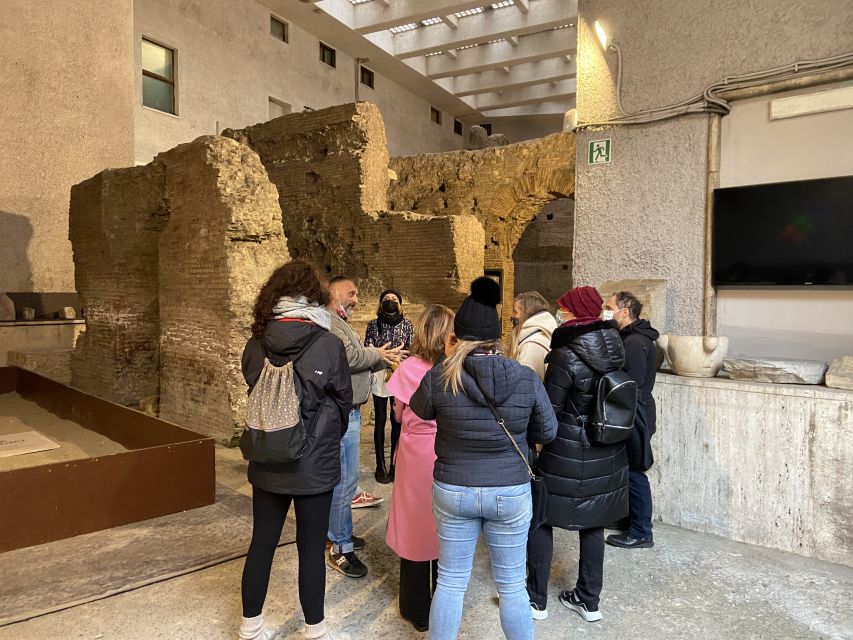
Now for the part that changes everything: the Vicus Caprarius museum. Instead of staying at street level, you’ll discover underground excavations connected to Rome’s water system, including remains of an underground aqueduct.
This is one of the most valuable stops on the tour because it teaches you something Rome usually hides in plain sight. Water shaped the city. And here, you can see remnants of that system in a way that feels grounded and physical.
It’s also a nice contrast after big landmarks. You go from monumental façades and famous sculptures to a quieter, archaeological setting. The result is a tour that feels varied rather than repetitive.
For anyone who likes architecture and how cities actually worked, this underground stop is the payoff.
Where the Tour Ends: La Rinascente and an Easy Next Step
The tour finishes at La Rinascente. That’s a practical ending point because it’s in a central, easy-to-navigate area. It gives you a straightforward way to grab a snack, take a breath, and keep exploring without needing to immediately solve transit puzzles.
If you’re planning dinner, this ending can help. You won’t end at a random alley corner with no easy options nearby. Instead, you get a built-in anchor for your next move.
It’s a small detail, but it makes the last moments of the tour feel smoother.
How This German-Guided Walk Works in Real Life
This is a live guided tour in German, and the headsets are there so you can hear clearly throughout. That’s a big deal for a walking tour because outdoor sound can be chaotic. You get to focus on the route instead of fighting noise.
The tour also runs rain or shine, so you’ll want rain protection if the forecast looks questionable. The “real-life” trick is packing for weather without overpacking. A lightweight rain jacket and shoes you trust on uneven stone will do most of the work.
Dress code is also clearly stated: avoid short skirts and sleeveless shirts. If you’re comfortable meeting that rule, you’ll feel relaxed rather than self-conscious.
One more practical note: you’re asked to bring cash. Plan for it so you don’t end up scrambling when you’d rather be enjoying the stops.
Value and Fit: Who This Tour Is Best For
I think this tour is a strong pick if you want Rome center in one connected storyline: big sights plus smaller, meaningful stops. You’ll see the Pantheon, Piazza Navona, and Trevi, but you’ll also get the kind of underground and arena-scale details that make your trip feel specific.
It’s also a good match if you like guides who can do more than list facts. In past groups, guides such as Gianluca have been praised for humor, and Janina has been recognized for giving insights with heart. That matters because it can turn a 3-hour walk into something you actually remember, not just something you survive.
If you only want the absolute headline icons and nothing else, you might find this tour a bit too varied. But if you like the idea of mixing famous Rome with places that feel like you found them yourself, this is built for you.
Should You Book This Rome CityCenter Hidden Highlights Tour?
Book it if you want a German-guided walk that connects major landmarks with less-famous experiences like Domitian’s stadium and the Vicus Caprarius underground aqueduct remains. The headsets and the mix of architecture, art, and archaeology make the 3 hours feel earned.
Skip it only if you’re looking for a fast, purely self-guided highlight sprint, or if you can’t handle rain and walking time comfortably. If you can manage a steady pace, this tour is a smart way to get more Rome per day.
FAQ
What language is the guided walking tour offered in?
The tour is conducted in German.
How long is the tour?
The duration is 3 hours.
Where do I meet the guide?
Meet at the fountain of Bernini in Piazza Navona. Look for the Deutsche Römerin sign. (Coordinates: 41.89900588989258, 12.473088264465332)
Does the tour run in bad weather?
Yes, it takes place rain or shine.
Is there a way to skip ticket lines?
Yes, the tour includes skip the ticket line.
What should I bring?
Bring cash.
Are there any dress code restrictions?
Short skirts and sleeveless shirts are not allowed.
Can I cancel for a full refund?
Yes. You can cancel up to 24 hours in advance for a full refund.
Can I reserve without paying immediately?
Yes. It offers reserve now & pay later, so you pay nothing today.