REVIEW · ROME
Rome: Fountains and Squares Small-Group Walking Tour
Book on GetYourGuide →Operated by romanholiday.travel & tours · Bookable on GetYourGuide
Rome shifts gears when you walk between piazzas. This small-group route strings together Spanish Steps, Piazza Navona, and the Trevi Fountain with real stops tied to Roman, Renaissance, and Baroque Rome. You’ll also get into the Pantheon and see the famous trompe l’oeil at Sant’Ignazio Church—so this isn’t just postcard scenery.
What I really like: you get architecture and art in the order your feet naturally move through central Rome, and your guide keeps the walk focused with details you’d miss on your own. I’m especially happy about the Pantheon interior stop and the chance to stand under trompe l’oeil artwork at Sant’Ignazio Church. One possible drawback: expect a solid, mostly-on-foot pacing for about 2.5 hours, and the tour isn’t friendly for people needing strollers or wheelchair access.
In This Review
- Key highlights you should care about
- Why the Spanish Steps to Trevi route works so well
- Meeting at the Keats-Shelley Museum: easy to find, easy to start
- Spanish Steps and Trinità dei Monti: where the climb becomes part of the tour
- Piazza Navona and the “Stadium of Domitian” moment
- Pantheon inside: stand in a Roman Empire temple
- Marcus Aurelius Column: a specific stop with a movie link
- Saint Ignatius (Sant’Ignazio): trompe l’oeil that plays tricks the right way
- Trevi Fountain: coin toss, wish-making, and the end of the story
- Pace, group size, and how 2.5 hours actually feels
- Price and value: what $45.55 buys you in Rome time
- Dressing and rules that keep church visits smooth
- Who this walking tour is best for
- Guide styles: what you might notice (and why it matters)
- Final verdict: should you book Rome: Fountains and Squares?
- FAQ
- How long is the Rome Fountains and Squares Small-Group Walking Tour?
- Where does the tour start?
- Where does the tour end?
- Is the tour guided, and what language is it in?
- What are the main stops on the tour?
- Is this tour suitable for children?
- Can wheelchair users or strollers join?
- What should I wear or bring?
Key highlights you should care about
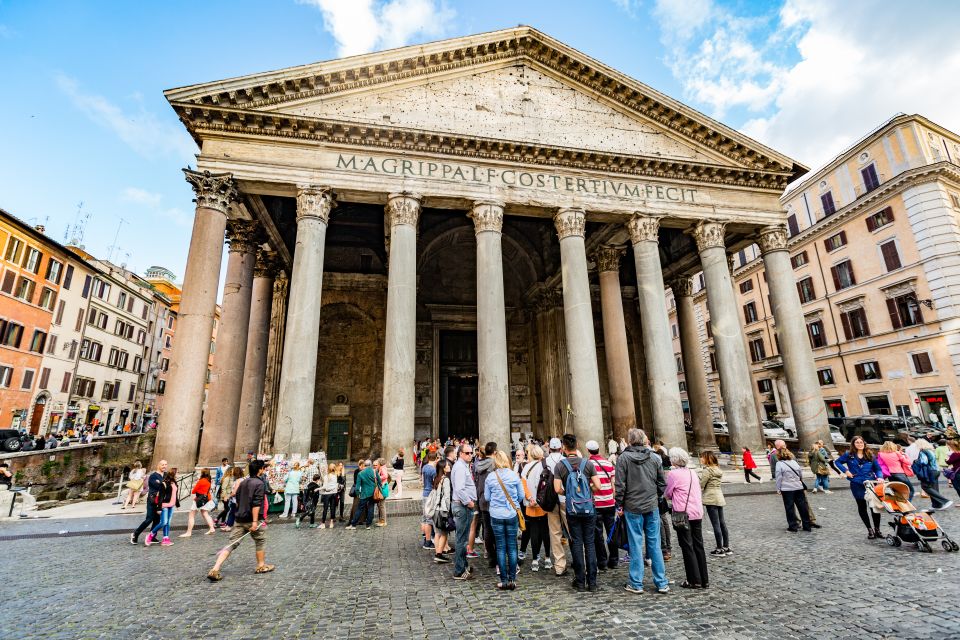
- Pantheon entry included: go inside a remarkably intact Greek-Roman temple from the Roman Empire era.
- Trevi Fountain coin ritual: you’ll end the tour by tossing a coin and making a wish to return.
- Bernini + Baroque Rome in full view: Piazza Navona’s Fountain of the Four Rivers and the surrounding masters’ work.
- Trompe l’oeil at Sant’Ignazio: one of Rome’s most talked-about optical illusions in the church dome.
- Small group, tight coordination: up to 20 people, with pace set for hearing the guide and staying together.
Why the Spanish Steps to Trevi route works so well
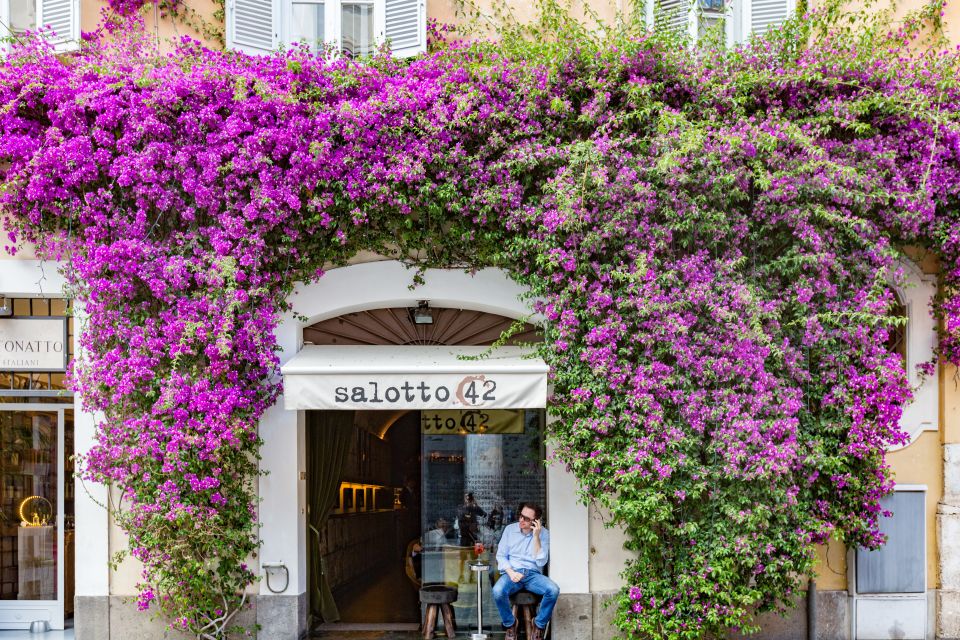
This is the kind of Rome tour that feels like it was designed for travelers with limited time. You’re not hopping randomly across the city. Instead, you’re walking a logical line through central Rome, starting around the Spanish Steps and finishing at Trevi. Along that path you hit major “you have to see it” moments—plus a few stops that help the big sights make sense.
The value here is not only that you see famous places. It’s how you see them. A good guide turns a list of monuments into a story: Roman-era structure and materials, then Renaissance and Baroque flourishes, then the city’s showmanship at fountains and piazzas. Even if you’ve studied Rome on a screen, the physical experience hits differently once you’re standing in it.
And because it’s a small group (maximum 20), you’re more likely to actually hear what matters at each stop. One review noted how a guide kept everyone together so the whole group could benefit—exactly the sort of thing you want on a walking tour.
You can also read our reviews of more walking tours in Rome
Meeting at the Keats-Shelley Museum: easy to find, easy to start
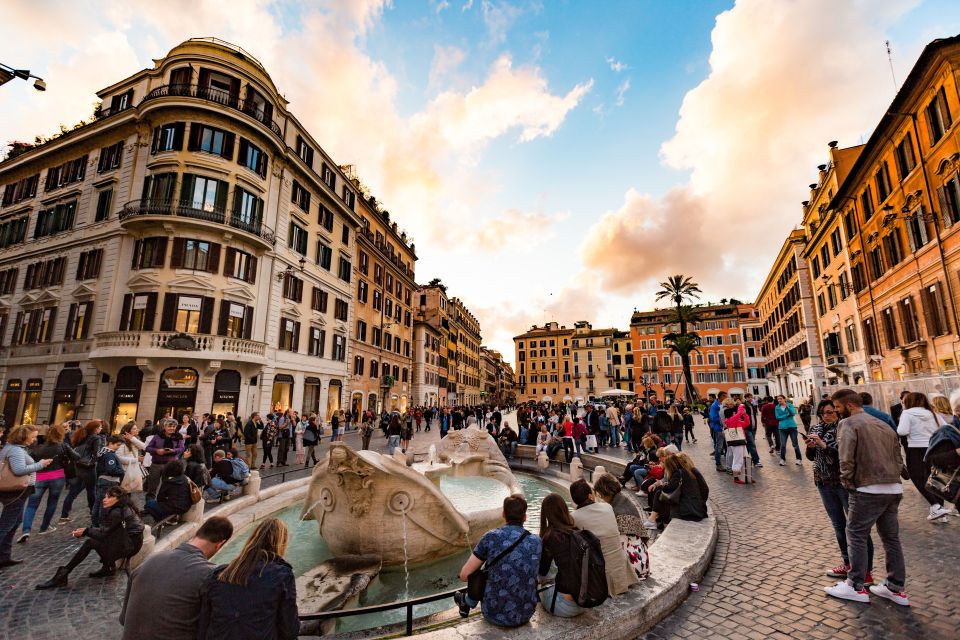
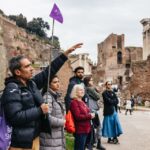
You meet at the entrance of the Keats-Shelley Museum at the bottom of the Spanish Steps, in front of Acqua di Parma. Your guide wears a GETYOURGUIDE badge or holds a sign with the same logo. Arrive about 10 minutes early, because you’ll want to check in, find the group, and settle before you start climbing.
This matters more than it sounds. The Spanish Steps area is busy, and small delays can ripple through a route that includes indoor entry at the Pantheon. If you’re the type who likes to “get there on time and breathe,” you’ll appreciate this simple, clear start.
Spanish Steps and Trinità dei Monti: where the climb becomes part of the tour
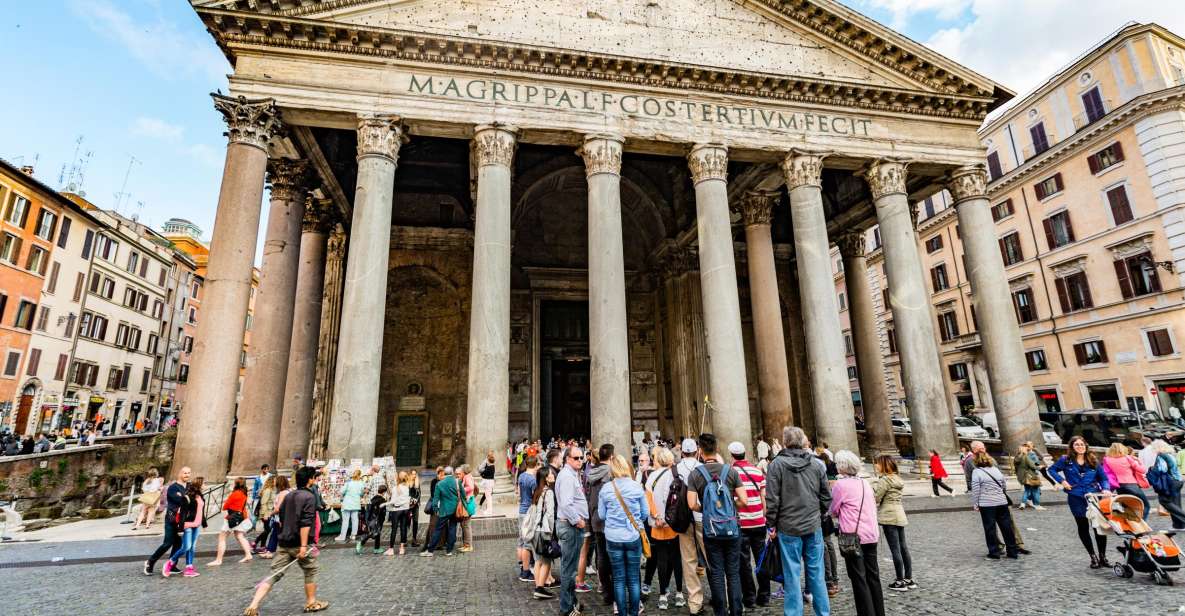
The tour follows the Spanish Steps up to Trinità dei Monti, a late Renaissance church. Starting here is smart because the steps give you an immediate sense of Rome’s dramatic scale—wide stairways, layered viewpoints, and the way buildings frame your sightlines.
Also, the Spanish Steps area sets the tone: this isn’t only about ancient ruins. Rome’s later styles are right in your face too. Even the way the route transitions from Renaissance religious architecture toward the Baroque piazza rhythm helps you understand what you’re about to see next.
If you’re traveling with a short itinerary—say you only have a morning or early evening before you head to the Colosseum/Forum area—this opening stop gives you bearings fast. Not in a vague way. In a practical way: you’ll learn where key sights sit relative to each other, so the rest of your trip feels less like pinball.
Piazza Navona and the “Stadium of Domitian” moment
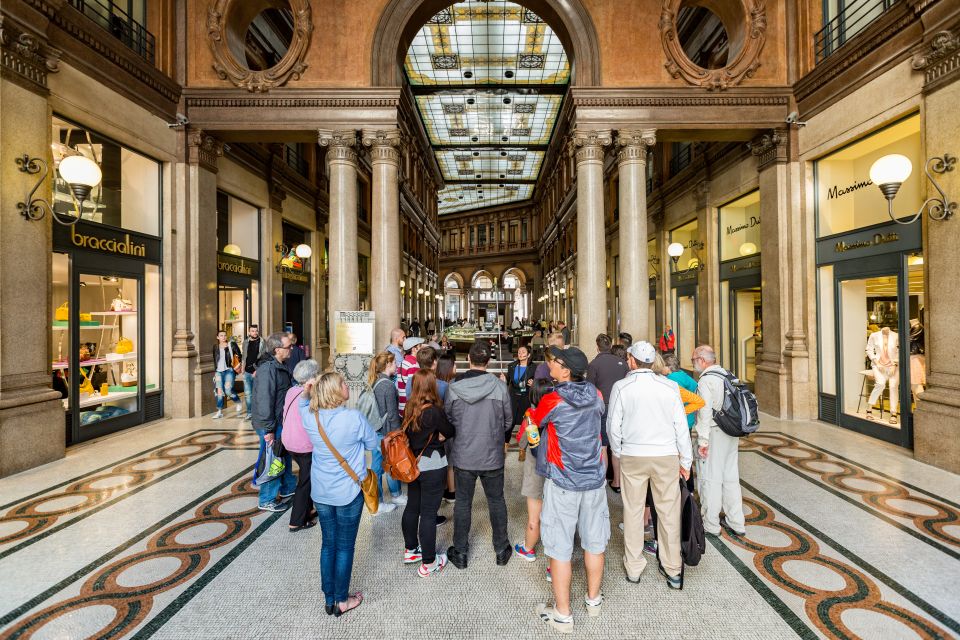
Next comes Piazza Navona. This square is famous for a reason. Your guide explains it as the Stadium of Domitian, built in 85 A.D. to accommodate athletic games. That’s the fun part: you’re standing in a Baroque spectacle, but the bones of it trace back to Roman engineering.
From there, Piazza Navona becomes a highlight reel. It’s described as the pride of Baroque Rome, with architectural elements and sculptures connected to masters like Gian Lorenzo Bernini and Francesco Borromini. If you like seeing how styles build on each other, this is one of the best “two eras at once” stops on the route.
You’ll also see Bernini’s renowned Fountain of the Four Rivers here. Even if you’ve seen photos, the square-scale makes it click—how a fountain anchors a piazza and turns open space into a visual stage.
Practical note: Piazza Navona can get crowded. Your best strategy is to keep moving with the group and let the guide position you for the key views, instead of trying to break off early for angles.
Pantheon inside: stand in a Roman Empire temple
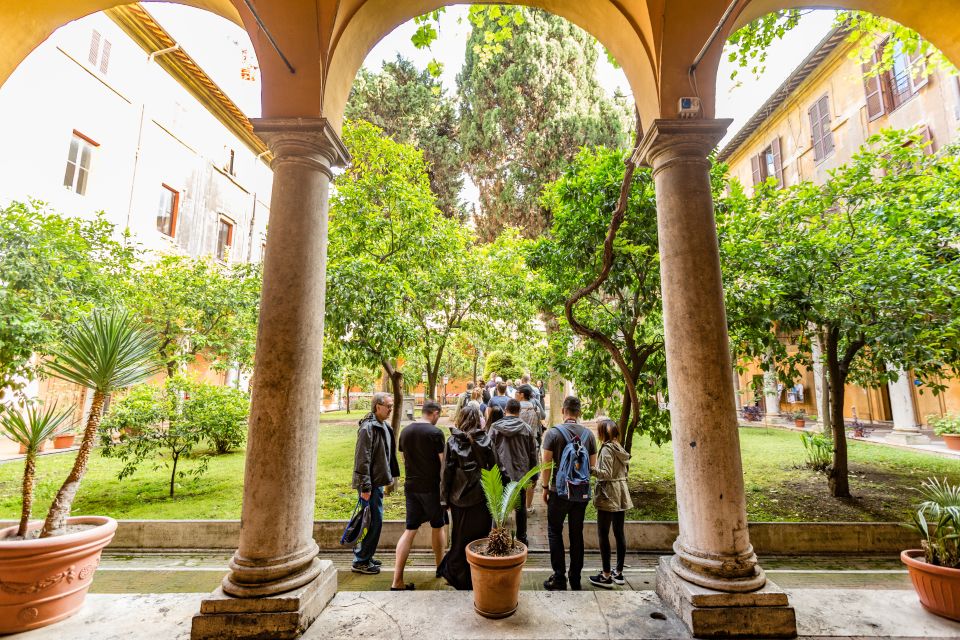
The Pantheon stop is one of the main reasons this tour feels worth it. You don’t just look at the exterior. You go inside, where you can see a remarkably intact Greek-Roman temple structure from the Roman Empire.
This is also where the tour’s pacing helps. By the time you reach the Pantheon, you’ve been primed for Roman-to-Renaissance-to-Baroque connections. So when you step into a space that still feels Roman in its core design, it doesn’t feel like a random museum stop. It feels like the spine of the city.
One practical reason to include Pantheon: it can be an “on your own” commitment that turns into planning stress. With a guided walk that gets you there as part of a route, you spend your time looking, not figuring out.

Marcus Aurelius Column: a specific stop with a movie link
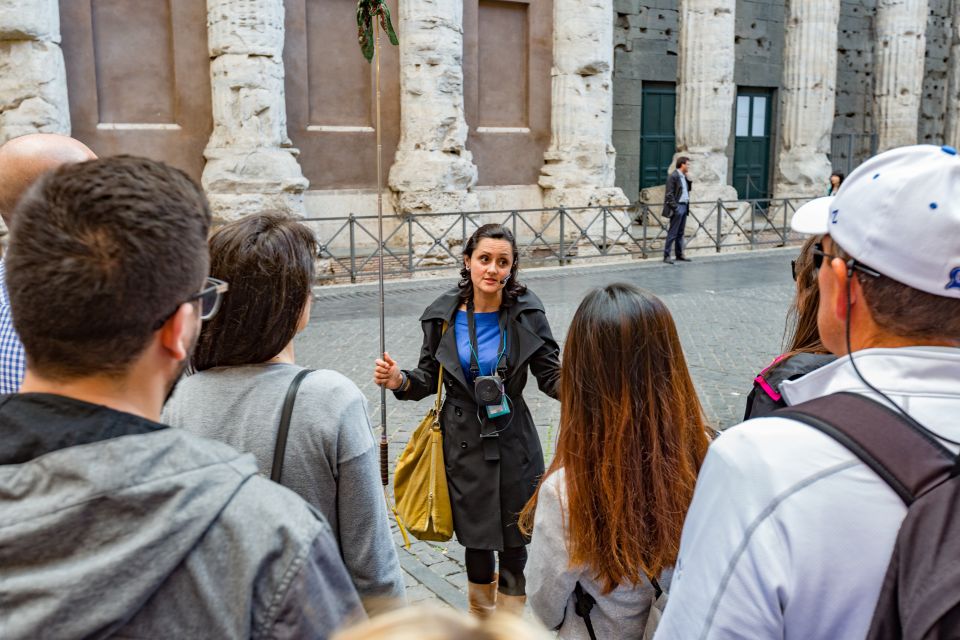
After the Pantheon, the route continues to a carved Column of Marcus Aurelius. The tour focuses on admiring original scenes from the movie Gladiator.
That movie connection is useful because it gives you a memory anchor. Without it, a column can feel like “another carved monument.” With it, your guide helps you match details to what you already recognize—then you can reframe what you’re seeing as actual Roman sculpture rather than a film prop.
This is also a good place to ask yourself what you want from your Rome day. If you enjoy art and symbolism and don’t mind a quick but focused stop, this kind of detail-heavy moment is exactly the sweet spot.
Saint Ignatius (Sant’Ignazio): trompe l’oeil that plays tricks the right way
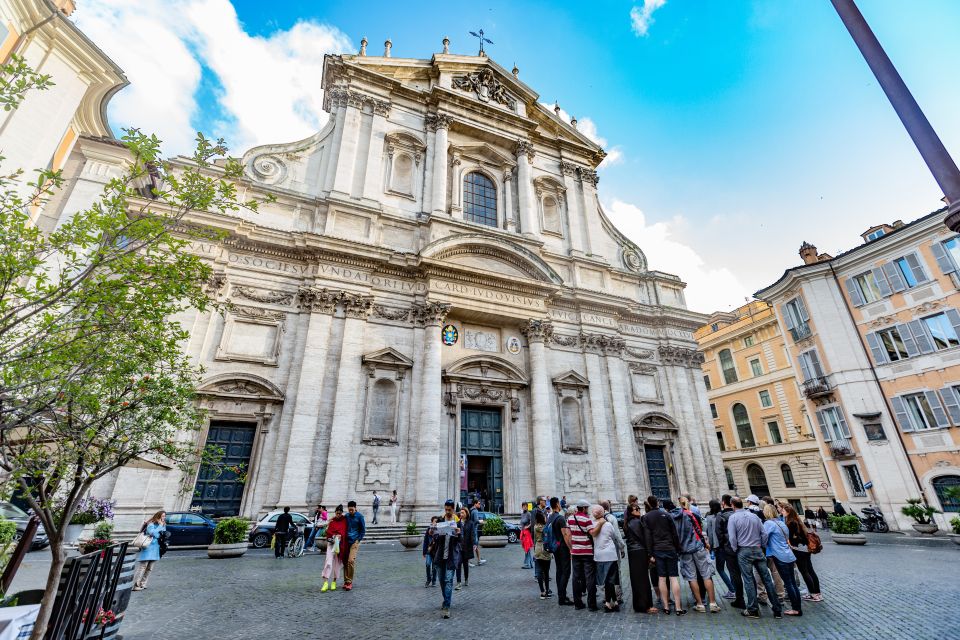
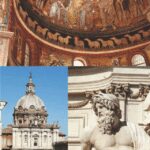
At Sant’Ignazio Church, you’ll see one of the finest examples of trompe l’oeil in the dome. Trompe l’oeil means it tricks your eyes into thinking something is not exactly as it appears. Even if you’ve seen images before, seeing it in the actual church space makes it far more convincing.
This stop is where I find the tour earns its keep. The walk already includes major names—Pantheon, Piazza Navona, Trevi. Sant’Ignazio adds a different kind of payoff: optical illusion art and the way Baroque churches used visual tricks to create drama.
One more thing I like: the tour doesn’t treat this as a quick “look up, move on” photo moment. The dome illusion needs your attention. A good guide helps you focus on what you’re looking at and how the artwork is constructed so you understand the effect, not just the result.
Trevi Fountain: coin toss, wish-making, and the end of the story
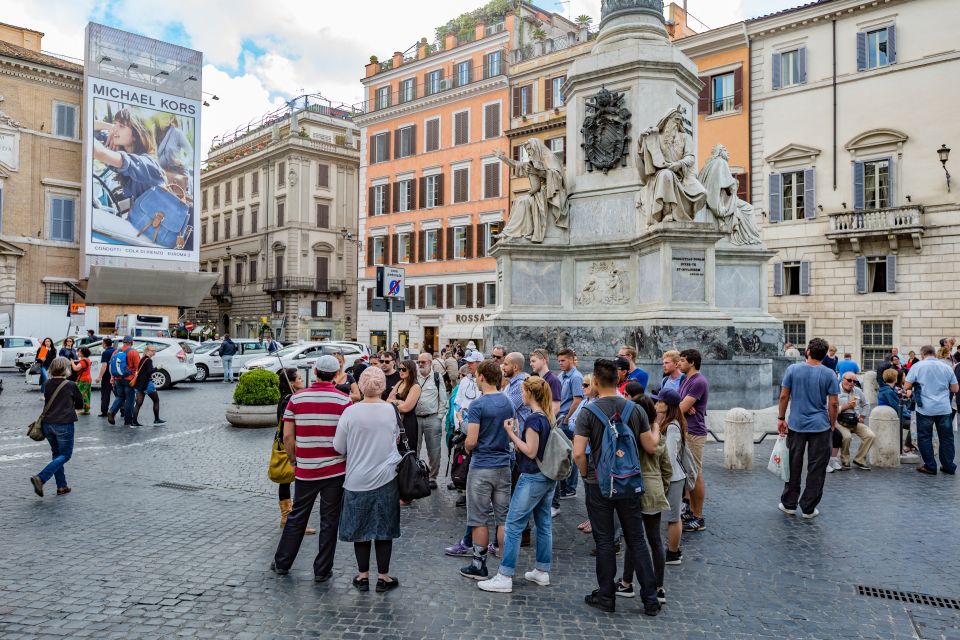
The final big moment is Trevi Fountain. After Saint Ignatius, you continue to the fountain for the end of the tour. The ritual is clear: throw a coin in Trevi and make a wish to one day return to Rome.
This finish works emotionally. You start with the city’s layered stairway energy and end with the grand, iconic fountain that people associate with romance, spectacle, and return trips. Tossing a coin is corny in the best way. The real win is that you’re arriving at Trevi after being guided through enough Rome context to appreciate why this fountain is a cultural magnet, not just a busy photo stop.
Also, check how the tour closes. The activity ends back at the meeting point. So after Trevi, you should expect to regroup and head back rather than going off alone immediately.
Pace, group size, and how 2.5 hours actually feels
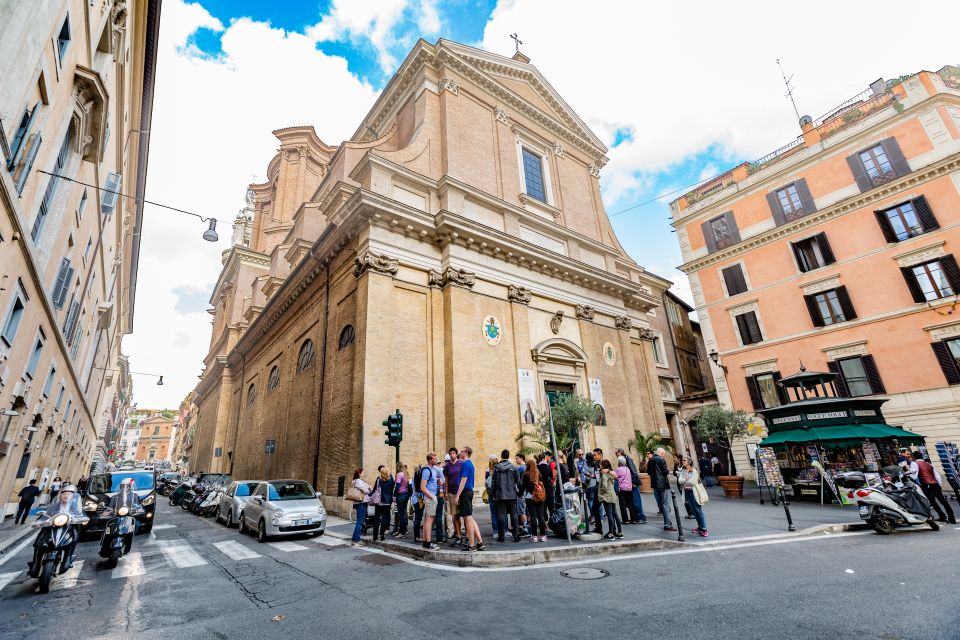
Plan for real walking. Comfortable shoes aren’t optional advice here—they’re the only sane option. This is a city of cobbles, uneven pavement, and frequent stop-start moments while you look at fountains, churches, and carved monuments.
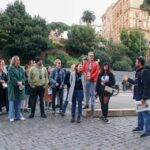
The group size is capped at 20, which is big enough to have energy but small enough to keep control. Translation is also restricted for comfort—no translating during the tour. If you rely on a language assistant, plan around that.
This isn’t the kind of tour where you can casually drift behind and catch up later. Your best experience comes from staying with the group and listening when the guide stops you for a specific view. If you want a light, flexible stroll, consider a slower plan. If you want a structured Rome highlight route with key stops explained, this hits the mark.
Price and value: what $45.55 buys you in Rome time
At $45.55 per person, you’re paying for more than movement from A to B. You’re paying for:
- a licensed English-speaking guide
- guided time inside the Pantheon (not just outside views)
- guided sequencing across major squares and churches so you don’t waste your day guessing routes
A walking tour can be a bargain when it replaces things you’d otherwise pay to plan or book separately. Here, Pantheon entry included is the big value driver. Add in the attention-grabbing Sant’Ignazio trompe l’oeil stop and the Bernini-heavy Piazza Navona segment, and the money starts to look like you’re buying access to meaning, not just sightseeing.
So is it worth it? For most first-time Rome visitors who want a high-impact route in one half-day block, I think it’s a solid spend. The main reason not to buy is if you’re already committed to doing these sites on your own with your own pace and your own app-based planning.
Dressing and rules that keep church visits smooth
Rome church stops come with specific expectations. For this tour, you’ll want something that covers your shoulders and knees for entry to churches and private areas. Avoid shorts and short skirts, and don’t show up with sleeveless shirts. Pack accordingly.
You should also plan for the tour rules:
- no smoking
- no eating or drinking on the tour
- no pets
- no oversize luggage, baby strollers, and no large bags
- no alcohol or drugs
Those restrictions are there for group flow and respectful entry. They also mean you’ll likely carry less, so your arms stay free for your photos and water.
If you’re traveling with a lot of “just in case” items, travel lighter than you think you need. A small day bag beats dragging anything bulky around the historic center.
Who this walking tour is best for
This tour is a great fit if you want a guided highlights loop through Rome’s fountains and piazzas, with two big indoor moments. It’s also a good pick for travelers who like structure: you’ll start at the Spanish Steps and end at Trevi, with major stops in between.
It’s not suitable for everyone. It’s not appropriate for:
- children under 10
- wheelchair users
- anyone relying on strollers (it’s not possible to join with them)
If you can walk comfortably for long stretches and can meet church dress expectations, you’ll likely enjoy the pacing and the variety. And if you’ve been to Rome once before and want a route that makes you look up and notice details, Sant’Ignazio’s trompe l’oeil is the kind of payoff that still feels new.
Guide styles: what you might notice (and why it matters)
The experience depends heavily on the guide. In past tour groups, names like Bruno and Stefano show up in glowing comments, and the common thread is energy plus storytelling.
One Bruno-led group was treated with tiaramisu, which tells you something about that guide’s personality. Stefano is also tied to memorable extra moments like a beer after the walk. Even if you don’t expect snacks or drinks, the bigger point is this: the best guides here don’t just recite facts. They keep you moving, laughing, and paying attention.
If you’re the type who tunes out when a tour becomes a lecture, look for the guide who keeps the pace light and the explanations pointed.
Final verdict: should you book Rome: Fountains and Squares?
Book it if you:
- want a small-group route through the Spanish Steps, Piazza Navona, Pantheon, Sant’Ignazio, and Trevi
- care about seeing Pantheon inside and experiencing Sant’Ignazio’s trompe l’oeil
- want a structured 2.5-hour block that still leaves time for gelato, wandering, and your next Rome goal
Skip it if you:
- need wheelchair or stroller access (this route isn’t set up for that)
- dislike walking long distances in historic streets
- want a free-form stroll with no guidance and no dress code expectations
If your plan is simple—see Rome’s top fountain-and-square icons plus a couple of interior wow stops—this tour is an efficient way to do it without turning your day into a map puzzle.
FAQ
How long is the Rome Fountains and Squares Small-Group Walking Tour?
The tour duration is 2.5 hours.
Where does the tour start?
Meet your guide by the entrance of the Keats and Shelley Museum at the bottom of the Spanish Steps, in front of the Acqua di Parma store.
Where does the tour end?
The activity ends back at the meeting point.
Is the tour guided, and what language is it in?
Yes. It includes a licensed English-speaking guide.
What are the main stops on the tour?
You’ll see the Spanish Steps area and Trinità dei Monti, Piazza Navona, the Pantheon (inside), a carved Column of Marcus Aurelius, Sant’Ignazio Church with its trompe l’oeil dome, and you’ll finish at the Trevi Fountain.
Is this tour suitable for children?
It is not suitable for children under 10.
Can wheelchair users or strollers join?
No. The tour is not possible to join with strollers or wheelchairs.
What should I wear or bring?
Wear comfortable shoes and dress in a way that allows you to cover shoulders and knees for church entry. Avoid outfits like shorts, sleeveless shirts, or short skirts.