REVIEW · CITY TOURS
Rome: City Highlights Walking Tour
Book on GetYourGuide →Operated by Crown Tours · Bookable on GetYourGuide
Rome at night has a way of feeling personal. This tour strings together the Eternal City’s biggest icons with smart commentary and easy strolling. I love the tight, 2-hour loop that still manages to hit major landmarks like the Pantheon and Trevi Fountain, and I also like that the guide experience is a major part of the value. One drawback to consider: the pace can feel like a lot of story-stuff in a short time, so you’ll want comfy shoes and an open mind for facts and architecture talk.
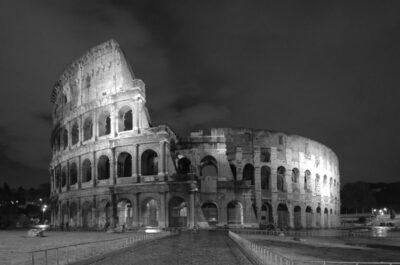
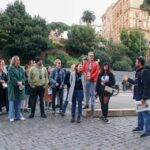
You meet near the Colosseum (with a clear Crown Tours sign), then head through Rome’s most famous central streets and piazzas after dark. The guides are often praised for making sites click—Sandra, Serena, and Paolo (Pablo) are a few names you might hear in the mix—and that matters because the landmarks are only half the experience. If you’re the type who needs silence and space between stops, the group energy may feel a bit lively.
In This Review
- Key things to know before you go
- Meeting Point and Start-Up Plan Near the Colosseum
- Why This Rome Night Walk Feels Different Than Daytime Sightseeing
- Via del Corso: Designer Storefronts on a Very Roman Street
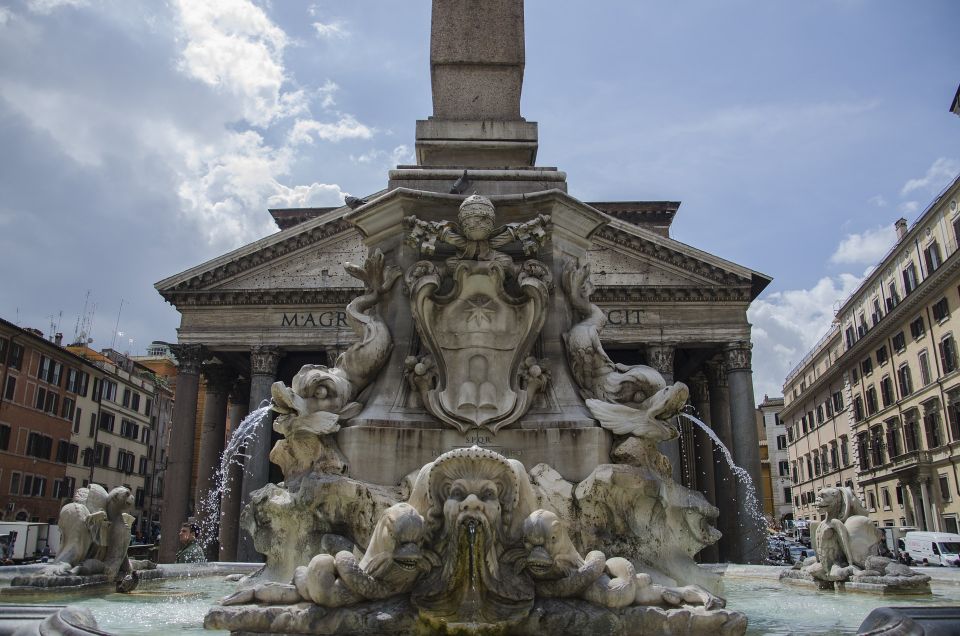
- The Pantheon at Night: A Dome That Still Stops People
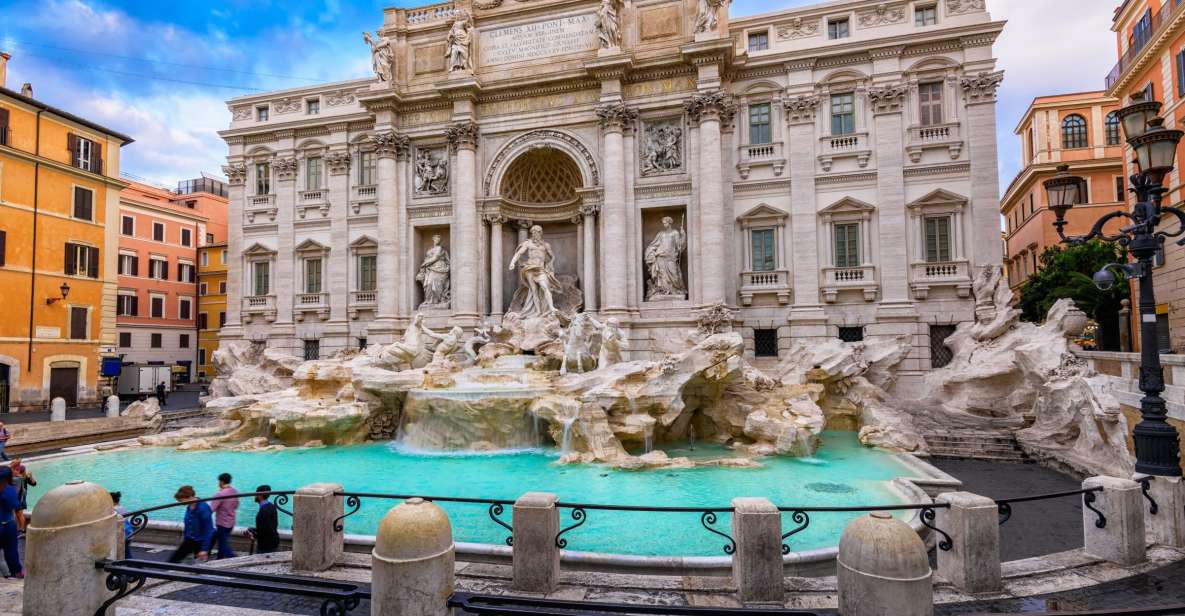
- Trevi Fountain: Highest-Earning Fame, Up Close
- Piazza Navona and Bernini’s Four Rivers Fountain
- Campo de’ Fiori: The Night Hub Before the Wrap-Up
- Guides and Pacing: What You’ll Likely Enjoy Most
- Value for the Price: Is $56.94 Worth It?
- Who This Tour Suits Best (and Who Might Want a Different Plan)
- Quick practical checklist before you book
- Should You Book This Rome Highlights Night Walk?
- FAQ
- How long is the Rome City Highlights Walking Tour?
- What does the tour cost?
- Where is the meeting point?
- Is hotel pickup or drop-off included?
- What languages are available for the live guide?
- What’s included in the price?
- What is the cancellation policy?
- Is reserve now, pay later available?
- What time does the tour start?
- Where does the tour end?
Key things to know before you go
- Meet near the Colosseum metro terrace with a pedestrian bridge and a purple Crown Tours flag
- Two hours, big sights: Pantheon, Trevi Fountain, Piazza della Rotonda, and Piazza Navona
- Night lighting changes everything for photos and for the feel of each piazza
- Via del Corso window-shopping zone along the way, including major designer storefronts
- Live guide in French, Spanish, or German (so pick your language carefully)
- The tour ends where it starts even though you’ll finish the night feeling like you’ve been dropped into Campo de’ Fiori
Meeting Point and Start-Up Plan Near the Colosseum
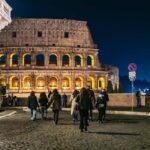
Plan to arrive early. The meeting point is about 100 meters from the Colosseum, up on the terrace above the Colosseum Metro Station. There’s a pedestrian bridge to cross above the road, then the office is about 50 meters farther up the street. Look for the purple flag that says Crown Tours.
This matters more than it sounds. The info you have here is clear: late arrivals cannot be guaranteed entrance. So if you’re the kind of person who hates rushing, give yourself a buffer. You’re not just meeting a guide—you’re aligning with the group so you don’t slow everyone down.
Also note what’s included and what’s not. You get a tour guide, but hotel pickup and drop-off aren’t part of the deal. That’s normal for a central-walking tour, but it changes your planning. You’ll want to start your day already positioned near the Colosseum area, or be ready to get there on your own using metro or a short walk.
Finally, the tour ends back at the meeting point. So even though the last stretch of the experience pushes you toward lively squares (more on that soon), you’re not getting deposited miles away with no way back. It’s a loop. A satisfying one, but still a loop.
You can also read our reviews of more walking tours in Rome
Why This Rome Night Walk Feels Different Than Daytime Sightseeing
The highlight list is telling: you’re meant to see Rome’s iconic landmarks under moonlight. That sounds poetic, but it also changes the practical experience. Night lighting can make stone surfaces look deeper and more textured, and piazzas tend to feel more social once evening settles in. You’re also moving through the city in a time window when many people are done with long museum visits and are out for dinner—so the vibe around the streets and fountains often shifts from tourist mode to neighborhood mode.
You’re walking cobbled alleys and moving between big open squares. That’s a key point. You don’t just stand and look from one spot. You get a sequence: famous street, major temple, famous fountain, historic square, then another historic square with one of Bernini’s best-known fountains. The route gives your brain a path for connecting the sites.
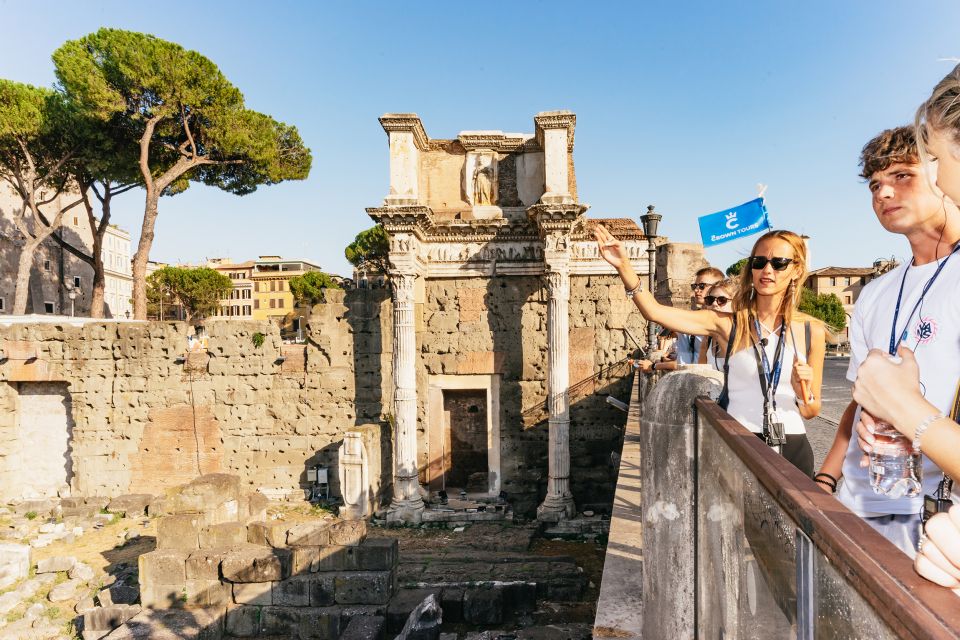
And this is where the guide can make a real difference. Guides on this style of tour are expected to explain what you’re seeing, not just point. Some specific guide strengths show up in the names people mention—Sandra is described as taking her time and structuring the story in a way that works even for kids, while Serena is praised for architecture insight. That kind of attention helps when you’re looking at a dome, a fountain, and a baroque piazza all in one evening.
Just keep one caution in mind: you have only 2 hours. If you’re someone who prefers long pauses at each landmark, the schedule may feel tight. The upside is you’ll see a lot; the trade-off is you’ll need to absorb quickly.
Via del Corso: Designer Storefronts on a Very Roman Street
After the start near the Colosseum area, you pass through the kind of Rome that feels almost contradictory: ancient stone on one side, fashion flagship stores on the other. Via del Corso is a major shopping street, and the tour uses it for more than walking through crowds.
In the description, you’ll see big Italian brand names called out—Valentino, Fendi, and Armani flagship stores. That’s useful even if you don’t plan to shop. It helps you locate yourself. You’re not drifting. You’re moving down a specific spine of central Rome that locals and visitors both recognize.
This stretch is also a good setup for the evening’s pacing. You’ll have a walking rhythm before reaching the heavier-hitting sites like the Pantheon and Trevi Fountain. And since the tour is guided, you’re likely to get the context of how this part of Rome evolved into a place where commerce and culture sit side by side.
If you do enjoy window-shopping, this is one of the few times you’ll get to do it while also having someone explain the city around you. If you don’t shop, just treat it as a moving corridor—Rome’s “main drag,” but one with real historical layers underneath.
The Pantheon at Night: A Dome That Still Stops People
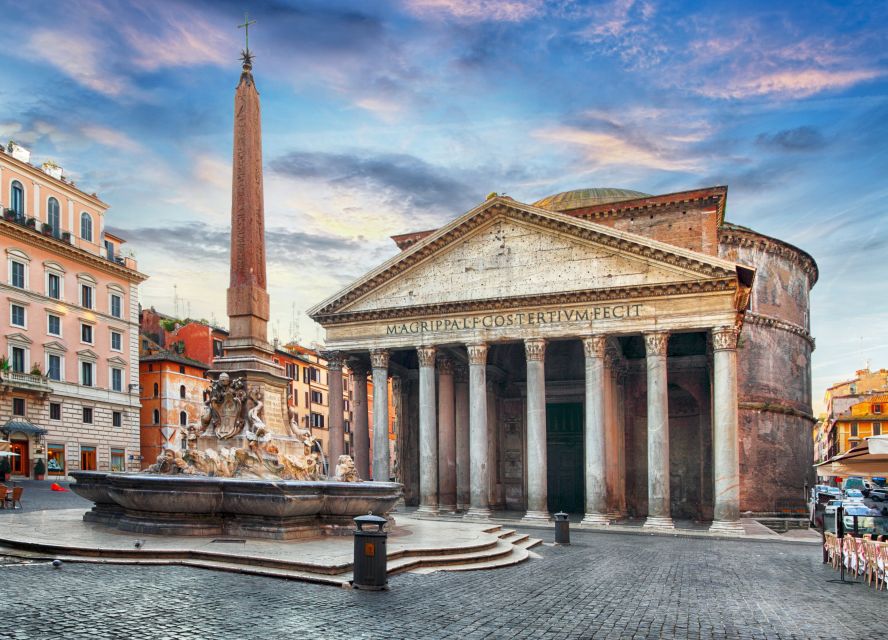
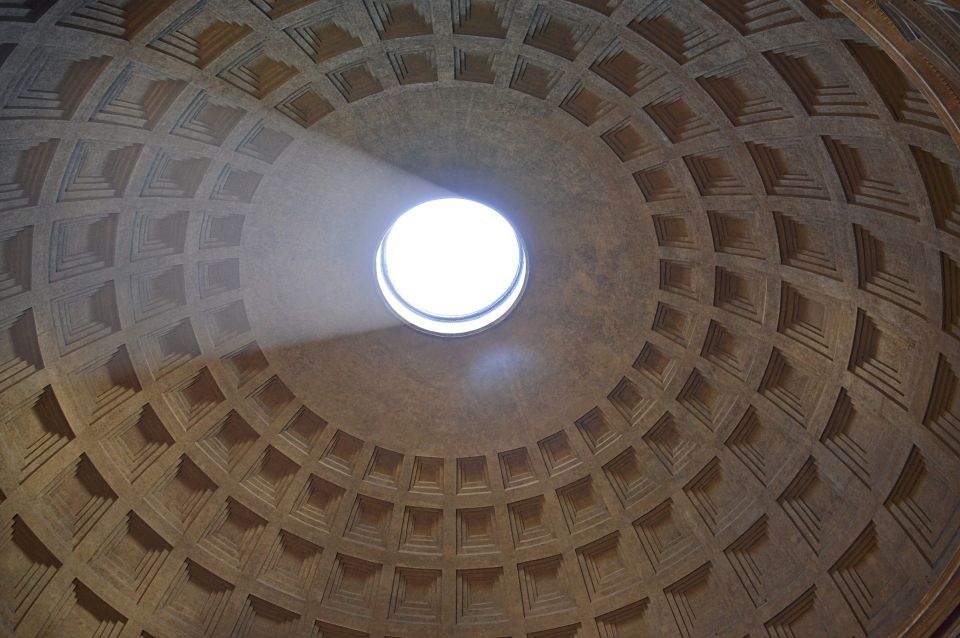
Next comes the big one. You head toward the oldest standing pagan temple in the world: the Pantheon. At night, it’s not just impressive—it’s easier to take in the scale because the building is lit and your attention isn’t split between long daytime lines and constant movement.
The tour description specifically frames what to look for: the Pantheon’s dome, and the way its architecture connects to Roman ambition. You’re also told to admire Hadrian’s Pantheon at night, lit up and surrounded by fountains and bars as you stand in the area of Piazza della Rotonda.
Here’s the practical value: a guided explanation helps you shift from seeing a famous facade to understanding why it’s famous. Roman architecture is often easier to appreciate when someone points out what the structure is doing and why it mattered. Without that, you can walk away thinking, Great photo. With it, you walk away thinking, I get the point.
One more tip: since this is a walking tour, your time at the Pantheon area may feel like a “stand and understand” moment rather than a long roam. Be ready to listen, look up, and then move on. If you want a slow, extended Pantheon experience, you might pair this with a separate visit later in the trip. But for a two-hour night overview, this stop is exactly the kind of anchor you want.
Trevi Fountain: Highest-Earning Fame, Up Close
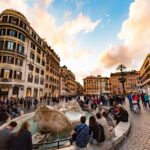
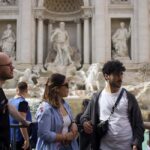
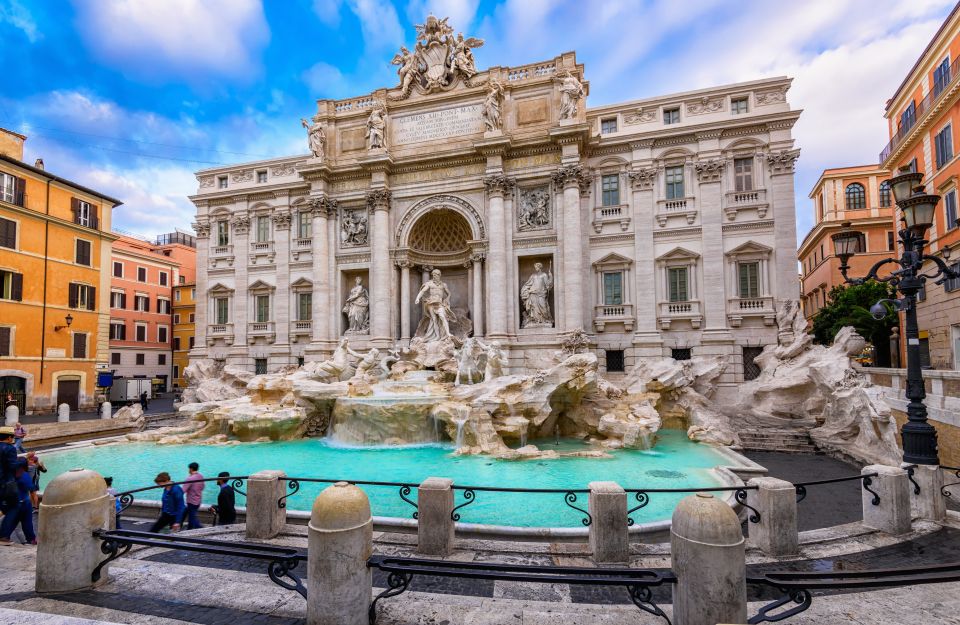
Then you go to the Trevi Fountain. It’s described as the most famous and highest-earning fountain in the world, and the tour is set up so you can admire it without turning the visit into a chaotic free-for-all.
You’ll likely spend enough time to actually take in the full composition, not just snap a quick shot. The point of a night walk is to slow down your perception. You’re in a city where every stone has a story. Trevi is where those stories get loud.
The guide’s job here is to connect what you’re looking at with why it matters. The tour description links the fountain stop with learning about the importance of the Pantheon building and then moving onward to Trevi. In other words, you’re not bouncing randomly between icons. You’re following a thread: Roman power, then Roman sacred/monumental design, then a fountain that became a global magnet.
A small bonus you may get from the guide style: in at least one instance, a guide named Mattej offered a quick gelato stop near Trevi. That kind of micro-pause is optional, but it can turn a photo stop into a memory.
Just remember: this is a fountain famous for crowds at all hours. Even on an evening tour, you’ll want to be patient, step out of people’s paths, and let the group reposition.
You can also read our reviews of more city tours in Rome


Piazza Navona and Bernini’s Four Rivers Fountain
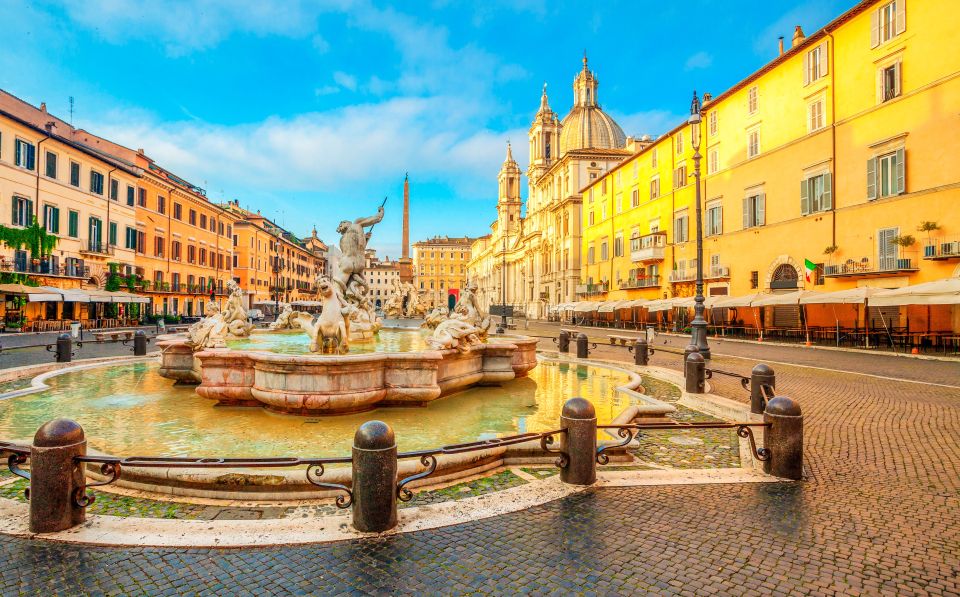
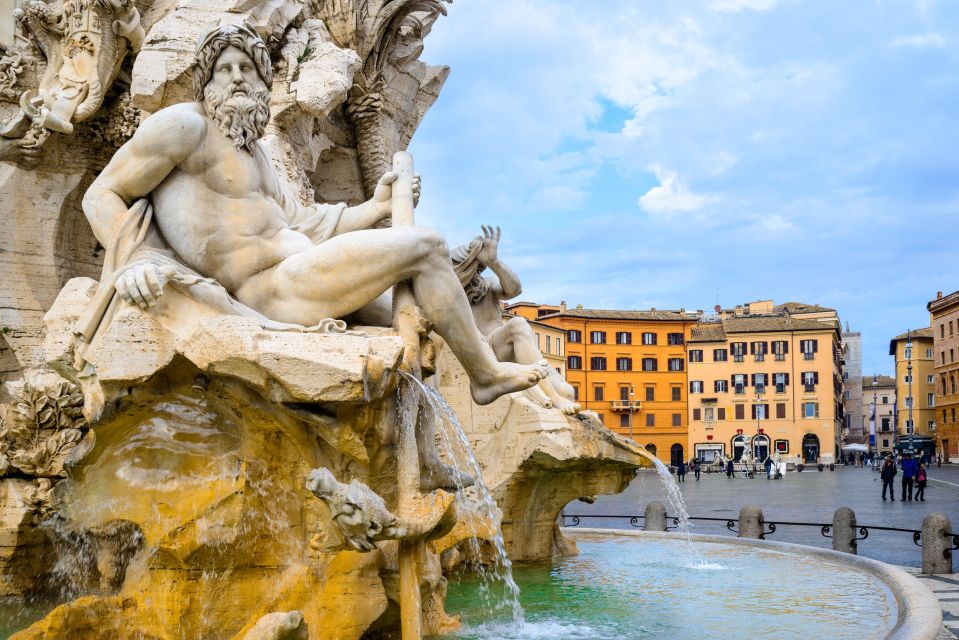
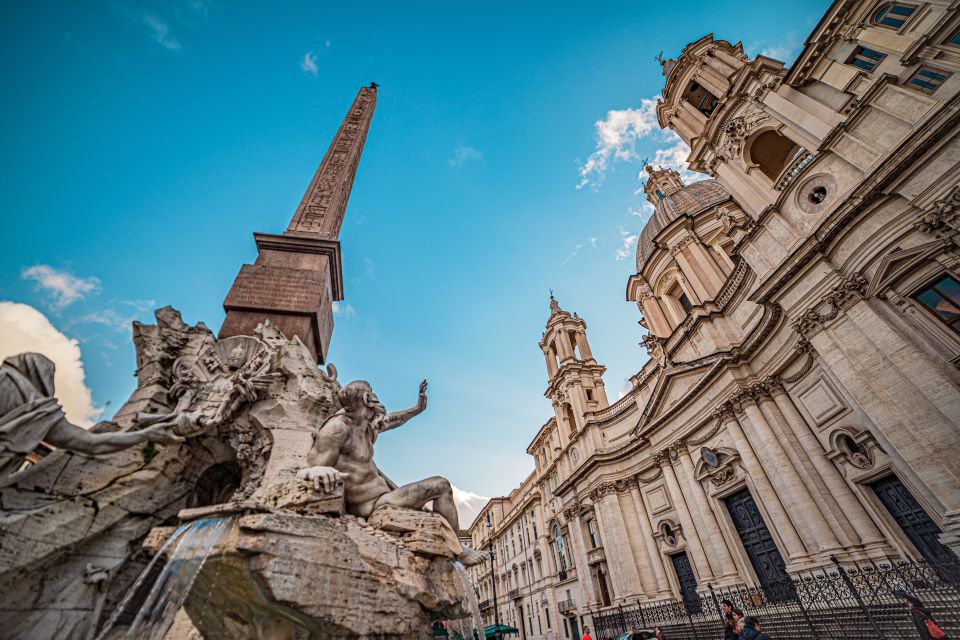
Piazza Navona is the next “wow” stop. It’s a baroque piazza experience, but the tour focuses your attention on the fountains at Piazza Navona—especially Bernini’s Fountain of the Four Rivers.
The description adds a fascinating connection: it’s located just in front of Bernini’s original design for St Peter’s church. That relationship is the kind of detail that makes you look at a fountain differently. You stop treating it like decoration and start treating it like part of a bigger plan—an artist’s influence traveling from one mega-project to another.
This stop also tends to be a favorite because the plaza gives you angles. You’re not trapped in one viewpoint. You can see the fountain area while also taking in the surrounding space, the way the piazza shapes movement and meeting.
Practical note: as the tour continues, your legs may feel it. You’ve done Via del Corso walking, then Pantheon-area positioning, then Trevi. Piazza Navona is where you’ll want to keep your footing and be ready to stand and look while your guide explains.
If you’re someone who loves architecture and art connections, this is where the guide’s passion really shows. Serena and others are specifically praised for building architecture understanding as you go.
Campo de’ Fiori: The Night Hub Before the Wrap-Up
After Piazza Navona, you head toward Campo de’ Fiori square. This is described as the main hub for bars, nightlife, and food in Rome—the electric part of the evening.
This is a smart ending stretch. Even though the tour is ultimately timed to finish and return to the start area, being guided into this neighborhood-feeling zone helps you shift from sightseeing into a real plan for the rest of your night. The guide may also help you orient yourself for what comes next—where to hang out, what kind of food area you’re entering, and how to keep moving without getting lost.
One thing to keep straight: the activity description says the tour ends back at the meeting point. So don’t assume you’ll be dropped forever near Campo de’ Fiori. Think of Campo de’ Fiori as the mood-setting conclusion: you’ll feel the city’s pulse, then you’ll wrap back toward where you started.
That’s a good thing. It protects you from the common problem of ending an evening tour and realizing you’ve been left in a place you don’t know how to leave. Here, the loop keeps you anchored.
Guides and Pacing: What You’ll Likely Enjoy Most
A walking tour lives or dies on the guide. The tour is presented as having a professional, expert, charismatic local guide, and the guide quality comes through in the names people share.
You’ll see patterns in what people praise:
- People mention guides like Sandra for structure and patience, including making the story easier for children.
- Serena gets credit for architecture insight across the buildings you pass.
- Paolo (Pablo) is highlighted as warm, welcoming, and full of knowledge.
- Guides are described as friendly and great companions for walking through the city center, with some even helping with practical next steps like taxi finding.
That last point is worth noting for your planning. Some tours can end with a vague goodbye. This one tends to keep you moving in a useful direction. In one case, Mercia was mentioned for walking guests toward a favorite dinner area that felt less touristy and more value-focused.
Still, pacing is a real consideration. Two hours is not long. If you’re the type who wants to read every plaque and stare at details until they sink in, the time limit may push you. One caution that shows up with this format is that the information can be a lot to digest within the 2-hour window. So I’d treat this as an overview that sharpens your understanding—and then plan follow-up time on your own for the pieces that stuck with you.
Value for the Price: Is $56.94 Worth It?
At $56.94 per person for a 2-hour walking tour, you’re paying for two things:
1) a guided route that connects major landmarks efficiently, and
2) a local voice that helps you understand what you’re seeing—especially at night, when your time is often limited and your attention is split between lighting, photos, and movement.
This price can feel fair or steep depending on what you’d do otherwise. If you’re already planning an evening of walking through central Rome anyway, the guide becomes the value multiplier. You’re not only visiting; you’re getting context.
If, however, your dream Rome night is to wander freely without listening to any narrative, then a guided tour may feel like a cost you didn’t need. You could build a similar route on your own using the same landmarks, but you’d lose the explanation. Since Rome can be overwhelming, that explanation often turns into savings of your mental energy.
One more value detail: hotel pickup isn’t included. That keeps the tour price from being inflated by logistics, but it means you’re responsible for getting yourself to the meeting point on time. If you’ll be near the Colosseum area anyway, the price looks better. If you’re starting far away, budget extra time and transport cost.
Who This Tour Suits Best (and Who Might Want a Different Plan)
This tour is a strong fit if you:
- want a focused highlights loop in only 2 hours
- enjoy nighttime sightseeing and want landmarks lit up
- like having architecture and history explained in a walking-friendly way
- want an easy way to cover Pantheon, Trevi, Piazza Navona, and the Campo de’ Fiori area without planning every step
It may be less ideal if you:
- hate structured itineraries and prefer quiet, slow wandering
- need long stops at every landmark
- get stressed by tight timing and meeting-point rules (arrive early, late arrivals can’t be guaranteed)
Language-wise, it’s offered with live guides in French, Spanish, and German. If you speak one of those, you’ll likely get the most out of the commentary.
Quick practical checklist before you book
- Wear shoes you can stand and walk in for 2 hours on cobbles.
- Plan to be at the terrace meeting point near Colosseum early enough to check in.
- Have a phone charged for photos, especially for the Pantheon and Trevi.
- If you’re hungry after, treat Campo de’ Fiori as your cue to keep the night going.
Should You Book This Rome Highlights Night Walk?
Yes, if you want a clean, guided way to see Rome’s biggest stars in one evening and get explanations that make the landmarks click. The route hits the Pantheon, Trevi Fountain, Piazza Navona, and ends near Campo de’ Fiori, which is exactly the kind of sequence that helps you get your bearings fast.
I’d especially recommend it for first-timers who feel Rome is too big to plan perfectly. This tour gives you structure without making you feel trapped. Just go in knowing it’s a quick tour: two hours means you’ll learn a lot, but you won’t have unlimited time to linger.
If that pacing sounds like your style, book it. If you want a slow, deep, sit-down type of sightseeing, consider pairing it with separate daytime visits to the sites that matter most to you.
FAQ
How long is the Rome City Highlights Walking Tour?
The tour lasts 2 hours.
What does the tour cost?
It costs $56.94 per person.
Where is the meeting point?
The meeting point is about 100 meters from the Colosseum, on the terrace above the Colosseum Metro Station. Use the pedestrian bridge to cross above the road, then look for the purple Crown Tours flag.
Is hotel pickup or drop-off included?
No. Hotel pickup and drop-off are not included.
What languages are available for the live guide?
The live tour guide is available in French, Spanish, and German.
What’s included in the price?
The tour includes a tour guide.
What is the cancellation policy?
You can cancel up to 24 hours in advance for a full refund.
Is reserve now, pay later available?
Yes. You can reserve your spot and pay later.
What time does the tour start?
Starting times vary, and you’ll need to check availability to see the specific times.
Where does the tour end?
The tour ends back at the meeting point.