REVIEW · COLOSSEUM, FORUM & PALATINE TOURS
Colosseum, Forum & Palatine Hill Guided Walking tour
Book on GetYourGuide →Operated by Tourismotion · Bookable on GetYourGuide
Roman ruins hit harder when someone tells you what to look for. This guided walk strings together the Colosseum, the Roman Forum, and Palatine Hill so the story of Ancient Rome stays in your head as you move. I especially liked the strong, English-speaking guidance from locals like Matteo and Simona, and the fact you get earphones so you can keep up even when the crowd noise spikes.
My other big plus: the tour keeps things organized across three separate areas, so you spend your energy on the sights, not on guessing where to stand. One thing to consider is that the meeting spot can be a little confusing (a few people flagged finding the right group/sign fast), so plan to arrive early and aim for the exact landmark your guide holds—the Tourismotion flag.
In This Review
- Key Things I’d Focus On
- Meeting Point at Via dei Fori Imperiali: Get Oriented Fast
- Inside the Colosseum: 1.5 Hours That Actually Explains What You’re Seeing
- Roman Forum: Where Politics, Commerce, and Power Show Up in Ruins
- Palatine Hill: Domus Flavia, Domus Augustana, and the Best Payoff for Your Walk
- Earphones, Pace, and Group Control: How It Feels on the Ground
- What’s Included (and What Isn’t) So You Don’t Get Surprised
- Practicalities: Shoes, Bags, and the End-of-Tour Exit Rule
- Value for $72.49: When This Tour Makes Sense
- Should You Book This Colosseum, Forum & Palatine Hill Walking Tour?
- FAQ
- How long is the Colosseum, Forum & Palatine Hill guided walking tour?
- Where do I meet the guide?
- Is the arena entrance included?
- What ID do I need to bring?
- Are meals included?
- Is this tour wheelchair accessible?
- What is the cancellation and refund policy?
Key Things I’d Focus On
- Skip-the-line access to the Colosseum plus guided time across all three big sites.
- Earphones included, which makes a huge difference when crowds and echoes start playing tricks.
- Local guide storytelling, with guides described as funny, personable, and able to answer lots of questions (for example, Matteo and Alexandra).
- A tight on-foot route that prioritizes key areas without wasting time wandering.
- You see Palatine Hill the right way, with attention to imperial houses like Domus Flavia and Domus Augustana.
- Arena entrance is not included, so manage expectations if that’s on your must-do list.
Meeting Point at Via dei Fori Imperiali: Get Oriented Fast
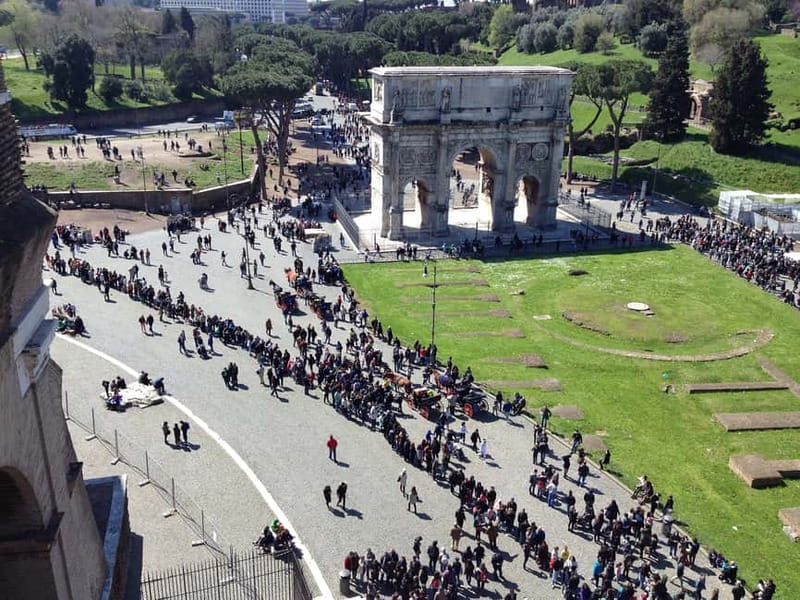
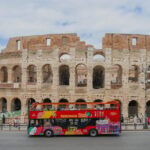
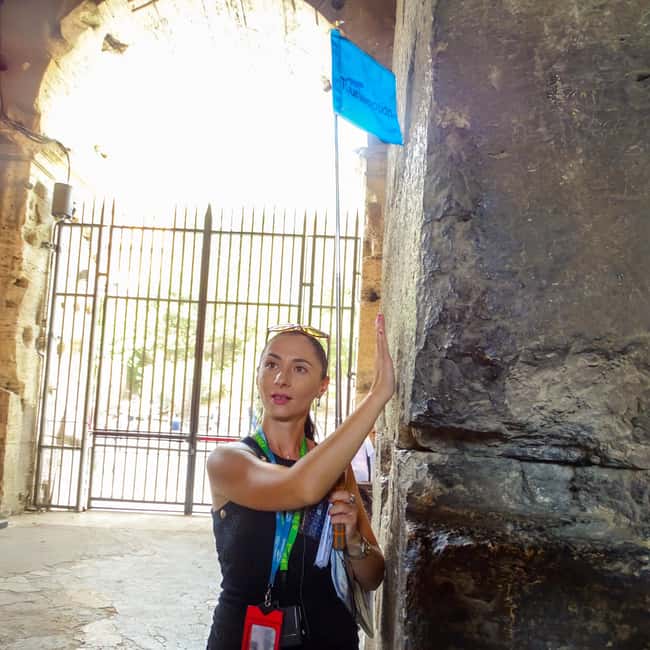
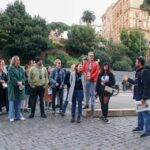
This tour starts by the Colosseum area, not deep inside the crowds. You’ll meet outside the Colosseo Metro Station on Via dei Fori Imperiali, opposite Colosseum Square, between the green kiosk and a wall-mounted fountain. Your guide is holding a Tourismotion flag, and you’re expected to arrive about 15 minutes early so you’re not rushing when the area gets crowded.
Here’s the practical reality: this part of Rome can feel like a maze at first. One review mentioned the sign wasn’t the shade people expected, and a couple comments pointed out that the meeting point can be hard to pin down quickly. So I’d treat this as a “show up early and look for the flag” situation, not a “wing it” situation.
Also note the tour’s check-in support. There’s a professional check-in team and on-site help via helpline/assistance. That’s useful if you’re late, confused, or you’re having trouble matching your guide to your group.
If you’re trying to start the day calmly, do this: arrive early, stand near the fountain/kiosk corner, and let your brain relax. Once you’re with the group, the walking flow is much easier.
You can also read our reviews of more walking tours in Rome
Inside the Colosseum: 1.5 Hours That Actually Explains What You’re Seeing
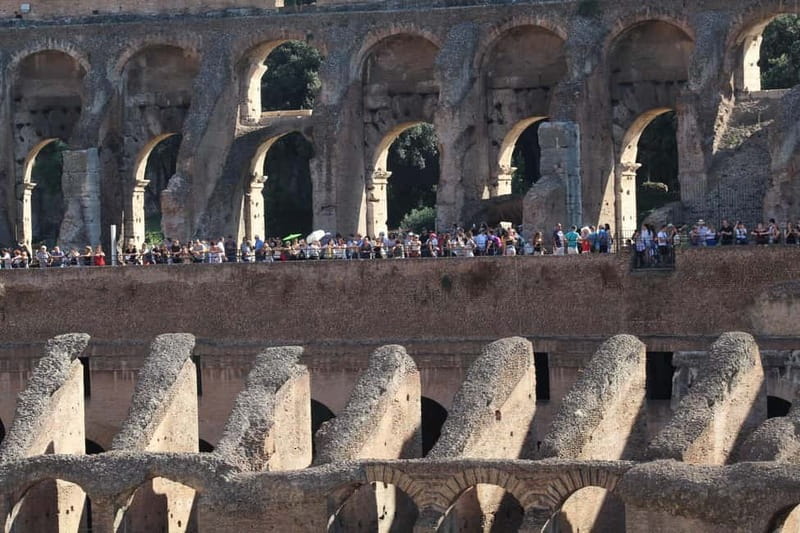
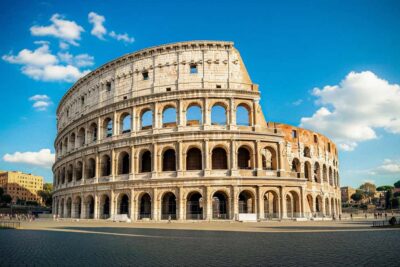
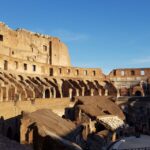
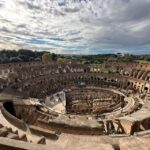
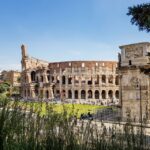
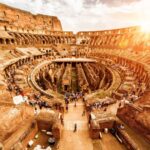
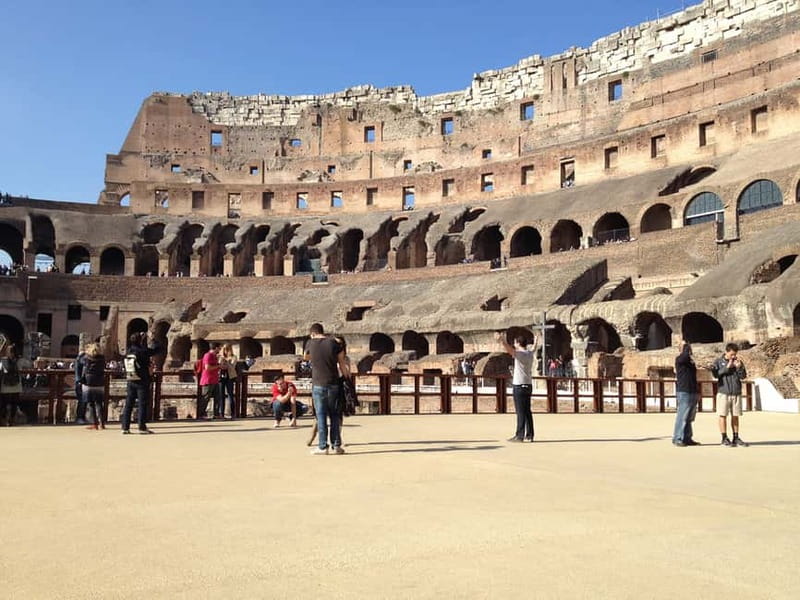
The tour’s biggest “wow” stop is the Colosseum, and it’s guided for about 1.5 hours. You don’t just look at the exterior and take photos. You’ll get context for the Colosseum as Roman engineering and as entertainment—especially the kinds of events people watched there, from gladiatorial contests to public spectacles.
This is where a good guide makes the site feel less like a set of stones and more like a place with real routines and real stakes. The descriptions you get focus on construction history and the role the Colosseum played in Roman public life. That matters because the structure can be intimidating at first—you’ll see levels, arches, and openings everywhere—but without a framework, it’s easy to miss the story.
A few reviews also highlighted guide presence in a very specific way: one guide’s voice projected well enough that the group stayed together and didn’t struggle to hear. Another point: some guides manage the group actively by calling out names at certain points, which can make you feel less like you’re wandering in a crowd.
One important expectation to manage: the arena entrance is not included. That means you may not be walking into the specific arena area (the “floor” experience). If the arena itself is your top priority, double-check what’s included before you buy any tour. This one is designed more around getting you through the Colosseum area with explanation, then continuing to the Forum and Palatine Hill.
Roman Forum: Where Politics, Commerce, and Power Show Up in Ruins
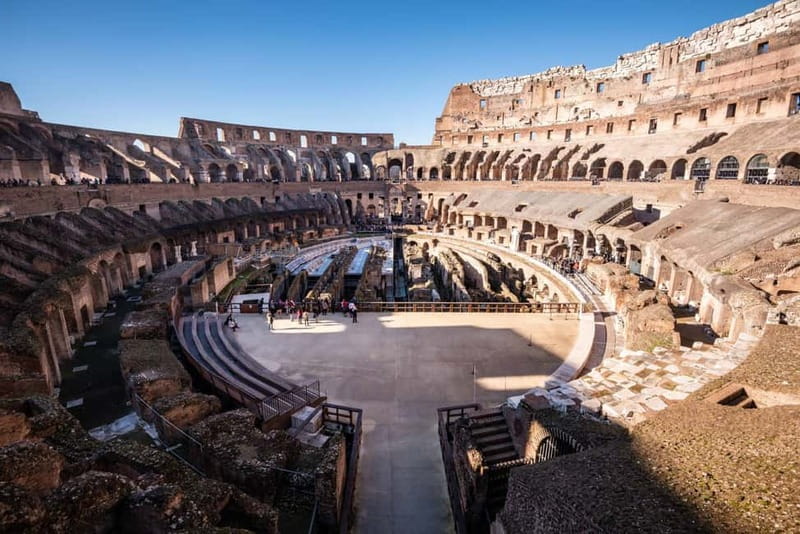
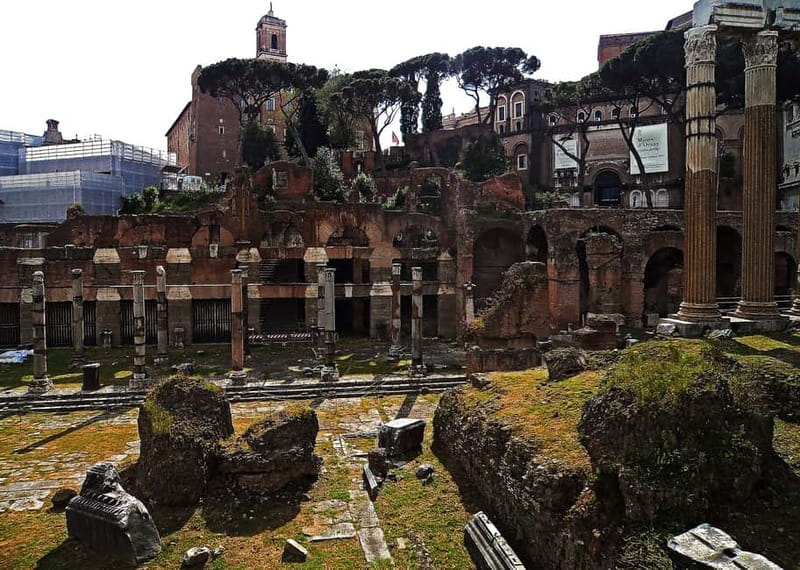
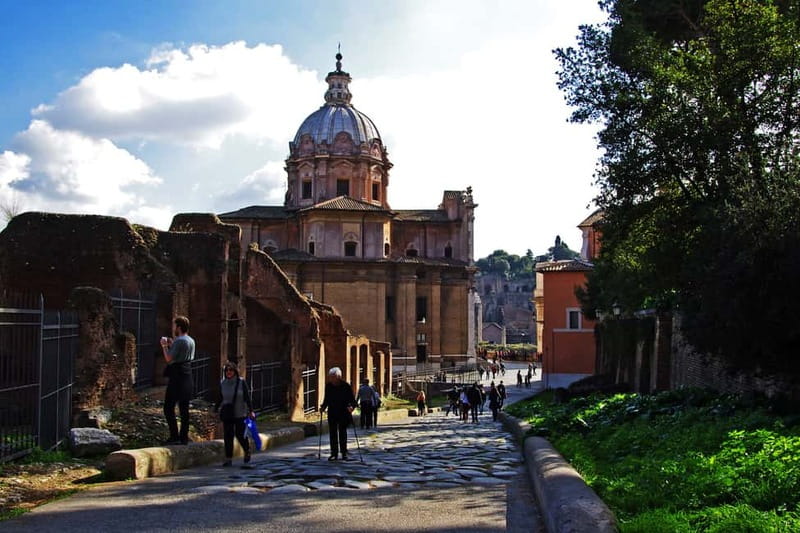
After the Colosseum, you move to the Roman Forum for about an hour of guided walking. This stop is less about one iconic structure and more about reading a landscape of ruins. You’ll be guided through key areas that reflect Roman political, social, and commercial life—temples, basilicas, and public buildings.
The value here is that the Forum can feel “random” if you’re solo. From a distance, it’s lots of stone bits and scattered arches. With a guide, it becomes a map of civic life. You’ll hear about what the Forum did in the Republic and Empire, and you’ll connect specific landmarks to the bigger story.
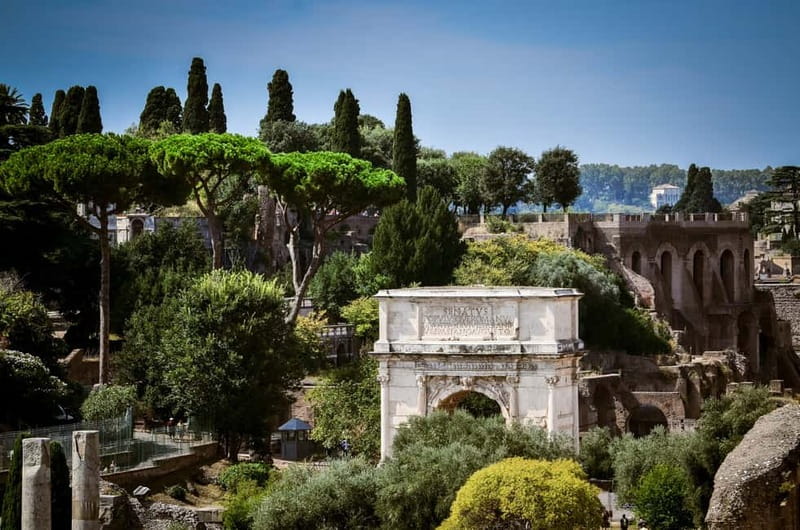
Two named sites are part of what you’ll cover: the Temple of Saturn and the Arch of Titus. Those details help your brain “file” what you’re seeing, instead of taking in ruins as decoration. Even if you’ve read about Ancient Rome before, the Forum is often where the concepts click—because this is where public decisions and public ceremonies happened.
One more subtle benefit: you’ll understand why the Forum pairs so well with the Colosseum. The Colosseum shows mass entertainment and public spectacle. The Forum shows mass politics and civic power. Put them together and you start seeing the same culture from two angles.
Palatine Hill: Domus Flavia, Domus Augustana, and the Best Payoff for Your Walk
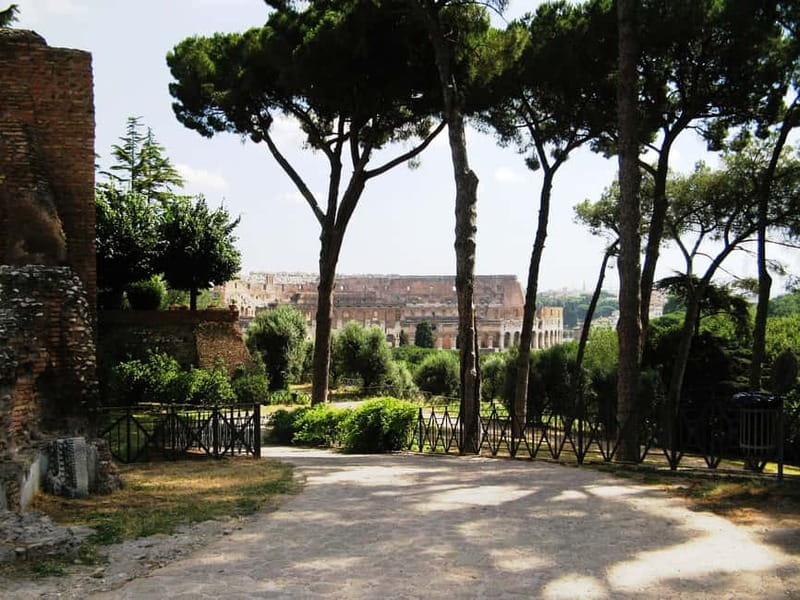
Palatine Hill gets the shorter block—about 30 minutes—but it’s also the most “story-heavy per minute” stop. You’ll walk in an area tied to Rome’s origin myths and later imperial life.
The tour framing includes the legend of Romulus and Remus being cared for by a she-wolf, then moving forward to how Palatine became the preferred residence for Roman emperors and aristocrats. You’ll also see references to imperial palaces and the remains of specific residences, including Domus Flavia and Domus Augustana. That’s a big deal because those names give shape to what you might otherwise experience as a collection of walls and overgrown slopes.
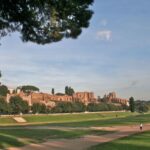
And then there’s the payoff: views. The guide will point out sightlines that connect Palatine to the Roman Forum and even the Circus Maximus area. Even in a short visit, you’ll get a sense of where the power centers were—what was visible from where, and how the city’s layout supported imperial status.
A couple reviews mention that a lot of their time felt focused on Palatine Hill, which suggests that the guide uses the hill as a key storytelling segment rather than treating it as a quick photo stop. If you want the Rome-with-a-view feeling—plus the myth-to-history bridge—this is the part you’ll remember.
Earphones, Pace, and Group Control: How It Feels on the Ground
This is a guided tour with earphones, which sounds small until you’re standing in a loud, echoing site with a guide trying to speak clearly. With earphones included, you’re far less likely to lose the thread when you’re squeezed into a crowd or when wind carries sound away from you.
Group size is described as smaller, with more personalization. That matters in practice because it helps your guide keep attention on details instead of rushing through the highlights. Several reviews praise guide management—calling out names to ensure everyone stays together, keeping the group accounted for, and making sure you don’t fall behind.
Timing-wise, you should expect a brisk but structured walk. The official duration is 2.5 hours, and the on-site experience can run a little longer. One review said the tour was about 15 minutes longer than stated. On a hot day, any extra minutes feel extra. On the bright side, it usually means you’re getting more explanation time at the sites you care about most.
Weather happens. One guide reportedly worked to keep the group dry when it poured rain. That’s a sign of a tour team that adjusts in real time, not just a scripted walk where nothing changes.
If you’re the kind of person who likes to take photos between stories, give yourself permission to move quickly. This tour works best when you stay with the guide’s pace.
You can also read our reviews of more guided tours in Rome

What’s Included (and What Isn’t) So You Don’t Get Surprised
Here’s the clean picture of inclusions:
- Tickets to the Colosseum, Roman Forum, and Palatine Hill
- An organized guided experience in English
- Earphones for clear commentary
- On-site helpline/help and a friendly check-in team
Here’s what’s not included:
- Meals
- On-site transfers
- Arena entrance
That last one is the key. If your dream version of the Colosseum is stepping onto the arena floor, this specific tour may not give you that. But if your priority is understanding the site—why it was built, what happened there, and how that connects to Roman civic life—this tour format fits very well.
Also, the Colosseum has a rule you should take seriously: you must present the original personal document. Photos or copies won’t work. If you forget your ID/passport, you risk not being admitted to the archaeological area. This isn’t the place for a “my phone should be fine” plan.
Practicalities: Shoes, Bags, and the End-of-Tour Exit Rule
Comfortable shoes are strongly recommended because you’re walking through multiple zones in a short span. The Forum and Palatine especially require attention on footing, and you’ll want to move efficiently rather than stopping every two steps.
Bags matter too. Luggage or large bags are not allowed, and backpacks are also not allowed. If you’re carrying day gear, travel light. This is one of those tours where “I can manage one small bag” beats “I’ll bring everything I own.”
At the end, you exit the archaeological area with the guide and are not allowed to remain inside. That’s worth knowing if you were imagining lingering on your own with extra time for photos or extra reading. This tour is designed to move you through, then get you out smoothly.
Finally, the tour isn’t suitable for wheelchair users, so if mobility access is a concern, look for an alternative that’s designed for that.
Value for $72.49: When This Tour Makes Sense
At $72.49 per person, you’re paying for three things: access, time, and interpretation.
You’re not just buying “entry tickets.” You’re paying for a guided route across the Colosseum, Forum, and Palatine Hill—plus earphones to keep the commentary clear. In Rome, where lines and crowd flow can eat hours, skip-the-line ticket planning is usually worth it.
You’re also paying for local storytelling. Reviews repeatedly mention guides who are enthusiastic and able to explain Roman history with wit and humor. That combo matters because it turns the sites from “seen it” into “I understand it.”
Is it the cheapest way to see these places? No. But it can be one of the most efficient ways to see three top landmarks without losing the narrative thread. If you want a simple plan that protects your time and gives you a structure for what you’re seeing, this one has strong value.
Should You Book This Colosseum, Forum & Palatine Hill Walking Tour?
I’d book it if you want a guided, structured route through three of Rome’s top ancient sites and you like learning through someone who can explain what you’re looking at while you walk. The earphones, the organized flow, and the consistent praise for guides like Matteo, Alexandra, Christina, Simona, Andrea, Federica, and Robert all point to a tour that focuses on communication and keeping the group together.
I’d think twice if your top priority is the arena floor itself, since arena entrance is not included. And I’d be extra careful about bringing your original ID/passport, because the Colosseum admission rules are strict.
If you’re ready to spend a few hours moving and learning—comfortable shoes on, ID packed—this is a smart way to experience Ancient Rome without turning the day into a scavenger hunt.
FAQ
How long is the Colosseum, Forum & Palatine Hill guided walking tour?
The tour runs for 2.5 hours. Starting times vary, so you’ll need to check availability for the specific slot you want.
Where do I meet the guide?
Meet outside the Colosseo Metro Station (Line B) on Via dei Fori Imperiali, opposite Colosseum Square, between the green kiosk and the wall-mounted fountain. The guide holds a Tourismotion flag, and you should arrive about 15 minutes early.
Is the arena entrance included?
No. Tickets cover organized access to the Colosseum, Roman Forum, and Palatine Hill, but arena entrance is not included.
What ID do I need to bring?
You must present the original personal document. The Colosseum does not accept photos or copies, so bring your passport or ID card.
Are meals included?
No. Meals are not included, so plan to eat on your own outside the tour time.
Is this tour wheelchair accessible?
No, it is not suitable for wheelchair users.
What is the cancellation and refund policy?
You can cancel up to 5 days in advance for a 97% refund.