REVIEW · ROME
Ghosts, Legends & Mysteries of Rome Tip-Based Walking Tour
Book on GetYourGuide →Operated by What About Tours · Bookable on GetYourGuide
Rome has a darker side at night. This tip-based walking tour gives you true-crime legends—ghosts, witches, executions, and the infamous poisoner Giulia Tofana—set right on the streets where the stories happened. I really love the mix of sharp storytelling and dark humor, plus the fact that you’re seeing major landmarks like Castel Sant’Angelo while the city is quieter and moodier.
I also like how the guides make the history human. You’re not just staring at stones; you’re hearing what people feared, what authorities did, and how Rome’s power games played out in real places. One drawback to consider: the subject matter is grim and the jokes can be politically incorrect, so it’s not the best choice if you want a gentler night out or you get uncomfortable with violence-adjacent stories.
In This Review
- Why this tour works so well for a night in Rome
- Key points to know before you go
- Start at Castel Sant’Angelo: the bridge-side meeting point sets the tone
- Pay-What-You-Want pricing: what $3.77 really means for your budget
- True crime with witches and corrupt power: what you’ll hear on the walk
- The route from Castel Sant’Angelo to Campo de’ Fiori: what those stops add
- Castel Sant’Angelo: the first guided photo stop
- Short guided stops in between: quick story breaks
- Fountain of the Mask: a 5-minute pause with meaning
- Farnese Palace: a stop that turns architecture into story
- Campo de’ Fiori: the ending square that ties it all together
- Secret stops in the alleys: why the unknown parts are part of the fun
- Your guide is the product: what the best storytelling looks like here
- Food and drinks recommendations: the practical perk that extends the night
- Who should book this (and who should skip it)
- Should you book Ghosts, Legends & Mysteries of Rome?
- FAQ
- How long is the Ghosts, Legends & Mysteries of Rome walking tour?
- Where do I meet the guide?
- What languages are the tours offered in?
- Is it really a tip-based tour?
- What tip amount should I plan for?
- What places does the tour cover?
- What kind of stories will I hear?
Why this tour works so well for a night in Rome
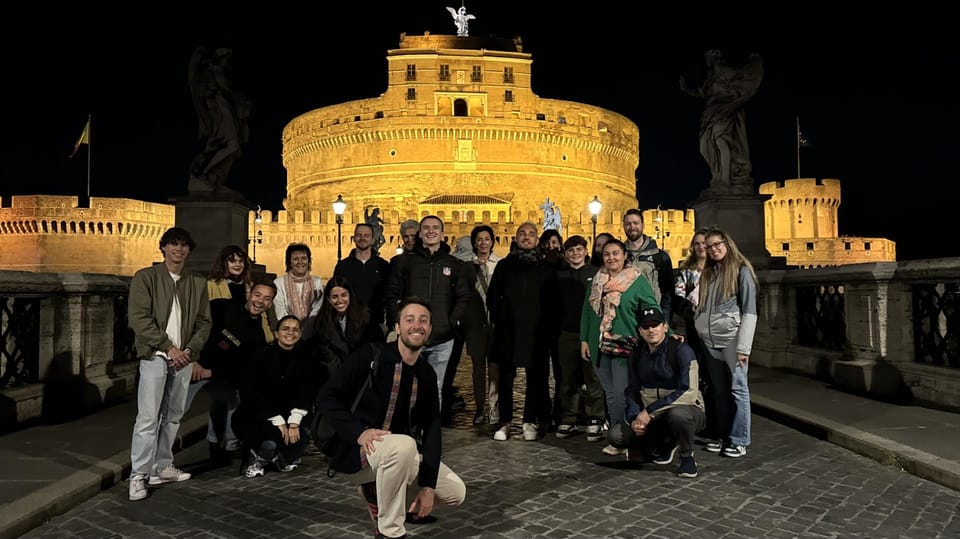
This is built for people who want something different from the usual highlights loop. You get a focused 1.5-hour walk that stays in the haunted-and-famous orbit, but with a more sinister framing than most mainstream tours.
You’ll also get live guiding in English or Spanish, and the delivery is very “stand close and talk with you” rather than headset-and-lecture. Guides like Ivan, Leonardo, Simone, Max, and others are mentioned repeatedly for keeping the pace lively and the stories easy to follow, even when the topic turns brutal.
Key points to know before you go
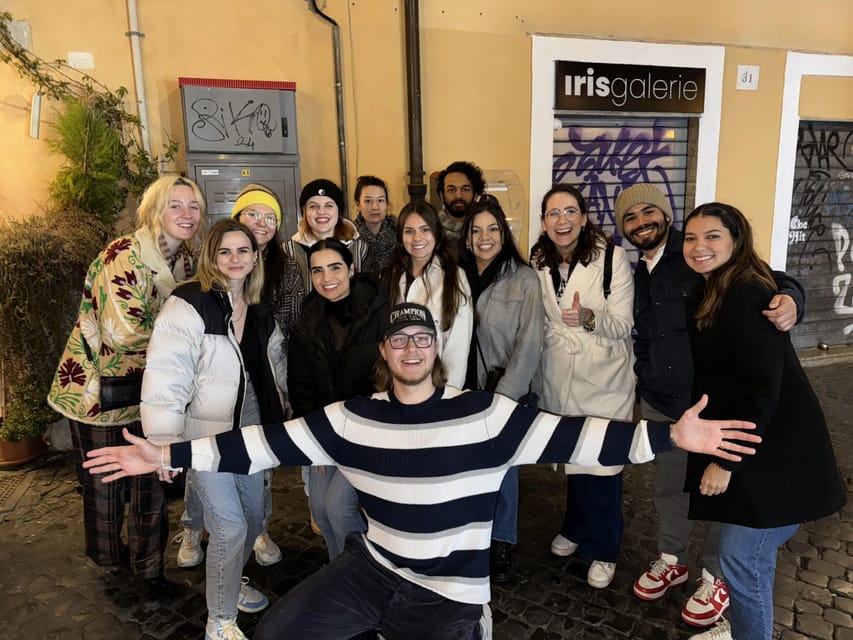
- Meet at Castel Sant’Angelo by bridge Sant’Angelo for an easy start and an immediate atmosphere change.
- Pay-What-You-Want tips are the real cost driver, and most people tip cash in the 10€ to 50$ range.
- True crime meets dark comedy, including witches, heretics, and inquisition-style stories.
- You’ll hit recognizable squares and palaces, plus a couple of intentionally kept “secret” stops.
- Food and drink recommendations are part of the experience, not just an afterthought.
- A tight 1.5 hours keeps it energetic, but it can feel short if you want a long, slow wander.
You can also read our reviews of more walking tours in Rome

Start at Castel Sant’Angelo: the bridge-side meeting point sets the tone
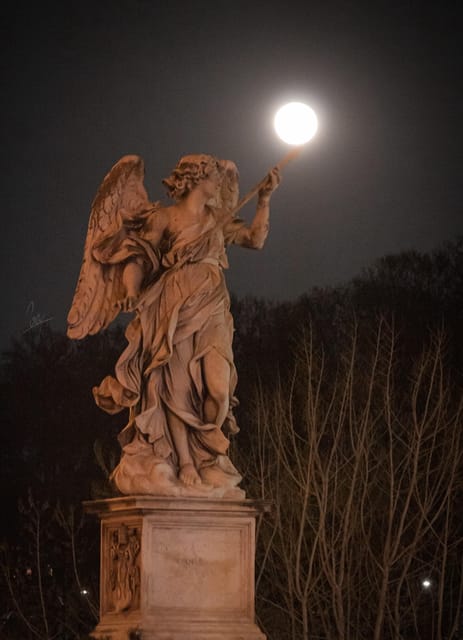
The tour starts right outside Castel Sant’Angelo, by bridge Sant’Angelo. That matters, because the first minutes are about atmosphere: it’s night in Rome, the river area has that slightly cinematic hush, and you get your bearings quickly.
You’ll get a photo stop and a guided start here (about 15 minutes). It’s long enough to orient yourself, notice details you’d normally walk past, and hear the first layer of the story before you move into narrower streets. If you’re the type who likes to understand what you’re looking at before you move on, this opening is a smart way to do it.
Practical note: wear shoes you’re comfortable walking in for about 75 minutes at night. The route is compact and walkable, but Rome streets are still Rome streets—uneven spots and tight turns included.
Pay-What-You-Want pricing: what $3.77 really means for your budget
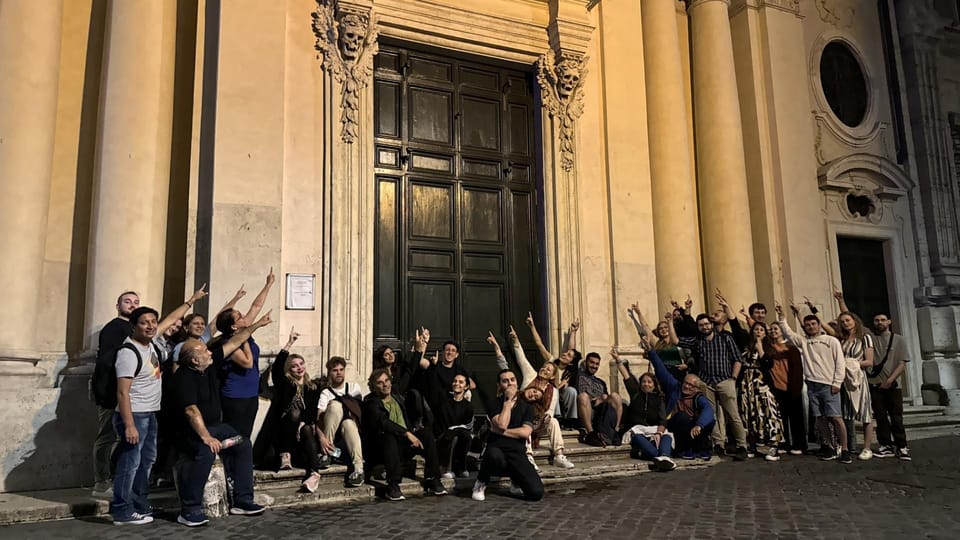
Yes, the listed price can look tiny—$3.77 per person. But this tour is designed around a tip-based model where the guide’s work is supported by what you choose to give at the end.
The guidance you’re given is clear: most people tip between 10€ and 50$. One review specifically calls out planning for at least 10€ per person in cash. So here’s the value math that actually matters: this is a low-cost entry ticket to get you into a story-driven night, and your tip is the piece that determines whether the guide’s time is properly supported.
What I like about tip-based tours (when they’re run like this one) is that you can match the final amount to your experience. If the guide keeps you laughing while still explaining the historical context, you can reward that. If you didn’t connect with the style, you’re not stuck paying a fixed “tour price” that doesn’t reflect what happened.
If you’re trying to keep things simple, bring cash ahead of time. It’s the easiest way to handle the end-of-tour moment without scrambling.
True crime with witches and corrupt power: what you’ll hear on the walk
This isn’t a ghost story in the fluffy, “boo” sense. The focus is on dark episodes: violence, brutality, terrible crimes, plus the religious persecution angle that shows up in stories about witches, heretics, and the inquisition.
The tour description also points to a couple of specific anchors in the narrative: Castel Sant’Angelo (eerie secrets tied to the building’s past) and Giulia Tofana, Rome’s infamous poisoner. When you hear a named figure tied to a place, the city starts to feel like it has memory. That’s the real payoff here—history that feels personal and unsettling, not like a textbook summary.
You’ll also hear about assassins, corrupt popes, and urban legends. The tone is intentionally mixed: the guide uses dark humor and sometimes politically incorrect jokes to keep the pace from becoming too heavy. That style works best if you’re comfortable with a little shock value—think campfire-story energy, but with real historical context layered in.
A quick caution: because the topics include executions and brutality, this may not feel right if you prefer your travel stories clean and comforting. If you get queasy with crime details, you’ll want to sit this one out.
The route from Castel Sant’Angelo to Campo de’ Fiori: what those stops add
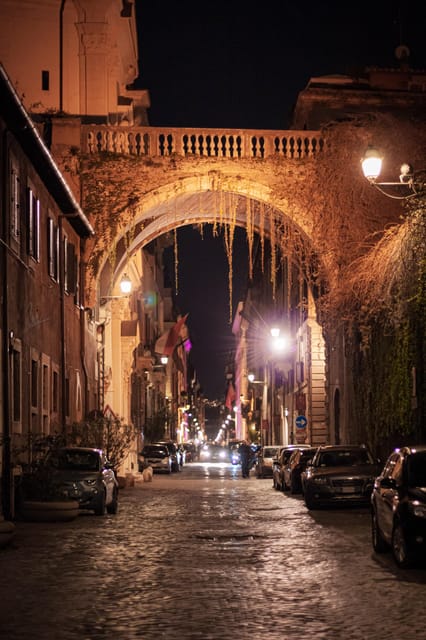
This walk is roughly 1.5 hours and moves in a series of short guided viewing moments with transitions between them. The total time adds up fast, so each stop needs to do work: a photo view here, a story point there, then forward again.
Here’s what stands out along the way:

Castel Sant’Angelo: the first guided photo stop
You start at Castel Sant’Angelo with a photo stop and guided sights (about 15 minutes). This isn’t just “look at the castle.” It’s a setup: you get the tone of the night—how authority, punishment, and fear get tied to the physical city.
Why it matters: starting here helps you understand why the rest of the route feels darker. When your first story is anchored to a place with real historical weight, the other stops land harder.
Short guided stops in between: quick story breaks
After the initial start, the walk includes a couple of brief (around 5 minutes) viewing moments. You won’t spend long at each one. Instead, you’re getting small story installments as you move through the urban fabric.
Why it matters: short stops keep the momentum. Rome night tours can drag if you pause too long. This one stays snappy.
Fountain of the Mask: a 5-minute pause with meaning
You’ll hit the Fountain of the Mask for about 5 minutes. It’s a quick stop, but it’s the kind of place where the guide can connect symbolism and local lore to what you’re seeing.
Even with limited time, these mid-route pauses are useful. They give your eyes a new target and keep the tour feeling like an actual walk through the city, not a bus ride in disguise.
Farnese Palace: a stop that turns architecture into story
Next comes Farnese Palace, again about a 5-minute guided stop. Big buildings like this can feel intimidating up close, and that’s where a good storyteller helps. The guide ties the site into the wider themes—power, reputation, and the kind of violence or intrigue that can circle the elite.
Why it matters: it’s one thing to recognize a palace from daylight. At night, with a story in your head, the place becomes a character.
Campo de’ Fiori: the ending square that ties it all together
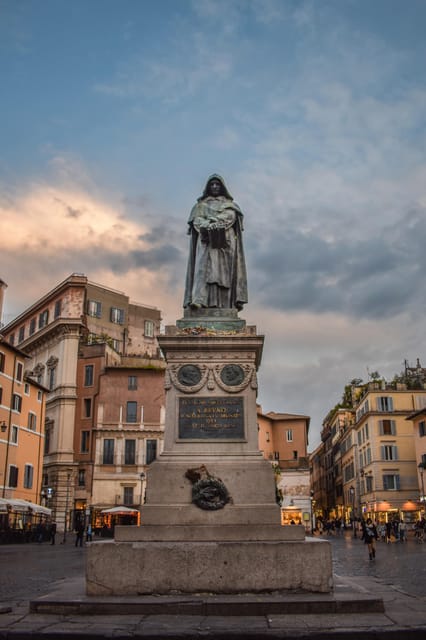
The tour finishes at Campo de’ Fiori (about 10 minutes of guided time before you wrap). This is a strong ending because it’s a public square—open enough to breathe, but still surrounded by the dense urban grid that makes Rome feel like it’s always hiding something.
Ending in a livelier-looking area also helps if you plan to keep exploring afterward, grab a drink, or walk off dinner plans.
Secret stops in the alleys: why the unknown parts are part of the fun
Two stops are labeled as secret stops in the experience flow, with guided time of about 10 minutes and 5 minutes. You won’t know exactly what corner you’ll get until you arrive there, and that changes the psychology of the tour.
Instead of treating the walk like a checklist, you stay alert. You listen harder. You notice street-level details you might otherwise ignore—doorways, corners, and the way the light falls between buildings at night.
There’s also a practical upside: secret stops often mean less crowded viewpoints. You’re more likely to hear the story clearly and have room for questions without battling foot traffic.
The tradeoff: if you prefer fully mapped, predictable schedules, the secrecy might feel like an uncertainty. It’s the price you pay for spontaneity.
Your guide is the product: what the best storytelling looks like here
A key reason this tour earns such strong ratings is the guides themselves. Names that show up again and again in the provided info include Ivan, Leonardo, Simone, and Max. The common thread is delivery: fast enough to keep energy, detailed enough to make the stories feel grounded, and funny enough to prevent the mood from turning into a lecture.
I especially like the way this kind of tour invites questions. One person notes that the group didn’t use headphones, which makes the whole experience more conversational. When you can ask something in real time, the guide can tailor the story on the spot. That’s a big difference from passive sightseeing.
If you want to get more out of the tour, do what the best participants do: ask one question at the right moment. It can be as simple as asking how a named figure connects to the setting you just passed. Guides tend to have answers ready, because that’s their job.
Food and drinks recommendations: the practical perk that extends the night
This tour doesn’t end with a goodbye and a vague suggestion to find gelato. The highlights explicitly include food and drinks recommendations, and at least one guide is praised for sharing a full list of local eateries and gelaterias at the end.
That’s more useful than it sounds. Rome’s best food choices often depend on neighborhood feel, opening hours, and what’s actually close to where you are walking next. A guide who knows the area can steer you away from the most touristy traps and toward places that fit your night.
If you’re doing more than one thing that evening, these suggestions help you stitch the hours together into one smoother plan.
Who should book this (and who should skip it)
Book this if you like:
- Dark humor mixed with real historical stories
- True crime and “how did this happen” history
- Seeing major Rome sites at night, with a guide who explains context
- Getting local recommendations for where to eat and drink
Skip this if you:
- Want a family-friendly, gentle “ghosts only” story format
- Get uncomfortable with references to execution or brutality
- Don’t want politically incorrect jokes in your travel day
Also, if you’re the type who wants a long, slow roaming session with lots of museum-style detail, the 1.5-hour length may leave you wanting more. It’s built to be intense and tight, not extended.
Should you book Ghosts, Legends & Mysteries of Rome?
I think you should book it if you want Rome to feel like a living place with a messy past. The value isn’t only the monuments—it’s the way the guide turns fear, power, and survival into stories you remember the next morning while you’re walking around normally.
If you do book, come prepared for the tip-based model. Bring cash, plan a realistic tip in the 10€ to 50$ range, and go in with an open mind about tone. Also, arrive at Castel Sant’Angelo on time so you start with the full story set-up.
If you want a night that’s part history lesson, part street theatre, and part dark comedy hour with real places behind it, this one fits.
FAQ
How long is the Ghosts, Legends & Mysteries of Rome walking tour?
It lasts about 1.5 hours.
Where do I meet the guide?
You meet right in front of the Castel Sant’Angelo entrance, by the bridge Sant’Angelo.
What languages are the tours offered in?
The live tour guide is available in English and Spanish.
Is it really a tip-based tour?
Yes. It follows a Pay-What-You-Want model, and you tip what you think the tour was worth at the end.
What tip amount should I plan for?
The tour info suggests tips are usually between 10€ and 50$. One review also specifically suggests budgeting for at least 10€ in cash.
What places does the tour cover?
You start at Castel Sant’Angelo, and the walk includes stops such as the Fountain of the Mask and Farnese Palace, with the tour ending at Campo de’ Fiori.
What kind of stories will I hear?
Expect ghosts and urban legends, plus true crime and dark history themes like witches, heretics, inquisition, assassins, corrupt popes, and executions.