REVIEW · GUIDED
Rome: Barberini Palace Guided Tour
Book on GetYourGuide →Operated by Doooing · Bookable on GetYourGuide
Baroque Rome, with the Barberini family in charge. This 2-hour guided visit is a smart way to see major masterpieces while you also learn why the Barberini mattered for art and politics. I especially like how the tour spotlights Raphael’s La Fornarina and Pietro da Cortona’s Divina Provvidenza ceiling, then ties each work to the era that shaped it.
The main thing to plan around is timing. Parts of Palazzo Barberini can be closed, and Caravaggio’s Judith Beheading Holofernes (also listed as Judith Slaying Holofernes) won’t always be on display during late 2025 through early 2026. If your dates line up, you’ll get a stellar lineup; if not, expect some key paintings or rooms to be missing.
In This Review
- Key highlights you’ll care about
- Where to meet for the Palazzo Barberini tour (and avoid a time sink)
- A tight 2-hour tour that stays focused on masterpieces
- Why the Barberini family is the real storyline
- Raphael’s La Fornarina: the Renaissance anchor
- Caravaggio’s Judith Beheading Holofernes: plan for the loan dates
- Pietro da Cortona’s Divina Provvidenza ceiling: the Baroque wow factor
- Bernini and Borromini inside the palace atmosphere
- Other masterpieces you may see: Holbein, Tintoretto, Bernini, and more
- Temporary showings: Conversione di Saulo and what changes in 2025
- Don’t get surprised by room closures (Aug 26 to Oct 21)
- Guides and group energy: what makes the explanations click
- Value for your time: why skip-the-line and the 20-person cap matter
- Who this tour suits best (and who should think twice)
- Should you book the Rome: Palazzo Barberini Guided Tour?
- FAQ
- Where is the meeting point for the Palazzo Barberini guided tour?
- How long is the tour?
- What languages are offered for the live guide?
- What’s the maximum group size?
- Do you skip the ticket line?
- Is luggage or a large bag allowed?
- Is the tour suitable for wheelchair users or people with mobility impairments?
- Will Caravaggio’s Judith Beheading Holofernes be on display during my visit?
- Are the 18th-century rooms open year-round?
- Is free cancellation available?
Key highlights you’ll care about
- La Fornarina: Raphael’s iconic Renaissance beauty is a centerpiece here.
- Divina Provvidenza: Pietro da Cortona’s Baroque ceiling fresco is the wow moment for many people.
- Barberini politics meet art: you’ll connect patrons, religious change, and what painters were allowed to show.
- Bernini and Borromini: you’ll see how two architectural minds shaped the space around you.
- Temporary exhibitions can change the exact artworks: for example, Conversione di Saulo is shown until Sept 30, 2025.
Where to meet for the Palazzo Barberini tour (and avoid a time sink)
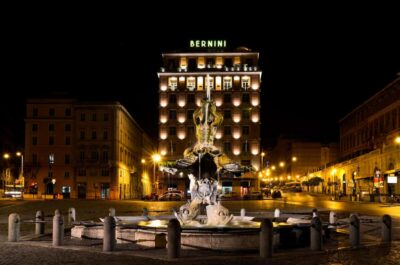
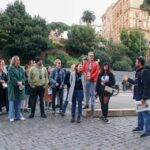
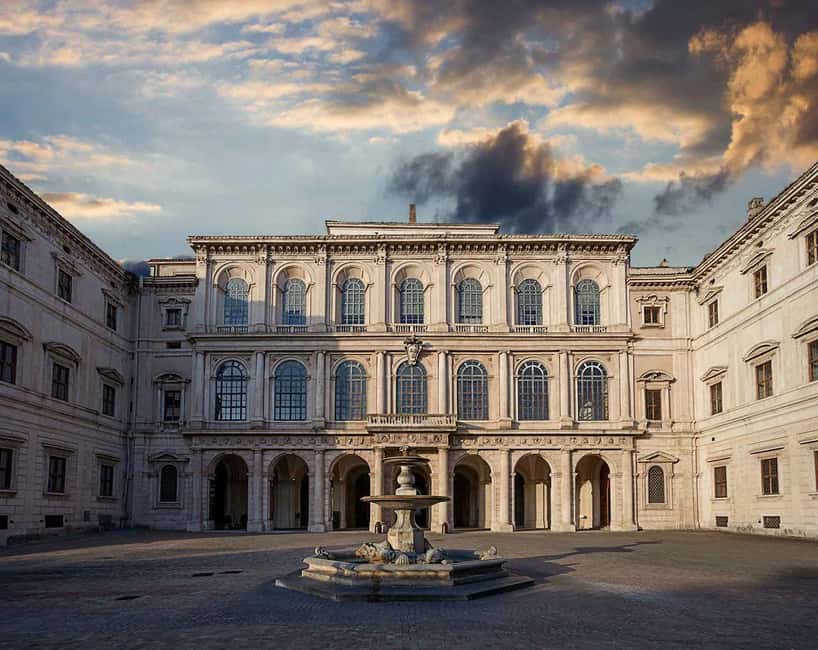
Meet inside the garden of Palazzo Barberini, around the fountain at Via delle Quattro Fontane 13, 00184 Roma RM. Staff will be waiting with a blue flag that says Doooing Experience. If you like to be early (most people do), I’d aim to arrive about 10–15 minutes ahead so you can settle in before the group gets moving.
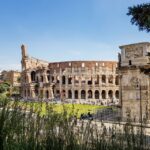
This spot is central Rome, and you’ll likely see other famous landmarks in the surrounding area as you move around. That means the tour isn’t just a quick gallery hop. You get the feeling of being in the same neighborhood where these families, artists, and big ideas circulated.
One practical note: the tour doesn’t allow luggage or large bags. So if you’re traveling with more than a small daypack, you’ll want to plan ahead before you show up at the garden entrance.
You can also read our reviews of more guided tours in Rome

A tight 2-hour tour that stays focused on masterpieces
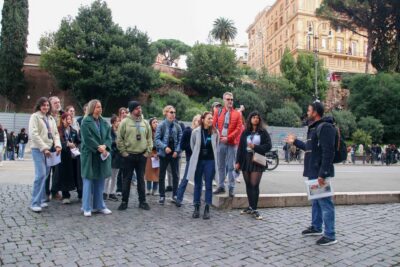
This is a 2-hour guided tour with a maximum group size of 20. That small-ish cap matters in Rome, where crowds can make even great museums feel chaotic. Here, you’re more likely to hear explanations clearly and have time to look closely rather than rushing through.
You’ll get a live guide in Spanish, Italian, or English, and the tour includes skip-the-ticket-line access. Skip-the-line is especially valuable at major Rome sights, because your time is better spent staring at paintings and ceilings than waiting behind a ticket queue.
The pace is guided, but it doesn’t feel like a checklist drill. The guide’s job is to connect what you’re seeing to the bigger story: patronage by the Barberini family, the push and pull of religious life, and the political shifts that affected artists and subject matter.
Why the Barberini family is the real storyline
The best part of this tour is that it doesn’t treat the art like isolated museum objects. You learn how the Barberini family influenced art and culture, and how that influence played out through commissions and public image.
In practical terms, that changes how you look. A painting isn’t just a painting. It becomes a message. It becomes something shaped by who paid for it and what the world needed it to say. The guide points out political and religious changes that helped steer what was painted and why.
If you’ve ever felt like baroque Rome is just “pretty ceiling + dramatic lighting,” this tour gives you the missing context. You start to notice how power, faith, and storytelling all run through the same room.
Raphael’s La Fornarina: the Renaissance anchor
Raphael’s La Fornarina is one of the key icons you’ll see. It’s the kind of work people recognize even if they’ve only seen small reproductions. The tour treats it as more than a famous name—it’s used to explain the Renaissance mindset and why Raphael’s work became a benchmark.
What I like about how this usually plays out in a guided format is that you don’t just get “pretty woman, famous painter.” You get help reading details and understanding how Renaissance artists approached realism, beauty, and meaning.
Because Raphael represents a different artistic language than the baroque works you’ll see right after, the sequence works well. You feel the shift. You see how tastes and goals moved over time, without needing a university seminar.
Caravaggio’s Judith Beheading Holofernes: plan for the loan dates
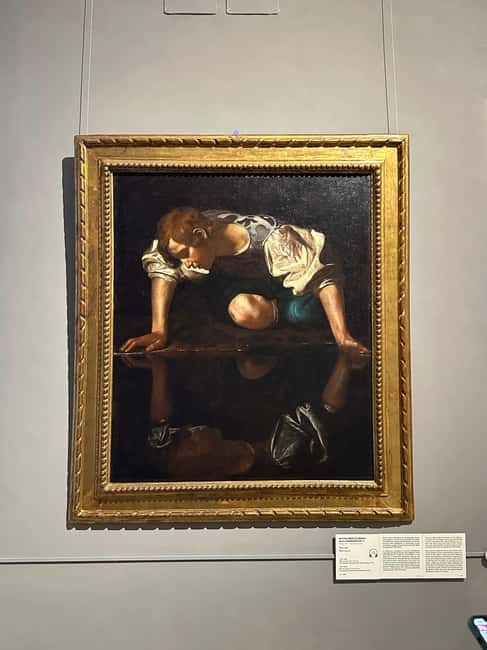
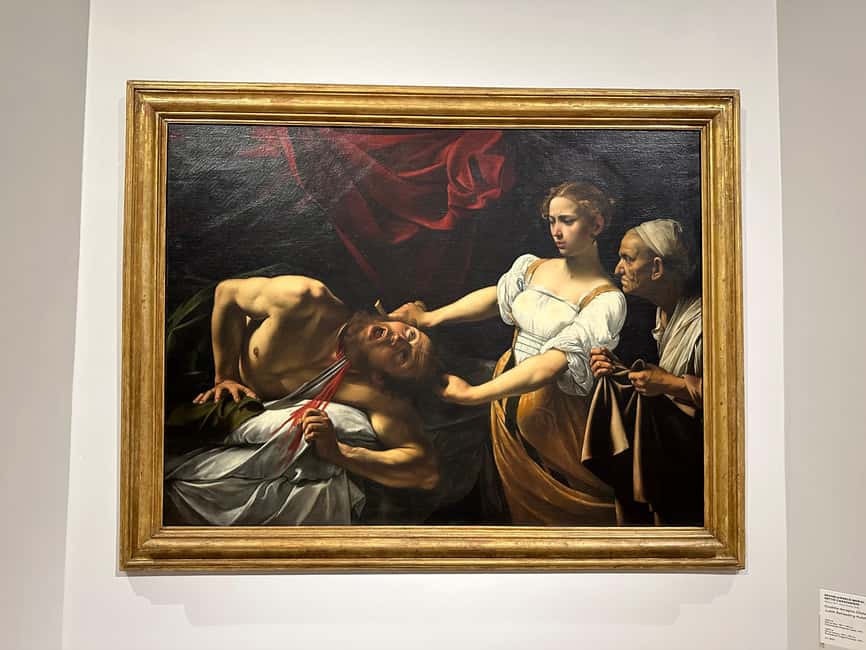
Caravaggio is one of those artists who can stop you cold. The tour includes his intense Judith Beheading Holofernes (also referenced as Judith Slaying Holofernes). This is not a calm, pretty painting. It’s drama, tension, and urgency—exactly what Caravaggio is known for.
Here’s the catch: this work is on loan during parts of late 2025 into early 2026. The information you should follow is:
- It will not be on display from the end of August 2025 until January 2026.
- Starting September 4, it will not be on display until January 31, 2026.
So if you’re traveling between late August and January 2026, your best move is to double-check what will actually be on site for your exact date. The good news is that the tour still covers many other major artists, so you’re not walking into an empty experience. But if Caravaggio is your top reason for booking, date matching matters.

Pietro da Cortona’s Divina Provvidenza ceiling: the Baroque wow factor
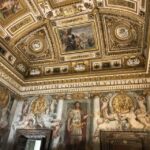
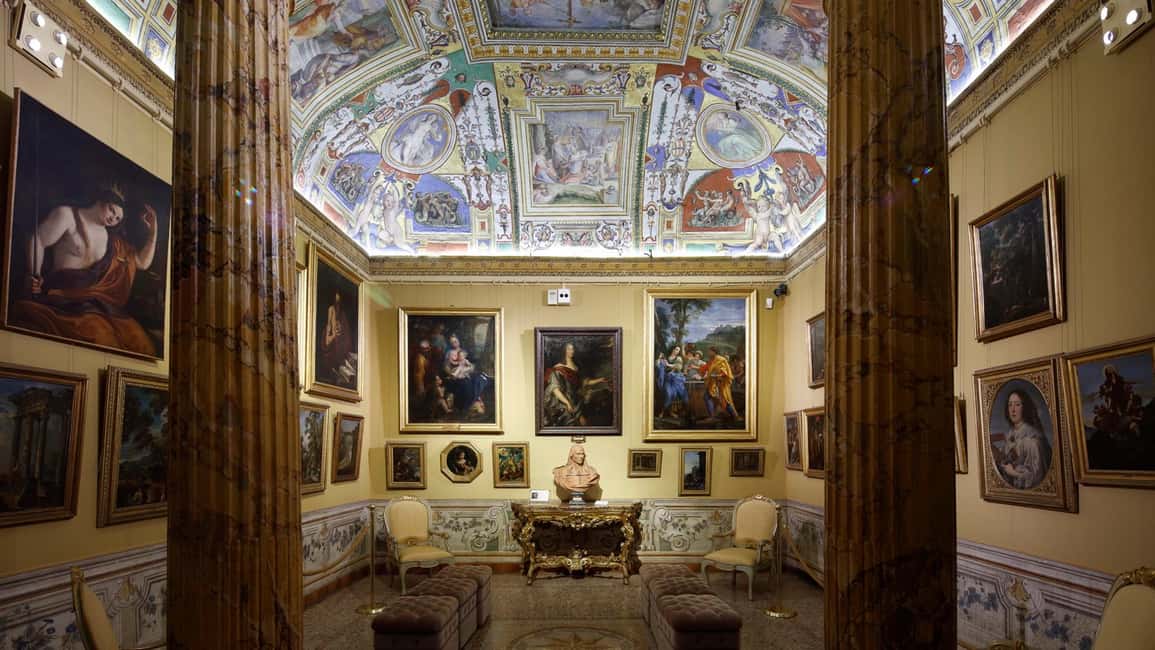
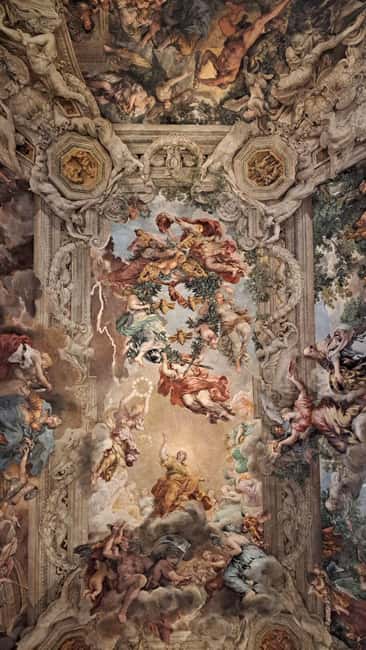
Pietro da Cortona’s Divina Provvidenza ceiling fresco is described as a true Baroque masterpiece, and you’ll feel why quickly. Ceilings can be tricky in museum settings—people rush past them, or they strain to see from the wrong angle. In a guided setting, you usually get the help you need: where to stand, how to look, and what to notice first.
The guide connects the ceiling to the broader cultural mood of the Baroque period. You start to see the ceiling as storytelling in paint. It’s not just decorative. It’s persuasion and atmosphere—using scale, movement, and emotion to communicate.
If you like the theatrical side of Rome, this is the moment most people remember.
Bernini and Borromini inside the palace atmosphere
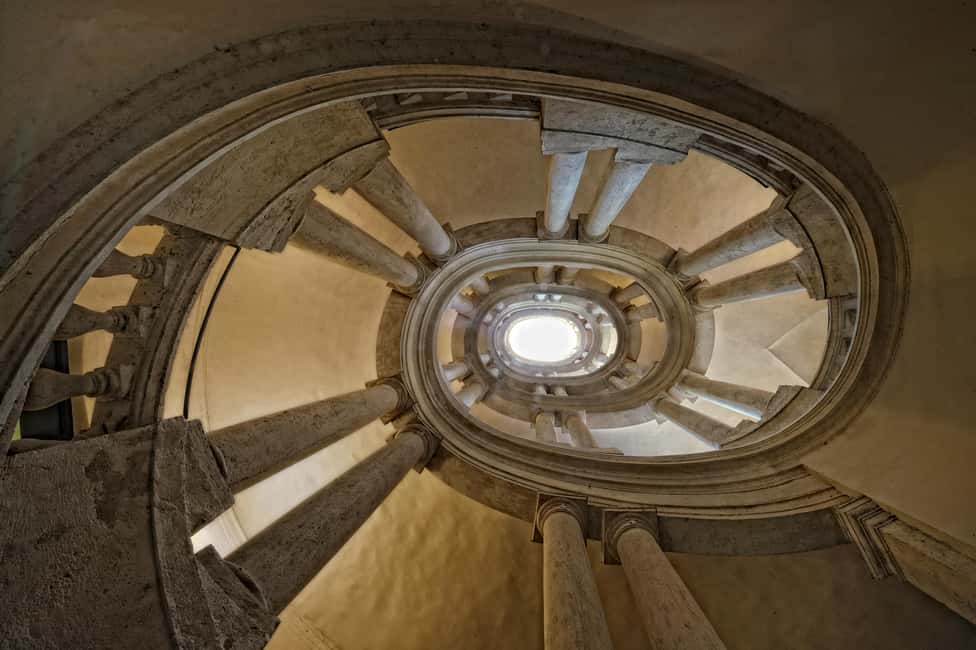
Barberini Palace also lets you experience architectural genius—especially through the work linked to Bernini and Borromini. Even if you don’t consider yourself an architecture person, these names help you understand the style shift across Rome’s 17th-century world.
In a palace setting, architecture isn’t a backdrop. It’s part of the message. You’ll look at how space shapes movement and attention, and how design choices reinforce power and spectacle.
That’s also why this tour works better than a purely “art talk.” You get to see how artistic ideas live across painting, patronage, and building design all in one place.
Other masterpieces you may see: Holbein, Tintoretto, Bernini, and more
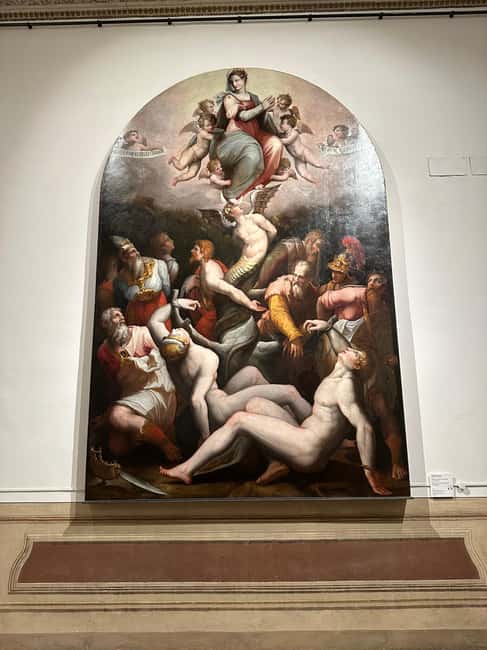
Beyond the headline works, the collection includes other major names such as Holbein and Tintoretto, plus additional works connected to Bernini. The exact set you see can shift depending on what’s on display during your dates, but the focus stays on major paintings and works that match the palace’s identity.
I like that the guide doesn’t treat these as separate trivia cards. Instead, you learn how different artists reflect different approaches to religion, politics, and audience expectations. That helps you spot patterns faster: how emotion gets expressed, how figures are framed, and how narrative is handled.
If you’re the type who gets museum fatigue, this is the kind of lineup that stays interesting because you’re constantly comparing. Renaissance vs Baroque. Controlled vs dramatic. Calm story vs urgent drama.
Temporary showings: Conversione di Saulo and what changes in 2025
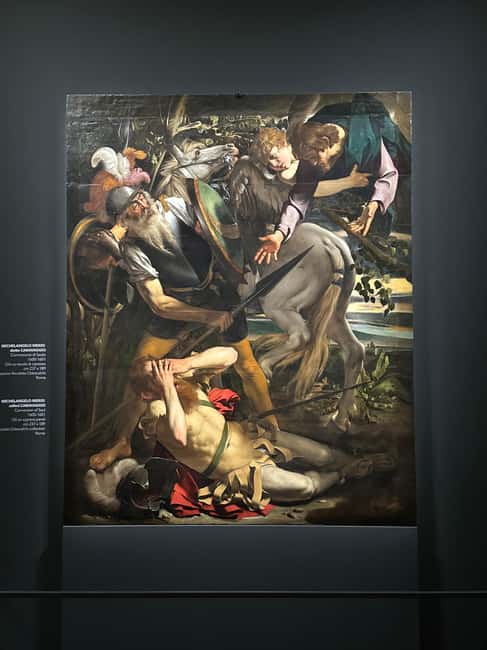
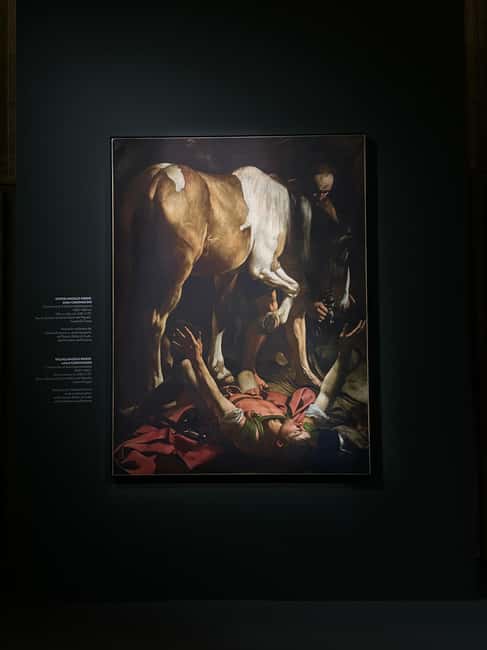
One of the most useful schedule details here is the temporary presentation of Conversione di Saulo, also called Conversion on the Way to Damascus. It’s part of a private collection and will be exceptionally exhibited in the palazzo until Sept 30, 2025.
This matters because it affects what you walk away seeing. If you’re visiting before that date, you get a special chance to see a work that isn’t always present. If you’re visiting later, you won’t count on it being there.
That’s why I consider this tour best for people who are flexible, or who check their dates carefully if they’re chasing a specific masterpiece.
Don’t get surprised by room closures (Aug 26 to Oct 21)
Starting August 26, the 18th-century Rooms of Palazzo Barberini are temporarily closed to the public. They’re scheduled to reopen on October 21.
So what should you expect? Even if the tour’s focus stays on key galleries and major works, those closed rooms can change the overall scope of what you’re able to see on your particular day. If you’re planning for the palace as a whole, check your calendar so you know whether you’re arriving inside the open-window period or during the closure.
It’s not a deal-breaker for everyone, but it is a real planning factor.
Guides and group energy: what makes the explanations click
The tour experience depends on the guide, and the good news is that the guides connected to this experience are known for making connections between art and architecture. For example, Zenda is praised for bridging art and architecture to the historical time periods, which makes the whole visit feel more connected rather than random.
Another name that comes up is Federica, described as introducing both the history and the architectural beauty with skill and energy. That’s the kind of guiding style you want for a palace tour, because the building itself is part of the lesson.
With a group size up to 20, you’re also less likely to feel like you’re stuck behind someone’s phone the entire time.
Value for your time: why skip-the-line and the 20-person cap matter
Even without talking about price, you can judge value by what you avoid and what you get:
- You skip the ticket line, so you spend time in the palace rather than waiting outside it.
- You get a live guide in the language you choose (Spanish, Italian, or English).
- You stay in a small group (max 20), which keeps the experience more readable and less rushed.
This is a good choice if you want a high-density art and architecture outing without turning it into a full-day museum marathon. It’s also a solid pick if you like explanations that connect art to real events, not just facts about artists.
Who this tour suits best (and who should think twice)
This tour is a great fit if you:
- Want major Renaissance and Baroque works in one focused, guided route
- Like context—politics, religion, patronage—along with what the art looks like
- Prefer smaller groups over big crowd crushes
It’s not suitable for people with mobility impairments or wheelchair users. Also, because luggage or large bags aren’t allowed, you’ll want to travel light.
If Caravaggio is your one absolute must-see, then your dates become critical because of the 2025–2026 loan schedule.
Should you book the Rome: Palazzo Barberini Guided Tour?
Book it if you want a tight, high-quality Roman art experience that connects paintings and architecture to the forces that shaped them. This is one of those tours where the guide’s context makes the masterpieces feel more meaningful, not just famous.
Skip or re-check your plan dates if:
- You’re visiting in the late-August to January 2026 window and Caravaggio is the main reason you booked
- You’re specifically targeting the 18th-century Rooms and you’re traveling Aug 26–Oct 21
- You need wheelchair-friendly access, since the tour isn’t set up for that
If your dates line up with the works being on view, you’re in for a strong mix: Raphael’s human calm, Caravaggio’s raw intensity (when present), Cortona’s ceiling drama, and the architectural punch of Bernini and Borromini.
FAQ
Where is the meeting point for the Palazzo Barberini guided tour?
Meet inside the garden of Palazzo Barberini around the fountain at Via delle Quattro Fontane 13, 00184 Roma RM. Staff will be waiting with a blue flag that says Doooing Experience.
How long is the tour?
The tour lasts 2 hours.
What languages are offered for the live guide?
The tour is available with live guiding in Spanish, Italian, and English.
What’s the maximum group size?
The group size is capped at 20 people.
Do you skip the ticket line?
Yes. The activity includes skip-the-ticket-line access.
Is luggage or a large bag allowed?
No. Luggage or large bags are not allowed.
Is the tour suitable for wheelchair users or people with mobility impairments?
No. It’s not suitable for people with mobility impairments or wheelchair users.
Will Caravaggio’s Judith Beheading Holofernes be on display during my visit?
It will not be on display starting September 4, and it’s scheduled to return on January 31, 2026. There is also an earlier unavailability window from the end of August 2025 until January 2026, so you should confirm your exact travel dates.
Are the 18th-century rooms open year-round?
No. The 18th-century Rooms of Palazzo Barberini are closed to the public starting August 26 and are scheduled to reopen on October 21.
Is free cancellation available?
Yes. You can cancel up to 2 days in advance for a full refund.