REVIEW · PRIVATE
Heart of Rome: Private Walking Tour
Book on GetYourGuide →Operated by LivTours - We craft tours, you live them · Bookable on GetYourGuide
Rome works best when you walk it.
This private walking tour keeps you moving through tight lanes and small piazzas while a guide stitches together what you’re seeing, including Rome’s big-ticket stops like the Pantheon and Trevi Fountain. I especially like that you get a personal guide for a focused route, and that you can skip the ticket line for major sights (when Pantheon entry is available). One thing to consider: on the first Sunday of the month or certain national holidays, Pantheon entry isn’t included, so your “big moment” there depends on the date.
You’ll meet near Babington’s Tea House at the bottom of Piazza di Spagna and spend two hours threading together Rome’s Baroque-era grandeur with practical, story-driven context. It’s a great fit if you want the highlights without trying to plan every turn yourself. The flip side is simple: it’s still a walking tour, so comfortable shoes matter, and places tied to worship have a strict dress code (shoulders and knees covered).
In This Review
- Key points before you go
- How this 2-hour private walk gives you real Rome context
- Meeting at Babington’s Tea House near Piazza di Spagna
- Spanish Steps to Trevi Fountain: streets you actually want to walk
- Trevi Fountain: what to notice beyond the coin toss
- Piazza Venezia stop: the city picture comes into focus
- Pantheon arrival: only one intact pagan temple tale worth knowing
- A local café break: keep the pace human
- Piazza Navona finale: Bernini’s Four Rivers plus street life
- Price and value: is $165.40 for 2 hours worth it?
- Who this tour suits best (and who should rethink it)
- Should you book Heart of Rome: Private Walking Tour?
- FAQ
- How long is the Heart of Rome private walking tour?
- Where is the meeting point for the tour?
- Does the tour include Pantheon entry?
- What sights are included on the itinerary?
- What languages are the guides available in?
- What should I wear for this tour?
Key points before you go
- Private, story-led route: you’re not just sightseeing; your guide explains what you’re looking at as you move.
- Big three in one loop: Trevi Fountain, the Pantheon, and Piazza Navona all fit into a tight 2-hour plan.
- Cobbles and alleys, not traffic: the route favors small streets and quiet piazzas over getting stuck in crowds.
- Skip-the-line when it applies: you’ll benefit from fast entry for ticketed stops, but Pantheon entry can be date-dependent.
- Gelato/café stop: there’s a break to keep the pace human, not marathon-mode.
- Dress code reality check: shoulders and knees covered for places of worship.
How this 2-hour private walk gives you real Rome context
Rome can feel like a highlight reel you’re trying to keep up with. This tour is built around a simple idea: in just two hours, you’ll see the famous sights, but also learn how they connect through stories, layout, and the way the city evolved.
The value isn’t only that you’ll stand in front of Trevi Fountain or the Pantheon. It’s that you’ll be walking through the in-between spaces—small streets, side fountains, and lesser-known piazzas—where Rome’s personality shows up. A good guide turns those quick moments into “oh, that’s why it’s there” understanding.
And because it’s private, the experience tends to feel less like a conveyor belt and more like a conversation you can steer. If you care about architecture, street-level details, or the meanings behind famous monuments, this format works well.
You can also read our reviews of more walking tours in Rome


Meeting at Babington’s Tea House near Piazza di Spagna
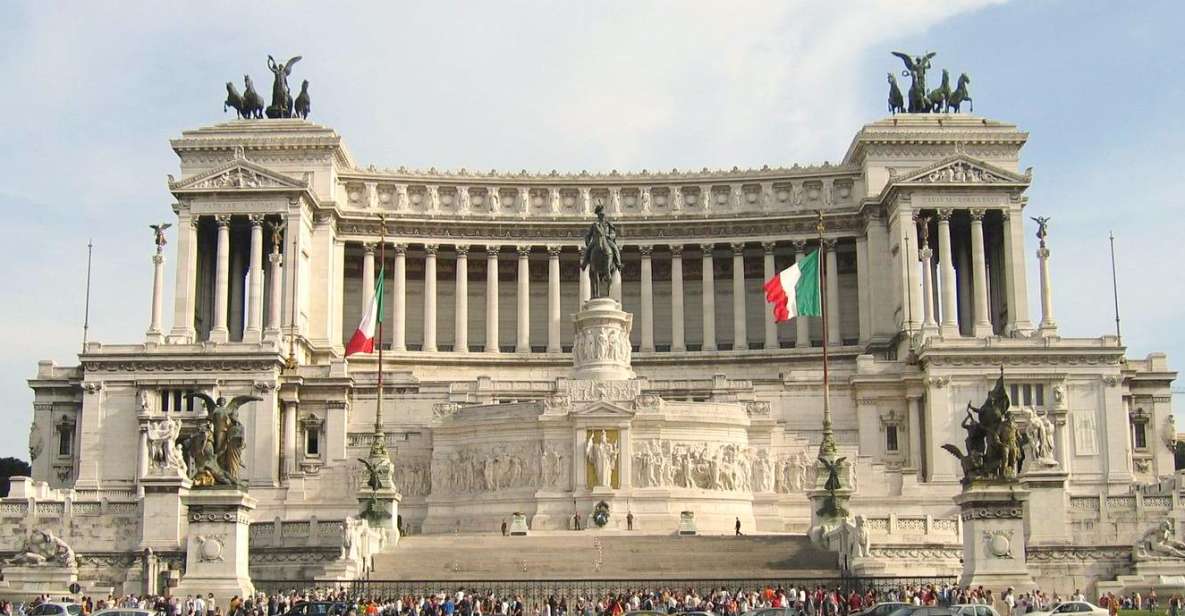
Your tour starts in a very walkable spot: in front of Babington’s Tea House, at the bottom of Piazza di Spagna (the Spanish Steps area). If you’re arriving late, don’t panic—this is a landmark meeting zone, so it’s easy to confirm you’re in the right place.
Right away, you’ll be moving away from the busiest bustle and into tighter streets. That shift is a big part of why this tour feels calmer than self-guided wandering. Instead of spending your energy figuring out direction, you spend it looking.
One small practical note: the itinerary references Furla early on, which matches the feeling that the first minutes happen right around the storefronts and sidewalks of the Spanish Steps area. In other words, you’re starting in the “arriving in Rome” zone, not a remote meeting point.
Spanish Steps to Trevi Fountain: streets you actually want to walk
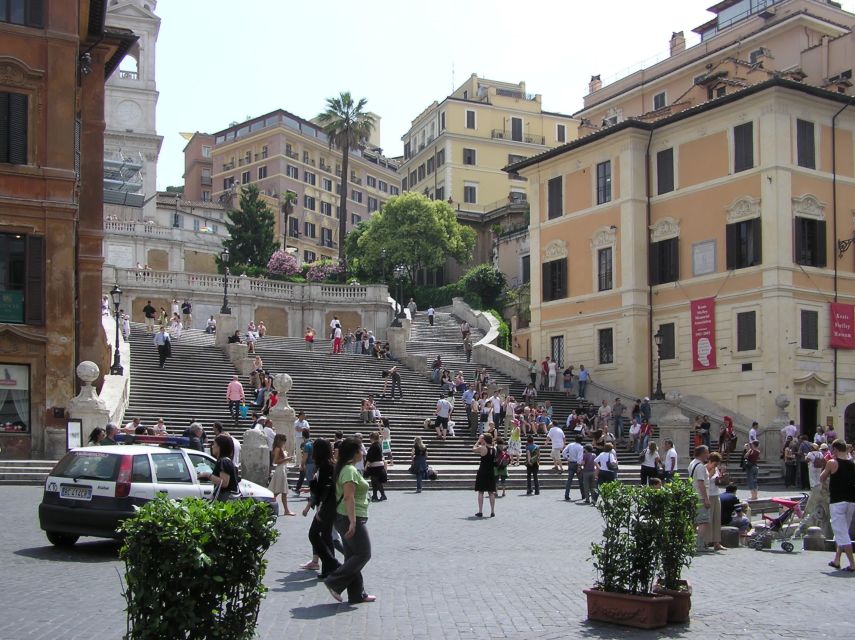
After you start, the route heads toward Rome’s classic postcard scenes, but the point is how you get there. You’ll walk on cobblestone streets and pass through narrow lanes where it’s easier to notice the small urban details—the tiny fountains, textured stonework, and little corner piazzas that most people ignore when they’re only chasing the next photo.
The guide’s job here is to keep you oriented. You get historical anecdotes tied to what you’re seeing, which helps the city feel less like random monuments and more like one evolving story. Even if you’ve visited Rome before, this style can make the streets feel new again because you’re learning the logic behind the layout.
When you’re heading toward Trevi Fountain, the atmosphere changes in your mind even before you reach it. The sight is famous for a reason, but the tour framing makes it easier to treat it like a living part of the city, not a checked box.
Trevi Fountain: what to notice beyond the coin toss
Trevi Fountain is the stop everyone knows. The tour gives you a little more than a quick arrival-and-photo moment.
First, you’ll get a guided visit and a walk, so you’re not stuck staring straight-on with everyone else. You’ll also hear how the fountain fits into the Baroque-era grandeur of Rome, and why it became the iconic meeting point it is today.
Then there’s the classic tradition: you’ll admire the fountain and toss a coin for your return to the Eternal City. The tradition is fun, but the better takeaway is that you’ll be looking at the fountain with “why this looks like this” context, not just “how to get the shot.”
Practical tip: Trevi can get crowded fast. The benefit of a guided timing window is that you’re not standing around waiting for a strategy to form in your head.
Piazza Venezia stop: the city picture comes into focus
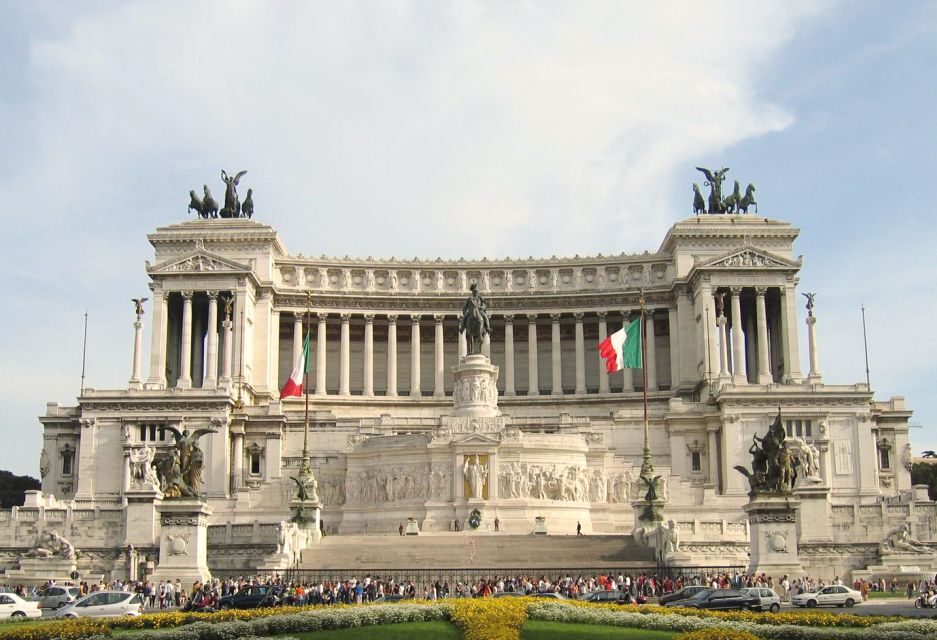
After Trevi, the route includes Piazza Venezia. This stop matters because it shifts your view from one monument to the broader sense of Rome as a layered city.
Even though you’re still moving at walking pace, Piazza Venezia helps you connect what you’ve already seen to what comes next. It’s a transition point where Rome stops feeling like isolated stops and starts feeling like one big arrangement—routes, sight lines, and locations that make sense when you’ve got a guide explaining the relationships.
You’ll pass through small streets and piazzas en route, so the “big moment” at Piazza Venezia doesn’t feel abrupt. It comes after a build-up of street-level detail, which makes the shift to a larger open space feel satisfying.
And honestly, this kind of mid-tour anchoring is what makes a short tour feel useful. You’re not only seeing places; you’re learning how the city puts them together.
You can also read our reviews of more private tours in Rome




Pantheon arrival: only one intact pagan temple tale worth knowing
Then comes one of the strongest stops in the whole loop: the Pantheon. You’ll have a guided visit and walk in front of this iconic building, which your guide explains as the only completely intact pagan temple left in Rome.
That framing helps. The Pantheon isn’t just impressive because it’s old; it’s impressive because it survived and kept its shape across major changes in Rome’s religious and cultural life. When you hear that kind of context, the space starts making sense in a different way, and you don’t just see a dome—you understand what kind of statement this was.
Important date reality: Pantheon entry isn’t included on the first Sunday of the month or during national holidays listed as April 25, June 2, and November 4 (due to ticket unavailability). Also, no refunds are issued for this scenario. If you’re aiming to experience the interior on those dates, you’ll want to confirm what will be possible before you book.
Still, even when entry isn’t included, you’ll likely get the guided approach benefits—history, story, and the way the building fits the walk. But if the Pantheon interior is your top priority, choose your date carefully.
A local café break: keep the pace human
Between major monuments, the tour includes a break at a local café. This is a smart part of a short itinerary. Two hours sounds short until you’re standing, walking cobblestones, and absorbing information. A planned break helps you avoid the “we’re done but my legs are done too” feeling.
You might also expect something gelato-like during this break. The tour description specifically points you toward a gelateria stop for some of the best Italian ice cream you’ve ever had, so it’s very much part of the experience, not an afterthought.
This pause is also where you can reset your focus. If you’ve been listening closely to stories, the café moment gives you room to digest it—then you finish the tour with a stronger sense of what you’ve learned.
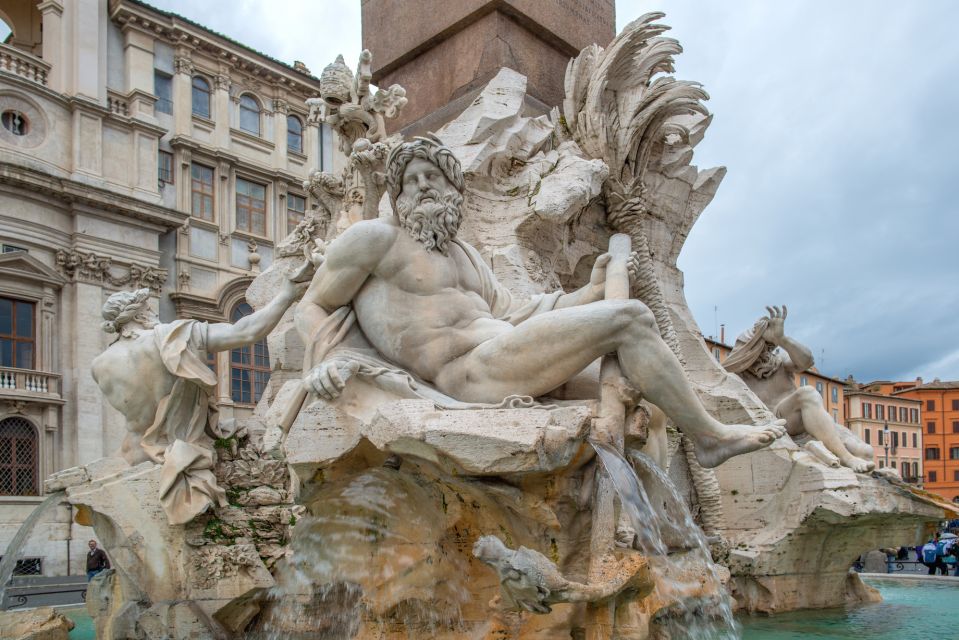
Piazza Navona finale: Bernini’s Four Rivers plus street life
The tour ends at Piazza Navona, one of Rome’s most fun places to linger. You’ll have a guided visit and walk here, and you’ll connect the space to what makes it special.
The big named feature is Bernini’s 4 Rivers Fountain. This is the kind of monument that feels like it’s part art piece, part stage set. With a guide’s explanation, you’ll notice more than just the fountain itself—you’ll see why the plaza works as a social space and how it fits the Baroque-era vibe Rome is known for.
And Piazza Navona has another side: performers, sidewalk artists, musicians, and the everyday energy of a major square. The tour doesn’t replace that atmosphere with a lecture. It gives you a structured visit, then lets the square be itself around you.
If you want a clean ending point for your Rome walk loop, Piazza Navona does the job. It’s easy to continue exploring afterward in any direction, and it’s the kind of place where you can watch people for a while without feeling like you’ve taken a detour.
Price and value: is $165.40 for 2 hours worth it?
At $165.40 per person for 2 hours, the price isn’t “cheap,” and you shouldn’t shop it like a budget museum ticket. This price makes sense when you understand what you’re buying:
- Private guiding: you get a real person shaping your route and answering questions.
- A tight highlights plan: Trevi, Pantheon, Piazza Navona are hard to string together smoothly on your own while keeping time and stamina in check.
- Skip-the-ticket line (where it applies): time saved matters in Rome, especially at high-demand sights.
Where value gets strongest is for visitors who want to maximize a short window. If you only have a day and you’d otherwise be bouncing from one crowded landmark to the next, this format gives you a clearer, smoother experience.
Where it may not feel like a bargain is if you already know exactly what you want to see and you’re comfortable building the route yourself. In that case, you might skip the private guide and enjoy more freedom—though you’ll lose the story context that helps the stops connect.
Who this tour suits best (and who should rethink it)
This tour is a good match if you:
- Want a high-impact route that hits major Rome sights within a short time.
- Like having a guide explain what you’re looking at, especially for famous sites with lots of layers.
- Prefer private guiding over large group pacing.
- Are visiting soon and want to get oriented fast in the center of Rome.
It might be less ideal if you:
- Have your heart set on Pantheon interior access on a date that falls into the Pantheon-entry-not-included categories.
- Want a long, slow art-and-photo session with extra time in each monument area. Two hours is tight by design.
One more practical fit note: you’ll be walking cobblestones. If your mobility is limited, choose your shoes and plan around comfort. And since there’s a dress requirement for places of worship—shoulders and knees covered—pack or wear what you can comfortably manage before you arrive.
Should you book Heart of Rome: Private Walking Tour?
I’d book it if you want the classic Rome highlights without turning your day into route math. The private guide angle is the real draw here: you get explanations that make famous stops easier to understand, and you also see the in-between streets that make Rome feel like Rome.
You should think twice if the Pantheon interior is the one thing you must do, because entry is not included on the first Sunday of the month and certain national holidays. If your schedule falls into one of those date categories, confirm what’s possible before you commit.
If your goal is a well-paced, guided highlights loop—from Piazza di Spagna down into Trevi, across to the Pantheon, and ending in Piazza Navona—this tour is built for exactly that.
FAQ
How long is the Heart of Rome private walking tour?
It’s a 2-hour private walking tour.
Where is the meeting point for the tour?
You meet in front of Babington’s Tea House, at the bottom of the Spanish Steps in Piazza di Spagna.
Does the tour include Pantheon entry?
Pantheon entry is not included on the first Sunday of the month or during national holidays listed as April 25, June 2, and November 4 due to ticket unavailability.
What sights are included on the itinerary?
The tour includes the Spanish Steps, Trevi Fountain, Piazza Venezia, the Pantheon, a local café break, and Piazza Navona.
What languages are the guides available in?
Live tour guide languages listed are English, French, and Spanish.
What should I wear for this tour?
For places of worship, you must have shoulders and knees covered. Tank tops and short dresses won’t meet the entry requirements.