REVIEW · APPIAN WAY BIKE & E-BIKE TOURS
private E-bike tour of Appian way, Aqueduct /catacombs&food
Book on GetYourGuide →Operated by Grand E-bike tours · Bookable on GetYourGuide
Rome’s oldest road is easier by e-bike. You’ll ride out of the center and trace history along the Appian Way, then head underground for the Catacombs of St. Callixtus with an English guide named Iman. I love how the e-bikes keep the pace comfortable, and I love how Iman connects the sites into one story as you roll between them. One consideration: this is an active walk-and-ride day, so it’s not a good fit for people with mobility impairments and you’ll want comfortable shoes.
The day runs about five hours and stays focused. You’re not trying to see “everything Rome” in one shot. Instead, you get a smart route through the Aurelian Walls area, major landmarks like the Tomb of Cecilia Metella, and the quieter Parco degli Acquedotti where the ruins and countryside make sense of why Rome needed all that water.
In This Review
- Key highlights you’ll actually care about
- Why an Appian Way e-bike tour beats doing it solo
- Meeting at Viale Manlio Gelsomini and getting the right start
- Porta San Sebastiano: an Aurelian Walls gateway with photo time
- Catacombs of St. Callixtus: the underground stop with real weight
- Villa di Massenzio: a quick look that still changes your perspective
- Tomb of Cecilia Metella: where you get that classic Appian Way vibe
- Riding the Appian Way itself: the best part is how it feels
- Parco degli Acquedotti: aqueduct ruins and real countryside calm
- Lunch at a local restaurant: when food is part of the plan
- The final surprise photo stop, then back to Viale Manlio Gelsomini
- The guide makes it: what you should expect from Iman
- Price and value: what $168.79 includes (and why it’s not just a bike rental)
- Who should book this private Appian Way e-bike tour
- Should you book it?
- FAQ
- Is this tour private?
- How long does the tour last?
- What’s included in the price?
- Where does the tour start and end?
- Are catacombs tickets included?
- What language is the guide?
- What should I bring?
- Is it suitable for people with mobility issues or wheelchairs?
- What about kids?
Key highlights you’ll actually care about
- E-bike comfort for a long archaeological day so you don’t burn out before the catacombs
- Guide Iman’s story-led pacing with frequent stops to look, listen, and regroup
- Catacombs entry included so you’re not scrambling for tickets
- Major Appian Way landmarks in one route like Porta San Sebastiano, Villa di Massenzio, and Cecilia Metella
- Aqueduct park views plus scenic photo stops instead of just road riding
- Lunch (or a different midday option) included, keeping the tour feeling complete
Why an Appian Way e-bike tour beats doing it solo
Riding on your own out to the Appian Way can turn into a guessing game. You’ll spot monuments, but you might miss the why. On this private e-bike route, you get context while you’re moving, so the road stops feeling like random ruins and starts feeling like a real landscape with a past.
The biggest win is the private e-bike setup. Your guide can slow down or speed up based on the group, and you’re not trapped in a packed schedule. Even with a set route, it feels flexible because there are photo stops and short guided segments, rather than nonstop riding.
Also, the route is designed to mix big wow moments with calmer scenery. Porta San Sebastiano and the catacombs give you drama. The Park of the Aqueducts gives you breathing room. That balance is what makes a five-hour loop feel like a day well spent, not a history lecture marathon.
The other practical point: an e-bike lets you cover more ground without turning the “getting there” into the main event. You spend your energy where it matters—on the walks, the views, and the guided explanations.
You can also read our reviews of more food & drink experiences in Rome


Meeting at Viale Manlio Gelsomini and getting the right start
The tour begins at Viale Manlio Gelsomini, 24. This matters because it sets you up to leave the dense center and get into Rome’s ancient edge zones without wasting time.
Right at the start, you’ll be using a high-quality e-bike and getting oriented. That’s not just convenience—it’s safety. If you’re new to e-bikes, you’ll appreciate having a guide there to help you find a comfortable rhythm before you start stringing together major sites.
For you, the goal is simple: get your bearings fast, then enjoy the ride. You’ll be going out for a long, mostly historic day, so start with energy, not stress.
Porta San Sebastiano: an Aurelian Walls gateway with photo time
Your first major stop is Porta San Sebastiano. You’ll get a photo stop and a guided visit here for about 15 minutes. This is the kind of place where a guide helps you see what you’d otherwise walk past.
Porta San Sebastiano is tied to Rome’s defensive story—part of the Aurelian Walls, the city’s fortifications designed to protect the Eternal City. Even if you’re not a full-on “Roman fortifications” person, it’s still worth it. Fortified gates change how you think about movement and control. They remind you that ancient Rome wasn’t just marble and emperors; it was also survival and boundaries.
The practical tip: treat this as your warm-up moment. Look first, then listen. If you’re trying to memorize details, you’ll miss the bigger idea: gates like this shaped how Rome expanded and how outsiders encountered the city.
Catacombs of St. Callixtus: the underground stop with real weight
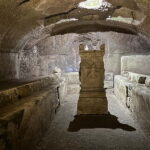
Next up: Catacombs of St. Callixtus for about one hour, including entry and a guided tour. This is one of the most powerful segments of the day because it changes scale. Above ground, you’re dealing with road lines and stone structures. Underground, everything feels more intimate and human.
You’ll benefit from going with a guide here. Catacombs can be easy to view as a generic “tombs” attraction. With interpretation, they become part of how communities remembered the dead and how early Christian history is tied to specific burial sites.
Here’s the practical part for you:
- Bring a steady stride mindset. Even if the ground isn’t described as difficult, you should expect walking on uneven surfaces.
- Wear shoes that you can trust.
- If you get a little claustrophobic in enclosed spaces, keep that in mind and pace yourself during the hour.
In the reviews, the catacombs experience is consistently framed as something that feels guided and well explained. That makes sense. This is the kind of site where the guide’s job is not to entertain you, but to make sense of what you’re looking at.
Villa di Massenzio: a quick look that still changes your perspective
After the catacombs, you’ll make a photo stop and guided visit at Villa di Massenzio for about 10 minutes. Short time here, yes—but short doesn’t mean unimportant.
Villa ruins like this help you connect the dots between the Appian Way corridor and elite Roman life. You start thinking beyond the road itself. This area wasn’t just for travelers and defenses. It was also part of how Rome’s powerful classes lived, built, and projected status.
Because the stop is brief, treat it like a snapshot with guidance. Let the guide point out what to notice. Then move on. That’s exactly how this itinerary keeps your attention from dragging.
You can also read our reviews of more tours and experiences in Rome






Tomb of Cecilia Metella: where you get that classic Appian Way vibe
Then comes Tomb of Cecilia Metella. Plan 15 minutes for a photo stop and guided visit.
This is the landmark people come for when they picture the Appian Way. It’s a marker you can orient around, and the guide will help you read it in context rather than just take photos.
Why this stop is valuable: tombs along routes like this weren’t just memorials. They were also signals to travelers. They shaped what you saw as you moved down the road—who mattered, what families wanted remembered, and how the landscape communicated identity.
If you’re a photographer, you’ll like that there’s time to pause. If you’re not, it still works. You can spend the moment listening to the story, then step back for a clean shot.
Riding the Appian Way itself: the best part is how it feels
The heart of the day is time on the Appian Way itself. You’ll have about 20 minutes here with photo time and guided components.
Walking the Appian Way is already a powerful experience because it’s old in a way that’s easy to feel. Riding it on an e-bike keeps you moving without exhausting your legs, so you can stay present. You’re more likely to notice the rhythm of the road and the way the terrain shifts.
You’ll also get the payoff of the tour’s structure: earlier stops give you the backstory, and the ride gives you the emotion. The road becomes more than a highlight listing. It becomes a route with a pulse.
One tip for you: don’t treat every stop like a race to capture a photo. If you do, you’ll miss the guide’s explanations about what you’re standing on.
Parco degli Acquedotti: aqueduct ruins and real countryside calm
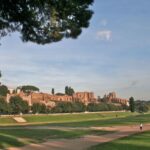
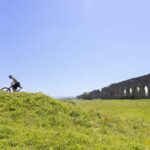
After the major monuments, the tour shifts toward scenery. Parco degli Acquedotti is next for about 25 minutes, with photo time, guided visit, and scenic views on the way.
This is where the day stops feeling like a checklist and starts feeling like a landscape. Aqueduct ruins are fascinating because they’re not just architecture. They’re infrastructure. They explain how Rome pulled off daily life at massive scale—water, movement, sanitation, and survival.
You’ll probably walk slowly here. The pace naturally drops because the environment asks for it. Look for how the remains of aqueduct structures cut through open areas. It’s one of the best ways to understand why Rome valued engineering as much as art.
And yes, the views matter. Even if you’re not a countryside person, the setting helps you reset after underground time and dense stone landmarks.
Lunch at a local restaurant: when food is part of the plan
Lunch happens at a local restaurant for about 30 minutes. This stop is included in the tour, and it’s not just filler.
A good tour day needs a place to refuel that feels local. In the feedback, the lunch break is described as excellent, with standout food, drinks, and friendly staff. That kind of comment usually means you’re not eating a sad tourist plate just to finish a schedule.
One useful detail for your planning: depending on the time of day, the afternoon version may offer an aperitif to replace lunch. So if you’re booking a later start, expect something drink-and-bite style rather than a full meal.
The final surprise photo stop, then back to Viale Manlio Gelsomini
At the end, there’s a short 10-minute surprise photo stop before you return to Viale Manlio Gelsomini, 24.
That final pause is useful because it gives you a last moment to look around with fresh eyes. By this point, you’ve already seen the big monuments. The last stop tends to feel like a reward for staying engaged—something scenic or atmospheric that fits the route’s theme.
Then you’re back at the starting area, with the ride done and your brain full of connections you didn’t have five hours earlier.
The guide makes it: what you should expect from Iman
The strongest pattern in the feedback is about the guide. People highlight Iman’s pacing and his ability to keep things informative without turning the day into a lecture.
That matters because this route has variety. You move from gates to underground spaces to major tomb landmarks to aqueduct scenery. Without a guide who can stitch it together, you’d get a string of separate sights. With Iman, it sounds like the tour becomes one connected story.
You should also notice the practical approach mentioned: bike control felt easy, and the stops were well timed. That’s a big deal on private tours. The guide sets the “comfort level,” and you shouldn’t have to fight the schedule.
Price and value: what $168.79 includes (and why it’s not just a bike rental)
At $168.79 per person for about five hours, this tour isn’t just paying for an e-bike. You’re paying for:
- A private guided route
- Use of a high-quality e-bike
- Catacombs of St. Callixtus entry ticket
- Lunch (or an afternoon aperitif option)
Value is about what you’d otherwise have to coordinate yourself. If you try to recreate this day solo, you’d likely spend your time solving transportation and ticket logistics. Here, the itinerary handles the sequencing. You just show up, ride, walk, and learn.
The other value factor is the private format. Even though your group is private, the tour still includes meaningful stops rather than a vague “we’ll ride and see things.” You get guided segments at major points plus time to pause for photos.
Who should book this private Appian Way e-bike tour
This is a great fit if you:
- Want the Appian Way experience without turning it into a full-day workout
- Prefer a guide-led route over trying to DIY ancient-site navigation
- Like mixing big history stops (walls, tombs, catacombs) with countryside views (aqueduct park)
- Enjoy having a consistent pace with breaks built in
It’s not ideal if you:
- Need wheelchair access or have limited mobility, since it’s not suitable for wheelchair users and people with mobility impairments
- Are traveling with young kids. It’s listed as not suitable for children under 6 and also not suitable for children under 10
Should you book it?
If you want an Appian Way day that feels organized, comfortable, and story-driven, I’d book this. The combination of e-bike ease, catacombs entry, and a guide like Iman who can explain what you’re seeing is a strong formula. You also come away with two kinds of Rome in one go: the monumental roadside and the calmer aqueduct landscape.
Skip it if you’re looking for a low-effort sit-and-see tour. This is active—ride and walk. If you’re up for that, you’ll likely find the five hours fly by.
FAQ
Is this tour private?
Yes. It’s listed as a private group tour with a live English guide.
How long does the tour last?
The duration is 5 hours.
What’s included in the price?
The tour includes use of a high-quality e-bike, a guided tour, entry ticket to the Catacombs of St. Callixtus, and lunch (with an afternoon aperitif option).
Where does the tour start and end?
It starts and ends at Viale Manlio Gelsomini, 24.
Are catacombs tickets included?
Yes. Entry to the Catacombs of St. Callixtus is included.
What language is the guide?
The live tour guide is English.
What should I bring?
Wear comfortable shoes.
Is it suitable for people with mobility issues or wheelchairs?
No. It’s listed as not suitable for people with mobility impairments and not suitable for wheelchair users.
What about kids?
It’s not suitable for children under 6 years, and also not suitable for children under 10 years.