REVIEW · COLOSSEUM, FORUM & PALATINE TOURS
Rome: Colosseum, Roman Forum, and Palatine Hill Experience
Book on GetYourGuide →Operated by Find Rome Tours · Bookable on GetYourGuide
Fast access helps you read Rome better. This ticket gives you priority access to the Colosseum plus an electronic or printed guidebook, so you can connect what you’re seeing with the people who ran the city. I especially like the built-in momentum: you move from the arena to the Forum ruins and then up Palatine Hill for big city views. One caution: the audio guide setup can be unreliable for some people, so bring a backup mindset and expect to use the written/digital track when needed.
With a total time of about 75–80 minutes, this is a practical way to hit the big three without letting queues eat your day. You still get real roaming time through the Roman Forum’s temples and basilicas, and the Palatine Hill climb for overlooks toward the Circus Maximus. It’s not a slow, deep museum visit, but it is a smart hit of the main ideas of Roman power and daily life.
In This Review
- Quick Takeaways
- Why Priority Access Matters at the Colosseum-Forum-Palatine Complex
- Where to Meet: Colosseo Metro and Find Rome Tours
- Entering the Colosseum Without the Usual Ticket Crush
- Roman Forum Ruins: Politics, Commerce, and Daily Power
- Palatine Hill Walk and the Circus Maximus View
- How the Digital Guidebook Fits Your Pace (and When Audio Fails)
- Pricing That Breaks Down: What You’re Actually Paying For
- Timing, Crowds, and the 75–80 Minute Reality
- Photo Rules, No-Backpack Policy, and What to Bring
- Who This Experience Suits Best (and Who Should Skip It)
- Should You Book This Colosseum–Forum–Palatine Ticket?
- FAQ
- How long is the Colosseum, Roman Forum, and Palatine Hill experience?
- Where is the meeting point?
- Does the ticket include access to all three sites?
- Is there a guidebook included?
- Does this entry skip the ticket line and security?
- How much does it cost, and how is that price explained?
- What should I bring?
- What is not allowed?
- Is it suitable for wheelchair users?
Quick Takeaways
- Priority access that cuts down the worst waiting at the Colosseum entry
- Colosseum + Roman Forum + Palatine Hill in one ticket, not three separate hunts
- Electronic or printed guidebook to keep the ruins from feeling random
- Palatine Hill viewpoints that help you understand the city layout at a glance
- Small-group or private options available if you want more personal attention
- Audio can be glitchy, so plan to rely on the guidebook text if the sound acts up
Why Priority Access Matters at the Colosseum-Forum-Palatine Complex
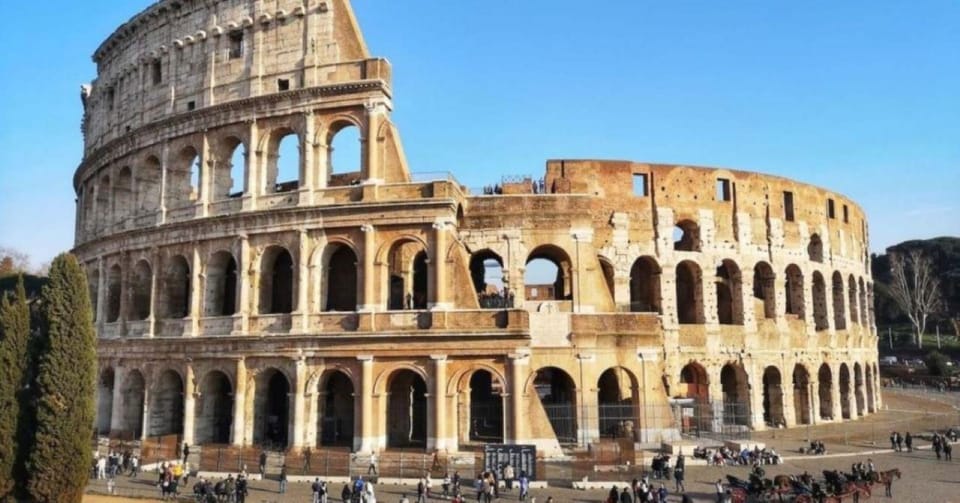
The Colosseum isn’t just famous. It’s famous and busy, which means you can lose a surprising chunk of your day standing still. That’s where priority access earns its keep. Even when you still have a security check, skipping the ticket line helps you spend more time walking and less time shuffling.
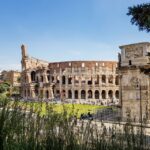
The other win is how the ticket bundles three zones that are usually sold separately. The Colosseum shows spectacle and control. The Roman Forum shows politics and commerce. Palatine Hill shows where elite power lived. When you do them in one flow, the whole story makes more sense.
You can also read our reviews of more tours and experiences in Rome.
Where to Meet: Colosseo Metro and Find Rome Tours
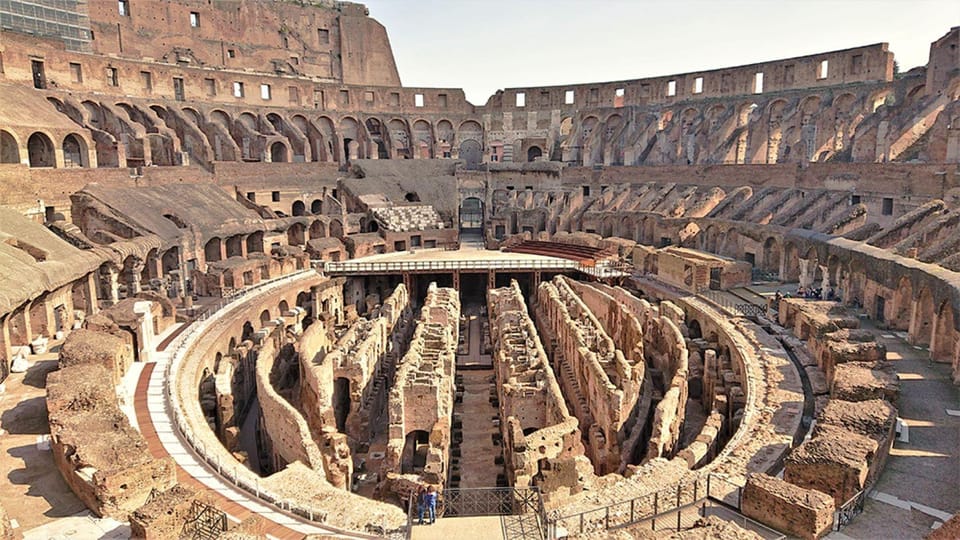
Your meeting point is on the upper level of the Colosseo metro station, near the M metro symbol and the SOS sign, close to Caffe Roma. You’re looking for Find Rome Tours staff there.
This matters because the area is busy and signage can be confusing when you arrive early or late. One of the clearer pieces of advice is simple: arrive a few minutes early, check the exact meeting location on your voucher/email, and watch for the staff uniform or branding so you don’t wander into the wrong tent.
Entering the Colosseum Without the Usual Ticket Crush
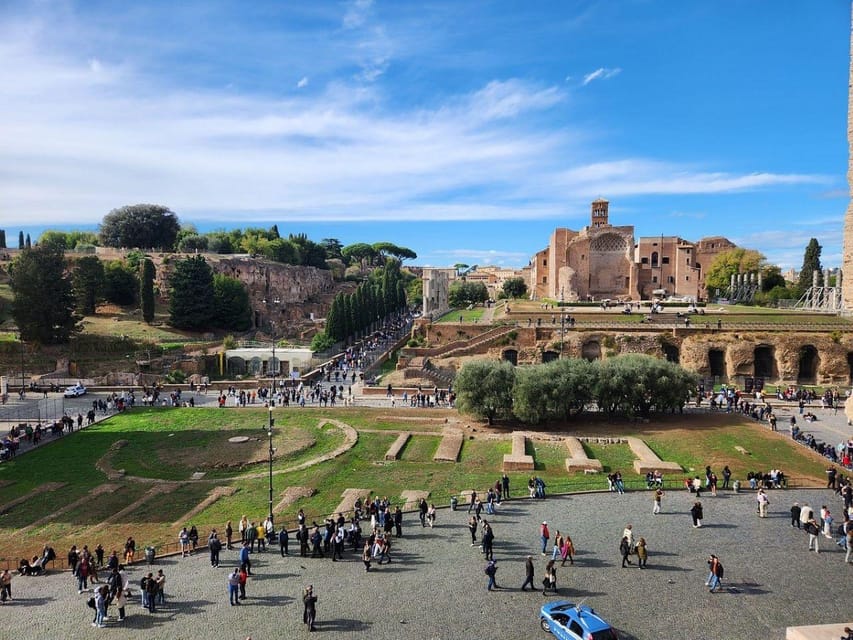
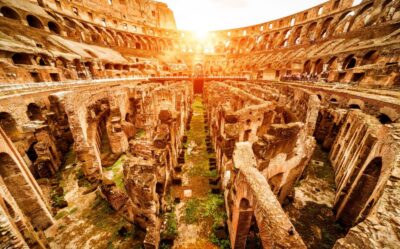
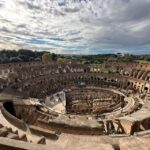
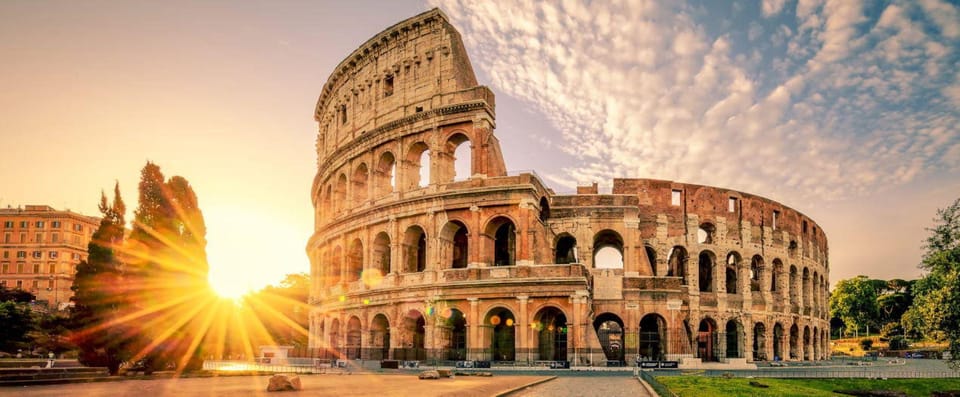
The Colosseum stop is the anchor. Your entry includes priority access, so you don’t have to fight the most crowded queue. Expect an efficient route in, then a chance to explore the major areas of the monument grounds.
A couple of practical notes from real-world patterns:
- Even with priority access, crowd flow can get messy when lines back up or when people rush ahead. Follow staff directions and keep moving with the group rather than trying to outmaneuver other visitors.
- Some areas can be closed depending on the day. If you don’t see everything, don’t assume you did something wrong. Look for on-site signage for what’s open.
This ticket does not specifically mention access to the arena floor. So if your must-see list includes being down at the lowest level of the stadium, you may want to double-check whether your option includes that extra area before you book.
Roman Forum Ruins: Politics, Commerce, and Daily Power
After the Colosseum, the Roman Forum is where the ruins become a city. This is the political and commercial heart of ancient Rome, and the route typically includes major temple and basilica remnants. The best part is that you’re not just looking at stones. You’re walking through the spaces where senators made decisions and where businesses operated.
The guidebook is especially useful here. Without context, the Forum can feel like a pile of ancient foundations. With the right explanation, you start spotting the logic of the place: power structures, public buildings, and the kind of daily movement that makes a capital city feel real.
The time you spend at the Forum will likely be focused rather than exhaustive, since the overall experience is 75–80 minutes. Still, it’s enough to grasp the scale and the vibe: Roman politics was not an abstract concept. It was physical, loud, and surrounded by real commerce.
Palatine Hill Walk and the Circus Maximus View
Then comes the climb—Palatine Hill. This is the legendary birthplace area of Rome, and it’s also where you get that “oh, I can picture the city now” moment. Even if you’re not a hardcore ruins person, the viewpoint helps you understand how the city sits and how far those vantage points reach.
The guidebook content (digital or printed) is built around emperors, senators, and the citizens who shaped the empire. That theme fits Palatine Hill well because it’s where elite power lived. Imperial palaces, lush gardens, and the idea of luxury all come through as you walk.
Also, the viewpoints toward the Circus Maximus are a huge payoff. If you only have a short time window, Palatine Hill is often where your brain grabs the map of Rome most quickly.

How the Digital Guidebook Fits Your Pace (and When Audio Fails)
This ticket includes an electronic guidebook (and possibly a printed version, depending on what you select at booking). The goal is to keep you oriented with stories as you move: emperors, senators, and everyday residents connected to what you’re seeing.
For most people, that’s the secret sauce. It turns an ancient site into a sequence of ideas rather than a list of landmarks.
One real drawback to plan for: the audio kit can be hit or miss. Some visitors reported units that didn’t work at all, while others mentioned crackling. When audio fails, you can still use the written/digital content if it’s available on your device or in the printed format.
If you’re traveling with kids, this is also a good strategy: audio doesn’t replace eye contact and pointing. Treat the guidebook like a tool, not a single point of failure.
Pricing That Breaks Down: What You’re Actually Paying For
The price you’ll see is around $20.50 per person. That number can feel steep if you compare it to a typical day ticket. But here’s what helps explain the value using the provided transparency details:
- Admission to the Colosseum is €18 for adults (and free for under 18).
- The remaining amount covers the advertising electronic information booklet and other services and booking fees.
So you’re not paying only for entry. You’re also paying for the guide content and the handling that helps you access the site through a smoother process. If you’d otherwise be stuck relying on random signage and patchy free audio, the “extras” are doing real work.
If budget is tight, the big question is how much you’ll use the guide. If you love having context while you walk, you’ll likely feel the price makes sense. If you prefer your own offline plan and you’re fine waiting in standard lines, you might consider alternative ticket types. But for most people on a packed Rome schedule, this combo is efficient.
Timing, Crowds, and the 75–80 Minute Reality
Your visit lasts about 75–80 minutes, with starting times depending on availability. That time box is the biggest factor in your expectations.
This isn’t a slow stroll. It’s a smart loop that prioritizes the main features: Colosseum entry, Roman Forum highlights, and Palatine Hill views. If you’re someone who wants to read every plaque and stop for long photo sessions, you might feel rushed.
Crowds also show up fast at the Colosseum. Even when entry is quicker, the site can still feel packed. One small practical tip: when there are many people moving toward the same photo angle, step slightly aside, let the main wave pass, then grab your shot.
Finally, pay attention to what your guide or staff tells you about next steps near the end. A couple of experiences described guides wrapping up and then not clearly setting up what would happen before closing. So keep your own eye on the time, and don’t assume you’ll get extra minutes at the end.
Photo Rules, No-Backpack Policy, and What to Bring
You’ll want comfortable shoes first. This is a walking and climbing experience, and Palatine Hill is the part that punishes poor footwear.
Pack light. Luggage or large bags aren’t allowed, and backpacks are also listed as not allowed. Flash photography is not permitted. Regular photography is allowed.
Other musts from the provided list:
- Hat
- Sunscreen
- Water
- Passport or ID card (a copy is accepted)
One more practical note: on busy days, on-site facilities can be a headache. If restrooms matter to you, plan to use them early in your route rather than waiting until you’re in the thick of crowds.
Who This Experience Suits Best (and Who Should Skip It)
This ticket is a strong fit for:
- You want the big three sites in one visit: Colosseum, Roman Forum, Palatine Hill
- You like structure but still want to explore a bit with your own pace
- You appreciate having an organized guidebook layer while walking
Guides mentioned by name in real experiences include Sandro, Nefertiti, and Giovanna. If you’re lucky enough to be assigned to one of these excellent communicators, you’ll likely get smoother pacing, clear explanations, and help with photo spots.
It’s not suitable for people with mobility impairments or wheelchair users, based on the provided info. The route includes stairs and uneven ancient terrain, so it’s safer to look for an accessibility-focused option if you need it.
Should You Book This Colosseum–Forum–Palatine Ticket?
Yes, you should book it if your day in Rome is limited and you want a clean, efficient way to connect the Colosseum to the Forum and then to the viewpoints from Palatine Hill. The priority access is the real value lever, and the guidebook is what turns ruins into a story you can follow.
Hold off or double-check details if:
- You’re counting on the audio kit working perfectly, since reliability can vary
- You want arena-floor access and you don’t see it clearly included in your option
- You’re traveling with mobility limitations, since this one isn’t designed for wheelchairs
If you want a practical Rome win—less queueing, more seeing, and a guidebook that keeps your brain engaged—this ticket is a solid choice.
FAQ
How long is the Colosseum, Roman Forum, and Palatine Hill experience?
The duration is listed as 75 to 80 minutes. Starting times depend on availability.
Where is the meeting point?
Meet at the upper level of the Colosseo metro station near the M metro symbol and the SOS sign, close to Caffe Roma. Look for Find Rome Tours staff.
Does the ticket include access to all three sites?
Yes. Priority access includes the Colosseum, Roman Forum, and Palatine Hill.
Is there a guidebook included?
Yes. You get an electronic or printed guidebook.
Does this entry skip the ticket line and security?
It includes skip the ticket line, but skip the security control is listed as not included.
How much does it cost, and how is that price explained?
The price is listed as $20.50 per person. The transparency note says Colosseum admission is €18 for adults and free for under 18. The remaining amount covers the electronic information booklet, other services, and booking fees.
What should I bring?
Bring comfortable shoes, a hat, sunscreen, water, and passport or ID card (a copy is accepted).
What is not allowed?
Luggage or large bags and backpacks are not allowed. Flash photography is also not permitted.
Is it suitable for wheelchair users?
No. It is listed as not suitable for wheelchair users and people with mobility impairments.