REVIEW · CATACOMBS & CRYPTS TOURS
Rome: Catacombs Express ENGLISH Guided Tour – SKIP THE LINE
Book on GetYourGuide →Operated by Rome With Mike · Bookable on GetYourGuide
Underground Rome changes your mood fast. On this English guided San Domitilla catacombs tour, you get quick entry and a focused look at early Christian burial life below the streets.
I love two things here: first, you see key Christian artwork in the catacombs, including frescoes connected to Saint Peter and Saint Paul (plus the Last Supper). Second, the tour ties the underground rooms to what was built above them, with a visit to the Basilica and tomb area of the martyrs Nereo and Achilleo.
One thing to consider: you’ll walk on uneven surfaces in cool, underground spaces, and the site isn’t a good match for claustrophobia or mobility needs. Bring warm layers and comfortable shoes, or you’ll feel it fast.
In This Review
- Key highlights you won’t want to miss
- Skip-the-Line at San Domitilla: the fast track to early Christian Rome
- Meeting in the garden near Via delle Sette Chiese (282)
- Basilica of Nereo and Achilleo: what’s above tells you what was below
- Best-preserved catacombs: corridors, tombs, and how the space is used
- Frescoes of Peter, Paul, and the Last Supper: the art you came for
- The story thread: from pagan Rome to Holy Roman Catholic Rome
- How long it feels: an express 1-hour visit that still has meaning
- Who this tour suits best (and who should skip it)
- Price and value: is $37 a smart use of time?
- Comfort checklist: what to bring and what to wear
- Should you book the Rome Catacombs Express at San Domitilla?
- FAQ
- How long is the San Domitilla catacombs express tour?
- Where do I meet the guide?
- Is the tour in English?
- Does the price include entry to both the basilica and the catacombs?
- Are photos allowed in the catacombs?
- Who should avoid this tour?
Key highlights you won’t want to miss
- Skip-the-line access so you spend time underground, not waiting outside
- Oldest-style Christian frescoes linked to Peter, Paul, and the Last Supper
- Basilica of Nereo and Achilleo above the martyrs’ tombs, built at the end of the 4th century AD
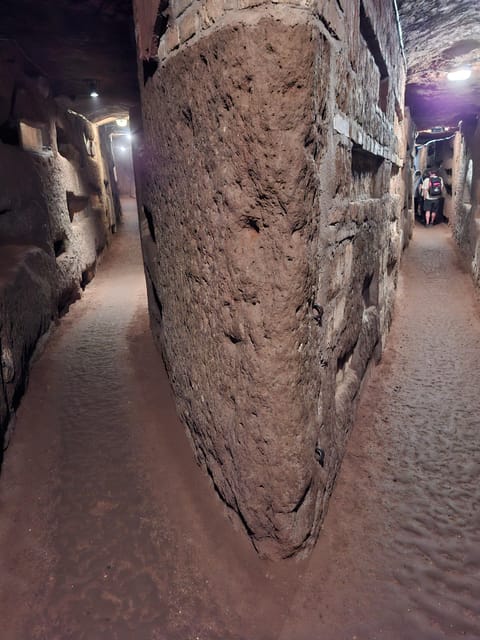
- Best-preserved catacombs across 17 kilometers of underground caves on four levels
- A guide who keeps the pace light, with humor and quick checks for understanding (names you may hear include Mike, Heather, John, Pete, Petar, and Divan)
- No flash photography inside, which helps preserve the art and keeps the experience calm
Skip-the-Line at San Domitilla: the fast track to early Christian Rome
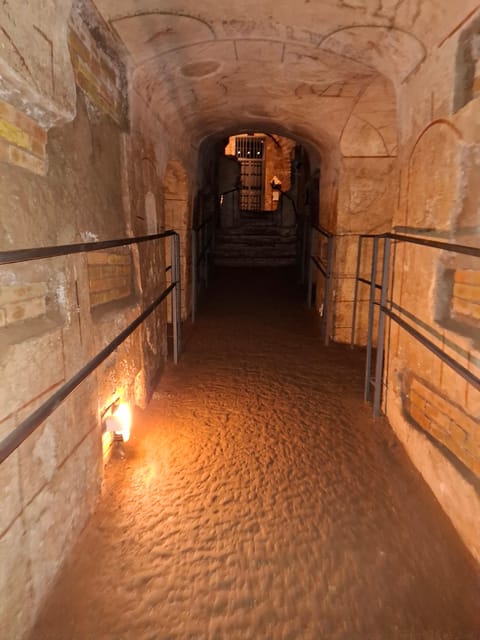
This is an express style catacombs visit. That matters in Rome, where waiting can eat your energy. With skip-the-line entry, you move straight into the experience—first a short orientation, then the underground walk.
The tour is built around one clear goal: show you how the early Christian community used burial spaces, and how that world connects to what came next in the city. It’s not just about “wow, it’s underground.” You get the story behind what you’re seeing, including the shift from pagan Rome into Catholic Rome across the 2nd to 9th centuries.
If you like tours that feel organized rather than rushed, this strikes a good balance. You won’t be in a huge crowd, and the small-group format keeps the guide’s explanations tied to what you’re actually looking at.
You can also read our reviews of more guided tours in Rome

Meeting in the garden near Via delle Sette Chiese (282)
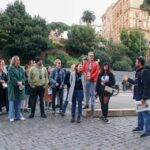
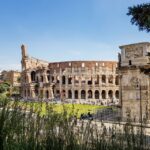
Plan to meet your guide at Via delle Sette Chiese, 282. When you arrive to the parking lot, walk through the gate into the garden. You’ll find the guide waiting at the picnic tables, usually under the gazebo.
This start point is practical. You get a “set your brain to underground mode” briefing before you go below ground. It also helps you spot the tone of the guide early—many guides who lead this tour are known for mixing straight explanations with humor, so the lesson doesn’t feel like a lecture.
You’ll end where you started, so you can keep the rest of your day flexible around the Appia Antica area.
Basilica of Nereo and Achilleo: what’s above tells you what was below
The tour includes the Basilica and tombs of the martyrs San Nereo and San Achilleo. This is the above-ground anchor that turns the catacombs from an interesting underground maze into a meaningful memorial space.
You start with the basilica built at the end of the 4th century AD, located above the tombs of these two martyrs. That vertical link is the point. It shows you how the early Christian burial world didn’t stay trapped underground. It became part of the city’s religious architecture as Christianity gained a public place in Rome.
Then you continue down further into the best-preserved parts of the catacombs—spreading across 17 kilometers of underground caves laid out on four levels. Even if you don’t walk all of that distance, the guide’s framing helps you understand the scale: this wasn’t a one-off site. It was an organized underground community.
Best-preserved catacombs: corridors, tombs, and how the space is used
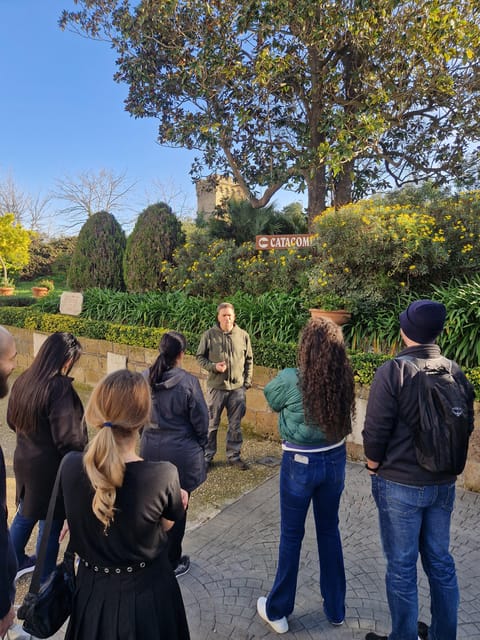
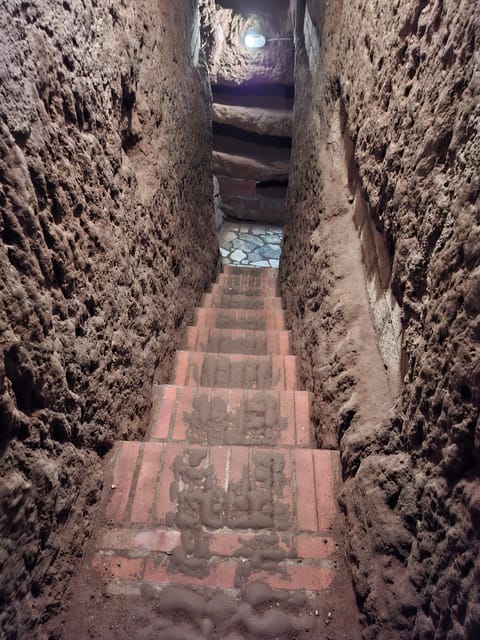
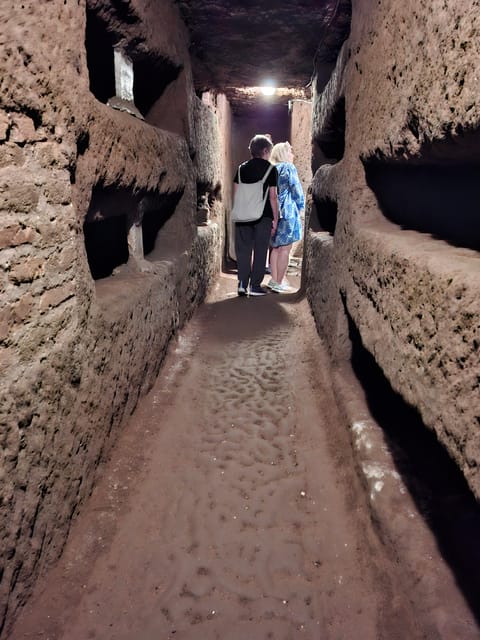
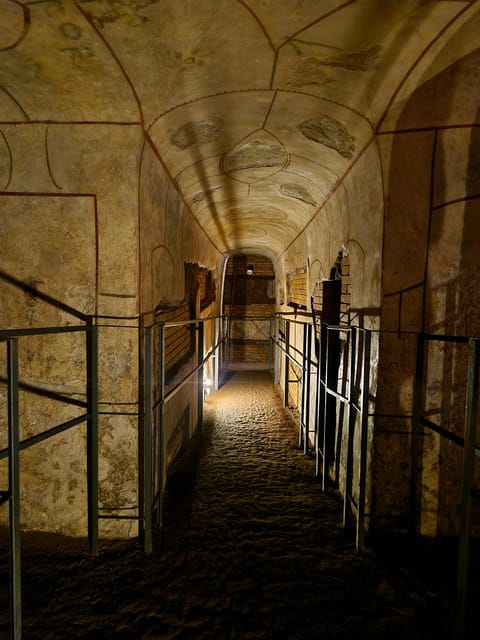
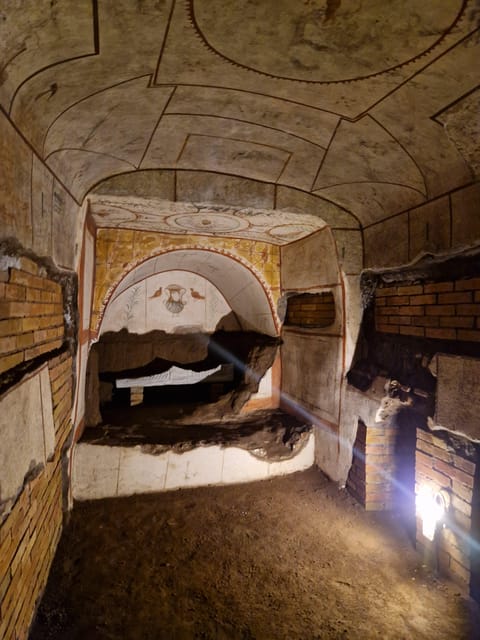
Once underground, you’ll explore the catacombs with your guide, moving through tunnels and tomb areas in a way that’s designed for understanding, not just sightseeing.
A key detail: this tour focuses on the burial spaces themselves. You’re not here for a “bones on display” experience. You’ll see tombs and passageways, and you’ll learn what the layout and burial customs meant to the early Christians.
That’s a big reason I like this tour format. Catacombs can feel confusing if you’re left to wander. Here, the guide helps you make sense of what you’re seeing—where people were laid to rest, how the spaces were arranged, and why certain features mattered.
One more practical note: the catacombs are cooler than the surface. You don’t need a winter coat, but you do want a light jacket or warm layer. The difference can be noticeable during the walking time.
Frescoes of Peter, Paul, and the Last Supper: the art you came for
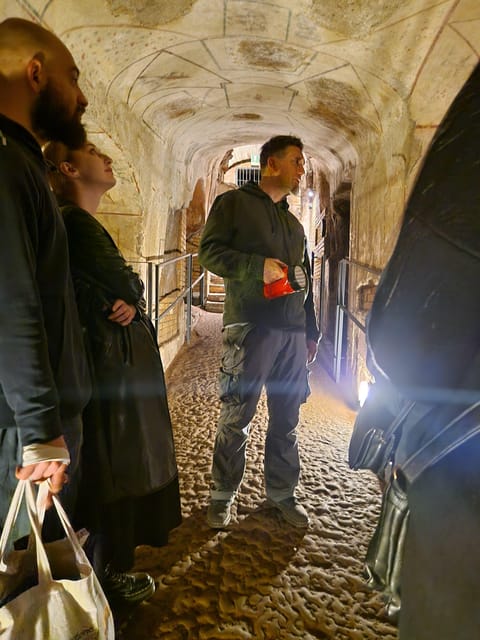
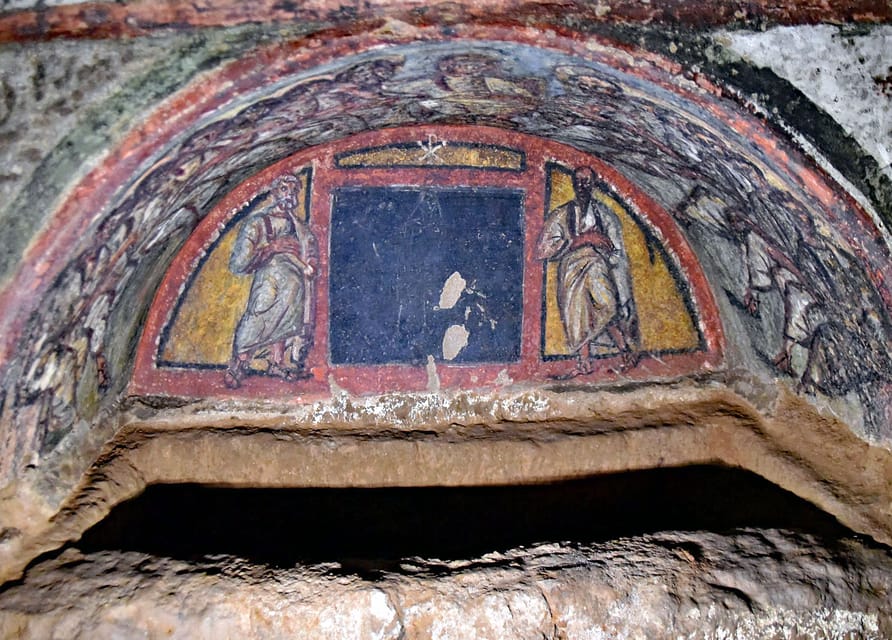
The catacombs are famous for what’s preserved, and this tour highlights some of the most meaningful religious imagery. You’ll see frescoes connected to Saint Peter and Saint Paul, and the tour also references the Last Supper in the artworks you encounter.
What’s valuable here isn’t just the subject matter. It’s the timing and context. These paintings help you picture how early Christians expressed belief visually—during a period when Rome’s religious identity was changing.
Also, there’s a simple rule: no flash photography inside. That’s not a small detail. It keeps the atmosphere respectful and helps protect the artwork. If you’re the type who takes lots of photos, plan to rely on normal light (and your eyes) instead of trying to “capture everything.”
You can also read our reviews of more tours and experiences in Rome

The story thread: from pagan Rome to Holy Roman Catholic Rome
A big part of the tour’s value is the narrative connection. You’ll learn about the transition from ancient pagan Rome to Holy Roman Catholic Rome, with the explanations focused on what burial rites and rituals looked like as the centuries passed.
You’re essentially watching history in two layers:
- Underground: the practical world of burial and community life
- Above ground: the way later Christianity formalized remembrance through basilicas and public memorial sites
The guide also connects the art and tomb spaces to the early Christian community of Imperial Rome and to the Catholic development in the city from the 2nd through the 9th centuries.
This matters because catacombs can get reduced to a spooky outing. With this tour, you get a more human angle: families, faith, ritual, and memory—handled in stone and paint.
How long it feels: an express 1-hour visit that still has meaning
The duration is listed as 1 hour, and the experience is built so you get both context and underground time. In practice, expect a split where you’re above ground first for background, then underground for the walking portion.
That pacing is great if you’re stacking days in Rome. You can fit this in without losing half the day to transportation and waiting. It also helps you avoid the “I’m exhausted but still hungry for answers” problem that can happen with longer tours.
That said, the express format means the tour is focused. You won’t have hours to linger at every corner or stop for deep personal reading. If your ideal catacomb experience is slow, silent, and long, you might find you want more time than this provides.
Who this tour suits best (and who should skip it)
This experience works best if you want:
- A small-group English guided look at San Domitilla
- A clear connection between the catacombs and the basilica tomb area
- Christian art details that go beyond surface-level viewing
- A compact time commitment in a city where time matters
It may not be your match if:
- You have claustrophobia
- You need accessibility support for mobility impairments or wheelchair use
- You’re traveling with children under 6 years
- You dislike uneven walking surfaces
If your priority is comfort and mobility, think twice before choosing an underground catacomb option at all. If you’re comfortable on your feet and fine in cool, enclosed spaces, you’ll likely find the experience rewarding and easy to follow.
Price and value: is $37 a smart use of time?
At $37 per person for an English guided, skip-the-line catacomb experience, this isn’t a “cheap and quick” add-on. It’s more like a targeted cultural stop—one that tries to compress the best parts: fast entry, expert guidance, and access to both key areas.
Here’s why it can be good value for the money:
- Skip-the-line reduces time waste, which is a real currency in Rome
- You get an English-speaking guide and a guided walk through underground areas
- Entrance includes the Basilica of Nereo and Achilleo and the best-preserved catacombs
You’ll pay for interpretation as much as entry. If you’re the type who wanders museums without processing, you might wonder what you got for the cost. But if you like understanding why things are placed where they are, the guided approach is the whole point—and it’s what makes this price feel fair.
Also, with no hotel pickup/drop-off included, you’re likely doing this as a planned day stop rather than a door-to-door service. That keeps costs down, but it means you should plan your own timing and transportation.
Comfort checklist: what to bring and what to wear
For this catacombs visit, keep it simple:
- Comfortable shoes for uneven surfaces
- Warm clothing or at least a light jacket for the cooler underground air
- Modest clothing is recommended due to the site’s sacred nature
And remember the no-flash rule. Bring your eyes. Save your camera for above-ground stops if you’re worried about restrictions.
One last tip: arrive ready to walk. Even with the express pace, you’ll be moving through corridors and stair-like changes in space. Good shoes beat any extra layer.
Should you book the Rome Catacombs Express at San Domitilla?
Book this tour if you want an efficient, English-guided way to see San Domitilla, connect the underground tomb world to what was built above, and understand the religious transition from pagan Rome to the later Christian era. It’s also a strong choice if you’d rather pay for clarity than spend time trying to decode catacombs on your own.
Skip it if you’re not comfortable with enclosed underground spaces, have mobility limitations that make uneven walking difficult, or prefer long, slow wandering with plenty of time to stop and study without a set guide pace.
If you’re doing a first pass at Rome’s early Christian sites, this express format is one of the more practical ways to get a meaningful “it all connects” picture—without burning your entire day underground.
FAQ
How long is the San Domitilla catacombs express tour?
The experience is listed as 1 hour. You should still plan for some time before the underground walk while your guide explains what you’re about to see.
Where do I meet the guide?
Meet at Via delle Sette Chiese, 282. Walk through the gate into the garden, then find your English mother-tongue guide at the picnic tables (often under the gazebo).
Is the tour in English?
Yes. The tour is guided in English by a live English-speaking guide.
Does the price include entry to both the basilica and the catacombs?
Yes. Entrance includes the Basilica of Nereus and Achilleo and the Best Preserved Catacombs of Rome, along with skip-the-line access.
Are photos allowed in the catacombs?
Photography is not allowed inside the catacombs. Flash photography is specifically not allowed.
Who should avoid this tour?
It is not suitable for children under 6, people with mobility impairments, wheelchair users, or those with claustrophobia. The tour includes walking on uneven surfaces.