REVIEW · CITY TOURS
Rome: Private Guided City Highlights Tour by Golf Cart
Book on GetYourGuide →Operated by Rolling Rome Segway & Golf-Cart · Bookable on GetYourGuide
A golf cart makes Rome faster. This private 3-hour highlights tour swaps long walks for an easy roll through Rome’s central piazzas and viewpoints, with stops like Trevi Fountain and Piazza Venezia. I love that it covers more ground than you can do on foot, and I also like how the guide can tailor the route for your pace and interests, including quieter hill neighborhoods such as Aventine and Celio. One thing to consider: if the weather turns cold, the cart’s cover may not be enough by itself, so bring a warm layer just in case.
You start near Piazza del Popolo in front of the twin churches (Santa Maria in Montesanto and Santa Maria dei Miracoli), then you’re off into the historic core with smooth access to places that are often slow to reach on foot. Expect a street-legal cart with safety belts, lights, a horn, and a guide who’s ready to answer questions while you glide between sights.
In This Review
- Key Highlights
- Why This Golf Cart Tour Feels Smarter Than Just Walking
- The Route Begins at Piazza del Popolo and Sets the Tone
- Trevi Fountain and the Baroque Hits You in a Short Time Window
- Piazza Barberini, Piazza Colonna, and the Column of Marcus Aurelius
- Piazza Barberini
- Piazza Colonna and the Column of Marcus Aurelius
- Piazza Venezia and the Monument to a Unified Italy
- Celio Hill: Villa Celimontana and Two Ancient Basilicas
- Aventine Hill and the Knights of Malta Connection
- How Guides Shape the Experience (From the Field, Not a Script)
- Cart Comfort, Safety, and the One Weather Watch-Out
- Hotel Pickup in Rome’s Historic Center Makes the Day Easier
- Price and Value: Is $198.25 Worth It?
- Who This Tour Is Best For
- Should You Book This Golf Cart Highlights Tour?
- FAQ
- How long is the Rome private golf cart highlights tour?
- Where does the tour start?
- What major sights and piazzas are included?
- Does the tour visit Rome’s hills like Aventine and Celio?
- Is this tour private?
- Is the guide available in English?
- Is hotel pickup included?
- What type of vehicle is used?
- Is insurance included?
- Is wheelchair access available?
Key Highlights
- Street-legal comfort: front and rear lights, safety belts, and an actual horn so you can move through central Rome without stress
- Private and tailored: your guide adjusts the plan toward what you want to see, not just a fixed script
- Core piazzas on the route: Piazza Venezia, Piazza Barberini, and Piazza Colonna, including the Column of Marcus Aurelius
- Rome’s hills, not just postcard streets: Celio and Aventine areas that you often miss on walking tours
- Knights of Malta story included: the route connects to the Knights of Malta after they fled Rhodes
- Easy win for limited time: 3 hours to hit a lot of Rome without your feet filing a complaint
Why This Golf Cart Tour Feels Smarter Than Just Walking
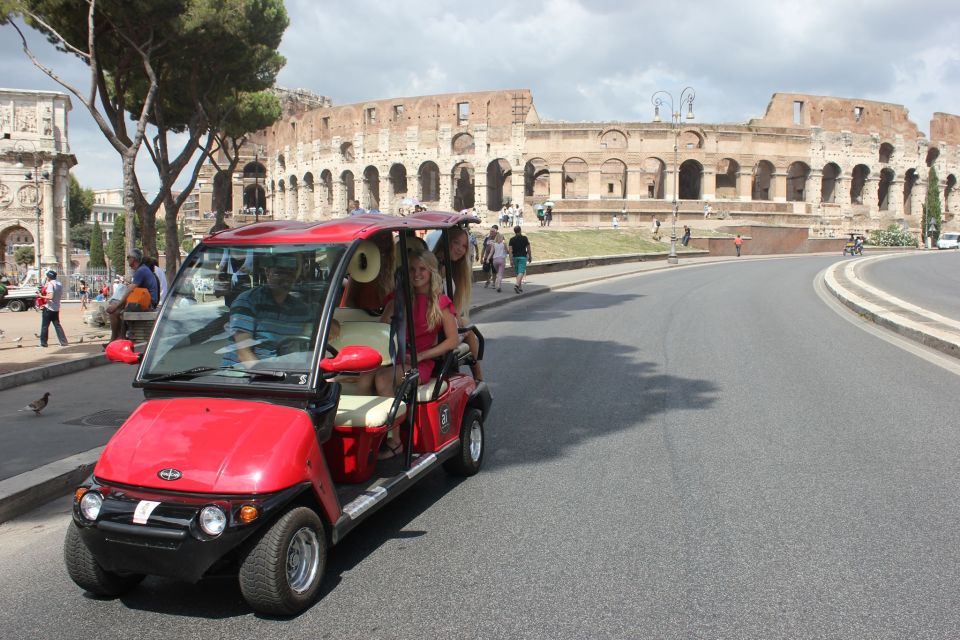
Rome can be a grind. Even if you love every stone, the city’s distances add up fast, and your “highlight plan” starts to wobble around museum lines, crowded sidewalks, and that one hill you did not plan for.
This tour is built around a simple idea: you get the history and the big sights, but with less fatigue. A street-legal golf cart means you can hop between major areas—so you spend time looking, not just moving. In 3 hours, you can cover a wide chunk of the center plus parts of the 7-hill geography that are usually a hassle to reach efficiently.
The private part matters too. Your guide can steer the day toward what fits your group: more photos, more backstory, more time near a viewpoint, or less time where you’d rather keep rolling. That flexibility shows up in the tour’s design even when the itinerary is only an outline.
And yes, it’s still Rome. You’ll still be exposed to traffic, street scenes, and the real rhythm of the city. But the cart helps you keep your energy for the stops that actually matter.
You can also read our reviews of more guided tours in Rome

The Route Begins at Piazza del Popolo and Sets the Tone
Most Rome days start with a map and optimism. This one starts with a location that’s easy to find: Piazza del Popolo, meeting in front of the twin churches, Santa Maria in Montesanto and Santa Maria dei Miracoli.
From there, you head into the historic center with a guided flow that avoids the annoying parts of planning. Instead of you trying to stitch together a route while dodging buses and scooters, the tour handles that work. You also get a lot of variety early, which is a big deal when you only have one or two days.
This starting point is a plus because it gives you a sense of direction fast. You see where you are in the broader layout of Rome’s center before you zoom into the more iconic zones.
Trevi Fountain and the Baroque Hits You in a Short Time Window
One of the smartest parts of doing highlights by cart is timing. You can catch the moment, without losing a whole hour to foot logistics.
The route includes Trevi Fountain, where the baroque drama is hard to miss. There’s also a classic legend tied to visiting: toss a coin and you’re said to return to Rome someday. Whether you buy into that story or not, it’s a perfect photo stop because it anchors the day emotionally—this is Rome at its most famous.
If your group wants quick stops, the cart format makes it possible. If your group wants longer looks, your guide can adjust how long you pause at key points.
Piazza Barberini, Piazza Colonna, and the Column of Marcus Aurelius
After Trevi, the tour steers you through some of the most important named squares in the center.
Piazza Barberini
This area is a major hub, and it’s a good place to get your bearings. You’re in the middle of Rome’s layered urban design—grand buildings, major streets, and a sense of the city’s political and cultural gravity.
You can also read our reviews of more city tours in Rome

Piazza Colonna and the Column of Marcus Aurelius
Then comes a true anchor: Piazza Colonna. The square is named for the marble Column of Marcus Aurelius, and it’s the kind of landmark that’s easier to appreciate with context. From the cart, you can see the square and connect it to Roman-era history without spending your whole day trying to line up views.
The practical benefit here: you avoid the walking bottlenecks people hit when they try to see three or four central landmarks back-to-back. The cart keeps you moving, so the day stays on track.
Piazza Venezia and the Monument to a Unified Italy
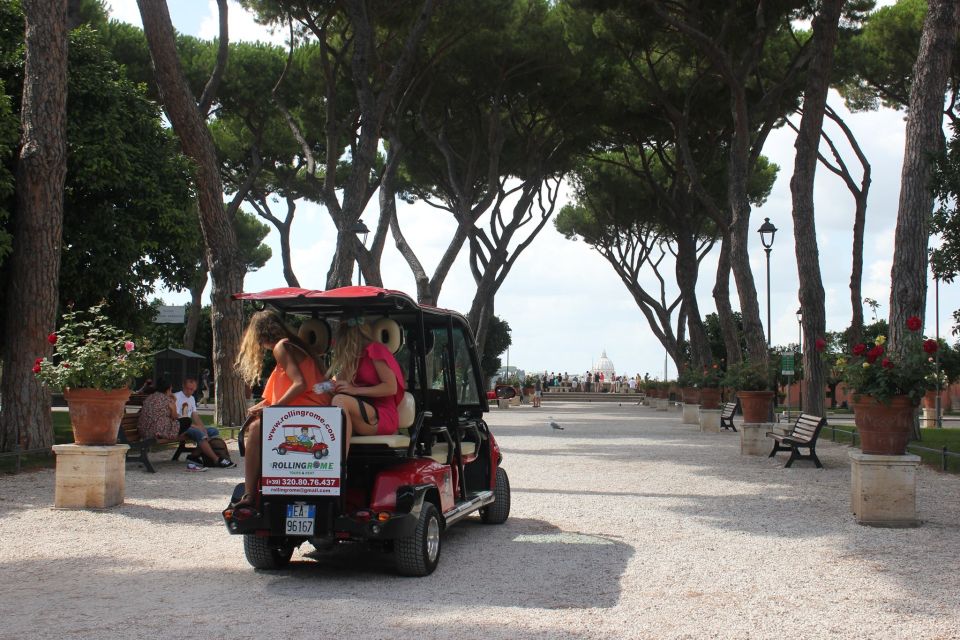
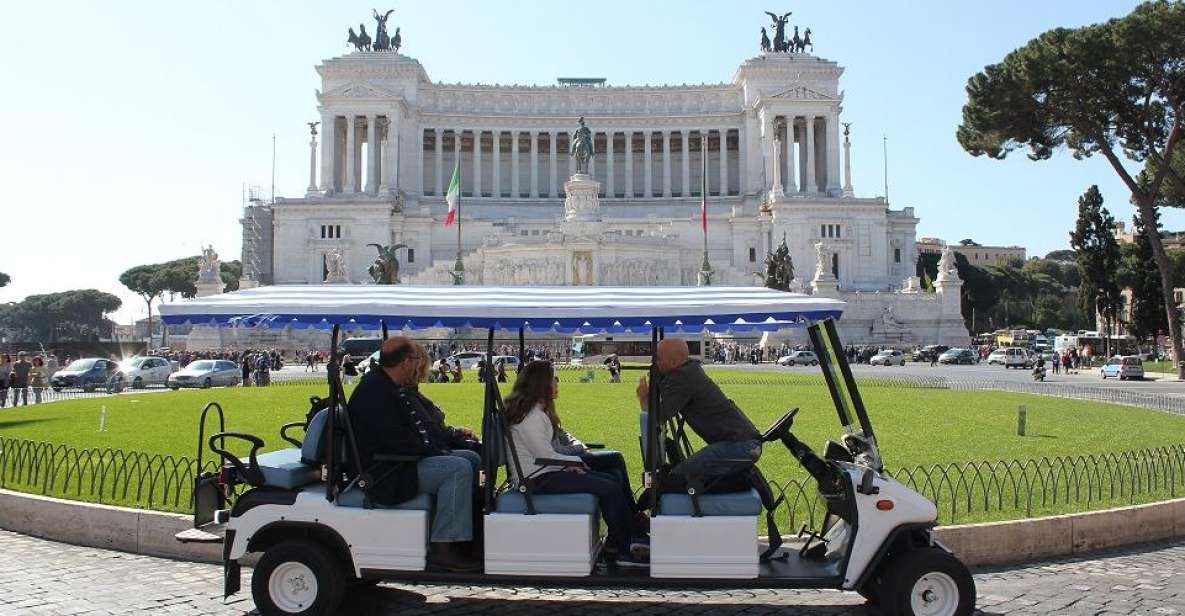
Next you pass Piazza Venezia, dominated by the Victor Emmanuel II monument to a unified Italy.
This is another place where context changes everything. Up close, the monument feels like an argument: it’s not just a building, it’s a statement about identity and nationhood. On a short tour, that matters. You’re not just checking boxes—you’re learning how different time periods sit in the same city.
The cart approach helps here because you can take in the square as a whole, not just a narrow street-level view. That wider sense is what helps the big monuments make sense.
Celio Hill: Villa Celimontana and Two Ancient Basilicas
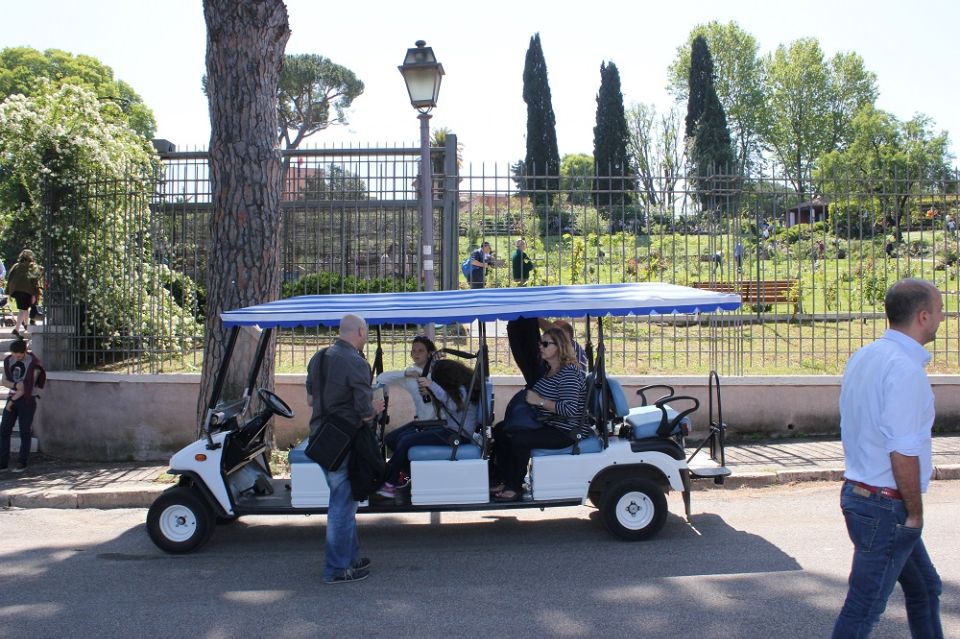
Here’s where the tour stops feeling like a greatest-hits loop and starts turning into something more useful.
You’ll drive to Celio Hill, where you can see the beautiful villa and gardens of Villa Celimontana. Gardens might not sound like a must-do in Rome at first, but in a 3-hour tour, it’s a nice change of pace. It’s a breather zone that keeps the day varied and makes the Roman layers feel more human.
On Celio you’ll also visit ancient basilicas, including Santo Stefano Rotondo and Santi Giovanni e Paolo. These are the kinds of sites that benefit from a good guide because they reward attention. Even if you’ve never studied early Christian architecture, a guide can help you notice the details that make each church worth your time.
A big advantage: the cart lets you reach these spots without turning the day into a cardio session. Rome hills are beautiful, but they’re also relentless.
Aventine Hill and the Knights of Malta Connection
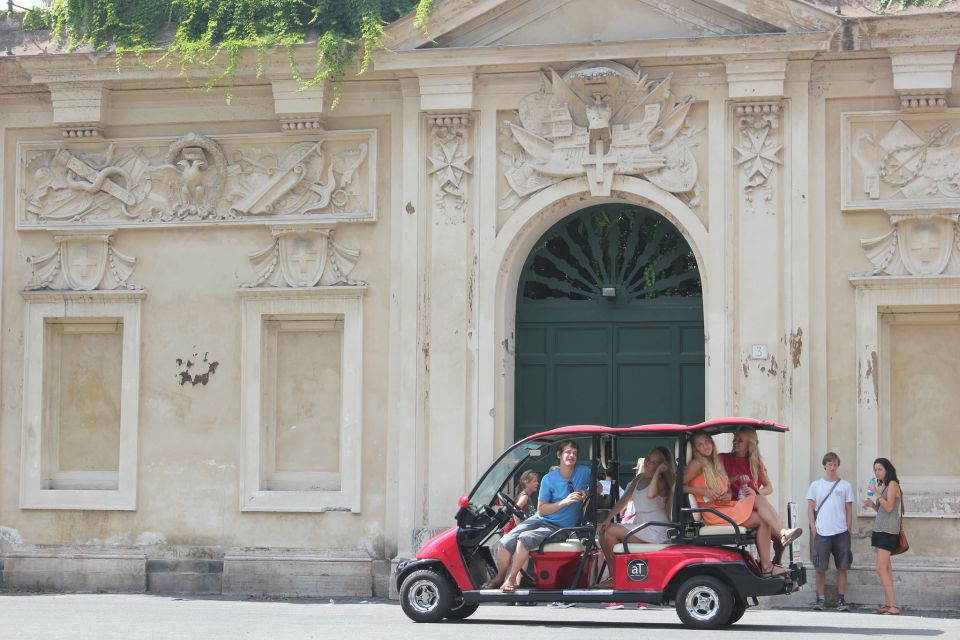
Then you go to Aventine Hill, one of Rome’s iconic heights. This is the southern suburb area where you’ll find a fragrant orange grove, and it’s also connected to the Knights of Malta.
The story included here is specific: after the Knights of Malta fled Napoleon’s army in Rhodes, they set up home in Rome. That kind of narrative is exactly why a guided tour can add value. Otherwise, you might walk past a location and only catch a fraction of what it means.
Aventine Hill also fits the tour’s “more than postcards” theme. Depending on timing, you’ll also connect with the area’s rose garden and its orange grove—small sensory details that make the day feel more lived-in.
And because the tour is tailored, you can spend more time on these stops if your group is more into gardens and atmosphere than into only the biggest monuments.
How Guides Shape the Experience (From the Field, Not a Script)
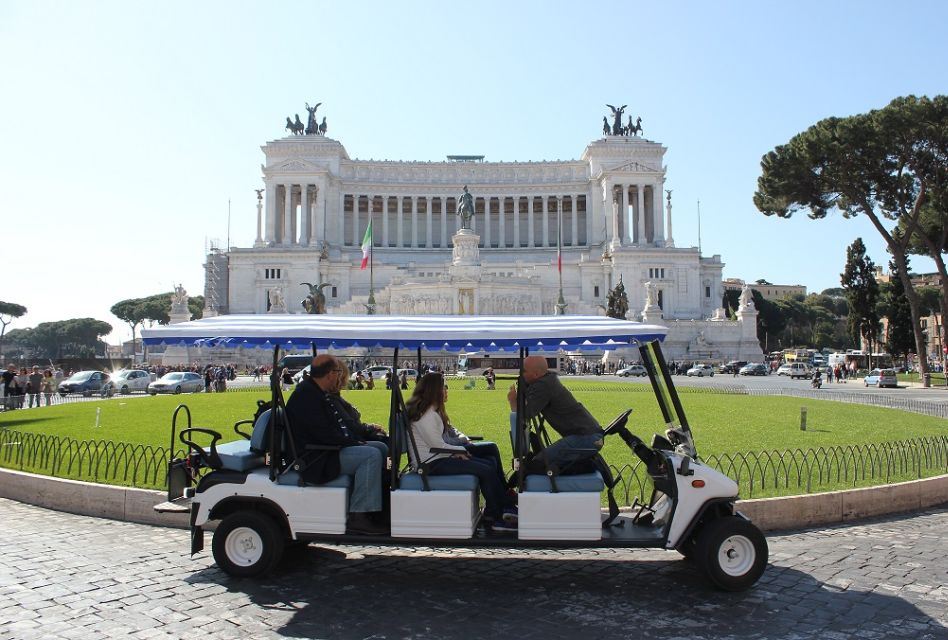
What I like most about this tour style is that it’s not just about a route. A lot depends on the guide, and the pattern across many experiences is clear: guides work to match the group.
You’ll see examples of this in how different guides handle different needs:
- Some guides keep the day fun even when weather hits, with quick adjustments so you don’t feel like the tour is falling apart.
- Others make regular stops for photos so you actually capture the places you came for.
- More than one guide includes practical recommendations mid-tour, like where to eat afterward.
- Guides also adapt for age differences, which is a huge deal if your group ranges from teens to seniors.
Names that show up often in the experience include Leonard, Benni, Angelo, Elaina, Gabriel, Nico, Jules, Luca, Beatrice, and Alex. The common thread is consistent: they don’t just recite dates. They help you connect the sights to stories you can remember.
Cart Comfort, Safety, and the One Weather Watch-Out
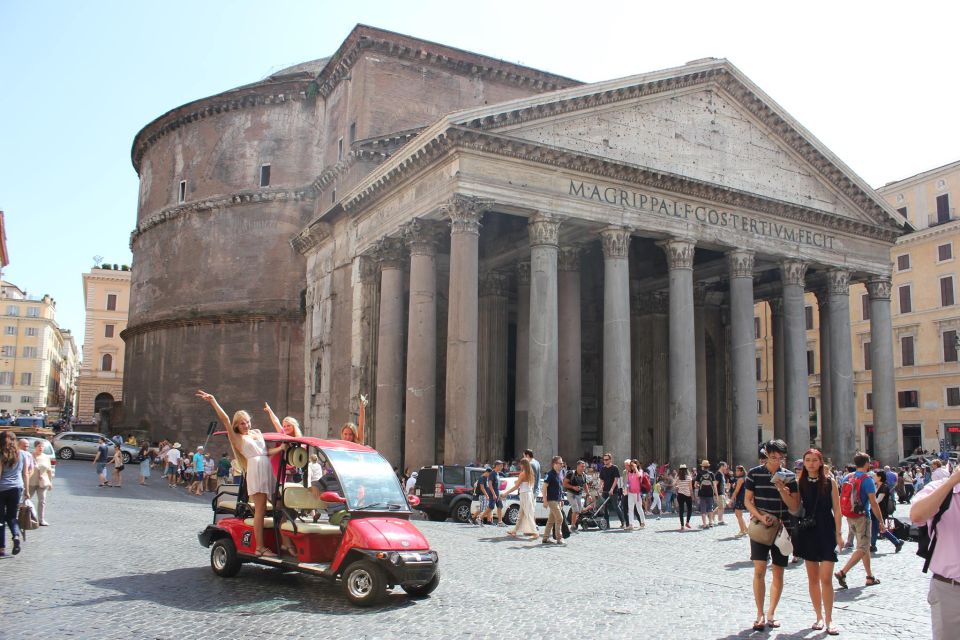
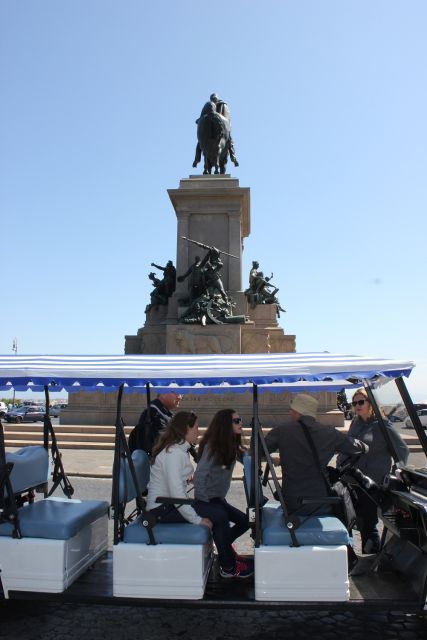
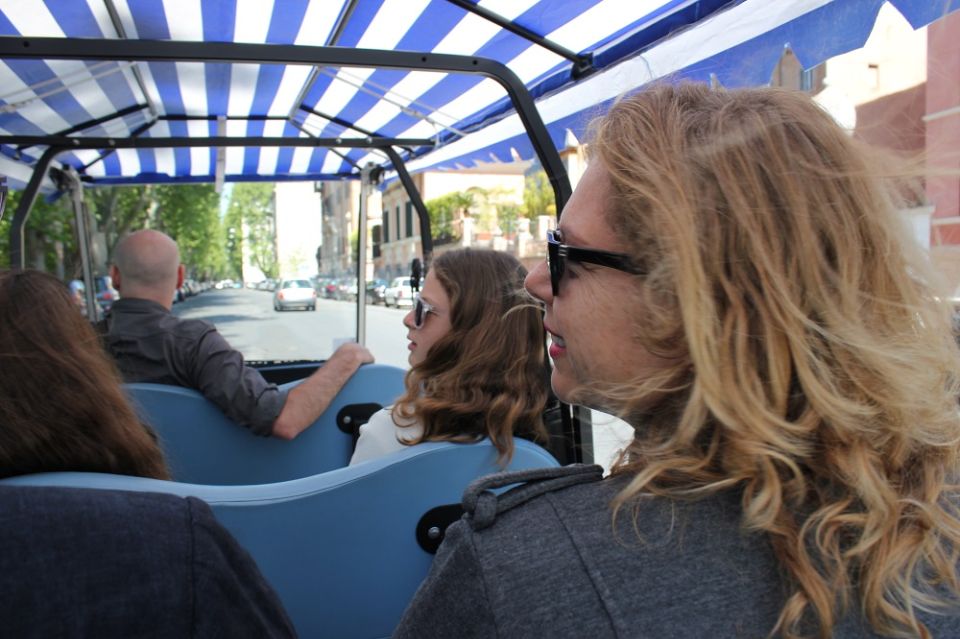
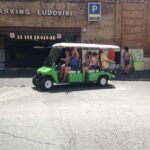
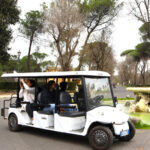
The golf cart itself is street-legal and equipped for comfort and basic safety: safety belts, front and rear lights, a horn, and a cover. That cover is useful, but it’s not a magic shield.
If the day is cold, you may feel it. Some experiences mention freezing conditions when the sides were limited, and the fix was simple: bring a warm layer and dress for Italian weather shifts. Also consider bringing a small scarf or gloves if you run cold easily.
If it rains, don’t assume the day is over. Some guides have handled downpours by adjusting the flow so you still see the key stops. Just expect that visibility and photo conditions can change—so be flexible.
Hotel Pickup in Rome’s Historic Center Makes the Day Easier
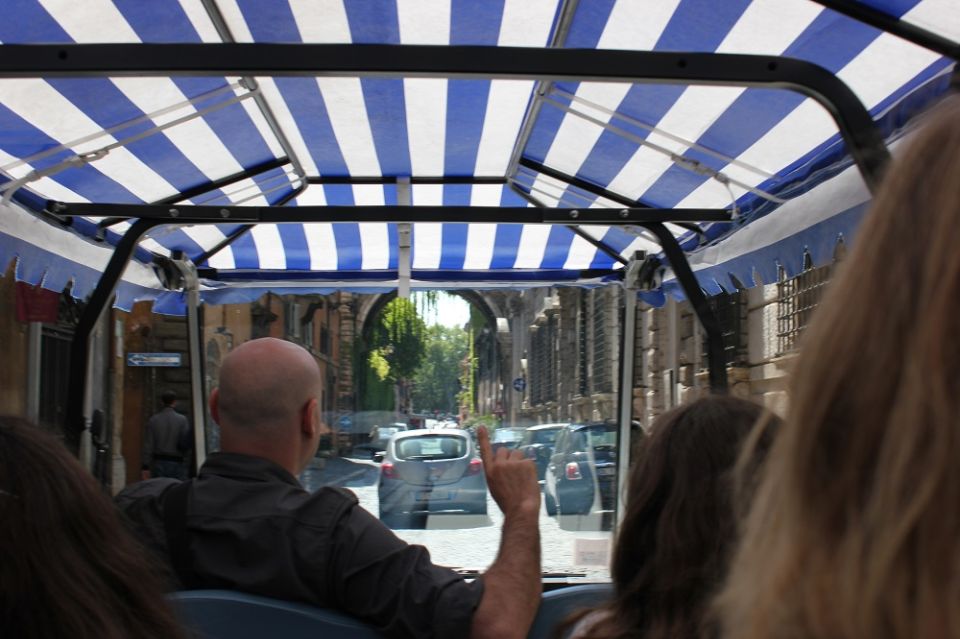
A major part of the value is that hotel pickup is included from hotels in Rome’s historic center.
That matters more than it sounds. Rome is full of narrow streets and complicated drop-offs. Starting from your hotel means you don’t burn time coordinating transport on top of the tour itself. You also arrive calmer, which makes a guided afternoon more enjoyable.
Price and Value: Is $198.25 Worth It?
At $198.25 per person for a 3-hour private highlights tour, the cost isn’t low. But value in Rome is rarely about the sticker price—it’s about what you get for the limited hours you have.
Here’s what you’re paying for, based on what’s included:
- a live English guide
- transportation by street-legal golf cart with safety features
- insurance included
- hotel pickup within Rome’s historic center
- private group format, which makes the tailoring real rather than optional
If you’re traveling with someone who moves slower, someone who gets tired of standing in crowds, or a group where you want maximum sightseeing without planning every step, this price can look pretty fair. For families and mixed-age groups, it often becomes the kind of decision you’re glad you made—because the tour doesn’t punish you for having legs that need breaks.
If your schedule is wide open and you love walking for hours, you could DIY a similar route. But you’d be doing it with more uncertainty, more walking between distant points, and less story context.
Who This Tour Is Best For
This tour is a strong fit if:
- you have limited time and want a lot of Rome in 3 hours
- your group includes seniors, kids, or anyone who prefers less walking
- you want a guided mix of top sights and hill neighborhoods like Celio and Aventine
- you’d rather spend your energy looking at landmarks than managing transit and routes
It may be less ideal if:
- you only want museums or long, indoor site visits (this tour is built for city highlights and drive-by views with stops)
- you prefer to walk everywhere and dislike being driven through streets
Should You Book This Golf Cart Highlights Tour?
Book it if you want a smart use of time: more sights with less strain, plus real guidance connecting places like Trevi Fountain, the Column of Marcus Aurelius, and Aventine’s Knights of Malta story into one afternoon.
Skip it if your travel style is all about slow wandering and you’d rather build your own day at foot speed. In that case, you can get plenty of Rome on your own. But if you’re trying to make the most of your trip and you want a smoother route through central Rome, this one is hard to beat for the money.
FAQ
How long is the Rome private golf cart highlights tour?
The tour lasts 3 hours.
Where does the tour start?
It starts at Piazza del Popolo, in front of the twin churches of Santa Maria in Montesanto and Santa Maria dei Miracoli.
What major sights and piazzas are included?
The route includes Trevi Fountain and drives through central piazzas such as Venezia, Barberini, and Colonna (with the marble Column of Marcus Aurelius).
Does the tour visit Rome’s hills like Aventine and Celio?
Yes. The tour includes stops on hills such as Aventine and Celio.
Is this tour private?
Yes, it’s a private group tour.
Is the guide available in English?
Yes, the live tour guide is available in English.
Is hotel pickup included?
Yes. Pickup is available from hotels in Rome’s historic center.
What type of vehicle is used?
You ride in a street legal golf cart with safety belts, front and rear lights, a horn, and a cover.
Is insurance included?
Yes, insurance is included.
Is wheelchair access available?
The tour is wheelchair accessible.