REVIEW · CARACALLA BATHS & CIRCUS MAXIMUS TOURS
Rome: Caracalla Baths & Circus Maximus — Private or Shared
Book on GetYourGuide →Operated by Touriks · Bookable on GetYourGuide
Rome has a second face.
I love that this tour pairs the Caracalla Baths, one of the best-preserved Roman spa complexes, with the Circus Maximus—so you see leisure culture, not just monuments. Two things I especially like: the way the guide explains how the baths worked (including the underfloor heating) and the small-group feel, with clear audio via sterilized headsets. One consideration: the Circus Maximus portion is short, and what’s left of the structure is limited, so you’ll spend more time imagining than photographing.
The biggest win here is the format. You get an archaeologist guide moving at a human pace through ruins that are calmer than Rome’s headline sites, with enough time to ask questions in a group of up to 10. If you’re expecting major, standing-everywhere walls at the Circus Maximus, you may feel slightly underfed compared with the Baths stop.
In This Review
- Key points to know before you go
- Caracalla Baths: why this Roman spa complex feels different
- The guide’s job: turning walls and mosaics into a daily routine
- What you actually see at the Baths (and what you’ll notice)
- Circus Maximus in 30 minutes: big Roman ideas, smaller visible remains
- Meeting point and timing: how to keep the day stress-free
- What’s included (and why headsets help more than you think)
- Group size and guide style: the difference between shared and private
- Accessibility and rules: plan your gear before you arrive
- Value for $77: is it worth it for your Rome trip?
- Who should book this tour?
- Should you book Caracalla Baths and Circus Maximus?
- FAQ
- How long is the tour?
- Where do I meet the guide?
- How much does it cost?
- What’s included in the price?
- Is it private or shared?
- What languages are offered?
- Is the tour wheelchair accessible?
- What should I bring?
- What is not allowed during the tour?
- Are there age or ID requirements?
Key points to know before you go
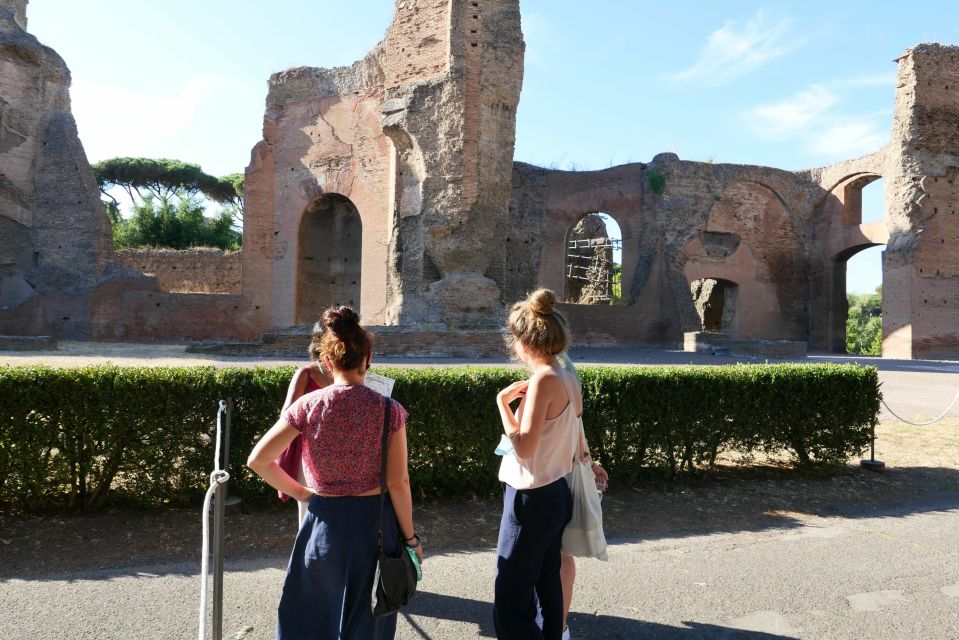
- Caracalla’s ruins are the star: tall walls, mosaics, and spaces that make it easy to picture daily routines.
- Underfloor heating gets explained: you’ll learn how the ancient system helped keep rooms at the right temperature.
- Small groups matter: max 10, plus private or semi-private options.
- Circus Maximus is mostly “place + story”: great for context, less for sheer remains.
- Clear audio on-site: sterilized headsets help you hear the guide well in open ruins.
Caracalla Baths: why this Roman spa complex feels different
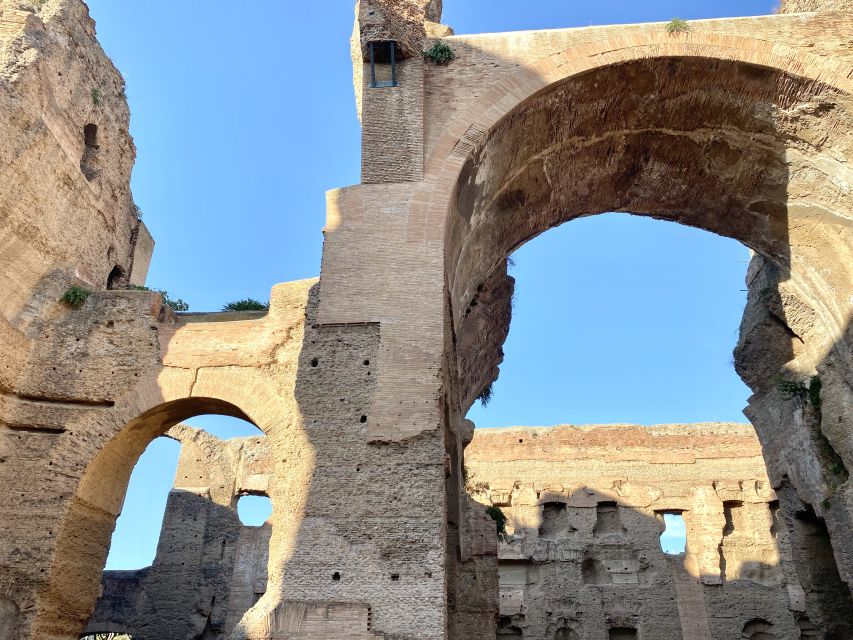
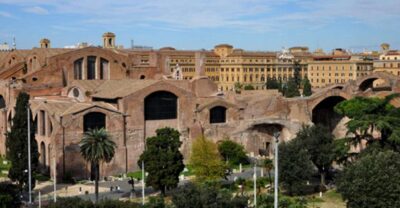
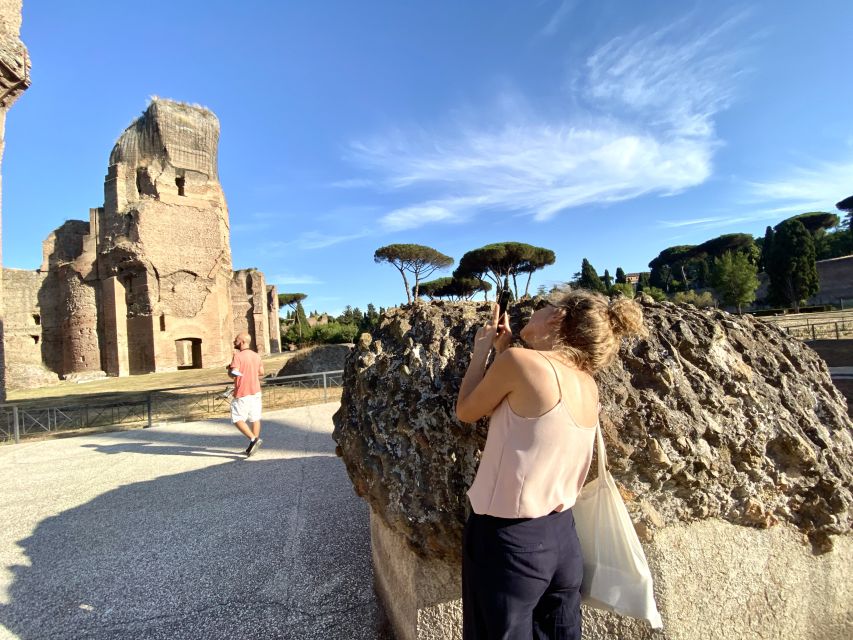
Caracalla Baths sit in a greener, calmer pocket of Rome, just a short distance from the Colosseum area. And that setting matters. It’s still Rome, still ancient stone, but the atmosphere is less hectic. You’re not wrestling crowds just to get your bearings.
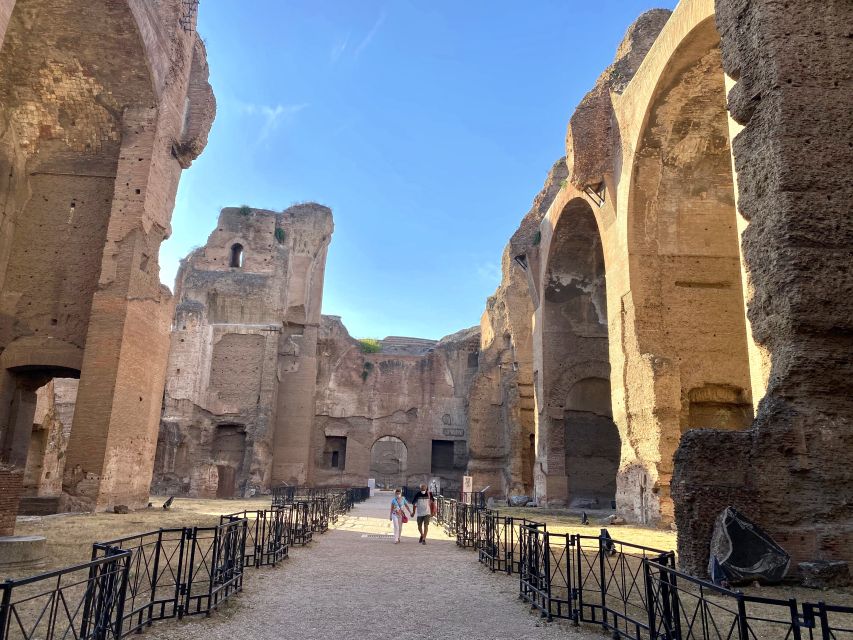
The Caracalla complex is also a “how did they build this?” site. Even when some parts have fallen away, the remaining walls and rooms make the scale feel real. You’ll see how the baths weren’t just for washing—they were a whole social and service machine.
What I really like is that the guide treats the ruins like a functioning place. You’re not only reading stone facts. You’re learning what people did there and why the architecture supported it. That approach makes the spaces click, even if you’ve never visited Roman baths before.
You can also read our reviews of more private tours in Rome

The guide’s job: turning walls and mosaics into a daily routine
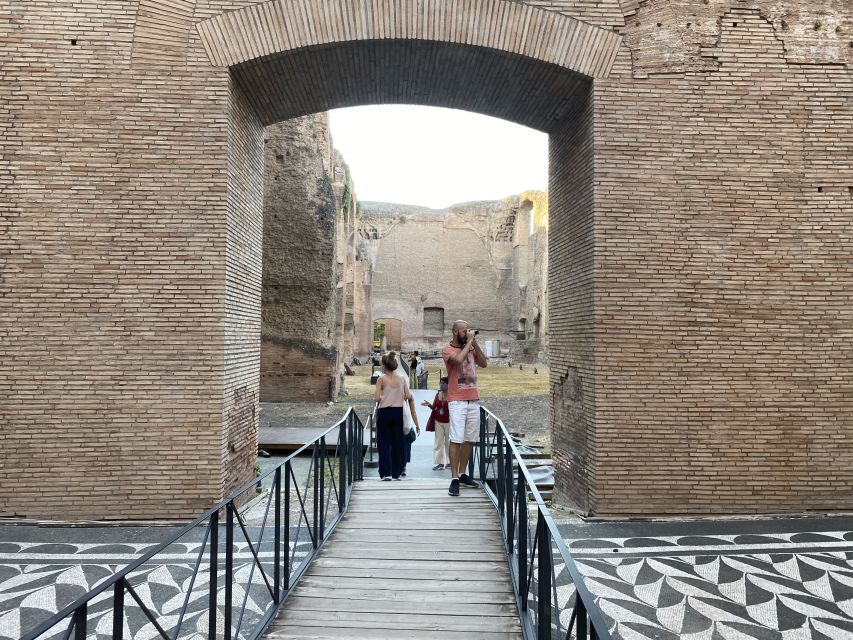
The best part of Caracalla isn’t a single room—it’s the flow. The guide walks you through the “day” sequence of a Roman bath experience from the 3rd century AD, step by step. It’s the kind of storytelling that changes how you look at a wall or a mosaic.
One of the stand-out topics is heating. The baths relied on a labor-intensive underfloor system, and the guide explains the techniques used to maintain temperature across different rooms. Even if you’re not a plumbing nerd, this is one of those details that makes Roman engineering feel tangible. You start noticing how the building layout would support different levels of warmth.
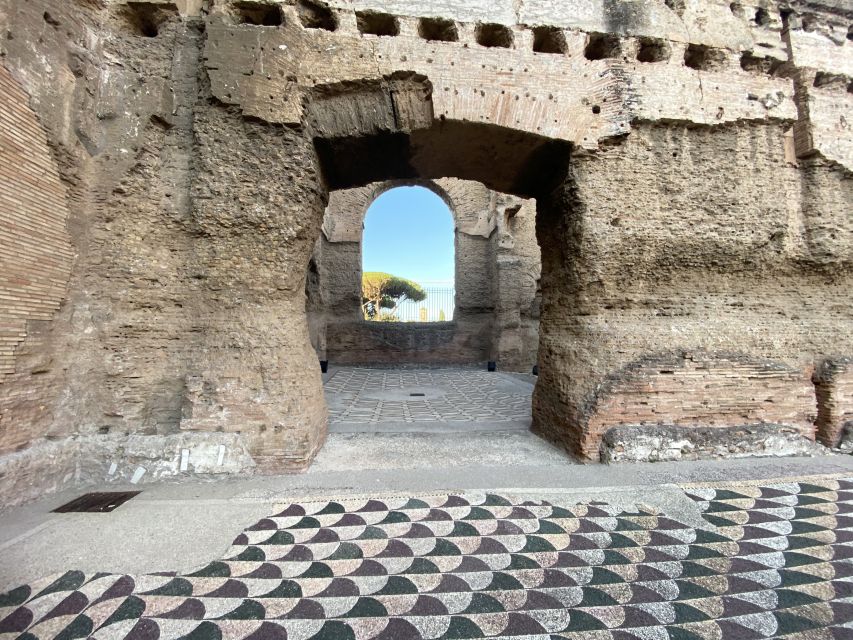
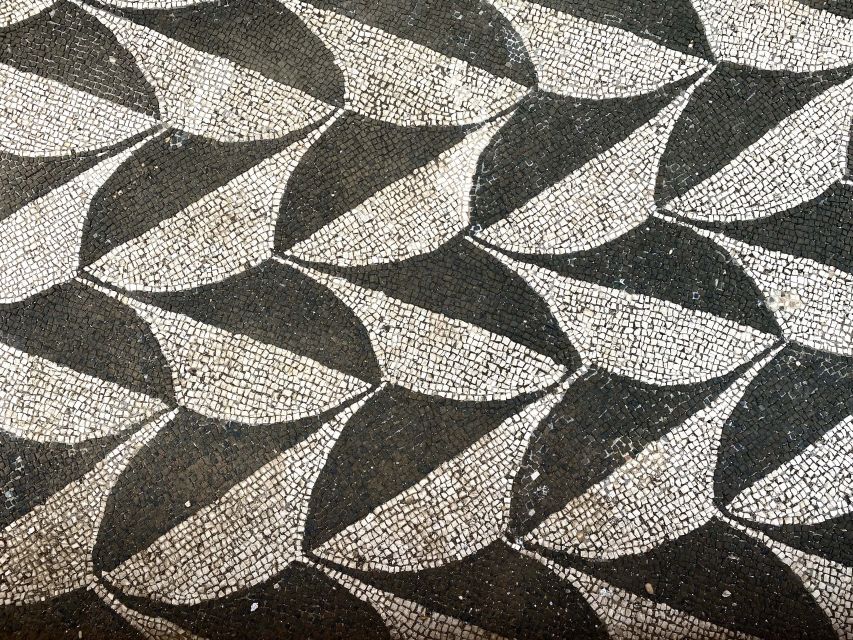
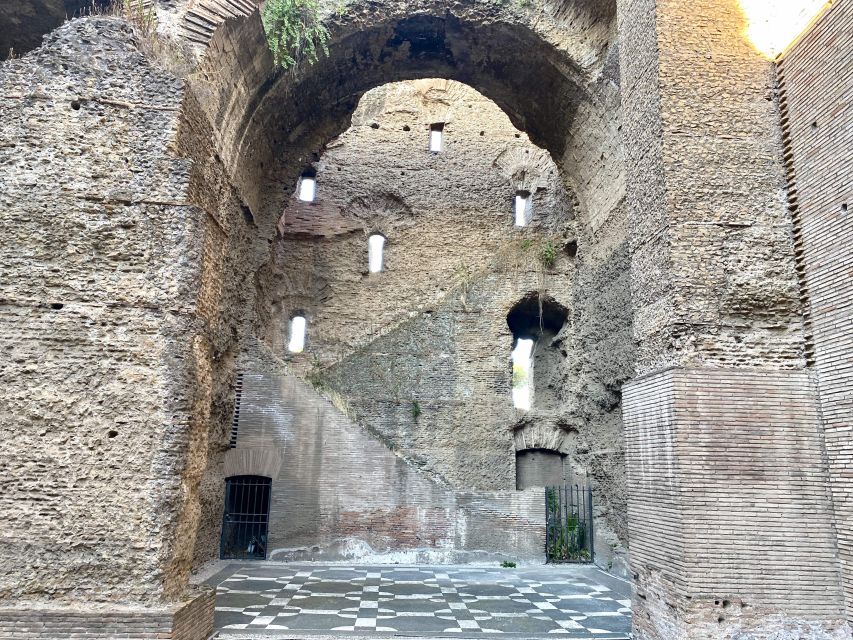
Then there are the mosaics and geometric motifs. Some sites feel like they’re mostly about space and scale; Caracalla adds decoration and pattern. When you’re standing close, you can see how intentional the design was, not just practical.
From the guides’ names showing up in real experiences, you’ll likely get strong performance. People mention guides like Chiara, Lars, Francesca, Mario, and Anestis for clear explanations and energy that keeps the tour moving at a good pace. The common thread is that the guide doesn’t dump facts—they connect what you’re seeing with how it worked.
What you actually see at the Baths (and what you’ll notice)
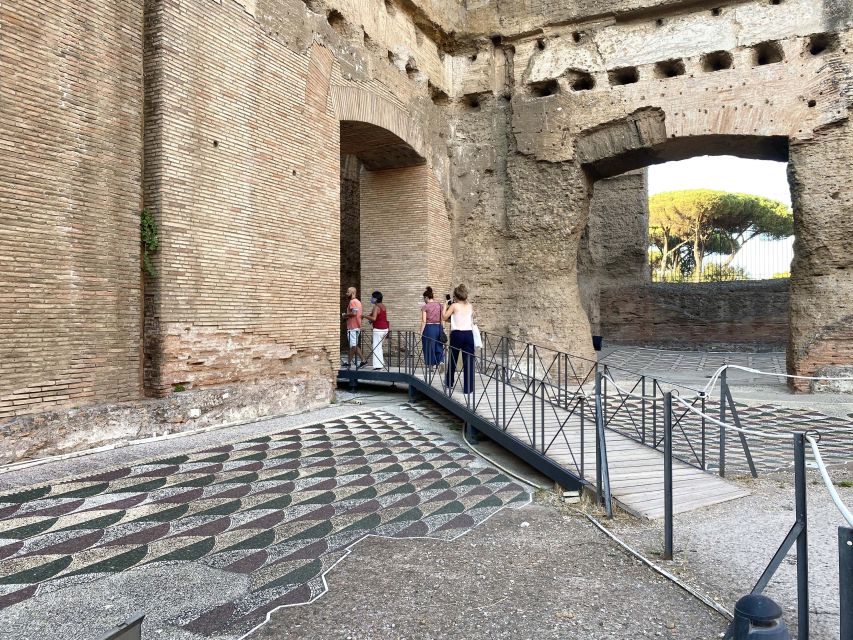
You’ll spend about an hour at Caracalla. That sounds short until you’re inside, because the ruins don’t invite a fast, check-the-box walk. The walls are tall enough to make you slow down. The rooms feel monumental, even with missing sections.
A few things you’ll likely notice during that hour:
- Architectural scale: big walls and room proportions that make it clear this wasn’t a small neighborhood spa.
- Floor-level leftovers: details like mosaic sections that show the craftsmanship survived better than you’d expect.
- Space planning: the tour helps you understand how parts of the complex would work together for comfort and routine.
- Decorative patterns: geometric motifs are a real “look again” moment.
If you’re the kind of person who likes to stand in one place for a minute and look up, Caracalla rewards that. The site gives you vertical cues, and the guide helps you connect them to the baths’ function.
Circus Maximus in 30 minutes: big Roman ideas, smaller visible remains
After the Baths, the tour shifts to Circus Maximus, where you’re standing in the broader arena of Rome’s public games culture. This stop is shorter—around 30 minutes—and it works best when you enter it as a story site.
Here’s the honest expectation-setting: Circus Maximus today doesn’t look like a fully intact stadium. A lot is gone. The guide compensates for that by focusing on what the Romans did there—the Ludi, the multi-venue celebrations, and the spectacle people gathered for for up to several days.
You’ll hear about chariot races and other famous entertainments associated with Roman games. And you’ll walk the ground with the idea that the noise and crowd energy were part of the experience, not an optional add-on.
The tour also goes further back, into quasi-legendary myths and gods before Rome itself. That angle matters because it frames the circus not just as a building, but as a cultural symbol—ancient Rome “explaining itself” through place.
If your dream is dramatic ruins you can photograph from every angle, you may find this section less satisfying than Caracalla. More than one experience notes that Circus Maximus can feel like you spend part of the time imagining. Still, the value is in understanding what made the space matter to Romans.
Meeting point and timing: how to keep the day stress-free
This tour starts at Viale Aventino, 3 for the activity’s listed starting point, but you’ll meet your guide at the exit of the Metro Station Circo Massimo. Specifically, stand in the direction of Laurentina, in front of the FAO building, and look for a yellow label with the local partner’s name.
Give yourself a buffer. You need to be there 5 minutes early to complete sign-up. That’s not just bureaucracy; it keeps the tour from slipping when you’re matching up with your group.
The tour duration is 1.5 hours, with about 1 hour at the Baths and 30 minutes at Circus Maximus. The pacing is tight but not rushed, because the Baths stop does most of the “slow down and process” work.
Wear comfortable walking shoes. Even when you aren’t climbing hills, Roman ruins involve uneven ground, lots of standing, and frequent turns.



What’s included (and why headsets help more than you think)
This experience is good value partly because it handles the “small friction” stuff.
You’re covered for:
- Entrance fees to the Caracalla Baths
- Sterilized headsets (so you can hear your archaeologist guide clearly)
- A live archaeologist guide
- Full on-site assistance
You skip the ticket line, which is a real time saver in Rome. The headsets may sound like a gadget detail, but in open-air ruins with wind or echoes, it’s the difference between catching every explanation and constantly asking people to repeat themselves.
What’s not included is hotel pickup/drop-off and food and drinks, so plan to connect it with your own route.
Group size and guide style: the difference between shared and private
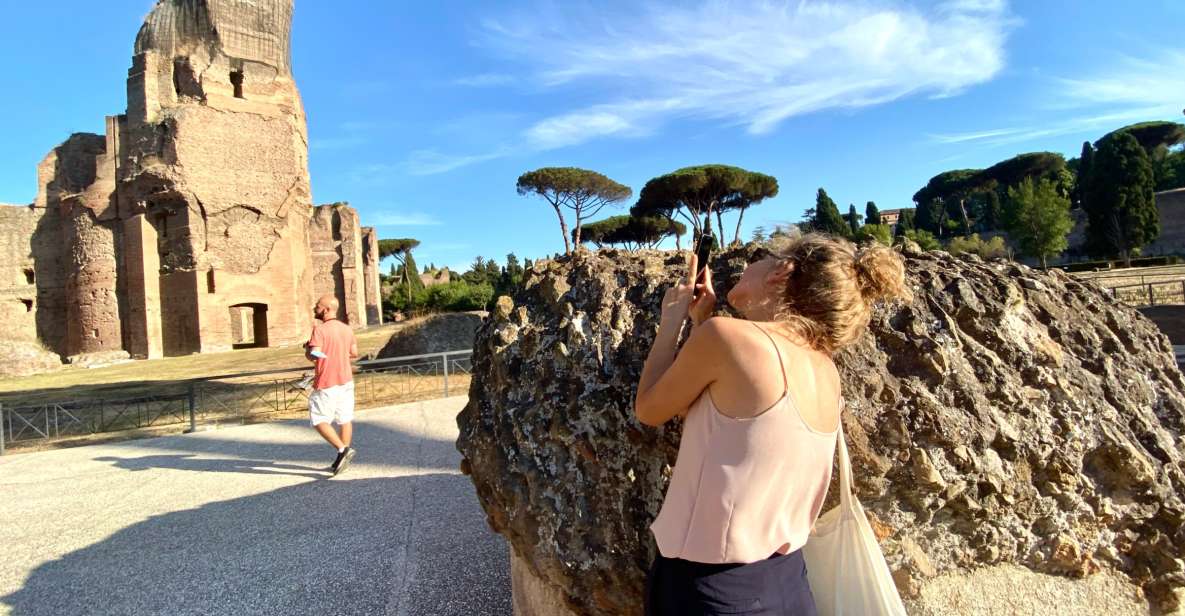
This is offered as private or small groups, with a maximum of 10 participants. That cap changes the entire feel. You’re not shouting over a wall of people. Questions are easier. The guide can adjust explanations if you look confused (in a good way) instead of bulldozing ahead.
In real experiences, people report that small groups sometimes end up effectively private when the group size is low. If you like a more personal pace—more time asking what something meant or why it was built a certain way—private or semi-private versions are worth it.
Guide styles also vary, but names like Lars, Chiara, Francesca, Cynthia, Mario, Anestis, and Samuele come up in accounts for being engaging and personable. The consistent point is that the tour doesn’t feel like a lecture. It feels like someone with real enthusiasm is translating Roman life into the spaces you’re standing in.
Accessibility and rules: plan your gear before you arrive
The site is wheelchair accessible, which is a major plus for anyone who needs it. On the other hand, there are clear on-site restrictions you should respect so your day doesn’t get derailed.
Not allowed:
- Pets
- Weapons or sharp objects
- Baby strollers
- Luggage or large bags
- Drones
It also notes that trolleys and large backpacks aren’t allowed inside the monuments. Rome punishes “oversized bag plans,” so travel light if you can.
If weather looks sketchy, the tour could be canceled due to unfavorable conditions, with an alternative date or a full refund option.
Value for $77: is it worth it for your Rome trip?
At $77 per person for 1.5 hours, the value depends on what you want most.
If you want:
- a guided explanation you can’t easily get alone,
- access to Caracalla Baths without ticket-line hassle,
- and a story-driven walk through two Roman leisure spaces,
…then this pricing is pretty reasonable. The inclusion list matters: entrance fees, headsets, and an archaeologist guide.
If you want:
- the Circus Maximus to feel like a full, intact attraction,
…then the shorter stop might feel pricey relative to what you can physically see. But you’re not paying just for rocks. You’re paying for interpretation—especially at Caracalla, where the remaining structure does most of the heavy lifting.
For many people, the Caracalla hour is the main event. In that sense, think of this as a Caracalla-focused tour with Circus Maximus context attached.
Who should book this tour?
I’d recommend this if you:
- are curious about Roman daily life, not just big-ticket ruins,
- like technical explanations (especially heating and building function),
- want less crowd pressure than the most famous Rome sites,
- enjoy small-group formats where you can ask questions.
It may be less ideal if you:
- need a long, visually “wow” segment at Circus Maximus,
- hate walking on uneven ground and want a very minimal, sit-down style tour (this involves a fair bit of movement).
If you’re doing Colosseum-area sightseeing already, this is a smart pairing because it adds the “leisure” angle while staying relatively calm.
Should you book Caracalla Baths and Circus Maximus?
I’d book it if you want Caracalla to be more than scenery. The strongest part is the way the archaeologist guide helps you understand how the baths functioned—especially the underfloor heating and the bath routine concept—and the way mosaics and ruins become part of that story.
If Circus Maximus is your top priority, keep expectations grounded. This is a 30-minute stop built around history, myths, and games culture, not a long walk through intact structures.
Overall: for a first-time Roman-baths fan, or for anyone who’s tired of the busiest sights, this hits a good balance of education, pacing, and atmosphere. Book it and plan to spend your “camera time” mostly at Caracalla.
FAQ
How long is the tour?
The total duration is about 1.5 hours, with roughly 1 hour at the Baths of Caracalla and 30 minutes at Circus Maximus.
Where do I meet the guide?
Meet at the exit of the Metro Station Circo Massimo (in the direction of Laurentina) in front of the FAO building. Look for a yellow label with the local partner’s name.
How much does it cost?
It’s priced at $77 per person.
What’s included in the price?
Entrance fees to the Caracalla Baths are included, along with sterilized headsets, a live archaeologist guide, and full on-site assistance. You skip the ticket line.
Is it private or shared?
Both options are available: private or small groups.
What languages are offered?
The tour guide is available in French, Portuguese, Spanish, English, German, and Italian.
Is the tour wheelchair accessible?
Yes, it’s listed as wheelchair accessible.
What should I bring?
Bring comfortable walking shoes.
What is not allowed during the tour?
Pets, weapons or sharp objects, baby strollers, luggage or large bags, and drones are not allowed.
Are there age or ID requirements?
Yes. Participants younger than 18 years old and European citizens under 25 must carry an official document (or a digital copy).