REVIEW · CITY TOURS
Ravenna: Private City Top Sights and Monuments Walking Tour
Book on GetYourGuide →Operated by TUI Musement · Bookable on GetYourGuide
Ravenna rewards you fast. In just 3 hours, you get a focused run at the city’s late Roman and Byzantine masterpieces, with lots of time spent looking up at the mosaics instead of rushing from one photo spot to another. I like how the route hits the big hitters—San Vitale and the Mausoleum of Galla Placidia—and I also like that you’re walking through the old center with stops that connect the art to the place itself.
One thing to consider: this is a tight schedule, so if you want to linger quietly on your own, you might feel a bit pushed during the guided portions.
In This Review
- Key things I’d watch for
- Ravenna’s Mosaic Reputation Comes From Places Like These
- Meeting at Piazza del Popolo: Easy to Find, Good for a Walking Start
- San Vitale: Byzantine Splendor You Can Actually Understand
- Galla Placidia’s Mausoleum: Small Space, Heavy Atmosphere
- Baptistery of Neon: Early Christian Art With a Clear Starting Point
- Sant’Apollinare Nuovo: Long, Linear Storytelling in Stone
- Piazza del Popolo and the Dante Area: Ravenna Isn’t Only Mosaics
- The Best Part: Your Guide Explains the Why
- Price and Value: What You’re Really Paying For
- Weather, Pace, and What to Do Before You Go
- Who This Tour Suits Best
- Should You Book This Ravenna Private Mosaics Tour?
- FAQ
- How long is the Ravenna Private City Top Sights and Monuments Walking Tour?
- Where does the tour start?
- Is this a private tour?
- What languages are available for the live guide?
- Which sites are included with entrance tickets?
- What is not included in the tour price?
- Does the tour run in the rain?
- What is the cancellation policy?
Key things I’d watch for
- Private, dedicated guide means explanations stay pointed at your questions, not a tour-feed crowd.
- Four major mosaic stops with entrances included, so you’re not juggling ticket lines for the main sights.
- San Vitale + Baptistery + Sant’Apollinare Nuovo gives you a well-rounded view of Ravenna’s Christian art styles.
- Time in the old town around Piazza del Popolo, plus the Dante area (Area of Silence) adds a human story.
- English, French, Italian, Spanish, German options help you match the tour to your comfort level.
- Rain-friendly operation keeps your plan moving unless weather turns extreme.
Ravenna’s Mosaic Reputation Comes From Places Like These
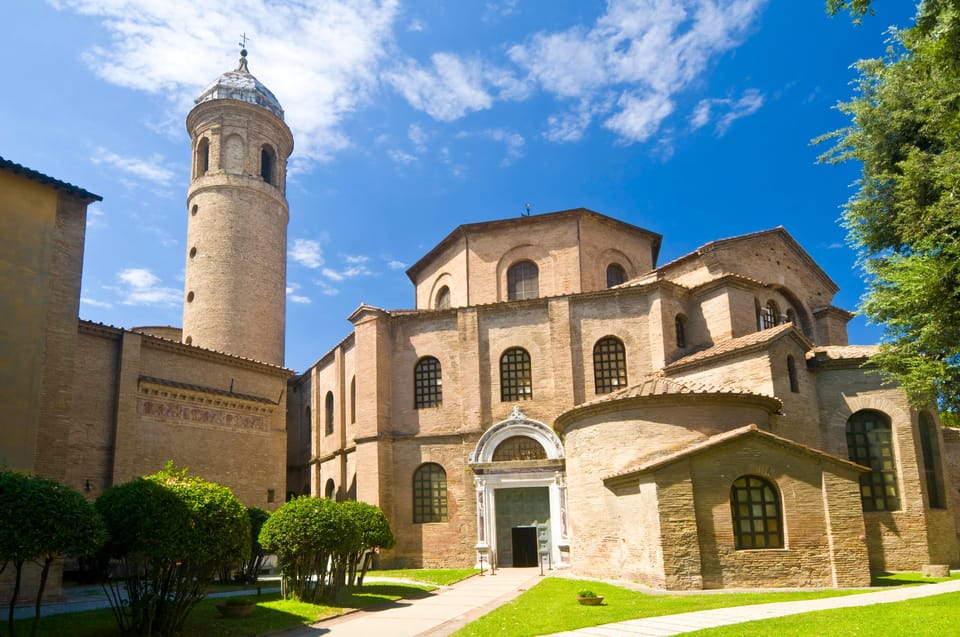
Ravenna wasn’t just pretty buildings. It was power on the move. In the 5th century AD it served as the capital of the Western Roman Empire, then it became the capital of the Ostrogoths until the Byzantines re-conquered it in 540. After that, Ravenna centered the Byzantine Exarchate until the Lombards arrived in 751.
Even if Ravenna sits inland, it still connects to the Adriatic Sea through the Candiano Canal. That mix of political crossroads and trade routes helps explain why so much late Roman and Byzantine architecture survived here, and why Ravenna’s UNESCO World Heritage sites are so tightly linked to specific monuments you can still visit today.
This tour works because it doesn’t try to cover everything. It targets the sites that best show you how Ravenna’s visual language developed—from early Christian settings to distinctly Byzantine mosaic style.
You can also read our reviews of more walking tours in Rome
Meeting at Piazza del Popolo: Easy to Find, Good for a Walking Start
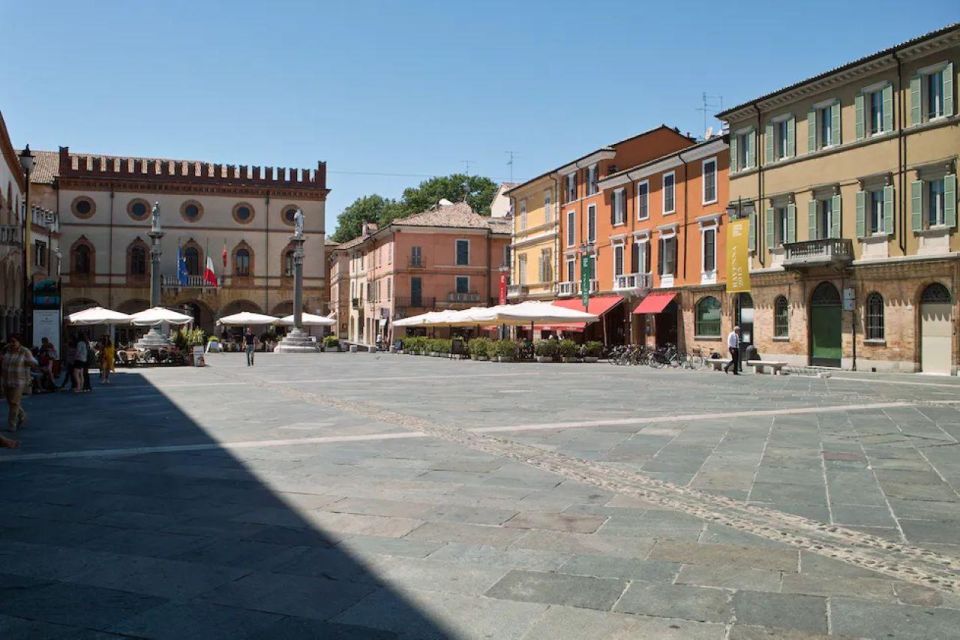
Your tour begins at Piazza del Popolo. Meet your guide under the clock tower, and you’ll start your walk from there and eventually return to the same spot. This is a helpful setup because it keeps you from feeling stranded in the middle of nowhere when you’re done.
The other practical win is that you’re starting in the heart of the area the tour plans to explore on foot. You’re not just sprinting between monuments; you also get to move through Ravenna’s old-town feel and pause in places like Piazza del Popolo itself.
San Vitale: Byzantine Splendor You Can Actually Understand
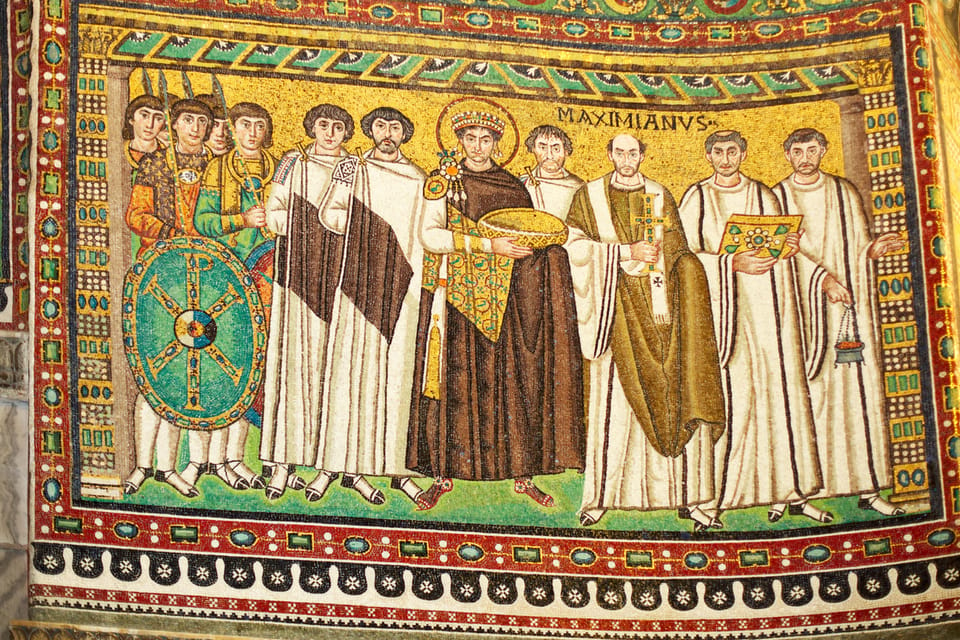
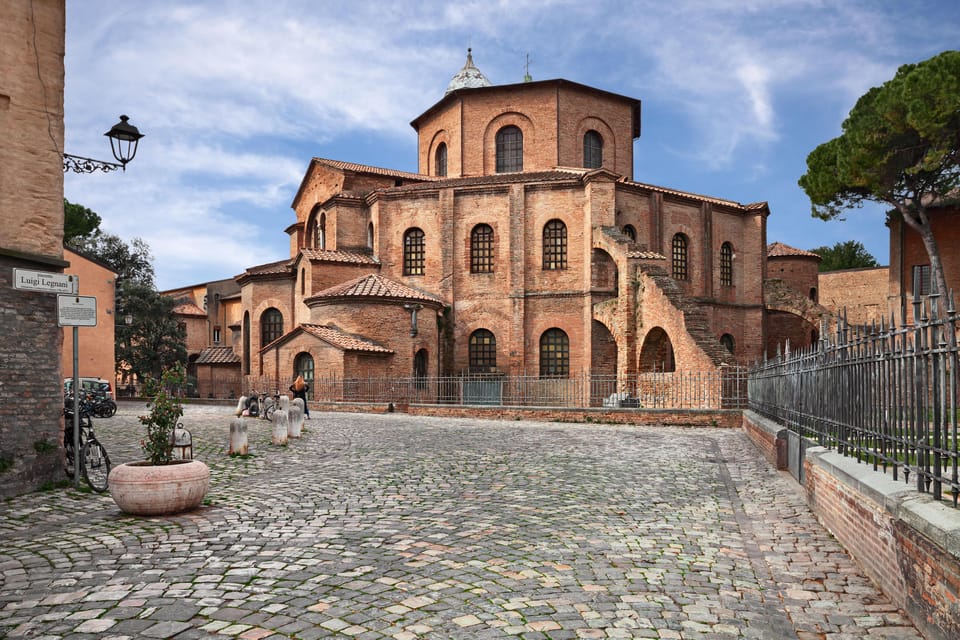
The first big stop is the Basilica of San Vitale. This is where you get some of Ravenna’s most famous early Christian and Byzantine mosaics, and the guided visit matters a lot here. Mosaics can look like pure decoration if nobody tells you what you’re seeing, and that’s exactly what a good guide prevents.
I love that the tour is designed so San Vitale isn’t treated like a quick walkthrough. You’re there long enough to follow the visual storytelling style typical of Byzantine art—figures, symbolism, and the sense of ceremony that comes through even without reading a word of Latin or Greek.
A small drawback: because it’s one of the top stops, you may find yourself wanting to slow down even more than the schedule allows. You’ll still get a strong overview, but this is the moment where you’re most likely to think, I wish I had another hour to just stare.
Galla Placidia’s Mausoleum: Small Space, Heavy Atmosphere
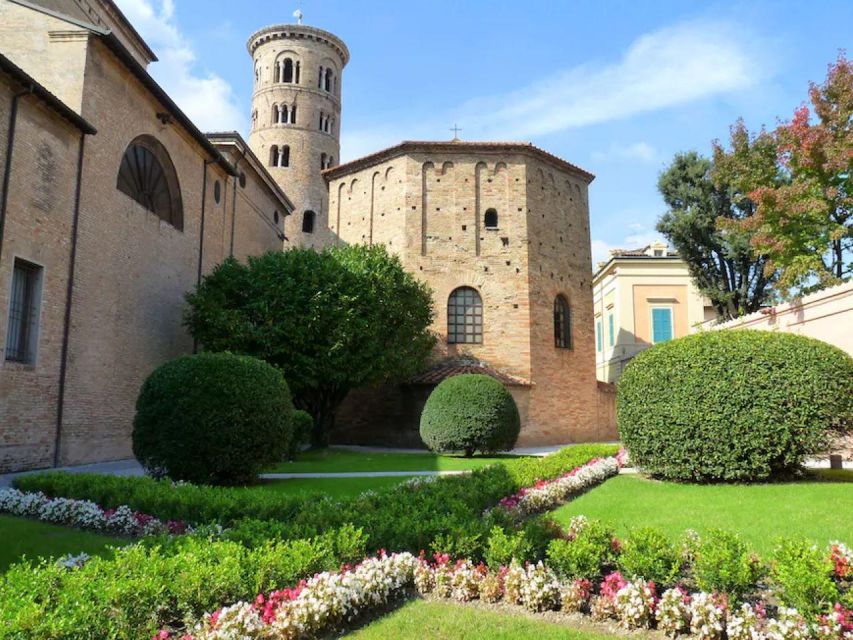
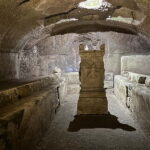
Next up is the Mausoleum of Galla Placidia. This is the kind of place that feels built for contemplation, and guided context helps you notice how the monument communicates with you through light, color, and religious imagery.
What I like about including this stop right after San Vitale is the contrast. You move from a major basilica setting into something more enclosed and intimate, and that shift helps your brain sort the styles instead of blending everything together.
This stop is also ideal if you want a “wow” moment without needing extra tickets or side quests. It’s already part of the included lineup, and you’ll get guided time focused on what makes the mosaics matter.
Baptistery of Neon: Early Christian Art With a Clear Starting Point
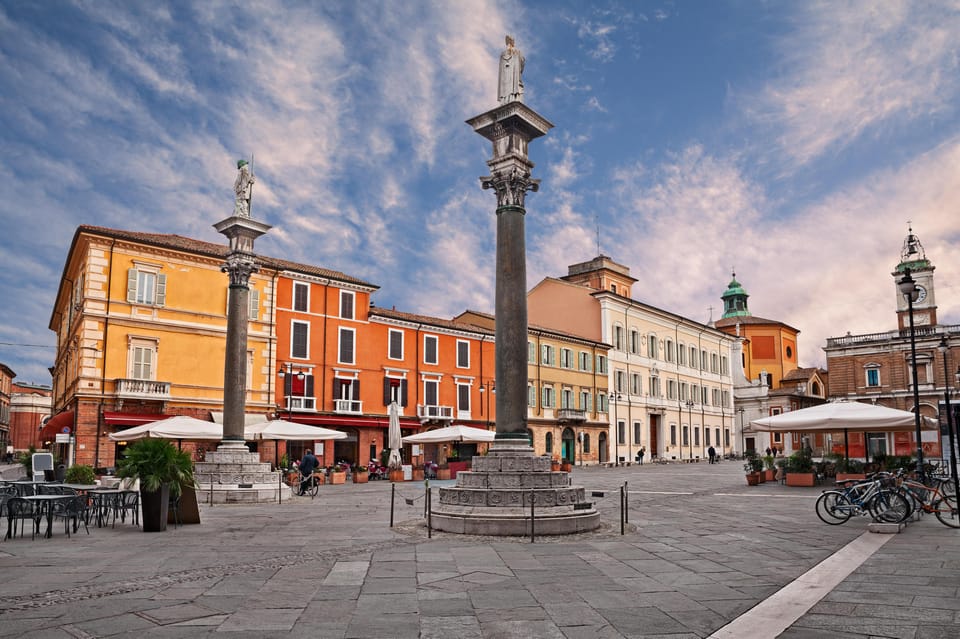
The tour then goes to the Battistero Neoniano (Baptistery of Neon). Baptisteries aren’t just architectural curiosities here—they’re part of Ravenna’s early Christian identity. The guided approach helps you understand why mosaics in this setting work differently than in bigger basilicas.
You’ll get the chance to see the iconography that ties the idea of baptism to the broader religious message of the era. Even if you’re not a religious-art scholar, a guide can point out visual logic: what scenes are doing, how figures are arranged, and how the mosaic surface creates that distinctive shimmering effect.
One consideration: baptisteries can feel visually intense in a short window. If you’re sensitive to sensory overload, wear your patience like you wear your shoes—comfortable and ready to slow down when you need to.
You can also read our reviews of more city tours in Rome


Sant’Apollinare Nuovo: Long, Linear Storytelling in Stone
After that, you’ll visit the Basilica of Sant’Apollinare Nuovo. This is a strong final monument because it helps connect Ravenna’s mosaic style to a larger sense of place and tradition. If you came in thinking it would all be “pretty floor-to-ceiling pictures,” this stop can correct that fast.
Guided visits matter here too. Mosaic programs can look similar at a glance, but the differences are where the story is. You’ll get help sorting early Christian themes, Byzantine influence, and what the monument is trying to communicate in its overall layout.
Practical note: you may spend time looking upward more than you expect. Bring a light hat or sunglasses if the lighting makes it hard to focus, and plan on stepping carefully where floors can be uneven or glossy near entrances.
Piazza del Popolo and the Dante Area: Ravenna Isn’t Only Mosaics
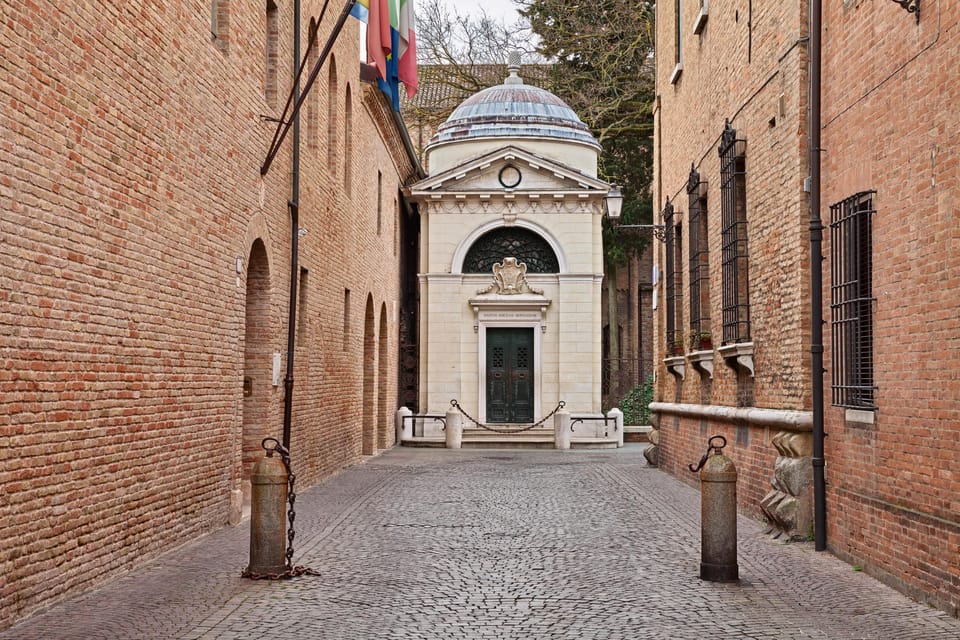
Between monument stops, the tour includes walking through the old town and pausing in key squares. You’ll explore Piazza del Popolo, then you’ll also cover the Dante area, sometimes called the Area of Silence.
This is where Ravenna becomes more than UNESCO tiles. Dante was exiled from Florence and died in Ravenna on 13 September 1321. That date gives the whole city a human anchor—so when you look at art made to express faith and authority, you also remember that real people lived and suffered in the same streets.
I like that the tour uses the walk to connect your sites. It keeps you from feeling like you only traveled to see four buildings. Instead, you get the sense of the city as a single story written across centuries.
The Best Part: Your Guide Explains the Why
This is a private tour, so you’re not stuck listening to a script meant for whoever is half-paying attention. The guide is dedicated to you, and that changes everything about the experience.
In particular, a guide named Samantha has stood out in past tours for explaining artworks from different epochs and giving helpful background. That kind of “what you’re seeing and why it exists” is exactly what makes Ravenna’s mosaics click.
Also, the tour is offered in English, French, Italian, Spanish, and German, which is a big deal if you want the explanations to land. If you understand the guide clearly, you’ll enjoy the mosaics more. If you don’t, they can turn into visual noise.
Price and Value: What You’re Really Paying For
The price is $168.79 per person for a 3-hour private guided tour. That’s not cheap, and I wouldn’t pretend it is. But you are paying for three value drivers: a private guide, a tight three-hour route, and entrance tickets included for four major sites.
Those included entrances are for Chiesa di San Vitale, Mausoleo di Galla Placidia, Battistero Neoniano, and Basilica Sant’Apollinare Nuovo. In other words, you’re not paying extra just to get into the places that matter most.
Is it worth it? If you care about understanding what you’re seeing—and you want that understanding in real time—then yes, it usually lands as good value. One past comment summed up the feeling: expensive, but worth the price. The private format is the main reason, because it protects your attention and your questions.
If you’re the type who prefers reading guidebooks at your own pace and you don’t mind spending time sorting out details alone, you might be better off with self-guided visits. But if you want your Ravenna time to feel efficient and meaningful, this format fits.
Weather, Pace, and What to Do Before You Go
The tour operates even when it’s raining. In the event of exceptionally heavy rain, it may be canceled and you’ll get a full refund. That policy matters because Ravenna’s marble-and-stone surfaces can get slick, so you’ll be walking regardless unless conditions are severe.
The pace is designed for a 3-hour window. That means you’ll see the top sites without spending your whole day. It also means you should treat the guided visits like the “main course,” not like a casual stroll where you can wander off and come back whenever.
What to bring is simple: comfortable walking shoes, water, and a light rain layer. Ravenna rewards slow looking, but this tour is intentionally structured for people who want the key monuments without a full-day commitment.
Who This Tour Suits Best
This Ravenna private top sights tour is best for you if you want a focused visit to the city’s early Christian and Byzantine mosaic heritage. You’ll enjoy it most if you like learning what you’re seeing as you go—especially at San Vitale, where the art program can feel overwhelming without guidance.
It’s also a good match if you want a group format that stays personal. Private means your guide is with you, not sharing time with strangers. That tends to be the difference between “I saw it” and “I understood it.”
If you’re traveling with kids or someone who struggles with long museum explanations, this tour might still work, but you’ll want to set expectations about pacing. The itinerary includes multiple guided monument visits in a short time, so it’s best when your group is willing to listen.
Should You Book This Ravenna Private Mosaics Tour?
Book it if you want the highest-impact Ravenna experience in a limited time window. The included entrances to four landmark mosaic sites, the private guide, and the added context around Piazza del Popolo and the Dante area make it feel like a real plan rather than a list of stops.
Skip it if you want total freedom to linger, or if you’re happy doing Ravenna on your own with minimal structured guidance. This tour is built for focus, not for wandering.
If you’re on the fence, think about one thing: do you want someone to explain the mosaics as you stand in front of them? If the answer is yes, this tour is a strong choice.
FAQ
How long is the Ravenna Private City Top Sights and Monuments Walking Tour?
The tour lasts 3 hours.
Where does the tour start?
You meet your guide at Piazza del Popolo, Ravenna, under the clock tower.
Is this a private tour?
Yes. It’s a private group tour, with a guide dedicated to you.
What languages are available for the live guide?
The guide is available in English, French, Italian, Spanish, and German.
Which sites are included with entrance tickets?
Entrance tickets are included for Chiesa di San Vitale, Mausoleo di Galla Placidia, Battistero Neoniano, and Basilica Sant’Apollinare Nuovo.
What is not included in the tour price?
Transportation to the meeting point is not included, and entrance tickets for sites other than the listed ones are not included.
Does the tour run in the rain?
Yes, the tour operates even when it’s raining. If there is exceptionally heavy rain, the tour may be canceled and you’ll receive a full refund.
What is the cancellation policy?
You can cancel up to 24 hours in advance for a full refund.