REVIEW · DAY TRIPS FROM ROME
Rome: Ostia Antica Private Walking Tour with Skip-the-Line
Book on GetYourGuide →Operated by Askos Tours · Bookable on GetYourGuide
Ostia Antica packs a lot into two hours. You get skip-the-line access plus a private guide who makes sense of how this once-powerful city worked, from its early days to the later neighborhoods. I especially like the way you see Neptune’s Thermal Baths and its Neptune/Amphitrite mosaics, and I also like how the guide ties the ruins to real purposes like controlling the Tiber and supplying Rome. One consideration: with a medium activity level, this is not a sit-and-watch tour.
This is a smart way to experience one of the closest “ancient cities” you can reach from Rome, the one people sometimes call a small Pompeii. The format is private, so the pacing can match your questions and comfort level. If you prefer a tight storyline over wandering on your own, you’ll feel it right away.
You’ll meet your guide at the Ostia Antica ticket office, recognized by a sign with your name. The walk is designed to cover the main sights without turning into a full-day grind.
Key things I’d plan around before you go
- Skip-the-line tickets save time so your tour starts exploring instead of waiting.
- Neptune’s Thermal Baths mosaics give you an instant visual anchor for the city’s stories.
- Teatro di Ostia helps you understand public life, not just walls and streets.
- Forum area stops connect the city’s commercial and civic role to what you’re actually seeing.
- Domus of Amor and Psyche excavations offer a different angle than the bigger public buildings.
- Small, private-group pacing makes it easier to keep the history straight.
In This Review
- Ostia Antica: the fast route to a real Roman city near Rome
- Skip-the-line entry starts the story sooner
- Neptune’s Thermal Baths and its mosaics: your visual “anchor” stop
- How Ostia grew: from military outpost to Rome’s food supply port
- Teatro di Ostia: public life you can feel in the seating
- Forum, House of Diana, and everyday city corners
- Domus of Amor and Psyche excavations: reading the smaller story
- Timing, pace, and the two-hour reality
- Price and value: what $314.37 buys you (and what it doesn’t)
- Guides who make the difference: Paolo Gardelli and Alessandro
- Who should book this private Ostia Antica walk
- Should you book this Ostia Antica Private Walking Tour?
- FAQ
- Where do I meet the guide?
- How long is the tour?
- What’s included in the price?
- Is this tour private?
- What languages are available?
- Is it wheelchair accessible?
Ostia Antica: the fast route to a real Roman city near Rome
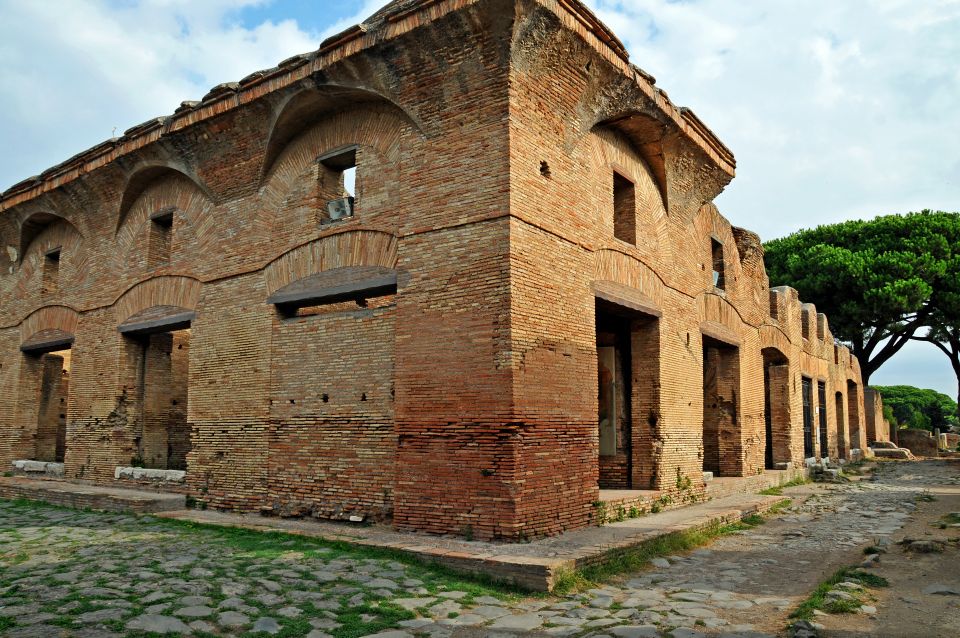
Ostia Antica is one of those places where “ruins” doesn’t mean random stones. It means you can walk through what looks like an older city grid and still feel the logic of a working Roman port town. The setting is close enough to Rome to feel easy, but it still has that quieter “away from the crowds” feel that you don’t get in the center of town.
What makes this tour especially useful is the focus: you’re not just looking at structures. You’re learning what the place was built to do. Ostia’s story stretches back to the early 4th century B.C., beginning as a military outpost meant to control access along the Tiber and the lower course of the river. Later, it grew into the kind of place that could feed Rome, especially through the port and trade connected to food supplies like wheat. Even if you’ve seen other Roman sites, this port-and-supply angle adds a useful layer.
And yes, it’s often compared to Pompeii. That comparison mostly holds because you’re walking among preserved street life and building footprints. But Ostia also feels different: it reads more like a city that lived and worked over time, not just one dramatic end point.
Skip-the-line entry starts the story sooner
Your meeting point is at the ticket office at Parco Archeologico di Ostia Antica. The guide holds a sign with your name, so you’re not playing the classic waiting-game in a busy entrance area.
The skip-the-line part matters more than it sounds. In a two-hour private tour, every minute you spend standing is a minute you lose at the most interesting buildings. With this setup, you’re more likely to arrive at the main sights while your attention is still sharp and your guide’s narrative is still fresh.
This is also a practical fit if you’re visiting during a busier time of day. You can’t control crowds in outdoor ruins, but you can control how long you’re delayed before you begin.
You can also read our reviews of more walking tours in Rome



Neptune’s Thermal Baths and its mosaics: your visual “anchor” stop
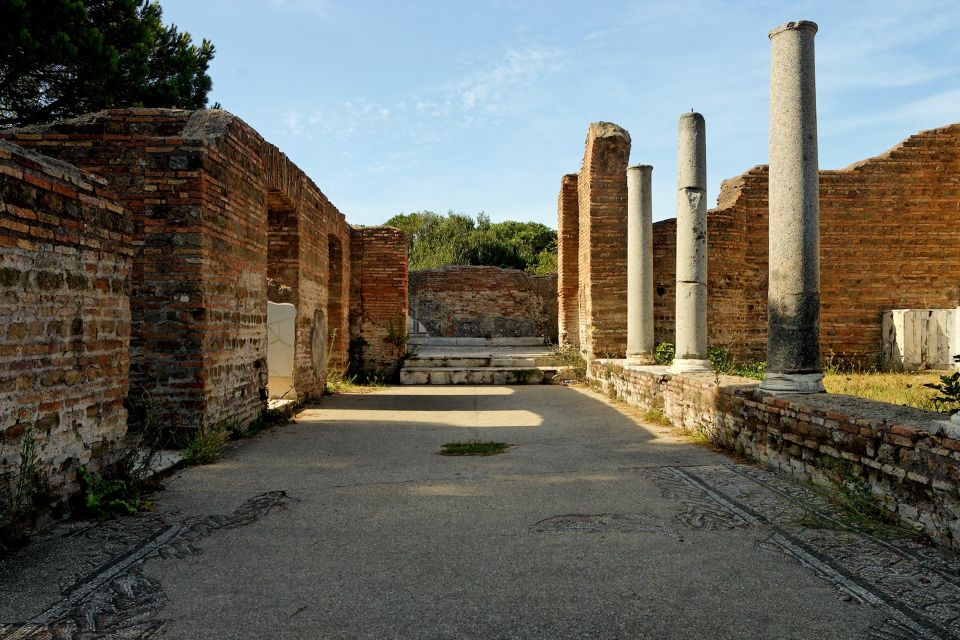
If you want one place to remember from Ostia Antica, it’s Neptune’s Thermal Baths, especially because of the mosaics. This stop isn’t just decoration for decoration’s sake. The mosaics feature Neptune and Amphitrite, and seeing them early helps you understand that the Romans treated public and semi-public spaces like stages. Even in baths, there’s messaging—myth and identity worked their way into everyday architecture.
I like that this tour doesn’t bury you in details too early. You get a clear moment of visual impact, then your guide connects it back to how the city functioned and why it mattered. It’s easier to follow the rest of the walk once you’ve got that first strong image in your mind.
If your brain tends to remember pictures better than facts, this is a good tour match. The mosaics do the heavy lifting up front.
How Ostia grew: from military outpost to Rome’s food supply port
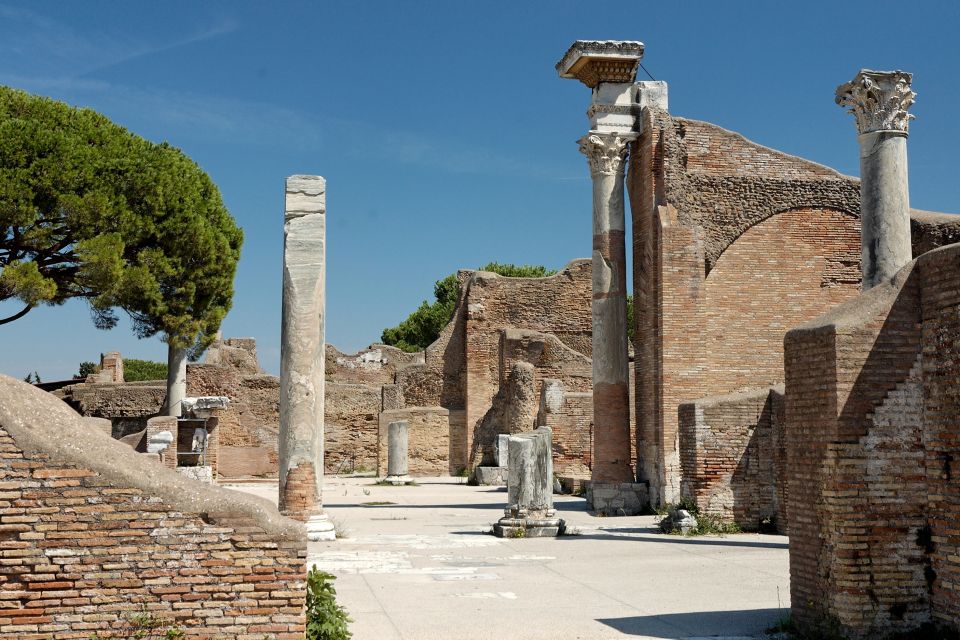
One of the biggest values here is the storyline. You start with the settlement’s military purpose—controlling access to the Tiber and nearby areas, defending Rome by managing movement along the river. Then the guide brings you forward to the later commercial function, when Ostia became the port that helped supply Rome with foodstuffs, with wheat called out as a key example.
You’ll also hear how the city was reorganized and expanded with walls. The city was later surrounded by a new circle of walls enclosing an urban area around 50 hectares, divided into five regions or neighborhoods. Even if those numbers sound abstract, they stop being abstract once you’re walking the ruins and looking at how the space was structured.
This matters because it turns the ruins from a list of sights into a map of strategy. You’re not just seeing buildings. You’re understanding why those buildings were worth building.
Teatro di Ostia: public life you can feel in the seating
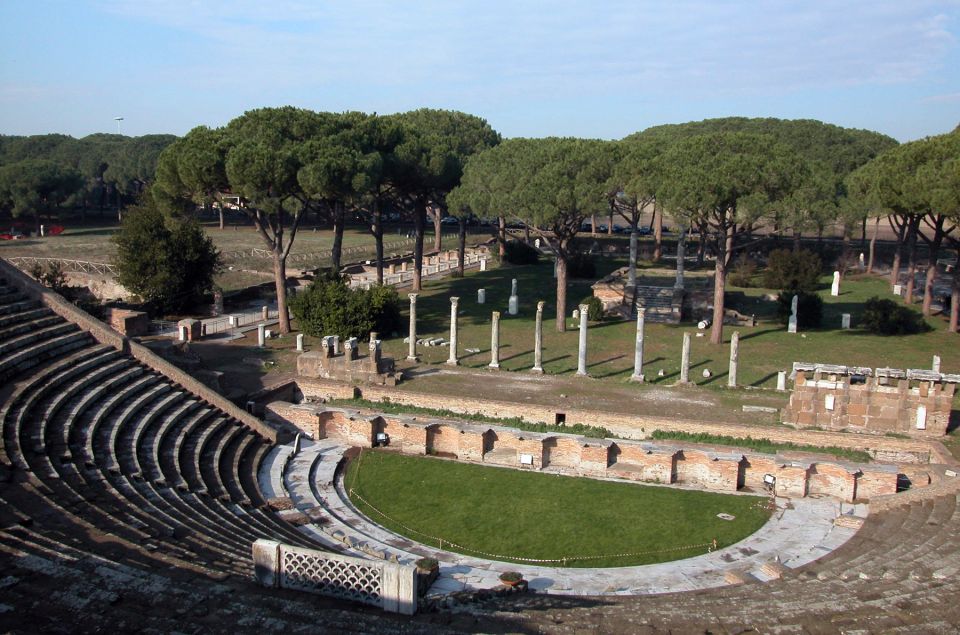
Your tour includes a focused stop at the Teatro di Ostia, with time set aside for a guided visit. A theater is one of the best “social” buildings in any ancient city. It’s where people gather, where performance and public culture happen, and where the city shows off its investment in shared spaces.
The practical advantage of this guided time is that it helps you interpret what you’re seeing in front of you. Without context, a theater can feel like an empty shell. With context, it becomes part of the city’s rhythm: civic gathering, entertainment, and community.
If you like sites that explain everyday Roman behavior—not only government or tombs—this stop is a keeper.
Forum, House of Diana, and everyday city corners
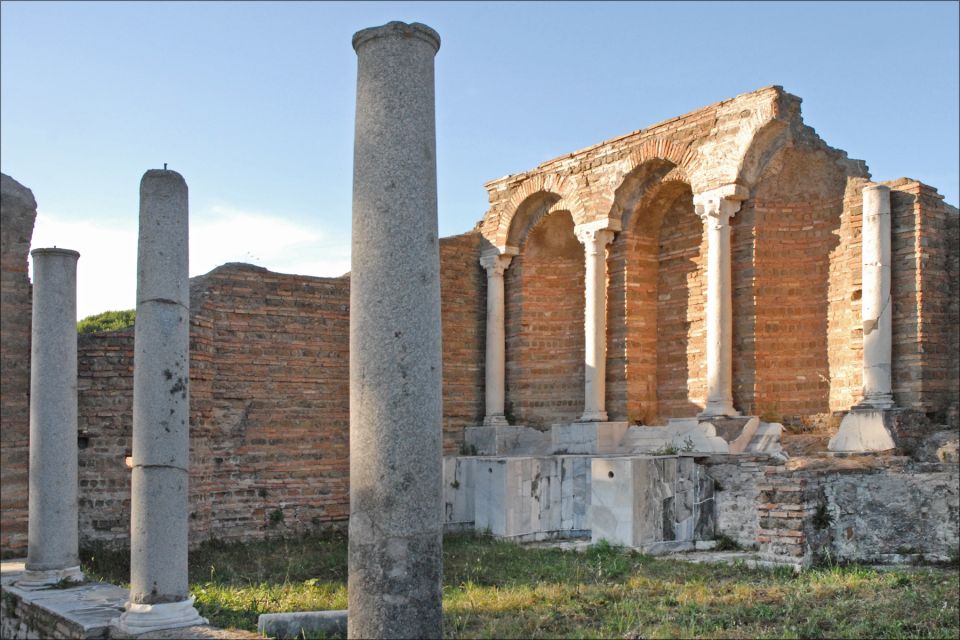
After the theater, the walk continues through the old town with stops that bring you to the civic and residential zones. The tour highlights include the forum and the House of Diana, along with other stops such as the Thermopolium and the Forica.
Here’s why these matter for your understanding:
- The forum helps you visualize Rome’s civic heartbeat in miniature. It’s where city life would have clustered around decisions, public interaction, and commerce.
- The House of Diana gives you a residential viewpoint, so you can see how wealth, status, and daily living played out in domestic spaces.
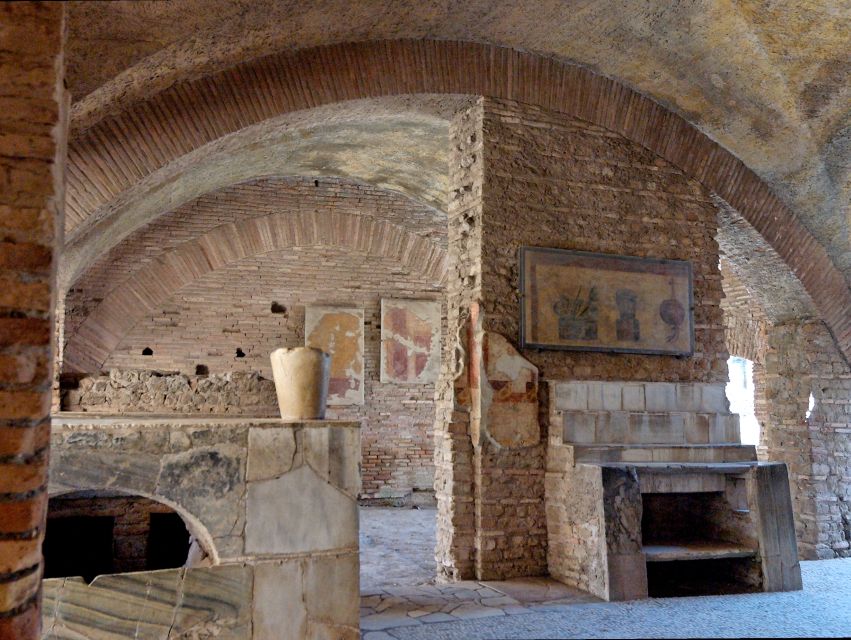
- The Thermopolium is a powerful reminder that ancient cities had fast-food culture too—at least in function. A place like this connects the idea of crowds and routines to a specific building type.
- The Forica rounds things out by pointing toward practical city needs, helping the ruins feel less like “museum objects” and more like real infrastructure.
I also appreciate that this isn’t treated like a scavenger hunt. The guide links these stops back to the city’s evolution: military control first, then port commerce and civic life.
You can also read our reviews of more private tours in Rome



Domus of Amor and Psyche excavations: reading the smaller story
The tour also includes time at the Domus of Amor and Psyche excavations of Old Ostia. This is the kind of stop that can completely change how you experience a site. Big public buildings show you the city from the outside. Excavations like this bring you closer to what daily spaces might have looked and felt like.
Even without turning this into a technical archaeology lecture, a guided visit here helps you track what’s been preserved and what it likely meant for residents. If you enjoy Roman art themes and the idea of myth inside domestic life, this stop tends to click.
It’s also a good “balance” stop in a two-hour tour. After moving through civic spaces, you get a more intimate view of how a city could hold different worlds in the same footprint.
Timing, pace, and the two-hour reality
This is a 2-hour private walking tour. That duration is actually a sweet spot if you’re squeezing Ostia into a broader Rome itinerary. You get enough time to cover the major sights and still keep things moving without feeling rushed every five minutes.
The activity level is listed as medium, so plan for a steady walk through outdoor ruins. You might have some uneven surfaces and stairs or steps depending on where the route takes you. The description also says it’s not suitable for people with mobility impairments, yet it lists wheelchair accessibility elsewhere. That contradiction is important: if mobility is part of your planning, I’d confirm directly with the provider before booking.
Because it’s private, your guide can keep the pace realistic for your group instead of forcing everyone into one speed.
Price and value: what $314.37 buys you (and what it doesn’t)
At $314.37 per person, this is not a budget tour. But it’s also not paying just for a person to point at ruins. You’re paying for three tangible upgrades:
- A private guide who explains what you’re seeing and why it matters.
- Skip-the-line tickets, which is valuable in a timed, two-hour visit.
- A structured route that hits the key buildings without wasting your attention.
What’s not included is also clear: no hotel pickup or drop-off, and no food or drink. That means you’re responsible for getting there and handling your own break if you want one.
If you’re traveling solo and want a guided experience without group chaos, private can feel like the right “unit cost.” If you’re splitting with others, the value can improve fast. If you’re trying to keep spending low, you might compare this with self-guided entry plus an audio guide. But if history clarity is what you want, the price begins to make sense quickly—especially given how much the guide can tie together across the site.
Guides who make the difference: Paolo Gardelli and Alessandro
The biggest praise in the available feedback centers on the guides’ ability to keep history specific and clear. Names that come up are Paolo Gardelli and Alessandro, both described as making the history easy to follow and the visit genuinely engaging.
That matters because Ostia Antica can become confusing if you’re just reading plaques. A strong guide helps you remember the city’s role—military outpost, port and food supply, then urban expansion—and connects those themes to each stop you walk into.
If you’re the type who likes knowing what a building was for, and you prefer a guide who keeps the story tight instead of vague, this is the right kind of tour.
Who should book this private Ostia Antica walk
This tour is a great fit if:
- you want a guided storyline rather than wandering,
- you’re interested in how a Roman port city worked, not only big monuments,
- you prefer a private group pace where questions are welcome,
- you like seeing visual highlights like the Neptune and Amphitrite mosaics.
It may be less ideal if:
- you want a flexible, open-ended self-walk,
- you need a low-mobility experience (the info provided points to medium activity and also flags mobility limits),
- you’re traveling without much interest in explanations—because the value is mostly in the guide-led interpretation.
Should you book this Ostia Antica Private Walking Tour?
Book it if you want to get the most understanding per hour. The skip-the-line access plus the focused route around major sites—Neptune’s Thermal Baths, Teatro di Ostia, forum areas, House of Diana, Thermopolium, and Forica—makes this a high-efficiency way to experience Ostia Antica.
I’d also choose it if you’re the kind of traveler who enjoys history when it’s made concrete. The tour’s payoff is knowing what you’re looking at and why it mattered to Rome, especially through the military-to-port evolution.
If you’re price sensitive, self-guided might work. But if you want the place explained in a way that stays with you after the walk, this private format is the lever that makes the difference.
FAQ
Where do I meet the guide?
Meet at the ticket office at Ostia Antica (Parco Archeologico di Ostia Antica). The guide holds a sign with your name.
How long is the tour?
The duration is 2 hours.
What’s included in the price?
The tour includes a private guide and skip-the-line tickets. Food and drink are not included.
Is this tour private?
Yes. It is a private group tour.
What languages are available?
The live guide is offered in Spanish, English, French, German, and Italian.
Is it wheelchair accessible?
The information provided is mixed: it lists wheelchair accessibility, but it also states it is not suitable for wheelchair users and not suitable for people with mobility impairments. You should confirm details directly with the provider before booking.