REVIEW · HALF-DAY
Rome: Hadrian’s Villa and Villa d’Este Half-Day Tour
Book on GetYourGuide →Operated by Green Line Tours · Bookable on GetYourGuide
Two villas, one smart half-day. This tour from Rome packs Hadrian’s Villa ruins with Villa d’Este fountains into one 4-hour Tivoli outing. I like that you get two very different eras in a single trip: Roman imperial planning, then Renaissance garden drama.
There’s one catch: the pacing is brisk. You’re looking at about one hour at each villa, so if you love taking photos slowly or reading every plaque, you may feel a bit rushed (and in at least one case the tour ran late).
In This Review
- Key things to know before you go
- Rome-to-Tivoli by coach: the practicality of a half-day plan
- Following Via Tiburtina: views, Bagni di Tivoli, and travertine in the real world
- Hadrian’s Villa ruins on the Tiburtini Hills: what you’re really seeing
- Villa d’Este gardens: fountains, grottos, and terraces with big ambitions
- How long you have at each villa (and how not to feel rushed)
- Price and included value: what you’re paying for (and what you’re not)
- What to do if Tivoli is your priority
- Who this half-day tour suits best
- Should you book this Rome: Hadrian’s Villa and Villa d’Este half-day tour?
- FAQ
- How long is the tour?
- Where is the meeting point in Rome?
- When does the tour start?
- What does the price include?
- What isn’t included?
- What languages are the live guides?
- Is this tour wheelchair accessible?
- Can I get a refund if my plans change?
- FAQ
- Is reserve & pay later available?
- Will I have time for shopping?
- What time does the tour end?
Key things to know before you go
- Via Tiburtina drive: You follow the road route toward Tivoli, with countryside views and stop-by visuals along the way.
- Hadrian’s Villa highlights: You’ll see major features like Canopus, the Serapeum, caryatids, and the artificial grotto connected to Serapis.
- Travertine quarry spotting: Keep an eye out for the vast travertine marble quarries as the region’s resources come into view.
- Villa d’Este gardens in full fountain mode: Grottos, frescoes, mosaics, terraces, and that famous water choreography.
- About an hour per site: Enough for the main sights, but not enough if Villa d’Este is your one true priority.
- Live guide in multiple languages: English, French, and Spanish, with a real local feel (one guide, Antonio, is singled out for rich explanations).
Rome-to-Tivoli by coach: the practicality of a half-day plan
This is the kind of trip that works when your Rome days are already crowded. In just 4 hours, you trade city streets for the Roman Campagna route to Tivoli, then hit two major garden-and-ruins destinations without having to plan two separate transport days.
You’ll start at 32 Via Giovanni Amendola (GLT Terminal), Rome. Timing changes by season: from April to September, the tour departs at 2:15 PM. From October to March, it starts at 7:45 AM. So think about daylight and energy level. The afternoon option can feel calmer, but you’ll still want to keep your schedule tight because you’ll be crisscrossing two sites in one go.
The coach format is also a value play. You’re paying for transportation plus local guide time plus entrance fees at both places. That means less DIY stress, and it’s a fair deal for a short window—especially if you don’t want to wrestle with tickets and transit on your own.
You can also read our reviews of more tours and experiences in Rome

Following Via Tiburtina: views, Bagni di Tivoli, and travertine in the real world
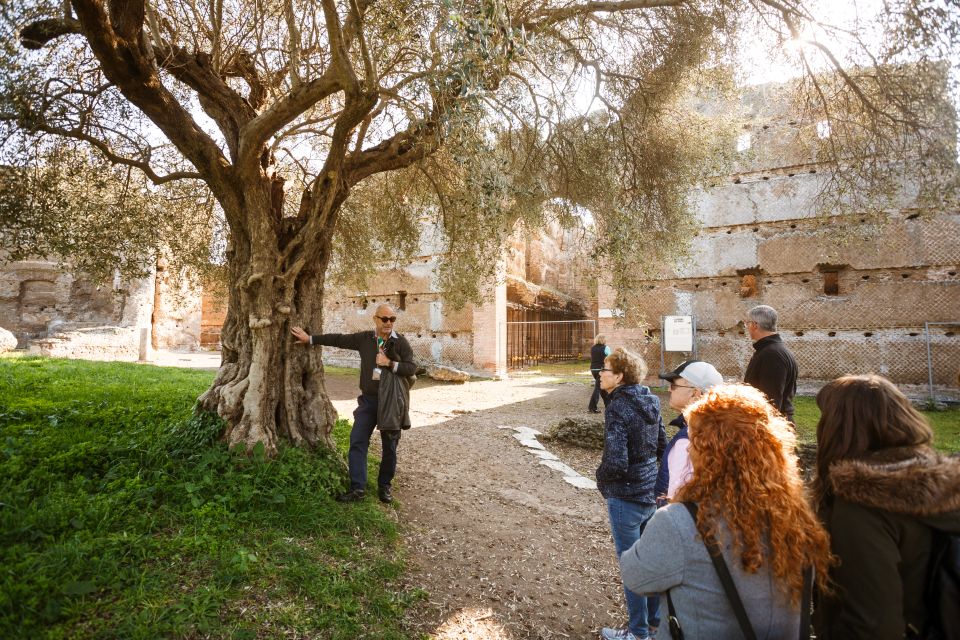
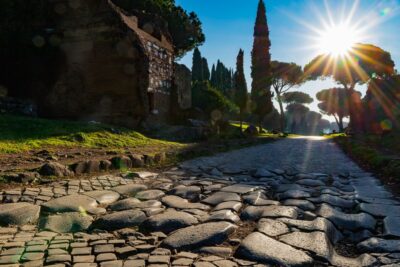
On the way to Tivoli, you travel along the ancient route known as Via Tiburtina. The practical reason this matters is simple: the journey itself is part of the storytelling. You’re seeing why Tivoli mattered to the Romans, not just standing in the ruins without context.
As you approach the area around Bagni di Tivoli, you get cues about the role of natural springs and spa culture. The tour frames it as a living link: natural springs helped feed the town that became famous for baths, and you’re watching the same water logic play out in modern geography.
You’ll also be on the lookout for the travertine marble quarries. That’s not just a random sight from the bus. Travertine is one of the materials that helps connect the region’s extraction economy to the look of Roman architecture. Even if you don’t know the stone by sight, the quarries make the supply chain feel tangible.
One small caution: since this is a coach tour, you’re mostly observing from the route. If you want lots of stops for photos, this won’t be that style. Think of it as getting you into the right mindset for the villas, not creating a photo safari.
Hadrian’s Villa ruins on the Tiburtini Hills: what you’re really seeing
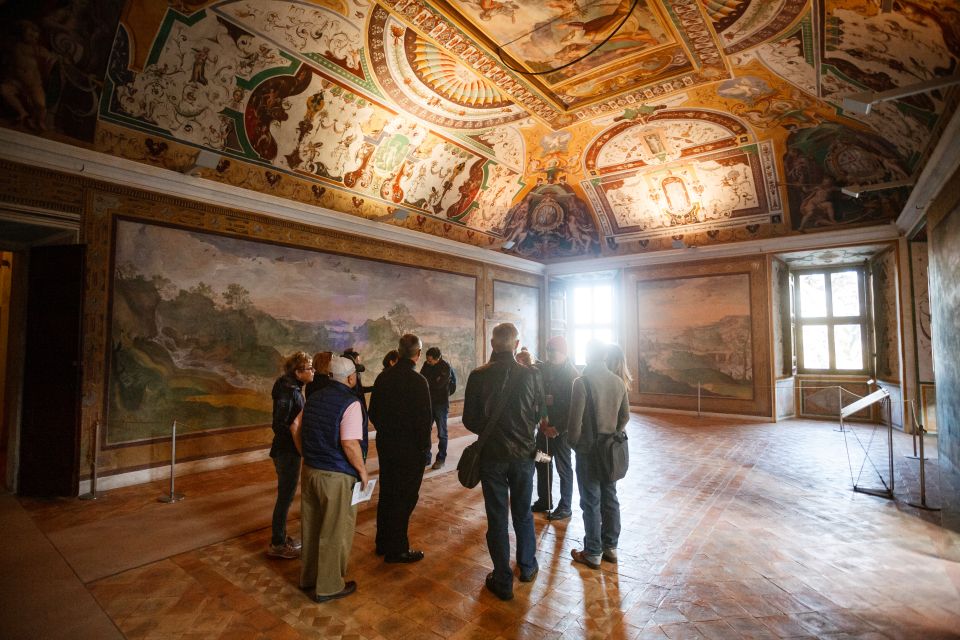
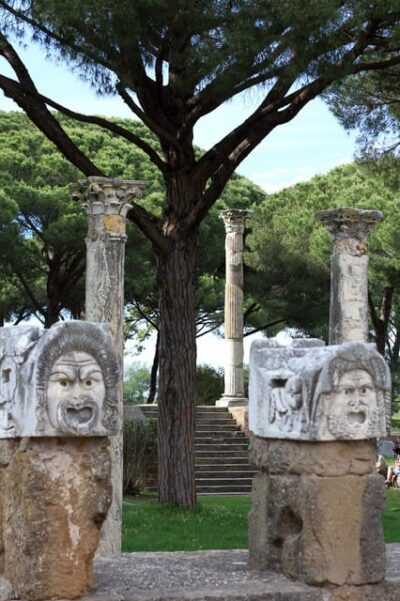
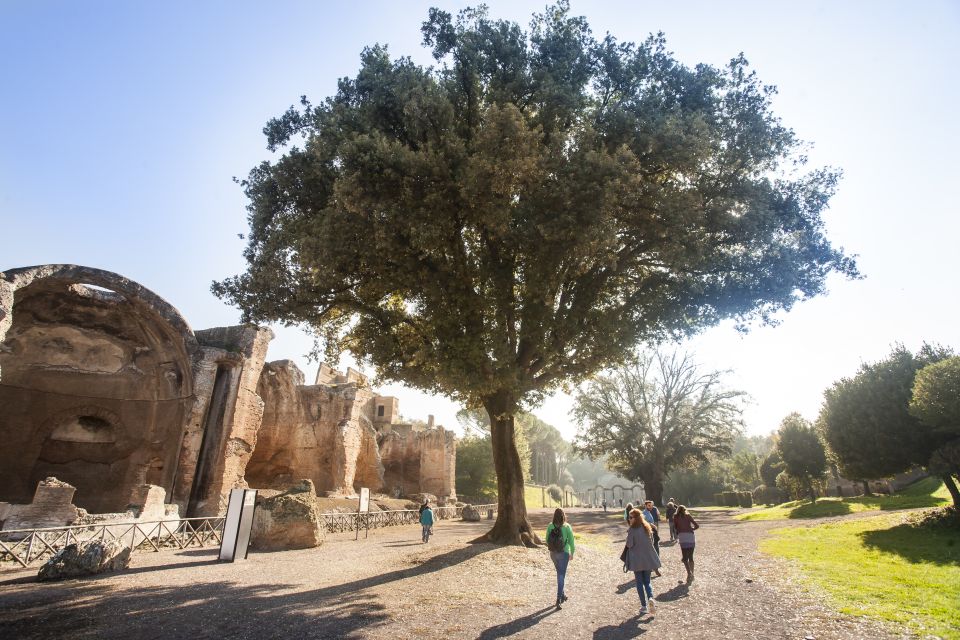
Hadrian’s Villa is on the hills of the Tiburtini area, and that elevation changes how the ruins feel. From a guide’s explanation, you start to understand the scale. This wasn’t just a residence; it was a machine for comfort, ceremony, and control—so it’s easy to see why the tour highlights how Villa Adriana once seemed more powerful than central Imperial Rome.
When you arrive, you’ll explore the ruins at the foot of the hills, where springs connect the landscape to the nearby spa town of Bagni di Tivoli. The timing is tight, so you’re going for major features, not wandering every corner.
Here are the specific stops that matter, because they translate well even in a short visit:
- Canopus: The tour calls out caryatids and columns here. It’s one of those spots where you quickly get the message—Roman design could be grand in a very theatrical way.
- Serapeum: This area is presented as a key highlight, tied to the myth-and-architecture style Hadrian favored.
- The artificial grotto for Serapis: This is the Egyptian-themed element the tour mentions—an intentional echo of another temple tradition, built into the villa experience.
You’ll also hear guidance about how the villa complex functioned. In a limited time window, the guide’s job is to connect dots fast: water, gardens, ceremonial spaces, and the way the whole layout was meant to impress.
Comfort note: ruins typically mean uneven ground and outdoor walking. Wear shoes that work on stone. Also, don’t rely on a long sit-down moment. Your time at Hadrian’s Villa is built for scanning the key pieces efficiently.
Villa d’Este gardens: fountains, grottos, and terraces with big ambitions
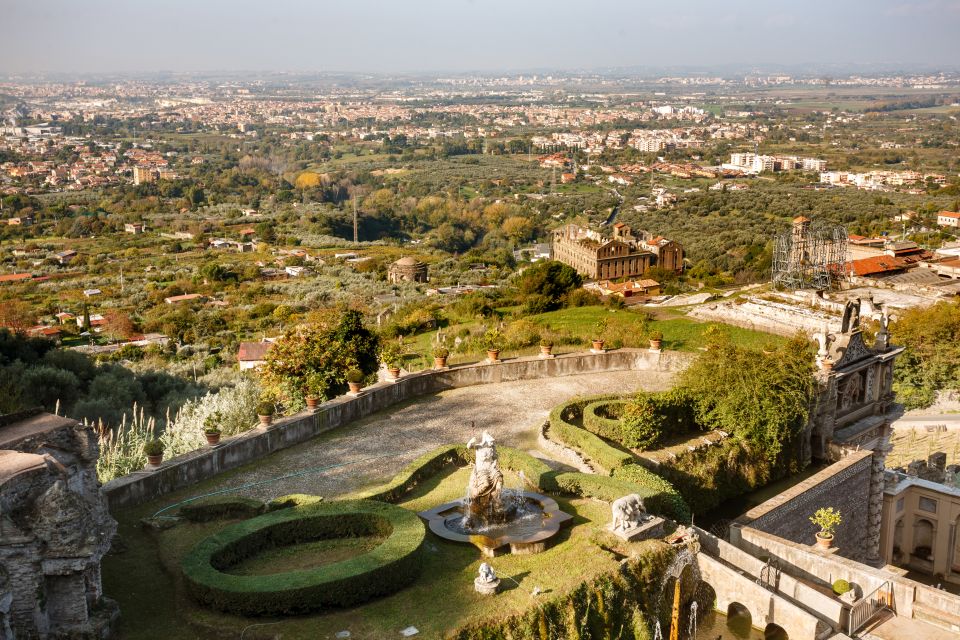
Then you switch gears to the Renaissance Villa d’Este. If Hadrian’s Villa feels like imperial planning, Villa d’Este feels like a performance staged in water, stone, and shade.
The tour gives you time to wander the Italianate gardens and focus on the main features:
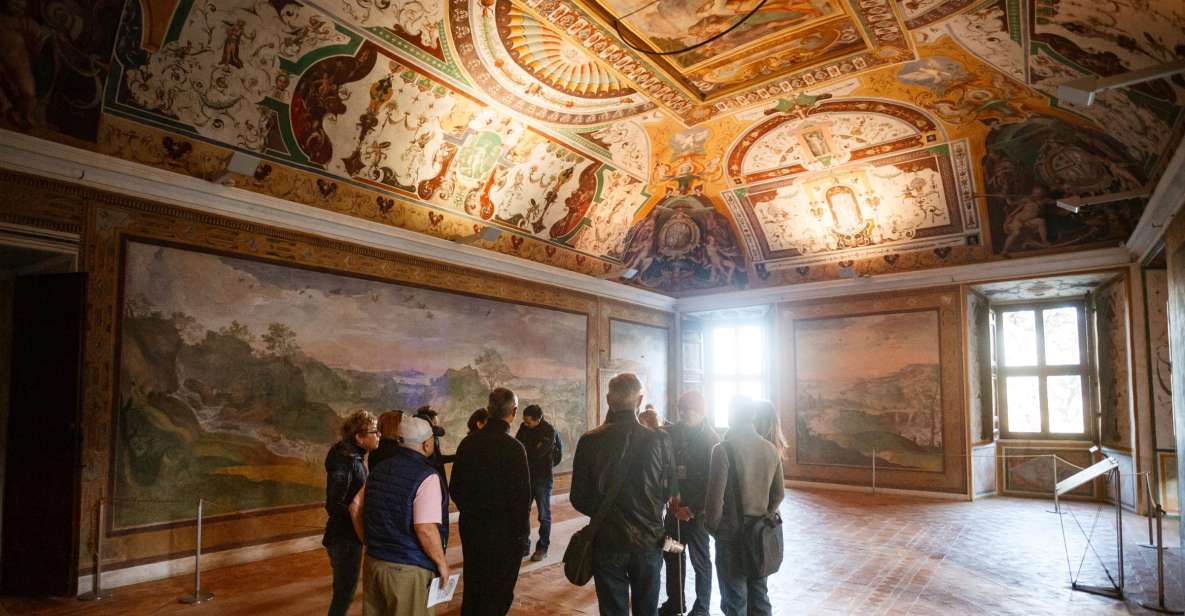
- Grottoes, plus decorative elements like frescoes and mosaics (the tour specifically calls these out).
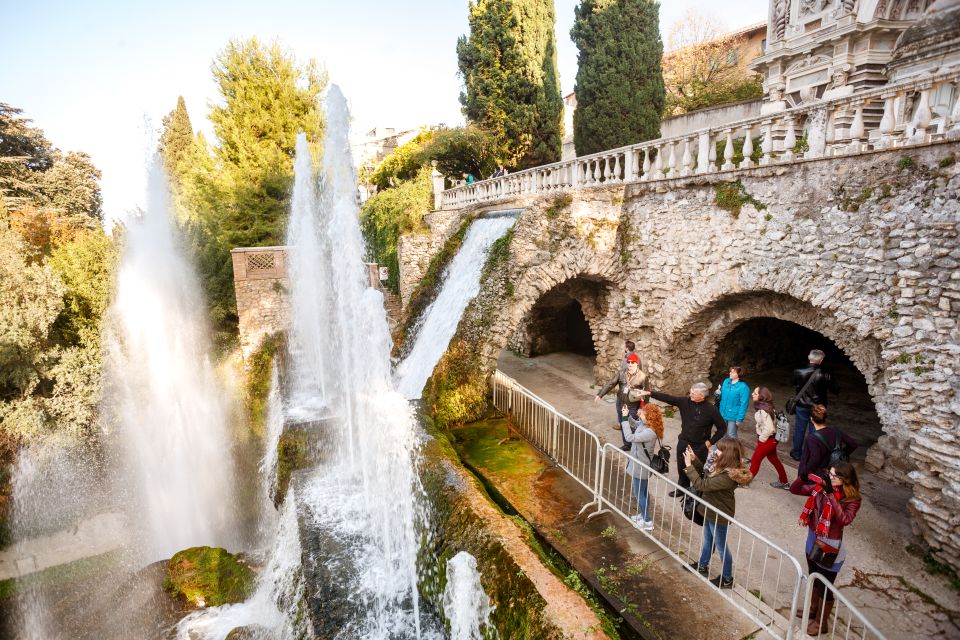
- A concentration of fountains that create the core experience. One comment highlights the sheer number—there’s talk of around 100 fountains. You don’t need to count them to get the point: this place is engineered to make water the star.
- Terraces designed to echo the Hanging Gardens idea. Even if you’ve seen that theme before, here it shows up as a garden rhythm you can actually walk through.
- An underground aqueduct route that shows the Romans still mattered in how this garden gets its water.
What I love about this part for visitors is that it’s interactive without being exhausting. You move through the grounds, then the fountains pull your attention into the next viewpoint. It’s not just “pretty.” It’s a layout that choreographs what you see as you walk.
The possible drawback is that Villa d’Este is easy to fall in love with, and you may not want to leave after an hour. One viewpoint was blunt: for a more relaxed, do-it-at-your-own-pace garden visit, you’d want more time—closer to 6 hours rather than 4 total across both villas. I get it. The fountains and grottos encourage lingering.
Still, one hour can be enough if you manage your priorities. If Villa d’Este is your top must-see, treat it like your main event and use Hadrian’s Villa as the appetizer.
How long you have at each villa (and how not to feel rushed)
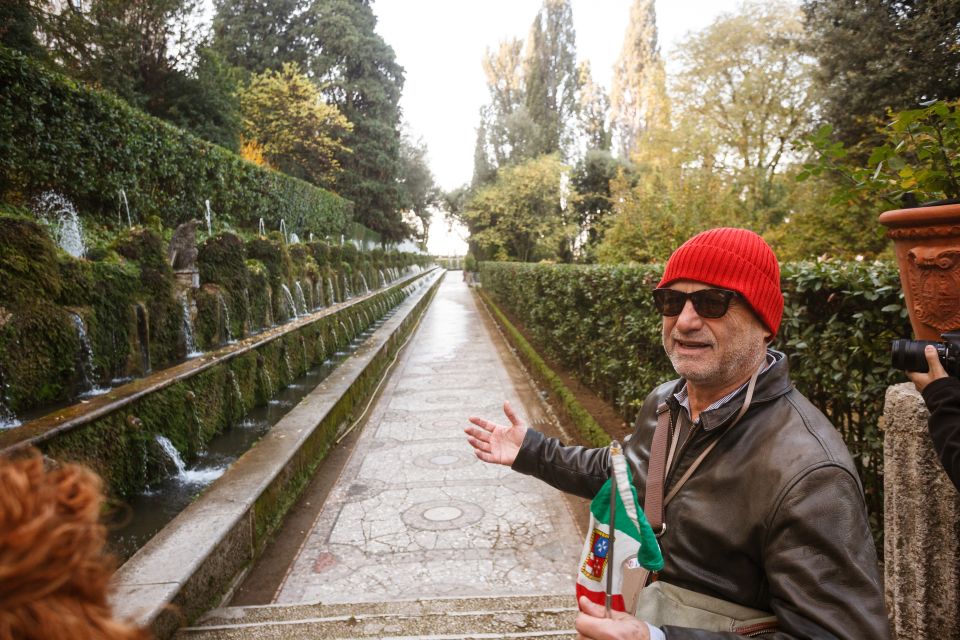
The scheduling here is built for highlights, not deep wandering. In practice, the visit often works out to about one hour at Hadrian’s Villa and about one hour at Villa d’Este. For many people, that’s the sweet spot: you see the best-known elements without burning an entire afternoon.
But the tour is short enough that your choices matter:
- If you’re very into Roman ruins, spend a little longer orienting yourself first at Hadrian’s Villa. Once you know where Canopus and the Serapeum sit, the rest clicks faster.
- If Villa d’Este is your obsession, arrive with a simple plan. Aim for the fountain-heavy zones and the terraces/aqueduct story, then add grottos and decorative extras as time allows.
Also, keep your evening flexible. The tour runs as a half-day loop and returns back to the meeting point, but at least one experience noted a delay of around an hour. That kind of timing slip can wreck dinner plans if you’ve locked everything in too tightly.
Finally, don’t assume you’ll have time to shop. One viewpoint said there wasn’t enough time for shopping near either villa. If you want souvenirs, treat it as a bonus, not a guaranteed task.





Price and included value: what you’re paying for (and what you’re not)

The price is $113.29 per person for a 4-hour guided half-day. On the surface, it might feel like a lot until you itemize what’s actually included.
You get:
- Transportation by coach from Rome to Tivoli and back
- Entrance fees to both Hadrian’s Villa and Villa d’Este and gardens
- A local live guide (English, French, Spanish)
Not included:
- Food and drinks
That makes the value pretty clear. You’re paying for the logistical package plus two entry tickets that can eat up time and planning if you try to DIY it. The trade-off is the schedule is tight, so you’re paying for efficiency.
My practical advice: budget for a snack or water before you go. Since food isn’t included, you’ll want something in your bag, especially if you take the morning departure in cooler months.
What to do if Tivoli is your priority
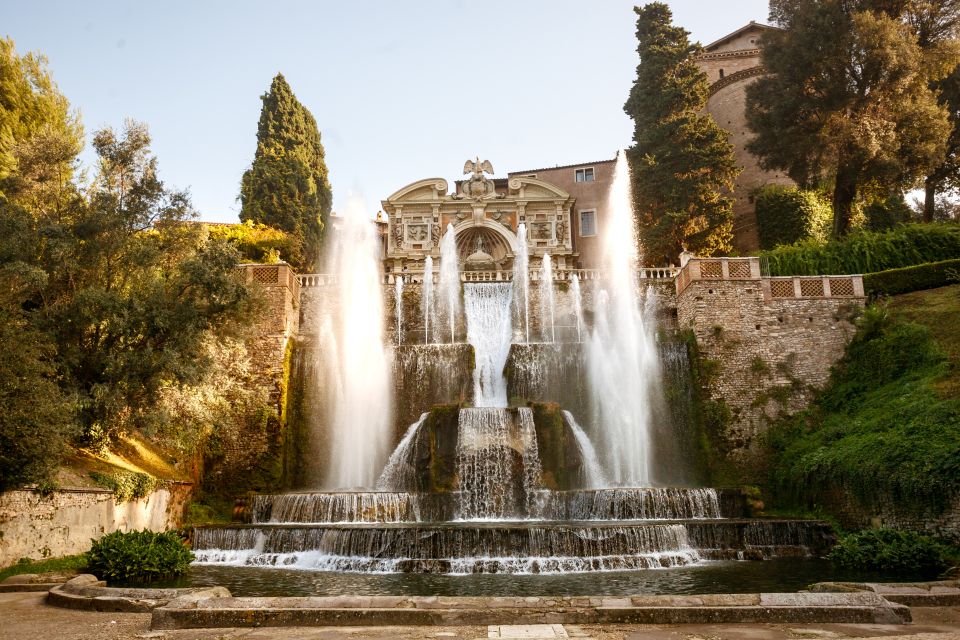
If you’re choosing this tour because you want Hadrian’s Villa and Villa d’Este in one shot, you’re making a good call. But if either one is your clear favorite, you should adjust your expectations.
- For Villa d’Este fans: Be ready for a quick walk-through. Take photos, then spend your last 10 to 15 minutes savoring one fountain zone and one grottto/terrace area instead of trying to see everything.
- For Roman ruins fans: The Hadrian’s Villa hour can be enough if your brain is already wired for details. Focus on the “big named” features the guide points out—Canopus and the Serapeum—then let your curiosity fill in the gaps.
Also, watch your comfort. This kind of garden-and-ruins mix usually means standing, walking, and moving between outdoor areas. Even if you’re fine physically, it’s not a sit-and-sip tour.
Who this half-day tour suits best
This tour is a strong fit for you if:
- You want two of the most famous Italian villa experiences without changing plans all over Rome.
- You like guided context. The guide is what helps you connect the dots between ruins, water, architecture, and the way the region’s springs shaped life.
- You enjoy a structured route when you’re short on time.
It’s less ideal if:
- You want long, unhurried garden wandering. Villa d’Este is one of those places where time can disappear.
- You have very strict evening plans and can’t tolerate possible delays.
- You shop as part of your sightseeing. This is highlight-focused, not shopping-focused.
Should you book this Rome: Hadrian’s Villa and Villa d’Este half-day tour?
I’d book it if you want maximum impact with minimum fuss. The included entrances, the coach transport, and the guided explanation make the price feel reasonable for a short window. And the contrast is genuinely satisfying: Hadrian’s imperial imagination, then Villa d’Este’s water spectacle.
Hold off if you know you’ll hate rushing—especially at Villa d’Este. In that case, you may do better with more time on your own or a longer format. But if you’re okay moving briskly and you want the best-known pieces of both villas, this is one of the more efficient ways to tick Tivoli off your Rome list.
FAQ
How long is the tour?
It lasts about 4 hours.
Where is the meeting point in Rome?
You meet at 32 Via Giovanni Amendola (GLT Terminal), Rome.
When does the tour start?
From April to September, it starts at 2:15 PM. From October to March, it starts at 7:45 AM.
What does the price include?
The tour includes transportation, a local guide, and entrance fees to Hadrian’s Villa and Villa d’Este and gardens.
What isn’t included?
Food and drinks are not included.
What languages are the live guides?
The live guide is available in English, French, and Spanish.
Is this tour wheelchair accessible?
It is wheelchair accessible with the requirement that the passenger travels with a companion who can assist them on and off the bus; wheelchairs are stored in the bus luggage area. The information also notes it is not suitable for people with mobility impairments, so it’s smart to double-check your exact needs with the provider.
Can I get a refund if my plans change?
Yes. Free cancellation is available up to 24 hours in advance for a full refund.
FAQ
Is reserve & pay later available?
Yes. You can reserve now and pay later to keep plans flexible.
Will I have time for shopping?
There may be limited time for shopping near the villas, since the schedule focuses on key sights.
What time does the tour end?
The tour ends back at the meeting point in Rome.