Ostia Antica beats many big-ticket day trips. It is one of the best-preserved Roman cities, reached in about 25 minutes by train from central Rome, and guided in English by a fun, mother-tongue specialist who turns ruins into stories. I like how the tour is built around hands-on sightseeing—especially the baths and the port-town layout—rather than just reading plaques.
One more thing I like: you get a calmer experience than the mega-famous sites, with smaller groups and a chance to cool off nearby. The main trade-off is that it is a moderate-walking 3.5-hour outing and it is not suitable for wheelchair users or people with mobility impairments.
In This Review
- Key highlights you will care about
- Meeting at Caffè Piramide: the start that keeps things easy
- The 25-minute train ride: Rome’s port story before you even arrive
- Ostia Antica in 2.5 hours: baths, amphitheater, and real daily life
- Why choose Ostia Antica over Pompeii: the port-city angle
- The guide experience: humor that actually helps you remember
- Taking your time after the tour: café stop, picnic, or beach swim
- Price and value: is $68 fair for what you get?
- Who this tour is best for
- Should you book this Ostia Antica guided tour?
- FAQ
- How long is the Ostia Antica guided tour?
- Where do I meet the guide?
- How do I get from Rome to Ostia Antica?
- Is the tour conducted in English?
- What is included in the price?
- Is food and drink included?
- Does the tour let me skip ticket lines?
- Can I stay longer at Ostia Antica after the guided portion?
- What should I bring for the tour?
- Is the tour suitable for wheelchair users or mobility impairments?
Key highlights you will care about
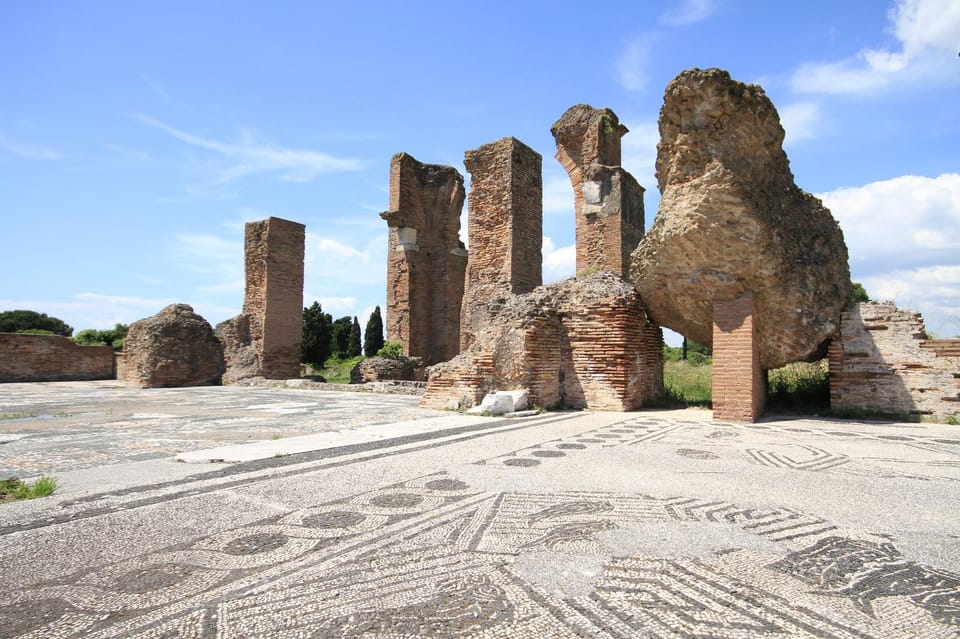
- English mother-tongue guides with a sense of humor, like Sean, Janelle, and Mike (you will feel it in the pacing).
- 2.5 hours on site inside Ostia Antica, so you see more than the quick photo loop.
- Roman baths + amphitheater + forum/temples, including Mithraic temples, all explained in clear, human terms.
- Smaller, quieter groups, which helps the ruins feel like a place again.
- Return by train with round-trip tickets included, so you are not scrambling on logistics.
- After-tour options: on-site café and the beach a few train stops away for a swim and lunch.
Meeting at Caffè Piramide: the start that keeps things easy
The tour begins at Caffè Piramide, right by the Piramide Metro Station. Your guide meets you in front of the café under the BAR T sign, which is exactly the kind of meeting point that prevents the usual early-morning hunt.
This matters because the whole day runs on a simple rhythm: train to the ruins, guided walking on site, then train back. You are not dealing with complicated “find your bus” instructions or timing stress from hotel pickup schedules. If you are already staying in Rome, getting to Piramide is usually straightforward, and you can treat the morning like a normal commute.
Also, the start time is set up for a 3.5-hour total commitment. That is short enough to fit into a tight itinerary, but long enough to feel like more than a stopover. I like that the plan gives you a clean handoff: you go with the guide for the key sights, then you can keep going on your own if you want.
The only caveat at the very beginning is comfort. You will be on your feet for a moderate amount of walking, and you want your shoes to feel good from the first steps outside the café.
You can also read our reviews of more guided tours in Rome

The 25-minute train ride: Rome’s port story before you even arrive
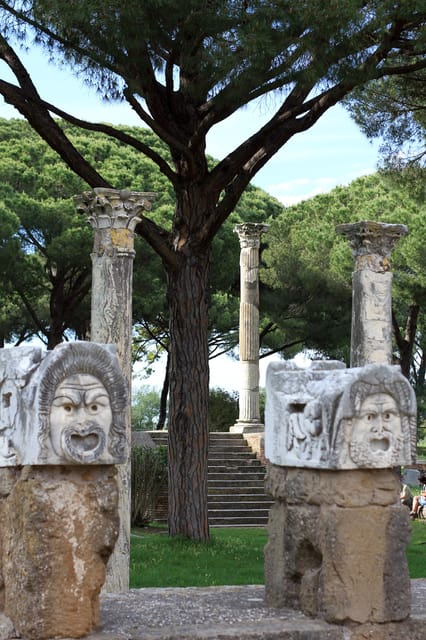
The transfer part is about 25 minutes on the train from Rome toward the Mediterranean side. Before the ruins, you get the “why” of Ostia Antica: the area’s geography, Ostia’s role as Rome’s port, and the historic path that led to the town’s rise in the Imperial era.
This pre-loading is smart. Ostia Antica can look like a jumble of walls until someone explains what you are looking at. Hearing about how the port fed the capital helps you connect everyday life to the physical layout—streets, buildings, public spaces, and the places people used to work and worship.
Along the way, you also get a practical benefit. You are not spending your limited sightseeing time stuck in traffic. You get movement and context at the same time, and that makes the arrival feel more intentional.
What to watch for during the ride: keep your water handy and have sunscreen ready. The tour provides guidance on bringing water, hat, and sunscreen, and I agree—this is one of those ruins days where your comfort affects your enjoyment.
Ostia Antica in 2.5 hours: baths, amphitheater, and real daily life
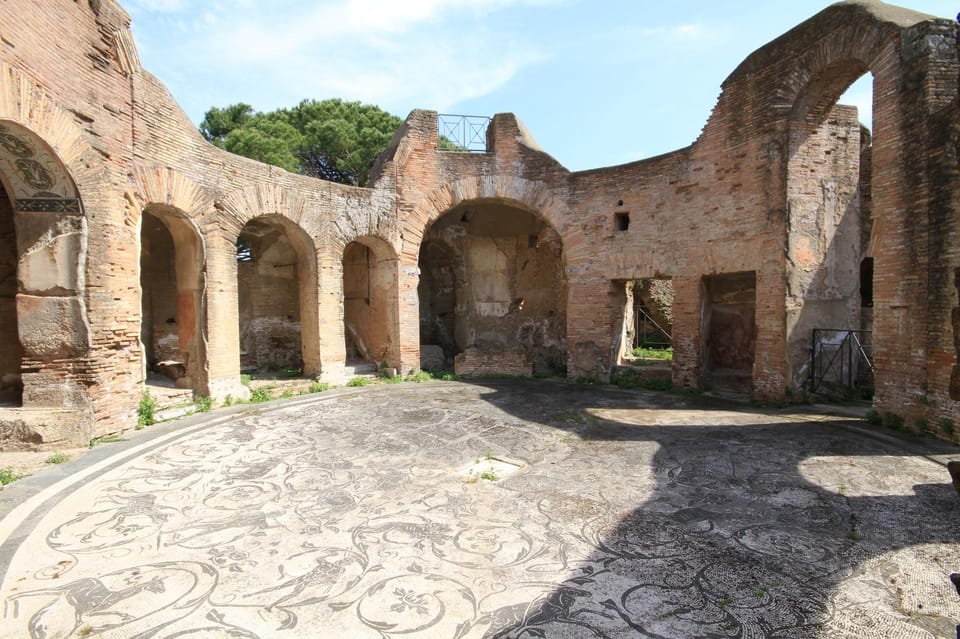
On site, you spend over 2.5 hours walking and sightseeing with the guide. This is where the tour earns its value. Ostia Antica is large, and if you go without a plan, you can end up taking random routes and missing the buildings that give the city its character.
The highlights you will focus on include:
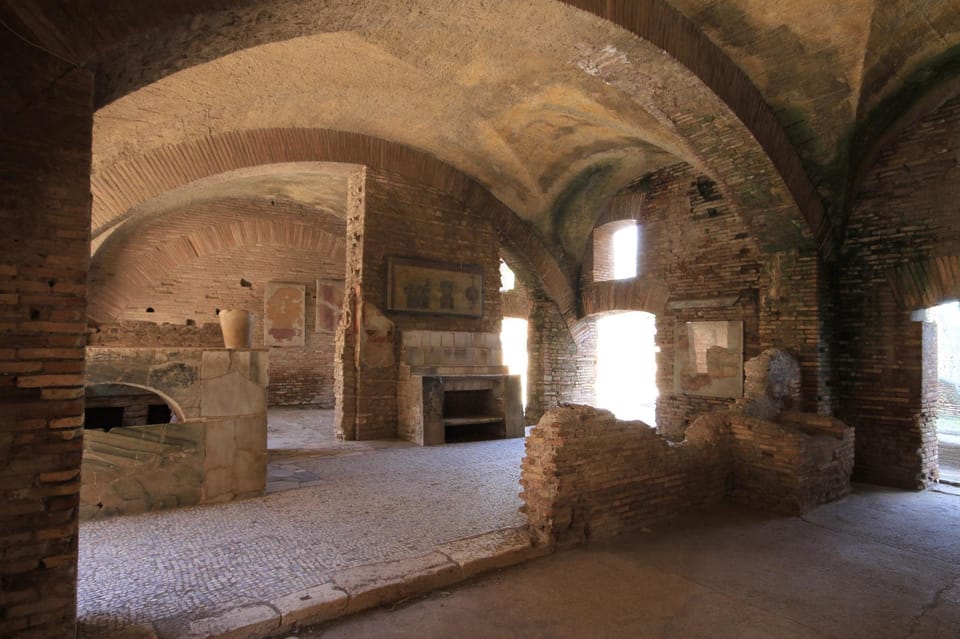
- Roman baths: not just architecture, but how bathing and routine worked as part of life.
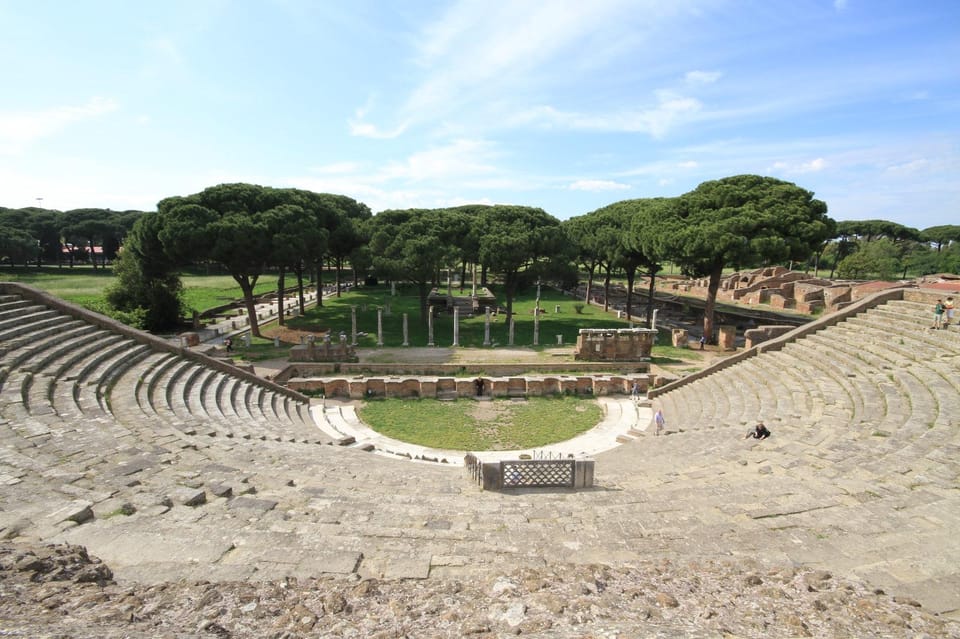
- Amphitheater: the entertainment side of the port city—people came out for events the way people do now.
- Temples and a forum: the public and religious heart of the town.
- Mithraic temples: these can be confusing on your own, so having the guide connect the dots is a big help.
Why I like the bath emphasis: baths are one of the best places to understand Roman culture because they combine function and community. When a guide explains what you are seeing—room to room, purpose to purpose—the ruins start to behave like a snapshot of daily routine, not just stone shapes.
Why I like the amphitheater and forum pairing: it makes the town feel complete. The amphitheater shows leisure and spectacle. The forum and temples show authority and belief. Add the baths and you get a fuller picture of how people moved through their day.
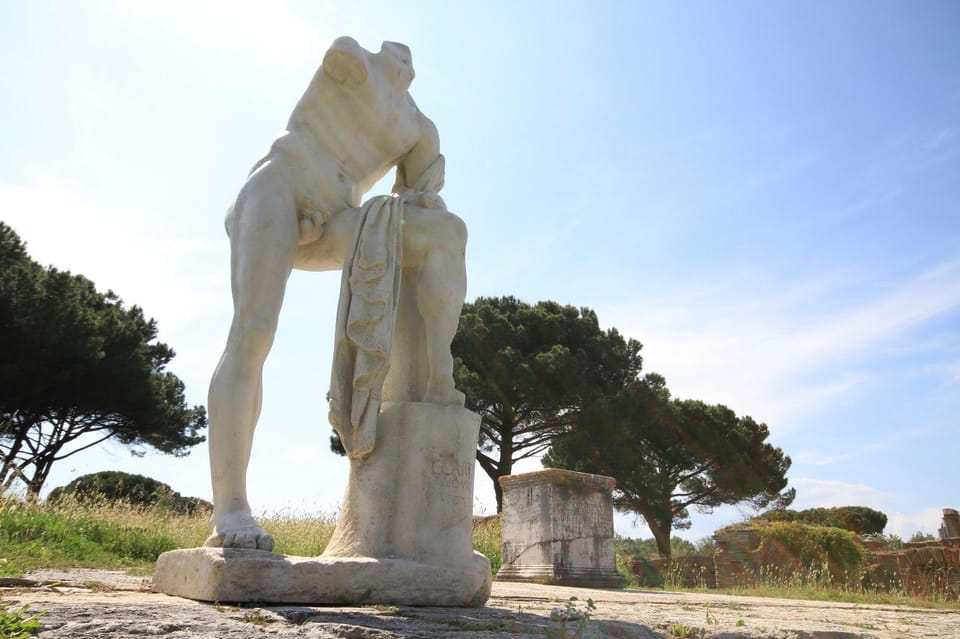
You will also pass through areas that feel like apartment complexes and neighborhood spaces. That is what makes Ostia Antica such a strong choice for comparison. This site is not trying to look like a perfect postcard ruin. It reads like a living town that had to operate, day after day.
A note on crowds and comfort: the tour is designed for small groups, and there is also shade on site and bathrooms available. That matters because Ostia Antica is easier to enjoy when you are not constantly dodging elbows.
Why choose Ostia Antica over Pompeii: the port-city angle
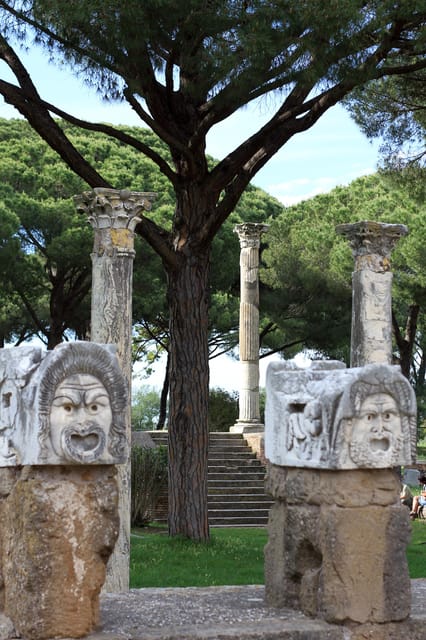
Pompeii often gets all the attention, but Ostia Antica has a different payoff, and this tour leans into it. The practical reasons are straightforward: Ostia is easier to reach and closer to Rome, and the experience can feel less crowded.
But the deeper reason is the type of city you are seeing. Pompeii is famous, and that fame shapes the way it feels. Ostia Antica is a working-class Roman town connected to the movement of goods and people through Rome’s port. When your guide frames the ruins as the infrastructure of everyday life, Ostia starts to feel less like a set and more like a community.
This is also a day-trip style experience with a built-in escape hatch. After the guided portion, you can stay longer on site and explore at your own pace. Or you can head toward the coast for a break.
If you want a Roman ruin day that feels lived-in—markets, workplaces, neighborhoods, and worship spaces—Ostia is a strong match. If you only want the biggest celebrity name, you might still prefer Pompeii. But for most people looking for something more balanced and easier, Ostia Antica checks a lot of boxes.
The guide experience: humor that actually helps you remember
A guided ruin tour can go one of two ways: facts that slide past, or stories that stick. This one aims for stories, and the humor is not just there for laughs. It helps you keep track of relationships between buildings and how people used them.
In this case, the tone you may hear from guides like Sean, Janelle, or Mike is upbeat and energetic. That matters in a place like Ostia Antica, where the visual differences between buildings can be subtle if you do not know what to look for.
I also like that the guide covers “bizarre cults” and the social texture of the place, not just the big architectural headlines. Mithraic temples are a good example. Without a guide, you might recognize the existence of something religious but miss why it mattered. With a guide, you get a clearer sense of the belief world that coexisted in a Roman port town.
If you care about understanding rather than just collecting photos, the guide style is a major part of the value.
You can also read our reviews of more city tours in Rome




Taking your time after the tour: café stop, picnic, or beach swim
Once the guided portion ends, you are welcome to keep exploring on your own. That flexibility is useful because Ostia Antica rewards slow attention. If you want to circle back to a bath area or spend extra time on one temple cluster, you can.
You also have easy food options built into the plan:
- an on-site café
- a picnic approach if you bring something with you
- and the option to take the train a few more stops out toward Ostia Beach for swimming and lunch
I love that the tour does not force you into a single “ruins only” day. In summer or warm months, the beach add-on can turn the outing from a sweaty slog into a full day with a payoff that feels like Rome, not a chore.
Practical tip: pack light but pack hydration and sun protection. The tour encourages hat, sunscreen, and water, and that advice is not generic. You will walk, you will stand, and you will be out in open air.
Price and value: is $68 fair for what you get?
At $68 per person for a 3.5-hour experience, the real question is what is included, not just the sticker.
Here is the value math that makes this tour feel reasonable:
- Round-trip train tickets from Rome are included.
- Entrance tickets to Ostia Antica are included.
- You get a live English mother-tongue guide for over 2.5 hours on site.
- It also includes skip-the-ticket-line entry, which saves time when you arrive.
So you are not paying only for the guide. You are paying for the whole day structure: transportation + entry + interpretation.
If you were to cobble this together yourself, you would still spend money on train fares and admission. Then you would add the cost of your time and the risk of not seeing the best parts without a plan. This tour reduces that risk by steering you to the baths, amphitheater, forum, and Mithraic temples in a way that feels logical.
The only “cost” you should accept is the walking time. If you struggle with walking for 3.5 hours total, the value will drop because you might not enjoy the same depth of sightseeing.
Who this tour is best for
This is a strong fit if you:
- want a Roman ruin day that feels more like daily life than a staged spectacle
- prefer smaller groups and calmer pacing
- like explanations that include culture, religion, and social routine—not only dates
- want an easy day trip from Rome without renting a car
It is also ideal for pairing with other Roman plans because it is short and efficient. You get a meaningful chunk of Ostia Antica, plus optional time for a café or beach.
If you need step-free access or wheelchair support, this one is not for you based on the stated limitations.
Should you book this Ostia Antica guided tour?
I would book it if you want the best parts of Ostia Antica without wandering in circles. The guided focus on baths, amphitheater, and key religious spaces makes the ruins much easier to understand. The included train tickets and admission also keep the day simple and predictable.
Skip it if your day is set up for minimal walking or if you are the type of person who prefers reading signage alone. In that case, you might be happier going without a guide—though you might miss some of the connections that make Ostia Antica memorable.
If you are aiming for a port-town Roman day trip from Rome that is calmer than the biggest-famous sites, this is a smart, practical choice.
FAQ
How long is the Ostia Antica guided tour?
The experience lasts about 3.5 hours, including the train transfer and time on site.
Where do I meet the guide?
Meet at Caffè Piramide, in front of the café under the BAR T sign next to Piramide Metro Station.
How do I get from Rome to Ostia Antica?
You take the train from Rome. The transfer portion is about 25 minutes toward the Mediterranean area.
Is the tour conducted in English?
Yes. The tour is in English, with a live English mother-tongue guide.
What is included in the price?
Round-trip train tickets from Rome, entrance tickets to Ostia Antica, and a live English tour guide are included.
Is food and drink included?
No. Food and drinks are not included, but there is an on-site café and you can also bring something for a picnic.
Does the tour let me skip ticket lines?
Yes. Skip-the-ticket-line entry is included.
Can I stay longer at Ostia Antica after the guided portion?
Yes. You are welcome to remain at the end to continue exploring the site on your own.
What should I bring for the tour?
Bring comfortable walking shoes, a hat, camera, sunscreen, and water (a water bottle is a good idea).
Is the tour suitable for wheelchair users or mobility impairments?
No. It is not suitable for people with mobility impairments or wheelchair users.