REVIEW · COLOSSEUM, FORUM & PALATINE TOURS
Rome: Colosseum Guided Tour with Entry Tickets
Book on GetYourGuide →Operated by Rutas Romanas · Bookable on GetYourGuide
Brutal queues are the point. This Colosseum tour leans on special entry tickets to help you avoid the longest ticket-office waits, and it hands out headsets so the guide’s story stays clear even in the crowd. You’ll also get access to the Roman Forum and Palatine Hill, so the Colosseum isn’t just a big stone wall with photos.
One-hour tours can feel rushed, but this one is built to hit the site’s key ideas fast: how the arena worked, how Romans were seated by social class, and how the building’s engineering supported huge crowds. The guide style tends to be energetic too, and I’ve heard this tour can be led by guides such as Henry, Alessandra, Agostino, or Rita, depending on your date.
One possible drawback: you still have to pass through a security check, and on busy days the line there can slow your actual start time.
In This Review
- Key Things That Make This Tour Worth Your Hour
- A One-Hour Plan for the Colosseum and Beyond
- Meeting at Via del Colosseo 41 and What to Expect on Arrival
- Entering the Colosseum: The Façade, Then the Stories
- Inside the Corridors: How the Arena Worked in Real Life
- The First Floor Learning Area: Panels and Reconstructed Models
- Seeing the Reconstructed Arena From Above
- The Emperor’s Box Finale: Where Power Watched the Show
- Roman Forum and Palatine Hill: Context in Archaeological Form
- Price and Value: Why $65 Can Make Sense Here
- Practical Tips That Keep the One-Hour Tour Smooth
- Who This Tour Fits Best
- Should You Book This Colosseum Guided Tour With Entry Tickets?
- FAQ
- How long is the Colosseum guided tour?
- What’s included in the ticket price?
- Where do I meet the tour group?
- What should I bring?
- What languages is the live guide offered in?
- Is this tour wheelchair accessible?
- Will I still have to wait in line?
- Does the tour run in rain, and is there a cancellation option?
Key Things That Make This Tour Worth Your Hour
- Special entry tickets cut down the worst ticket-office line pressure
- Headsets help you hear the guide clearly without craning your neck
- Forum + Palatine Hill access gives you context beyond the arena
- Social-class seating makes sense of who sat where and why
- First-floor learning area uses panels and reconstructive models for quick understanding
- Emperor’s box finale ends with the power-seat of the show
A One-Hour Plan for the Colosseum and Beyond
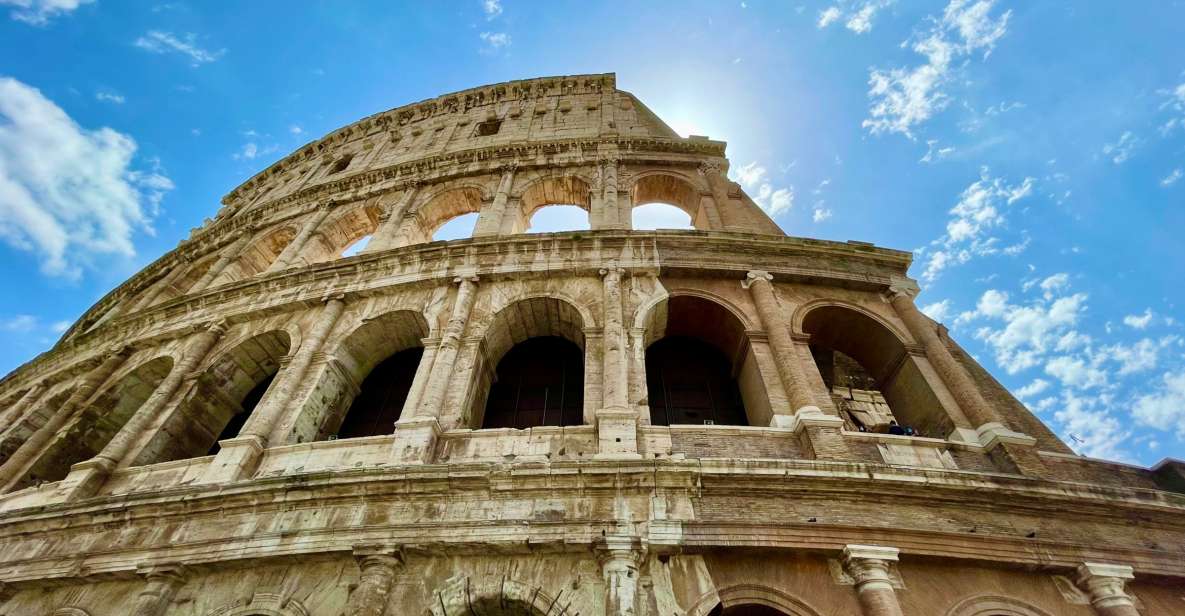
If you only have a short window in Rome, this is the kind of tour you pick on purpose. The Colosseum is huge, and wandering without a framework can leave you with great photos and not much meaning. This tour gives you a guided route that explains what you’re seeing while you’re seeing it.
It’s also smart that you don’t stop at the arena floor. You get access to the archaeological areas of the Roman Forum and Palatine Hill, which are where Rome’s political and elite everyday life becomes visible. Even if your legs are tired, your brain leaves with a clearer picture of how the Romans lived and staged power.
Duration is about 1 hour, and timing can shift slightly depending on crowd flow and what areas are accessible that day, especially in poor weather.
You can also read our reviews of more tours and experiences in Rome

Meeting at Via del Colosseo 41 and What to Expect on Arrival
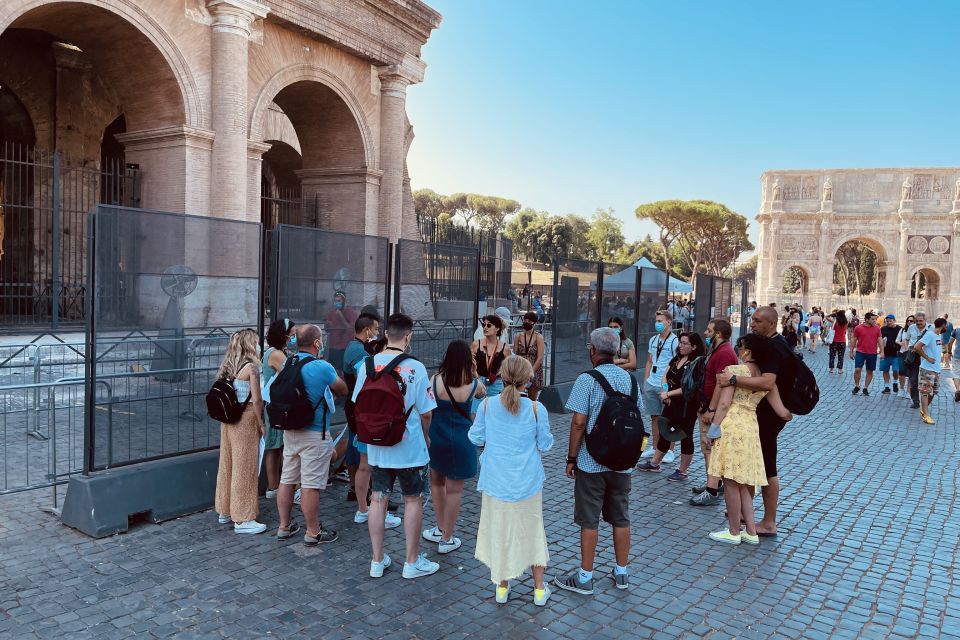
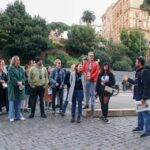
You meet at Via del Colosseo 41, above Colosseum Metro Station, in front of Caffe Roma. Staff are holding a “Rutas Romanas” sign. This matters because the meeting area is busy and easy to miss if you’re scanning the street like it’s a game show.
Once you gather, plan for the reality of entrance checks. Even with special entry tickets, everyone must go through security. On crowded days, that security line can be unavoidable and can push your start time later than scheduled. It’s one of those Rome truths: the queue logic is bigger than any tour operator.
Your best move is simple:
- Show up with your ID or passport ready
- Wear comfortable shoes (the ground and routes aren’t gentle)
- Keep bags minimal since luggage or large bags aren’t allowed
Entering the Colosseum: The Façade, Then the Stories
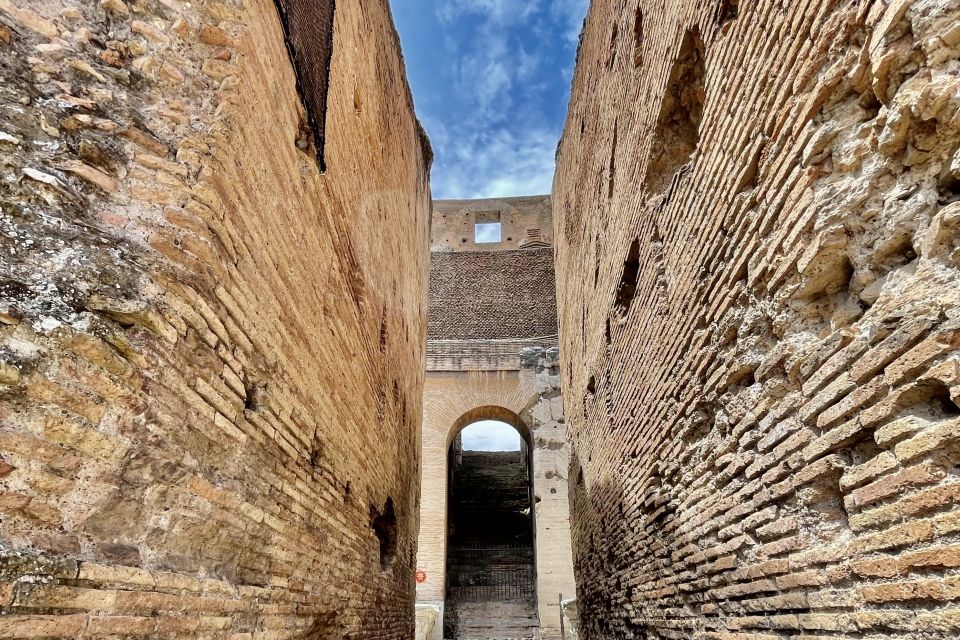
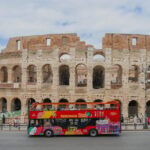
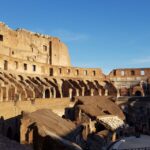
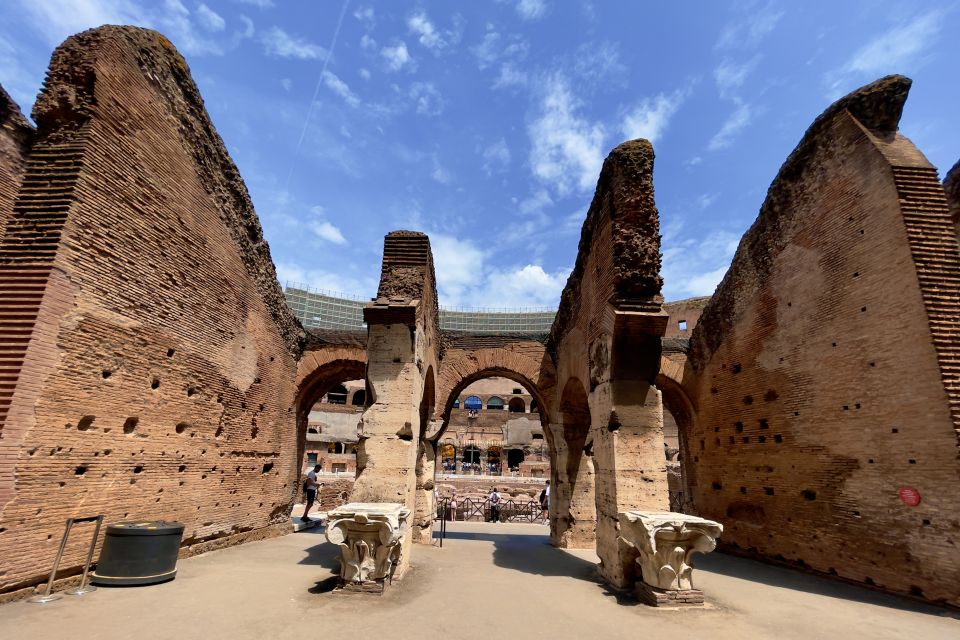
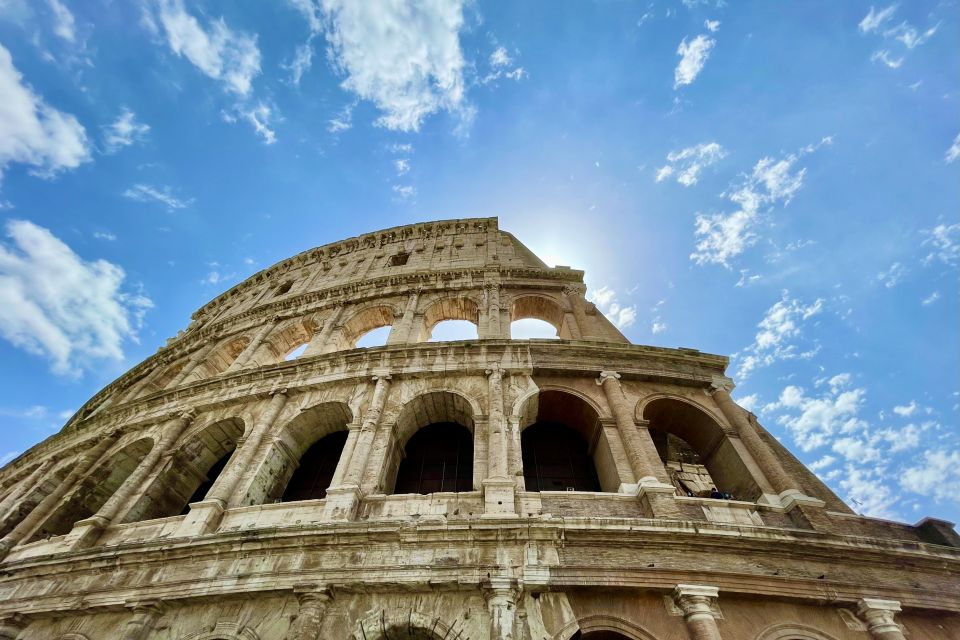
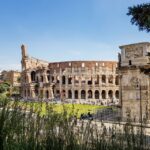
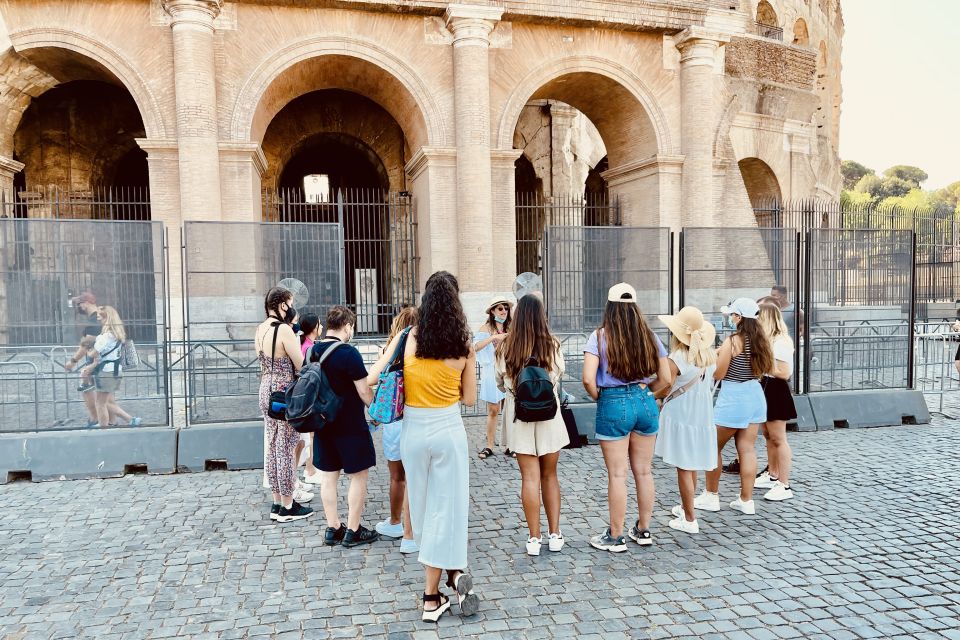
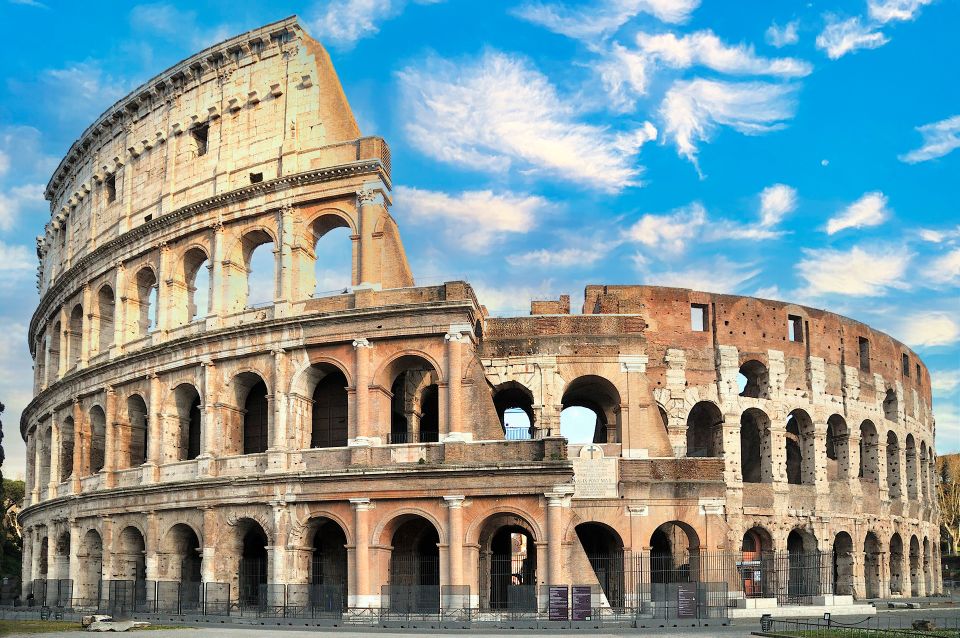
You start outside and look at the Colosseum’s imposing façade before you go in. That outer moment isn’t just for orientation. The guide uses it to frame what the arena actually was: a public stage designed to handle enormous crowds and keep control while the spectacle rolled on.
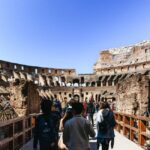
Then you head inside to walk through spaces that were visited in ancient times by millions of people. The tour is timed for maximum impact, so you’re not doing a slow circuit. Instead, you move through corridors and viewing points while the guide points out architectural details that most visitors miss.
This is where the headsets earn their spot. Even with crowd noise, you can follow the guide’s explanations without constantly turning your head. It’s the difference between hearing about the Colosseum and getting lost in it.
Inside the Corridors: How the Arena Worked in Real Life
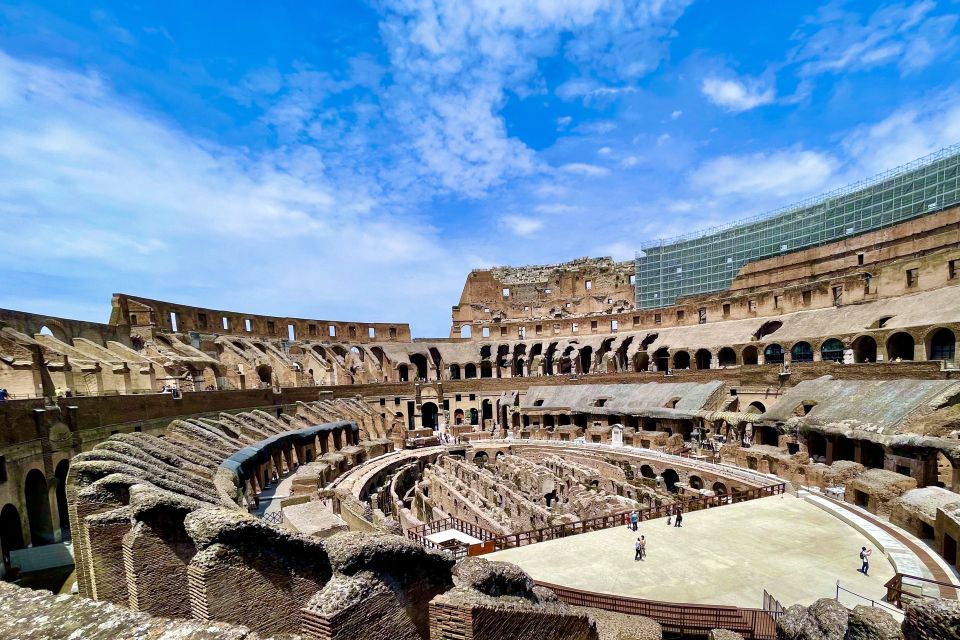
The guide’s main job here is to connect architecture to human behavior. You’ll hear what the Colosseum was built to do, including how it could hold a massive number of spectators and how it managed the flow of people.
One section focuses on the complex system of services that supported big crowds. That includes the practical “behind-the-scenes” logic of moving people, keeping order, and delivering the show. It’s a reminder that the spectacle wasn’t magic. It was logistics.
Another standout theme is how people were divided according to social class. This is one of those details that changes how you look at seating and access. Instead of thinking, I’m just standing in a Roman stadium, you start thinking, Romans built the experience to reflect status and control.
Guides also tend to point out the emperor-related structure of the space. You don’t just learn names and dates; you learn where power sat and how it would have been visible during key moments.
The First Floor Learning Area: Panels and Reconstructed Models
On the first floor, you’ll walk along a corridor that’s set up like a mini classroom. There are explanatory panels and reconstructive models designed to help you picture how the Colosseum looked and functioned in its prime.
This is a smart stop for a short tour. Many one-hour experiences rush past explanation and hope you’ll figure it out later. Here, you get a chance to see information that turns the tour from a list of facts into a mental map.
If you’re the type who likes to understand the “how” behind the “wow,” this section does the job. You’ll still be moving, but you’ll be moving with meaning.
You can also read our reviews of more guided tours in Rome

Seeing the Reconstructed Arena From Above
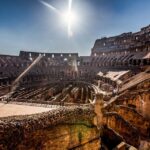
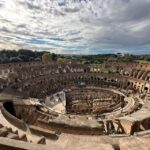
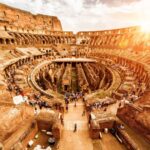
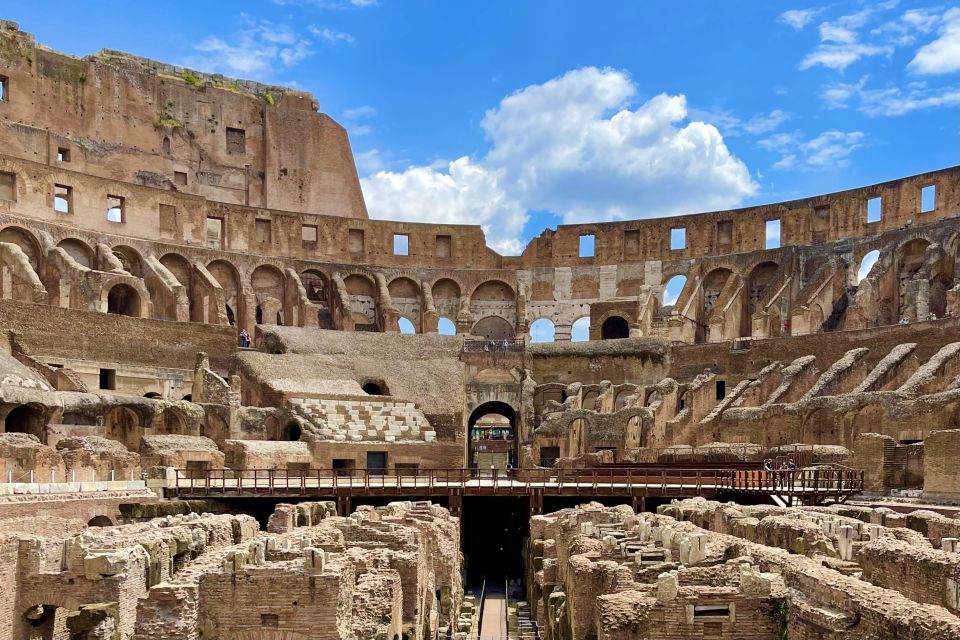
Next comes one of those moments that makes the whole Colosseum click. You’ll admire a reconstructed portion of the arena from above. From this angle, you can start visualizing the performances and how the viewing experience would have felt.
Even if you’re not a theater person, this part helps. It shows you that an amphitheater isn’t only seats. It’s a layered design where different spaces connect and where sightlines matter.
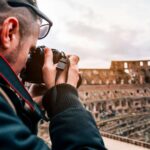
It also gives you something practical for your photos. Instead of shooting randomly, you’ll know where to look for structure, viewpoints, and the geometry that made the arena work.
The Emperor’s Box Finale: Where Power Watched the Show
The tour ends at the location where the emperor’s box was located, the place that housed his family and honored guests. Finishing here is a strong choice because it ties together earlier themes: control, social order, and visibility.
When you stand in (or near) the emperor’s area, the Colosseum feels less like an abandoned ruin and more like a system built for public drama. That shift in perspective is often what people mean when they say the tour was worth it. You’re not only looking at stone. You’re looking at power made physical.
From a planning standpoint, it also helps you finish with an anchor point. After one hour, you’ll have a clear mental souvenir: the Colosseum wasn’t neutral. It was political theater.
Roman Forum and Palatine Hill: Context in Archaeological Form
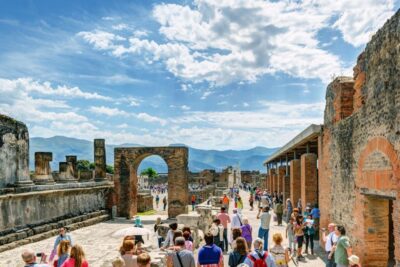
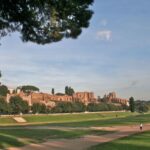
This tour includes access to the Roman Forum and Palatine Hill, and that inclusion is what makes it more than a “Colosseum-only” hit. The Forum was where Romans mixed politics, business, and public life. Palatine Hill was tied to elite status and the story of who mattered.
Here’s the practical wrinkle: the order can vary. Sometimes the tour begins inside the Colosseum and ends up at Palatine Hill and the Roman Forum. Other times it starts at the Forum/Palatine area and finishes inside the Colosseum. Either way, you get both.
Weather can also affect what’s accessible. The tour runs rain or shine, but some parts of the Forum and Palatine Hill might not be reachable during bad weather. That’s normal for these open-air archaeological sites, and it’s worth dressing with that in mind.
If you’re trying to compress Rome’s “why is this important” into a short timeline, this pairing is efficient. You get the arena’s spectacle, then the political neighborhood that made it possible.
Price and Value: Why $65 Can Make Sense Here
At $65 per person for a guided, ticketed experience that includes the Colosseum plus Roman Forum and Palatine Hill access, the main value isn’t just the guide. It’s time and comprehension.
Yes, you can buy entry tickets yourself and see the sites. But you’ll lose two things that matter when your Rome days are limited:
- You’ll spend more time sorting out what you’re looking at
- You’ll likely face longer waits in the busy building entry process, even if you pick a smart time
This tour’s special entry tickets are designed to help with avoiding long queues at the ticket office. That’s the kind of saving that feels real in July heat or in shoulder-season crowds.
Then there are the less obvious inclusions:
- A professional guide telling you what each place means
- Headsets so you can hear the narration clearly
I think of it like this: $65 is a trade. You’re paying to compress the learning curve and reduce time lost to confusion and lines. For a one-hour format that also covers multiple major sites, it can be good value.
Practical Tips That Keep the One-Hour Tour Smooth
I’d treat this tour like a tight city errand with a history payoff. That means you prep so you’re not slowed down mid-tour.
- Bring your passport or ID card. You’ll need it for entry checks.
- Wear comfortable shoes. You’re walking through ancient sites where the paths aren’t designed for easy strolling.
- Don’t bring luggage or large bags. Those aren’t allowed.
- Leave pets, weapons/sharp objects, alcohol/drugs, and sprays/aerosols at home.
- If rain is in the forecast, accept that some Forum/Palatine sections may be limited. Pack accordingly.
Also, plan your day so you’re not sprinting to the next reservation right after the tour. Even if you start on time, crowd flow can be unpredictable, and your start time can shift a bit because of the unavoidable security check.
Who This Tour Fits Best
This experience is best for you if:
- You want the Colosseum explained without spending your hour trying to decode it
- You have limited time and want Forum + Palatine Hill access included
- You like learning through guided storytelling, architectural details, and practical context
It’s not a great fit if:
- You need wheelchair-friendly routes or mobility-friendly access. This tour isn’t suitable for people with mobility impairments or wheelchair users.
- You want a slow, meandering visit. The time is tight by design.
If you’re traveling with kids or multi-age groups, the guide’s style can help keep the session focused. People often appreciate that the tour doesn’t feel like a lecture that goes on forever.
Should You Book This Colosseum Guided Tour With Entry Tickets?
If you’re deciding between self-guided wandering and a guided, ticketed hour, I’d lean toward booking this one when your schedule is tight. The best reason is simple: you’re getting special entry, a guided route that explains what you’re seeing, and Forum/Palatine access in one package.
The only real hesitation is the unavoidable security check queue, which can delay your start on busy days. If that would ruin your day, plan flexibility.
Otherwise, for first-timers and anyone who wants the Colosseum to make sense fast, this tour is a strong match.
FAQ
How long is the Colosseum guided tour?
The tour lasts about 1 hour.
What’s included in the ticket price?
You get entrance to the Colosseum, Roman Forum, and Palatine Hill, plus a professional tour guide and headsets to hear the guide clearly.
Where do I meet the tour group?
Meet at Via del Colosseo 41, above Colosseum Metro Station in front of Caffe Roma. Staff hold a “Rutas Romanas” sign.
What should I bring?
Bring a passport or ID card and wear comfortable shoes.
What languages is the live guide offered in?
The tour is available with live guides in Spanish, French, and English.
Is this tour wheelchair accessible?
No. It’s not suitable for people with mobility impairments or wheelchair users.
Will I still have to wait in line?
You can avoid long queues at the ticket office thanks to special entry tickets, but all visitors must pass through security. During busy days, the security queue can still happen and may affect the actual starting time.
Does the tour run in rain, and is there a cancellation option?
The tour runs rain or shine. Some areas of the Roman Forum and Palatine Hill might not be accessible during bad weather. You can cancel up to 7 days in advance for a full refund.