REVIEW · CITY MUSEUMS & MONUMENTS TICKETS
Rome: Leonardo da Vinci Exhibition Entrance Ticket
Book on GetYourGuide →Operated by Mostra di Leonardo da Vinci · Bookable on GetYourGuide
Leonardo da Vinci’s ideas feel oddly modern here. This Rome exhibition pairs full-scale machines with hands-on stations and 3D holograms, turning sketches into something you can actually understand.
Two things I really like: the interactive setup (you can test and play with many models) and the way the exhibition organizes da Vinci’s thinking by engineering themes. One catch to plan for: the space is hands-on, and there are spots that can be a little tricky to navigate if you’re with very small children.
Key highlights at a glance
- 65+ full-scale machines built from Leonardo’s designs
- 9 holograms that show da Vinci’s paintings and inventions in 3D
- 4 engineering themes: Water, Air, Fire, Earth
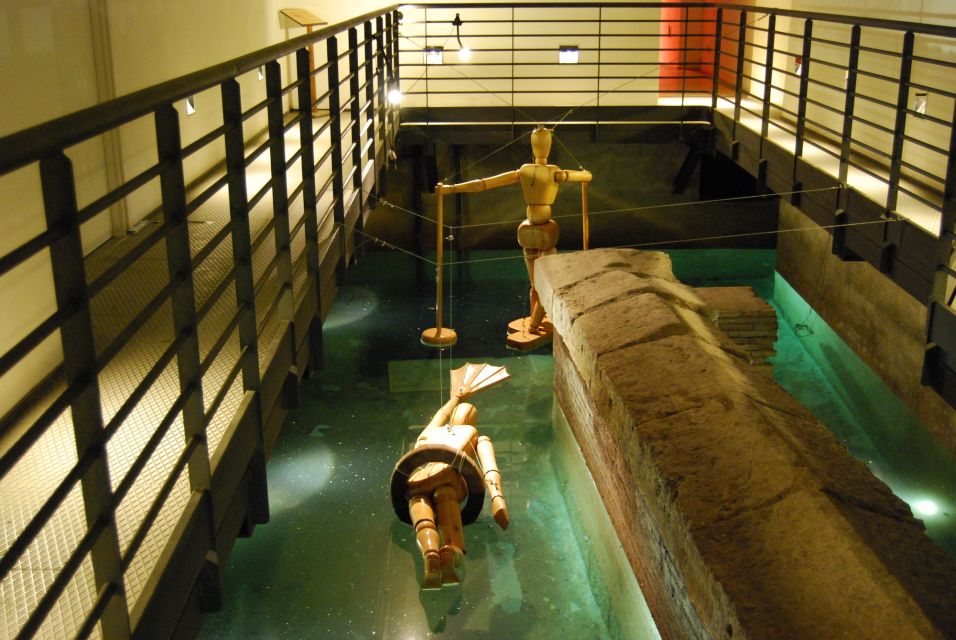
- A 43 BC tomb set into an underground pond area
- 7 interactive installations that use da Vinci’s drawings as the starting point
In This Review
- Leonardo’s Machines in Rome’s Palazzo della Cancelleria
- Tickets, timing, and how long to plan
- The four study zones: Water, Air, Fire, Earth
- Full-scale machines and the 3D hologram effect
- Touchable inventions, bridge-building fun, and interactive stations
- The 43 BC tomb and the underground pond pause
- Audio, the gadget you get, and making sense of the rooms
- Staff help, calm pacing, and the gift shop stop
- Value check: is $10 for Leonardo in Rome fair?
- Who should go (and who might not love it)
- Practical tips before you go
- Should you book Leonardo da Vinci: Palazzo della Cancelleria?
- FAQ
- Where is the Leonardo da Vinci exhibition in Rome located?
- How much does the entrance ticket cost?
- How long should I plan to spend inside?
- Is a guide included with the ticket?
- What will I see inside?
- Can I enter if I arrive near closing?
- Is it wheelchair accessible?
Leonardo’s Machines in Rome’s Palazzo della Cancelleria
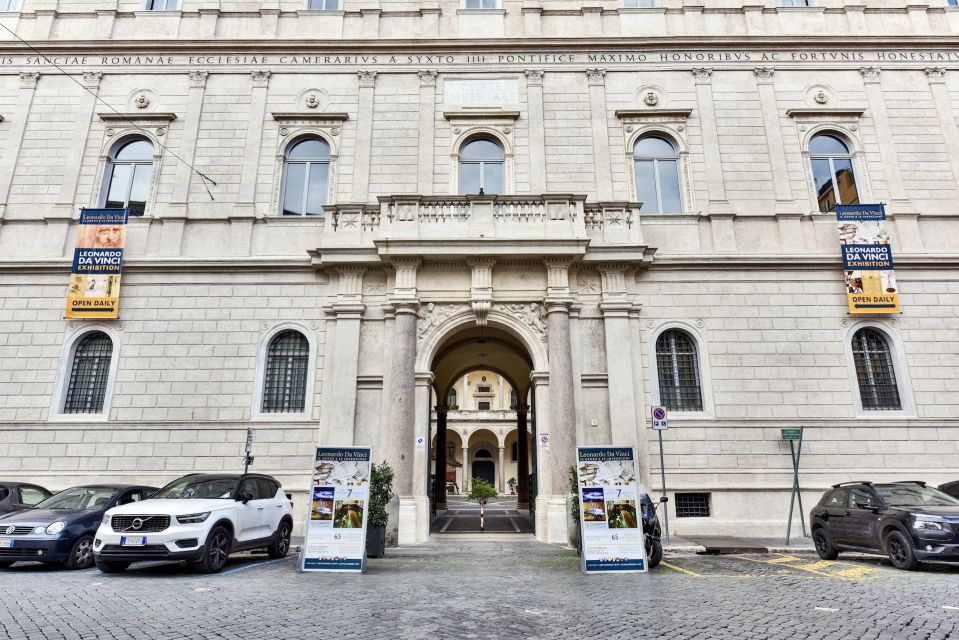
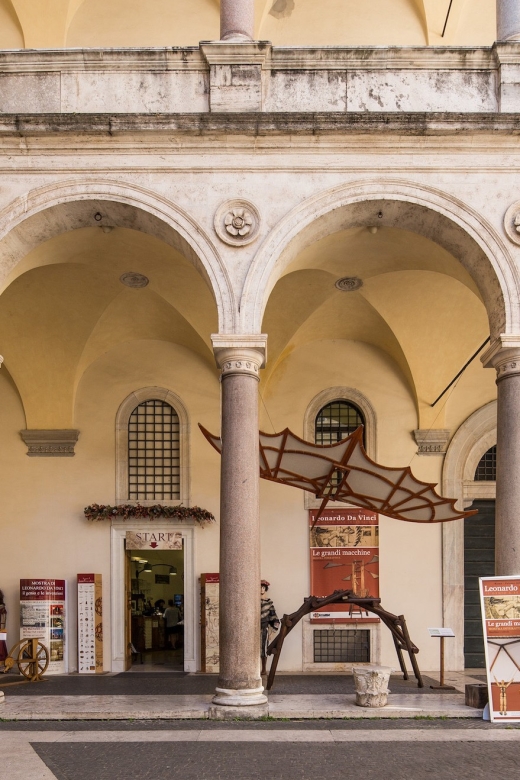
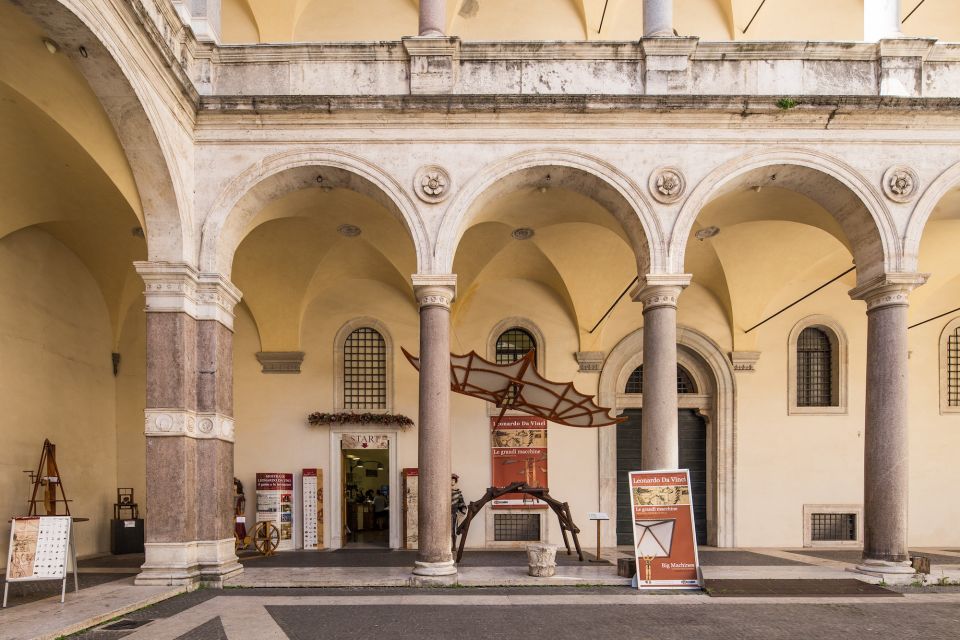
If you’ve ever stared at da Vinci’s notebooks and thought, I get it, but how did he picture it working, this is the answer. The exhibition is inside Rome’s Palazzo della Cancelleria at Piazza della Cancelleria 1, near the Campo de’ Fiori and Piazza Navona area. You’ll walk into a set of themed rooms built to explain his engineering mindset in plain, visual steps.
The big win here is how the exhibit doesn’t treat Leonardo as a distant museum figure. It treats him like an inventor with problems to solve: movement, materials, power, and the rules of nature. And because you see machines built to his designs, his ideas start to feel practical instead of just impressive.
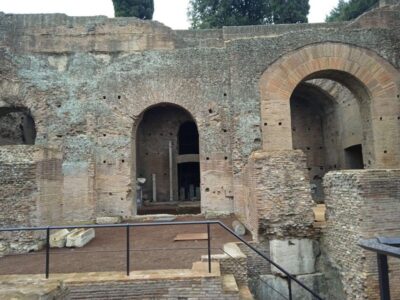
There’s also a bonus layer to the setting. The Palazzo della Cancelleria is owned by the Vatican, and the building itself is a sight, not just a container for the exhibition. (The upper floor has the Sacra Rota, and the complex includes a tomb from 43 BC in an underground pond area.) So you get both engineering and architecture vibes in the same stop.
Tickets, timing, and how long to plan
You’re looking at a 1-day ticket with entry times, and you can enter until 1 hour before closing. The ticket is set up so you can skip the ticket line, which matters in central Rome when you’re trying to stitch together a day of sights without wasting energy.
How long will you spend inside? The exhibition is not a marathon museum. Plan for roughly 45–60 minutes if you’re mainly looking and moving at a steady pace. If you linger to read and interact more, it can stretch toward up to a couple of hours. I’d treat it like a strong “midday brain recharge” rather than a full half-day anchor.
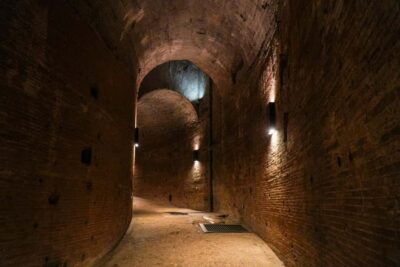
Because the venue is underground in parts, it’s also a smart choice when Rome gets hot. Even if you only have an hour and a half, it’s still a worthwhile use of time for hands-on da Vinci.
You can also read our reviews of more tours and experiences in Rome



The four study zones: Water, Air, Fire, Earth
The exhibition guides you through four sections based on Leonardo’s studies: Water, Air, Fire, and Earth. This isn’t random theming. It mirrors the way he approached understanding: start with the behavior of the natural world, then apply it to mechanisms and designs.
Here’s what that means for you as a visitor:
- You’ll see how a single interest (like water movement) connects to instruments and mechanical ideas.
- You’ll notice how the exhibit tries to translate Leonardo’s thought process into cause-and-effect: what he’s thinking, what the invention would do, and why it matters.
If you care about modern engineering—bridges, transportation concepts, architecture ideas—this structure helps you see Leonardo less as a genius snapshot and more as a system thinker. He’s tackling fundamentals, then converting them into builds.
Full-scale machines and the 3D hologram effect
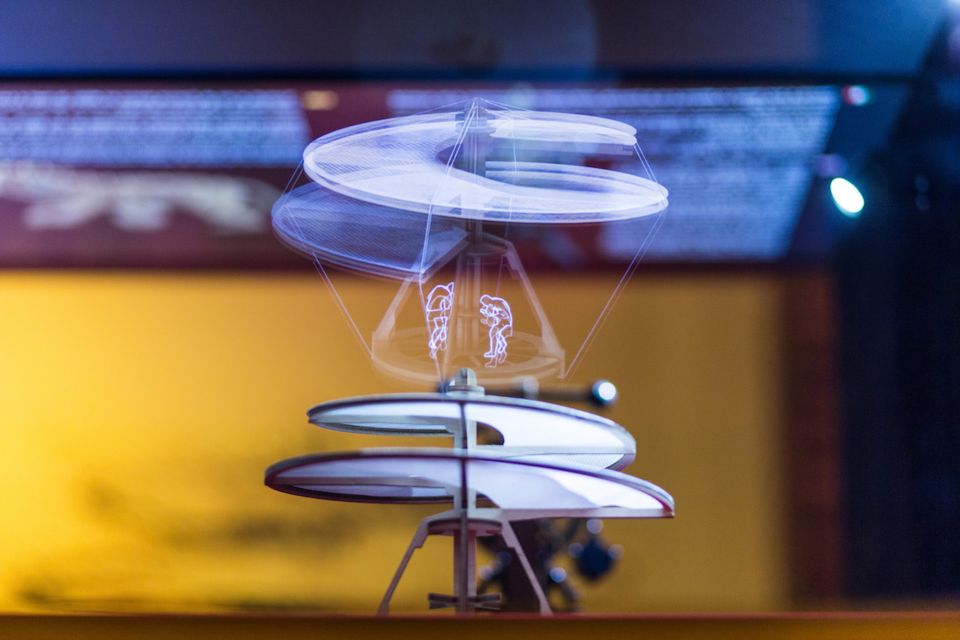
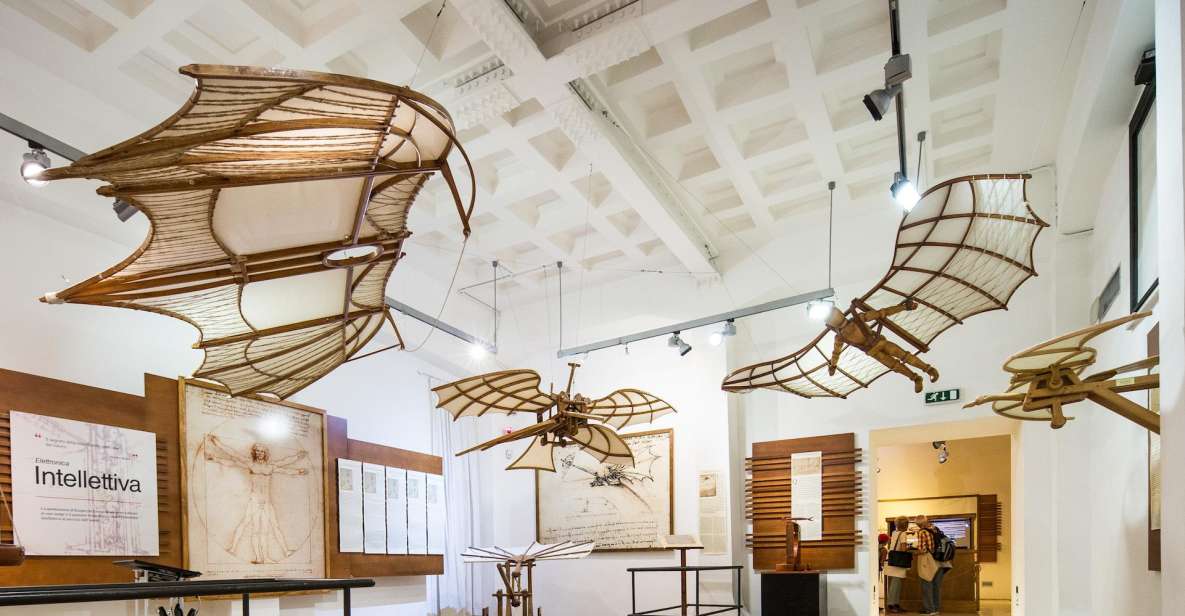
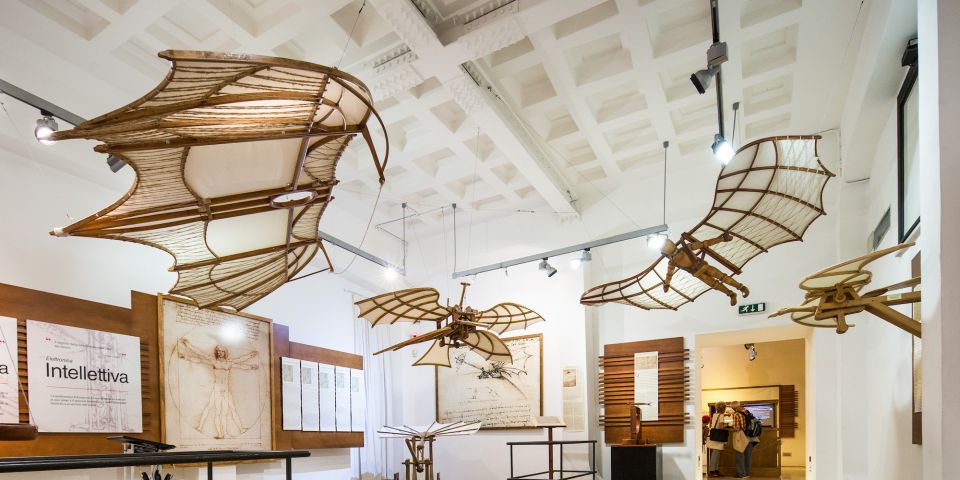
Leonardo’s inventions can be hard to picture if they stay on paper. This exhibition solves that by putting you face-to-face with 65+ full-scale machines made according to his designs. Some are big enough that you can see scale and proportions clearly, which is a huge part of why Leonardo feels like he was thinking in real dimensions, not just diagrams.
Then you add the standout tech: 9 holograms that show da Vinci’s paintings and inventions in 3D. Even if you’re not usually wowed by holograms, the point here is interpretation. The hologram segments help you connect what you’re seeing in the model to what Leonardo was experimenting with—how an idea could look or function when brought into the real world.
One more practical note: the exhibit is designed to be interactive without forcing you to spend time guessing. You’re given enough prompts through the setup (and the gadget/headphone option) to keep you moving room to room without feeling lost.
Touchable inventions, bridge-building fun, and interactive stations
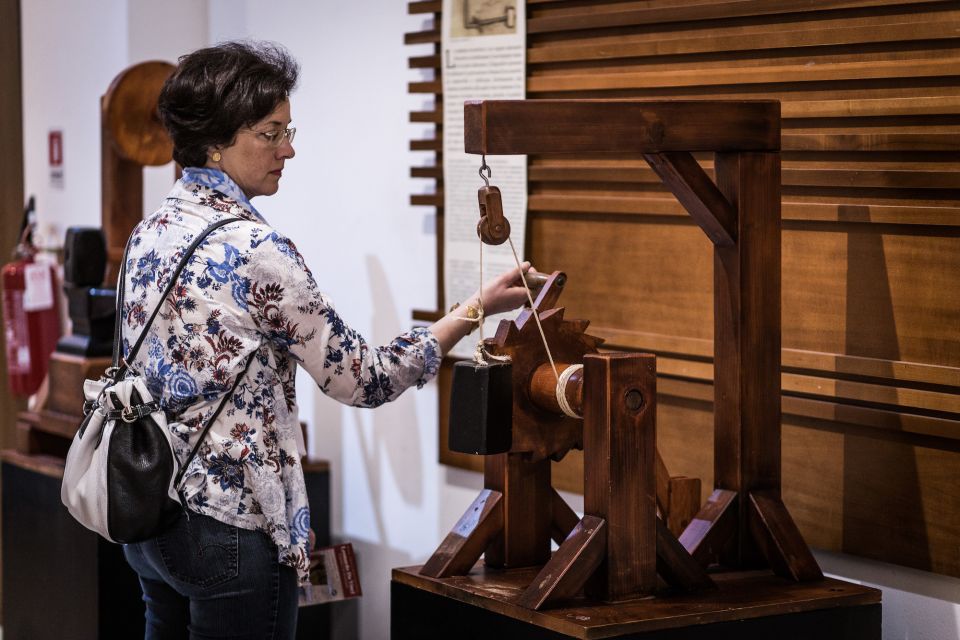
This is a hands-on exhibition, and you’ll feel that difference fast. The layout includes touch and play opportunities for many of the machine reproductions. You’re not just reading plaques; you’re operating mechanisms, testing concepts, and watching how the models behave.
Some of the interactive moments are based directly on Leonardo’s drawings. There are 7 interactive installations tied to his sketches, so you can see the leap from “idea on paper” to “working mechanism.” It makes his drafts feel less like art and more like engineering drafts—the kind where the drawing is a blueprint, not just an image.
There’s also a bridge-building element inspired by da Vinci’s invention concepts. It’s the kind of station that works whether you’re traveling solo or with kids: adults can geek out on design logic, while kids get to feel like engineers instead of museum spectators.
The 43 BC tomb and the underground pond pause
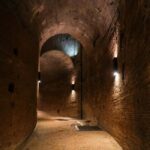
One of the most memorable surprises is the tomb dating back to 43 BC, placed in an underground pond setting. If you expect an exhibition that stays strictly in the realm of Leonardo, this is a reminder that you’re inside a centuries-old building with its own layers of history.
It also functions as a smart break in your visit. You pause, you look around, and you reset your brain between mechanical stations. The underground setting also helps when the weather is hot, so it feels like a built-in time-out from Rome’s street-level hustle.
And since the Palazzo itself is a point of interest owned by the Vatican, this part of the visit adds depth without requiring extra planning.
You can also read our reviews of more museum experiences in Rome





Audio, the gadget you get, and making sense of the rooms
Your ticket includes exhibition entrance and you receive a gadget. Many visitors also strongly recommend using an audio/headphone guide because it adds context and ties the inventions together so you don’t just see objects—you understand what they’re showing.
A small realism check: some audio experiences don’t line up perfectly with the physical room order. That means if you’re listening carefully, you might need to stay flexible: the best strategy is to use the audio as a guide to ideas, not as a strict room-by-room script.
If you’re choosing between spending extra time reading labels versus using audio, I’d bias toward audio when you want clarity. It helps you connect Leonardo’s inventions to the themes you’re seeing in the four sections.
Staff help, calm pacing, and the gift shop stop
The exhibition is set up to feel welcoming. The front desk is described as friendly and helpful, which matters because small exhibits can still make you feel rushed if staff are not clear about flow. Here, the staff seem to focus on keeping your visit smooth.
The pace also tends to be calm rather than chaotic. There’s background music that doesn’t overpower conversation, and the overall staging makes the space feel more orderly than you’d expect from a room full of machines.
And yes, there’s a gift shop worth a detour. People note it as a good one in its own right, with items that feel more “Leonardo-inspired” than standard tourist filler.
Value check: is $10 for Leonardo in Rome fair?
At $10 per person, this is one of those rare Rome experiences that doesn’t ask you to choose between budget and quality. For that price, you get:
- 65+ machines built at full scale
- hologram sections with 3D presentation
- interactive stations where you can touch and operate
- a setting with real architectural and historical interest
The key value isn’t just the number of exhibits. It’s the fact that the exhibition uses your curiosity actively. You’re not only looking—you’re testing concepts and connecting drawings to results. That kind of “learning by doing” often costs more at bigger museums.
If you’re the type who likes engineering, science, aviation concepts, military-era machinery ideas (as shown in the exhibit themes), and architectural thinking, the price feels like a bargain.
Who should go (and who might not love it)
This is a great fit for:
- Families with kids who like to touch and try things
- Adult fans of Leonardo who want a hands-on interpretation
- People into engineering principles and how ideas become workable designs
- Anyone who wants a cooler indoor break that still feels active
It may be less ideal for:
- Very small children who can’t easily manage trip hazards or “watch your step” zones in interactive areas
- Visitors who prefer quiet, fully seated museum experiences over operation and interaction
- Anyone who wants an hours-long deep-dive museum program (this one is more focused and shorter)
If you’re combining it with other nearby sights, it fits well as a lower-stress stop near Campo de’ Fiori and Piazza Navona.
Practical tips before you go
A few small choices make the experience better:
- Start with the four themes (Water, Air, Fire, Earth) so the inventions feel connected, not random.
- Wear shoes you’re comfortable moving around in, since interactive areas can include uneven transitions and touch-designated zones.
- If your visit includes the gadget/headphones, treat it like an idea map. Even if the audio order isn’t perfect, it helps you connect machines to concepts.
- Build in time to wander past the more visually dramatic pieces, then come back to slower stations where reading matters.
Should you book Leonardo da Vinci: Palazzo della Cancelleria?
Book it if you want Leonardo da Vinci with an engineering lens and a hands-on twist. For $10, you’re paying for models you can understand, holograms you can interpret, and an underground, temperature-friendly setting with real Rome atmosphere built into the building.
Skip or think twice if you only want traditional art viewing, or if you’re traveling with very young kids who struggle with navigating interactive spaces. In those cases, you might prefer a different kind of museum stop.
If you’re asking for one practical recommendation: put this on your list if you like the moment when a sketch turns into a machine, and you want that to happen in under two hours.
FAQ
Where is the Leonardo da Vinci exhibition in Rome located?
It’s at Palazzo della Cancelleria, Piazza della Cancelleria 1, near Campo de’ Fiori and Piazza Navona.
How much does the entrance ticket cost?
The price listed is $10 per person.
How long should I plan to spend inside?
You can treat it as a relatively short visit. Many people describe it as about 45–60 minutes, while others spend up to around two hours depending on how much they read and interact.
Is a guide included with the ticket?
No. A guide is not included (you can do it as a self-guided visit with the gadget/headset option).
What will I see inside?
Expect 65+ full-scale machines, 9 holograms in 3D, 7 interactive installations, and a tomb from 43 BC in an underground pond setting, plus Leonardo’s themed studies of Water, Air, Fire, and Earth.
Can I enter if I arrive near closing?
Entrance is available until 1 hour before closing time.
Is it wheelchair accessible?
Yes. The venue is wheelchair accessible.