REVIEW · CITY MUSEUMS & MONUMENTS TICKETS
Rome: Capitoline Museums Experience with Multimedia Video
Book on GetYourGuide →Operated by TOURISTATION · Bookable on GetYourGuide
Rome hits different when you start with the right context. This experience pairs a 25-minute Ancient Rome multimedia video with a reserved-entry visit to the Capitoline Museums, so you walk in knowing what you’re looking at. You’ll also get the Capitoline Wolf moment, plus an audio guide app you can use at your own pace.
I especially like how the video setup helps you connect the dots fast. It walks you from ancient Rome into the Rome you see today, using graphic reconstructions of major monuments of the Roman Empire.
One thing to consider: the Capitoline is on a hill. Expect stairs, and plan comfortable shoes if you want your visit to feel easy rather than punishing.
In This Review
- Key things to know before you go
- Starting with the 25-minute Ancient Rome video (so the museum makes sense)
- Capitoline Museums: Rome’s first public museum, and why you should care
- The Capitoline Wolf and the moments you’ll want to slow down for
- Using the Capitoline Museums audio guide app without wasting time
- Breakfast or aperitif on the terrace: a small add-on with big Rome energy
- Optional guided tour: when you want someone to connect the dots for you
- Add-on option: Centrale Montemartini with reserved entry
- Price and value: what you’re really paying for at $42
- Timing it right for a 3–5 hour museum visit
- Finding the meeting point: Touristation Aracoeli details that actually help
- What’s on during your visit: the Cartier exhibition window
- Should you book this Capitoline Museums multimedia experience?
- FAQ
- How long is the Capitoline Museums multimedia experience?
- Where do I redeem my voucher before visiting?
- Is skip-the-ticket-line included?
- What does the multimedia video cover?
- Is the audio guide included, and what languages are available?
- Can I choose breakfast or aperitif?
- Is Centrale Montemartini included?
Key things to know before you go
- 25-minute multimedia intro that uses reconstructions to explain how today’s Rome grew out of Roman times
- Reserved entry + skip the ticket line, which saves the most frustrating part of museum visits in Rome
- The Capitoline Wolf with Romulus and Remus, one of the most famous symbols tied to Rome’s origin myths
- Capitoline Museums audio guide app, available in multiple languages, plus included Wi‑Fi
- Breakfast or aperitif options with coffee/croissant or a cocktail with snacks and terrace views
- Optional add-on to Centrale Montemartini, an old industrial plant turned museum, also with reserved entry
Starting with the 25-minute Ancient Rome video (so the museum makes sense)
The visit begins with a 25-minute multimedia video on Ancient Rome. It’s designed to show you how the city you’re standing in relates to what was happening thousands of years earlier in the Roman Empire.
What I like about starting here is that it gives you a mental map. Instead of wandering room to room with only labels, you get replays of important places and monuments that anchor what comes next. The video is produced by a company with credits for UNESCO, BBC, and National Geographic, so the production value is there, but the goal stays practical: orientation.
If you’ve ever stared at ancient ruins and thought, I’m missing the story, this part helps solve that problem early. Even if you only catch a few key “this connects to that” ideas, you’ll feel smarter as you move through the galleries.
You can also read our reviews of more museum experiences in Rome


Capitoline Museums: Rome’s first public museum, and why you should care
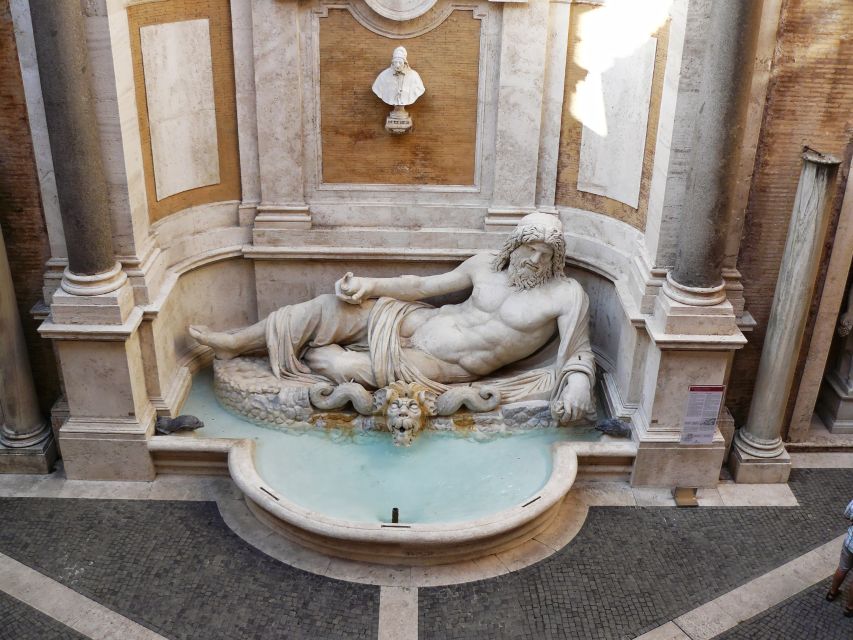
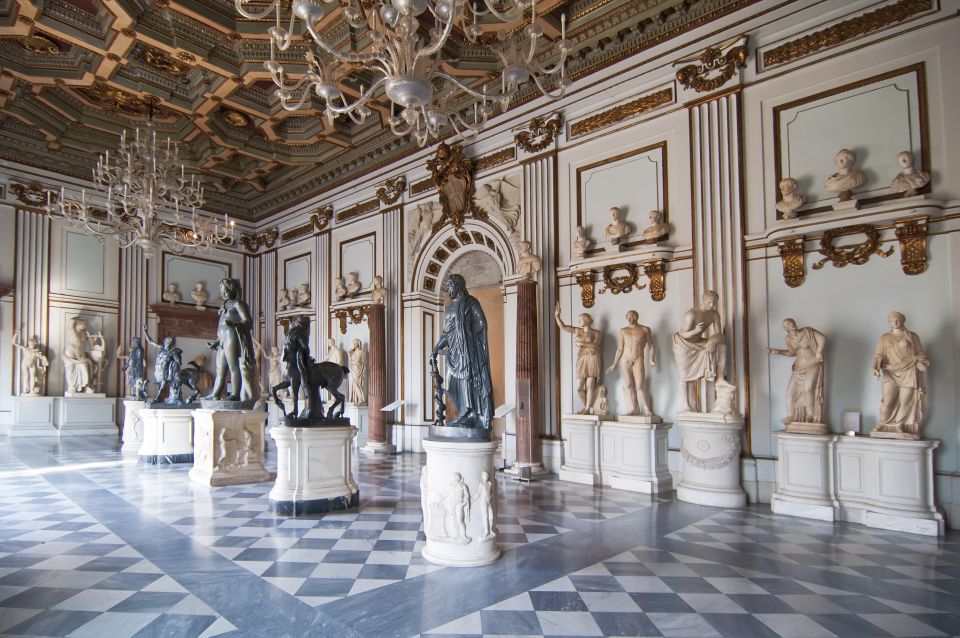
The Capitoline Museums are often described as a “first” for a reason: they’re considered the world’s first public museum. They opened to the public in 1734, which shaped how Rome presents art and artifacts as shared civic heritage, not private collections behind closed doors.
This matters because you’re not just looking at objects. You’re stepping into a museum that has been teaching Rome’s identity for centuries. The building and the way the collections are arranged can feel like an argument for looking closely, not rushing through.
You’ll find sculptures and artifacts that tell the story of the city over time. One of the best parts of a museum like this is that Rome’s history isn’t a single theme—it’s layers. So even if you start with the origin myths (yes, the Wolf), you can drift into emperors, everyday life, and the city’s evolution without needing a strict route.
The Capitoline Wolf and the moments you’ll want to slow down for
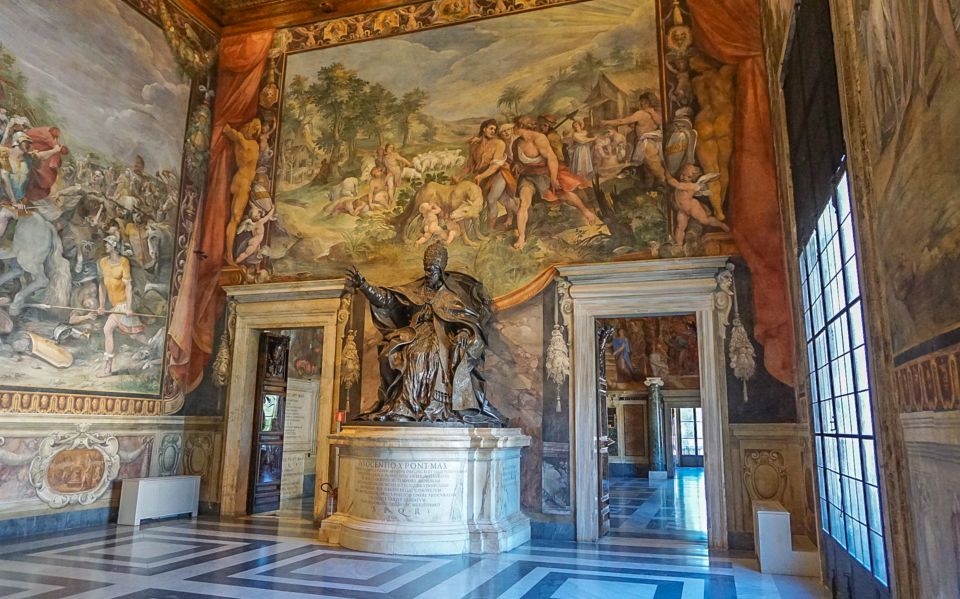
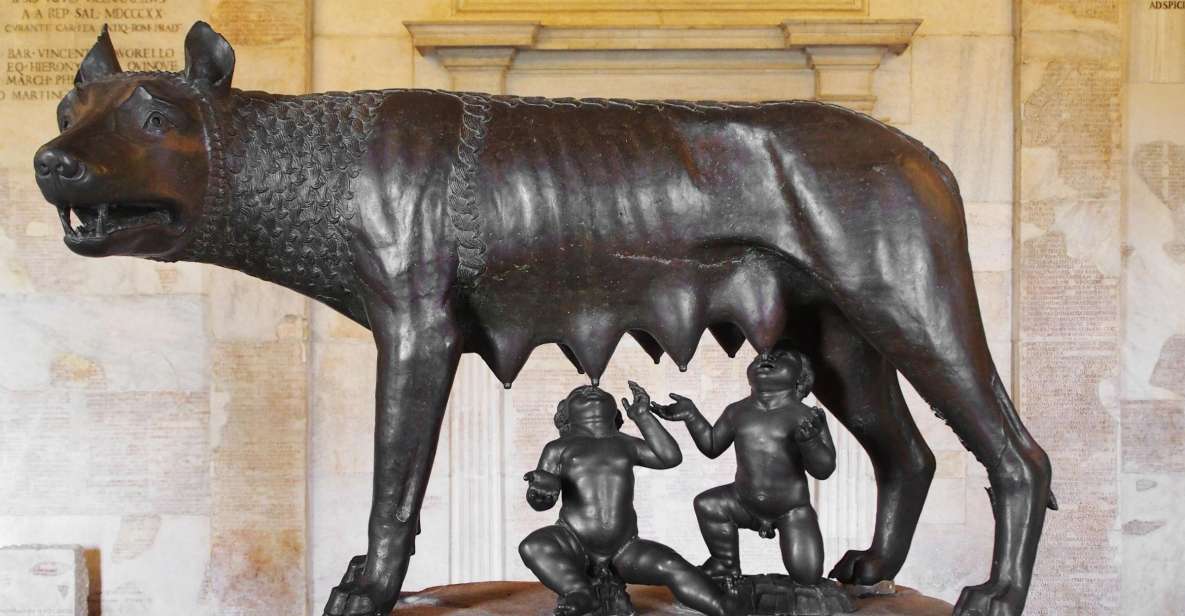
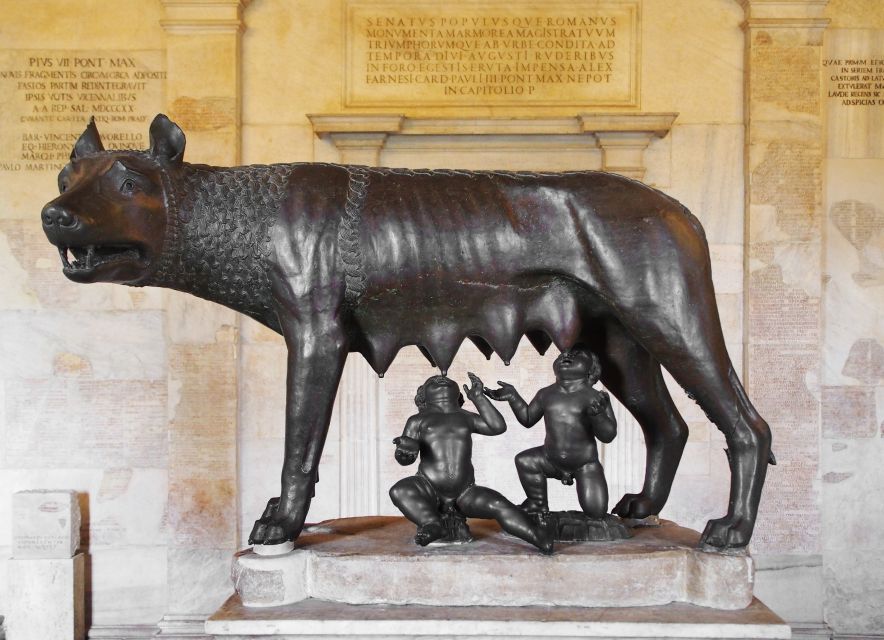
No Capitoline visit feels complete without the Capitoline Wolf sculpture featuring Romulus and Remus. Even if you already know the myth, seeing the sculpture in context is a different thing than reading about it.
This is one of those “stand and look” stops. I’d treat it like a checkpoint: pause, take in the scale, and let it reconnect the whole museum theme back to Rome’s founding story. It’s also a great place to orient your attention before you move deeper into artifacts and smaller details.
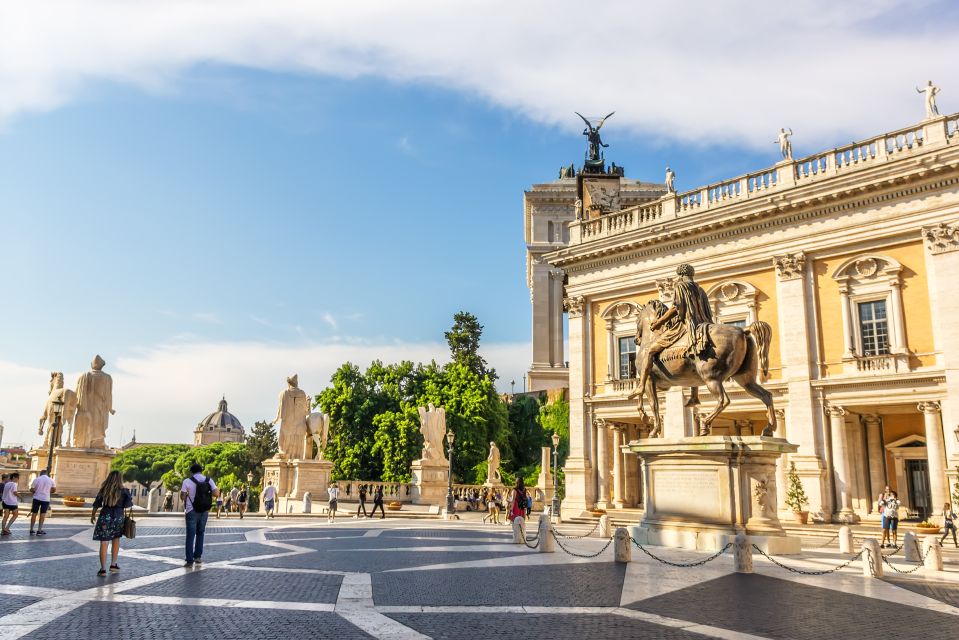
And don’t miss the view angle. There’s a strong payoff for modern eyes: you can enjoy forum and Palatine Hill views from the Tabularium. That matters because it links the museum experience back to the outdoor archaeology you came to Rome for.
In other words, this museum isn’t only indoors. It gives you a bridge from artifact to landscape, even if you only glance out between galleries.
Using the Capitoline Museums audio guide app without wasting time
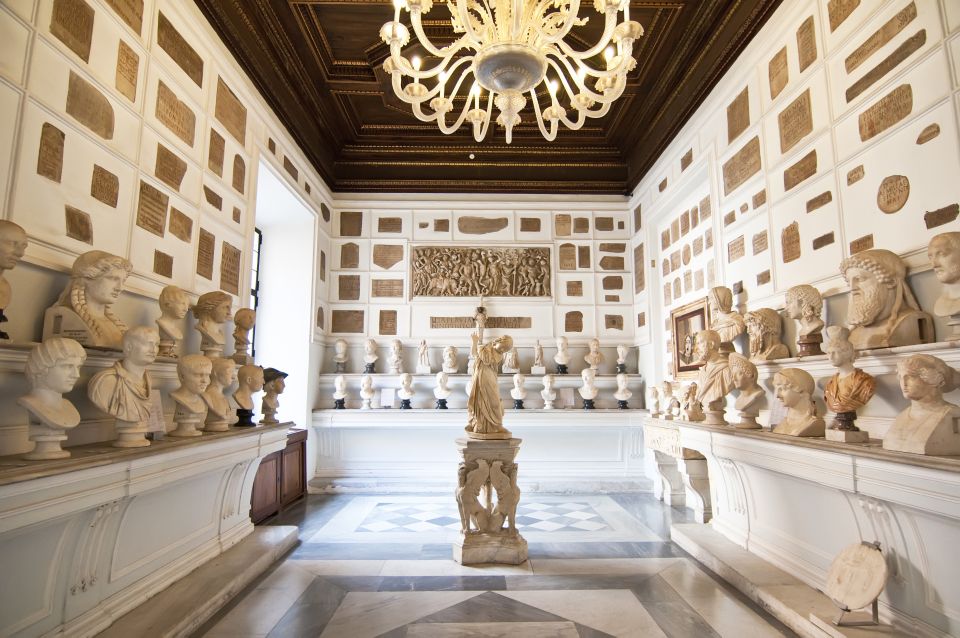
You’re given access to the Capitoline Museums Audio guide app. It’s available in English, French, Spanish, and Italian, and it’s meant to make self-paced wandering feel guided rather than random.
Because the experience includes Wi‑Fi, you’re not scrambling for connectivity before you start. You can also use the app as a tool, not a chain: listen when a room grabs you, pause when you want to look without sound, and skip sections that feel repetitive.
My advice: don’t try to listen to everything in one go. Use it strategically. Pick a few key galleries (especially ones tied to Roman origins and major monuments introduced by the video) and let the app give you the “why it matters” behind what you’re seeing.
That approach keeps the audio guide from turning into background noise. It also makes your time feel more intentional within the 3–5 hour window.
Breakfast or aperitif on the terrace: a small add-on with big Rome energy
This experience can include an option that’s easy to underestimate: a breakfast or an aperitif with views.
If you choose breakfast, you’ll get an Italian breakfast with coffee or cappuccino and a croissant. If you choose aperitif, you’ll get a cocktail and snacks at the bar. Either way, the experience leans into Rome’s habit of pairing food with a scenic pause.
I like this perk because it turns “museum time” into something you’ll actually remember. Museums can blur together when you’re tired. A terrace break helps reset your energy so your next rooms feel fresh.
Also, you don’t need to be a food person to appreciate it. It’s a practical reset button.

Optional guided tour: when you want someone to connect the dots for you

Your ticket can be upgraded to include a Capitoline Museums guided tour (if that option is selected). When you have a local guide and an expert in the history of the Roman Empire, the museum becomes more than a collection of objects.
Instead of you trying to guess what’s linked to what, you get historical facts tied to the specific items you’re seeing. That’s especially helpful if you’re the type who likes context—why an artifact exists, what it symbolized, and how people in Roman times would have read it.
Guided tours also help you avoid getting stuck in one room too long. The best guides tend to keep a flow, even when they go deep on a few standout pieces.
Add-on option: Centrale Montemartini with reserved entry
You can combine the Capitoline Museums experience with Centrale Montemartini, using a reserved entrance ticket (if selected). Centrale Montemartini is an old industrial plant converted into a museum, which is a very different setting from the Capitoline Museums.
That’s the main reason this add-on can be worth it. You get contrast. One museum gives you classic Rome museum atmosphere and origins myths; the other gives you Roman art placed in an industrial backdrop.
If you’re curious about how museums change the way you interpret objects, this pairing is smart. It also helps fill out a half-day when you want more than a single museum visit.
Price and value: what you’re really paying for at $42
At $42 per person, the price can look like just another museum ticket—until you break down what’s included.
You’re not paying only for entry. You’re paying for:
- Reserved entry time and a skip-the-ticket-line advantage
- The 25-minute multimedia video intro
- The audio guide app access
- Wi‑Fi
- Optional inclusions like breakfast (coffee/cappuccino + croissant) or aperitif (cocktail + snacks)
- Optional upgrades like a guided tour and/or Centrale Montemartini reserved entry
That’s real value because the museum portion is often the time sink in Rome. Skipping the ticket line is one of those invisible upgrades that makes the day feel smoother.
And the video is a low-effort, high-impact start. It turns the rest of your visit into something more “understandable,” which is what most people want when spending time and money in a major museum.
Timing it right for a 3–5 hour museum visit

This experience runs 3–5 hours. That’s a good length for people who want more than a quick hit but don’t want the day swallowed whole.
If you like to move at an easy pace, you can still see a lot, especially when you’re starting with a video that gives you a structure. If you prefer ultra-slow museum time, you may find it flies by. The fix is simple: plan a focused route and use the audio guide to choose what to prioritize.
Also, consider the physical reality: there are stairs. One common frustration on the Capitoline is the sheer climb. Wear shoes you trust, and give yourself time to recover between sections if you need it.
Finding the meeting point: Touristation Aracoeli details that actually help
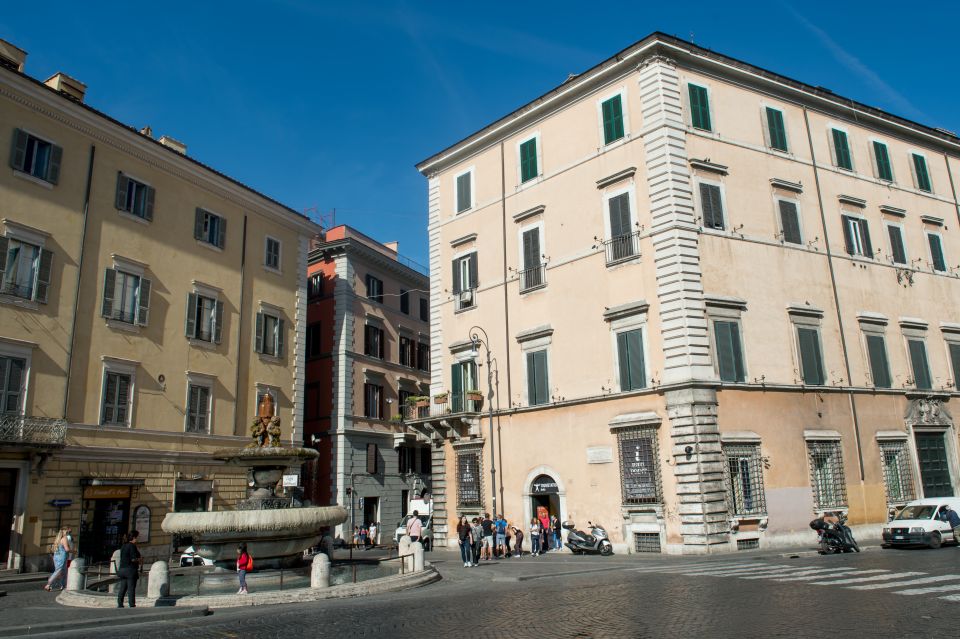
You’ll exchange your voucher at Touristation Aracoeli. The address is Piazza Ara Coeli 16, and you should look for a fountain with orange flags in front of the office entrance.
This is worth emphasizing because it’s the one moment where people lose time. Once you redeem and get into the museum flow, everything tends to run smoother.
If you’re arriving early, take a minute to confirm you’re in the right spot before you lose your focus. That small habit saves a lot of stress on busy Rome days.
What’s on during your visit: the Cartier exhibition window
Depending on your date, you may also get access to Cartier e il Mito ai Musei Capitolini, running from November 19, 2025 to March 15, 2026.
If you’re interested in fashion, design, or the way modern creativity connects to ancient themes, this can be a nice bonus layer. Even if you’re mostly there for ancient Rome, it’s a good reason to check your calendar before you book.
Should you book this Capitoline Museums multimedia experience?
Book it if you want a smart “first steps into Rome” plan. The combination of a short Ancient Rome video, skip-the-line reserved entry, and an audio guide app makes the experience feel organized without forcing you into a rigid schedule.
Skip it (or consider a different style) if you already know you want a very slow, no-planning museum day. Also, if stairs are a deal-breaker for you, plan accordingly for the Capitoline hill setting.
For most first-timers and for anyone who wants history explained in plain terms while still having freedom to roam, this hits the sweet spot.
FAQ
How long is the Capitoline Museums multimedia experience?
It lasts between 3 and 5 hours.
Where do I redeem my voucher before visiting?
You redeem your voucher at Touristation Aracoeli, Piazza Ara Coeli 16.
Is skip-the-ticket-line included?
Yes. Entry includes reserved entry time and skip-the-ticket-line service.
What does the multimedia video cover?
It’s a 25-minute video about Ancient Rome, showing how Rome today relates to thousands of years ago during the Roman Empire, with reconstructions of important monuments.
Is the audio guide included, and what languages are available?
Yes. The Capitoline Museums Audio guide app is included, and you can use it in English, French, Spanish, and Italian.
Can I choose breakfast or aperitif?
Yes, you can select either an Italian breakfast (coffee or cappuccino and a croissant) or a happy hour aperitif (a cocktail and snacks).
Is Centrale Montemartini included?
Centrale Montemartini is included only if you select the option that adds it. It comes with a reserved entrance ticket.