REVIEW · COLOSSEUM, FORUM & PALATINE TOURS
Exclusive tour of Ancient Rome and Domus Tiberiana
Book on GetYourGuide →Operated by ontario srls · Bookable on GetYourGuide
Rome’s imperial story is written in stone, and Palatine Hill is where it starts. This 2 to 2.5 hour tour focuses on Palatine Hill and the Roman Forum, with priority access that helps you see key viewpoints of the Forum and Circus Maximus without wasting time.
What I like most is the guide-led archaeology angle. You’re walking through imperial spaces tied to where emperors lived, not just looking at a scenic ruin. A second big win is the Domus Tiberiana portion, newly restored after being closed for nearly 50 years due to structural issues.
One consideration: this isn’t a walk you can slow down easily. It’s not suitable for wheelchair users, and there’s airport-style security plus restrictions like no large bags.
In This Review
- Key things to know before you go
- Roman Forum and Palatine Hill: the real roots of imperial Rome
- Your guide matters: what you’re really paying for
- Getting into the site: priority entry meets airport-style security
- Palatine Hill imperial access: where the emperors lived
- Domus Tiberiana: the restored imperial complex you can finally see
- Circus Maximus viewpoints: understanding Roman spectacle
- Price and value: is $99.92 worth it?
- Who this tour suits best
- Should you book this tour?
- FAQ
- How long is the tour?
- Are tickets included for the Roman Forum and Palatine Hill?
- Do I need a passport or ID card?
- What languages is the tour offered in?
- Is this tour suitable for wheelchair users?
- What should I bring and what is not allowed?
Key things to know before you go
- Expert archaeologist-style guiding with clear context for what you’re seeing
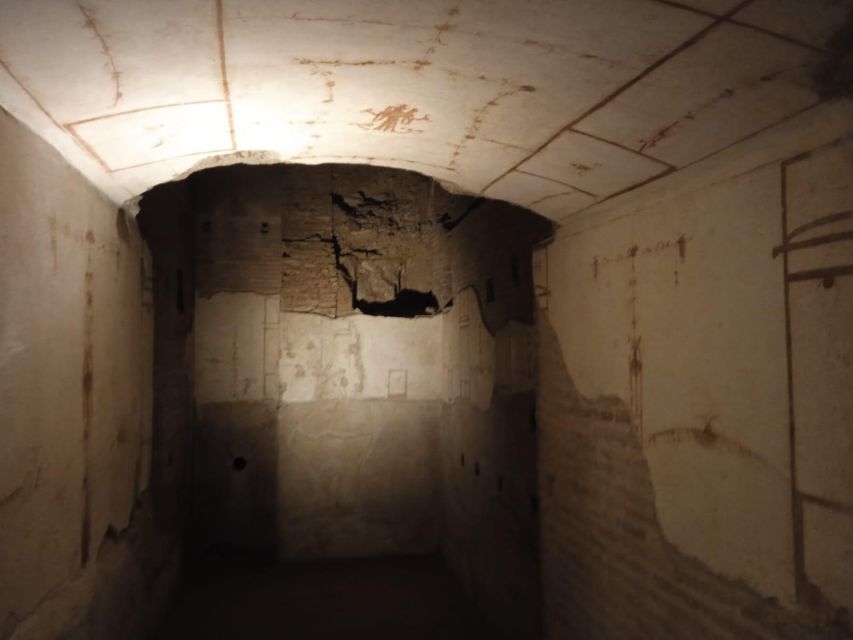
- Domus Tiberiana is back after decades of closure and new restoration work
- Restricted imperial palace areas on Palatine Hill are part of the experience
- Priority access for Forum and Circus Maximus viewpoints so you spend more time looking than waiting
- A tight 2–2.5 hour format that fits a packed Rome day
- Skip the ticket line to keep your schedule from slipping
Roman Forum and Palatine Hill: the real roots of imperial Rome
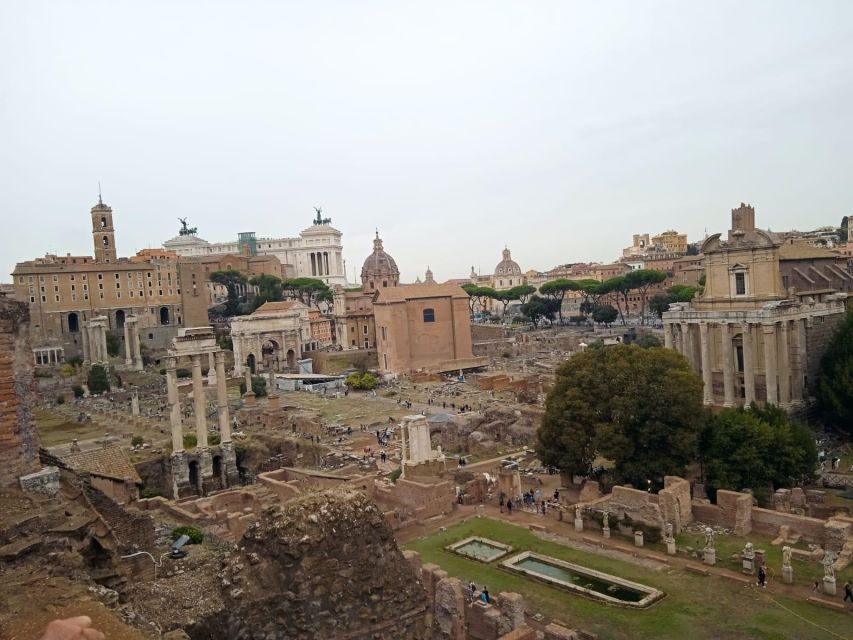
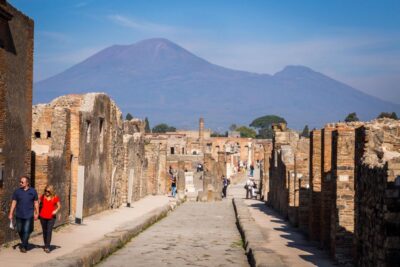
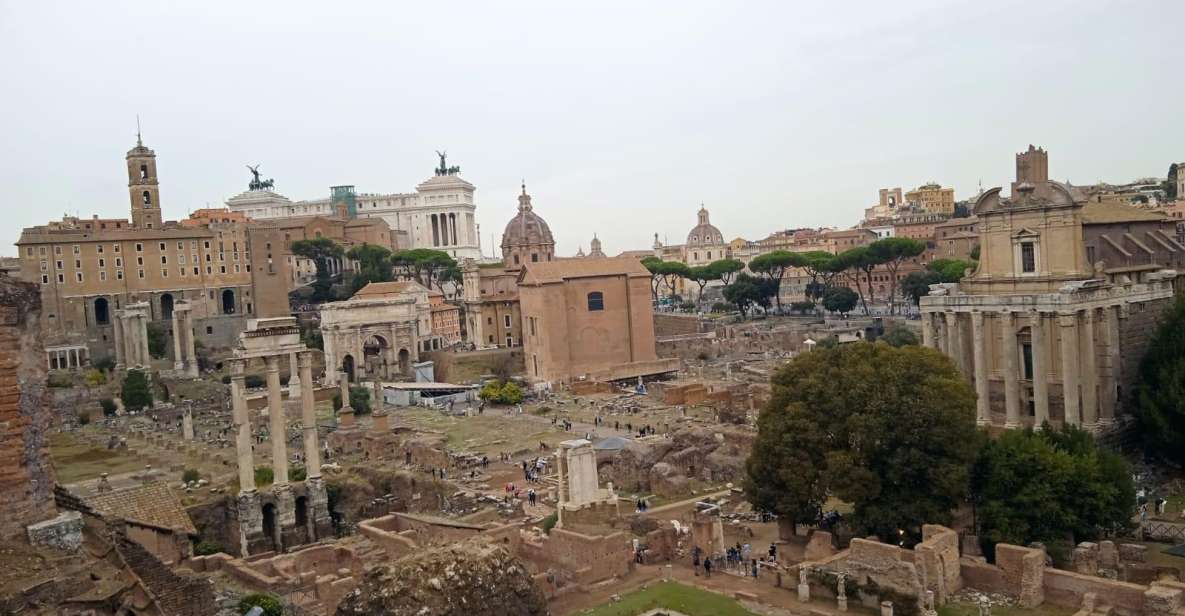
If you’ve ever wondered why Rome feels like two cities at once—chaos on the street, order in the ruins—this tour is the bridge. Palatine Hill and the Roman Forum were the heart of Roman political and social life, and they’re where you can connect big themes like power, spectacle, and everyday decisions.
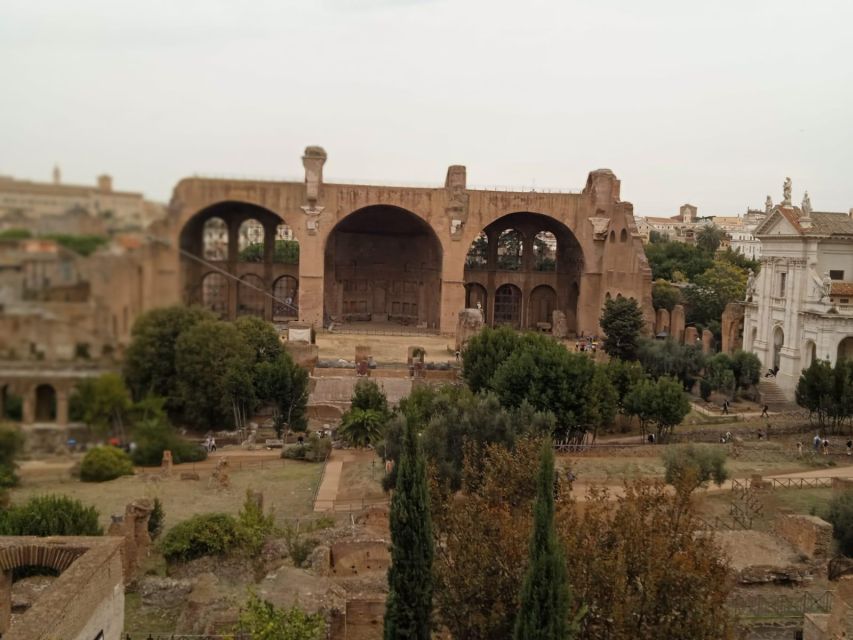
The Roman Forum is where public life ran on rules, speeches, courts, commerce, and ceremonies. Palatine Hill is where the story shifts. You move from public-facing political drama to the private, high-status world of emperors and elites—literally the elevated zone overlooking the rest of the city.
This is also a great way to get your bearings fast. Even if you’ve read about Roman history, it often stays abstract. Here, the buildings and their layout make the timeline feel physical. You start to notice how visibility mattered—who could watch whom, which spaces were designed for authority, and which parts were meant for crowds.
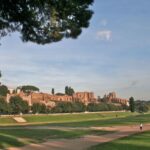
And yes, you get big views. The tour includes outstanding perspective over Circus Maximus, the famous arena area tied to Roman entertainment and mass events. It’s the kind of view that makes the city’s scale click in your head.
You can also read our reviews of more tours and experiences in Rome.
Your guide matters: what you’re really paying for
The guide is the heart of this experience. It’s led by a professional, local, expert guide, and the style is practical: you’re not just handed facts; you’re taught how to look at ruins like a map.
The best part is the way context gets attached to each area. For example, Dino’s approach stood out for taking extra time to explain which portions have been explored more recently and giving clear background for each building. That’s exactly what you want at the Forum. Many sites look similar if you’re rushing. The guide slows your thinking down—just enough—to make the space readable.
Another standout, Donnatella, was praised for balancing deep knowledge with responsiveness to questions and concerns, keeping the pace comfortable while still moving through the key structures. That matters because the Forum can be emotionally flat if you only see stone. A strong guide makes it feel like a working place—full of decisions and tensions.
This is why the tour is worth considering even if you’ve visited major ruins before. You’re paying for interpretation and on-site expertise, not just entry stamps.
Getting into the site: priority entry meets airport-style security
Rome does security the serious way. You’ll need to pass through airport-style screening before entering, and you should bring a passport or ID card.
Also plan around restrictions: no large bags or luggage. If you’re traveling light, you’re fine. If you’re carrying a day pack plus extra layers plus shopping bags, you may feel boxed in at the screening point. Wear comfortable shoes, keep essentials easy to reach, and aim for a smooth arrival.
The good news is the tour includes skip-the-ticket-line entry. That can be a lifesaver in peak season when lines multiply quickly and your day calendar gets fragile. Priority access plus a timed guide visit means you lose less time to friction and more time to actually seeing.
Palatine Hill imperial access: where the emperors lived
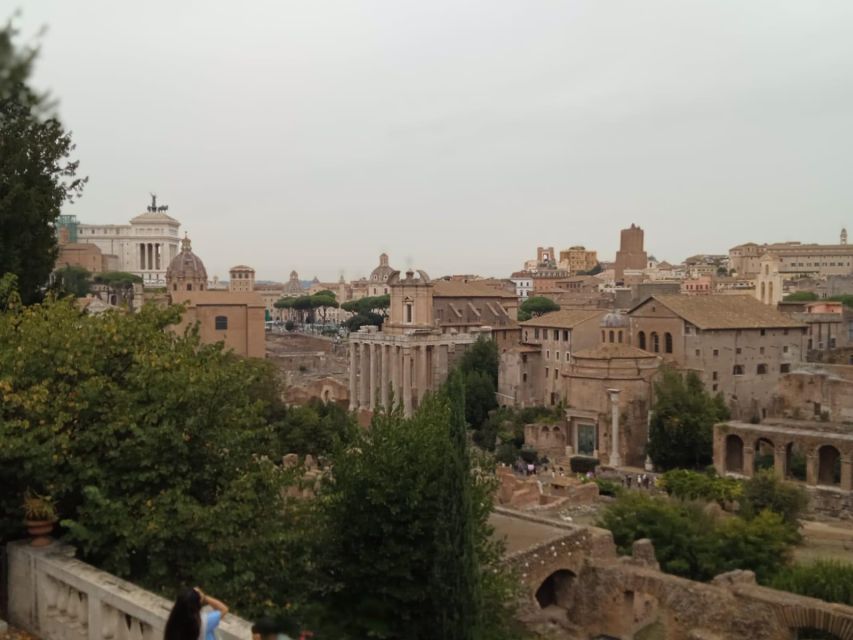
Palatine Hill is one of Rome’s seven hills, and it’s also the hill where status becomes architecture. The experience includes exploring Palatine Hill and the Roman Forum with a focus on areas connected to the imperial palaces.
What makes Palatine special on this tour is the chance to visit parts that feel closer to the center of power, including restricted areas of the imperial palaces on Palatine Hill. Even if you’ve seen photos of arches and courtyards, the physical layout can be eye-opening. You start to understand why emperors wanted both visibility and privacy: authority in public, control in semi-private spaces.
A practical tip: move with your guide’s pacing. Some stops are designed for quick reference, while others are meant for slow looking. If you try to go faster than the commentary, you’ll miss why certain walls, levels, or alignments matter.
You’ll likely notice how the hill’s elevation changes the feel of space. From here, the city opens up. That matters because Roman power wasn’t only political; it was also spatial. Whoever occupied these spaces had the advantage of commanding attention.
Domus Tiberiana: the restored imperial complex you can finally see
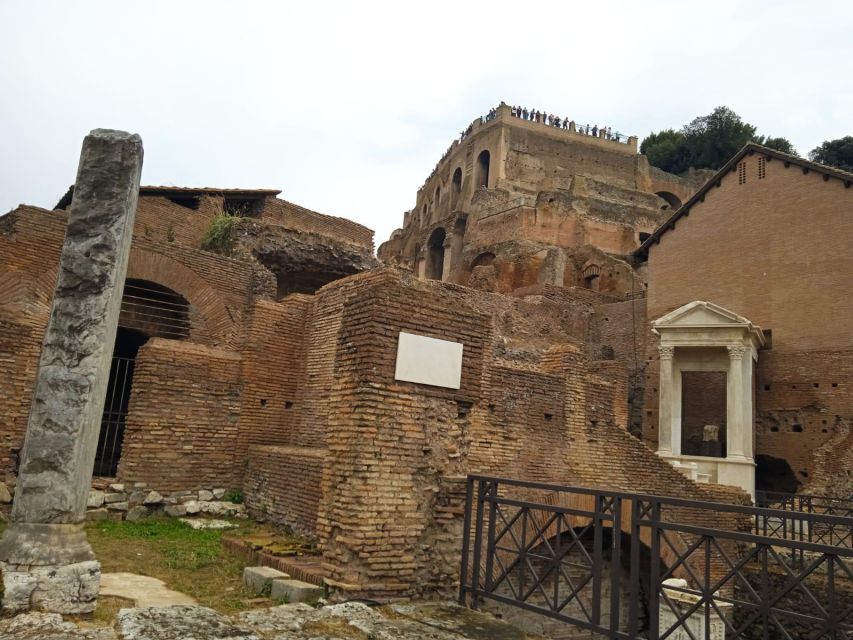
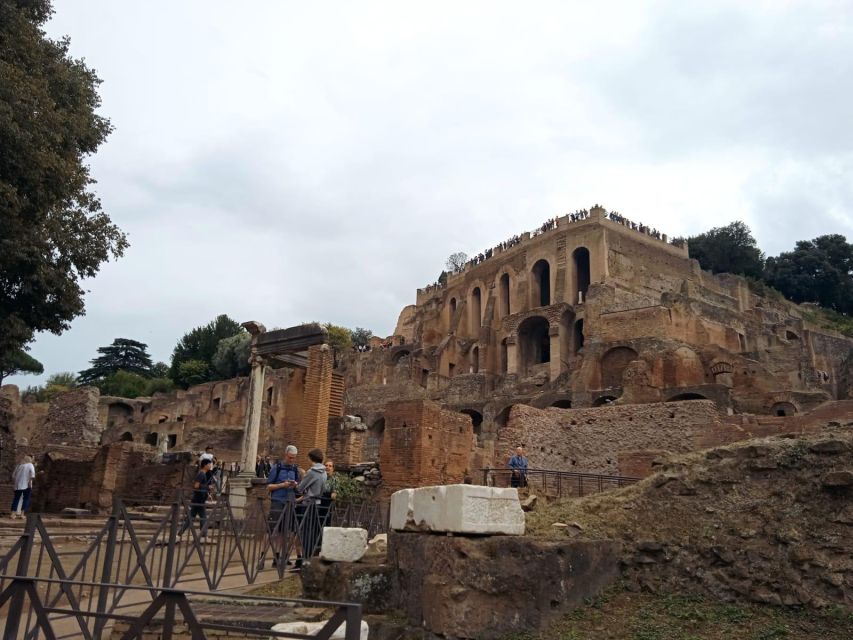
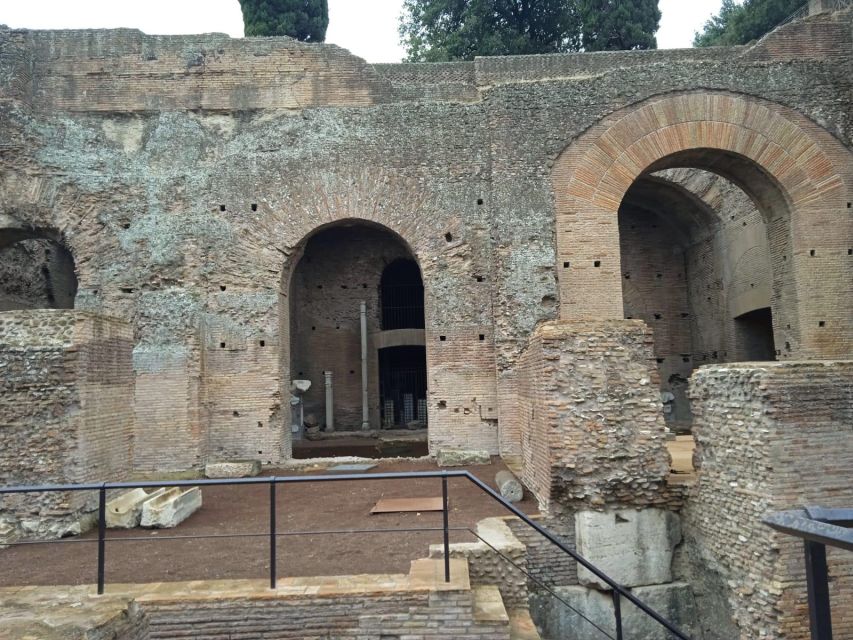
The Domus Tiberiana is the standout element. It’s a major imperial residence spanning about 4 hectares, and it overlooks the Roman Forum.
Here’s the key story: this site was closed to the public for nearly 50 years because of structural issues. New restorations have brought it back, and this tour is designed to show it as part of the experience—not just as a quick exterior glance.
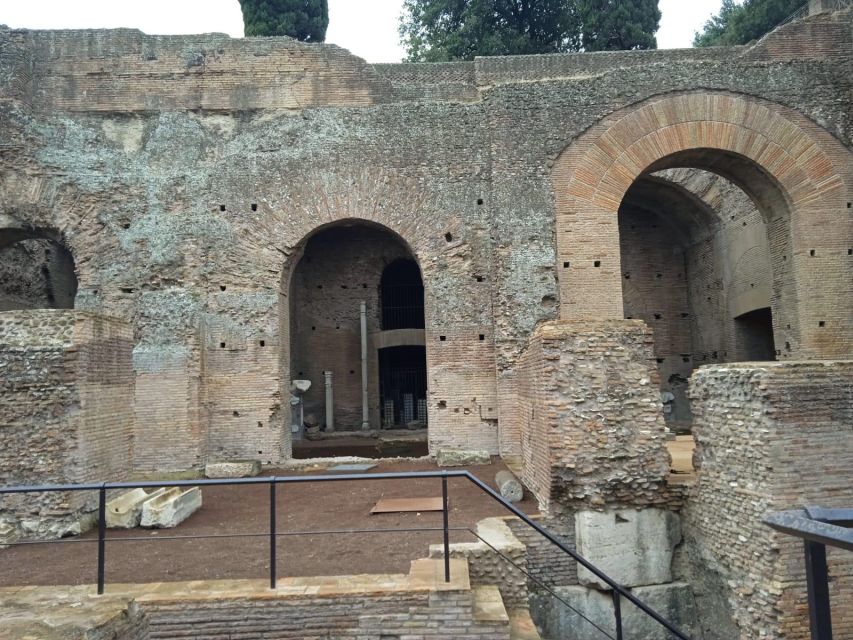
What you’re looking at includes multi-level arches and a sense of grandeur that feels different from the typical Forum fragments. This is a place built for a specific kind of authority: layered, monumental, and built to endure.
Also, the Domus Tiberiana adds depth to the rest of the tour. Once you see a residence of this scale beside the Forum, the political scene makes more sense. You can imagine how decisions moved between public halls and private corridors, and how the architecture supported that flow.
From a value standpoint, this is where your ticket stops being just “entry to ruins” and starts being a guided access to a recently restored space. If Domus Tiberiana has been on your reading list—or if you’ve been frustrated by closures on past trips—this is the reason to plan your Rome day around this tour.

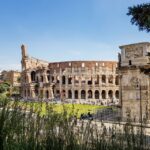
Circus Maximus viewpoints: understanding Roman spectacle
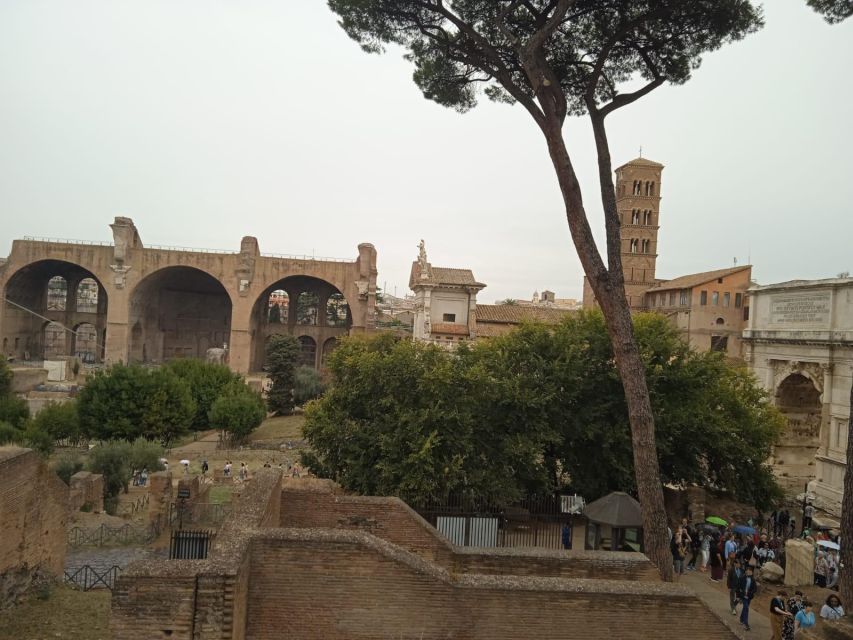
One of the tour’s promises is amazing views of Circus Maximus, and that matters more than it sounds. Circus Maximus wasn’t a small arena you can ignore. It was built for large-scale entertainment, and it played into social life in a major way.
Roman spectacle was never only about fun. It was also about status, politics, and public bonding. When you can see the arena’s scale from the right viewpoints, your imagination gets leverage. The Forum stops being just a historic stage; it becomes part of a larger system where crowds gathered, messages traveled, and leaders were judged indirectly.
The priority access helps here too. If you arrive at the Forum at the wrong time, you spend your visit threaded into crowds and rushed camera angles. This tour is set up to keep you moving through the right zones so you spend time looking at the big picture.
Price and value: is $99.92 worth it?
At $99.92 per person, this isn’t a bargain-basement budget tour. The value comes from three combined things:
- Expert guiding focused on archaeology and building context
- Priority entry / skip-the-ticket-line to reduce time lost during the busiest hours
- Domus Tiberiana access tied to a major restoration story, plus Palatine Hill imperial palace areas
If all you wanted was to wander the Forum on your own, you could. But if you want the site to make sense—who lived where, what you’re actually looking at, why certain parts matter—this format is the more efficient choice.
Think of it this way: the price buys you time and clarity. With ruins, that’s often the real luxury. You’re not only seeing; you’re understanding while you’re standing there.
Who this tour suits best
This tour fits best if you:
- like your Roman history grounded in physical spaces, not just dates
- want a guided approach to the Forum and Palatine rather than self-navigation
- care about the Domus Tiberiana restoration and want to see it as part of a guided route
- enjoy short-to-medium tours (2 to 2.5 hours) that still cover meaningful areas
It may not be ideal if you:
- need wheelchair access
- are recovering from recent surgery (the walking and site surfaces can be tough)
- travel with large luggage or hate security lines (airport-style screening is part of the deal)
Should you book this tour?
I’d book it if Domus Tiberiana and the imperial palaces are on your Rome checklist, and if you want the Forum explained while you’re in the middle of it. The combination of priority entry, expert guide context, and the restored Domus Tiberiana adds real value beyond a generic ruins visit.
If you’re the type who prefers a totally self-guided roam, you might feel constrained by the structured route. But if you want to leave with the Forum and Palatine feeling like one connected story, this is a strong pick.
FAQ
How long is the tour?
It runs about 2 to 2.5 hours, depending on the starting time available.
Are tickets included for the Roman Forum and Palatine Hill?
Yes. Entry/admission to the Roman Forum and entry/admission to Palatine Hill are included.
Do I need a passport or ID card?
Yes. You’ll need to bring a passport or ID card, and you must pass through airport-style security.
What languages is the tour offered in?
The live guide operates in Italian and English.
Is this tour suitable for wheelchair users?
No. It is not suitable for wheelchair users.
What should I bring and what is not allowed?
Bring your passport or ID card. Large bags or luggage are not allowed, and drones are not allowed. Alcohol and drugs are not allowed, and explosive substances are also not allowed.