REVIEW · BORGHESE GALLERY TOURS
Rome: Galleria Borghese Museum Entry Ticket and Guided Tour
Book on GetYourGuide →Operated by TLight · Bookable on GetYourGuide
Big names, tight time, and real wow art. I love the way Caravaggio and Bernini share the spotlight in the same collection, and I love how the guide steers you room-to-room so you catch the best works fast. The main drawback to plan around is timing: the experience is sold as about 2 hours, and if anything runs short it can feel like you missed key pieces.
This is one of those Rome museum tickets where the details matter. You get an entry ticket plus a live guide (French, Italian, English) and headsets, so you’re not stuck playing whisper-guessing games in crowded rooms.
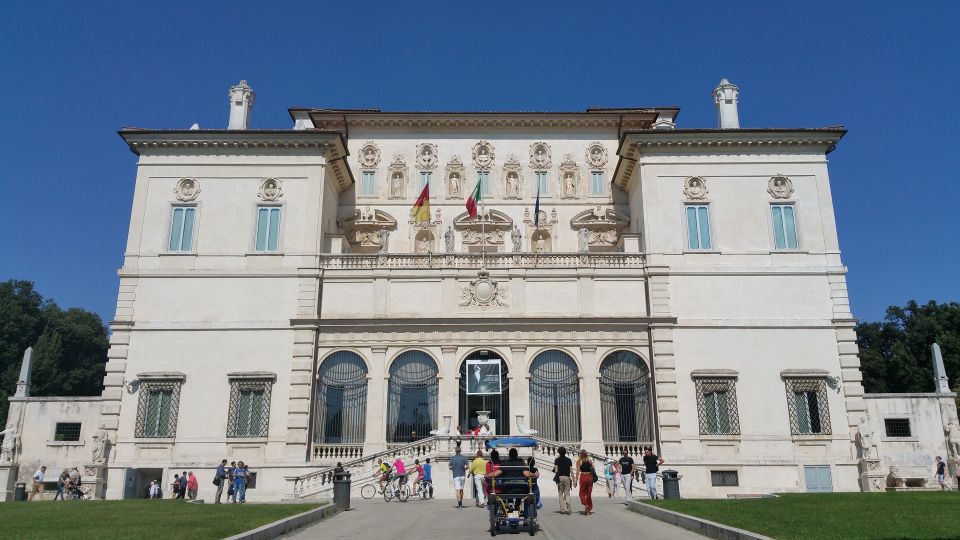
Meet at Piazzale Scipione Borghese, 5, and look for your guide’s red flag with the Saints Tour logo. You’ll want your passport or ID, and you should plan to travel light because luggage or large bags aren’t allowed.
In This Review
- Key highlights worth planning for
- Finding the tour meeting point at Piazzale Scipione Borghese
- Inside the Borghese Gallery: making sense of art in two hours
- Caravaggio at the Borghese: St John the Baptist and more
- Bernini’s big energy: Rape of Proserpine and Apollo and Daphne
- The Salone ceiling frescoes: seeing the trick behind the illusion
- Ground floor sculpture and portrait busts worth your time
- Price and value: does $94 make sense in Rome?
- Who this tour fits best (and who might want a different plan)
- Should you book this Borghese ticket and guided tour?
- FAQ
- FAQ
- How long is the guided experience?
- Where do I meet the guide?
- Is the museum entry ticket included?
- Are headsets provided?
- What languages are offered for the live guide?
- Is the audio guide included?
- What do I need to bring?
- What items are not allowed?
- Does the tour run in bad weather?
Key highlights worth planning for
- Caravaggio’s presence: St John the Baptist plus other major works like Boy with Basket of Fruit, Saint Jerome Writing, and Sick Bacchus
- Bernini showpieces: the drama of Rape of Proserpine and the motion of Apollo and Daphne
- Salone fresco wow: foreshortening that makes the ceiling art feel almost 3D
- Room design that rewards slow looking: each gallery space shifts the mood, not just the art
- Headsets + guide flow: you hear the explanation clearly without losing your place in the room
- Teen-friendly pace: the best guides keep questions coming without dragging the group
Finding the tour meeting point at Piazzale Scipione Borghese
Start where the action is: Piazzale Scipione Borghese, 5. This is also where you’ll spot the guide holding a red flag with the Saints Tour logo. I find this matters more than people think, because Borghese-area directions can be confusing if you’re juggling maps, buses, and crowds.
Bring your passport or ID. And plan for the museum’s rules: luggage or large bags aren’t allowed, so keep your bag small and manageable. If you’ve got a day packed with sights, this is one of those moments where being organized saves stress.
One more practical note: the tour happens rain or shine. That doesn’t mean you’ll be outside the whole time, but it does mean you’ll be walking to get checked in and get to the right entrance. A small umbrella or a hooded layer can keep the morning from turning into a wet scramble.
Lastly, you’re not relying on your phone for explanations. The experience includes headsets to hear the guide clearly, plus an audio guide in French, Italian, and English. That’s a big deal in a museum setting, where acoustics and distance can make a “guided” visit feel more like a guided suggestion.
You can also read our reviews of more tours and experiences in Rome
Inside the Borghese Gallery: making sense of art in two hours
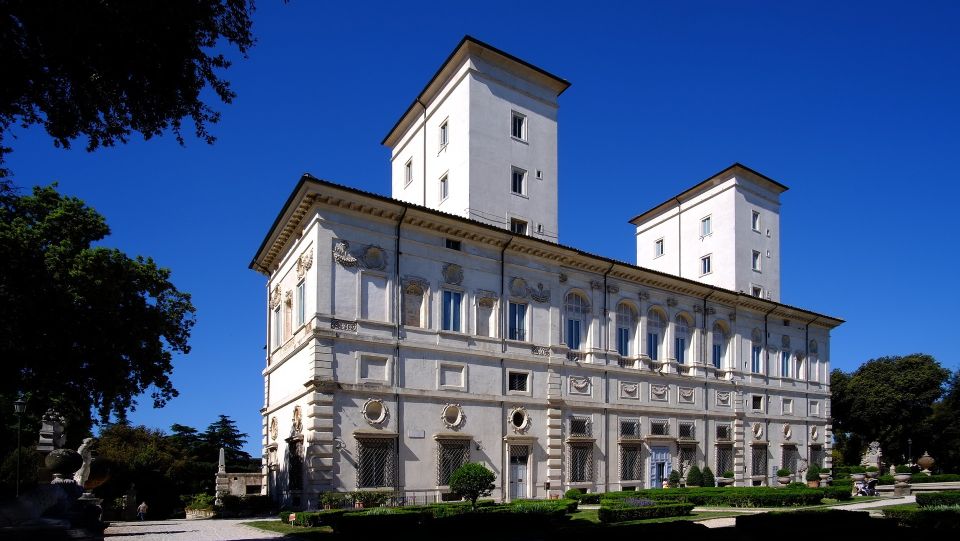
The Galleria Borghese is famous for a reason, but it’s also easy to feel overwhelmed if you wander without a plan. This is where the guide earns their ticket price. You don’t just get told what you’re looking at. You get pointed toward what to notice first—pose, expression, lighting, and the specific details that explain how Caravaggio and Bernini pull off their effects.
You’ll spend guided time in the museum’s main areas (the Borghese Gallery focus), and then you move into the ground-floor sculpture displays. Even if the walls are steady, the feeling changes: paintings demand close attention, while Bernini’s sculptures basically ask you to walk around and watch how the forms “behave.”
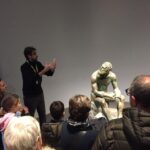
The headset setup helps you keep your place in line and still follow what the guide is saying. With art this famous, there’s a temptation to rush for photos. I’d treat the guide’s pace as your guardrail: you can still take pictures, but you’ll avoid the common mistake of seeing everything except the point.
The guide speaks French, Italian, and English, so you’re not stuck with a one-size explanation. And if your group includes teens, pay attention to how the guide handles pace and questions. One of the clearest strengths of this kind of tour is that a good guide can keep impatient minds focused without turning it into a lecture.
Caravaggio at the Borghese: St John the Baptist and more
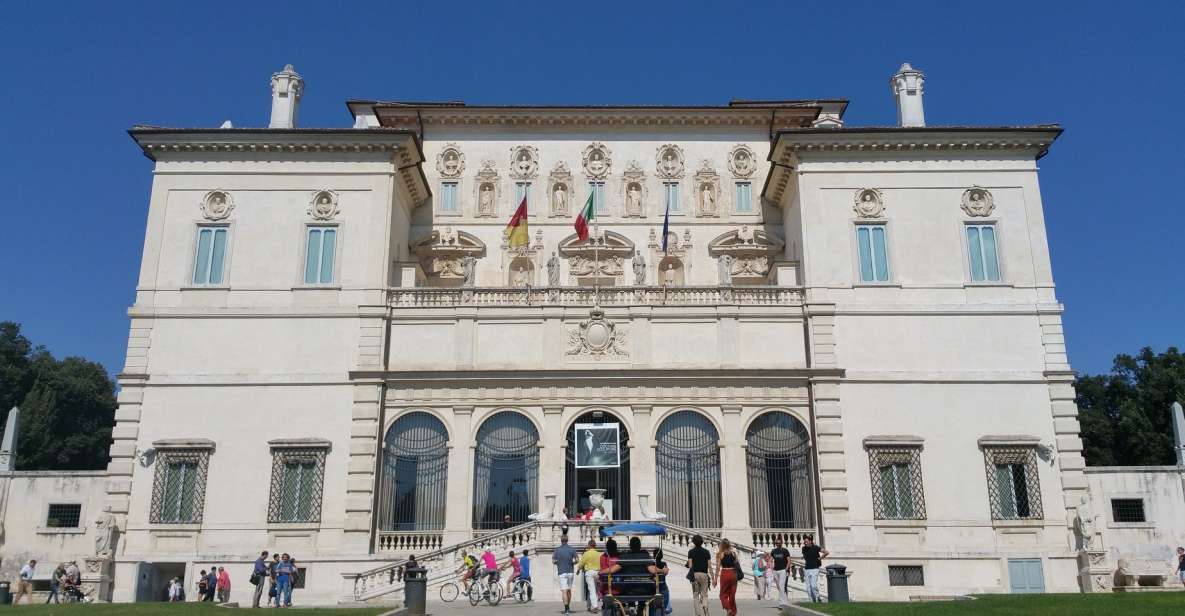
If you care about the drama of Caravaggio, this is where the museum earns its reputation. The collection includes two Caravaggio paintings, including St John the Baptist. That single work alone is worth the ticket for many art lovers because Caravaggio’s style is all about tension—light versus shadow, and emotion versus restraint.
What makes this pairing interesting is how it frames Caravaggio as more than a “dark painter.” In the Borghese collection, you’ll also find other major works tied to the same Caravaggio force:
- Boy with Basket of Fruit
- Saint Jerome Writing
- Sick Bacchus
I like seeing these in one place because you can compare moods fast. One painting turns on observation and human detail. Another leans into atmosphere and vulnerability. The museum layout and guided commentary help you notice how Caravaggio keeps changing the emotional temperature without changing his core methods.
Here’s the practical takeaway for you: don’t just look for the most famous canvas. Use the guide’s pointers to slow down on faces, hands, and the way the light lands. Caravaggio is not “background art.” If you let the guidance cue your attention, you’ll understand why people keep coming back to these works.
Bernini’s big energy: Rape of Proserpine and Apollo and Daphne
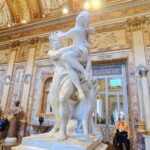
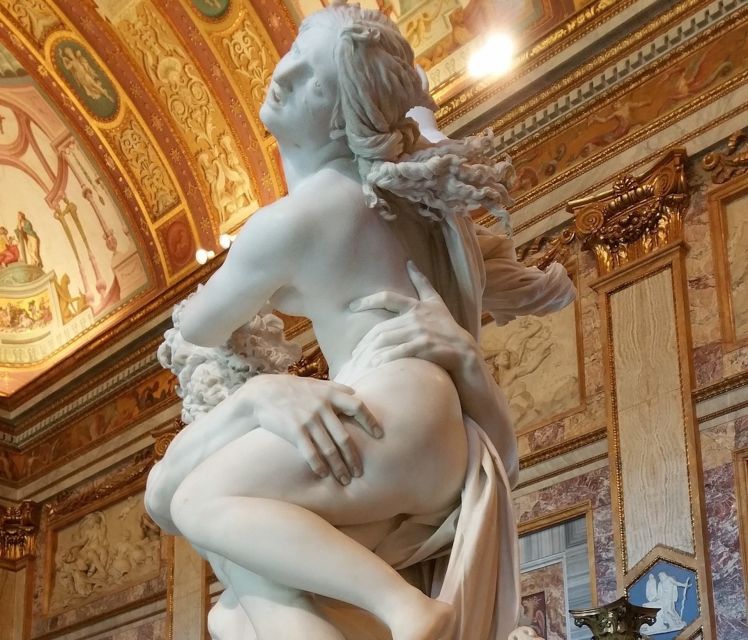
Bernini can feel like a special effect when you first encounter him—movement frozen in stone. The Borghese Gallery puts that idea on full display with Rape of Proserpine and Apollo and Daphne, both central highlights for first-timers.
Rape of Proserpine is the kind of sculpture where your body starts “reading” the scene. You can see tension in the twist of bodies, the attitude of the characters, and the push-and-pull between power and panic. Apollo and Daphne works differently. It’s about transformation: you can feel speed, and you can see how the sculpture directs your eyes through the action.
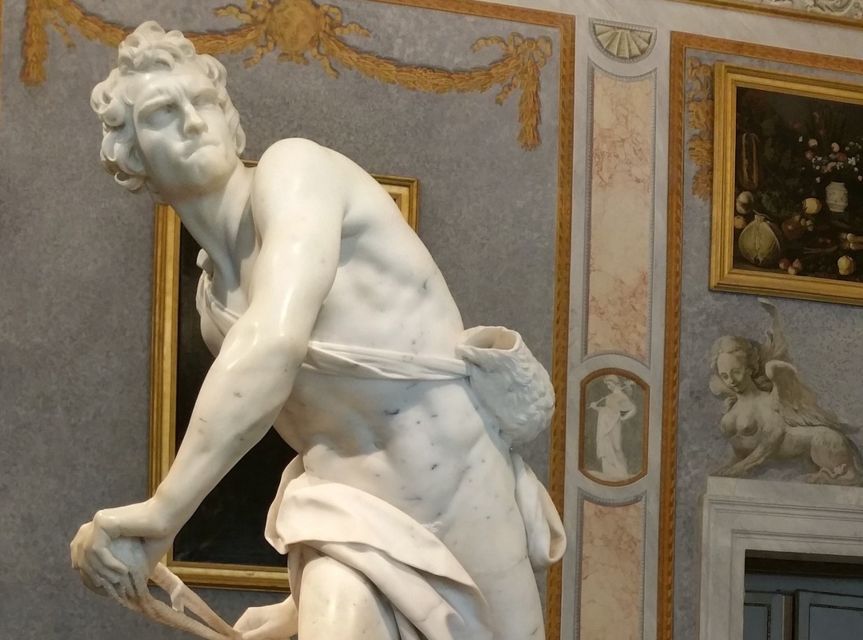
If you keep walking, you’ll also encounter other Bernini works in the broader Borghese collection context, including pieces considered important in his development of secular sculpture, such as Goat Amalthea with Child Jupiter and Faun and Faun and Aeneas, Anchises and Ascanius. You’ll also see the collection includes David, which is often treated as a key step in Bernini’s career.
A smart way to experience Bernini here: use the guide’s explanation to choose one element to focus on for each sculpture. For Rape of Proserpine, pick the emotion first, then look at movement. For Apollo and Daphne, start with the transformation, then notice how your viewing angle changes the story.
That’s a big part of why a guided visit helps. Without a cue, it’s easy to stare at one spot and miss the full effect. With guidance, you get the “walk-around” mindset that Bernini demands.
The Salone ceiling frescoes: seeing the trick behind the illusion
Not every wow moment in the Galleria Borghese is a figure or a statue. Some of the most impressive art is above you, and the guide helps you notice it before you walk past.
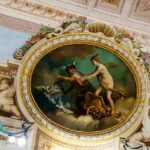
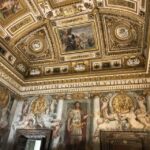
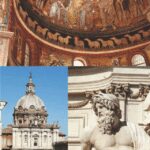
The Salone includes a large ceiling fresco in the first room. The ceiling painting uses foreshortening so effectively that it can look almost three-dimensional. You’re not just seeing a pretty sky scene. You’re experiencing an illusion made with paint—so it’s worth slowing down long enough to let your eyes recalibrate.
The fresco depicts Marcus Furius Camillus relieving the siege of the Capitol by the Gauls. Then the first-room Chamber of Ceres shifts to a more symbolic focus, with a marble vase depicting Oedipus and the Sphinx. It’s the kind of detail that feels like it belongs in a myth lesson, except it’s housed inside a high-class art museum.
In the second room, the ceiling is frescoed by Francesco Caccianiga with Fall of Phaeton. And in the third room, the sculpture highlight includes Bernini’s Apollo and Daphne. This room-by-room rhythm is what makes the museum feel like a curated experience rather than a warehouse of masterpieces.
For your visit, here’s my advice: take a quick posture break. Look up once in each room, even if you think you’ll remember later. The ceiling works are easy to miss because your brain assumes the action is at eye level. A good guide makes sure you don’t lose those moments.
You can also read our reviews of more guided tours in Rome

Ground floor sculpture and portrait busts worth your time
After the main gallery focus, you’ll move through ground-floor sculpture spaces where the Borghese collection shows off its sculptural range and its taste for portraiture.
This is where you can spot how the Borghese collection isn’t only about myth and drama. It also includes human presence: portrait busts connected to the Borghese family’s world. In the collection, you’ll find portrait busts including one of Pope Paul V and two portraits of Cardinal Scipione Borghese, one of the key patrons tied to building the collection.
I like these busts because they add context you can feel. You start to see the collectors behind the art—not as background trivia, but as a reason the museum looks the way it does. The guide’s job here is to connect the sculptures and paintings to the broader collection logic, so you understand why these works are grouped and displayed.
If you’re the type who only wants “the biggest names,” don’t skip this floor. The sculptures help you understand Bernini’s themes beyond just the headline pieces. You’ll also get a sense of the early works that lead toward the later masterpieces—so Rape of Proserpine and Apollo and Daphne land with more meaning.
Also remember the museum rules: since luggage isn’t allowed, keep your hands free. You’ll likely spend time standing and looking, and it’s easier if you don’t have to juggle a bulky bag while you’re trying to take in details.
Price and value: does $94 make sense in Rome?
At $94 per person for a two-hour experience, the price can feel steep at first glance. But this is one of those Rome tickets where you’re paying for three things at once: the entry ticket, a live guide, and headsets that keep the experience readable and focused.
In a museum like this, “DIY” usually means paying your own time cost. You might spend your first 20 minutes figuring out where to go and then end up missing context that makes Caravaggio and Bernini click. When you’re time-limited, that lost time can sting.
There’s also a real value in not guessing what to prioritize. The museum’s fame draws big crowds, and you can’t rely on spontaneity if you want ideal timing. I’d plan to book ahead, because later availability can be hard to find and can get expensive.
Now, the balanced part: the experience is designed as about two hours, and one issue that can happen is a tour that runs noticeably shorter. If your schedule is tight, treat the posted duration as a promise to aim for, and keep an eye on timing at the start. If anything clearly goes off the rails, ask for clarification right away rather than hoping it fixes itself at the end.
Overall, I think the price is fair if you want the story behind the masterpieces. If you already know Borghese inside and out and you plan to stay for much longer than two hours, then a guided ticket may feel less necessary. But for most first-timers, it’s a smart way to get meaning fast.
Who this tour fits best (and who might want a different plan)
This guided entry works especially well if you:
- want to see the main Caravaggio and Bernini highlights without spending your whole morning hunting for them
- like museum explanations that connect works to each other
- have teens or family members who need a pace that doesn’t wander
It also makes sense if you’re nervous about museum logistics. The headsets help you follow without crowd chaos. The guide’s red-flag meeting point reduces the “where do we go?” stress.
If you’re a solo traveler who loves to linger, you might feel slightly constrained by the two-hour format. The museum has more than enough to justify longer visits, especially if you plan to study the details without a countdown timer.
And one more thing: the activity runs rain or shine. That’s good for stability, but if you hate any outdoor waiting at all, you’ll still want to arrive a few minutes early so check-in doesn’t become your weather problem.
The experience is wheelchair accessible, which is a major plus if mobility needs are part of your planning.
Should you book this Borghese ticket and guided tour?
Yes, I’d book it if your goal is to understand the collection, not just take photos. The pairing of Caravaggio and Bernini is the headline, but what you’ll remember is the way the guide points your eyes—paint details, sculpture dynamics, and ceiling fresco illusions that you’d otherwise miss.
Do it especially if:
- you’re visiting Rome for the first time and want a high-return museum stop
- you care about interpretive context in plain language
- you want a plan for a tight schedule, with headsets to keep everything clear
Skip or reconsider if:
- you’re committed to long, unstructured wandering
- you’re ultra-sensitive to time slips and need absolute predictability down to the minute
If you book, come prepared: ID ready, light bag, and the mindset that in two hours you’re aiming for the best connections. That’s how you turn a famous gallery into a real experience you’ll actually carry with you.
FAQ
FAQ
How long is the guided experience?
The duration is listed as 2 hours.
Where do I meet the guide?
You meet at Piazzale Scipione Borghese, 5, and look for a guide holding a red flag with the Saints Tour logo.
Is the museum entry ticket included?
Yes. The entry ticket is included along with the guided tour.
Are headsets provided?
Yes. Headsets are included to help you hear the guide clearly.
What languages are offered for the live guide?
The live guide is available in French, Italian, and English.
Is the audio guide included?
Yes. Audio guide access is included in French, Italian, and English.
What do I need to bring?
You should bring your passport or ID card.
What items are not allowed?
Luggage or large bags are not allowed.
Does the tour run in bad weather?
Yes, the tour takes place rain or shine.