REVIEW · APPIAN WAY BIKE & E-BIKE TOURS
Rome: Appian Way, Aqueducts, and Catacombs Tour
Book on GetYourGuide →Operated by Walks of Italy · Bookable on GetYourGuide
Rome’s oldest road feels like a time machine. This Appian Way, Aqueducts, and Catacombs tour takes you out of the city center for ancient ruins with breathing room, then down into Rome’s underground when the day’s crowds are gone.
Two highlights I’d put at the top: walking the Appian Way on centuries-old paving stones, and getting catacomb access at closing time for a quieter, calmer visit.
One thing to consider first: the catacombs are tight and underground, so if you get claustrophobic (or you need mobility support), this is not the right fit.
In This Review
- Key points to know before you go
- Starting at Piramide: getting out of central Rome the easy way
- Walking the Appian Way: paving stones, tombs, and that road-worn feeling
- Cecilia Metella’s mausoleum: why this circular tomb still dominates the view
- Parco degli Acquedotti: standing beneath Roman aqueducts
- Catacombs of San Sebastiano or Domitilla at closing time
- Private A/C transport: comfort that keeps the tour enjoyable
- What the 195 minutes really means for your Rome schedule
- Who should book this Appian Way, Aqueducts, and Catacombs tour
- Price and logistics: making it work smoothly in your planning
- Should you book this tour?
- FAQ
- How long is the Rome Appian Way, Aqueducts, and Catacombs tour?
- Where do I meet for the tour?
- Which catacombs will we visit?
- Is transport included?
- Are cameras allowed?
- What should I wear or bring?
- Who should avoid this tour?
Key points to know before you go
- Appian Way still feels real: you’re walking an old road that remains active today, not a fenced-off museum street.
- Cecilia Metella is the showpiece: a dramatic circular tomb that helps you picture the power of Rome’s elite families.
- Parco degli Acquedotti delivers the views: towering aqueduct remains in a park setting, with lots of photo angles.
- Catacombs at closing time: a big reason this feels special—less noise, more focus.
- English live guides: you’ll get guided context in plain language while you walk and look.
- Private A/C transport between stops: you spend less time sweltering between locations.
Starting at Piramide: getting out of central Rome the easy way
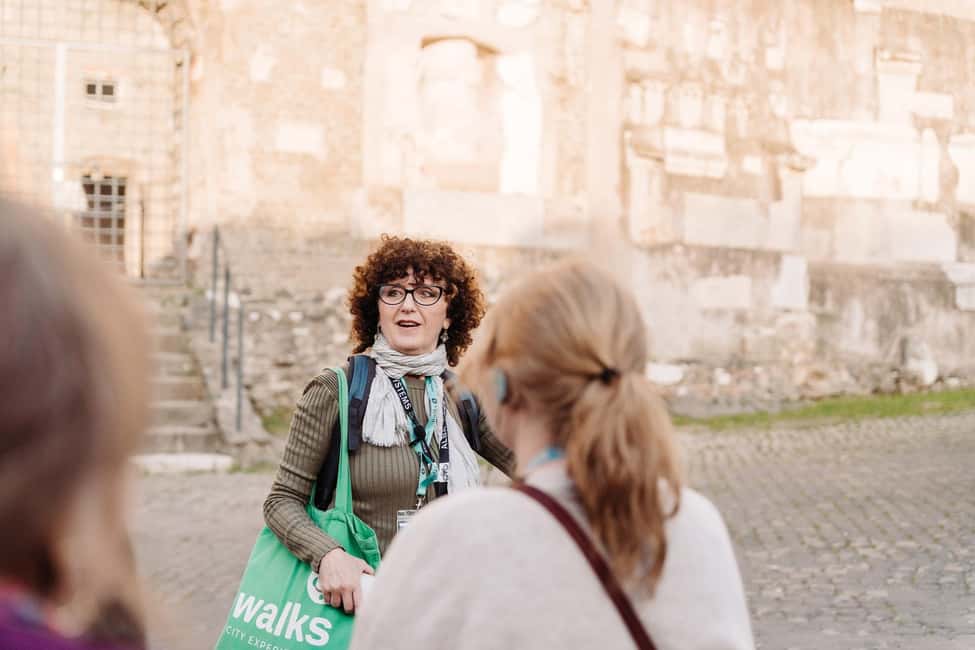
Your day starts at Piramide metro station, across from Piazzale Ostiense. Plan to arrive about 15 minutes early so your group can check in and get moving without stress. This is a smart setup if you want Rome history but you do not want to burn time fighting buses, taxis, or tram transfers.
The big practical win is the private air-conditioned transport between stops. Rome can roast you fast, and between the outdoor walking and the underground portion, comfort matters. One useful detail: the catacombs visit is timed for later in the day, so the day’s hottest hours don’t control your whole experience.
Also, read the fine print on clothing and photo rules before you go. You’ll want to arrive prepared—long pants and a long-sleeved shirt are required, and shoulders/knees must be covered for the religious site areas.
You can also read our reviews of more tours and experiences in Rome.

Walking the Appian Way: paving stones, tombs, and that road-worn feeling
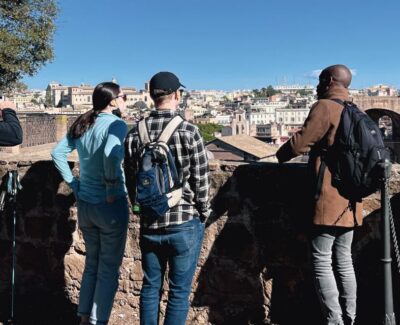
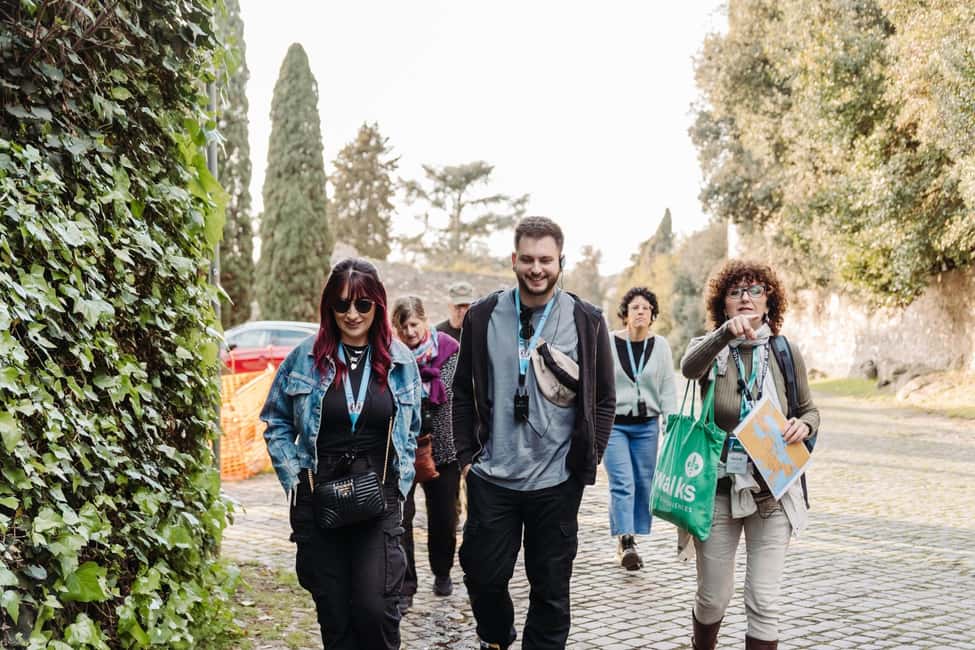
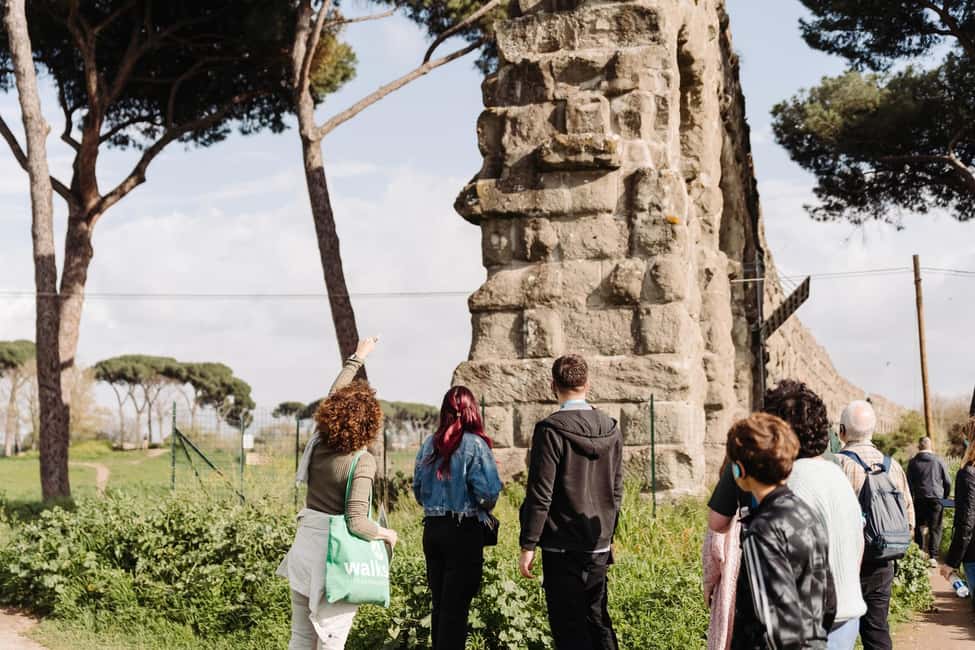
The Appian Way (Via Appia) is one of those places where your feet do history homework. You’ll get a photo stop, a guided look, and a walk segment long enough to feel the road rather than just glance at it. Expect paving stones underfoot and an atmosphere that makes it easier to imagine Romans marching, hauling goods, and moving through the countryside.
What makes this stop particularly satisfying is the mix of scale and detail. You’re not only seeing a landmark name—you’re walking the kind of roadway design that let Rome spread power across distance. The guide context helps you connect what you’re stepping on to the bigger story of Roman expansion and travel.
A small reality-check: even though it’s ancient, the Appian Way is not totally sealed off. One guide-led group noted that it can feel surprising how much of it is still an active road. If you’re expecting the perfect quiet postcard, you might find it more “real-world” than you imagined. The tradeoff is you get authenticity.
Practical note: the walking is paced at a moderate level, and you’re not doing a marathon. Still, wear shoes you trust on uneven stone. A few reviews also flagged that the roads can be bumpy, which is a reminder that this is outdoors and old-school.
Cecilia Metella’s mausoleum: why this circular tomb still dominates the view
After the Appian Way, you’ll head to the Mausoleo di Cecilia Metella, a circular tomb dating back to the 1st century BCE. This isn’t a tiny stop. It’s imposing, and it lands well because the shape and materials do the storytelling for you even before the guide starts speaking.
What I like about this stop for first-time visitors is how it frames power. It’s not just a pretty monument. You get a sense of how elite families wanted to broadcast status through architecture, and how those choices have lasted for centuries.
You’ll have time for photos and a guided visit, plus another walking segment. The pacing here usually feels like a reset after the road walk—less open-ended and more focused on one strong landmark. It’s a good point in the day to slow down and actually look at details: the scale, the geometry, and how the tomb holds its presence in the landscape.
Parco degli Acquedotti: standing beneath Roman aqueducts
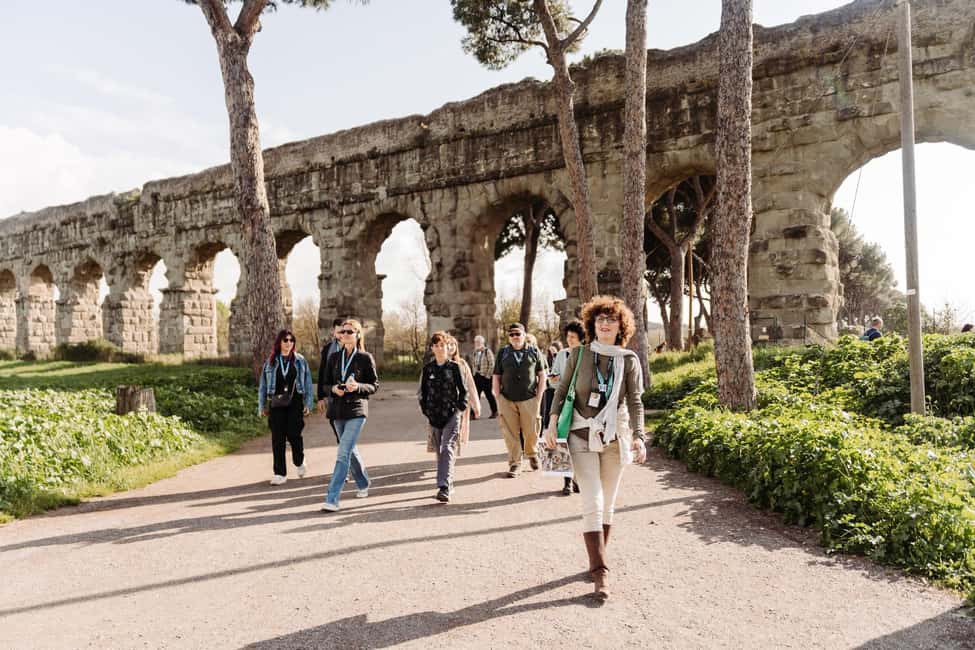
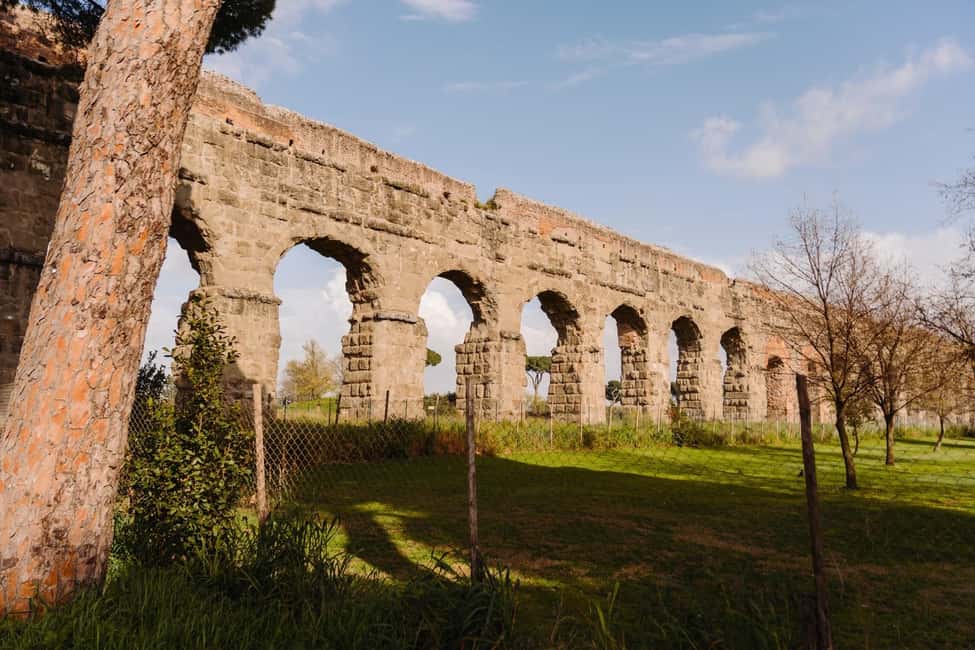
Next up is Parco degli Acquedotti, where you stand beneath the remains of Rome’s iconic aqueduct system. This is where the tour shifts from “Roman road” to “Roman engineering,” and the effect can be dramatic. Even in ruins, the aqueduct arches show off how seriously Rome treated water supply.
You’ll get a photo stop, a guided visit, and enough time to absorb the site without feeling rushed. What makes this stop worth your attention is that aqueducts change how you think about Rome. Water doesn’t just mean convenience—it means civilization at scale. When you look up at those towering remains, it’s easier to picture a city fed by infrastructure that had to work over long distances.
This is also one of those stops that benefits from good timing. The tour usually places it well so you can enjoy it before you’re fully drained. Reviews also mention it can be hot in Rome, and guides have helped by keeping shade breaks in mind when temperatures spike.
Catacombs of San Sebastiano or Domitilla at closing time
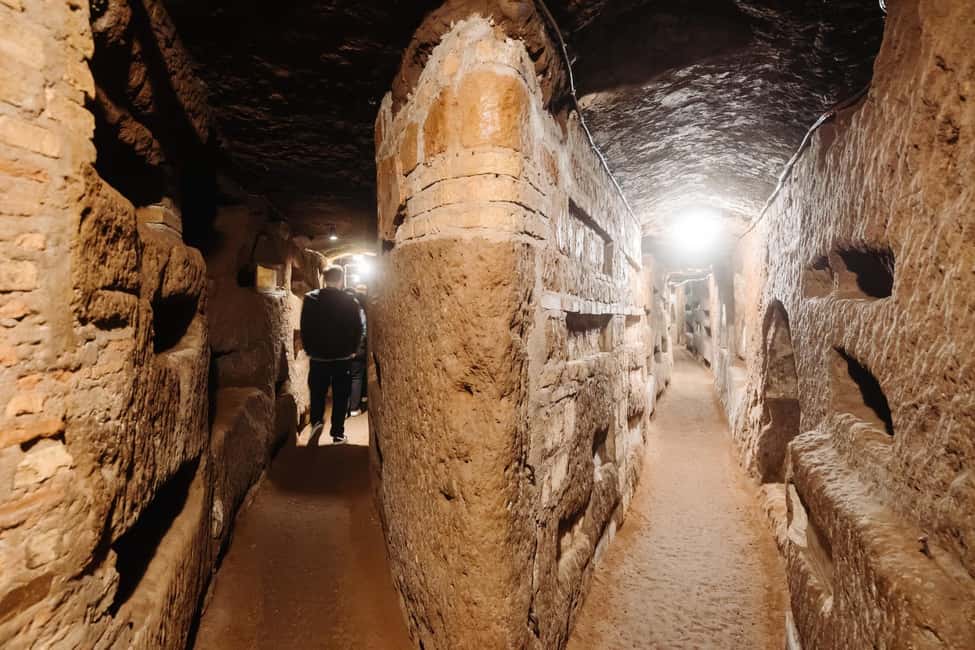
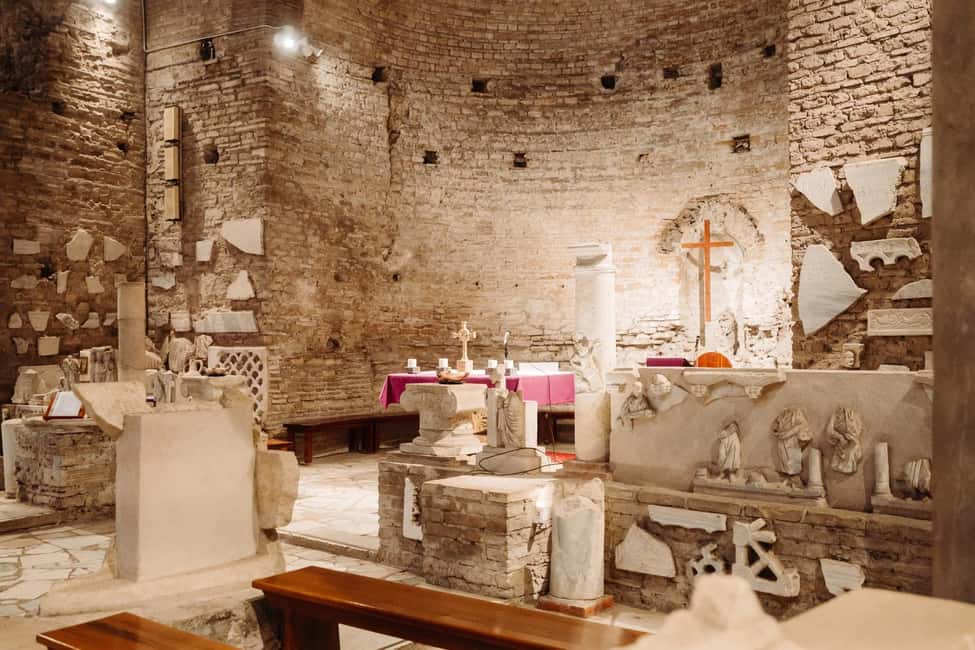
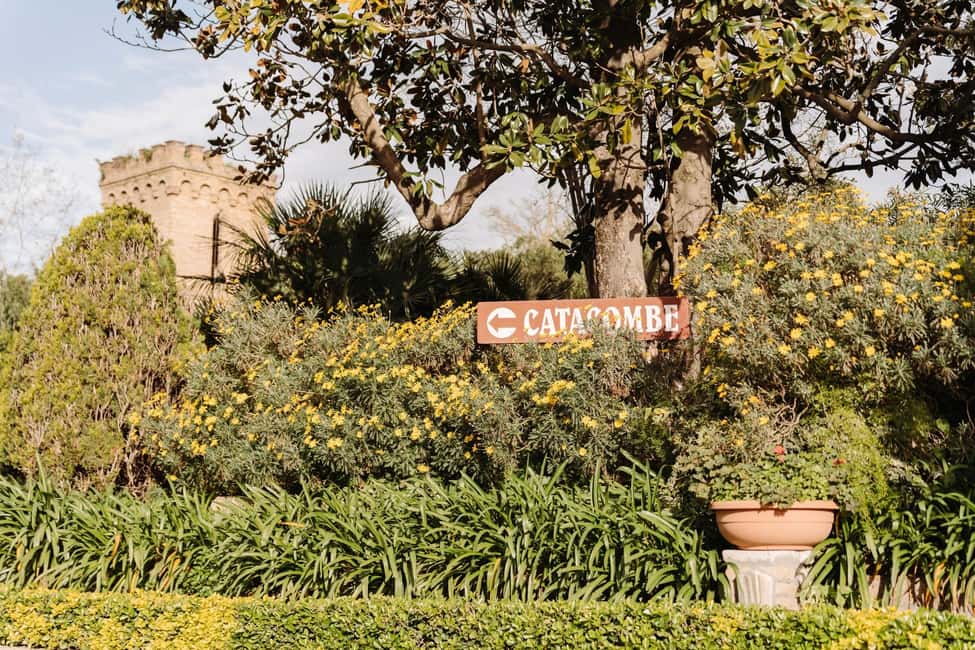
The headliner for many people is the catacombs visit, and this tour times it for the end of the day so you’re not walking through with the biggest crowds. You’ll have a guided underground experience at either the Catacombs of Saint Sebastian or the Catacombs of Domitilla, depending on the day. The total catacomb visit time is long enough (about 80 minutes) that it feels like a full program, not a quick peek.
Two things I find most important to know before you choose this tour:
- The catacombs are tight and underground. Claustrophobia is the main risk factor here.
- This is a religious context, so you’ll need shoulders and knees covered when you enter. Bring an extra scarf or layer if you expect your outfit to fall short.
Inside, you’re walking tunnels with early Christian burial spaces and wall artwork. One review note worth keeping in mind: you might not see bone displays in the same way some other famous catacomb sites are known for. It’s still eerie, still fascinating, and still very much about how people lived with death and faith—but the look and format can be different.
Another practical plus of this timing: arriving when fewer people are around changes the feel of the underground spaces. Less noise helps you focus on the guide’s explanations and on what you’re looking at on the walls.
Photography rules matter here too. Cameras aren’t allowed, and photography inside is not permitted. Bring your memory skills instead of your camera battery.


Private A/C transport: comfort that keeps the tour enjoyable
A lot of Rome tours solve the logistics problem with speed, not comfort. This one tries a different approach: private air-conditioned transport between stops. That matters because you’re mixing long outdoor sections with an underground visit, and you don’t want your day to collapse into sweat, waiting, and missed landmarks.
The ride also helps you get outside the city center without turning your schedule into a juggling act. You’re not piecing together multiple transit legs. Instead, the group stays together and the day flows from one historical zone to the next.
A few reviews also mention the driver negotiating route complications, including road conditions and protest-related detours. That is not something you can plan for as a visitor, but it does suggest the operator is used to keeping the schedule moving.
One more practical tip: taxi drop-offs can go wrong if you copy the wrong address. If you’re taking a taxi, aim for Metro station Piramide, since that’s where the tour meets.
What the 195 minutes really means for your Rome schedule
The total time is about 195 minutes, so this isn’t a half-day that swallows your entire afternoon. It’s long enough to feel complete—Appian Way, Cecilia Metella, aqueduct park time, and the catacombs visit—yet it still leaves room for you to keep exploring Rome afterward.
Price-wise, it’s listed at $64 per person. For me, the value comes from combining four high-impact experiences in one guided block, plus private transport that reduces your stress. If you tried to do this combination on your own, you’d spend time figuring out transit, timing entrances, and coordinating a schedule—time you could be spending actually looking at aqueducts and walking ancient stones.
You’re also paying for a real guide inside the catacombs. That underground context is the difference between seeing corridors and understanding what you’re seeing.
And because the catacombs visit is at closing time, you’re buying something less common: fewer crowds. That quiet matters more than people think, especially underground.
Who should book this Appian Way, Aqueducts, and Catacombs tour
This tour is a great match if you want Rome history that feels spread out, not crammed into one famous square. You’ll like it if you:
- enjoy walking Rome’s infrastructure, not just its iconic buildings
- want engineering and architecture alongside tomb history
- appreciate a quieter catacomb experience at the end of the day
- prefer small-group or private-style pacing with guided explanations in English
It may not be your best choice if you:
- have mobility impairments, need a wheelchair, or need stroller access (this tour is not suitable)
- have claustrophobia, because the catacombs are tight
- want to take lots of photos (cameras are not allowed, and photography inside is prohibited)
- plan to wear shorts or bare shoulders/knees (the dress rules are firm)
If you’re traveling with kids, double-check comfort and requirements first. The tour is not set up for stroller use, and the catacombs require covering shoulders and knees.
Price and logistics: making it work smoothly in your planning
At $64 per person, the tour sits in a fair middle ground: you’re not paying for a luxury private driver all day, but you are getting private A/C transport plus guided coverage at multiple sites.
The logistics are mostly simple, but you do need to show up ready:
- Meet at Piramide metro station, across from Piazzale Ostiense
- Wear long pants and a long-sleeved shirt
- Bring something to cover shoulders/knees if needed for catacombs
- Leave cameras behind; photography inside isn’t allowed
If you do those basics, the rest tends to run well because the day is scheduled and guided.
Should you book this tour?
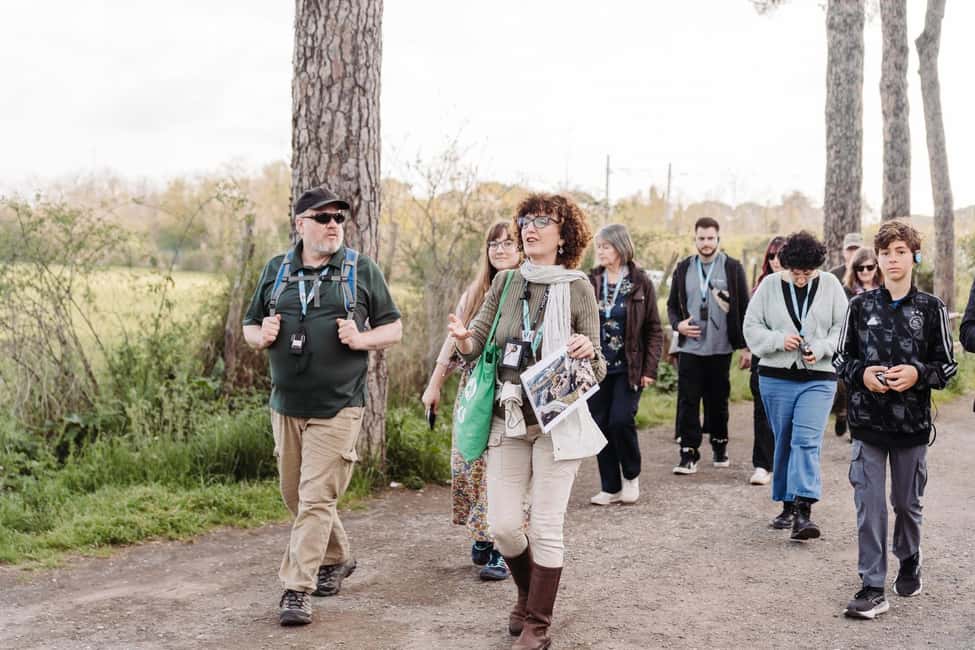
If your Rome wish list includes the Appian Way + aqueducts + catacombs, I think this tour is a strong yes. It’s especially worth booking if you’re tired of crowd lines and want a more thoughtful pace—plus you’ll get catacomb access at closing time, which changes the mood completely.
Book it when you:
- want an out-of-the-center Roman escape without complicated planning
- appreciate guided context that connects roads, water, and burial practices
- can handle tight underground spaces and a walking day
Skip it when you:
- are claustrophobic or need accessibility support not offered on this tour
- want to take photos freely (you cannot)
- prefer a lighter dress code than a religious site requires
If you’re a history-leaning walker who enjoys the feel of real places, this is one of the better ways to spend a portion of your Rome day away from the biggest attractions.
FAQ
How long is the Rome Appian Way, Aqueducts, and Catacombs tour?
It runs for about 195 minutes.
Where do I meet for the tour?
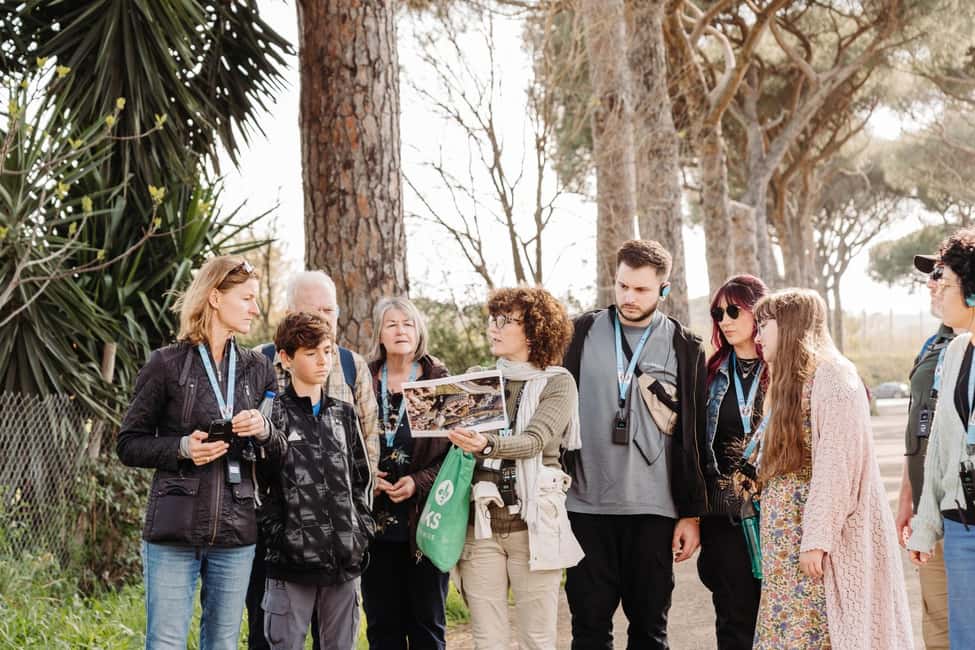
Meet in front of Piramide metro station, across from Piazzale Ostiense. Arrive about 15 minutes early, and your guide will be holding a green Walks sign.
Which catacombs will we visit?
The tour visits either the Catacombs of San Sebastiano or the Catacombs of Domitilla, depending on the day.
Is transport included?
Yes. You get private, air-conditioned transport between stops.
Are cameras allowed?
No. Cameras are not allowed, and photography inside the catacombs is not permitted.
What should I wear or bring?
You should wear long pants and a long-sleeved shirt. Since the catacombs are religious sites, you must cover your shoulders and knees, and bringing an extra scarf or covering can help.
Who should avoid this tour?
It is not suitable for guests with mobility impairments, wheelchair users, or people with claustrophobia, and it is not appropriate for strollers.