REVIEW · APPIAN WAY BIKE & E-BIKE TOURS
Rome: E-Bike Tour of Appia Antica, Aqueducts, and Caffarella
Book on GetYourGuide →Operated by Rome in a Day Tours · Bookable on GetYourGuide
The Appian Way is better at bike speed. This e-bike route turns Italy’s Roman “first highway” into a practical sightseeing loop, with you gliding through Appia Antica sights and quiet countryside instead of spending your day stuck in lines. I love how the tour mixes big-name monuments with real walking-room around them, so you get time for photos and a calm look at details.
I also like the guide-led storytelling angle, and the energy shows up in how routes are handled: people have mentioned guides like Monika and Adriana taking extra care for a safe, comfortable ride. Add a midday break at a local bar, plus real time in places like Parco degli Acquedotti and Caffarella Valley, and you get a packed half-day without feeling rushed.
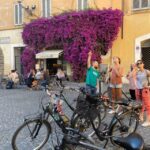
One thing to consider: this is a biking tour, and e-bike sizing matters. One rider noted the bike didn’t fit their smaller frame quite right, so if you’re on the shorter side, ask about sizing when you arrive and be ready to adjust before you set off.
In This Review
- Key things to know before you ride
- Why the Appian Way hits differently from the saddle
- From Circus Maximus to Caracalla: the day’s warm-up route
- Quo Vadis, catacombs nearby, and the monuments clustering on Via Appia
- Parco degli Acquedotti: the water system becomes real
- Caffarella Valley: countryside calm, plus farm-animal vibes
- How the 4 hours actually feel on the bike
- What to bring (and the non-negotiables)
- Price and value: why $88 can work out well here
- Who should book this tour
- Should you book this e-bike tour of Appia Antica, aqueducts, and Caffarella?
- FAQ
- FAQ
- Where does the tour start?
- How long is the e-bike tour?
- What’s the price?
- What language is the guide?
- Is the tour limited to a small group?
- What should I bring?
- Does the tour run in bad weather?
- Do I need to know how to ride a bike?
- Is the tour appropriate for everyone?
Key things to know before you ride
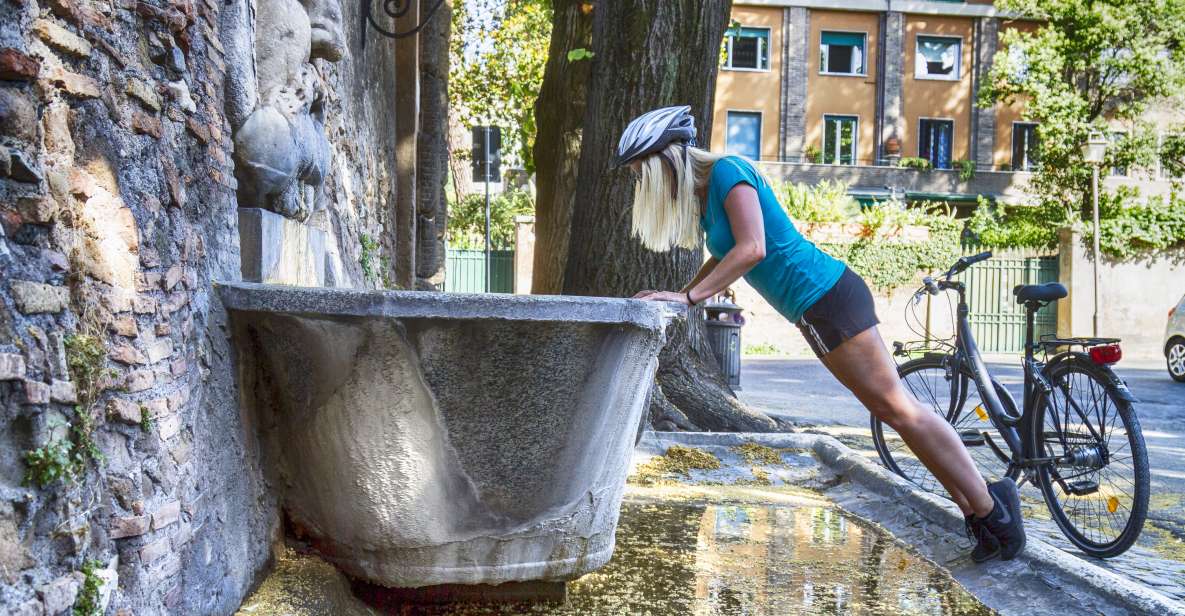
- Small group (max 8) keeps the pace human and makes road crossings feel more controlled.
- E-bike assist helps a lot on hills and uneven spots along historic roads.
- Aqueducts + Caracalla Baths context means the water story isn’t just scenery.
- Caffarella Valley delivers a countryside feel right near the city, with farm animals possible nearby.
- Stops are built in: photo pauses, a local bar break, then focused time in parks.
Why the Appian Way hits differently from the saddle
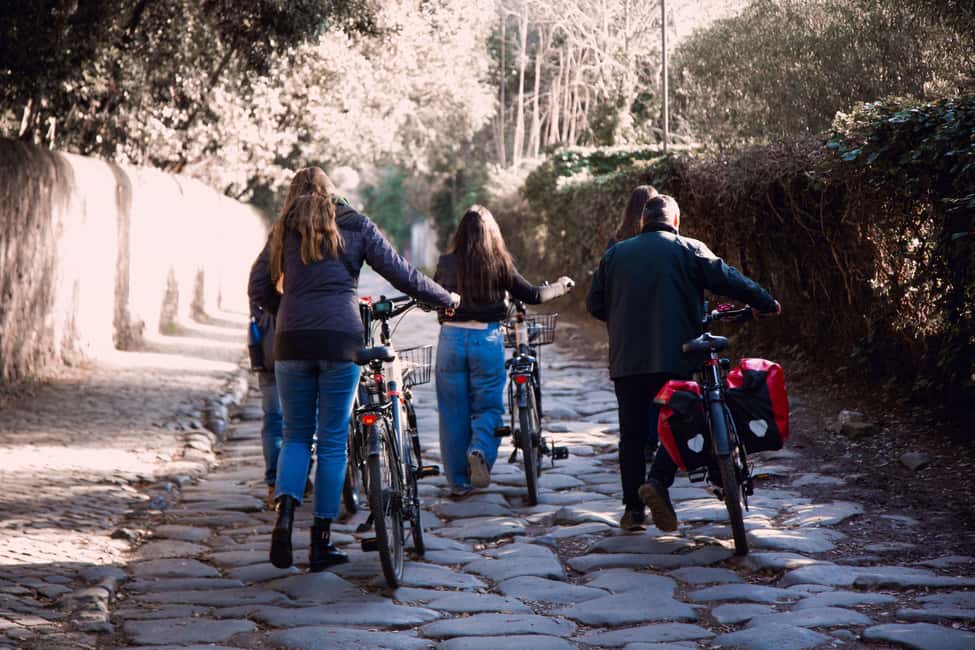
Rome has plenty of “look, don’t touch” attractions. This tour flips that. You’ll spend the morning moving along the Regina Viarum, the stretch connected to the legendary Via Appia—the first major highway ever built—whose construction began in 312 BC under Appius Claudius Caecus.
That matters because the Appian Way is not just about one monument. It’s the corridor itself: the feeling that you’re traveling through layers of time. On foot, Via Appia can feel long and repetitive, and you’re stuck deciding between fast transit or slow wandering. On an e-bike, you get a third option: you cover ground smoothly, but you still stop often enough to notice what makes the place special.
There’s also a preservation angle woven into the route. Antonio Cederna, an archaeologist and urbanist, pushed back hard against uncontrolled building speculation. You see the result today: the Appia Antica Archaeological Park still lets you experience how an ancient road functioned—both as a route and as a social space that attracted tombs, villas, and religious sites.
You can also read our reviews of more cycling tours in Rome

From Circus Maximus to Caracalla: the day’s warm-up route
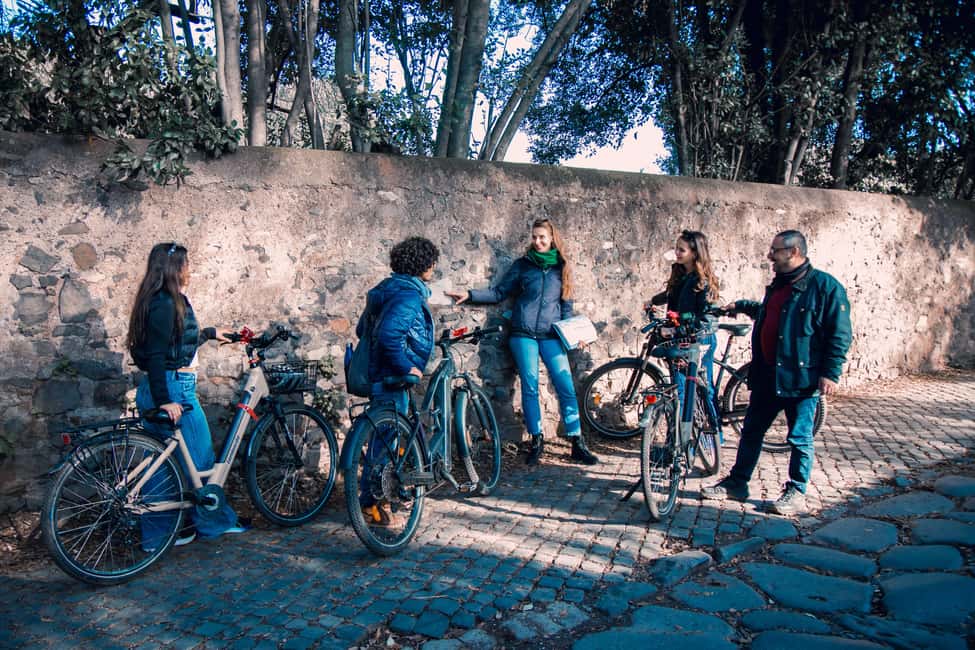
The ride starts at the Rome in a Day Tours venue in front of the Circus Maximus. Yes, that Circus Maximus—the huge chariot-racing arena that could hold around 300,000 spectators. Even if you only get a photo stop, it’s a strong opening image: Rome built for spectacle, still sitting in the middle of modern streets.
From there, the tour heads toward the Baths of Caracalla for a photo stop. This is a smart move because Caracalla’s baths aren’t just a standalone ruin. They’re a clean introduction to Rome’s water system, which becomes a central theme once you reach the aqueducts area. If you’ve ever looked at Roman ruins and wondered where all the water actually came from, this tour sets you up to understand the answer before you see the infrastructure up close.
Then you reach Porta San Sebastiano, where you get time to familiarize with the fortifications of Rome and the Aurelian Walls. This is one of those stops that can feel like a blur on a standard tour. Here, it lands as a “Rome’s defenses and power” moment that helps you connect the dots between roads, water, and how cities protected themselves.
Quo Vadis, catacombs nearby, and the monuments clustering on Via Appia
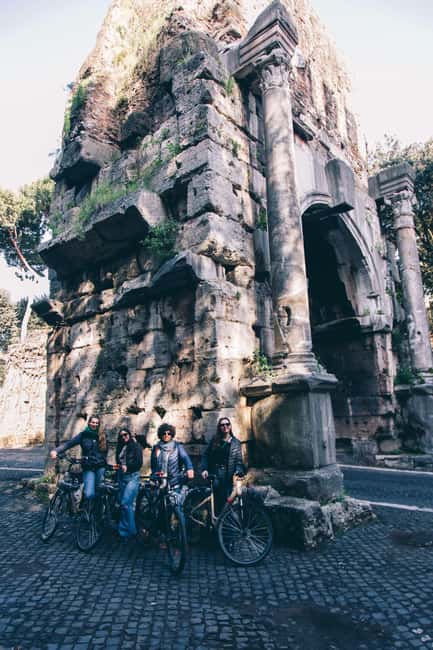
As the tour gets into the “first few miles” zone of the ancient road, the density of sights ramps up. You’ll stop at the Church of Domine Quo Vadis for a visit. Even if you’re not deeply religious, it’s a fascinating reminder of how sacred meaning layered itself onto older spaces—Rome doesn’t replace history; it builds new meaning on top.
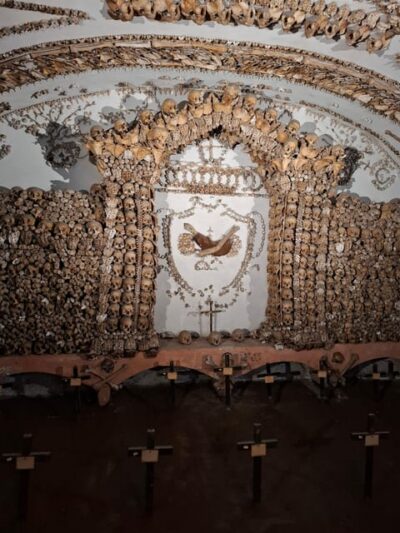
Next is a pass-by of the catacombs area (Saint Callistus is part of the story here). You don’t necessarily spend time underground on this particular ride, but being near the catacombs gives context. Roman cemeteries and early Christian sites lived alongside the routes people traveled—so the Appian Way wasn’t only about trade and travel. It was also about memory and ritual.
You’ll also make photo stops around major names connected to elite power and burial culture, including:
- Villa di Massenzio (Residence of Maxentius): a visual link to imperial ambition.
- Tomb of Cecilia Metella: a striking monument you can see clearly from the road, built for permanence.
- Additional nearby sites in the same corridor feel like they’re “just over your shoulder,” including places described on the route such as the Tumulus of the Curiazi and Villa dei Quintili.
The value of these clustered stops is simple: you don’t waste time commuting between scattered ruins. You ride the corridor where they naturally belong, then you pause at each point long enough to understand what you’re looking at.
Parco degli Acquedotti: the water system becomes real
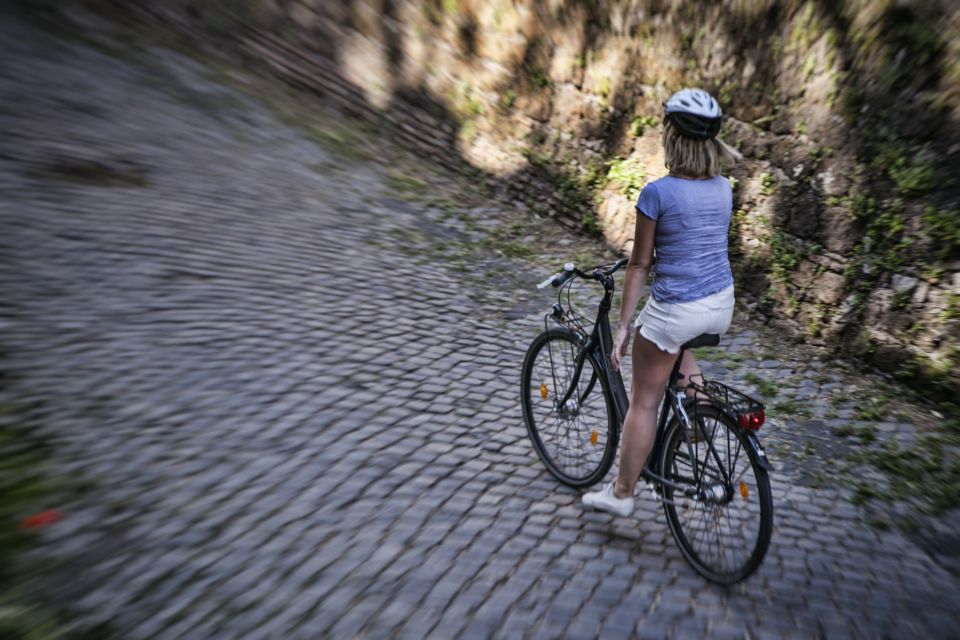
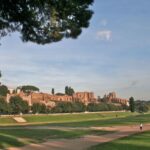
When you reach Parco degli Acquedotti, the tour shifts from ruins-and-religion into engineering and survival. Roman aqueducts are easy to admire from a distance. It’s harder to understand scale. This stop is designed to solve that.
Because the morning already pointed you from Caracalla toward the broader “Roman water system” theme, the aqueduct park lands with more meaning. The aqueducts supplied Rome with an “unsurpassed amount of water,” and the park setting helps you see how infrastructure shaped everyday life—from baths to fountains to public and private use.
In a walking-only plan, aqueduct areas can be slower and spread out, and you might cover less ground for the time you spend. Here, the e-bike keeps you moving while still giving you focused time at the park itself (about half an hour).
One more practical benefit: the route design tends to reduce heavy traffic time. In the feedback for this experience, safety and car-free routing come up often. It’s not a promise you should rely on blindly, but it signals the tour has a real process for keeping cyclists comfortable.
Caffarella Valley: countryside calm, plus farm-animal vibes
After the aqueducts, you follow the Almone River down into Caffarella Valley. This is where the tour turns into something different from the standard Rome sightseeing loop.
Instead of constant stone streets and tight crowds, you get scenery that feels more like the outskirts—open space, softer ground, and a slower tempo. The route description also mentions the possibility of horses, sheep, goats, and pigs close to the city center. Even if you don’t catch every animal, the point stands: this ride gives you an “outside of Rome” feeling without leaving Rome.
You also end this section near the Nymphaeum of Egeria, tied to the tradition around Herodes Atticus’s villa. It’s a poetic finishing note in the sense that it brings you back to the theme of water—but now the water story is also about myth, leisure, and landscape memory.
The tour keeps its timing flexible enough that you can actually enjoy the park time (about thirty minutes here), rather than treating it like a quick photo queue.
You can also read our reviews of more tours and experiences in Rome


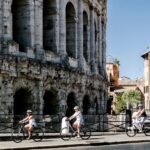
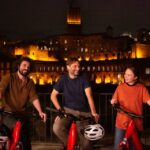
How the 4 hours actually feel on the bike
The total duration is about 4 hours, and the time structure is built around short photo stops and a few meaningful holds for learning and breaks. You’ll have:
- A brief start and photo stop around Circus Maximus,
- Photo stops at major sites like Caracalla and Porta San Sebastiano,
- A church visit for Domine Quo Vadis,
- Time in Parco degli Acquedotti and Caffarella Park,
- A local bar break (about 20 minutes).
Because you’re in a small group capped at 8, you’re not fighting for space at every stop. One common complaint in Rome tours is crowds that turn every moment into shoulder-to-shoulder negotiation. This plan is built to reduce that.
Still, plan for real biking terrain. Even with e-bike assist, the historic stones on the Appian Way can be bumpy, and some stretches may feel rougher than modern roads. That’s normal for this type of route, and it’s also part of why e-bikes work well here: they let you handle the texture without turning the day into a workout test you didn’t plan for.
What to bring (and the non-negotiables)
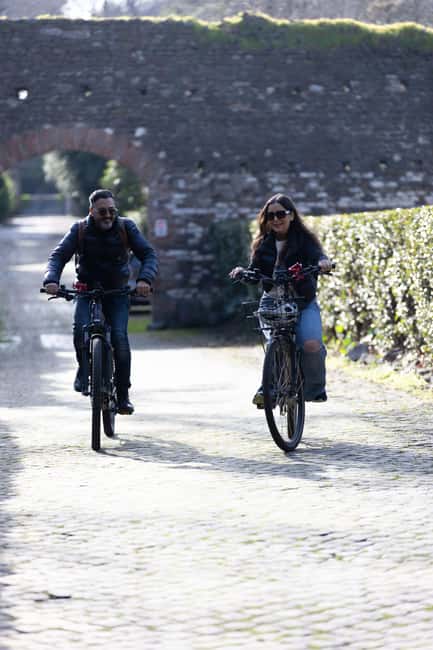
This tour runs rain or shine, so don’t pack a purely hot-weather fantasy. Bring comfortable clothes and something that can get dirty. Closed-toe shoes are required, which matters more on a bike than you might think.
Two practical “check yourself” points:
- You must know how to ride a bicycle to join.
- It’s not suitable for people with mobility impairments, children under 12, pregnant women, or anyone who can’t ride.
If you’re not sure about your biking comfort, treat this as a “ride with confidence” experience, not a casual roll-and-thing. And if you’re petite, check bike fit when you arrive—one rider specifically flagged sizing as the one issue that kept their rating from a perfect score.
Price and value: why $88 can work out well here
At $88 per person for about four hours, this isn’t a bargain in the “cheap and cheerful” sense. It becomes good value when you think about what you’re buying.
You’re paying for three things that are hard to reproduce on your own:
- A guided corridor plan along the Appian Way and into the aqueduct park and Caffarella Valley.
- E-bike transport, which lets you cover distance without draining your day before the sightseeing.
- Time efficiency: you see a lot of high-impact Roman sites clustered along a route, then you actually get to enjoy the park settings.
If you’re the type who hates spending your limited Rome time waiting, repeating transit stops, or walking long stretches in heat, this format can save energy for the places where your brain actually wants to look. Several visitors also praised the ride as an antidote to city meandering, and that’s exactly the practical logic behind choosing an e-bike.
Who should book this tour
This is a great fit if:
- You want a half-day Roman experience that feels more open-air than indoor museum time.
- You like learning in context, especially around the Roman water system.
- You can ride a bike comfortably and want e-bike assist to make bumpy sections easier.
It’s less ideal if:
- You don’t ride bikes.
- You need mobility accommodations.
- You’re traveling with very young kids (the cut-off is under 12).
- You’re pregnant and need to avoid this kind of riding and positioning.
Also, if you’re short or worry about bike sizing, ask about the bikes when you meet the crew. The feedback suggests they care about getting riders comfortable, but you should still double-check fit.
Should you book this e-bike tour of Appia Antica, aqueducts, and Caffarella?
If you want Rome with fewer queues and more movement through real landscapes, I’d book it. This tour does two things well: it gives you major Roman landmarks along the Appian Way corridor and then it follows that with parks where the city gets quieter and your ride feels like an escape.
My main caution is simple: be honest about your cycling comfort and don’t ignore bike fit. If you can handle bumpy historic roads and you arrive ready to ride, this is one of the more satisfying ways to see the Roman countryside side of Lazio without spending your whole day commuting.
FAQ
FAQ
Where does the tour start?
The tour starts at the Rome in a Day Tours Electric Bike and Vespa Excursions meeting venue, in front of Circus Maximus. Arrive about 15 minutes early to get acquainted with the bikes and sign paperwork.
How long is the e-bike tour?
It lasts about 4 hours.
What’s the price?
The price is $88 per person.
What language is the guide?
The live guide offers English and Dutch.
Is the tour limited to a small group?
Yes. It’s a small group with a maximum of 8 participants.
What should I bring?
Bring comfortable clothes, clothes that can get dirty, and closed-toe shoes.
Does the tour run in bad weather?
Yes, it takes place rain or shine.
Do I need to know how to ride a bike?
Yes. You need to know how to drive a bicycle to join an e-bike tour.
Is the tour appropriate for everyone?
No. It is not suitable for children under 12, pregnant women, people with mobility impairments, or anyone who cannot ride a bike.