REVIEW · APPIAN WAY BIKE & E-BIKE TOURS
Rome: Appian Way, Catacombs, & Roman Aqueducts E-bike Tour
Book on GetYourGuide →Operated by TopBike Rental & Tours · Bookable on GetYourGuide
A quiet stretch of Rome with loud history. This Appian Way e-bike tour is a smart way to see ancient ruins, follow the aqueducts, and get a break from city crowds without turning your day into a marathon. I loved the mix of off-road riding in Roman countryside and history stops that feel spaced out, not crammed.
The best part for me was the combo of top-tier Cannondale e-mountain bikes (including anti-puncture tires) and a guide who keeps the group together with safety-first pacing. The tour can include a guided stop inside the Catacombs of St. Callixtus or St. Sebastian, and that option adds a different kind of Rome than the ruins above. One thing to weigh: this is an intermediate ride with gravel and uneven sections, plus some road time through busier city traffic.
In This Review
- Key things you’ll care about
- The Appian Way by e-bike: why it works in Rome
- Choosing 4 hours or 6 hours (Catacombs difference)
- Meeting at Via Labicana and getting ready fast
- The early ride: St. Sebastian’s Gate to the Appian Way
- Appian Way stops: Circus of Maxentius, Cecilia Metella, Villa dei Quintili
- Aqueduct Park: following the arches back toward modern Rome
- Caffarella Valley and Baths of Caracalla: ending with open air
- E-bike reality check: intermediate terrain and how to handle it
- Safety and guide style: how the ride stays controlled
- What’s included vs what you’ll need to plan
- Price and value: why $85 can make sense here
- Weather, timing, and the rhythm of the day
- Who should book this e-bike Appian Way tour
- Should you book the Rome Appian Way, Catacombs & Aqueducts tour?
- FAQ
- How long is the Rome Appian Way, Catacombs, and Aqueducts e-bike tour?
- What is the difference between the 4-hour and 6-hour tour?
- Where does the tour start and end?
- What’s included in the tour price?
- What should I bring?
- Do I need to be an experienced cyclist?
- How much off-road riding is there?
- Is there traffic on the route?
- Are children allowed?
- Is food included, or can I buy something during the tour?
Key things you’ll care about

- Two tour lengths, one main route: the 4-hour option skips the guided Catacombs visit, while the 6-hour version includes it.
- Real distance, real variety: about 27 km (17 mi), with roughly 60% off-road and about 40% in the city.
- Guides manage safety in traffic: tight spacing, clear rules, and hands-on help at crossovers.
- You ride first, learn in context: stops are timed so you can look around, take photos, and then get back on the bike.
- Aqueduct Park is the visual payoff: colossal arches plus a mostly traffic-free route for big views.
- Bikes make it feel doable: e-assist helps you keep moving even when the terrain gets bumpy.
The Appian Way by e-bike: why it works in Rome

The Appian Way isn’t just a road you visit. It’s the kind of place that reads better when you can keep going slowly, stopping to stare at tombs and villas as the landscape opens up. On this route, you start in Rome and gradually shift into a greener, quieter world where the scale of ancient infrastructure feels more real.
What makes the experience click is the pacing. You get frequent stops for perspective, then you ride long enough to feel the change from city streets into parks. It’s a day that balances legs-on-the-ground history with the simple pleasure of moving under your own power.
Also, the tour’s “relaxing and safety-conscious” approach isn’t a marketing slogan. It shows up in how the itinerary is structured around manageable segments and a guide who plans the tricky bits.
You can also read our reviews of more cycling tours in Rome

Choosing 4 hours or 6 hours (Catacombs difference)
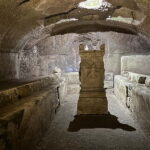
You basically have two ways to do this day: a shorter ride that gives you the key outdoors highlights, or a longer one that adds time underground. The 6-hour tour includes a guided Catacombs visit through crypts and corridors. The 4-hour tour makes only a short stop at the Catacombs entrance for brief context.
If you want the Catacombs experience as a main event, pick the 6-hour option. The guided component matters because you’re not just looking at an entrance sign; you’re moving through the spaces with direction and explanation. If you prefer a more outdoors-heavy day and want to keep the underground part minimal, the 4-hour route is a good fit.
Either way, you’ll still cover the Appian Way and end with the aqueducts and parks. The difference is how much of the day is spent in a darker, slower rhythm rather than on the bike.
Meeting at Via Labicana and getting ready fast
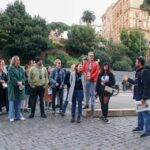
You meet at Via Labicana 49, and it’s easy to reach from central Rome. The instructions route you from either Metro COLOSSEUM or Metro MANZONI, then a short walk to the meeting address.
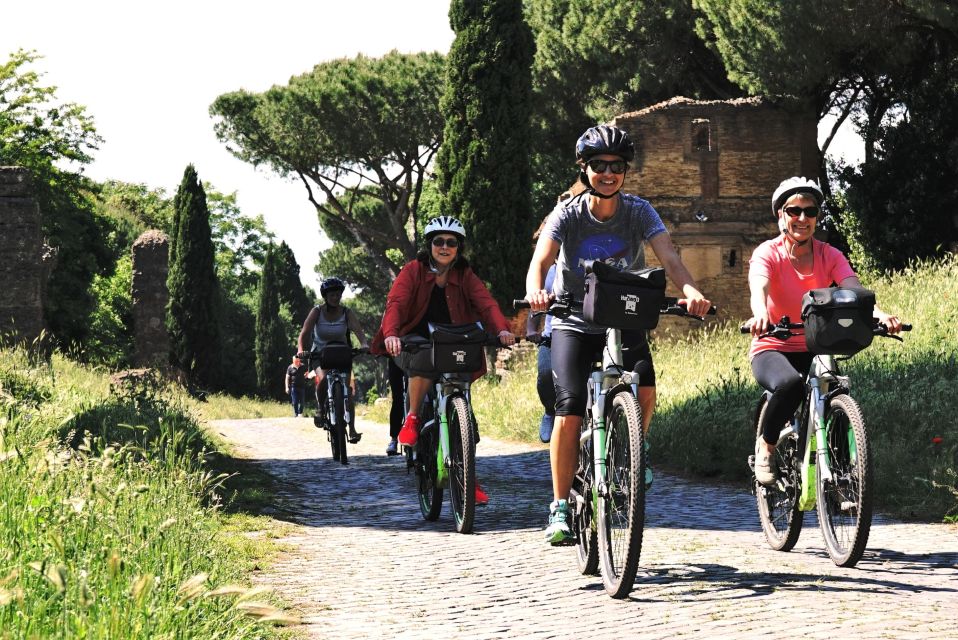
Once you arrive, the setup is straightforward: you get a helmet (mandatory), a Cannondale e-mountain bike with anti-puncture tires, and a 5-liter handlebar bag. You also get a biodegradable bottle of water, which is useful because this is not a food-included tour.
Small group size helps here. With a limit of 10 participants, it’s easier for your guide to manage everyone’s pace and keep the ride feeling calm rather than chaotic.
The early ride: St. Sebastian’s Gate to the Appian Way
The tour begins with an entrance through St. Sebastian’s Gate in the Aurelian Walls, which sets the tone right away. You’re stepping from central Rome into a route that stretches back into the story of Rome’s rise, golden age, and decline.
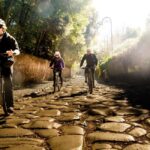
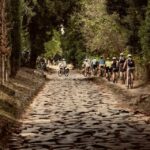
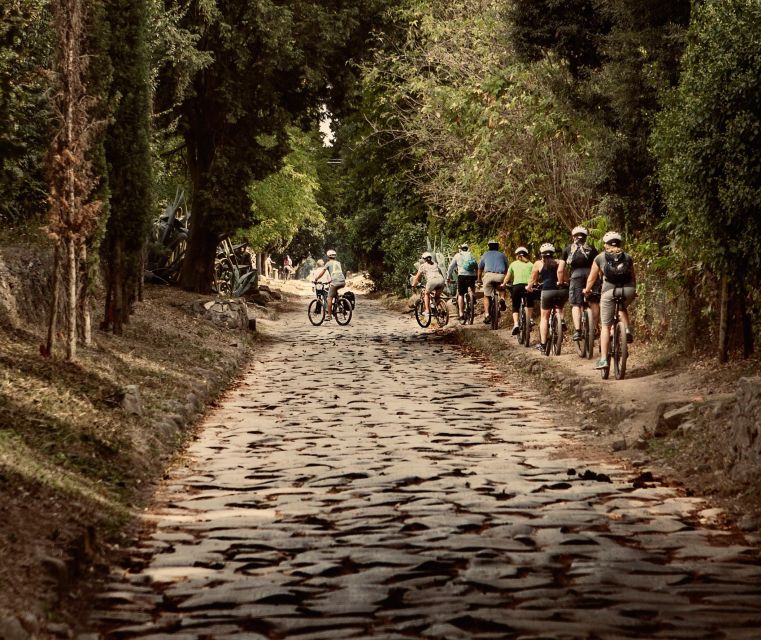
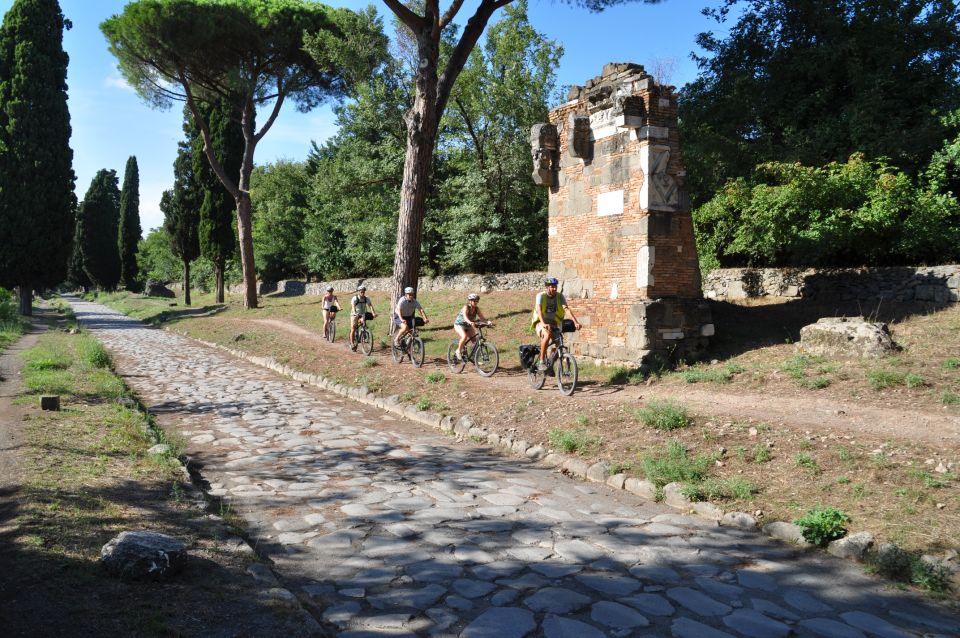
From there, you ride into the Appian Way, a road that’s presented like an open-air museum. You pass ancient sites along the way—tombs, mausoleums, and villas of aristocratic life—so you’re not only learning facts. You’re seeing how the built landscape changes with every stop.
One practical note: the itinerary includes some city riding to connect from your start point to the Appian Way and later to the Aqueducts Park. About 40% of the tour is in the city. The good news is the remaining 60% is in parks, where traffic is not the focus.
Appian Way stops: Circus of Maxentius, Cecilia Metella, Villa dei Quintili
This part of the ride is about scale. On the Appian Way, you’re presented with monumental fragments—places you can look at from a bike and then linger over when your guide calls a stop.
You pass the Circus of Maxentius, then continue to the Tomb of Cecilia Metella, and later stop at Villa dei Quintili. These aren’t random photo stops. They each help you picture how different types of structures sat alongside a major thoroughfare, and how power and commemoration shaped the landscape.
Because you’re moving, you also get a useful sense of distance. You can’t fully appreciate these sites if you only view them from one angle. Riding between stops gives your brain the “layout” so the ancient road stops feeling like isolated ruins.
You can also read our reviews of more tours and experiences in Rome



Aqueduct Park: following the arches back toward modern Rome
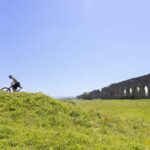
The emotional payoff of the tour is the Parco degli Acquedotti. You ride with the colossal Roman aqueduct arches in view, then follow them back toward the city. Even if you’ve seen pictures of aqueducts before, seeing these structures at riding speed changes the scale again.
Your route uses the aqueduct park for a reason. In the parks, there’s no traffic, so your focus can stay on the landscape and the engineering you’re seeing as you pedal. The light in that area—especially later in the day—is also made for photos, since the arches read clearly against the sky.
There’s also a psychological benefit. When you’ve spent time in Rome’s street bustle, it’s refreshing to ride where the terrain and space feel designed for movement, not navigation and stopping.
Caffarella Valley and Baths of Caracalla: ending with open air
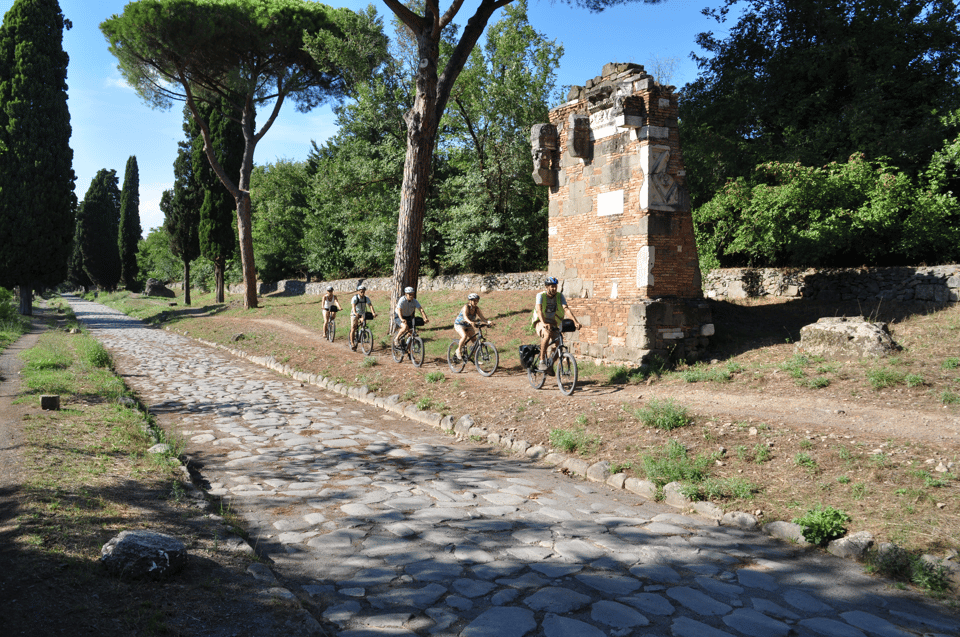
After the aqueduct park stretch, you cross the Caffarella Valley. It’s a green break that keeps the day from ending too abruptly. This is where the ride feels more like a long countryside stroll with wheels, even though you’re still hitting major landmarks.
The itinerary also includes the Baths of Caracalla as a final sightseeing stop before you return. This is a good “bookend” because it pulls the day back toward a more urban Roman atmosphere while still leaving you with the countryside calm you got from the route.
When you finish, you’re back at Via Labicana 49, so you don’t have to scramble across town after a long ride. If you still have energy, this setup makes it easier to plan dinner near central Rome.
E-bike reality check: intermediate terrain and how to handle it
Even with e-assist, this is not a casual flat ride. The tour covers 27 km (17 mi) with about 60% off-road, and the official level is intermediate. That means uneven ground, gravel, and stretches that can feel bumpy even when the bikes are powerful.
The good news is that the bikes are built for this. You’re on Cannondale quality e-mountain bikes, and the anti-puncture tires are there for peace of mind on rougher surfaces. The e-assist also helps you pedal comfortably without feeling like you’re fighting every hill.
But you still need bike-handling comfort. City segments require attention, especially when crossing roads and weaving through unavoidable traffic connections. Your guide’s job is to manage it, and the group size helps, yet you should still go into the experience confident enough to ride steadily.
If you’ve never ridden before, I’d treat this as a “learn with support” day rather than a throw-your-balance-into-it day. The sooner you get comfortable with starting, stopping, and holding a consistent line, the more fun the ride becomes.
Safety and guide style: how the ride stays controlled
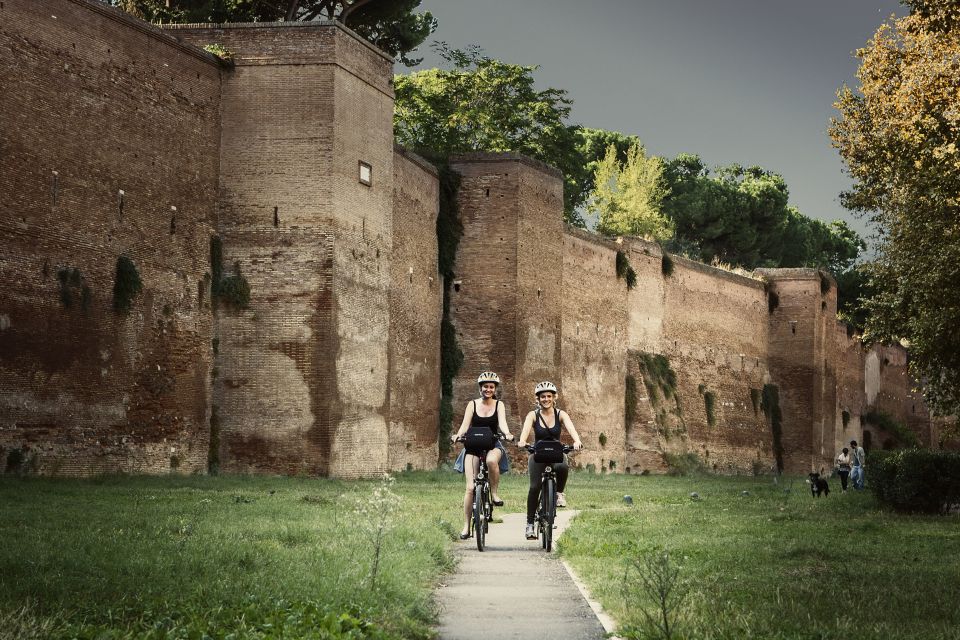
A tour like this succeeds or fails based on the guide’s traffic strategy. The route includes city riding, which means your guide needs to time crossings, control spacing, and watch each rider’s comfort level.
This operator consistently runs small groups and uses guide instruction that focuses on safety. In practice, that often means repeated checks that everyone is okay with the pace, reminders before busier sections, and regrouping when someone needs a moment.
You’ll see the effect in how the ride flows. When your guide is confident—like the guides people name often, such as Arina, Oscar, Ali, Pablo, Zac, Agnese, Cas, or Bita—the day feels organized even when the setting is complex.
And yes, sometimes the ride gets bumpy. One rider even wished for rear shocks after rougher sections. The takeaway for you: wear the helmet, keep your grip steady, and expect some vibration on uneven paths.
What’s included vs what you’ll need to plan
Included in the price are the e-bike, professional guide, helmet, a handlebar bag, the water bottle, and—if you book the 6-hour version—the guided Catacombs visit.
Not included is food and drinks, so you’ll want to plan around that. The schedule includes multiple stops, and there’s time where you can pick up something along the way, but it’s not a sit-down meal included in the cost.
If you’re the type who runs on food, bring snacks or make a plan to buy something during the day. Also bring comfortable shoes as recommended, since you’ll be doing plenty of short look-around periods on uneven ground.
Price and value: why $85 can make sense here
At $85 per person for this 4–6 hour e-bike experience, the value comes from three things: the bike quality, the guide time, and the structure of the day.
A quality e-mountain bike with anti-puncture tires is not a cheap add-on, especially for a route with off-road riding. Then you add a professional guide who handles traffic management and pacing over a long loop, which makes a big difference for your comfort. Finally, the itinerary is built so you’re not just riding between one landmark and another—you’re moving through a chain of meaningful sites like Appian Way monuments, aqueduct arches, Caffarella Valley, and the Baths of Caracalla.
Compared with trying to DIY this with rentals and navigation, the guided approach is what makes it feel relaxing. Even with e-assist, you’ll still be glad you don’t have to solve route decisions in busy Roman streets.
Weather, timing, and the rhythm of the day
This tour is timed for an outdoors-heavy experience. That helps if you’re visiting Rome in a season when the countryside parks feel pleasant and the light makes aqueducts look dramatic.
You should also know that on Wednesdays the tour can run 30 minutes longer. That matters if you have a tight schedule after your ride. Otherwise, the 4-hour vs 6-hour option gives you built-in control over how much of your day you want to spend on bikes and whether the Catacombs visit fits.
Also, rain can happen in Rome. If it’s wet, the off-road parts can feel more slippery. Your guide will still run the route, but go in with the mindset that traction and careful riding matter.
Who should book this e-bike Appian Way tour
You should book if you want an active day that still feels thoughtful. This works especially well if you’re:
- Comfortable enough on a bike to ride uneven terrain and mixed streets
- Interested in Roman engineering themes, not only the biggest-ticket ruins
- Hoping to get outside the densest central tourist flow
- Traveling with teens who can ride independently (the route notes that kids aged 9 and above can ride independently)
It’s also a strong fit for a first-time e-bike rider, as long as you’re ready to learn quickly and follow instructions. Some riders in this category report that e-assist made the ride feel much easier than expected, because you don’t have to grind through every hill by leg power alone.
You might skip this if you’re seeking a gentle, fully paved ride with minimal handling demands. The route is long, and the terrain is not uniform.
Should you book the Rome Appian Way, Catacombs & Aqueducts tour?
If you like Rome when it stretches beyond the center, I’d book this. The Appian Way gives you the ancient road experience in a way that walking alone can’t match, and the Aqueduct Park is where the scenery rewards your effort. The Catacombs option is there for you if you want underground history, and skipping it keeps the day lighter if that’s your preference.
Pick the 6-hour tour if you want the Catacombs visit as a true feature of your day. Pick the 4-hour tour if you want the outdoors and aqueduct payoff with less time underground.
Just be honest with your riding comfort. This is intermediate, with a long route and bumpy off-road sections. If you go in prepared—helmet on, steady grip, comfortable shoes—you’ll end the day feeling like you saw a real slice of Rome, not just a list of stops.
FAQ
How long is the Rome Appian Way, Catacombs, and Aqueducts e-bike tour?
It runs 4 to 6 hours, depending on which version you book.
What is the difference between the 4-hour and 6-hour tour?
The 6-hour tour includes a guided visit to the Catacombs. The 4-hour tour does a shorter stop at the Catacombs entrance with a brief explanation, but it does not include the guided visit.
Where does the tour start and end?
It starts and ends at Via Labicana 49.
What’s included in the tour price?
You get a Cannondale quality e-mountain bike (with anti-puncture tires), a professional guide, a helmet (mandatory), a 5-liter handlebar bag, and a biodegradable bottle of water. The Catacombs guided visit is included only on the 6-hour tour.
What should I bring?
Wear comfortable shoes. You may also want to bring your own snacks, since food and drinks are not included.
Do I need to be an experienced cyclist?
The tour is rated intermediate and includes about 60% off-road and some city traffic, so it helps to be comfortable riding a bike.
How much off-road riding is there?
The total distance is 27 km (17 mi), and about 60% is off-road.
Is there traffic on the route?
About 40% of the tour is in the city, where some traffic is unavoidable. The remaining 60% is in parks, where there is no traffic.
Are children allowed?
Infants under 1 year are not suitable. Children aged 1–4 travel on a child seat and ride for free. Children aged 5–8 ride with a child extension. Children aged 9 and above can ride independently.
Is food included, or can I buy something during the tour?
Food and drinks are not included, but it’s possible to purchase some along the way.