REVIEW · BORGHESE GALLERY
Rome: Borghese Gallery and Gardens Guided Small-Group Tour
Book on GetYourGuide →Operated by City Wonders Ltd. · Bookable on GetYourGuide
Timed silence helps you see Rome’s art clearly. This small-group Borghese Gallery and Gardens tour uses controlled entry and a tight max group size, so you spend more time looking and less time shuffling. I especially love the headset-guided storytelling, and I also like how the visit is set up to make the room details feel important, not overwhelming. The main drawback is simple: you’ll do a fair amount of walking, and you can’t bring bags into the Borghese Gallery.
What really makes this worth your time is the way the art is explained in context—Cardinal Scipione Borghese’s obsession with collecting, and the way key works were placed in their original settings. Some guides really lean into the drama and energy, like Sal or Federica, and you’ll feel it in how they connect Bernini’s sculpture, Caravaggio’s religious intensity, and Raphael’s scene. You’ll finish with a short stop at the Borghese Gardens, a calmer counterpoint with shade, sculptures, and fountains.
In This Review
- Key things to know before you go
- Why the Borghese Gallery setup feels calmer than most Rome museums
- Meeting at Piazzale del Museo Borghese: what to do before you enter
- Inside the Galleria Borghese: Bernini, Caravaggio, Raphael, and the collector’s plan
- How the guided rooms lead into self-guided time
- Borghese Gardens with sculpted shade: a real break from indoor art
- Price and value: why $60 can make sense in a timed-entry museum
- Who this tour suits best (and who should think twice)
- FAQ
- FAQ
- How long is the Rome Borghese Gallery and Gardens guided small-group tour?
- Where do we meet the tour guide?
- Is this a small-group tour?
- What’s included in the price?
- Do I need to bring anything?
- Are there restrictions on bags and luggage?
- Are mobile phones allowed?
- Is there walking involved?
- Is the tour accessible for wheelchair users or strollers?
- What’s the cancellation and payment flexibility?
- Should you book this Borghese Gallery and Gardens tour?
Key things to know before you go
- Timed-entry control helps you avoid the worst museum crush and get better sightlines for the big names
- Headsets mean you hear your guide clearly even when you’re moving through packed rooms
- Cardinal Scipione Borghese’s collection vision ties the gallery together instead of treating it like separate masterpieces
- Bernini, Caravaggio, Raphael, and Canova are the headline acts, with stories tied to why they were chosen
- Small group size (15 max) keeps questions possible and pacing easier to handle
- A short garden break lets you reset your brain with sculpture-lined paths and fountains
Why the Borghese Gallery setup feels calmer than most Rome museums
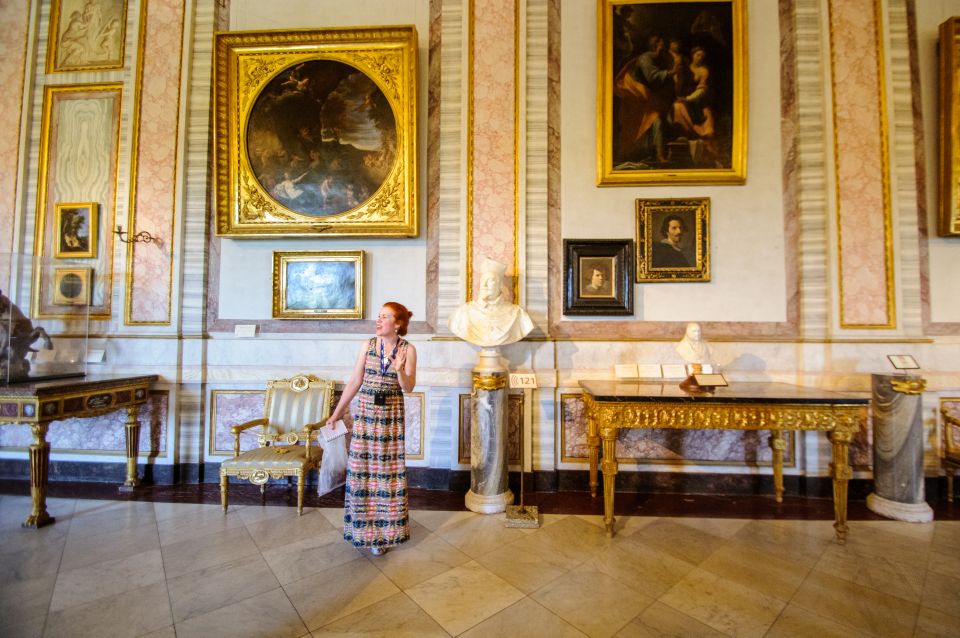
The Borghese Gallery is famous for a reason, but it can also feel stressful in practice. Timed entry matters here, because crowds at the wrong moment can ruin your ability to slow down and actually see faces, gestures, and carved textures. This tour’s controlled access is designed to keep things steady so you’re not stuck waiting while other groups surge past.
I also like the small-group format because it changes how you experience the rooms. With a max group of 15, the pace tends to be humane: you can move forward when it’s time to progress, then stop to look without feeling like you’re holding up a stampede. It’s still a museum visit, so you’ll be walking and paying attention, but the rhythm is less frantic.
Your guide’s job is to make the gallery feel like a planned world. Cardinal Scipione Borghese didn’t just commission art—he built an overall experience, and many famous works remain in their original settings. That means you’re not only looking at masterpieces; you’re also noticing how they were staged, where they were placed, and what mood the rooms were meant to create.
Meeting at Piazzale del Museo Borghese: what to do before you enter
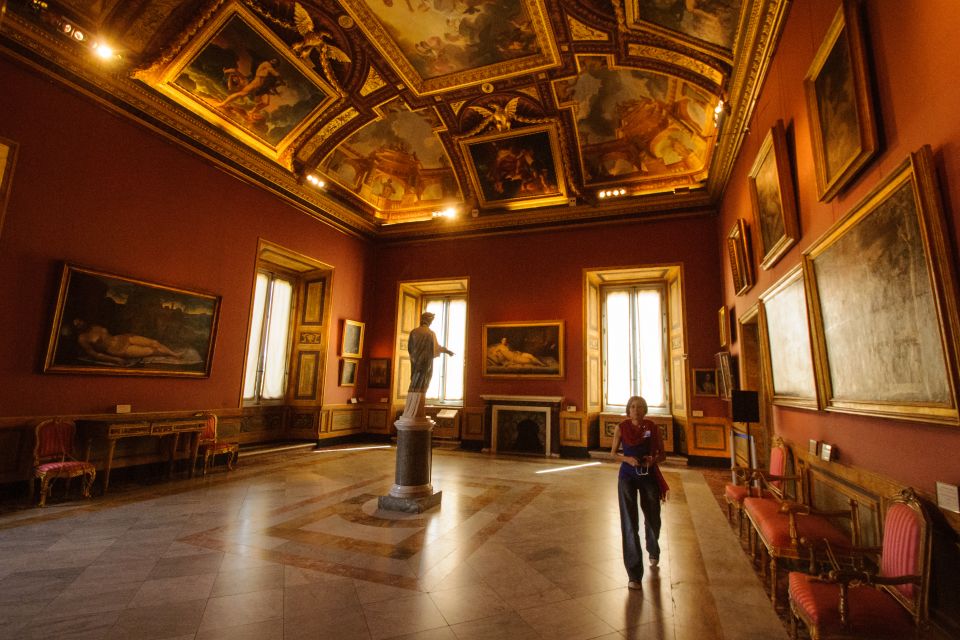
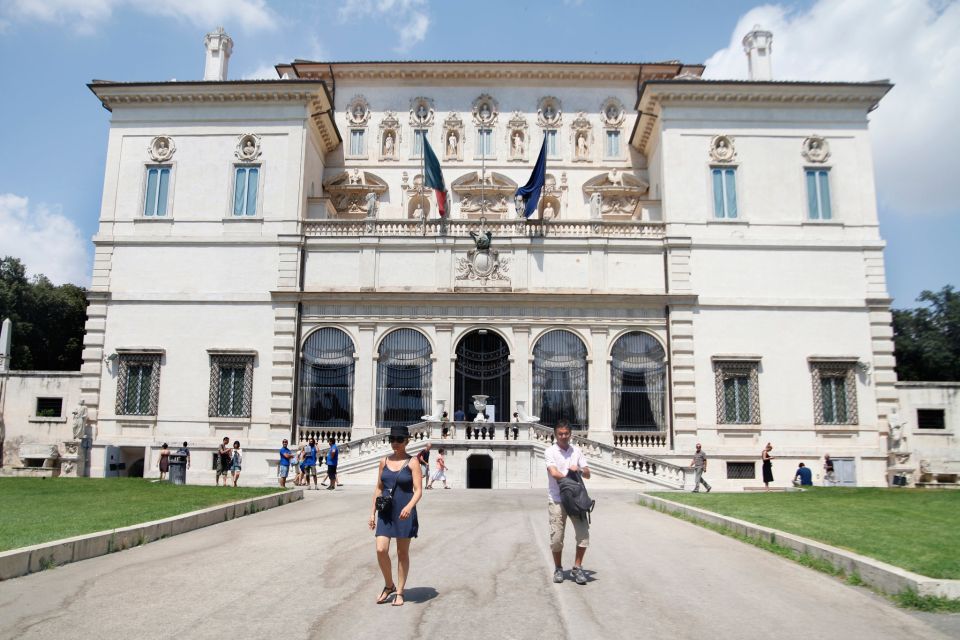
You’ll meet your guide at Piazzale del Museo Borghese, right in front of the Borghese Gallery. Plan to arrive about 15 minutes early because late arrivals can miss the start, and you may not be able to join once the timing window passes.
This is also one of those Rome tours where your “prep” matters. Bring a passport or ID card, wear comfortable shoes, and leave the bags at home. You can’t bring luggage or large bags, and the gallery rules are stricter: no bags are permitted inside. Mobile phones are also prohibited, so leave yours away before you enter the rooms.
One more practical note: security checks can slow things down at some venues, and you may have to deal with mandatory checks before you’re inside. The best move is to travel light and move with purpose—no lingering at the curb while others step into the flow.
Inside the Galleria Borghese: Bernini, Caravaggio, Raphael, and the collector’s plan
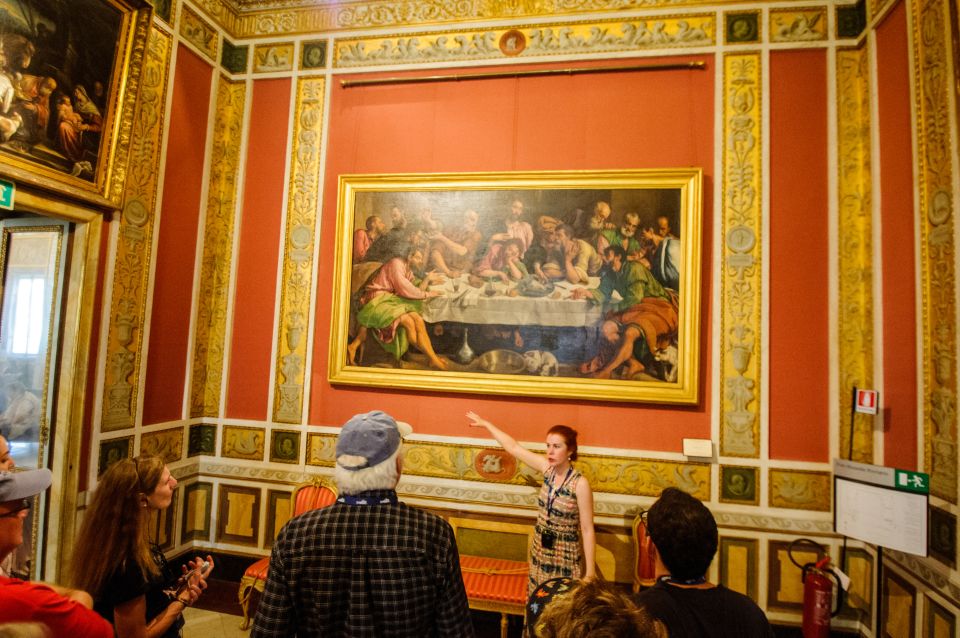
The core of this tour is the guided visit through the Borghese Gallery. The big value is that your guide doesn’t treat the collection like a checklist. Instead, you learn the collector logic: Cardinal Borghese commissioned the Villa Borghese itself and helped shape what you see inside it. Once that clicks, the gallery stops being just a set of famous names and starts feeling like a coherent story.
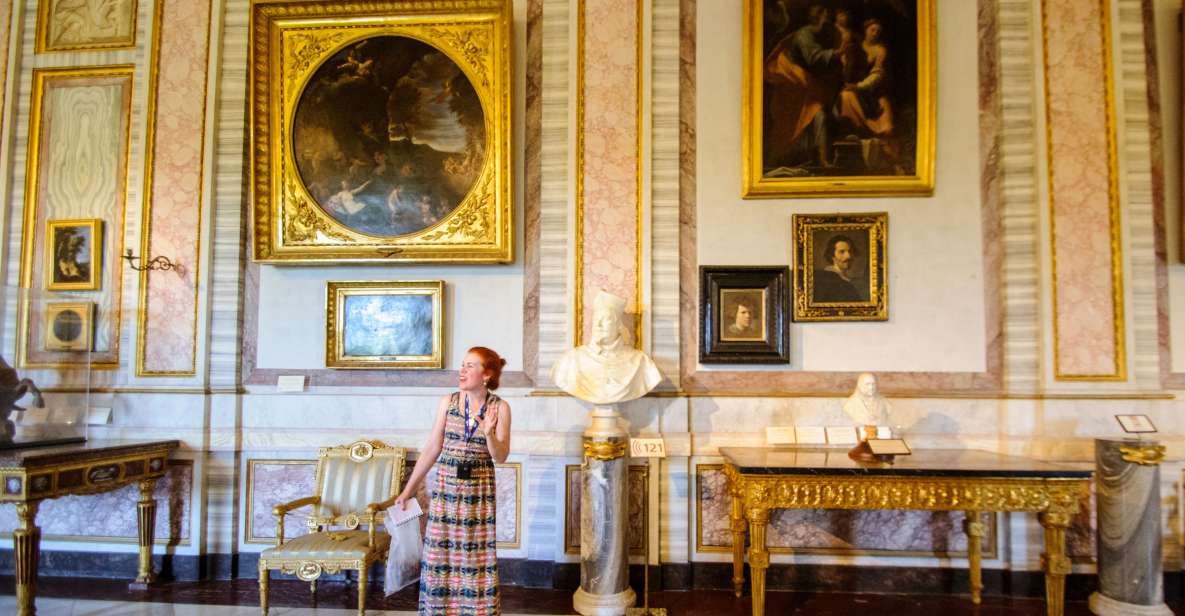
Expect your guide to connect the artworks to people, power, and persuasion. This is where the audio headsets pay off. They help you catch details while you’re standing at the right distance from the sculpture or painting. You can focus on what’s in front of you instead of constantly squinting to hear across a crowd.
Here are the headline works you can look forward to, and the kind of context your guide is likely to highlight:
- Bernini’s Apollo and Daphne: you’ll hear how Bernini’s movement and emotion are part of the collector’s taste—dramatic, theatrical, and crafted to pull you in
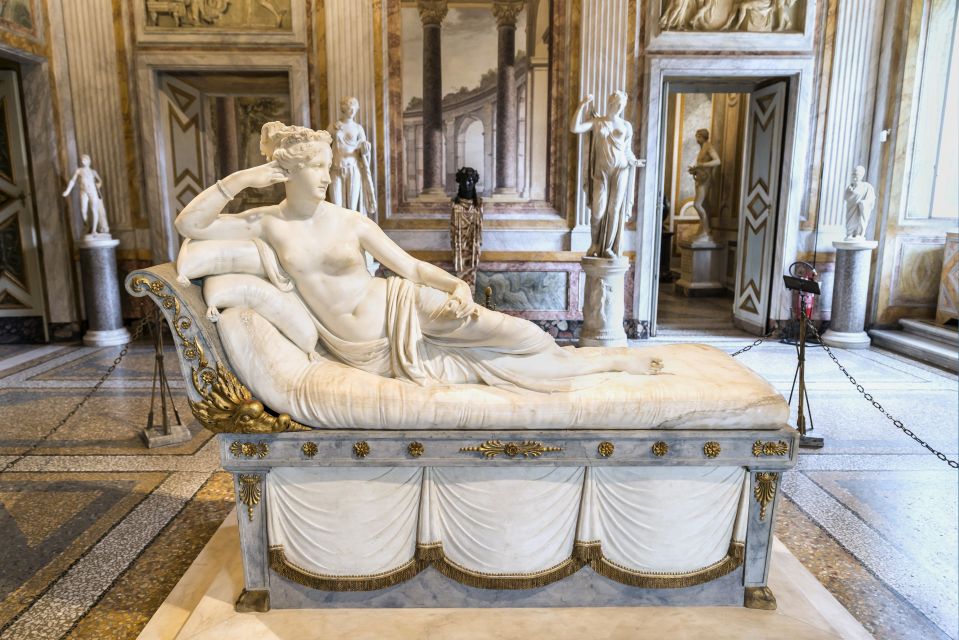
- Canova’s Pauline Bonaparte: the guide will place it in the orbit of how art functioned as image and message
- Caravaggio’s St. Jerome: expect discussion of intensity, realism, and why religious scenes landed with such force
- Raphael’s The Deposition: you’ll get story context that helps you see the composition as more than paint on canvas
- Plus major names like Titian among the painterly highlights, with guidance on what to notice in each room
Guides vary, but the overall pattern from excellent guides is consistent: they slow you down at the moments that matter. One guide style (like Sal in multiple mentions) seems to focus on clarity and pace, making it easy to follow. Another (like Federica in several accounts) leans into storytelling so the art feels tied to real decisions and real ambitions. Either way, the best outcome is the same: you understand what you’re looking at, not just what it’s called.
How the guided rooms lead into self-guided time
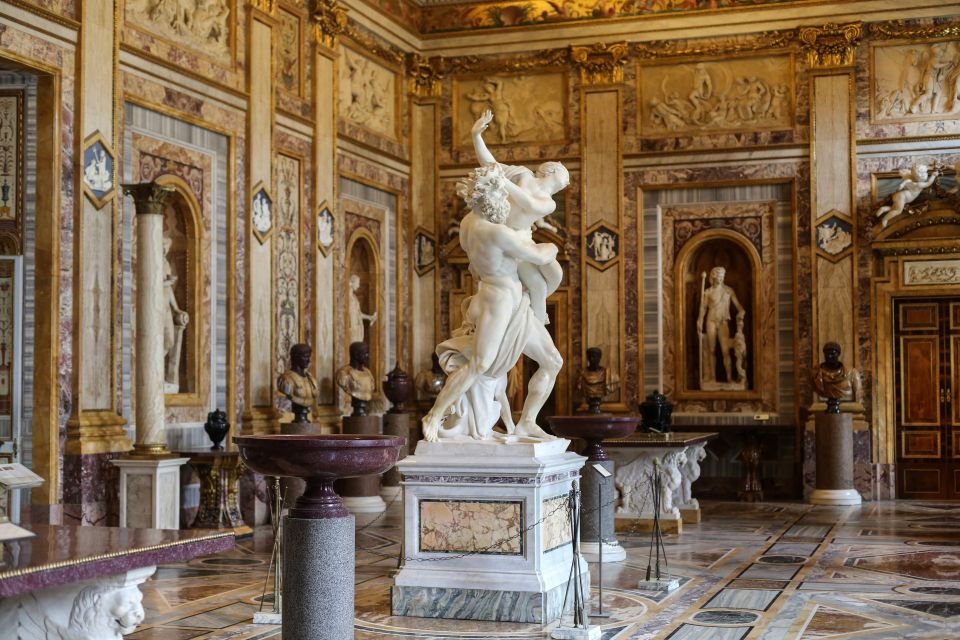
This experience isn’t only you rushing through rooms with a guide. There’s also a period where you can keep exploring on your own after the guided portion. That matters because Borghese rewards lingering. A sculpture changes when you move a half-step. A painting’s emotion can click differently once you know what to look for.
Use the guided part as your roadmap. When your guide points out a relationship—between pose and expression, between myth and the politics behind patronage, between composition and meaning—write it in your head and then test it. In your own time, try looking again from the spots your guide used. If you’ve got a favorite work, don’t feel like you need to hit everything equally. Pick 2 or 3 masterpieces and spend extra attention on them.
There’s also a practical limitation: you’ll be working within a set visit length. Some people mention feeling the time gets tight, especially at the end portions when you’re trying to do everything. So I’d treat this as a “best-of” experience with expert context, not a “slow museum day.” If you’re the type who wants hours for every room, you may still want a follow-up independent visit later.
Borghese Gardens with sculpted shade: a real break from indoor art
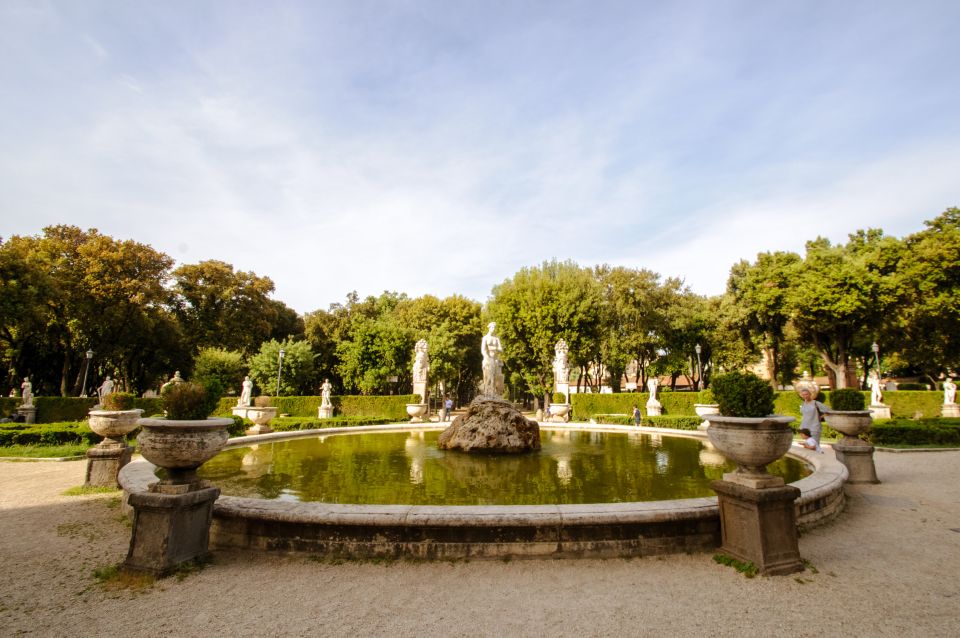
After the gallery, you shift gears to the Borghese Gardens—once a private park, now a beloved escape for locals. Even with the short time on the schedule, this stop gives your brain a reset. You go from artworks you study at close range to a landscape where sculptures, plants, and water features shape the mood.
The gardens are often described as an English-style garden, and that’s visible in the way paths meander through shaded areas. Expect shady lanes, sculptures placed in thoughtful spots, and tranquil fountains that make the garden feel like a quiet extension of the villa’s artistic world. It’s a nice counterbalance to the gallery’s intensity.
Time can be tight here, and heat can push you to move faster. I’d bring this into your planning: if you’re visiting in warm weather, you may need to prioritize what you want to see most. Even if the garden segment is shorter than you’d like, the value is still the contrast—art indoors, then a calm outdoor pause.
Price and value: why $60 can make sense in a timed-entry museum
$60 may sound like a lot until you break down what’s included and what it solves. You’re paying for:
- entry to the Borghese Gallery
- an expert English-speaking guide for the gallery portion
- headsets so you can actually hear your guide
- small-group handling (max 15)
- a Borghese Gardens visit
The “value” piece is the timing and the explanation. Timed entry at major sites can mean waiting around, guessing where to stand, and missing context while you’re trying to organize yourself. Here, the tour format helps you get in cleanly and move through the rooms with someone who knows where the key moments are.
Also, headsets are not a small detail. In a gallery, you’re often positioned among other visitors and moving between rooms. Without audio help, you can lose half the story. With headsets, the tour becomes more like a conversation with art history, not a noisy walk-by.
So I see this price as reasonable if you want the Borghese experience to feel guided, not improvised. If you love reading labels and don’t mind figuring out pacing on your own, a self-guided visit may be cheaper. But for most people, the combination of timed access plus expert guidance is what turns the gallery into a stronger memory.
Who this tour suits best (and who should think twice)
This is a great choice if you want to see the Borghese Gallery efficiently and understand what you’re looking at. It’s especially helpful if:
- you want the big artists and masterpieces, including Bernini, Caravaggio, Titian, Raphael, and Canova
- you prefer a calmer experience over sprinting through rooms
- you appreciate art history explained in plain, practical terms
It’s less ideal if you need mobility accommodations. This tour cannot accommodate wheelchairs, strollers, or baby carriages, and it’s not set up for guests requiring special assistance. If you fall into that category, you’ll want to choose a different format that matches your needs.
Also, be honest with yourself about rules. The “no bags in the gallery” policy and the “no phone use” rule mean you need to travel light and follow instructions closely. If you show up with a large bag or you’re hoping to treat it like a casual museum browse with your phone out, you’ll feel the constraints.
FAQ
FAQ
How long is the Rome Borghese Gallery and Gardens guided small-group tour?
The tour duration is listed as 2.5 hours.
Where do we meet the tour guide?
Meet at Piazzale del Museo Borghese, in front of the Borghese Gallery.
Is this a small-group tour?
Yes. The group size is capped at 15 people.
What’s included in the price?
You get an entry ticket to the Borghese Gallery, a guided gallery visit, expert English-speaking guide, headsets, and a visit to the Villa Borghese Gardens.
Do I need to bring anything?
Bring your passport or ID card.
Are there restrictions on bags and luggage?
Yes. Luggage or large bags are not allowed, and no bags are permitted in the Borghese Gallery.
Are mobile phones allowed?
No. The use of mobile phones is prohibited during the tour.
Is there walking involved?
Yes. This tour involves a fair amount of walking, so comfortable shoes are recommended.
Is the tour accessible for wheelchair users or strollers?
No. It cannot accommodate wheelchairs, strollers, or baby carriages.
What’s the cancellation and payment flexibility?
Free cancellation is available up to 24 hours in advance for a full refund. You can reserve now and pay later.
Should you book this Borghese Gallery and Gardens tour?
Book it if you want the Borghese Gallery to feel organized, calm, and well explained—especially if timed entry and hearing your guide clearly matter to you. The small group size, headsets, and the chance to learn the collector’s stories behind works by Bernini, Caravaggio, Raphael, and Canova make it a strong value at $60.
Skip it (or look for another option) if you can’t handle the walking, you need stroller or wheelchair access, or you’ll struggle with the strict no-bags and no-phone rules. If you’re the right fit, this is one of those Rome experiences that’s easier to enjoy when someone else handles the pacing and you can focus on the art.