REVIEW · CASTEL SANT'ANGELO TOURS & TICKETS
Rome: Castel Sant’Angelo Skip the Line Private Tour
Book on GetYourGuide →Operated by Raphael Tours & Events · Bookable on GetYourGuide
Rome’s darkest tomb sits above the river. A skip-the-line private guide brings Castel Sant’Angelo to life as it shifts from imperial mausoleum to papal residence and prison.
You’re not just looking at stone—you’re following a story across fortified walls, statuary, paintings, and key chambers.
I especially like two stops: Emperor Hadrian’s tomb, and Pope Paul III’s apartment with its standout frescos. The guide’s focus makes these rooms feel less like a checklist and more like scenes in one long plot.
One thing to plan for: the visit includes a run of stairs to reach the panoramic terrace, and it isn’t suitable for wheelchair users or people with mobility impairments.
In This Review
- Key highlights you’ll care about
- Why Castel Sant’Angelo Feels Different With a Private Guide
- Finding the Meeting Point and Getting Into the Castle Fast
- Emperor Hadrian’s Tomb: The Mausoleum That Became a Fortress
- Pope Paul III’s Apartment and Its Frescos
- Treasure Rooms, Ancient Walls, and the Art You’ll Actually Understand
- The Castle’s Many Jobs: From Treasury to Prison and Public Executions
- Panoramic Terrace Views and the Stairs Reality Check
- Time, Pace, and Who the 2-Hour Format Fits Best
- Price: Is $214.11 Per Person Good Value for Rome?
- Should You Book This Skip-the-Line Private Tour?
- FAQ
- How long is the Rome Castel Sant’Angelo skip-the-line private tour?
- Does this tour include skip-the-line entry?
- What parts of the castle will I visit?
- Is the tour guide available in English?
- Do I need to bring anything or wear anything specific?
- Is this tour suitable for wheelchair users or mobility impairments?
Key highlights you’ll care about

- Skip-the-line entry via a separate entrance saves time for a 2-hour tour
- Hadrian’s tomb shows how an imperial plan became a fortress
- Pope Paul III’s apartment and frescos connect art with power
- Treasure room access adds a different angle beyond tomb-and-prison
- Top terrace views of Rome make the walk feel worth it
- A live English private guide keeps the pace tight and the details clear
Why Castel Sant’Angelo Feels Different With a Private Guide
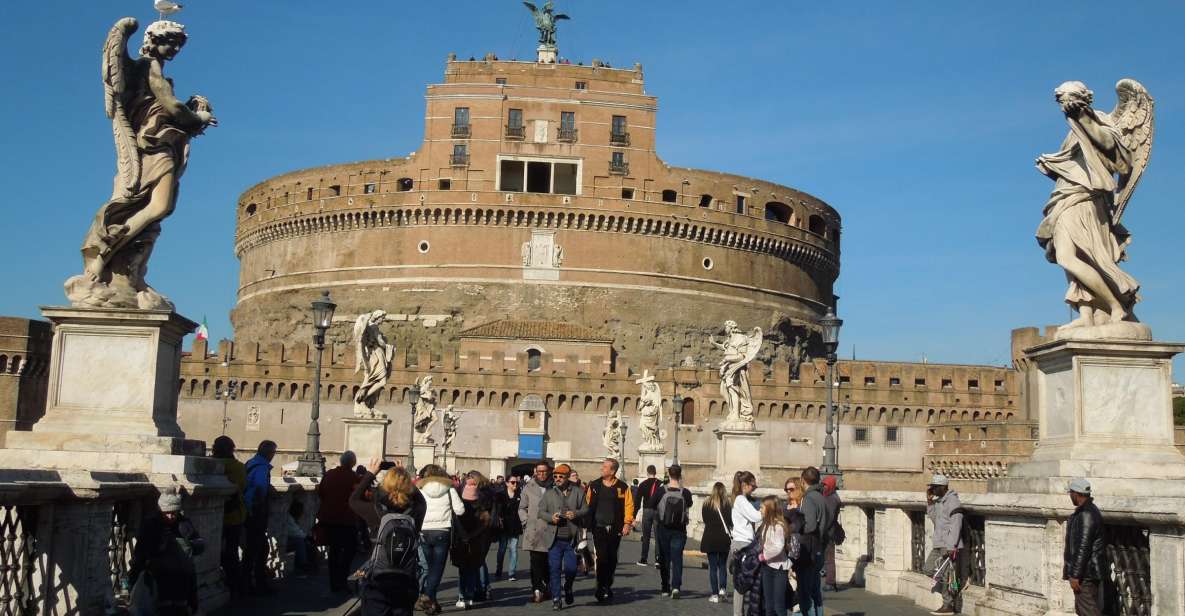
Castel Sant’Angelo is one of those Rome sites that can look straightforward from the outside—until a guide explains how the place kept changing jobs. This tour is designed to help you read the castle: first as Hadrian’s tomb, then as a papal residence, then as a treasury and prison, and at points as a venue for public executions.
A private format matters here. In two hours, you don’t have time to wander and “hope” you catch the important details. With a guide, you move with purpose—through ancient fortified walls, past statues and painted spaces, and into the specific rooms where the castle’s roles show up.
And you get more than “cool stuff.” You get connections—how architecture and artwork reflect who controlled the building at different times. It’s the difference between looking at rooms and actually understanding what they were built to do.
You can also read our reviews of more private tours in Rome

Finding the Meeting Point and Getting Into the Castle Fast
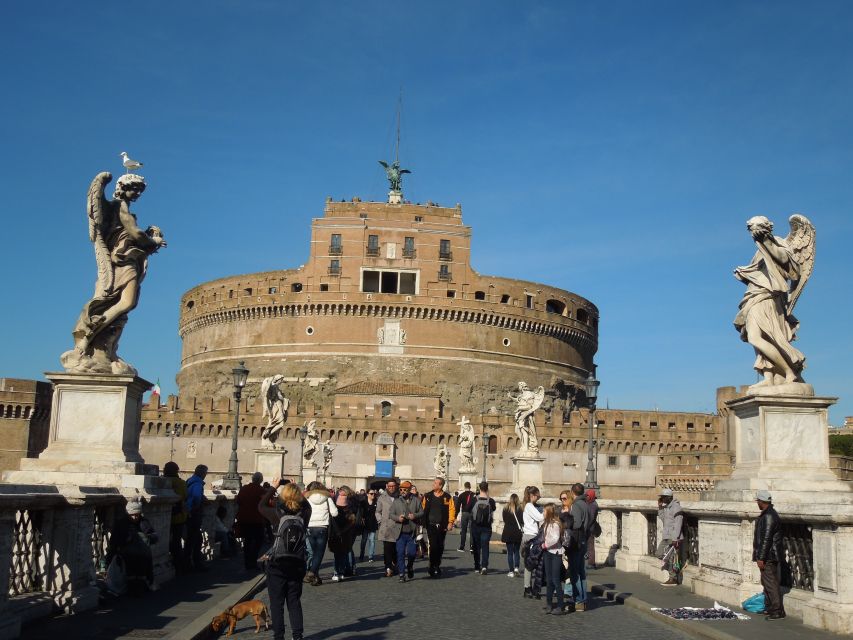
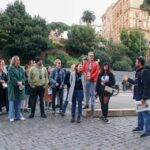
You’ll meet the guide in the square at the end of the bridge, outside the main entrance. Since there’s no hotel pick-up or drop-off, you’ll want to arrive on foot and ready to start walking immediately.
The big practical win is the skip-the-line setup. You enter through a separate entrance, which helps a lot on busy days. For a 2-hour experience, shaving off waiting time is the difference between feeling rushed and feeling like you got your money’s worth.
Come with sensible footwear. The tour is walking-based, and the castle includes stairs—especially for the terrace. Also note the rules: no large bags or luggage, and unaccompanied minors aren’t allowed. If you’re traveling light, you’ll have a smoother time.
Emperor Hadrian’s Tomb: The Mausoleum That Became a Fortress
The heart of the visit is Emperor Hadrian’s tomb. This is not just a “place where someone is buried.” It’s the origin point of the entire complex, originally built to serve as Hadrian’s final resting place.
From a reader’s point of view, this is where the castle’s layers start to click. You begin with an imperial intention, then you keep learning how later rulers repurposed the structure. Even without getting lost in technicalities, you can see the logic: a strong building with a powerful location becomes useful again and again.
This stop is also a good way to reset your expectations. Many people arrive thinking they’ll mostly see papal rooms or just viewpoints. Hadrian’s tomb reminds you that the story began long before the popes—and the castle’s later history carries that original weight.
Pope Paul III’s Apartment and Its Frescos
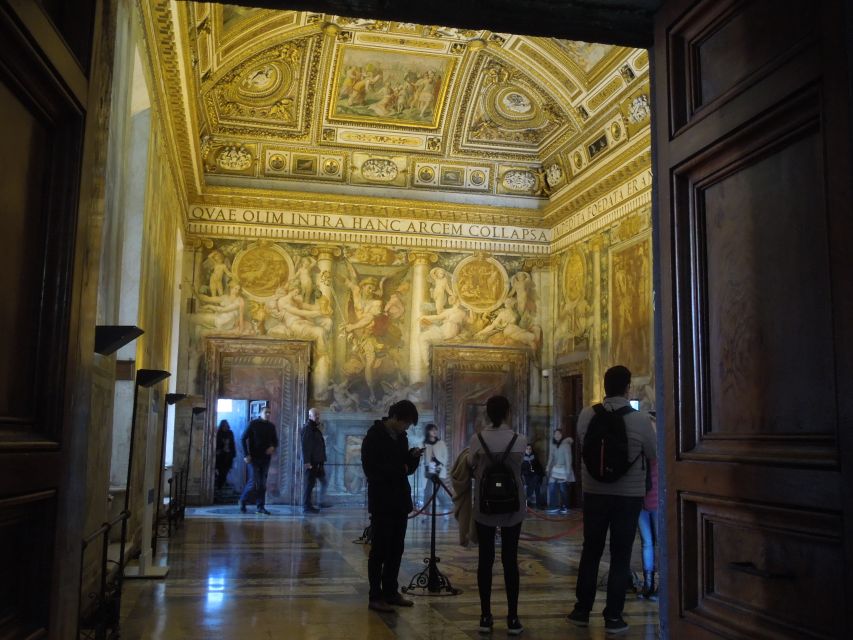
Next, you’ll get into one of the tour’s most appealing contrasts: the papal side. The highlight here is Pope Paul III’s apartment, where you can see amazing frescos and experience the castle as a residence, not only a stronghold.
This matters because it shifts your attention from stone defense to human expression. Frescos are about status, taste, and messaging. In a castle that also served as a treasury and prison, that artistic setting adds context. You start to understand that power didn’t just protect itself—it performed itself.
If you care about art, this is the kind of stop that stays memorable because you’re not guessing what you’re looking at. The guided approach helps you connect the artwork to its place in the building’s timeline.
Treasure Rooms, Ancient Walls, and the Art You’ll Actually Understand
Between the major named highlights, you’ll explore other key areas: fortified walls, statues, and samples of art in both architecture and paintings. The goal isn’t to rush past everything. It’s to show you the castle’s visual language, room by room.
One underrated reason to book a guided version: castles are full of details, and most visitors don’t know what to notice. Here, you’re guided to interpret what you’re seeing—so a wall or statue becomes a clue instead of background decoration.
The tour also includes the treasury room, which adds a practical slice to the story. If the tomb and papal apartments feel like “symbolic” spaces, the treasury reminds you that rulers needed money—fast access to resources inside a defensible location.
You can also read our reviews of more tours and experiences in Rome




The Castle’s Many Jobs: From Treasury to Prison and Public Executions
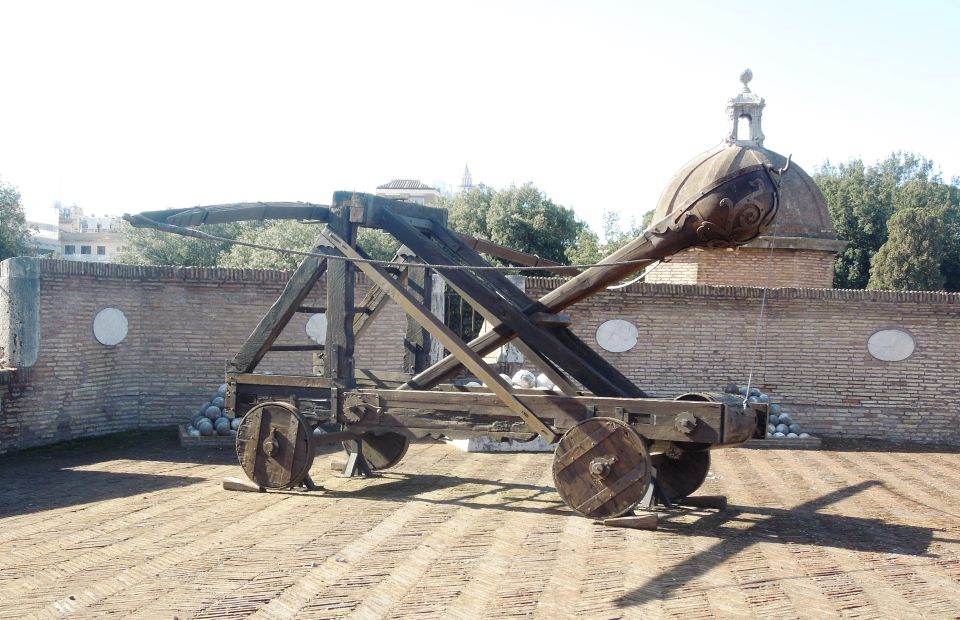
Castel Sant’Angelo’s résumé is intense. Over time it served as a state treasury, a prison, and a site for public executions. That breadth changes how you should see the building.
Even during the most scenic moments, it helps to remember the castle’s darker uses. The walls and internal layout stop feeling like scenery and start feeling like infrastructure for control. A guide’s narration is especially helpful here because you’ll quickly understand how one site can swing between ceremony and punishment.
This is also why the tour feels satisfying if you like history but hate museum lectures. You’re walking through the physical evidence of how the castle was used—without needing to memorize a textbook.
Panoramic Terrace Views and the Stairs Reality Check
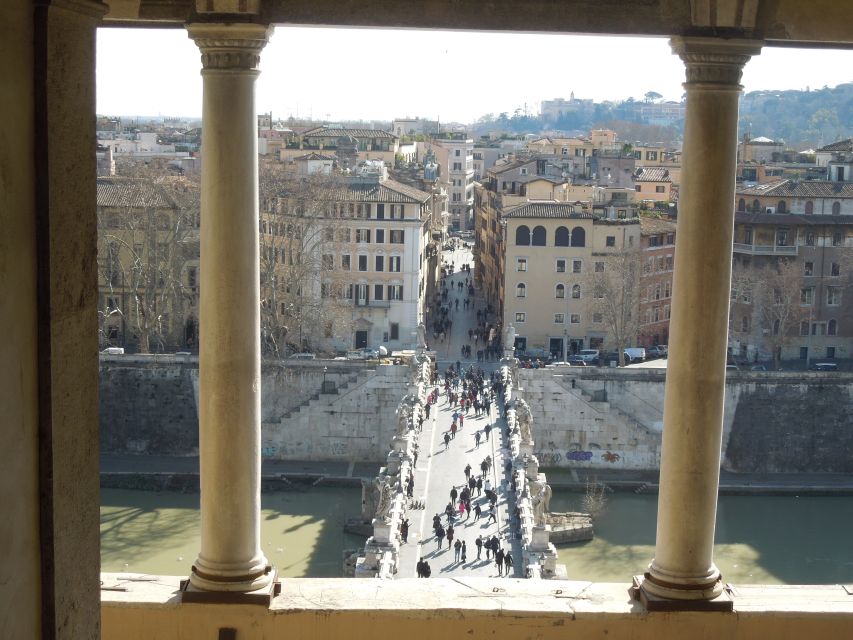
The tour finishes with one of its most motivating perks: a breathtaking city view from the top terrace. It’s also explicitly a great place for panoramic photos of both the castle and Rome.
But I’ll be straight with you: the route includes a series of stairs to reach the terrace. You should wear comfortable shoes and plan your pace. If stairs are a problem for you, this tour is not suitable for wheelchair users or people with mobility impairments based on the provided information.
If you can handle stairs, the payoff is real. This is the moment where the castle stops being only “a place you visited” and turns into “a place you got perspective from”—literally.
Time, Pace, and Who the 2-Hour Format Fits Best
This is a 2-hour private tour, so you should expect a concentrated visit rather than an all-day museum experience. That can be a plus in Rome, where your time is always competing with another must-see.
A private group also means you can ask questions in real time. One past guide example shared that a guide named Mates was an expert and handled questions while staying tightly focused on castle details. That kind of hands-on attention is exactly what you want in a short format.
Who it suits best:
- You like history but want it told through specific rooms
- You want skip-the-line value in a timed window
- You care about art tied to place (like frescos in the papal rooms)
- You want a Rome viewpoint, not just indoor wandering
If you’re the type who loves to linger, you might want to treat the terrace as the moment to slow down—because everything else will keep a guided rhythm.
Price: Is $214.11 Per Person Good Value for Rome?
At $214.11 per person for a 2-hour private guided visit, the price is clearly not “grab-and-go.” But it doesn’t feel overpriced when you add up what’s included:
- Entrance tickets
- A local guide
- Private tour (so you’re not bargaining with a group pace)
- A walking tour with guided context
- A great view from the terrace
What you don’t get is also clear: hotel pick-up/drop-off and food and drinks aren’t included. So you’ll want to plan a simple snack strategy before or after.
To judge value, I’d focus on what usually costs you time and energy in Rome: waiting, confusion, and missing context. This tour attacks all three. The separate-entrance skip-the-line helps you use your limited time well, and the guided interpretation helps you get more from every chamber you enter.
If you’re traveling as a couple or a small group who wants a controlled pace and real explanation, this is the kind of ticket that often feels worth it.
Should You Book This Skip-the-Line Private Tour?
I think you should book it if you want a guided walk through the castle’s most meaningful chapters—Hadrian’s tomb, Pope Paul III’s apartment, the treasure room, and the terrace views—all in one tight 2-hour window.
It’s also a strong pick if you dislike aimless roaming. Castel Sant’Angelo can feel like “cool rooms” unless someone helps you connect them. A good guide makes the building’s shifting identities—tomb, residence, treasury, prison—feel logical instead of random.
Skip it only if stairs are a deal-breaker for you. The terrace requires climbing, and the tour is not suitable for wheelchair users or people with mobility impairments based on the provided details.
Finally, there’s a quality signal here: the experience is rated 4.9 with 29 reviews. That doesn’t make it automatic, but it suggests the guiding and pacing are landing well for most people who book it.
If you’re deciding between “just visiting” and “seeing with meaning,” this one leans toward the second option—and that’s usually the better deal in Rome.
FAQ
How long is the Rome Castel Sant’Angelo skip-the-line private tour?
The tour lasts 2 hours.
Does this tour include skip-the-line entry?
Yes. You get skip-the-line access through a separate entrance, and entrance tickets are included.
What parts of the castle will I visit?
You can enter the tomb of Emperor Hadrian, visit Pope Paul III’s apartment and its frescos, see areas like the treasure room, explore ancient fortified walls and statues, and enjoy the view from the top terrace.
Is the tour guide available in English?
Yes. The tour includes a live English guide.
Do I need to bring anything or wear anything specific?
Wear comfortable shoes. The tour includes stairs to reach the panoramic terrace.
Is this tour suitable for wheelchair users or mobility impairments?
No. It is not suitable for people with mobility impairments and it is not suitable for wheelchair users.