REVIEW · APPIAN WAY BIKE & E-BIKE TOURS
Rome: Appian Way & Roman Aqueducts Guided E-Bike Tour
Book on GetYourGuide →Operated by TopBike Rental & Tours · Bookable on GetYourGuide
A 2,300-year road by e-bike is a rare treat. I love the Ancient Appian Way stretch on real Roman cobblestones, and I also like how the route brings you face-to-face with the Roman aqueducts without the usual tourist bottleneck. One thing to consider: this is not a smooth, paved cruise. Expect rocky gravel and some city riding with unavoidable traffic as you connect from Rome to the parklands.
What makes it work for real people is the mix: a quick warm-up in the city, then a long chunk of calmer riding through the countryside side of Rome. The tour runs about 4 hours and covers 27 kilometers, with roughly 60% off-road. Small group size helps too, since you’re limited to 10 participants and your guide can keep an eye on everyone, from experienced riders to first-timers.
Safety and comfort are taken seriously, with a helmet that’s mandatory and e-bikes built for easier hill riding. Still, the route is listed as intermediate (so you’ll want comfortable shoes and basic bike confidence), especially if you’re sensitive to uneven surfaces.
In This Review
- Key Things I’d Plan Around
- Starting at Via Labicana 49: Getting Your Bearings Fast
- Aurelian Walls to the Catacombs: Rome’s Edge Before the Countryside
- Maxentius and Cecilia Metella: Big Roman Ruins, Short and Clear
- Ancient Appian Way Cobblestones: What 2,300 Years Feels Like
- Parco degli Acquedotti: Riding Beside Monumental Aqueducts
- Caffarella Valley Park: Quiet Paths and a Different Kind of Rome
- Traffic, Gravel, and Safety: The Real Riding Profile on 27 km
- Guide Style and Stop Rhythm: Why It Feels Educational Without Draining You
- Value at Around $85 for 4 Hours: What You’re Really Paying For
- Who This Tour Fits Best (and Who Should Be Cautious)
- Should You Book the Appian Way and Aqueducts E-Bike Tour?
- FAQ
- How long is the Rome: Appian Way & Roman Aqueducts guided e-bike tour?
- How far will we ride?
- Where do we meet?
- Is hotel pickup included?
- What’s included with the tour?
- Do I have to wear a helmet?
- What’s the riding like in terms of traffic?
- Can children or infants participate?
- Is cancellation allowed?
Key Things I’d Plan Around
- Two worlds in one ride: city edges first, then parks with no traffic for long stretches
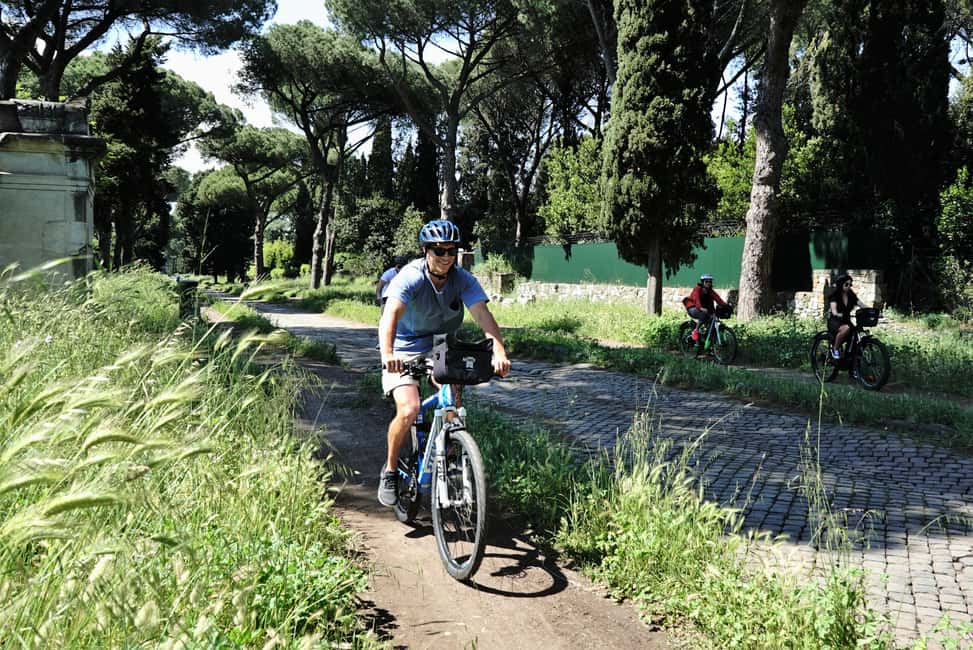
- The Appian Way’s cobblestones: you’ll feel the age under your tires
- Aqueduct time in person: a “look-and-look-again” Roman engineering moment
- Caffarella Valley Park views: quieter, greener-feeling Rome time after the monuments
- Off-road is real (60%): gravel and ancient stones show up, even on e-bikes
Starting at Via Labicana 49: Getting Your Bearings Fast
You meet at Via Labicana 49, about a 5-minute walk from the Colosseum. That’s convenient if you’re already using that area as your Rome base, and it also means you start near some of the city’s big-ticket sights without needing hotel pickup.
Before you roll, you’ll get the essentials: bike handedness, how to manage the e-bike assist, and the basics of riding together as a group. The bikes are Cannondale e-bikes with anti-puncture tires and a comfortable saddle, plus a handlebar bag for the small stuff. You also get a helmet (and you’ll need it on the tour).
Practical tip: wear shoes that handle uneven ground. Flip-flops are a hard no, and even “comfortable sneakers” can feel different once you’re dealing with gravel and ancient stone. I also suggest bringing layers, since open-air countryside can swing cooler or warmer than the streets near the Colosseum.
If you’re wondering about language, you’re covered. Guides speak Dutch, French, Spanish, English, German, and Italian, so you can expect a real explanation rather than mumbling over headsets.
You can also read our reviews of more cycling tours in Rome

Aurelian Walls to the Catacombs: Rome’s Edge Before the Countryside
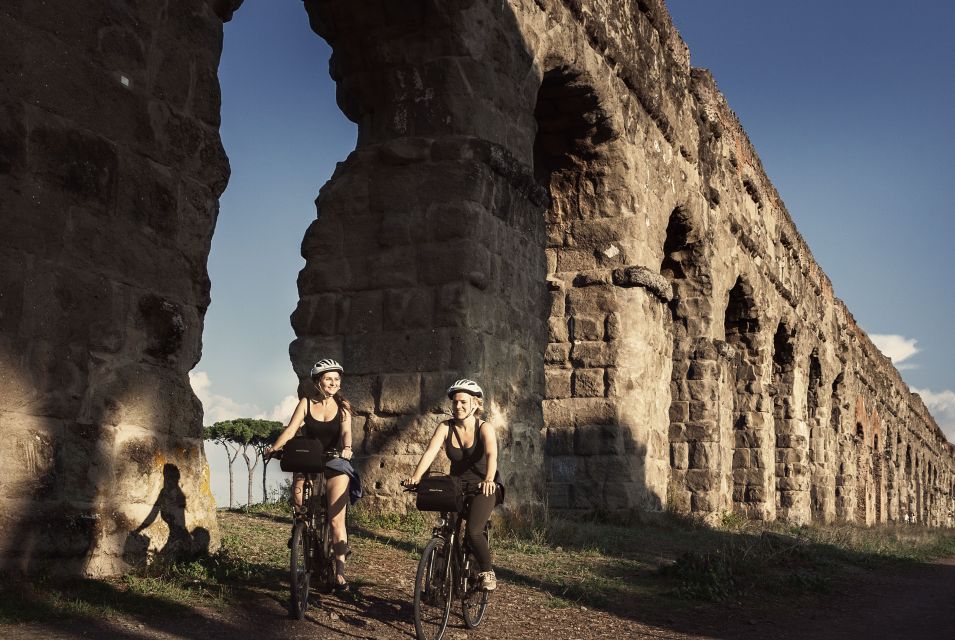
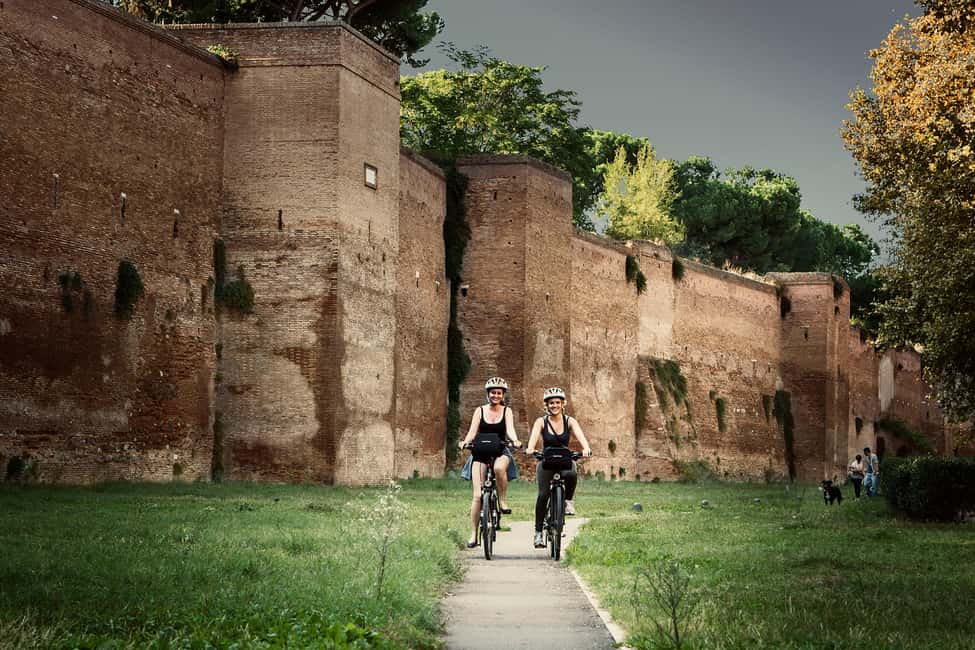
The early part of the ride sets the tone. After leaving the start point, you’ll pass by the Aurelian Walls area and then head toward the Catacombs of Rome zone. These aren’t just “drive-by” moments. They help you shift mental gears: you’re not only seeing famous monuments, you’re moving along older layers of the city.
This is also where your guide’s group-management matters most. You’ll spend a chunk of time cycling in Rome streets, and while the route is selected carefully, some traffic is unavoidable for the connection out to the park area. In practice, that means you should expect brief waits, tight spacing while crossing, and a bit of stop-and-go.
What I like about starting with this urban stretch is how it prevents disappointment later. Once you reach the quiet paths, you’ll feel the contrast right away. It’s easier to appreciate the countryside part because you’ve already “warmed up” your senses in the city.
Maxentius and Cecilia Metella: Big Roman Ruins, Short and Clear
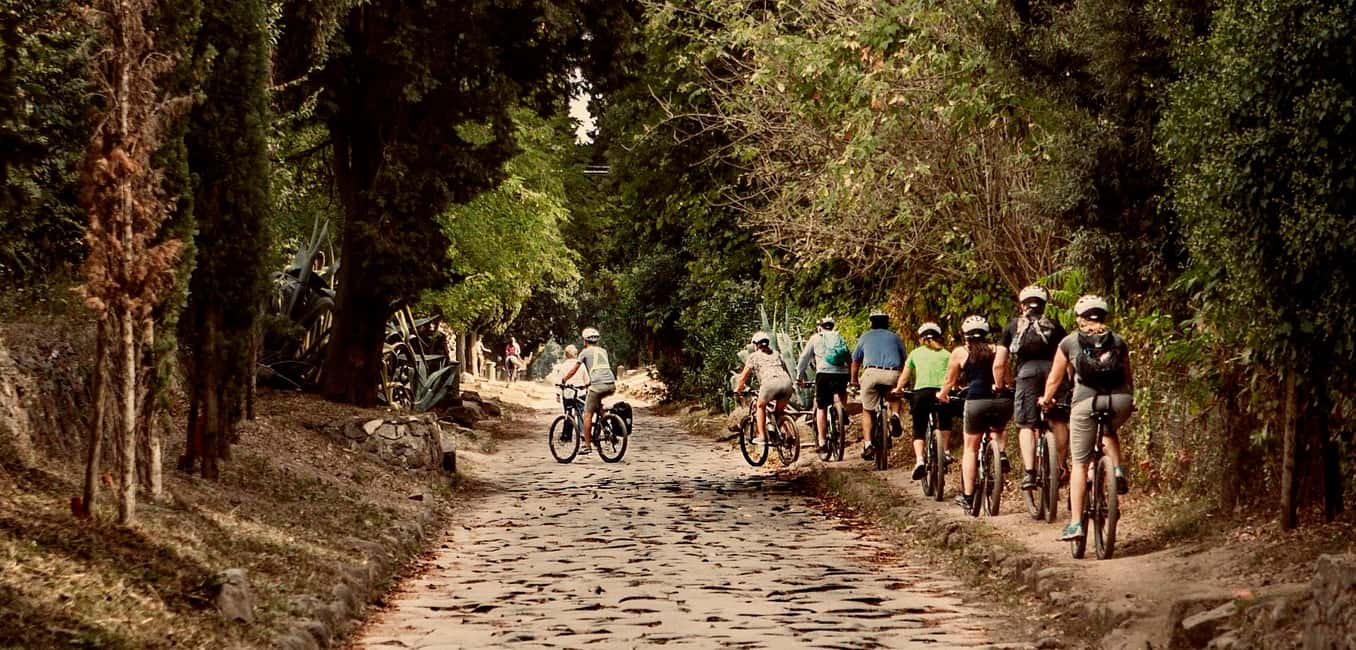
As the ride continues, you’ll see the Circus of Maxentius and then the Tomb of Cecilia Metella. These stops are valuable because they’re visual. You don’t need an audio guide marathon to grasp why they mattered in Roman urban life.
From the bike, you can take in scale quickly. That’s hard to do when you’re on foot with crowds funneling you one direction at a time. You get moving perspectives—front angle, side angle, then a wider look as the group rolls forward.
There’s also a practical benefit: the guide can adjust the tempo between stops. One reason people rate this tour so highly is that the ride doesn’t feel like you’re being rushed through. Instead, you get enough context to connect what you see (circus ruins, tomb shapes, the surrounding areas) to the bigger route out to the Appian Way and aqueduct country.
The possible drawback is simple: if you’re the type who wants constant pedaling, you may find yourself standing still more often than expected. Some riders have noted that a good chunk of time is spent listening during the briefings. That’s the trade for getting historical context without turning the ride into a lecture.
Ancient Appian Way Cobblestones: What 2,300 Years Feels Like
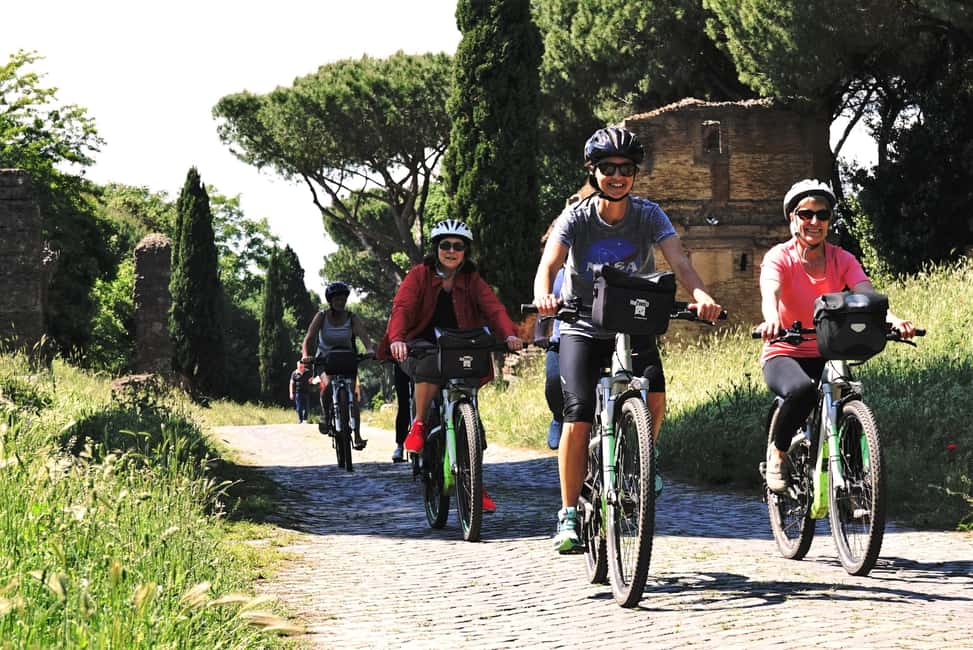
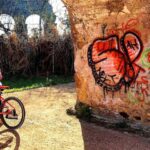
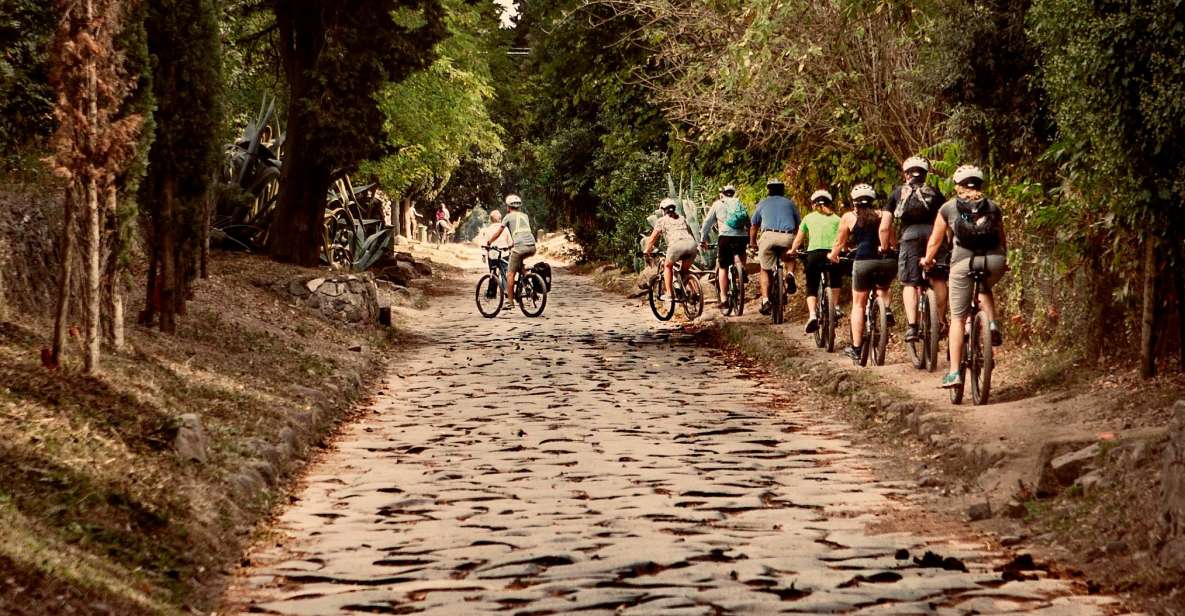
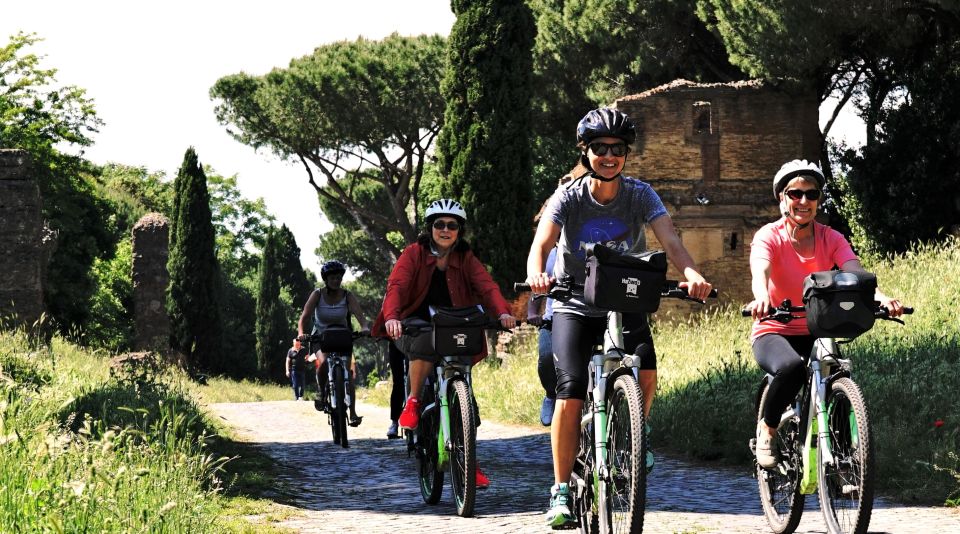
Then comes the star: the Appian Way itself. This is the moment you’ve probably pictured—real Roman cobblestones laid down long ago, with the road texture under your wheels. It’s also where the “e-bike equals easy” myth gets corrected in a good way. Yes, the assist helps. But the surface is still the surface.
Here’s what to expect on the cobbles:
- You’ll feel vibration through the frame and saddle.
- Gravel or uneven patches can make the ride feel less stable than smooth pavement.
- Your core and hands work a bit more than you’d expect, even on an e-bike.
I actually like this, because it makes the site real. You don’t just look at an ancient road. You ride on the same kind of ground that people walked and traveled on centuries ago. It’s also a strong photo segment because you’re moving, not just posing.
One warning based on rider feedback: some parts can feel harrowing if you’re sensitive to uneven stones or if you prefer a very smooth surface. A 65-year-old rider described it as manageable but intense. So, if your knees or back aren’t happy on rough terrain, plan accordingly—and keep your expectations honest.
Parco degli Acquedotti: Riding Beside Monumental Aqueducts
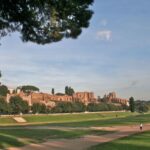
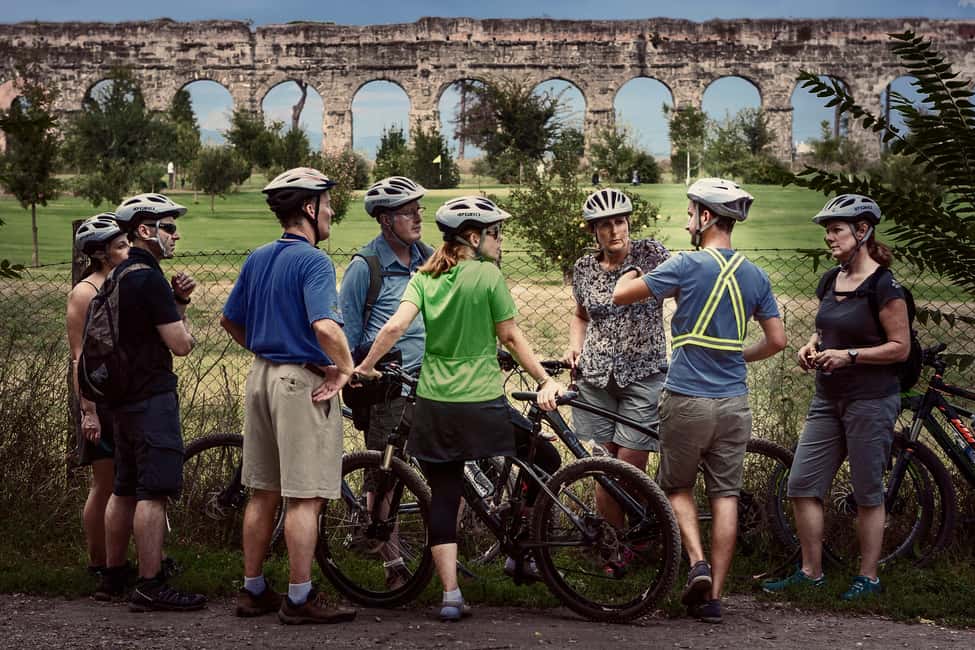
Once you leave the Appian Way stretch, the tour follows the ancient aqueducts through the Parco degli Acquedotti. This is where Roman engineering turns into a full-body experience. You’re not just seeing a structure. You’re riding alongside it, with repeated sightlines that slowly build scale.
The park portion is designed to feel calmer. Traffic is not part of your daily stress here, since the route’s off-road segments take you through areas where there’s no traffic. That shift is a big reason this tour works as an “escape from Rome” without needing a train ticket.
A neat detail from rider experiences: on hot days, guides may point out opportunities to rinse in water associated with the area, including notes about Aqua Felix water. Not every day will offer the same moment, but the fact that it comes up at all tells you the guide is thinking about the lived experience, not just the architecture.
If you like photography, this section tends to deliver. Some riders have mentioned being steered to photo spots, including a short spur through wildflowers. You’ll get more than “one nice frame” if you’re open to brief detours and your guide’s sense of timing.
You can also read our reviews of more guided tours in Rome

Caffarella Valley Park: Quiet Paths and a Different Kind of Rome
Next up is Caffarella Park, known for its intact beauty and that “Rome but not Rome” feeling. You’ll appreciate this part most if you’re tired of constant monuments and want a break from crowds and traffic.
Caffarella works because it’s a contrast to the earlier ruins. The Roman structures still linger in the background, but the riding feels freer and more open. You get wide sightlines and calmer rhythm, which helps you reset mentally after the dense history stops.
This is also a good segment for relaxing your grip. City riding demands attention. Gravel and cobbles demand attention too. But in the park, you can settle into the ride, take in the scenery, and focus on enjoying the day rather than only managing the bike.
If you’re going as a family or group with mixed experience, this is often where confidence builds. E-bike assist helps, but it’s the environment—fewer cars, more open paths—that lets people breathe again.
Traffic, Gravel, and Safety: The Real Riding Profile on 27 km
Let’s talk about the part people don’t always expect: the route is 27 kilometers, and about 40% happens in the city. That urban slice includes some traffic, unavoidable only because you have to move between Rome and the park areas. The remaining 60% rides in parks with no traffic.
So yes, it’s safer overall than most “bike through Rome” fantasies. But it’s not a traffic-free dream. You’ll need to follow your guide closely during city crossings and busy segments.
The tour is also listed at an intermediate level. That doesn’t mean you need a racing bike background, but it does mean you should be comfortable with uneven surfaces and short stretches that feel less predictable than smooth asphalt.
E-bikes do help a lot. Riders have described the bikes as easy to operate even for people who’d never ridden an e-bike before. Still, don’t confuse assist power with surface stability. You’ll still feel gravel and ancient stones, and you should plan to ride with calm focus.
Small-group pacing helps here. Because the group is limited to 10, your guide can keep everyone together without turning the ride into a line of single riders disappearing into the distance.
Guide Style and Stop Rhythm: Why It Feels Educational Without Draining You
A big part of this tour’s appeal is how the guide balances movement with explanation. You’ll get historical context along the way as you cycle between major sights—Aurelian Walls area, Catacombs, Circus of Maxentius, Cecilia Metella, then the Appian Way and aqueduct sections.
Guides like Nima, Cas, Fabio, Pablo, Zac, Aaliyah, Bita, Han, Christian, Ana, Linda, and Davide are repeatedly mentioned for two things that matter: safety management and keeping the group engaged. You can feel the difference when the guide is actively positioning riders and choosing when to slow down for a point of view.
There’s also real-world competence. One rider described a bike breakdown and field repairs to keep the group moving, plus coordination to get a replacement bike. That’s the kind of behind-the-scenes readiness that makes you trust the day.
One caution: because stops include briefing time, your “active riding time” can be less than you might guess from 4 hours on a bike. If you want a workout-first ride, this is not a pure pedal-fest. If you want a guided mix of scenery plus meaning, it makes sense.
Value at Around $85 for 4 Hours: What You’re Really Paying For
For about $85 per person and a 4-hour half day, the value comes from what’s included and what’s avoided.
You get:
- A Cannondale e-bike with anti-puncture tires and a comfortable saddle
- A helmet (mandatory)
- A professional guide
- A handlebar bag
- A biodegradable bottle of water
What you’re not paying for:
- Hotel pickup and drop-off
Why that price can feel fair: you’re paying for guided access to a route that combines the Appian Way cobblestones, standout Roman ruins, and aqueduct park segments—without you needing to plan traffic connections or worry about navigation between neighborhoods and countryside routes.
Also, you’re paying for time. This is a strong option if you don’t want to commit to a full-day excursion but still want that “left the city” sensation. The park portions help make Rome feel wider than the usual sightseeing grid.
Who This Tour Fits Best (and Who Should Be Cautious)
This tour is a smart pick if you:
- Want to see Roman sites with far fewer crowds than the center
- Like biking but prefer structure and safety from a guide
- Enjoy photos with motion, not just static museum shots
- Want a countryside-feeling day without leaving central Rome far behind
It may feel like too much if you:
- Strongly dislike uneven ground, gravel, and cobblestones
- Need fully smooth surfaces for comfort
- Expect constant motion with almost no stop time for briefings
Because it’s intermediate and includes child-specific options, families can work too. Infants under 1 can’t join. Ages 1–4 can ride free with a child seat (max 49 lbs / 22 kg). Ages 5–8 get a child extension, and ages 9+ can ride an appropriately sized e-bike. Your bike equipment has a weight limitation of 300 lbs / 136 kg.
Should You Book the Appian Way and Aqueducts E-Bike Tour?
If your ideal Rome day includes a mix of major ruins and quieter park time, book it. The pairing of Appian Way cobblestones plus aqueduct riding is exactly the kind of switch-up that keeps Rome from feeling repetitive. I’d especially recommend it if you want a guided, small-group experience that handles the tricky city-to-country connection for you.
If you’re worried about rough ground or you’re very traffic-averse, don’t ignore that intermediate rating. Wear sturdy shoes, keep a relaxed grip, and trust your guide on the busier city parts. The reward is a half day that feels both historical and genuinely outdoorsy, with the kind of Roman infrastructure you can experience rather than just read about.
FAQ
How long is the Rome: Appian Way & Roman Aqueducts guided e-bike tour?
The tour lasts 4 hours.
How far will we ride?
The total route length is 27 kilometers, with about 60% off-road.
Where do we meet?
You meet at Via Labicana 49, a 5-minute walk from the Colosseum.
Is hotel pickup included?
No, hotel pickup and drop-off are not included.
What’s included with the tour?
You get a Cannondale e-bike with anti-puncture tires and a comfortable saddle, a professional guide, a mandatory helmet, a handlebar bag, and a biodegradable bottle of water.
Do I have to wear a helmet?
Yes. Wearing a helmet is mandatory for the tour.
What’s the riding like in terms of traffic?
Approximately 40% of the route is in the city, where some traffic is unavoidable to connect to the aqueduct park. The remaining 60% is in parks with no traffic.
Can children or infants participate?
Infants under 1 year can’t participate. Children aged 1–4 travel free on a child seat (max 49 lbs or 22 kg). Ages 5–8 get a child extension. Children aged 9 and above can ride an appropriately-sized e-bike.
Is cancellation allowed?
Yes. You can cancel up to 24 hours in advance for a full refund, and there’s also a reserve now & pay later option.