REVIEW · CASTEL SANT ANGELO
Castel Sant’Angelo Skip-the-Line Entry & Optional Audioguide
Book on GetYourGuide →Operated by Loving Rome · Bookable on GetYourGuide
Rome’s skyline comes with stairs. This skip-the-line ticket is a fast pass into a place that used to be a monumental tomb and later became a fortress and papal residence, with roof-terrace views that make the climb worth it. I especially like the way you move through Renaissance and Baroque art without getting trapped in ticket lines. One thing to plan for: there are a series of stairs, and it’s not suitable for wheelchair users or people with mobility impairments.
This is a self-guided visit built around a clear route: 5 floors, a spiral ramp, then the rooms and cells, and finally the terrace where you can spot the Vatican City area, the Tiber River, and the Bridge of Angels. If you choose the optional audio guide, you’ll use your smartphone (with headphones), and you need to download the app before you go. If you’re a fast, independent type, you’ll likely find this format feels smooth.
In This Review
- Key things to know before you go
- Castel Sant’Angelo in one ticket: what you’re really buying
- Getting in fast: emailed ticket, app, and entrance checks
- What the 5-floor route feels like: tomb to fortress to papal rooms
- Renaissance and Baroque rooms: the art you’ll actually remember
- Cells, papal residence rooms, and the chamber of ashes
- Roof terrace views: Vatican City, the Tiber, and Bridge of Angels
- Optional digital audio guide: using your phone without stress
- Time your visit: how a time slot can change the vibe
- Practical value at $15: why this ticket can be a smart buy
- Who should book this Castel Sant’Angelo ticket
- Should you book Castel Sant’Angelo skip-the-line entry?
- FAQ
- FAQ
- How long is the Castel Sant’Angelo ticket valid?
- What’s included in this experience?
- Is there a guided tour included?
- Do I need to download an app before I arrive?
- What languages are available for the digital audio guide?
- What do I need to bring?
- What should I show at the entrance?
- Will I need to climb stairs?
- Is this suitable for wheelchair users or mobility impairments?
- Are luggage and large bags allowed?
- Can I enter at any time during the day?
Key things to know before you go
- Skip-the-line entry means you spend more time inside and less time in the usual Rome queue
- 5 floors and a spiral ramp guide your route through the building’s many lives
- Art stops include Renaissance and Baroque paintings, statues, and frescoes you can take your time with
- Cells, papal rooms, and a chamber of ashes add the strange, human side to the history
- Top-level terrace views put you above the Tiber for classic Rome photos
Castel Sant’Angelo in one ticket: what you’re really buying
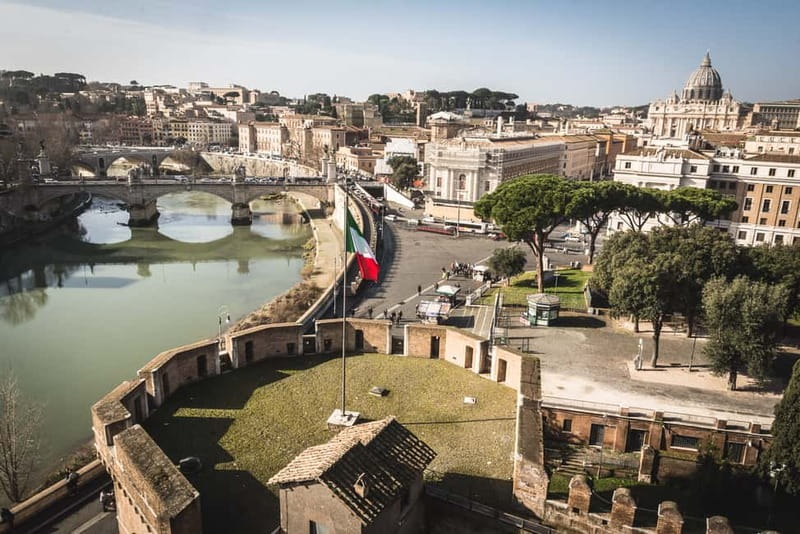
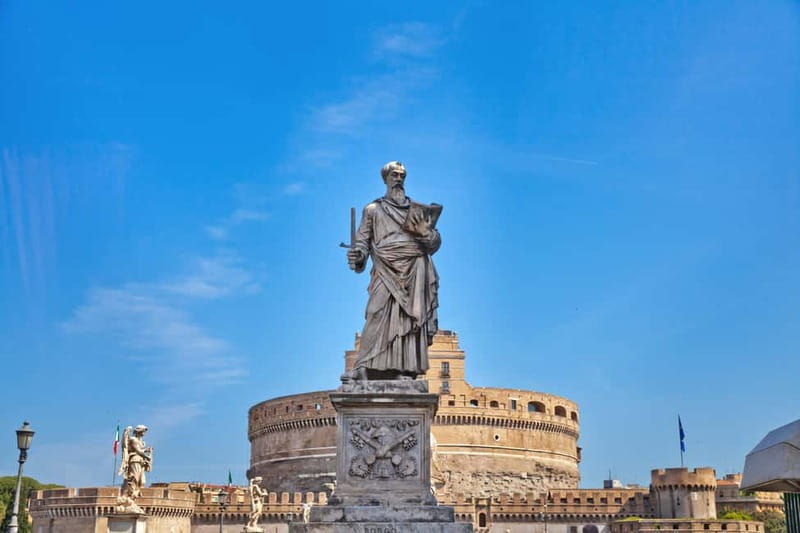
You’re buying entry into a museum built inside a landmark that keeps changing roles. First erected as a monumental tomb, it later served as a fortress in medieval times and even as a defensive post during barbarian invasions—so the building itself is part of the story. When you step inside, you’re not just seeing rooms; you’re watching Rome’s power shift over centuries.
The practical win here is the skip-the-line part. Castel Sant’Angelo is one of those sites where the building is worth your time, but the ticket queue can eat it. With this ticket, you head straight to the main entrance and get started, which is exactly what you want if your Rome days are packed.
This ticket is also lighter than a full guided tour. There’s no guided commentary walking with you, so you’ll get the freedom to move at your pace and pause for photos or readings where you want them.
Getting in fast: emailed ticket, app, and entrance checks
The day-of workflow is simple, but it depends on you doing one key thing: preparing your smartphone. You’ll need to download the required application before the tour begins, and you should have a charged phone with internet access. If you choose the digital audio guide option, you’ll also need headphones since the audio is on your device.
Your ticket arrives by email tied to the address used at booking. The information says your Entry Ticket(s) will be delivered within 24 hours prior to the activity, and you should plan to check your inbox the day before. At the entrance, you’ll show your emailed ticket and a valid passport or ID, and the provider also asks that you enter full names exactly as on your passport during booking.
A couple of real-world notes from the experience add peace of mind. One visitor said the company quickly rebooted tickets when Castel Sant’Angelo had an unexpected closure tied to a pope-related inauguration, with security around the site. Another said the entry was seamless because ticket links were sent in the app and the process moved fast once they arrived. That matches the overall expectation: when it’s working, it’s straightforward and quick.
What the 5-floor route feels like: tomb to fortress to papal rooms

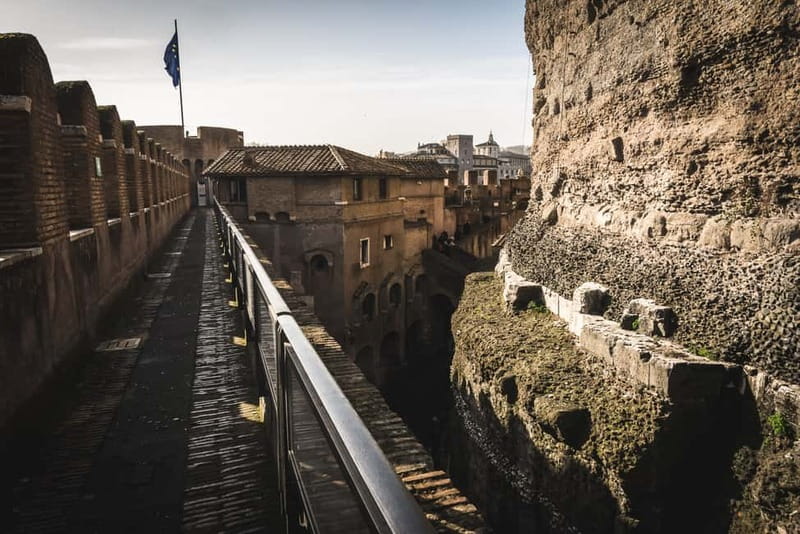
Inside, the museum route is built to keep you moving upward through the building’s different eras. You head toward a spiral ramp and work through multiple levels—5 floors in total—before reaching the terrace at the top. It’s not just a loop for looking; you’re essentially following the building’s layers.
Here’s what you can expect as you climb:
- You’ll move through areas tied to the building’s early identity as a monumental tomb, then forward into its defensive evolution.
- You’ll reach sections that include cells and rooms connected to a papal residence.
- You’ll encounter a chamber of ashes, where you can view remains of iconic Roman characters and see preserved frescoes.
The “why this matters” part is that you get a sense of the structure’s purpose changing over time. Fortress architecture and papal residence spaces feel different, even if you’re not a trained historian. The route helps your brain make those connections without demanding you memorize dates.
One caution: your feet do the talking. You should expect a noticeable amount of walking and a series of stairs, and people do note that the experience is worth it, but you’ll want to pace yourself. If you’re the type who stops often for photos, plan extra time.
Renaissance and Baroque rooms: the art you’ll actually remember
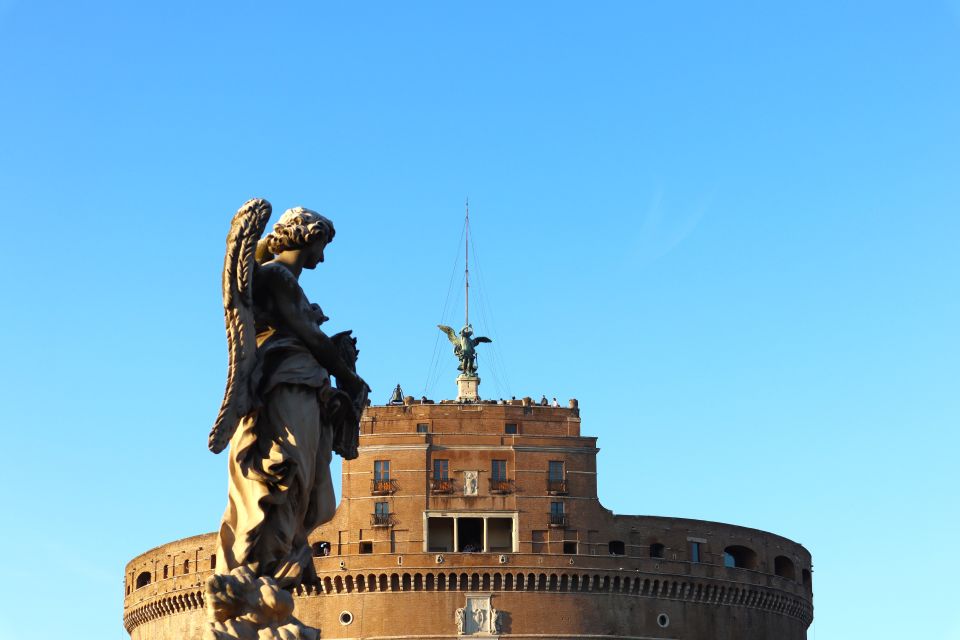
Castel Sant’Angelo isn’t only about views. It also includes a spread of Renaissance and Baroque works—frescoes, paintings, and major sculpture-style highlights—so you’ll get visual variety instead of one long stone corridor.
What I like about this part of the visit is the way art and architecture reinforce each other. When you’re inside a former tomb turned fortress and residence, the art isn’t just decoration; it feels like a statement of culture and power within a place that was once built for survival and defense.
You’ll also find majestic statues and frescoes mentioned as key sights. Even if you don’t plan to read every label, these are the stops where the museum’s tone shifts from “history in stone” to “history in paint.”
If you’re an art lover, you’ll probably want a slower tempo in these rooms. If you’re not, you can still enjoy them as a break from climbing because the art-focused spaces give your eyes something rewarding while your legs catch up.
Cells, papal residence rooms, and the chamber of ashes
This is where Castel Sant’Angelo becomes a little unsettling—in a good way. The museum route includes cells and areas used as papal residence rooms, which means you get to see how the building functioned when it housed people with very different roles and daily routines.
Then comes the chamber of ashes. You’re told you can marvel at remains connected to iconic Roman characters, and you’ll also see frescoes preserved perfectly. That combination—human remnants plus preserved painting—creates a specific kind of “Rome-ness” that you don’t get at every site.
Also, this is one of the spots where audio helps. Even if you don’t buy the optional audio guide, there are readings and interpretive material along the route. With the audio guide, you can match the information to what you’re seeing without needing to join a group or wait for a guide’s pace.
Roof terrace views: Vatican City, the Tiber, and Bridge of Angels

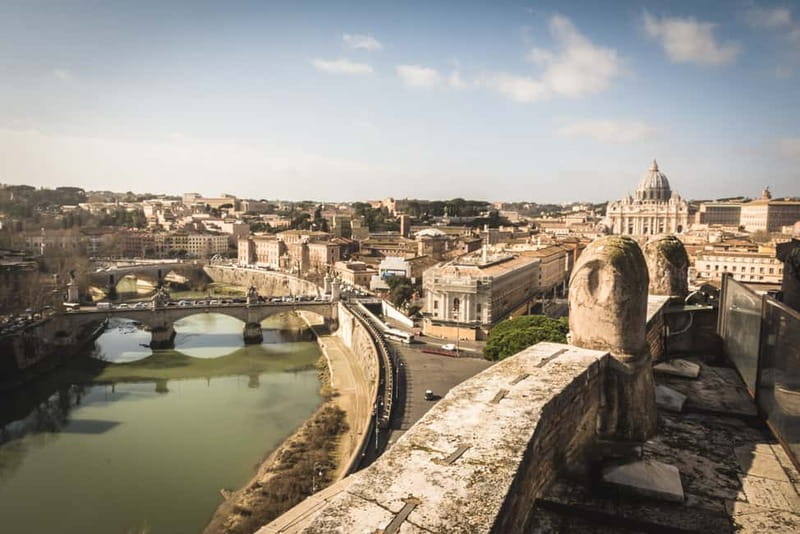
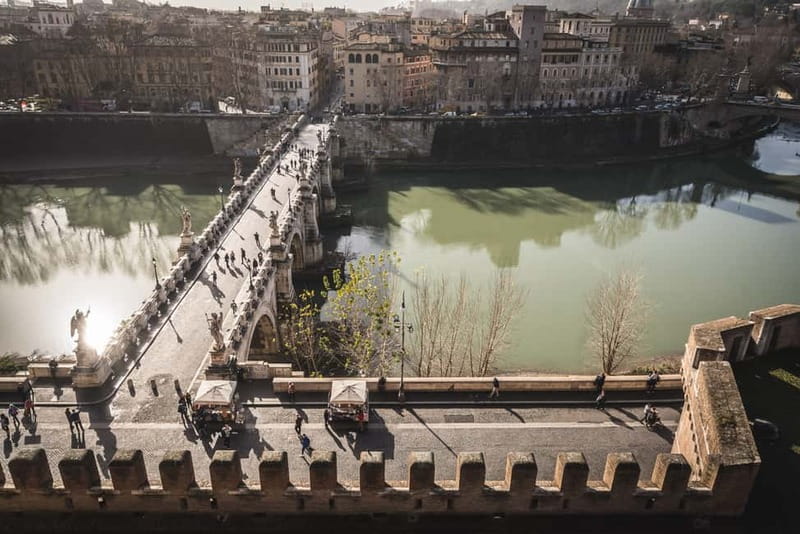
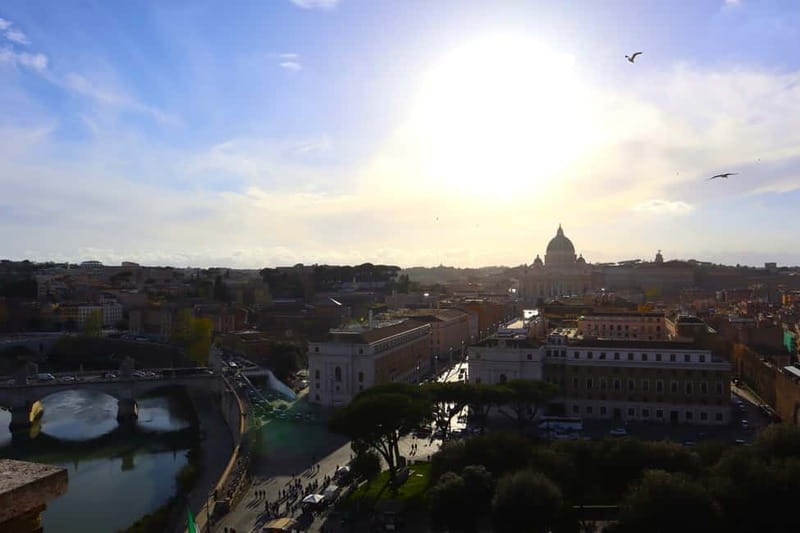
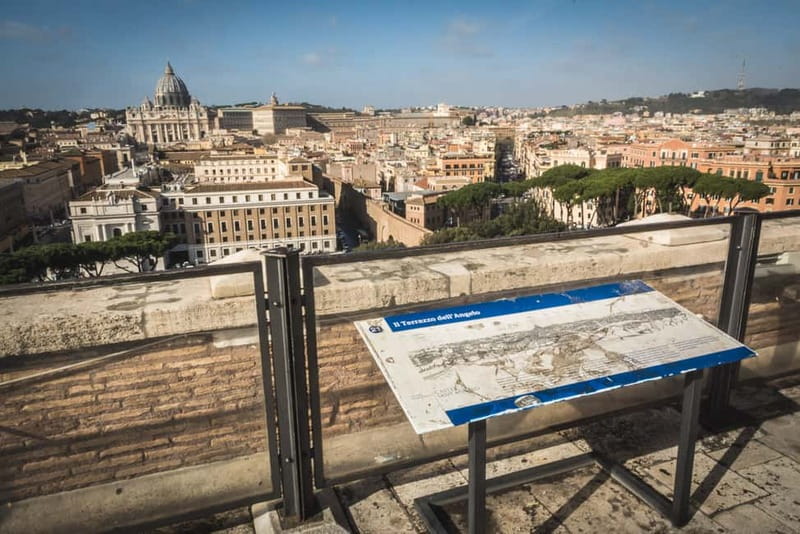
End your visit with the roof terrace views. This is the payoff moment: you’ll get panoramic scenes over Rome, including the Vatican City area, the Tiber River, and the Bridge of Angels. The viewpoint is the reason many people rank this as one of the best ways to see the city from above.
You can also expect a climb to reach the terrace—there’s a series of stairs to get there—so go into this knowing it’s not a flat “museum stroll.” Still, once you’re at the top, you’ll likely feel the momentum of the whole building’s story. From this height, a former tomb-turned-fortress starts to look like a strategic perch, not just a dramatic interior.
If you want a practical break, there’s a bar on the top with great views, and some visitors also mention a café spot up there for a rest. It’s a good time to hydrate and slow down for a few minutes before heading out.
Optional digital audio guide: using your phone without stress
This experience offers a digital audio guide option in multiple languages: English, French, Italian, Chinese, German, and Spanish. If you add it, you’ll use the app on your smartphone with your headphones while you follow the museum route.
One small but important detail: the provider notes you must download the app before the tour begins. That’s not just tech trivia. Doing it early prevents the annoying situation where you arrive ready to go but your phone needs time to set up.
In at least one case, a guide named Adrian helped visitors download or set up the audio guide app when they arrived. Still, you shouldn’t rely on needing that help. Make sure your headphones work, your phone is charged, and your app is ready.
If you hate being tied to a group schedule, the audio guide format is a great match. You can stop where you want, spend longer where the artwork catches your eye, and keep moving when you’re ready.
Time your visit: how a time slot can change the vibe
Your ticket is valid only for the selected date and time slot. That’s good news if you like structure. It’s also useful because you can choose a later time when you expect thinner crowds.
One review highlighted that a later time slot worked well as the crowds started to thin out. You can use that logic even without guessing exact crowd patterns: pick a slot that gives you a bit of freedom later in the day, especially if you also plan to see other Roman landmarks nearby.
A common theme from satisfied visitors is that entry feels quick once they show up. The whole point of skip-the-line is getting you through the bottleneck faster, so matching your time slot to the day’s flow helps you get the most value from that speed.
Practical value at $15: why this ticket can be a smart buy
At about $15 per person, you’re paying for a specific thing: time. In Rome, that’s usually the most expensive currency. Skip-the-line entry doesn’t just mean you avoid waiting—it means you’re more likely to finish the visit without feeling rushed, which matters because Castel Sant’Angelo has multiple floors and several distinct stops.
This ticket also has good value if you like independence. With no guided tour included, you’re not paying premium prices for a person to walk you through a route you can navigate yourself with signage and (optionally) an audio guide.
If you’re traveling with limited time, this works nicely as a “single-site win.” People mention that the castle is huge and there’s a lot to see, but it’s still relatively easy to navigate solo compared to some other major Rome landmarks. If you’re worried about getting lost, you can follow the suggested itinerary-style flow you’ll be guided toward.
On the flip side, the main value trade is physical effort. There’s a lot of walking and plenty of stairs. If you know you’ll struggle on stair-heavy sites, this might feel more tiring than worth it.
Who should book this Castel Sant’Angelo ticket
Book it if:
- You want skip-the-line entry without paying for a full guided tour
- You like a self-paced museum where you can spend extra time on art and specific rooms
- You care about views that include the Vatican area, the Tiber River, and Bridge of Angels
- You’re comfortable using your smartphone for audio and navigation
You might rethink if:
- Stairs are a problem for you (this isn’t suitable for wheelchair users)
- You strongly prefer guided tours with a person speaking face-to-face the whole time
- You don’t want the responsibility of downloading the app before arrival
This one also suits families who manage stairs well and history lovers who appreciate seeing one structure shift roles over time. And if you’re an Assassin’s Creed fan, you’ll probably enjoy the military-fortress vibe and photo-worthy angles people mention.
Should you book Castel Sant’Angelo skip-the-line entry?
I’d book this if you want the fastest path into a meaningful Rome site. For around $15, you’re paying for a smooth entry experience and an efficient route through a building with real changes in purpose—tomb to fortress to papal residence—ending with the kind of skyline view that makes you stop for photos even if you didn’t plan to.
If you’re short on time, the skip-the-line feature is the best reason to choose this. If you have extra time and love details, add the optional audio guide and give yourself the flexibility to linger in the Renaissance and Baroque rooms and in the chamber of ashes.
Go in ready for stairs, bring headphones if you’re using the audio, and consider bringing a bottle of water because there’s enough walking that hydration matters.
FAQ
FAQ
How long is the Castel Sant’Angelo ticket valid?
The ticket is valid for 1 day, and you should check availability for the starting time slots.
What’s included in this experience?
You get Castel Sant’Angelo skip-the-line entry. If you select the optional add-on, you also get a digital audio guide.
Is there a guided tour included?
No. This is not listed as a guided tour. The experience is self-guided with an optional audio guide.
Do I need to download an app before I arrive?
Yes. You must download the application on your smartphone before the tour begins.
What languages are available for the digital audio guide?
The audio guide is available in English, French, Italian, Chinese, German, and Spanish.
What do I need to bring?
Wear comfortable shoes, bring headphones, and make sure your smartphone is charged with internet access.
What should I show at the entrance?
Show your emailed ticket and a valid passport or identification during the activity.
Will I need to climb stairs?
Yes. The information says you will need to climb a series of stairs to reach the panoramic terrace.
Is this suitable for wheelchair users or mobility impairments?
It is not suitable for people with mobility impairments and not suitable for wheelchair users.
Are luggage and large bags allowed?
No. Luggage or large bags are not allowed.
Can I enter at any time during the day?
Tickets are valid only for the selected date and time slot, so you should aim to arrive according to your chosen slot.