REVIEW · DAY TRIPS FROM ROME
Rome: Ancient Ostia, Archeology and History, Half Day Tour
Book on GetYourGuide →Operated by Welcome Italy by Spare Tour S.r.l. · Bookable on GetYourGuide
Ostia Antica beats the hype. What I love most is how well-preserved the ruins feel for a working ancient port, and how a local guide turns the site into a readable city with stops like Decumanus Maximus. One thing to consider: this experience is not suitable for wheelchair users or people with mobility impairments, so plan for a walk-heavy archaeological site.
If you like Roman architecture that you can actually see clearly, this half day works fast and stays focused. The transportation and guide time are built for a smooth Rome-to-Ostia schedule, so you’re not wasting your morning figuring things out. You’ll get a strong feel for daily Roman life, from baths to markets, without needing a full day commitment.
In This Review
- Key highlights to look for
- Ostia Antica feels like daily Roman life, not a ruin
- Getting there: A/C minivan pickup inside Rome’s walls
- A local guide for 3 hours makes the ruins click
- Walking Decumanus Maximus: the main street story
- Baths of Neptune: the mosaic you’ll remember
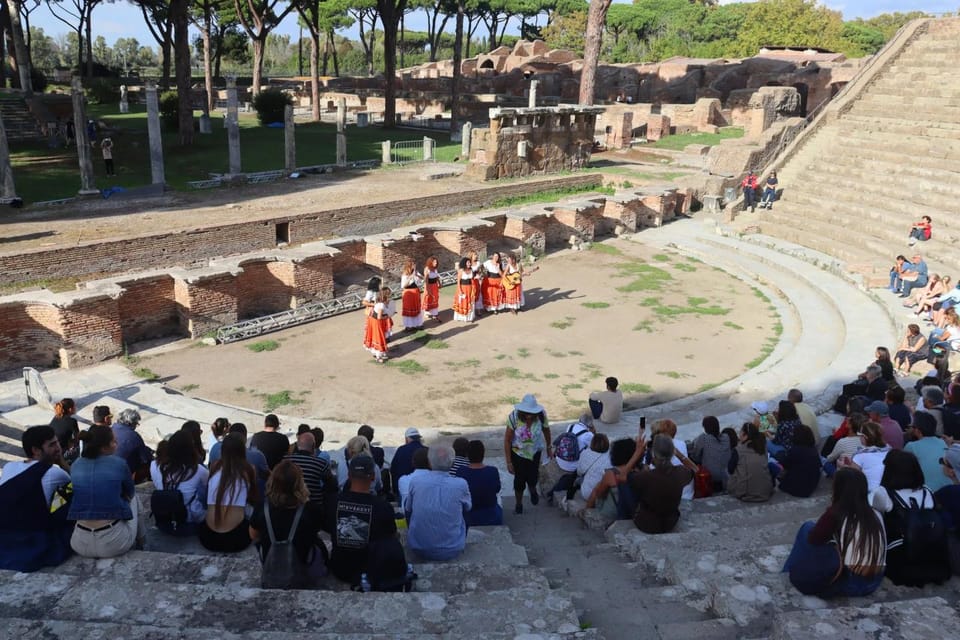
- What else you’ll see: taverns, markets, apartments, and theatres
- Half-day timing: when 4 hours works and when it doesn’t
- Price and value: what you’re really paying for
- Who this tour suits best (and who should think twice)
- Should you book this Ostia Antica half-day tour?
- FAQ
- How long is the tour?
- Do I get hotel pickup in Rome?
- Is transportation included?
- Will I have to wait in line for tickets?
- How many hours will the guide show us Ostia Antica?
- What languages are available for the guided tour?
- Is this tour always a small group?
- What should I bring?
- Is the tour wheelchair accessible?
- What is the cancellation policy?
- Is there a reserve now, pay later option?
Key highlights to look for
- Better-than-Pompeii preservation: buildings and streets that feel remarkably intact
- 3 hours with a local professional guide: focused, small-group style
- Decumanus Maximus walking route: a main street story, not just a museum stroll
- Baths of Neptune mosaic: Sea God imagery with a chariot pulled by sea horses
- A/C round-trip minivan: easier logistics from central Rome
- Entrance fee + skip-the-ticket-line: less time waiting, more time seeing
Ostia Antica feels like daily Roman life, not a ruin
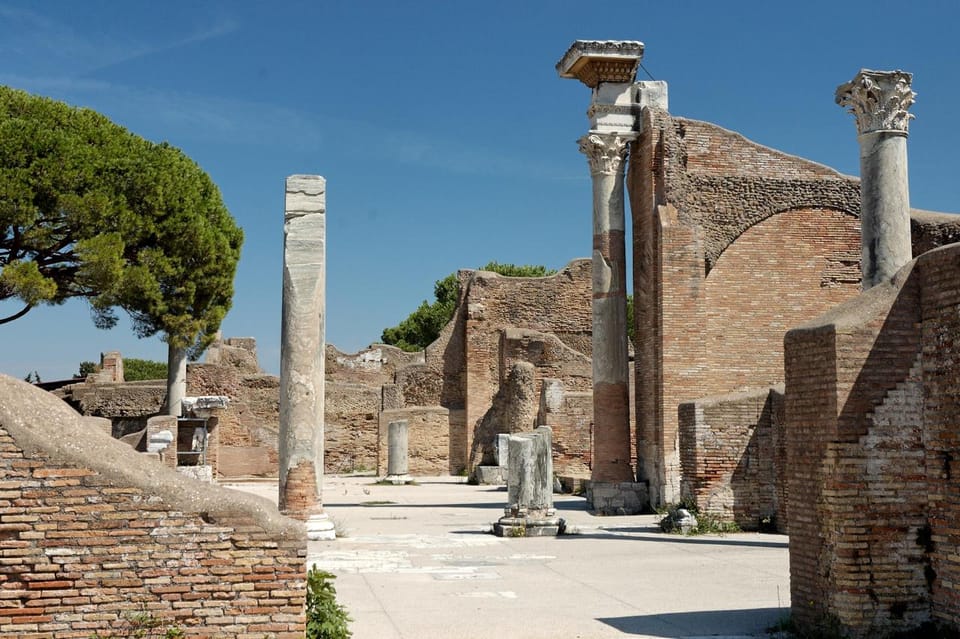
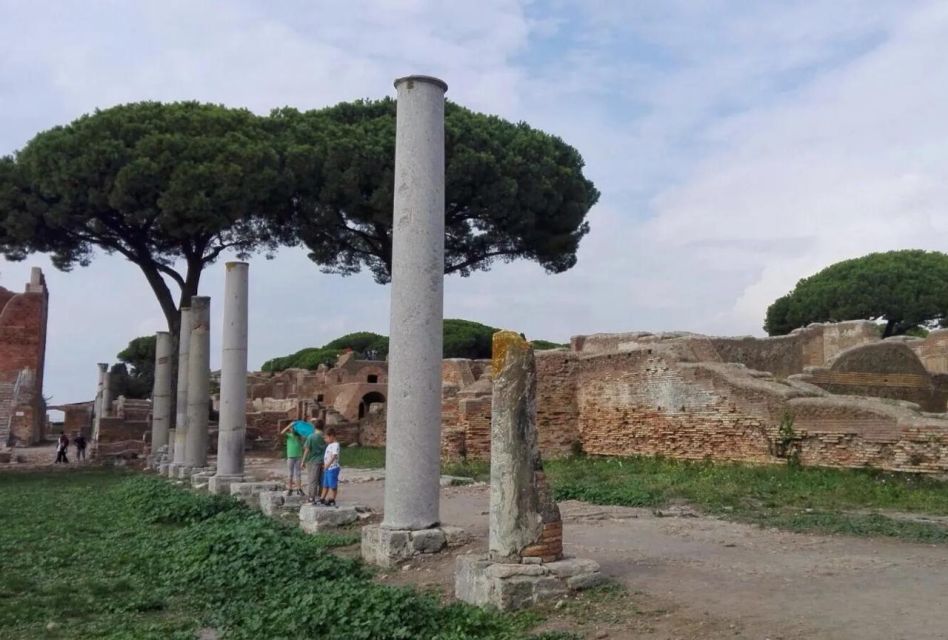
Ostia Antica is the kind of place that makes you slow down. It’s often nicknamed the Better than Pompeii site because the structures and streets are so well kept that you don’t just read about Rome—you can picture how people lived and worked.
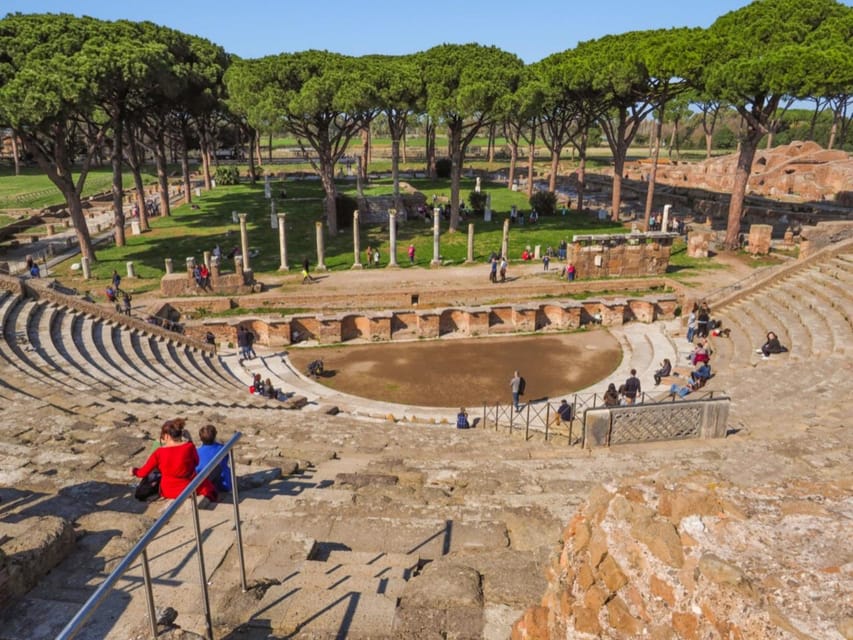
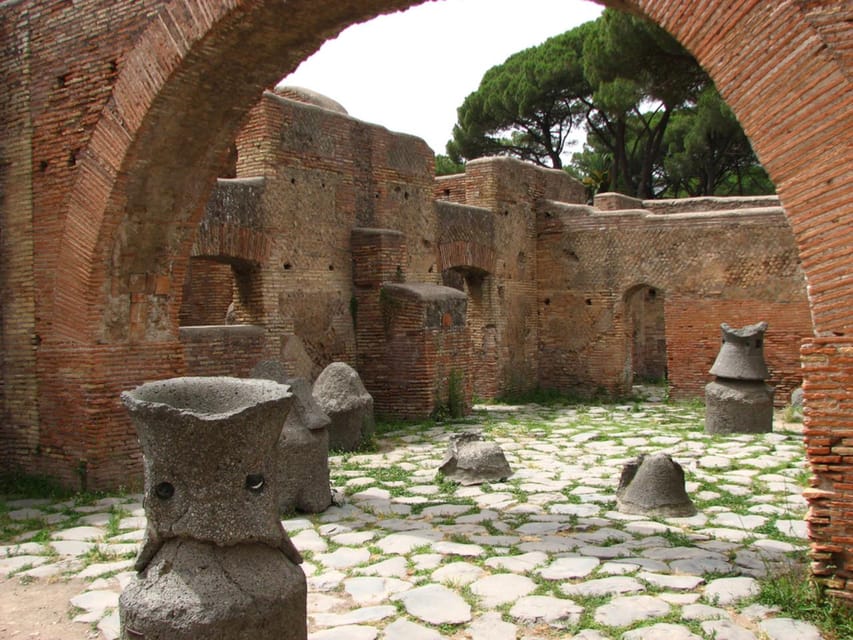
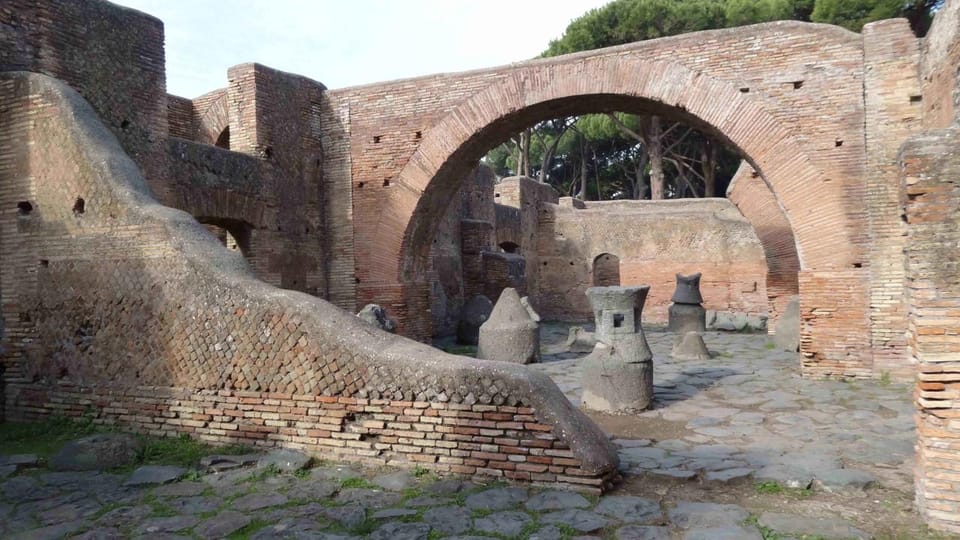
You’ll walk through parts of an ancient harbor town founded as far back as the 4th century BC. Along the route, you’ll see the kinds of spaces you’d expect in a working city: areas linked to taverns, baths, apartments, groceries, and even theatres. And the guide helps connect those dots so the site starts to feel like a real place, not a pile of stones.
The biggest win is perspective. At Ostia, the conditions are so striking that it can feel like it’s easier to make sense of than sites where the buildings are more worn down. Add the fact that Roman statues line sections of the walkways in excellent condition, and you start to feel like you’re moving through an active street scene from long ago.
You can also read our reviews of more historical tours in Rome



Getting there: A/C minivan pickup inside Rome’s walls
Rome logistics can eat up vacation time fast. This tour solves that problem with round-trip transport in an air-conditioned minivan, plus pickup and drop-off at your hotel area inside the Aurelian Walls.
Pickup timing matters here. You’ll wait in your hotel lobby or just outside your accommodation about 10 minutes before the scheduled pickup time, so set a reminder and don’t plan an early coffee run that might run late. The total tour duration is 4 hours, which means travel time is part of the math—this is meant to be a focused half-day.
Because the drive is handled for you, you can show up at Ostia ready to walk. That’s a small but real quality-of-life upgrade compared to piecing together transit on your own, especially if you’re trying to fit everything into a tight Rome schedule.
A local guide for 3 hours makes the ruins click
The standout here is the 3-hour professional local guide time on site. This is not a quick drive-by. Your guide is there for the walk and the explanation, so you get context for what you’re seeing as you go.
Expect live interpretation in French, Spanish, or English, depending on what’s running. That’s important because Ostia isn’t just pretty stone—your guide’s stories help you connect building types to how Romans moved through the city and used it day to day.
Also, you get a photo stop as part of the Ostia Antica stop. That gives you a moment to reset your camera hands before the deeper walking begins. For a site like this, you’ll be glad you can grab a few key views before you’re focused on details with the guide.
Walking Decumanus Maximus: the main street story
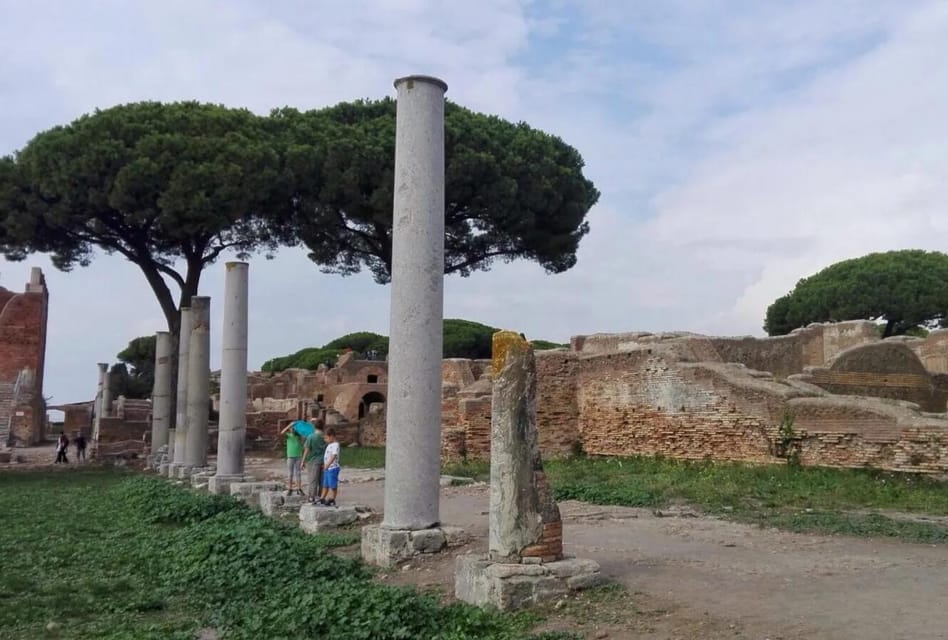
Ostia’s planning is easy to understand when you’re guided along the city’s main axis, the Decumanus Maximus. That’s the spine of the ancient town, and your guide uses it like a timeline—stories move forward as you walk.
Here’s what you’ll notice: the architecture isn’t random. The tour is designed so you can read the street layout and understand how public spaces and daily-life functions fit together. It’s a more satisfying way to visit than wandering alone because you’re not left guessing what each ruin is meant to represent.
Along the walk, the guide highlights interesting facts about Roman architecture and how the site’s preservation helps you see details. You’ll also pass statues that still look exceptionally well preserved, which adds to the illusion that you’re walking among Romans rather than viewing broken fragments.
If you’ve been to the Roman Forum and felt like you wanted something clearer for how daily life worked, this route can feel like a helpful companion. The tour even positions Ostia as a place where the present-day condition makes the ancient world easier to visualize.
Baths of Neptune: the mosaic you’ll remember
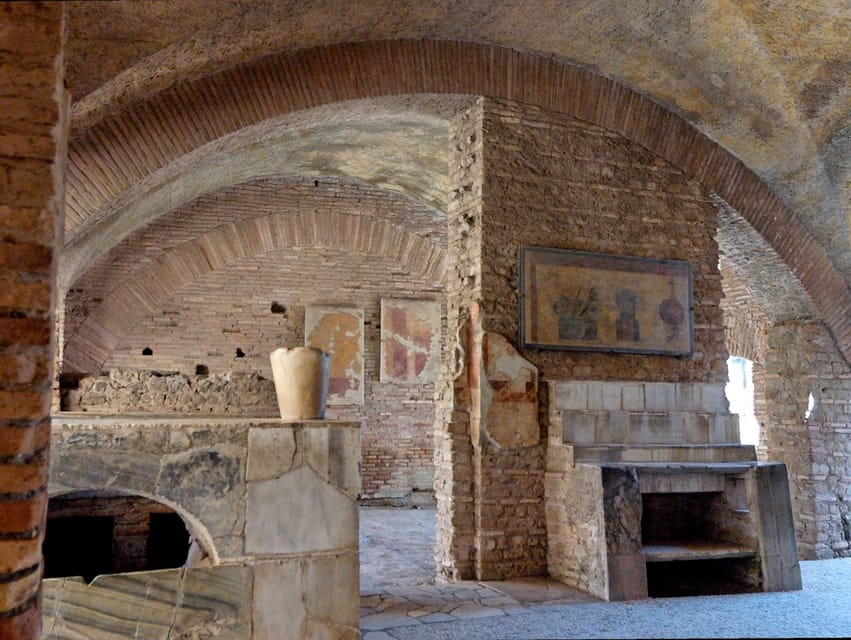
One of the most memorable moments is the Baths of Neptune area, where you can even take a break at the Baths of Neptune feature itself. It’s topped by an impressively intact mosaic showing the Sea God in a chariot pulled by sea horses.
That mosaic matters because it’s not just decoration. It’s a clue about how Romans turned leisure spaces into story spaces—myth, power, and everyday routine all mixed together in one place. When the art is preserved well, it does something practical: it helps you understand the scale of the baths and how people experienced them.
You’ll also feel the difference between seeing a mosaic in a museum and seeing it in the context of the building it belonged to. In the Baths of Neptune setting, the scene makes more sense because it sits where the ancient body-and-mind experience would’ve happened.
This is also a good reminder of why Ostia is so often compared favorably with Pompeii. It’s not only that things survive—it’s that the survivals include major visual hits like this mosaic and recognizable street structure.





What else you’ll see: taverns, markets, apartments, and theatres
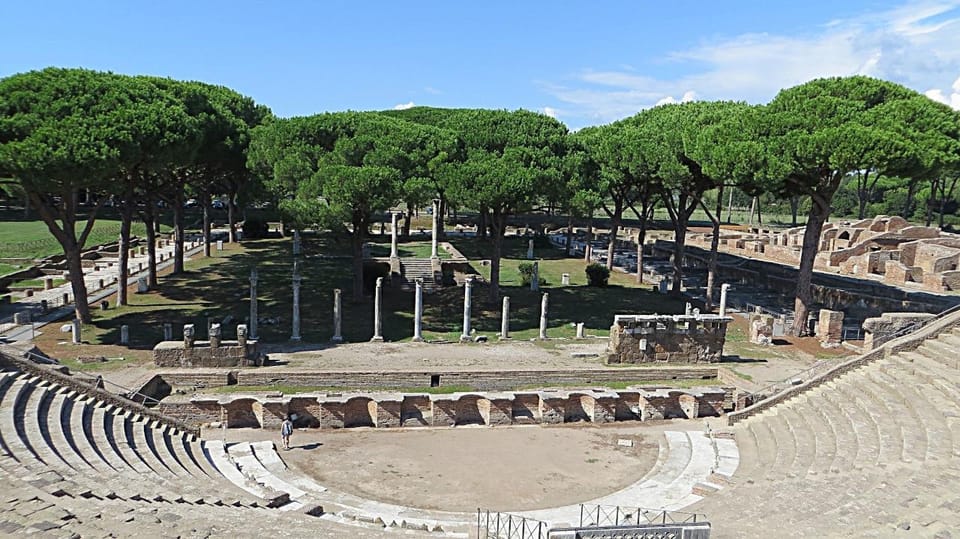
The route through Ostia Antica covers a spread of building types, and the guide keeps them connected. You’ll move past areas tied to ancient taverns, baths, apartments, groceries, and theatres. The tour doesn’t treat those as separate stops; it treats them like pieces of the same living machine.
That approach is valuable because it answers the question most people have when visiting ruins: what did people do here, day after day? By walking the main street and threading in multiple building categories, you get a stronger mental map of the town.
It also helps you notice preservation in a more meaningful way. When buildings are intact enough to recognize their purpose, you’re more likely to remember details after you leave. That memory payoff is a big part of why the tour is rated so highly and why Ostia often feels like a must-see for anyone who enjoyed Pompeii.
Half-day timing: when 4 hours works and when it doesn’t
A 4-hour total tour is practical in Rome. It gives you enough time for a guided walk and the best highlights without eating up a full day that could be used for Vatican, Trastevere, or a second Roman site.
Still, it’s half-day timing, so don’t expect to cover every inch of Ostia with complete freedom. You’re on a schedule, following the guide’s route and pace. If you’re the type who loves to linger in side areas, you might want more time—or you might pair this tour with a lighter self-guided visit afterward.
If you’re trying to hit Ostia for the first time and you also want the explanation that makes it click, this duration is a good fit. If you already know the basics and want long solo wandering time, the value may depend on whether you prefer guided structure or self-paced exploration.
Price and value: what you’re really paying for
At $258.29 per person, this is not a bargain-basement outing. The value comes from the mix of costs you don’t have to manage yourself: the entrance fee, the live 3-hour guided portion, and round-trip transport in an air-conditioned minivan.
You’re also getting skip-the-ticket-line included, which matters at busy times. Waiting is time you can’t get back, especially when your total day is just 4 hours.
The price can feel easier to justify if:
- you want a guide’s explanation rather than reading ruins on your own
- you prefer pickup/drop-off convenience inside central Rome
- you want a tight schedule that doesn’t turn into a logistics project
If you’re traveling with someone who’s perfectly happy planning transit, timing, and tickets independently, you may choose a self-guided route. But if you’d rather spend your energy looking at the ruins, not figuring out transport, the included guide + logistics combo is the selling point.
Who this tour suits best (and who should think twice)
This is a strong match for:
- first-time visitors to Ostia Antica who want the big highlights
- people who liked Pompeii and want a similar experience with different strengths
- travelers who appreciate guided context along a walk-through route
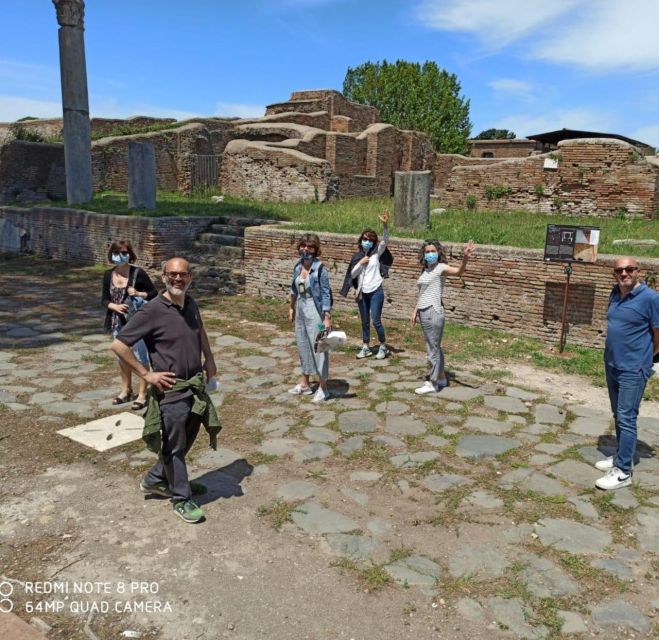
- couples and friends who want small-group attention (private or small groups are available)
It’s a weaker match if you:
- use a wheelchair or have mobility limitations (the tour explicitly isn’t suitable)
- want a slow, wandering visit with lots of off-route time
- need heavy comfort amenities for uneven ground and prolonged standing (this is a real archaeological site experience, and you should plan accordingly)
A quick practical tip: bring comfortable shoes and sunglasses, and bring a camera because the preservation makes photos worth your effort. That Baths of Neptune mosaic is the kind of shot you’ll be glad you planned for.
Should you book this Ostia Antica half-day tour?
I’d book this tour if you want a guided, high-impact visit to one of Rome’s standout ancient sites in just half a day. The combination of 3 hours of local guidance, A/C transport, and entrance details handled for you makes it easier to get your money’s worth through time spent actually seeing the best parts.
Book it especially if you enjoyed Pompeii and want to test your love of Roman urban life with a site where the layout and visuals feel unusually readable. If you’re short on time in Rome but still want an authentic archaeology day, this is a well-targeted option.
If mobility is an issue, or if you need a mostly seated experience, skip it. For everyone else who can manage a guided walk, this tour is one of the more efficient ways to connect Roman street life, architecture, and myth-driven art in a single morning/afternoon window.
FAQ
How long is the tour?
The total duration is 4 hours. The guided portion at Ostia Antica is about 3 hours.
Do I get hotel pickup in Rome?
Yes. Pickup and drop-off are included at a hotel location inside the Aurelian Walls.
Is transportation included?
Yes. You’ll travel round trip in an air-conditioned minivan.
Will I have to wait in line for tickets?
No. The tour includes skipping the ticket line, and the Ostia Antica entrance fee is included.
How many hours will the guide show us Ostia Antica?
You’ll have a 3-hour tour with a professional local guide during the Ostia Antica visit.
What languages are available for the guided tour?
The live guide is available in French, Spanish, and English.
Is this tour always a small group?
It runs as a small group, and private or small-group options are available.
What should I bring?
Wear comfortable shoes and bring sunglasses and a camera.
Is the tour wheelchair accessible?
No. It is not suitable for people with mobility impairments or for wheelchair users.
What is the cancellation policy?
You can cancel up to 24 hours in advance for a full refund.
Is there a reserve now, pay later option?
Yes. You can reserve your spot and pay nothing today.