REVIEW · DAY TRIPS FROM ROME
Ostia Antica Tour with Transfer: Private or Group of Max. 8
Book on GetYourGuide →Operated by Touriks · Bookable on GetYourGuide
Roman port ruins feel strangely alive. I love the small-group limit and the way guides like Mario bring Ostia Antica’s streets, baths, and underground Mithraeum to life. I also like the city-center transfer with headsets and smooth entry. One thing to plan for: you will walk on uneven archaeological ground, and this tour is not a good fit for wheelchair users or reduced mobility.
This is one of those days where you trade the big-city rush for something calmer. Ostia Antica is often compared to Pompeii, but it tends to feel less hectic, because you are seeing a whole working port city frozen in time. You get a guided 2-hour walk inside the park, then you decide how long you want to stick around afterward.
In This Review
- Key points you should know before you go
- Why Ostia Antica Feels Better Than a Crowded Rome Day
- Getting There Fast: Touriks Office, Private Van Transfer, and Luggage Deposit
- Your Guided Walk Through Ostia Antica’s Best-Preserved Street Life
- Baths of Neptune and the Mosaics Moment
- The Roman Theatre and Why It Works as a Story Stop
- Decumanus Maximus: The City’s Main Spine
- Insulae and Domus: Neighborhoods, Not Just Monuments
- The Spiritual Side: Forum, Temples, and the Underground Mithraeum
- Forum and Temples: Power in the Public Square
- The Underground Mithraeum: The Part People Talk About
- After the Tour: Train Ticket, Optional Return Transfer, and Beach Time
- Price and Value: What $123.48 Buys You in Real Terms
- What to Bring (and What to Leave Behind) for a Smooth Ostia Day
- Who This Tour Suits Best in One Day With Good Rhythm
- Should You Book This Ostia Antica Tour with Transfer?
- FAQ
- Is the tour group limited to a small size?
- How long is the Ostia Antica tour with transfer?
- Where do I meet the tour?
- What’s included besides the guide?
- Do I need tickets for Ostia Antica?
- How does the return to Rome work after the tour?
- What should I bring or avoid?
Key points you should know before you go
- Max 8 people (guaranteed) or private guide for a more relaxed pace and more chances to ask questions
- Licensed expert archaeologist-style guiding with strong storytelling, including guide credits like Mario and Francesca
- Headsets included so you can hear the guide clearly even while you’re moving through open-air ruins
- Transfer from central Rome + return plan that lets you travel without dragging luggage around
- Major sites in one go: Baths of Neptune, Roman Theatre, Decumanus Maximus, Forum/Temples, and the Mithraeum
Why Ostia Antica Feels Better Than a Crowded Rome Day
If you’ve already done the headline sights in Rome, you’ll probably crave something that feels more lived-in and less choreographed. Ostia Antica is an ancient port city tied directly to how Rome moved goods, people, and ideas. The setting helps: you’re not just looking at one monument, you’re walking through a whole urban system—streets, neighborhoods, and public buildings.
I especially like how the ruins help you picture daily life. The Roman Theatre makes more sense once you can imagine the crowds it once held. The baths feel different when you connect them to neighborhood routine, not just to architecture on a postcard.
The other big win is the crowd factor. You’re not trying to squeeze into a nonstop tourist bottleneck. Instead, you spend your time with a guide who can point out what you’d otherwise miss. That means more meaning per minute, and less time standing around thinking, I guess this is where something happened.
You can also read our reviews of more private tours in Rome

Getting There Fast: Touriks Office, Private Van Transfer, and Luggage Deposit
Your day starts at the Touriks point at Via di San Giovanni in Laterano 132, 00184 Rome. Arrive about 15 minutes early so you can check in without stress. From there, you go by private transfer to Ostia Antica, which is a real comfort if you’re trying to keep the day simple.
The transfer timing matters because it protects your energy. You’re not arriving to the park drained from multiple legs of public transport. Instead, you roll out of central Rome, settle into the van, and you’re ready to start seeing ruins right away.
One practical detail I like: there’s a luggage deposit at the city-center office, but only if you choose the return transfer option. If you’re carrying a big bag on the day, this can make a noticeable difference in comfort. Even if you don’t have that option, remember the park experience has rules: large bags aren’t allowed, so travel light.
Your Guided Walk Through Ostia Antica’s Best-Preserved Street Life
Once you reach Ostia Antica, the tour shifts into the good stuff: a guided walk designed to help you read the city. You get 2 hours with an expert licensed guide, and they use headsets so you can hear clearly even in open-air sections.
Baths of Neptune and the Mosaics Moment
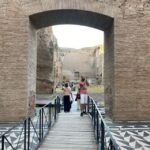
Early in your walk, you’ll hit one of Ostia’s signature stops: the Baths of Neptune and their mosaics. This is the kind of site where a guide can change everything. Without explanation, you might focus only on decoration. With guidance, you start noticing how the design supports movement, social life, and ritual.
Mosaics also reward patience. The details are easier to catch when someone points out what you should look for and how different rooms were used. You’ll come away understanding this wasn’t just a place to wash; it was also a place to meet, talk, and show status.
The Roman Theatre and Why It Works as a Story Stop
Next comes the Roman Theatre, and it’s a smart anchor for the day. A theatre in the open air sounds straightforward, but it becomes far more interesting when your guide helps you imagine a performance schedule and how people would have arrived and reacted.
The building is also a great tool for learning Roman urban habits. If you can see how public entertainment fit into an ordinary day, you’ll connect later stops much faster.
You can also read our reviews of more tours and experiences in Rome




Decumanus Maximus: The City’s Main Spine
Then you’ll walk along Decumanus Maximus, the big east-west main street of the city. This is where Ostia starts feeling like a place, not just a collection of ruins.
On a street like this, you can understand why the port city mattered. Goods moved, people traveled, and news traveled. When you walk the main axis with a guide’s cues, you can feel how the city was organized for flow.
Insulae and Domus: Neighborhoods, Not Just Monuments
As the tour continues, you’ll see the insulae (apartment buildings) and lavish domus (larger private houses). This part is valuable because it shows social difference without needing a lecture.
You begin to connect layout to class. In other words, you’re not just learning names for building types—you’re reading how architecture reflected everyday income and lifestyle. It’s a quick education in how Rome functioned beyond temples and statues.
The Spiritual Side: Forum, Temples, and the Underground Mithraeum
Ostia Antica isn’t only about daily life and entertainment. It also has a serious spiritual layer, and your guide uses it to tell a fuller story of Roman beliefs.
Forum and Temples: Power in the Public Square
The Forum and Temples give you the political and religious core of the city. This is a good moment to slow down, because the guide’s job here is to help you connect what you see to why it mattered to residents.
Even if you don’t remember a list of gods or titles, you’ll understand the pattern: civic life and religious life were tightly linked. That makes the ruins feel more personal. You’re not just looking at sacred architecture; you’re seeing how a community organized its priorities.
The Underground Mithraeum: The Part People Talk About
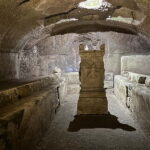
Then comes one of the most intriguing stops: the underground Mithraeum, tied to Roman mystery cults. This is the kind of site that feels different from the rest of the open-air ruins, mostly because it’s private-feeling in design.
Your guide’s explanation turns it from a strange room in the dirt into a meaningful clue about who people were worshipping and why. And it gives you a surprise factor, because many visitors arrive expecting only baths and theatres.
If you like history that includes belief systems, rituals, and human behavior (not just dates), this stop is a highlight.
After the Tour: Train Ticket, Optional Return Transfer, and Beach Time
When your 2.5-hour total experience ends, you’re not locked into a single finish line. You can either keep exploring on your own or ask the guide to accompany you to the train station.
From there, you get a public transport ticket included, so you can return to Rome or head toward the nearby beach by public transport. For many people, this is the easiest way to tack on an afternoon without hauling around extra luggage.
There’s also an option for return transfer to the city-center office, but it depends on what you chose at booking. If you didn’t select that option, your return to Rome is via public transport, with the train ticket included.
One practical note: your tour ends back at the meeting point area in concept, but in real life you have flexibility. Plan around your energy. If you’re the type who could keep walking for another hour, bring that curiosity with you.
Price and Value: What $123.48 Buys You in Real Terms
At about $123.48 per person, this tour isn’t a budget ticket. But it also isn’t just a guide and a clock. You’re paying for a mix of things that add up fast: entrance fees, expert guiding, headsets, and transportation from central Rome.
Here’s how I think about value:
- You’re saving time with included transfer and a structured start at the Touriks office.
- You’re paying for interpretation, not just access. The site is large, and Ostia rewards guidance because it helps you read what you’re seeing.
- You’re getting comfort logistics, especially if you use the luggage deposit option tied to return transfer.
Also, the small group of max 8 matters. For many people, that’s where the cost starts feeling fair. It reduces the feeling of being herded and makes it easier to ask a question when you’re standing in front of something specific.
One consideration: if you’re a fast walker with strong self-guided skills, you might be able to do Ostia on your own. But if you want meaning, hearing your guide well (headsets help), and a smooth transfer plan, this price starts to make sense quickly.
What to Bring (and What to Leave Behind) for a Smooth Ostia Day
You don’t need much, but you do need the basics right.
Bring passport or an ID card. Wear comfortable shoes—there’s a moderate amount of walking and the ground is archaeological, not mall-floor smooth. This is also not a good day for carrying bulky luggage, because large bags aren’t allowed, and the tour rules also forbid weapons/sharp objects and drones.
Keep it simple on the day: no complicated packing, no oversized day bags, and nothing that turns check-in into a hassle.
Weather matters too. The tour is subject to conditions and calendar events. If it gets canceled, you’ll be offered an alternative date or a refund, so build a little flexibility into your planning.
Languages are multiple, too: English, German, French, Portuguese, Spanish, and Italian. If you’re picky about language comfort, check the option when you book.
Who This Tour Suits Best in One Day With Good Rhythm
This tour makes the most sense if you want Ostia Antica to be more than a quick look. If you enjoy archaeology and Roman culture, the guided structure helps you connect major sites into a single story: port life, public entertainment, neighborhood living, and religious practice.
It’s also a strong choice for families, because the ruins offer lots to point at and a good guide can keep the pace friendly. The positive guide feedback includes examples like Mario and Francesca, and that kind of storytelling skill matters at a site like this.
If you’re traveling solo or as a couple, the small-group size can feel like a “best of both worlds” experience: guided and social, but not crowded. If you want maximum control of pace and questions, the private option is the logical step.
The one clear mismatch: this tour is not recommended for people with reduced mobility or wheelchair users. Even if you’re determined, the walking and site setup likely won’t cooperate.
Should You Book This Ostia Antica Tour with Transfer?
Book it if you want an easy, well-organized way to see a major ancient Roman city without spending your whole day sorting out transport. The best reason is simple: the combination of transfer + expert guiding + headsets turns Ostia Antica into something you’ll remember for more than photos of walls.
Skip it if you hate group logistics or if you plan to do Ostia purely for your own pace and don’t need interpretation. You’ll pay more than a DIY day, and that cost only feels worth it if you’ll actually use the guide’s perspective.
If you’re in Rome for a few days and want one day that feels calmer, smarter, and more human than the usual mega-attractions, this is a very solid pick.
FAQ
Is the tour group limited to a small size?
Yes. You can choose a small group option with a maximum of 8 people (guaranteed), or you can book a private option.
How long is the Ostia Antica tour with transfer?
The total experience time is 2.5 hours, including the transfer. Starting times vary, so you should check availability.
Where do I meet the tour?
Meet at the TouriksPoint at Via di San Giovanni in Laterano 132, 00184 Rome. Try to arrive 15 minutes before your scheduled start time.
What’s included besides the guide?
Entrance fees to Ostia Antica, headsets, and private transport from the city-center office are included. Depending on what you choose, you may also get a train ticket for the return to Rome or a return transfer.
Do I need tickets for Ostia Antica?
Entrance fees are included, and the tour also includes skip-the-ticket-line access.
How does the return to Rome work after the tour?
After the tour, you can stay longer or go with the guide to the train station. A public transport ticket is included for the return to Rome, unless you selected the private return transfer option during booking.
What should I bring or avoid?
Bring a passport or ID card and wear comfortable shoes. Don’t bring large bags, weapons/sharp objects, drones, or alcohol and drugs.