REVIEW · ROME
Rome: Trajan Markets Experience with Multimedia Video
Book on GetYourGuide →Operated by TOURISTATION · Bookable on GetYourGuide
Trajan Markets make ancient Rome feel practical, not dusty. I love the curved, almost market-stall architecture and the way the Fori Imperiali Museum follows the story with amphorae and artifacts. One thing to consider: a big chunk of the archaeological area is also visible from the street, so the value is best if you want the interior remains plus the museum experience, not just an outside look.
Start with a 25-minute multimedia video that reconstructs major monuments, then you’ll explore at your own pace using a smartphone app with 170+ points of interest. The only real drawback I’d flag is ticket pickup can be slow if the desk is backed up, so give yourself a little extra time at the start.
In This Review
- Key Points I Think You’ll Appreciate
- A 25-Minute Rome Video That Actually Prepares You
- Trajan Markets: When a Shopping Mall Was Built to Last
- What you should watch for while walking
- The Forums Around You: Trading and Meeting Points in One Neighborhood
- The 17th-Century Cistern Ruins: Proof the Site Never Stopped Being Used
- Fori Imperiali Museum: Amphorae and Artifacts from Multiple Ancient Cultures
- Using the Interactive App: 170+ Points That Keep You Oriented
- Meeting Point at Piazza d’Aracoeli: Get There Ready
- Price and Value: Is $37 Worth It?
- What’s Not Included (and Why It Matters)
- Who This Is Best For (and Who Should Skip It)
- Booking Advice: Should You Book This Experience?
- FAQ
- How long is the Trajan Markets experience?
- Where do I meet for the experience?
- What’s included with the ticket?
- Is food included?
- Do I need headphones?
- Can I take a guided tour with this?
- Is it wheelchair accessible?
Key Points I Think You’ll Appreciate
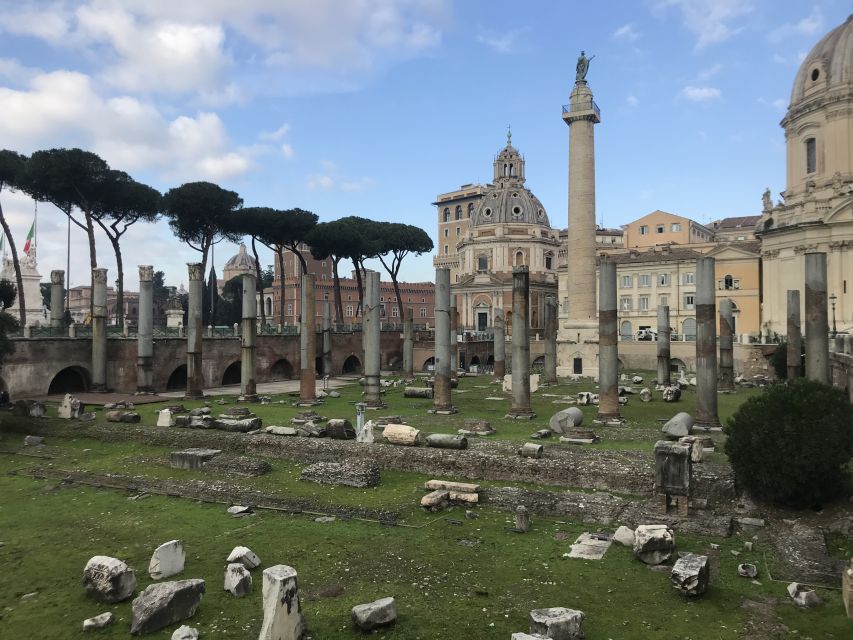
- A 25-minute multimedia intro that sets the scene before you walk ruins
- Trajan Markets’ semicircle architecture, built for a real commercial flow
- A self-guided phone app with 170+ points, so you’re not stuck waiting on a group
- Fori Imperiali Museum artifacts, including amphorae and material from multiple ancient cultures
- Forum-hopping in one area, with sightlines linked to Caesar’s, Augustus’, Nerva’s, and the Templum Pacis
A 25-Minute Rome Video That Actually Prepares You
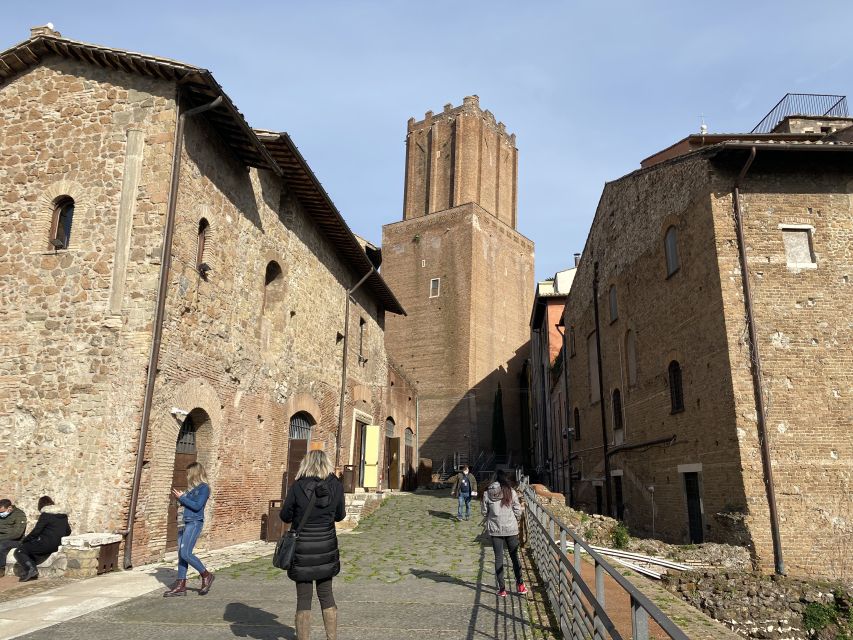
This experience begins with a 25-minute multimedia video on Ancient Rome. The point isn’t to overload you with dates—it’s to help you recognize what you’re looking at. The narration and visuals reconstruct the most important monuments of Rome, which matters because the Trajan Markets area can look like “ruins in layers” unless your brain has something to match to.
If you like walking with a mental map, you’ll appreciate the setup. You’ll be primed to notice how Imperial Rome organized space: commerce, movement, public life, and prestige all pushed into the same urban footprint.
Practical tip: have your headphones ready and your smartphone charged. The later phone app is a core part of how you’ll understand what you’re seeing.
You can also read our reviews of more tours and experiences in Rome.



Trajan Markets: When a Shopping Mall Was Built to Last
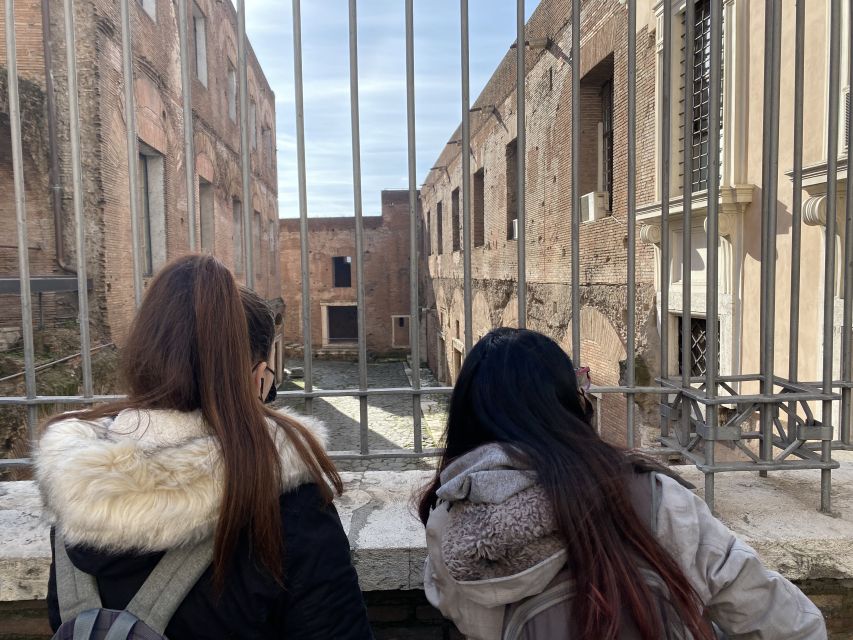
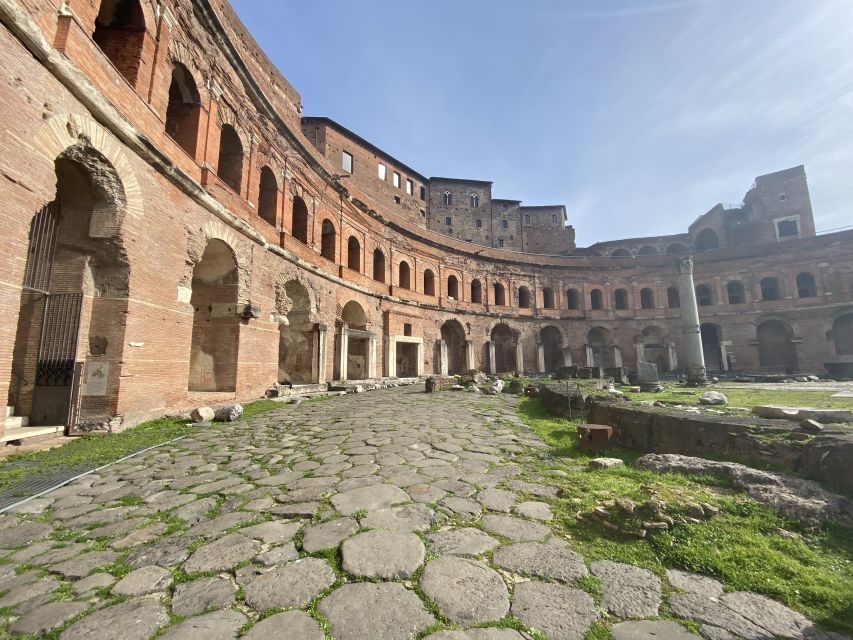
Trajan Markets were the commercial shopping mall of the Roman Empire. That’s the headline, but what you’ll feel on-site is the layout and the ambition. One review highlight that stuck with me was the semicircle shape—the architecture has a strong sense of design, not random stone piles. It feels planned to guide people toward activity.
You’ll explore the Trajan Markets archaeological complex as it connects to trade and daily interaction during the Roman Imperial Age. Instead of imagining merchants in your head, you can physically trace the space they used: the idea of a shopping center as an engine of urban life.
And even if you’re not a “big Roman architecture person,” commerce is still a human theme. People meet. People browse. People buy. Rome did that too—just with a different scale and materials.
What you should watch for while walking
I’d focus on three things:
- Flow: how space seems to funnel visitors and shoppers through the built environment
- Function: areas that feel like they were meant for public access rather than private living
- Layering: the complex wasn’t frozen in time; it changed and got repurposed later
That layering is where the experience starts to feel more real.
The Forums Around You: Trading and Meeting Points in One Neighborhood

The Trajan Markets sit close to the network of imperial forums that served as trading and meeting points. As you explore, you’re directed to connect the commercial world of Trajan Markets with the civic and ceremonial world of the forums.
You’ll specifically encounter references to:
- Caesar’s Forum
- Augustus’ Forum
- Nerva’s Forum
- Templum Pacis
Even though you’re not walking through four separate ticketed “attractions” here, this matters. It gives you a sense of how the city operated as a system. Trade wasn’t isolated. It was part of an urban rhythm that blended shopping, politics, public display, and social life.
A personal way to make this section click: don’t treat it like a list. Instead, pick one name (Caesar, Augustus, Nerva) and try to imagine the kind of crowd it drew. Then compare that mental crowd to the idea of a commercial center. You’ll start to see how people would move between spaces depending on purpose.
The 17th-Century Cistern Ruins: Proof the Site Never Stopped Being Used
One of the more interesting surprises in this area is the ruins of a 17th-century cistern. That cistern is a reminder that Rome’s most famous structures and spaces didn’t just vanish after the ancient world. They were reused, adapted, and turned into something else.
This is where you get more than Roman history; you get Rome’s “second life.” Seeing a cistern layered into the same story as imperial commerce helps you understand why so many historic cities feel alive even when they’re ancient. The past isn’t a museum wall—it’s something that kept working, even after the original purpose faded.
If you like architecture and how cities evolve, this is a section you shouldn’t rush.




Fori Imperiali Museum: Amphorae and Artifacts from Multiple Ancient Cultures
After exploring the exterior archaeological complex, you’ll spend time in the Fori Imperiali Museum. This is a key part of why the experience feels complete rather than just a walk among stones.
The museum focuses on artifacts from ancient cultures, including amphorae. Amphorae are everyday objects in ancient terms—containers for liquids and goods. That makes them perfect here. You’re connecting trade and storage to the physical evidence of what people bought, transported, and consumed.
One review praise I like: the museum section includes artificers, with materials that help you picture craftsmanship and the production side of ancient commerce—not only what goods looked like, but how they fit into a broader economy.
Also, the museum’s wider aim—artifacts from different civilizations—helps broaden the Roman-centered story. Rome traded, collected, and absorbed influences. If you only focus on Roman monuments, you miss a huge part of how the empire worked.
Practical tip: don’t try to read every label word-for-word. Instead, skim for categories that match what you just saw outside: trade goods, containers, and evidence of everyday life.
Using the Interactive App: 170+ Points That Keep You Oriented
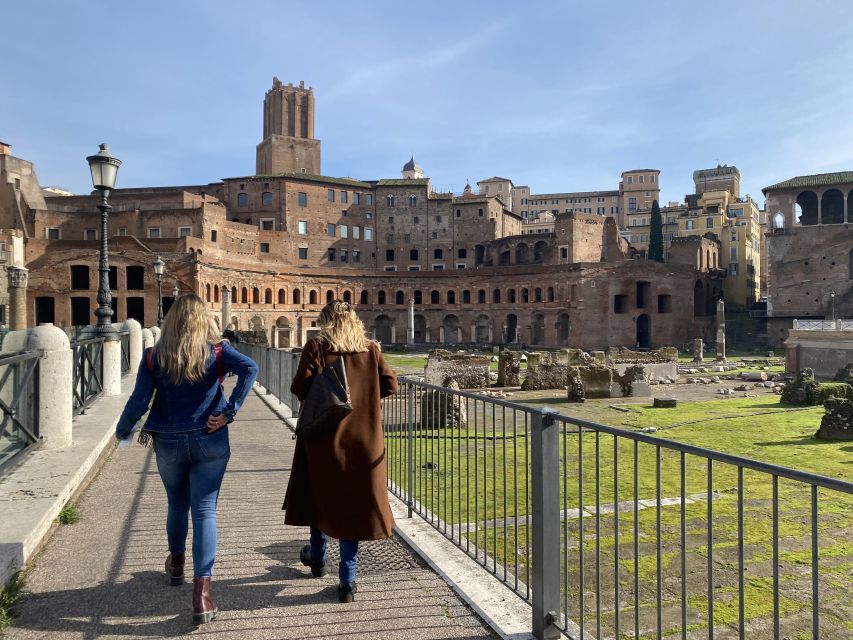
The experience includes a downloadable city app audioguide for your smartphone, with more than 170 points of interest. This isn’t just “extra audio.” It’s what helps you connect what you’re seeing to context.
Here’s how I’d use it:
- Use it when you’re about to reach a new sightline or structural detail
- Pause your walking pace briefly so you can match audio to stone
- Keep headphones on so you don’t lose the thread
The goal is simple: your brain should form a map as you walk. With 170+ points, the app gives you choices, but it can also overwhelm you if you treat everything like a checklist. I’d pick the points that correspond to the big themes you care about—commerce, forums, or artifacts.
Tip for smooth use: arrive with your phone charged and ready. If your battery dips, the experience becomes harder than it needs to be.
Meeting Point at Piazza d’Aracoeli: Get There Ready
You’ll meet at the Touristation Aracoeli Office, Piazza d’Aracoeli 16, near Piazza Venezia. Look for the orange Touristation flags. There’s a fountain in front of the entrance, which makes it easier to confirm you’re at the right spot.
One review detail stands out: exchanging a voucher worked smoothly for one person who got help in the morning even though the visit was scheduled for later in the day. That’s a good sign that the desk can handle ticket changes—when it’s not backed up.
Still, there’s a caution from another experience: ticket printing and the check-in procedure can take longer than you want, and the process can feel confusing if staff aren’t on the same page. The practical fix is boring but effective: plan for a little extra time when you arrive at the meeting point.
Price and Value: Is $37 Worth It?
At $37 per person for a 1-day experience, the key value question is what you’re really buying.
You’re not just buying entry into ruins. You’re getting:
- a 25-minute multimedia video
- Trajan Markets entrance
- Fori Imperiali Museum entrance
- a downloadable smartphone app audioguide (170+ points)
- assistance at the meeting point
Food and drinks aren’t included, so you’ll want to plan on grabbing something nearby before or after. There’s no hotel transfer, and there isn’t a guided tour included, so you’re the guide for most of the walking—using the phone app and the video as your anchors.
So who gets the best value?
- People who like self-guided exploration with strong interpretation
- People who enjoy connecting architecture to social life (commerce + forums)
- People who want museum time, not only outdoor ruins
Who might feel less happy?
- People expecting a full guided narrative from a live guide
- People who only want a quick “see what’s there” outside experience
Given the museum component and the app, I think $37 can feel fair—especially if you’ll actually use the audio points rather than leaving your phone in your pocket.
What’s Not Included (and Why It Matters)
You’ll need to handle:
- Food and drinks
- Hotel transfer
- Guided tour
That last one is important. Without a guided tour, the experience depends on the video and app. If you’re the type who likes a guide to explain everything out loud, you’ll have to supply that energy yourself.
Also, this is not a drop-in casual walk with unlimited time. The experience is built around the entrances and the audio content, so it works best when you treat it like a structured visit, even if it’s self-paced.
Who This Is Best For (and Who Should Skip It)
This experience makes sense if you:
- like Roman sites beyond the biggest name monuments
- enjoy trade, daily life, and how cities work
- want a museum stop with objects you can connect to what you saw outside
- prefer control over your pace (app-based self-guiding)
It may not be ideal if:
- you need wheelchair access (the experience is listed as not suitable for wheelchair users)
- you hate phone-based navigation and audio
- you want only a quick outside photo stop
Also, check your day planning. The site restrictions mean you shouldn’t bring bulky items. The experience lists items not allowed such as luggage or large bags and drones, along with rules about pets and weapons or sharp objects.
Booking Advice: Should You Book This Experience?
I’d book this if you want a structured way to understand Trajan Markets as a real commercial space, and you’re happy to use your smartphone app to connect the dots. The combo of video + entrances + museum + 170+ audio points gives you enough interpretation to make the ruins feel readable.
I’d think twice if you hate delays and complicated check-in. The meeting point process includes ticket handling, and at least one experience flagged slow printing and confusing procedure. If you do book, arrive early, keep your phone charged, and have your passport or ID ready.
If you’re choosing between this and a simple “see the outside” pass, this is clearly aimed at people who want the interior remains and the museum artifacts. You’ll get more out of it if you show up ready to listen and look.
FAQ
How long is the Trajan Markets experience?
It lasts 1 day, with a 25-minute multimedia video as part of the start of the visit.
Where do I meet for the experience?
Meet at the Touristation Aracoeli Office at Piazza d’Aracoeli 16, near Piazza Venezia. Look for the orange Touristation flags, with a fountain in front of the office entrance.
What’s included with the ticket?
Included items are the 25-minute Ancient Rome video presentation, Trajan Markets entrance, Fori Imperiali Museum entrance, the downloadable city app audioguide on your smartphone, and assistance at the meeting point.
Is food included?
No. Food and drinks are not included.
Do I need headphones?
Yes. Headphones are listed as something to bring.
Can I take a guided tour with this?
No guided tour is included. The experience is primarily self-guided using the video and the smartphone app.
Is it wheelchair accessible?
No. It is listed as not suitable for wheelchair users.