REVIEW · CATACOMBS & CRYPTS TOURS
Rome: Catacombs of Priscilla Entry Ticket & Guided Tour
Book on GetYourGuide →Operated by OPERA ROMANA PELLEGRINAGGI · Bookable on GetYourGuide
Priscilla’s catacombs feel like time travel underground. This guided visit takes you into early Christian burial spaces, including two floors of galleries, niches, and notable frescoes. I love how the site is still under active archaeological exploration, and I love the way the guide ties the burial stories to what you can see down there.
Two details really land: the early Christian art and inscriptions you’ll encounter, and the smooth, small-group pace (up to 10 people) that keeps you from getting lost in tight passages. The main drawback to plan for is that it’s 45 minutes, and the space is narrow—so it’s not the kind of visit where you can wander slowly on your own.
In This Review
- Key Points to Know Before You Go
- Rome’s Priscilla Catacombs Tour: What You’re Really Walking Through
- Entering From Via Salaria and Stepping Into the Two-Floor Site
- The First Level: Niche Tombs and Galleries Made for Mourning
- The Cryptoporticus and Greek Chapel Connection
- The Acili Hypogeum: When a Water Cistern Becomes Memory
- The People the Catacombs Remember: Martyrs and Buried Popes
- The Frescoes: Early Christian Art Still Visible
- The Guides Matter: Sister Lydia, Alexandra, Clara, and the Funny Side
- Practical Notes: 45 Minutes, Tight Corridors, and No Photos
- Price and Value: Why This $16 Ticket Works in Rome
- What If You Want More Than the Underground Story?
- Who This Catacomb Tour Is Best For
- Should You Book the Catacombs of Priscilla Tour?
- FAQ
- FAQ
- Where is the Catacombs of Priscilla tour meeting point?
- How long is the guided tour?
- How much does the tour cost?
- Is the tour guided?
- What languages are available for the live guide?
- How big is the group?
- Are baby strollers allowed inside?
- Can I take photos inside the catacombs?
- Is this tour suitable for people with mobility impairments?
- Is there free cancellation?
- Who runs the tour?
Key Points to Know Before You Go
- Two floors of catacombs with galleries and niche tombs used by Christians starting in the early 3rd century
- Cryptoporticus area and Greek Chapel connected to a former noble burial ground
- Acili hypogeum with inscriptions originally tied to a cistern, with fragments shown nearby
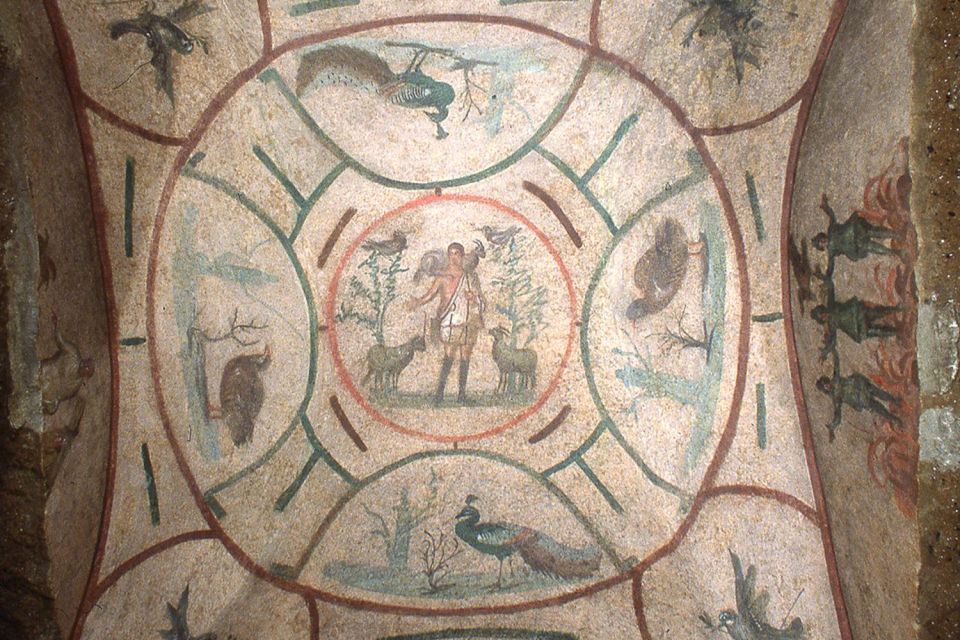
- Frescoes that can still surprise you, including very early Virgin-and-Child imagery highlighted by guides
- Small group size (max 10) helps in narrow corridors and keeps the tour from feeling rushed
- No photos inside, so come ready to use your eyes, not your camera
Rome’s Priscilla Catacombs Tour: What You’re Really Walking Through
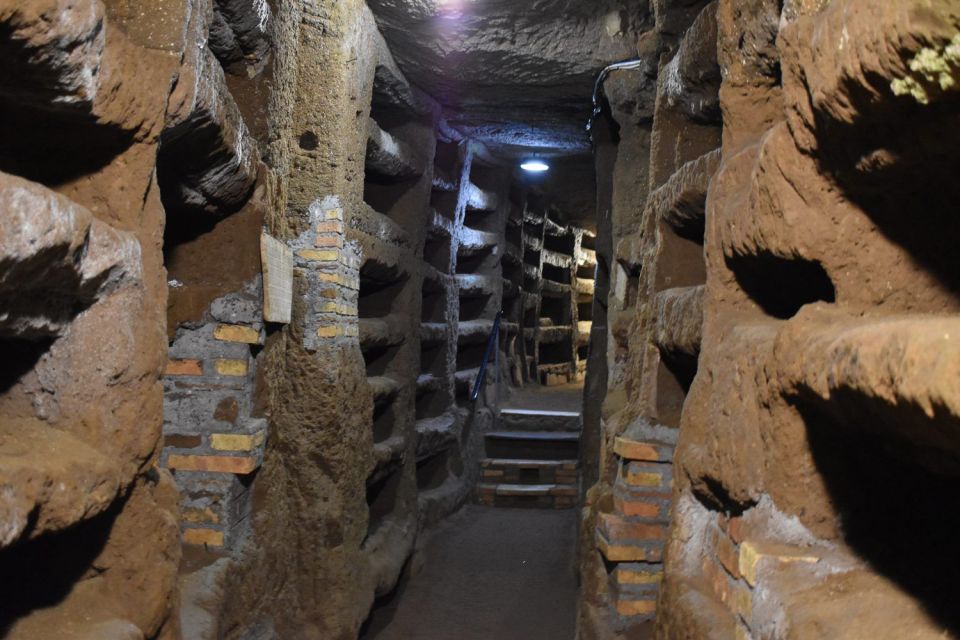
Rome’s headline sights are loud. The Catacombs of Priscilla are quiet. You trade crowds for candlelit-calm darkness (even if there are modern lights above you somewhere). Then, in a short 45 minutes, you get a window into early Christianity—how people mourned, remembered, and left signs of faith in stone, paint, and names.
This isn’t the kind of experience where you just “look around.” The best part is the way the tour explains the logic of the spaces: why there were niches, what galleries were used for, and how separate areas connect underneath the city. Even if you know Rome well, this tour adds a different layer—what life and belief looked like when the ground itself became part of the story.
You can also read our reviews of more tours and experiences in Rome

Entering From Via Salaria and Stepping Into the Two-Floor Site
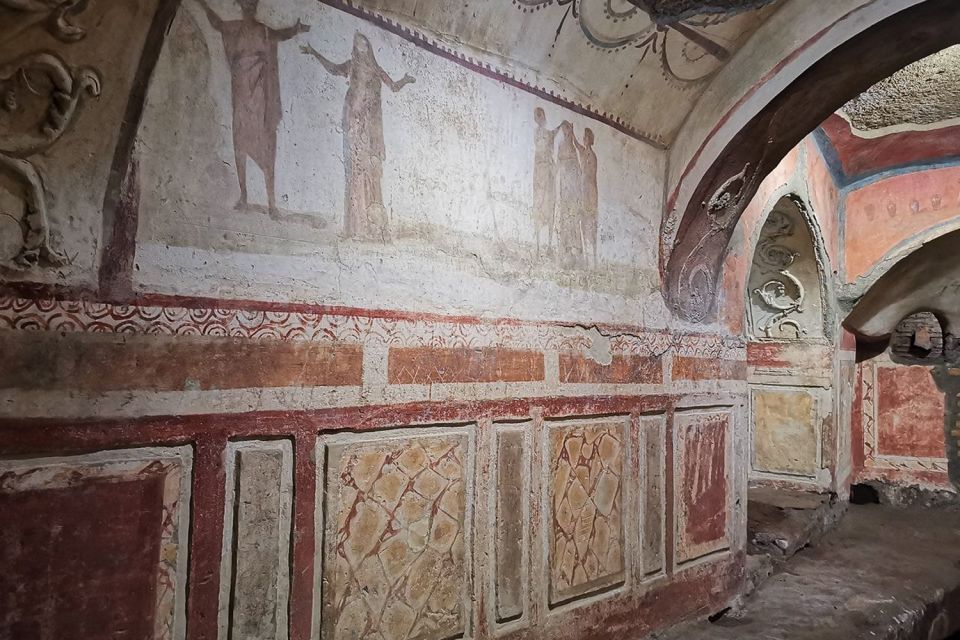
The tour starts at the ticket office for the catacombs. You’ll want to arrive at least 10 minutes early so you can check in and be ready for the group to move inside. The experience is small-group by design, limited to 10 participants, which matters once you’re underground because paths get tight and you don’t want to feel packed like a bus schedule.
Inside, you’re dealing with a site that spans two floors. That detail changes the whole feel of the visit. Instead of a single corridor, you experience shifts in space and use—how one level functioned differently from another. The first floor includes large, irregular galleries. Early on, the area wasn’t even a catacomb in the usual sense—it began as an arenarium (essentially a sand quarry) and later was abandoned. Christians began using those big spaces around the beginning of the third century, adding tomb niches and shaping the underground landscape for burial and commemoration.
If you like archaeology that still feels like it’s being discovered (not just staged), this matters. One strong theme from the praise is that the place is actively being studied, and the guides connect what you see to what the excavation work suggests.
The First Level: Niche Tombs and Galleries Made for Mourning
On the first floor, you’ll see the kind of underground architecture that fits early Christian realities. Think hundreds of niches cut into the walls, plus a set of about twenty niche tombs built out as the space became organized for commemoration. The important point isn’t just volume—it’s how practical the system was.
Many people imagine catacombs as dramatic caverns. Priscilla’s spaces feel more functional: a working underground memory bank. Families and communities could return, honor names, and keep stories alive. And that’s where the tour guide really helps. You’ll typically hear about the kinds of people whose burial locations became meaningful—not only in a spiritual sense, but as a historical map of early Christianity.
This is also where you’ll start noticing the sites of later connections—areas that were once separate and then became linked through use over time.
The Cryptoporticus and Greek Chapel Connection
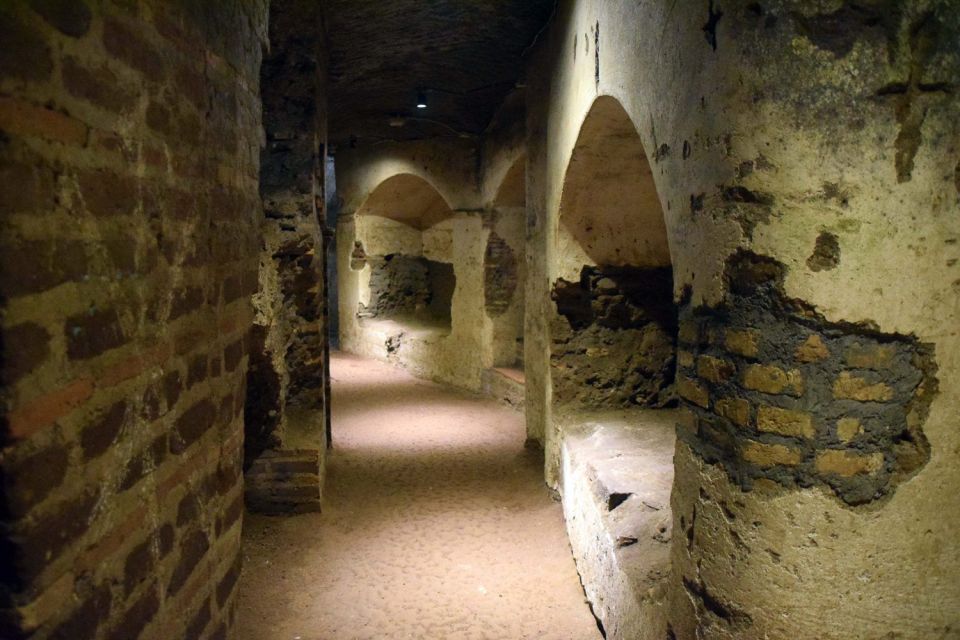
One of the most interesting segments is the adjacent cryptoporticus area, including the Greek Chapel. The cryptoporticus isn’t just a random extra room—it has its own background. It began as a noble family burial ground and later became connected to the catacomb.
That connection is a big reason the tour feels more layered than a simple burial walk. You’re not only tracing Christian use; you’re also seeing how older elite spaces and later religious practices overlap under Rome. The catacombs aren’t isolated from the rest of Roman life. They sit inside it, shaped by changing ownership, changing beliefs, and changing needs for memorial space.
In a place like this, timing matters. You’ll move at a pace that fits the 45-minute format, so you won’t have hours to linger. But the upside is you get the essential story without fatigue.
The Acili Hypogeum: When a Water Cistern Becomes Memory
Another standout stop is the hypogeum of the Acili. The tour explains that this area started as a cistern of water. At some point, it became part of the larger burial complex, and later you’ll hear about the Acili inscriptions found there.
A key detail: inscriptions aren’t just names on a wall. They act like a historical spine, letting you connect a space to a family network and to documentation of the underground world. The fact that these inscriptions are found and exhibited means the story doesn’t end in darkness. You can connect what you see during the tour to what has been preserved and interpreted.
If you love when tours turn “interesting” into “I get it,” this part usually does that work.
You can also read our reviews of more guided tours in Rome

The People the Catacombs Remember: Martyrs and Buried Popes
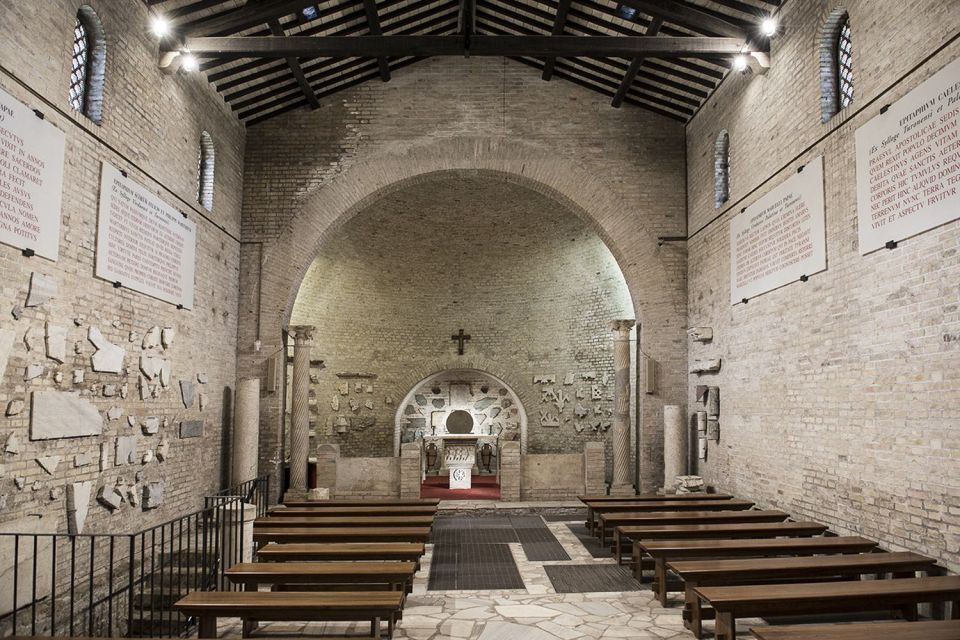
Priscilla’s catacombs are famous for the names attached to them. The tour highlights several martyr figures, including the brothers Felice and Filippo, said to have been martyred—likely under Diocletian—along with their mother St. Felicita and the other brothers Alessandro, Marziale, Vitale, Silano, and Gennaro.
You may also hear that numerous popes were buried here. The names mentioned include Marcellino (296–304), Marcello (308–309), Silvestro (314–335), Liberius (352–366), Siricius (384–399), Celestino (422–432), and Vigilius (537–555). That’s a lot to process in a short time, but it gives you a strong sense of scale. This wasn’t a small private crypt. It became part of a larger story of leadership and faith.
Even if you don’t know these names ahead of time, the tour helps you place them in context. It’s a good reminder that early Christian memory wasn’t abstract—it was tied to real people with real dates and linked traditions.
The Frescoes: Early Christian Art Still Visible
People don’t just come for the architecture. They come because of the frescoes and paintings that survive in places meant for burial.
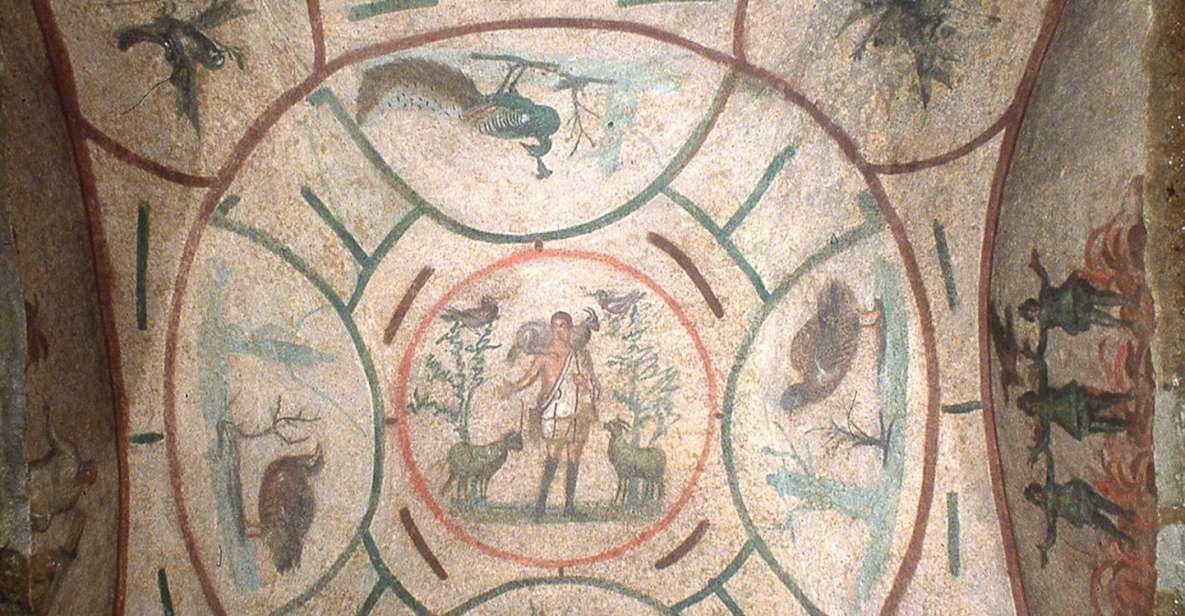
In the praise, guides are singled out for helping visitors understand what they’re seeing and why it matters. One highlight that comes up repeatedly is the mention of a very early Virgin Mary image—specifically a Virgin-and-Child depiction highlighted during the tour. Even without turning this into a lecture, the guide’s explanation can make those images feel personal, not just old.
This is also where the “still under exploration” angle becomes emotional. When a site like this is actively studied, you’re not just looking at a final museum display. You’re viewing part of a living research story—what has been uncovered, what has been interpreted, and what still needs careful study.
And yes, it’s cold underground compared with Rome’s surface heat. Even when you’re not thinking about archaeology, the comfort factor helps.
The Guides Matter: Sister Lydia, Alexandra, Clara, and the Funny Side
This tour lives or dies by its guide. The best feedback points to guides who bring a mix of history, care, and a little humor into narrow spaces where it’s easy to lose your bearings.
Names you may hear associated with excellent tours include Sister Lydia / Sister Lidia, Alexandra, and Clara. If you get one of these guides—or a similarly styled guide—you can expect a talk that doesn’t just recite facts. The tone is friendly, and the guide often keeps the group together so nobody ends up alone in a tunnel.
In small spaces, pacing is everything. One reason the max 10 group size earns praise is that the guide can keep an eye on everyone while pointing out details. You’re not forced to crane your neck while a half-dozen people try to see the same corner.
And since the tour runs only 45 minutes, a strong guide makes time feel efficient rather than cramped.
Practical Notes: 45 Minutes, Tight Corridors, and No Photos
Plan around the reality of being underground. This is not a slow stroll.
The visit is 45 minutes, and many people find that to be just right—short enough to stay sharp, long enough to absorb the key spaces. But if you’re someone who always wants more time in museums, you might wish you had an extra loop. It’s a quick, focused experience by design.
Also, keep your hands and camera away. Photography inside is not allowed. That’s a real constraint, but it also keeps the catacombs from turning into a screen-fest. Come prepared to take notes in your head. Look closely. Ask questions when your guide invites them.
A comfort tip: wear a top layer you can tolerate in cooler underground air. And if you get claustrophobic in enclosed corridors, think twice. The route is narrow and the tour is group-paced.
Price and Value: Why This $16 Ticket Works in Rome
At around $16 per person, this is one of the more straightforward value plays in Rome. You’re paying for a guided entry ticket into a site that’s genuinely different from the usual list of Roman icons.
Here’s the trade-off:
- You don’t get hours of content.
- You do get a structured, guided experience in a place most people never see.
When you compare it to Rome’s typical ticket costs for major monuments, the price feels reasonable for what you get: early Christian burial context, names of martyrs and popes, and frescoes that can surprise you even if you’re not a hardcore art buff. If you want something meaningful that doesn’t eat your entire day, this fits.
And because the group is capped at 10, you’re more likely to get explanations tailored to the group rather than a rushed script.
What If You Want More Than the Underground Story?
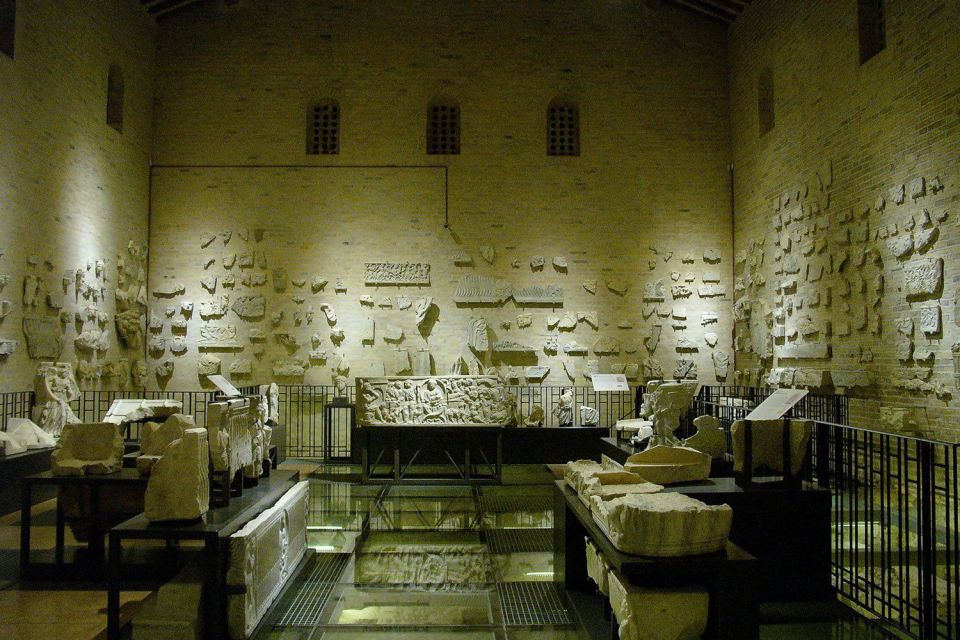
The tour centers on the catacombs, but the larger setting adds context. You’ll hear about the Basilica built by Pope St. Silvestro connected to the tomb of Felice and Filippo, located at Villa Ada. Near the basilica, there’s a museum set up that collects hundreds of fragments of sarcophagi found during excavations in the catacomb area.
If you like following threads, this is your cue. Even though your guided time is focused underground, the broader complex helps you connect burial spaces to later commemorative practices—and to what was preserved and studied above ground.
If you enjoy “one ticket, lots of meaning,” this is the kind of experience that can push you to read more after you leave.
Who This Catacomb Tour Is Best For
This tour suits you if:
- You like early Christian art and want to see it in context, not just in captions.
- You want a break from Rome’s crowds and heat.
- You prefer small groups and clear guiding over wandering.
It’s also a strong choice for mixed-interest groups. Even if one person cares about art and another cares about history, the tour ties both to the same physical spaces.
It’s not the right fit if:
- You need accessibility support, since it’s not suitable for people with mobility impairments.
- You want a photo-heavy outing, since no photography is allowed inside.
- You hate tight spaces, since the underground route can feel cramped.
Should You Book the Catacombs of Priscilla Tour?
If you’re tired of the usual Rome grind—squeeze, queue, repeat—this is an easy “yes.” For a short, guided $16 experience, you get early Christian burial practices, key named figures, and frescoes that really carry emotion.
Book it if you like guided interpretation and you want something authentic and off the main tourist wave. Skip it if you need long self-paced time, if you’re strongly photo-oriented, or if tight spaces are a no-go for you.
FAQ
FAQ
Where is the Catacombs of Priscilla tour meeting point?
You go directly to the ticket office of the Catacomb and show your reservation. Arrive at least 10 minutes before your scheduled tour.
How long is the guided tour?
The tour lasts 45 minutes.
How much does the tour cost?
The price is $16 per person.
Is the tour guided?
Yes. Your ticket includes an entrance ticket and a guided tour of the Catacombs of Priscilla.
What languages are available for the live guide?
The live guide offers tours in Italian, English, and Spanish.
How big is the group?
It’s a small group, limited to 10 participants.
Are baby strollers allowed inside?
No. Baby strollers are not allowed.
Can I take photos inside the catacombs?
No. Photography inside is not allowed.
Is this tour suitable for people with mobility impairments?
No. It is not suitable for people with mobility impairments.
Is there free cancellation?
Yes. You can cancel up to 24 hours in advance for a full refund.
Who runs the tour?
The experience provider is OPERA ROMANA PELLEGRINAGGI.