REVIEW · MUSEUMS
Rome: Early Vatican Museums & Sistine Chapel Tour
Book on GetYourGuide →Operated by Tourismotion · Bookable on GetYourGuide
Be ready for Michelangelo before Rome wakes up. I like the early entry most, because it turns a chaotic must-see into something you can actually follow, and the professional English-speaking guide is what makes the art click instead of just blur together. One thing to keep in mind: even with the head start, a tour this short can feel a bit fast in the Vatican Museums once the wider crowd flow arrives.
This is a 3-hour, morning-first way to tackle the Vatican Museums and reach the Sistine Chapel when you still have a little calm. You’ll get guided time in the key rooms (think Greco-Roman sculpture, the Gallery of Maps, and the Gallery of Tapestries), and you’ll walk into the Sistine Chapel with the right mindset—silence matters there.
The other practical win: you skip the long ticket lines via a separate entrance and you get earphones, so you can hear your guide without leaning into other groups or competing with background noise. Just know the tour isn’t for wheelchair users or people with mobility impairments, and you’ll be walking with limited luggage freedom.
In This Review
- Quick hits you’ll feel right away
- Early entry at the Vatican: why morning access changes everything
- Meeting at Via Tunisi 4 and finding your group without stress
- Cortile del Belvedere warm-up: setting the art up before the big rooms
- Vatican Museums highlights that actually matter: Greco-Roman to Maps to the courtyard
- Greco-Roman sculpture you’ll recognize after the explanation
- The Gallery of Maps: history you can read like geography
- Belvedere Courtyard: a calmer pause before the finale
- Gallery of Tapestries: why this stop helps on a long art day
- Sistine Chapel in quiet mode: what silence changes
- How long is 3 hours, really: what you’ll see and what you might skip
- Price and value: what $108.70 buys you (and why it can be worth it)
- Who should book this early Vatican tour (and who should consider alternatives)
- Should you book it? My take
- FAQ
- What time does the early tour start?
- How long is the tour?
- What’s included in the tour?
- Is St. Peter’s Basilica included?
- Where do I meet the guide?
- Can I bring a backpack or large bag?
- What do I need to bring with me?
- Is this tour suitable for wheelchair users?
- What if there are extraordinary closures or restrictions?
Quick hits you’ll feel right away
- Early arrival (as early as 8 am): you get in before the big crush, which makes the whole visit calmer
- Skip-the-line entry via a separate entrance: less time stuck at the ticket chaos
- Earphones included: your guide stays clear even in crowded rooms
- Guides make the art readable: names and stories turn statues and frescoes from random to meaningful
- Sistine Chapel timing: you experience it in a quiet, focused way rather than a sprint
- Well-run group logistics: meeting point clarity, pace, and shepherding get praised a lot (when you show up on time)
Early entry at the Vatican: why morning access changes everything
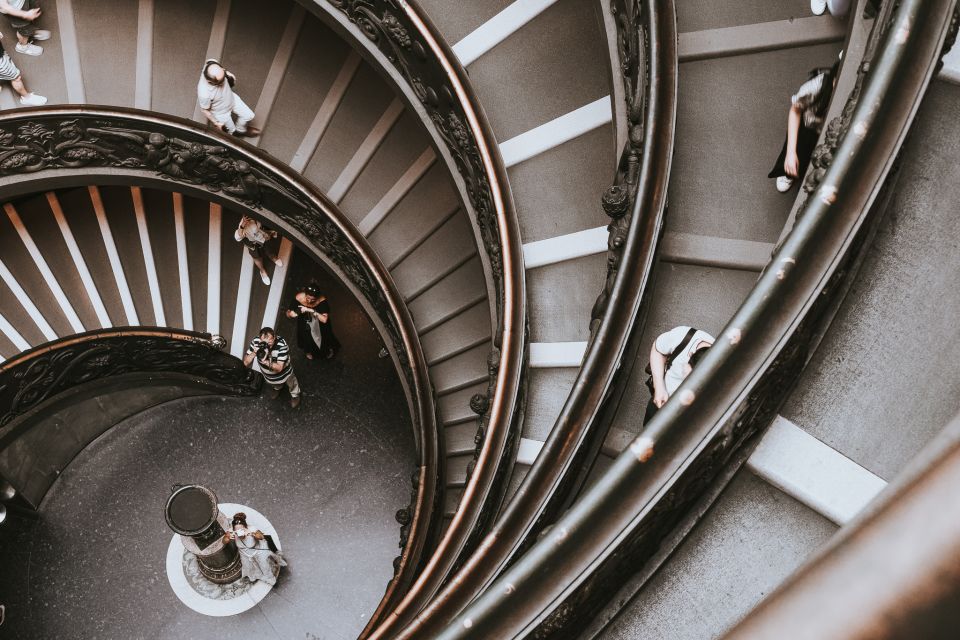
The Vatican Museums are the kind of place where “seeing everything” isn’t a real plan. It’s more like managing time, attention, and crowds—especially if you want the Sistine Chapel to feel special instead of stressful.
That’s why I think the early start is the heart of this tour. When you enter as early as 8 am, you’re not just beating lines; you’re beating the human wave that makes every narrow hallway feel like a moving wall. Your guide also has time to set you up before you hit the busiest zones, which matters because the Vatican is big and easy to mentally drop.
You’ll notice the difference in how you experience the place. At the start, you can actually look. Later, when crowds thicken, you may feel the pace tighten a bit—but the head start helps you get the important rooms out of the way while you still have room to breathe.
You can also read our reviews of more museum experiences in Rome

Meeting at Via Tunisi 4 and finding your group without stress
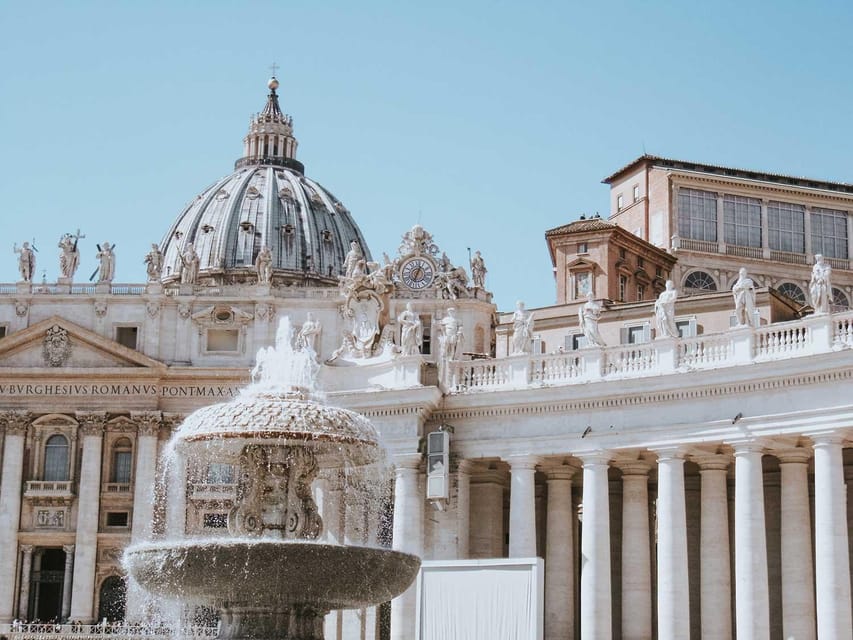
Logistics can make or break a Vatican day, so I appreciate how straightforward this one is in practice.
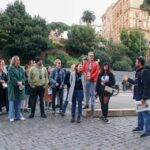
You meet at Via Tunisi, 4, on the pedestrian street. The key detail is where to stand: on the upper side of the road, closer to the corner with Viale Vaticano, in front of the Vatican Museums entrance. A staff assistant waits with a sign that says Tourismotion.
My advice: arrive at least 15 minutes early. Even with good organization, meeting points in this area are crowded with tour groups. People who showed up close to the start time had to scramble, while those who came early generally had an easier time finding their group and getting moving.
Also plan light. You should bring passport or ID, but you must skip luggage and large bags. Backpacks aren’t allowed either. If you travel like most people do—small daypack, water, phone charging pack—still treat that daypack like it’s not optional. Keep it minimal.
Cortile del Belvedere warm-up: setting the art up before the big rooms
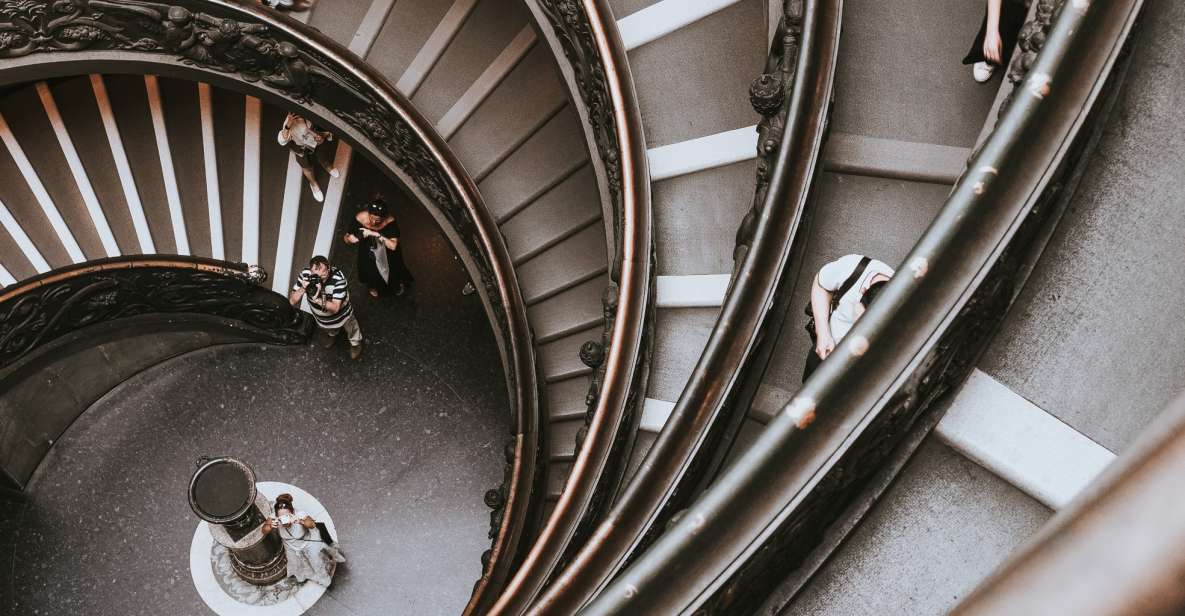
The tour begins with a guided introduction outside and then moves into Cortile del Belvedere. This stop matters more than it sounds. It’s basically your mental warm-up: you get bearings, and your guide helps you understand how the Vatican Museums are organized and why certain masterpieces are grouped the way they are.
This is also where you’ll likely get the “how to look” lesson. Some guides use the waiting and moving time to explain what you’re about to see, which helps you recognize art cues instead of just walking past them. It’s a small thing, but it changes the experience.
When guides are at their best here, you don’t feel like you’re being rushed into a checklist. You feel like you’re being guided through a storyline.
Vatican Museums highlights that actually matter: Greco-Roman to Maps to the courtyard
The middle of the tour covers the core museum highlights in a way that works for first-timers. And yes, the Vatican Museums are famous for being packed, but the structure helps.
Greco-Roman sculpture you’ll recognize after the explanation
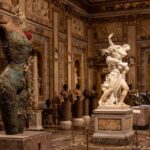
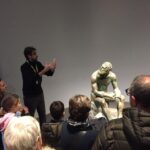
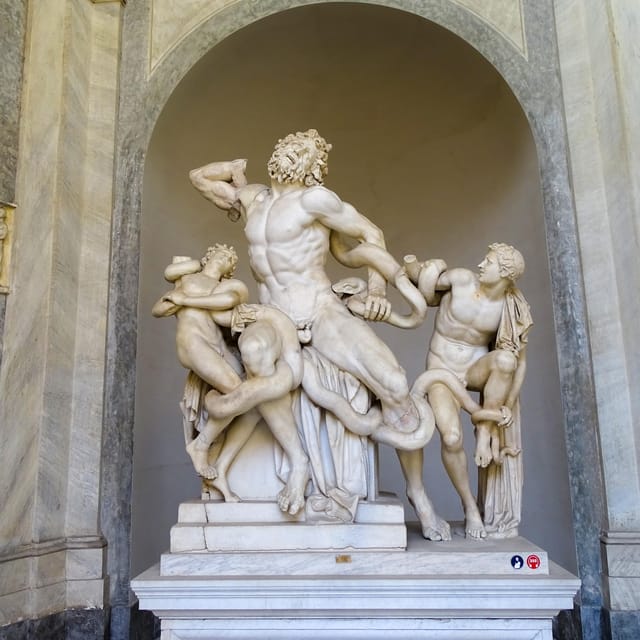
One of the standout sections is the Greco-Roman area, where you’ll see famous works like the Laocoön Group and the Belvedere Torso. These are the types of sculptures people photograph without fully registering why they’re important.
With a good guide, you learn what to notice: the tension in the figures, the emotional storytelling, and why Renaissance artists were so drawn to this kind of anatomy and form. The tour also points you toward emperors and gods—figures that echo through centuries of European art.
I especially like this approach because it turns “I saw a statue” into “I know what I’m looking at,” and that’s the difference between a museum visit and a real experience.

The Gallery of Maps: history you can read like geography
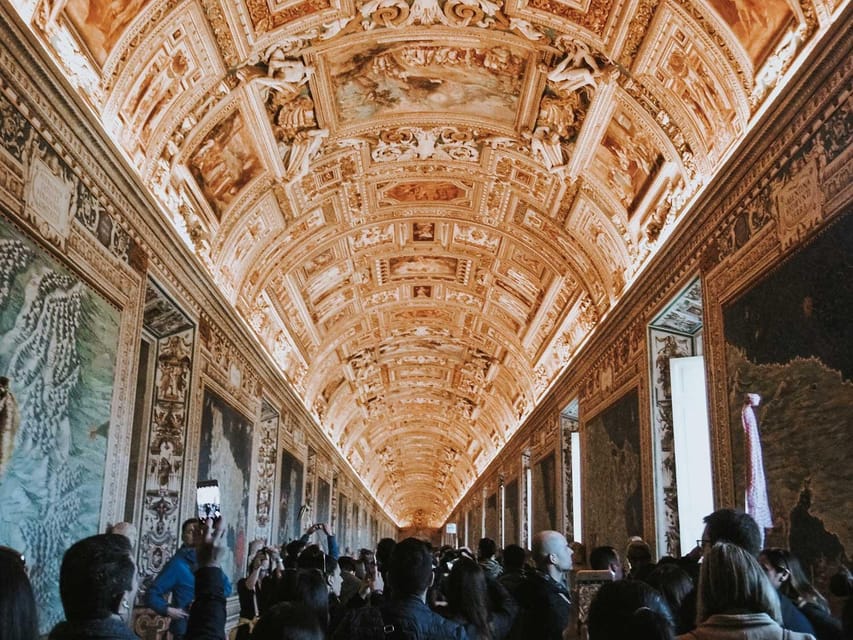
Then comes the Gallery of Maps, where 16th-century cartography helps you see Italy not as a modern political idea, but as a patchwork of regions shaped by power, art, and identity.
This room is surprisingly engaging because the maps give you something concrete. Even if you’re not a “maps person,” you’ll still understand the visual language quickly—your guide translates the details into stories.
Belvedere Courtyard: a calmer pause before the finale
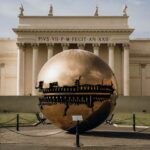
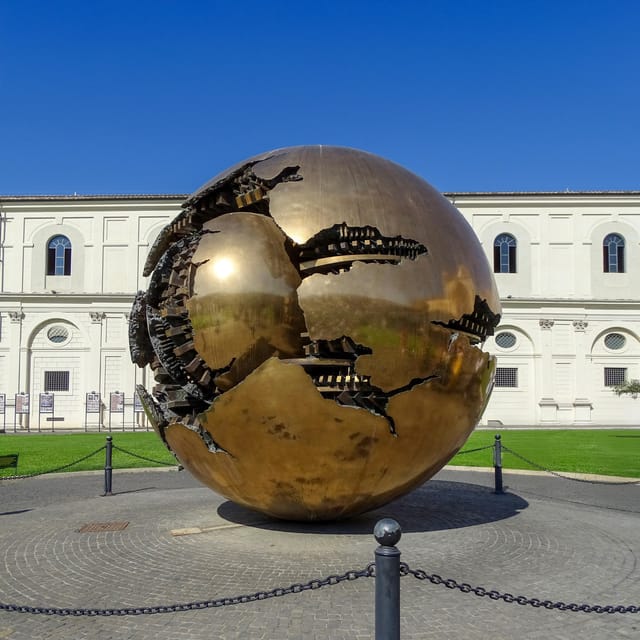
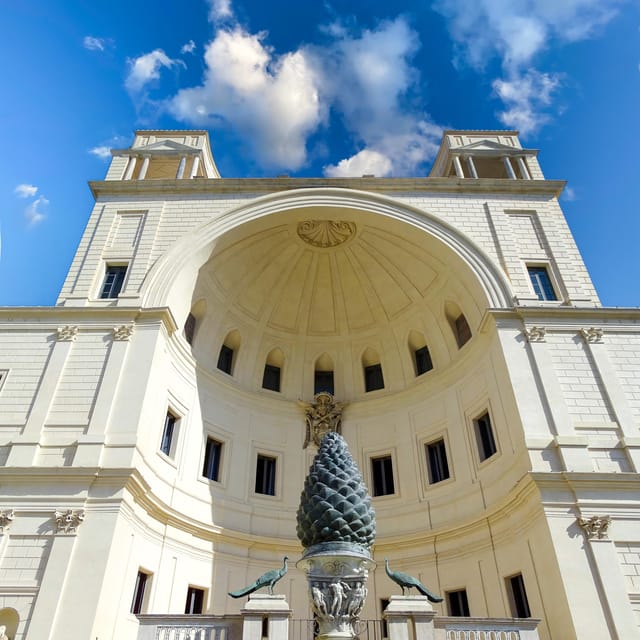
Between big interior rooms, you’ll have time in the Belvedere Courtyard, where the design feels more open and balanced. It’s a breather, and it helps you reset your eyes before you go into the final stretch.
Then the route takes an exclusive path toward the Sistine Chapel, so you’re not stuck wandering or doubling back.
Gallery of Tapestries: why this stop helps on a long art day
After the Maps, the itinerary includes the Gallery of Tapestries. This is one of those “you might not pick it out on your own” stops that ends up being useful.
Tapestries break the visual rhythm. Frescoes and statues are one kind of intensity. Woven scenes are another. You get a different texture, a different way of telling stories, and a change of pace that prevents the day from becoming one endless wall of images.
In other words: it’s not filler. It’s a reset button.
Sistine Chapel in quiet mode: what silence changes
You’ll reach the Sistine Chapel with your guide’s prep in place—and it matters that they emphasize the rules. Silence is required inside, so your time there becomes more than sightseeing.
Michelangelo’s ceiling is, of course, the headline. You’ll be guided to appreciate the frescoes, including The Creation of Adam, but the real value is how your guide helps you notice how the images work together—symbolism, artistic techniques, and the spiritual message behind the scenes.
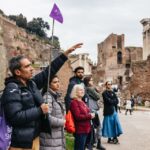
This is where the best guides shine. People have raved about guides like Bernadette (clear and smoothly run), Simona (fantastic managing busy crowds), Alexandra (good shepherding), Julia (super informative and patient), and Laura (excellent at navigating crowds and making the experience enjoyable for everyone). Names like Lorene and Susana show up too, both praised for energy, humor, and making history feel accessible.
Even when crowds build after the early start, the Sistine Chapel itself is its own world. The tour structure helps you experience it with focus instead of shoulder-to-shoulder panic.
How long is 3 hours, really: what you’ll see and what you might skip
Three hours sounds short until you remember the Vatican Museums can feel like an entire city. With this tour, you’re getting a curated overview: major rooms, key masterpieces, and the Sistine Chapel.
The upside is you finish with a sense of accomplishment without burning your whole day. Several guides are praised for pacing and for using waiting/moving moments with extra context. One review even notes that the tour wrapped early enough to keep the rest of the day wide open.
The downside is also real: this isn’t a slow, “linger in every hall” visit. One critique I took seriously is that parts of the museum can feel rushed, with some visitors wishing there was more time on bigger items. That’s the trade for a short early guided tour.
If your goal is depth—like you want to spend real time with fewer works—this may not feel satisfying. If your goal is to hit the most important visual beats with meaning attached, it’s a strong fit.
Price and value: what $108.70 buys you (and why it can be worth it)
At $108.70 per person, you’re paying for the early access system, a professional English-speaking guide, earphones, and a separate entrance that helps you avoid the worst of the ticket line.
Here’s how I’d think about the value:
- The Vatican Museums are huge, and a guide saves time and confusion. Without guidance, you can waste energy guessing what’s worth your attention first.
- Earphones are not just a comfort item; they help you keep up with explanations even when groups get crowded.
- Early entry is the big lever. If you arrive late, you’re paying the same ticket price but getting a less pleasant experience because your timing is worse.
Is it expensive? Yes, it’s not a budget excursion. But for a first-time or limited-time Rome visit—especially if you want the Sistine Chapel to feel like an experience rather than a chaotic obligation—this price can make sense.
Also, the tour does not include entry to St. Peter’s Basilica, so if you want that too, plan it separately.
Who should book this early Vatican tour (and who should consider alternatives)
This works best if:
- You want an efficient, guided overview rather than a self-directed marathon
- You like learning while you walk (and you want your guide to interpret what you’re seeing)
- You’re able to handle museum walking and crowds
- You want a morning start so you can still enjoy Rome later in the day
It’s not a fit if:
- You need wheelchair access or mobility accommodations (it’s not suitable for people with mobility impairments, and it’s not for wheelchair users)
- You’re planning to carry luggage or larger bags (those aren’t allowed, and backpacks also aren’t)
If you have only a single morning for the Vatican, or you’re pairing it with other Rome plans later, a 3-hour structure is a very practical choice.
Should you book it? My take
I’d book this tour if you want the simplest path to the Vatican highlights with an intelligent guide and a better chance of experiencing the Sistine Chapel in a calm, respectful way. The early entry is the big reason, and the guided storytelling is the reason it feels more than just photos.
I would not book it if you’re the type who gets happiest when you linger. This itinerary is a smart overview, but it can feel rushed in the museum halls because three hours has to cover a lot of ground.
If you do book, go in with two goals:
1) Use the guide to understand what you’re seeing in the big rooms
2) Save your energy for the Sistine Chapel, because that’s where the quiet turns everything up
FAQ
What time does the early tour start?
The tour is designed for early entry, with access as early as 8 am. Exact starting times depend on availability for your date.
How long is the tour?
The duration is 3 hours.
What’s included in the tour?
It includes early access to the Vatican Museums, access to the Sistine Chapel, a professional English-speaking guide, earphones, and helpline/assistance.
Is St. Peter’s Basilica included?
No. Entry to St. Peter’s Basilica is not included.
Where do I meet the guide?
Meet at Via Tunisi, 4 (pedestrian street, upper side of the road closer to the corner with Viale Vaticano, in front of the Vatican Museums entrance). Look for a sign that says Tourismotion.
Can I bring a backpack or large bag?
No. Luggage or large bags and backpacks are not allowed.
What do I need to bring with me?
Bring your passport or ID card (and for children, their passport or ID as well).
Is this tour suitable for wheelchair users?
No. It is not suitable for wheelchair users and is also not suitable for people with mobility impairments.
What if there are extraordinary closures or restrictions?
If there are extraordinary closures or restrictions imposed by the Museums, no refund will be provided. The itinerary may change, but it will have the same duration.