REVIEW · PRIVATE
The Genius of Caravaggio: Rome Private Tour
Book on GetYourGuide →Operated by Crazy4rome srls · Bookable on GetYourGuide
Caravaggio in Rome feels like walking into shadows. This private tour follows Michelangelo Merisi da Caravaggio through the churches that originally commissioned his work, using his life in the city to make each painting click. I love the tight match between story and art, and you’ll like how the stops are chosen for impact, not crowd flow. One possible drawback: it’s a 3-hour walking-and-looking format, so you’ll want comfortable shoes.
The best part is the guided focus on what you can actually see: technique, drama, and the religious scenes Caravaggio painted for real altars. I also like the private guide setup, including multilingual options like English and French, so you can go at a pace that makes the art easier to understand. A consideration: tickets are not required, but entry can still depend on how the churches are operating that day.
Key things I think you’ll care about
- Original commissioning churches: you visit Santa Maria del Popolo, Sant’Agostino, and San Luigi dei Francesi.
- Specific painting scenes: Saint Paul’s Conversion and the Crucifixion of Saint Peter in Santa Maria del Popolo.
- Sant’Agostino’s anchor work: The Madonna of Pilgrims.
- San Luigi dei Francesi finale: three Saint Matthew paintings that are said to be the first altarpieces Caravaggio painted.
- Private group attention: a guide with deep focus and flexible pace for up to 4 people.
In This Review
- Why a private Caravaggio tour makes the art easier to read
- Starting at Via del Governo Vecchio: getting your bearings fast
- Santa Maria del Popolo: Saint Paul’s Conversion and the Crucifixion of Saint Peter
- St. Louis of the French: taking in San Luigi dei Francesi with context
- Rione IV Campo Marzio: a neighborhood pause that helps the story breathe
- Basilica of St. Augustine: Sant’Agostino and The Madonna of Pilgrims
- Finishing at Piazza di Spagna: what to do with the last hour of your day
- What you’re really paying for: guide quality and smart, focused value
- Languages, pacing, and the practical comfort of a private group
- Who should book The Genius of Caravaggio tour (and who might skip)
- Should you book this Caravaggio private tour?
- FAQ
- How long is the Genius of Caravaggio private tour?
- Where does the tour start?
- Which churches are included?
- Do I need tickets for this tour?
- Do you skip the ticket line?
- Is this tour private and how many people can join?
- What languages are available for the guide?
- Is the tour wheelchair accessible?
- Can you arrange a hotel drop-off?
Why a private Caravaggio tour makes the art easier to read
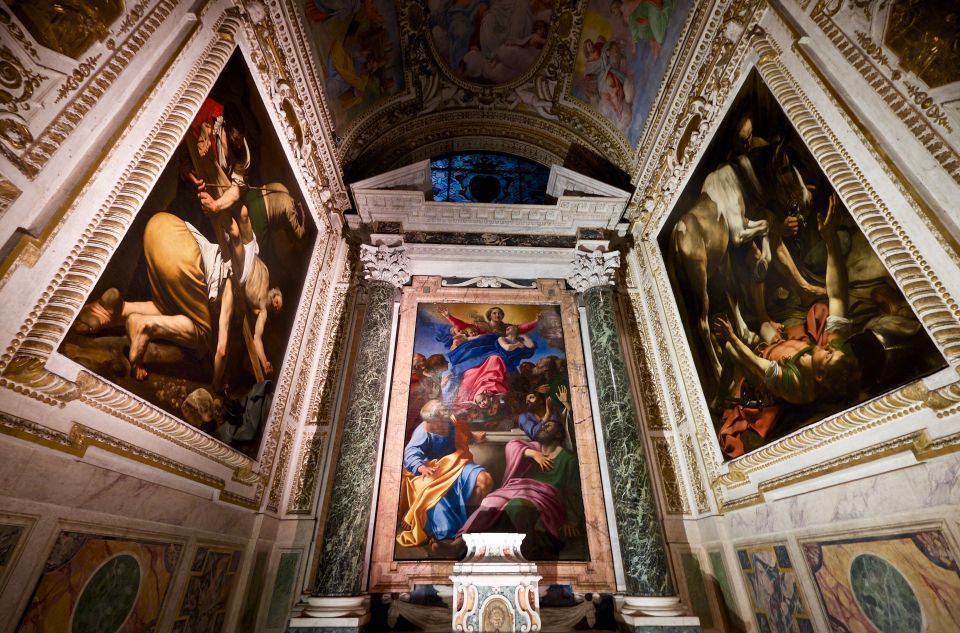
Caravaggio’s work can feel intense, even for people who don’t call themselves “art people.” This kind of private tour helps because you’re not just looking at famous paintings; you’re learning how they were meant to function in their original church settings.
I like that the tour builds from simple anchors—Caravaggio’s timeline and where he worked in Rome—then uses each church to explain what you’re seeing. The tour places you in the district where Michelangelo Merisi da Caravaggio lived and worked, then walks you stop by stop through the religious spaces that commissioned his paintings. That matters because Caravaggio didn’t paint in a vacuum. The setting shapes how the scenes land, what stands out, and what details feel purposeful.
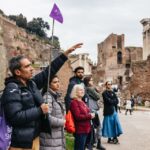
You’ll also get the benefit of a live official expert guide who can answer questions in your chosen language. From the feedback I’ve seen, guides such as Chiara and Maria get praised for being engaging and making the technical side of Caravaggio feel understandable, not intimidating. Add in the occasional extra tip like a great gelato stop, and the day has a nice human touch.
Starting at Via del Governo Vecchio: getting your bearings fast
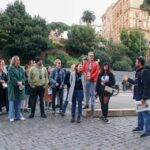
You meet at the exit of the bookstore Altroquando on Via del Governo Vecchio, 82. Starting here is useful because it puts you close to the “real Rome” vibe—small lanes, everyday life, and the kind of walking rhythm that makes a short art tour work.
From your first moments, the guide’s job is to connect the dots: Caravaggio was born in Milan in 1571 and was in Rome by the end of the 1580s. That simple timeline helps you frame the experience. You can listen for how the guide links his Roman presence to the churches you’ll visit next, then keep that thread in your mind when you step inside each church.
This is also where the private format pays off. If you want to ask about a particular painting title or want more time looking at a specific figure, you can. If you’re less confident with art terms, you can steer the conversation toward what you can notice with your eyes.
You can also read our reviews of more private tours in Rome
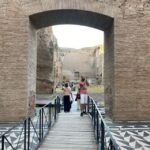
Santa Maria del Popolo: Saint Paul’s Conversion and the Crucifixion of Saint Peter
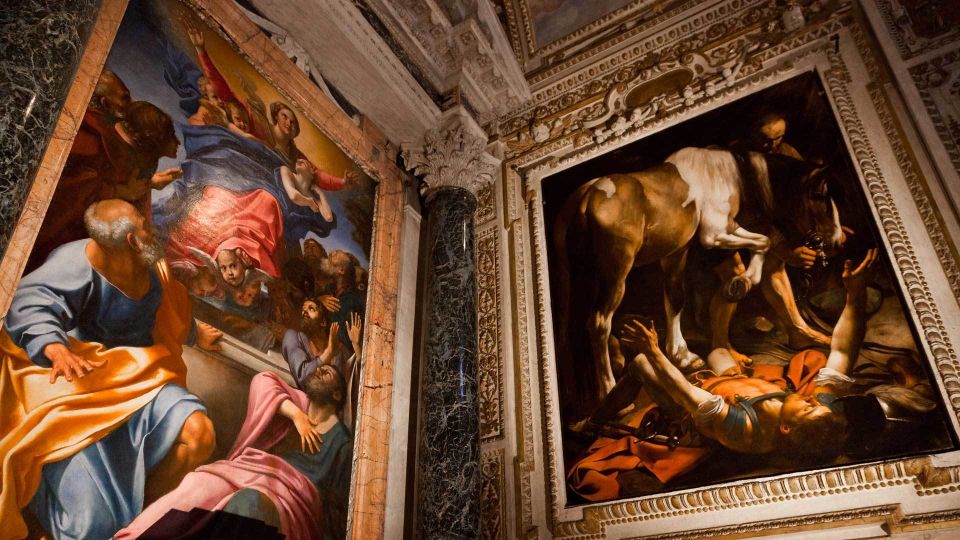
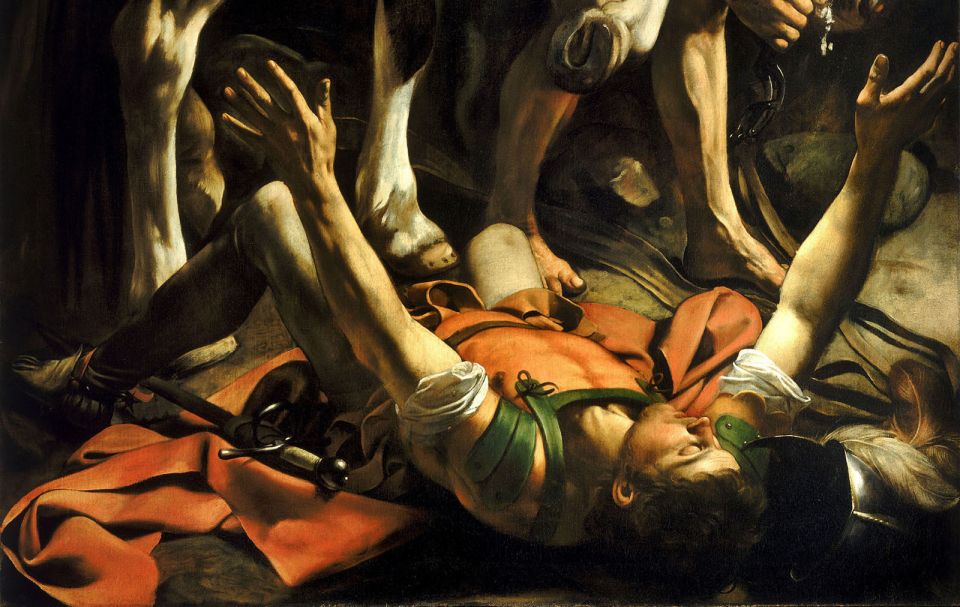
Your first major stop is the Church of Santa Maria del Popolo, with about 45 minutes guided inside. This is a standout because the highlight paintings are named clearly and they’re dramatic in subject matter: Saint Paul’s Conversion and the Crucifixion of Saint Peter.
What I like about this stop is that it sets a tone for the whole tour. You’re not wandering randomly through a church. You’re going in with two concrete scene targets, so your attention stays sharp. The guide can point out the technical skills that have kept Caravaggio’s name in the conversation for more than 400 years, and you can connect those points directly to the painting themes on the walls.
A small practical note: churches can feel cool and visually busy. The guide’s job is to slow your eye down. If you’re the kind of person who tends to snap photos instead of looking, this stop helps you do the opposite. You’ll be guided to what matters, then you’ll have time to see it more than once.
Potential drawback? If you’re prone to fatigue in churches (lots of standing, low light, and long sightlines), you’ll want to manage your energy. This tour is short, so the pacing is generally manageable, but it does require attention and upright posture.
St. Louis of the French: taking in San Luigi dei Francesi with context
Next comes San Luigi dei Francesi, also about 45 minutes guided. This is one of those Rome details that feels almost tailor-made for an art-focused day: it’s described as one of the few French churches in Rome, which gives the experience a clear “why this place” factor beyond the paintings alone.
Here’s where the tour’s claim becomes especially interesting: you’ll see three paintings that represent the stories of Saint Matthew, and these are said to be the first altarpieces Caravaggio painted. Even if you don’t know anything else about him, this makes San Luigi a meaningful stop. You’re not just seeing a master’s work—you’re seeing his early impact in a specific role tied to church commissions.
What you should do during this stop is simple: look for how each panel tells the story in sequence, then listen to the guide explain what makes Caravaggio’s handling distinctive. The tour framing is built for that moment. If Santa Maria del Popolo sets the drama, San Luigi helps you understand how Caravaggio structured narrative for an altar setting.
One more practical consideration: because this stop is longer than a “quick peek,” plan your attention. If you split your brain between filming, texting, and scanning, you’ll miss the technique points the guide is likely to stress.
Rione IV Campo Marzio: a neighborhood pause that helps the story breathe
Between the churches, you’ll also spend time in Rione IV Campo Marzio for about 30 minutes guided. This stop can be easy to underestimate because it’s not a church interior. But I think it’s a smart choice for how Caravaggio’s Rome feels.
When you hear that Caravaggio lived and worked around the area, it’s one thing to process that fact. It’s another thing to walk through the district and let your brain connect “where” to “why these commissions mattered.” The guide likely points out the kinds of features that help you imagine the movement of artists, patrons, and church life in the city during Caravaggio’s time.
For you, this is useful because it breaks up the church pattern. Art tours can blur together when every stop is a different interior. A neighborhood segment resets your senses and gives the afternoon a more human pace.
The main drawback is time. This part is short, so you shouldn’t treat it as a full neighborhood tour. Think of it as a story bridge—enough to connect scenes, not enough to replace a separate stroll later.
Basilica of St. Augustine: Sant’Agostino and The Madonna of Pilgrims
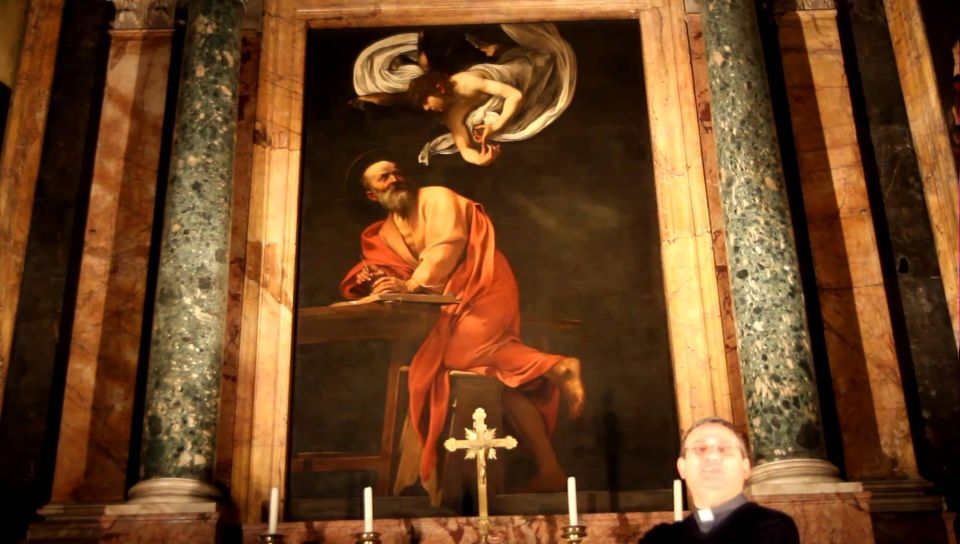
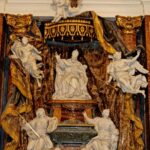
Your next key church stop is the Basilica of St. Augustine (Sant’Agostino), with 45 minutes guided. The highlight here is The Madonna of Pilgrims.
I like this stop because it changes the emotional register. If Santa Maria del Popolo is about major conversion and crucifixion scenes, Sant’Agostino brings you to a different kind of sacred focus. The guide’s attention to form and technical skill helps you compare how Caravaggio handles expression, figure presence, and how the painting sits within the church space.
This is also where the tour framing about original commissions becomes more tangible. The guide isn’t just naming artworks. They’re helping you see how Caravaggio’s art functioned for worship in real buildings, for specific communities, and for specific church contexts.
If you’re tempted to rush out and “move on,” this is the stop where you should slow down. Take a moment to look quietly, then return to where the guide points. Caravaggio’s impact is often in the small choices—positioning, emphasis, and how the scene pushes your attention.

Finishing at Piazza di Spagna: what to do with the last hour of your day
The tour finishes around Piazza di Spagna and ends back at the meeting point area. That timing is practical. Piazza di Spagna puts you near lots of Rome movement—easy to grab a drink, wander, or connect to another plan without feeling stranded.
I’d treat this ending as your “choose your own adventure” moment. If your guide mentioned a good gelato option earlier (yes, that happens), it’s a natural way to keep the day light after focused church time. Or you might use the ending to reset with a longer walk through the surrounding streets at your own pace.
Because you’re done after about 3 hours, you’ll have enough daylight or evening momentum to keep exploring. The tour is designed to give you a strong Caravaggio hit without stealing your whole day.
What you’re really paying for: guide quality and smart, focused value
The price is listed as $456.21 per group up to 4, for a 3-hour private tour. That’s not “cheap,” but it’s not pretending to be. The value comes from a few practical pieces:
- You get a private official expert guide for the full time. That’s where the experience shifts from seeing art to understanding art.
- Stops are selected for specific Caravaggio commissions rather than random church sampling.
- Tickets are not required, and the tour includes skipping the ticket line (so you’re less likely to lose time to queue chaos).
- The group size cap (up to 4) keeps the guide’s explanations from turning into a lecture for too many people.
If you’re traveling solo, a private tour can feel like a splurge. But if you have two or four people, the math looks different fast—especially when you compare it to paying for multiple separate guide services.
Where I’d be careful: if you’re looking for a “big bus tour” style overview with no deep looking, this format may feel a bit intense for what you want. This is a guide-led art day. You’ll get more out of it if you’re willing to stand, look, and listen.
Languages, pacing, and the practical comfort of a private group
One of the smartest details here is language flexibility. The guide can work in Spanish, English, French, German, Italian, Arabic, Portuguese, and Russian. That matters because Caravaggio can be hard to summarize in a sentence. You’ll want the guide’s explanations to land in your own language.
The private group setup also affects pacing. You can pause in front of a painting longer if something catches your eye, or ask follow-up questions without feeling rushed. The tour length—3 hours—is long enough for meaningful church time, but short enough that you won’t feel like your whole day vanished.
Also, the tour is listed as wheelchair accessible, and there’s an option for hotel drop-off by taxi on request at your own expense. If mobility or timing is part of your plan, it’s worth asking in advance so you don’t have to improvise at the end.
Who should book The Genius of Caravaggio tour (and who might skip)
Book this tour if you want a focused Caravaggio day built around real commission sites: Santa Maria del Popolo, Sant’Agostino, and San Luigi dei Francesi. I’d especially recommend it if you like:
- art tours with specific painting names and clear points of attention
- small-group or private time with a guide
- learning how a master’s work connects to where it was commissioned
Skip it if you want a broad “top sights” overview of Rome, or if you prefer to wander without structured looking. Also, if churches make you feel uncomfortable due to standing time, you may want to choose a shorter or less church-heavy experience.
Should you book this Caravaggio private tour?
If your goal is to see Caravaggio in the places where his work was made to be seen, this is a strong match. The structure is clear: original commission churches, guided attention to named paintings, and a private guide who can explain technique and story in your language.
For best value, book when you can share the group cost (up to 4). Then commit to the experience: plan for attentive looking, not just photos. If you do that, you’ll leave with more than fame—you’ll have a clearer sense of what Caravaggio was doing, and why those scenes belong to those churches.
FAQ
How long is the Genius of Caravaggio private tour?
It lasts 3 hours.
Where does the tour start?
It starts at the exit of the Book Store Altroquando on Via del Governo Vecchio, 82.
Which churches are included?
You visit Santa Maria del Popolo, San Luigi dei Francesi, Sant’Agostino (Basilica of St. Augustine), plus time in the Rione IV Campo Marzio area.
Do I need tickets for this tour?
Tickets are not required.
Do you skip the ticket line?
Yes, the tour includes skipping the ticket line.
Is this tour private and how many people can join?
It’s a private group, priced per group up to 4 people.
What languages are available for the guide?
The guide can work in Spanish, English, French, German, Italian, Arabic, Portuguese, and Russian.
Is the tour wheelchair accessible?
Yes, it is listed as wheelchair accessible.
Can you arrange a hotel drop-off?
Hotel drop-off by taxi is available on request, at your own expense.