REVIEW · POMPEII & AMALFI COAST DAY TRIPS
From Rome: Guided Tour to Pompeii with priority admission
Book on GetYourGuide →Operated by Napoli Official Tour · Bookable on GetYourGuide
Pompeii hits different when you can skip the lines. This half-day trip pairs a fast train from Rome with priority admission and helps you skip the ticket line so you can start walking sooner.
You’re buying more than a ticket: you’re buying time, and time is the real currency at Pompeii.
I also like how the guide-led walk turns ruins into a story. With guides such as Lívia and Fabio, you get the why behind what you’re seeing, from the lost city to the everyday life that survived under ash.
One possible downside: the whole outing is only about 6 hours total, so you’ll need to make peace with a fast pace and no included meals.
You’ll meet near the Pompeii entrance, do a guided route for about 2 hours, then return to Rome. It runs rain or shine, so bring what keeps you comfortable for an outdoor site.
In This Review
- Key points I’d plan around
- Pompeii in half a day: why the schedule matters
- Getting to Pompeii: the fast train from Termini
- Meeting your guide and skipping the ticket line
- The guided walking route: what you’ll actually see
- Via dell’Abbondanza: imagining the everyday city
- The Forum end: power, religion, and public life
- The other end: Porta Sarno necropolis
- Learning the Pompeii story: ash, pumice, and a first-century AD catastrophe
- Big sights in a tight walk: theatre and the House of Menander
- Rain or shine: how to prepare for an outdoor site
- Food on your own: timing the snack so you don’t lose time
- Price and value: is $283.21 worth it?
- Who this tour fits best
- Should you book this Pompeii priority admission tour?
- FAQ
- How long is the Pompeii tour from Rome?
- What time does the tour depart from Rome?
- Where do we meet the guide in Pompeii?
- Does the ticket include skip-the-line priority admission?
- Which languages are available for the live guide?
- Is food included in the tour price?
- What should I bring?
- Will the tour run in bad weather?
- Can I cancel or pay later?
Key points I’d plan around
- Fast train from Rome Termini gets you to Pompeii in under 2 hours without messing with local connections
- Skip-the-line entry means you spend your time in Pompeii, not waiting at the gates
- A focused 2-hour guided route covers Pompeii’s main highlights without turning into a long marathon
- Via dell’Abbondanza + Forum area lets you picture the street life and power centers of the city
- Big set pieces are included like the large theatre (5,000 seats) and the House of Menander
- Guides can manage crowds; on busy stretches (like Easter weekend), Lívia has started from the end to reduce group overlap
Pompeii in half a day: why the schedule matters
If Pompeii is on your list, you already know it’s popular. The smart move here is not trying to “wing it” from Rome and then spending your best morning trapped in ticket queues and logistics.
This tour is built around a simple rhythm: train first, Pompeii second, guided walking while you’re fresh. The trip uses fast, comfortable rail from Rome Termini, and you reach the archaeological site in less than 2 hours. That means your day starts with momentum, not stress.
I also like that the experience is structured around a 2-hour guided walk once you arrive. Pompeii can feel endless if you wander without a plan. With a guide, you get a path that hits the big spaces people come for, while still giving you context so the ruins don’t feel like random stones.
You can also read our reviews of more guided tours in Rome



Getting to Pompeii: the fast train from Termini
Your morning starts at Rome Central Station of Termini, with a scheduled departure at 7:40 am. You’ll want to arrive about 30 minutes early so you don’t cut it close.
What you’re really paying for here is the reduction in friction. Instead of figuring out train times, transfers, and how to handle the last leg, the tour includes round-trip fast train tickets plus transfer to and from the train station. That matters because the biggest pain with a day trip is not the ruins—it’s everything around them.
Once you’re on the train, the pace is quick. In under 2 hours, you’re already at the Pompeii area and ready to start.
Meeting your guide and skipping the ticket line
When you arrive, you meet your professional guide close to the entrance. Here’s where the priority admission pays off. You skip the long ticket line and move straight into the visit with your group.
That line time can be brutal at major sites. Cutting it out means you actually get to use your limited hours inside Pompeii. It also keeps the tour feeling like a single experience rather than a bunch of waiting.
The guides handle the storytelling part, and you can see the difference in style. I’m especially drawn to the approach used by guides like Lívia and Fabio, who focus on how the city worked and what daily life looked like—not just dates and names. On busy days, Lívia has even used a crowd-smart route approach (starting from the end to the starting point) to reduce walking bottlenecks among tour groups. If you’re visiting during a peak holiday window, that kind of planning can make your experience feel far less cramped.
The guided walking route: what you’ll actually see
You’re in Pompeii for about 2 hours with a guide, and the walk is built around recognizable landmarks plus everyday streets. The tour starts with the story of how Pompeii was lost and then rediscovered. You’ll learn why this site is so well preserved and why the eruption isn’t just a tragedy—it’s also the reason we can read daily life in stone.
From there, the guide leads you along key areas that help you visualize the city’s layout:
Via dell’Abbondanza: imagining the everyday city
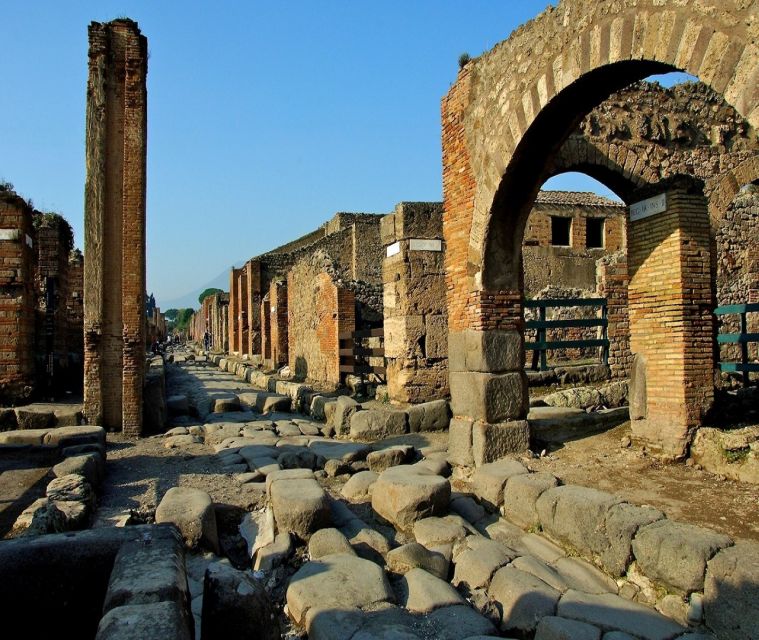
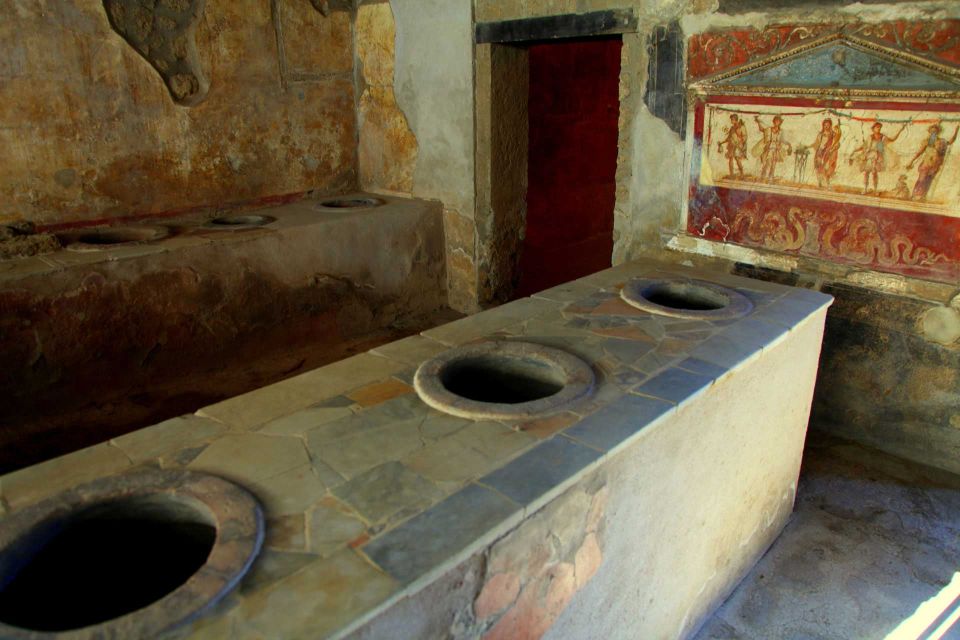
One of the tour’s anchors is Via dell’Abbondanza, Pompeii’s main street. You’ll pass by ancient shops and snack bars, which is the point where ruins stop feeling abstract and start feeling human.
This is where I’d urge you to slow down for a few moments, even during a guided pace. Look at the storefront spaces and imagine the traffic of people moving along the street. It helps you understand why Pompeii feels like a living place paused mid-day rather than a museum of random artifacts.



The Forum end: power, religion, and public life
As you reach the forum, you’ll see why Pompeii still grabs people even if they’ve never taken an ancient history class. The forum area includes major civic spaces like the basilica, the Temple of Jupiter, and the forum baths.
These stops matter because they show you what the city valued. This wasn’t just homes and shops. Pompeii had a public world—debate, worship, gathering, and daily routines tied to shared infrastructure.
If you like “sense of place” experiences, this forum sequence is one of the best values in the itinerary. It connects architecture to social life, and it gives you a spine for the walk.
The other end: Porta Sarno necropolis
The tour also reaches Porta Sarno necropolis. This is a helpful contrast to the public center. You get a window into burial and the way a city organized remembrance.
Even without getting lost in details, just knowing you’re switching from forum life to the city’s edges helps you understand Pompeii as a whole organism, not a single highlight reel.
Learning the Pompeii story: ash, pumice, and a first-century AD catastrophe
The guided intro is one of the best reasons to do this as a tour instead of free-roaming. You don’t just see the “what”; you get the “why.”
A key part of what the guide covers is the eruption aftermath. You’ll hear how excavations over decades revealed that some of the city lay beneath ash and pumice, reportedly six metres deep. That sudden destruction—tied to the eruption of Mount Vesuvius in the first century AD—is what made the preservation possible.
I find this framing crucial. It helps you interpret what you’re looking at. When a guide explains that the city was preserved quickly, you start noticing how certain details survive and why.
Big sights in a tight walk: theatre and the House of Menander
Pompeii has places that feel like they belong in blockbuster movies, and this tour includes a few of them.
You’ll pass or visit highlights including the large theatre, seating about 5,000 people. Even if you’re not a theatre person, it’s a great visual for how social events worked and how communities gathered.
You’ll also see the House of Menander. This is a villa believed to have belonged to one of the city’s important families. The reason I think this stop is valuable is that it gives you a peek inside social rank. It turns Pompeii from a “street and public buildings” story into a “homes and everyday choices” story.
The guide will point out informative details and explain what they mean, which is the difference between walking past a wall and understanding why that space mattered.
Rain or shine: how to prepare for an outdoor site
This tour runs rain or shine, so your comfort matters. Pompeii is mostly outdoor walking, and the guided route depends on keeping the group moving.
Wear shoes that handle uneven ground. Bring a light rain layer if the forecast looks messy. Also, since it’s a half-day format, plan like you’ll be standing and walking for hours, not just taking photos.
Food on your own: timing the snack so you don’t lose time
Food and drinks are not included, so you’ll need to manage that piece yourself.
The good news is the structure makes it easy: when your guided portion ends, you’ll have a chance to buy some food to bring with you on the train for the return to Rome. This is a practical solution because it keeps you from searching for a full meal and eating away from the clock.
Still, I recommend having a simple plan before you go—at least decide what you’ll bring or buy so you’re not making choices while tired.
Price and value: is $283.21 worth it?
At $283.21 per person, this isn’t the cheapest way to reach Pompeii. But you’re not just paying for entry. You’re paying for a package that removes multiple time drains:
- Fast round-trip train tickets from Rome Termini
- Transfers to and from the train stations
- Priority admission with skip-the-line entry
- A 2-hour live guided walking tour
If you tried to DIY this, your cost could drop on paper, but the real risk is wasted time: figuring out train schedules, handling transfers, and then losing a chunk of your day to queues at the entrance.
For me, the “value” equation works when you want the main highlights and context without the coordination headache. This is especially true if it’s your first time in the area or if your schedule doesn’t leave room for delays.
Who this tour fits best
This tour works well if:
- You want Pompeii highlights fast, with context, not a free-for-all
- You prefer a guided route that keeps you oriented
- You’d rather avoid the train planning and ticket-line stress
- You like architecture, street life, and how daily routines show up in ruins
It’s also a solid match for families and groups. One reason is organization. The experience is designed to move the group smoothly, and guides like Lívia and Fabio have a track record of keeping the visit lively and well run.
If you’re the type who wants 4–6 hours of wandering on your own in every corner, you might find the half-day time limit a little tight. In that case, you’d be happier with a longer, less structured visit.
Should you book this Pompeii priority admission tour?
If you want a smooth, time-efficient Pompeii day with priority entry and a guide who explains what you’re seeing, I’d say book it. The biggest payoff is simple: you trade planning headaches for a structured route that hits the forum, Via dell’Abbondanza, major set pieces like the theatre, and the House of Menander, all with a story built around preservation and daily life.
I’d skip it only if you’re determined to spend most of the day roaming independently and you enjoy negotiating logistics yourself. Otherwise, this is a smart way to get the best parts of Pompeii without letting queues and timing quietly eat your morning.
FAQ
How long is the Pompeii tour from Rome?
The total duration is 6 hours, with about 2 hours spent on the guided visit inside Pompeii.
What time does the tour depart from Rome?
Departure is scheduled for 7:40 am from Rome Central Station of Termini. Plan to arrive 30 minutes early.
Where do we meet the guide in Pompeii?
You will meet your professional guide close to the entrance of Pompeii.
Does the ticket include skip-the-line priority admission?
Yes. The entrance ticket includes skip-the-line admission / priority entry.
Which languages are available for the live guide?
The live tour guide is available in English, Spanish, French, and Italian.
Is food included in the tour price?
No. Food and drinks are not included. You can buy food after the tour to take back on the train.
What should I bring?
Bring passport or ID card as required (the information specifically notes passport/ID card for children). Wear comfortable clothes and shoes for walking outdoors.
Will the tour run in bad weather?
Yes. The tour takes place rain or shine.
Can I cancel or pay later?
You can cancel up to 24 hours in advance for a full refund, and you can use reserve now & pay later (pay nothing today) to keep plans flexible.