REVIEW · COLOSSEUM, FORUM & PALATINE TOURS
Colosseum, Ancient Rome and Evening Combo Tour
Book on GetYourGuide →Operated by Rome Your Way · Bookable on GetYourGuide
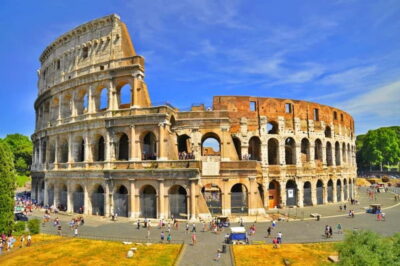
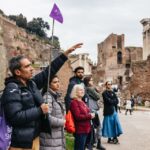
Gladiator echoes start the moment you enter. This small-group Colosseum and Roman Forum tour keeps things moving with skip-the-line access and an expert guide who brings the sites to life with clear context, not just names and dates.
One of the reasons I like it is the way the afternoon tour builds a story: Colosseum (including the first and second tiers), then the Roman Forum area, and finally Palatine Hill.
The evening half is where the magic shifts to romance and viewpoints. I like the timing and route, especially the stop at the Pincio Terrace for sunset and the easy walk to the big classics like Piazza di Spagna and Bernini’s Barcaccia Fountain, plus the chance to toss a coin into the Trevi Fountain. One consideration: you’re on your feet for hours, and the outfit rules for the Pantheon (shoulders and knees covered; no shorts or sleeveless tops) can be annoying if you packed for beach weather.
In This Review
- Key takeaways before you go
- Two-part pacing: Colosseum afternoon, Rome at dusk
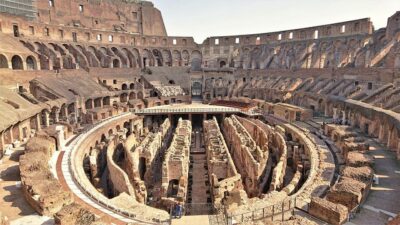
- Entering the Colosseum: tiers, gladiator stories, and real drama
- Roman Forum and the Curia: where politics met everyday life
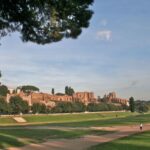
- Palatine Hill: the view that makes Rome feel personal
- Piazza del Popolo regroup: setting up a sunset walk
- Pincio Terrace sunset: rooftops, fountains, and photo angles
- Piazza di Spagna and Barcaccia Fountain: classic Rome, guided
- Trevi Fountain coin, Pantheon exterior, Piazza Navona
- Campo de’ Fiori: finish point with good night energy
- Guides matter: what Andrada and Valentina-style storytelling can feel like
- Price and value check: what you’re really paying for
- Who should book this Colosseum and evening combo (and who shouldn’t)
- Practical tips that make the day smoother
- Should you book this tour?
- FAQ
- How long is the Colosseum, Ancient Rome and Evening Combo Tour?
- What are the meeting points for the two parts of the tour?
- Does the tour include skip-the-line entry?
- What language is the live guide?
- Is there a dress code?
- Is the tour wheelchair accessible?
- What should I bring?
Key takeaways before you go
- Skip-the-line at two heavy hitters: the Colosseum and the Roman Forum.
- Two tours in one day: afternoon archaeology, then an evening romance-and-views walk.
- Gladiator stories with context: you’ll hear what mattered and why the Colosseum was designed the way it was.
- Sunset from Pincio Terrace: a great Roman panorama without needing to hunt for the perfect angle.
- Major landmarks grouped efficiently: Trevi, Pantheon exterior, Piazza Navona, and Campo de’ Fiori in one flow.
- Small group size (up to 18): easier questions and less time lost.
Two-part pacing: Colosseum afternoon, Rome at dusk
This is a true combo day. You start with a guided visit to the Colosseum and Roman Forum in the afternoon, then you re-group later for a scenic walk through central Rome after sunset. Total time runs about 6.5 hours, and the tour uses a live guide in English.
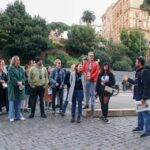
The logistics are simple, but you should plan for two meeting moments. First, you meet at 1:30 PM outside Colosseo metro station on the upper level, in front of Caffè Roma (Via del Colosseo 31). Then you meet again at 6:45 PM at Piazza del Popolo, in front of the church Santa Maria del Popolo (next to the Leonardo da Vinci museum). If you like being ready early, arrive a few minutes ahead at both points so you don’t feel rushed.
Group size is up to 18, which matters in Rome. The big sites can get crowded fast, and a smaller group keeps the guide’s pace more human. You still walk a lot, but it feels more like a guided walk than a conveyor belt.
You can also read our reviews of more evening experiences in Rome
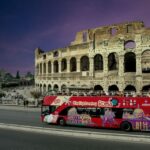
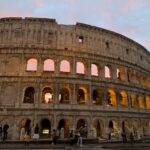
Entering the Colosseum: tiers, gladiator stories, and real drama
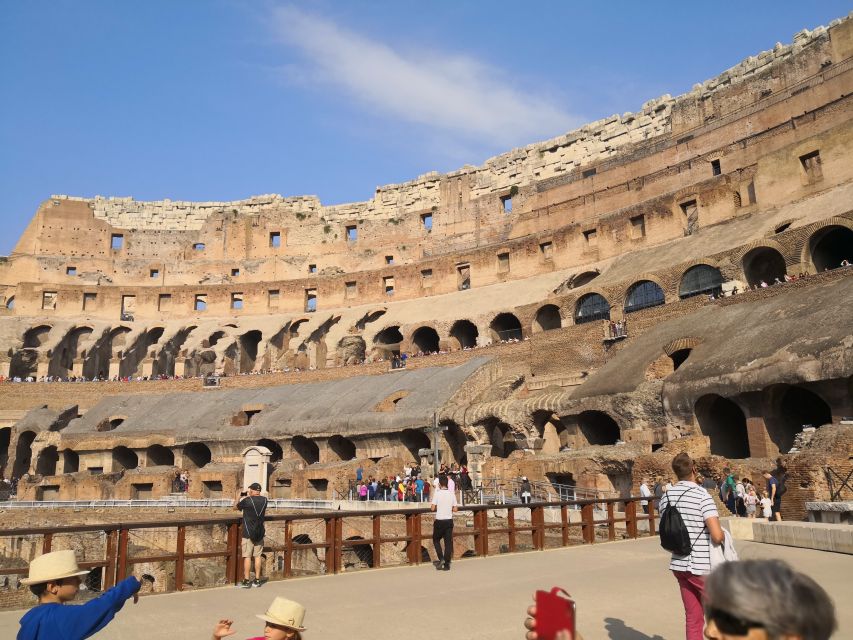
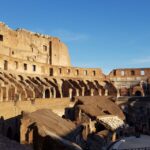
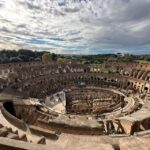
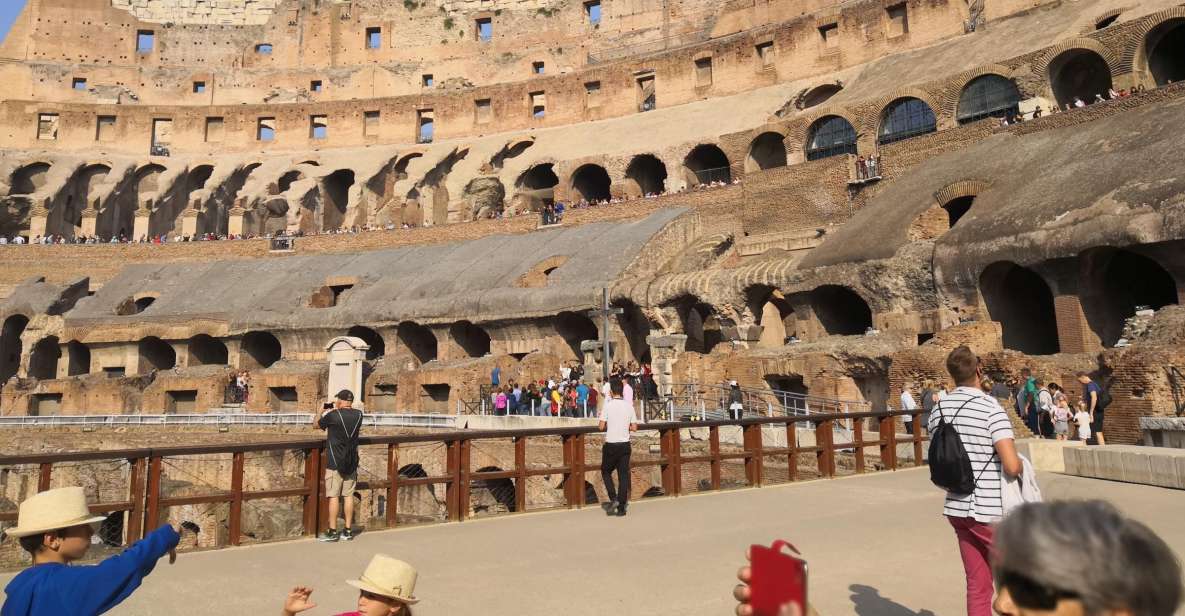
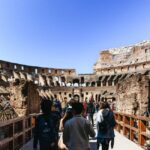
The Colosseum visit starts with you getting inside without wasting time in the longest lines. Once you’re in, the guide helps you understand what you’re actually looking at—especially if you’ve only seen postcard images.
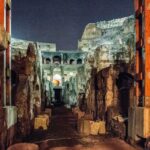
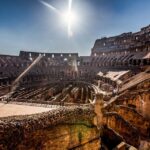
What stands out is that you’re guided through the first and second tiers. Those levels are where you can start to picture how spectators moved, where sightlines likely felt strongest, and why different sections mattered. The guide focuses on gladiator fights and the spectacle, but the best part is how the stories connect to the building itself. Instead of treating gladiators as random pop-history, you learn how the arena functioned as a stage for power, entertainment, and Roman identity.
From a practical standpoint, this is a smart way to visit. You don’t just wander the perimeter and hope you recognize the details. You’re led through the parts that help you “see” how the Colosseum worked.
And yes, the vibe is emotional. Even without being a history nerd, it’s hard not to feel the scale. The stones are worn smooth in places; the walls still read like architecture built to last.
Roman Forum and the Curia: where politics met everyday life
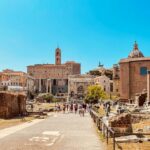
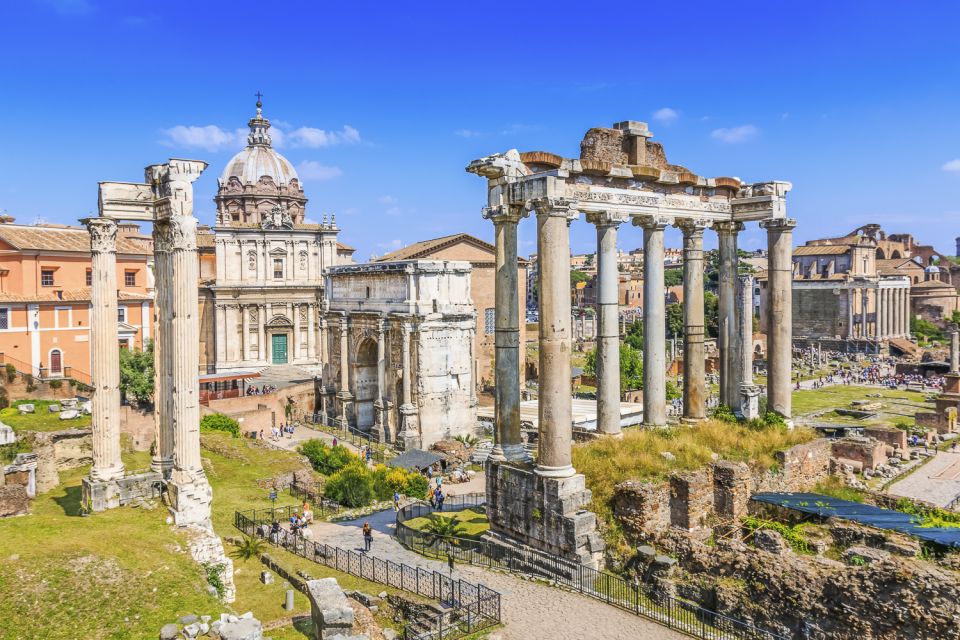
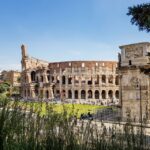
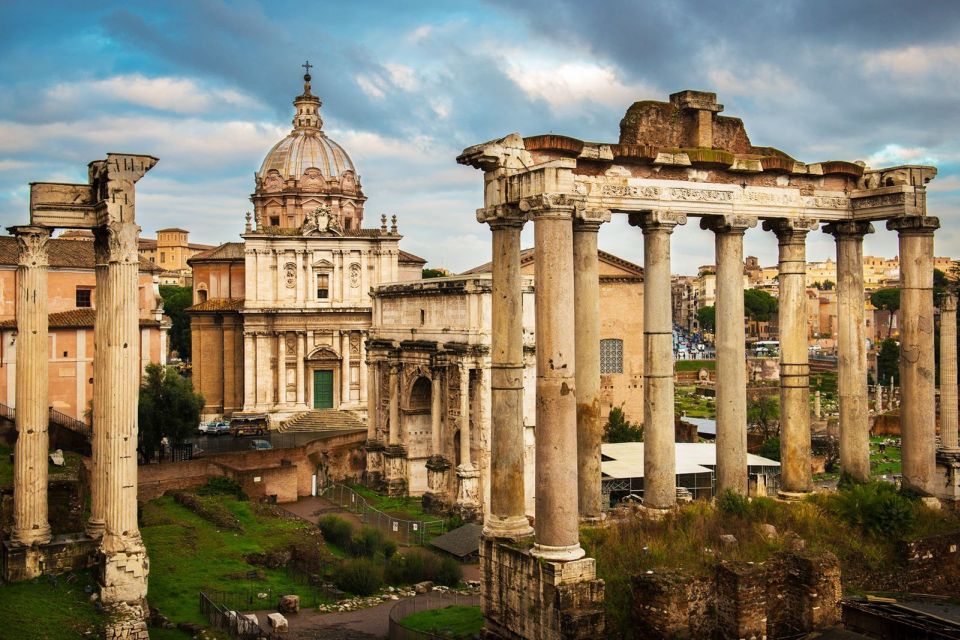
After the Colosseum, the tour shifts toward the Roman Forum area and nearby monuments—because the arena alone isn’t the whole story of Rome. This is where you see the “backstage” of the empire: public life, debate, ceremony, and the power games that ran behind the scenes.
You’ll also hear about monuments such as the Curia. The guide’s goal here is to help you connect the dots between institutions and daily movement through the city. It’s not just rubble and columns. With the right explanations, it becomes a map of how Rome organized authority in physical space.
One reason I like including the Forum on the same outing is pacing. If you do these sites on separate days, it’s easy to forget what came first. Here, you leave the arena and immediately step into the civic world that fed into it.
Tip for your own enjoyment: when you’re in the Forum area, slow down and look for the “logic” of the streets and buildings. Even in ruins, Rome has a way of showing you how people would have flowed through the space.
Palatine Hill: the view that makes Rome feel personal
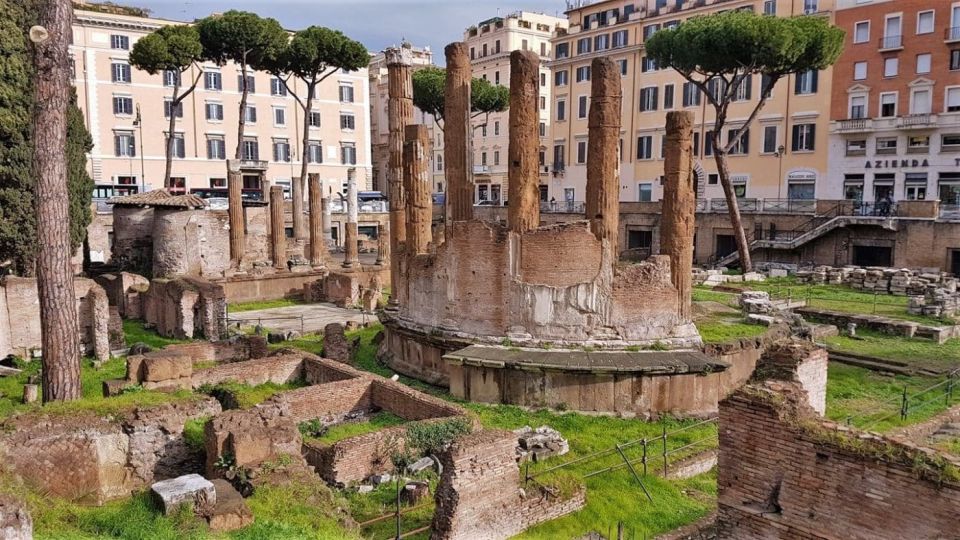
Next up is Palatine Hill, a place that feels both historic and visual. The Palatine is often treated as a side stop, but on this tour it’s a highlight. You don’t just pass by—you’re guided to admire what makes Palatine special: its role as one of the most important residential and symbolic zones of ancient Rome.
From a visitor perspective, the Palatine Hill segment is great because it gives you a different type of understanding. The Colosseum is about the crowd. The Forum is about public life. Palatine is about perspective—literally, and socially.
If you’re the type who likes a “why this place mattered” answer, you’ll appreciate how the guide frames Palatine in relation to the rest of the day. It turns the ruins into a story of status and location.
Piazza del Popolo regroup: setting up a sunset walk
After the afternoon ends, you take a break and return later at 6:45 PM at Piazza del Popolo by Santa Maria del Popolo. This is a clever switch in tone. The morning-to-afternoon world is stone, empire, and scale. The evening world is light, angles, and the way Rome looks when the crowds thin a bit.
Piazza del Popolo is also a good staging point. You start in a landmark plaza, then move toward viewpoint walking routes that feel natural rather than frantic.
A quick mindset note: Rome after sunset is beautiful, but it’s still busy. The best plan is to keep your pace steady and accept that you’re going to move through groups of people. Your guide helps you keep the day organized.

Pincio Terrace sunset: rooftops, fountains, and photo angles
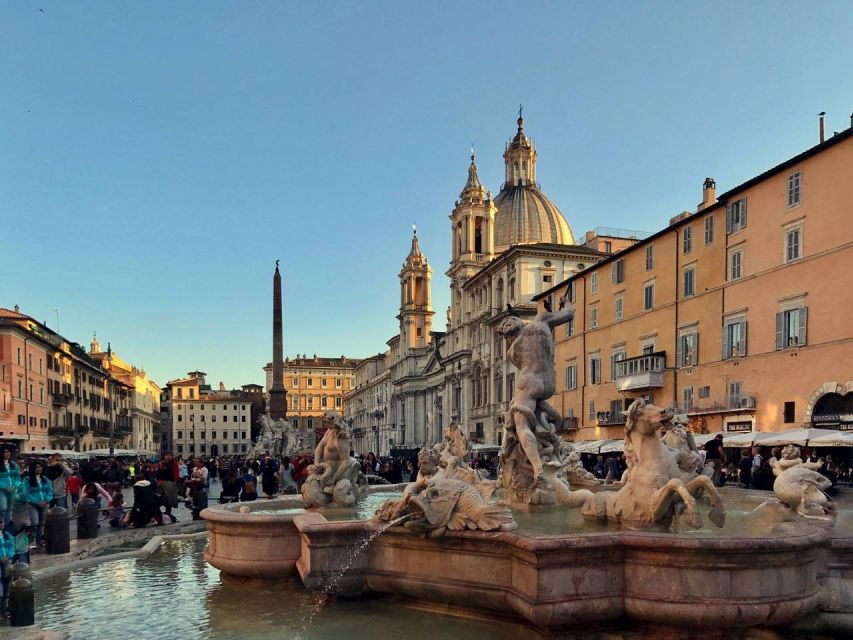
The evening walk takes you to Pincio Terrace to see the sunset over Rome—squares, fountains, and rooftops. This stop is one of the easiest ways to upgrade your day from sightseeing to seeing. From an elevated viewpoint, Rome stops being a checklist and starts being a city you can understand at a glance.
You’ll get photos here, sure. But the bigger value is how it re-frames what you saw earlier. The Colosseum and Roman Forum are your ancient context. Pincio gives you the modern city layer on top of it.
If you’re planning your own comfort, remember this is still walking time. Wear shoes that let you stand and step on uneven pavement without pain.
Piazza di Spagna and Barcaccia Fountain: classic Rome, guided
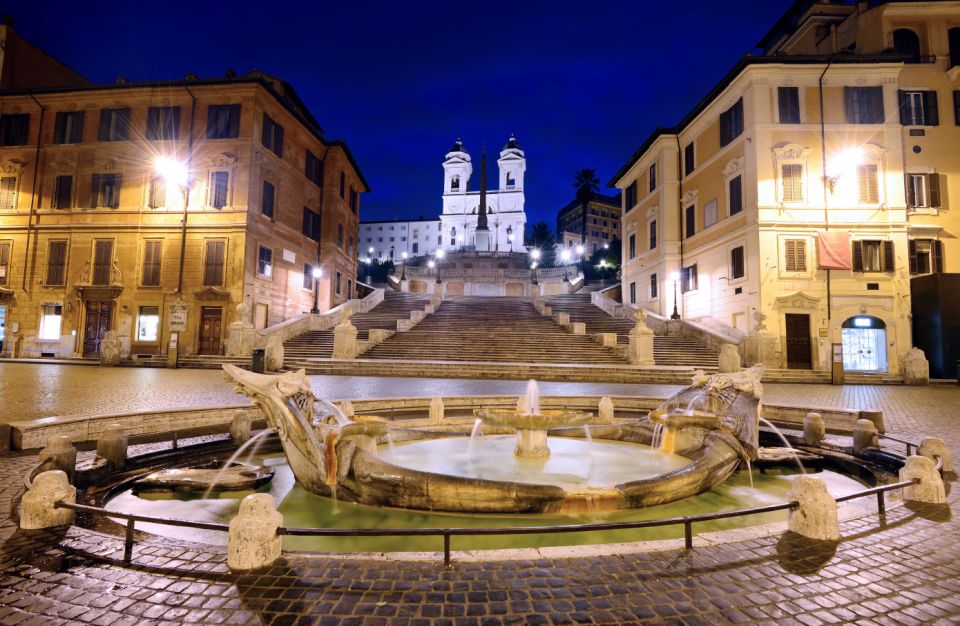
After sunset, the route flows toward Piazza di Spagna and Bernini’s Barcaccia Fountain. This is one of those Rome stops that’s famous for a reason: even if you’ve seen it online, it has energy in person.
With a guide, you get more than a scenic stop. You learn what to notice—layout, perspective, and why the fountain sits where it does in the neighborhood’s visual story.
The Barcaccia is also a great “pause” point during the evening walk. You can catch your breath, look around, and then keep moving toward the heavy hitters.
Trevi Fountain coin, Pantheon exterior, Piazza Navona
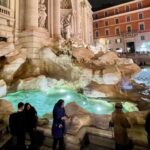
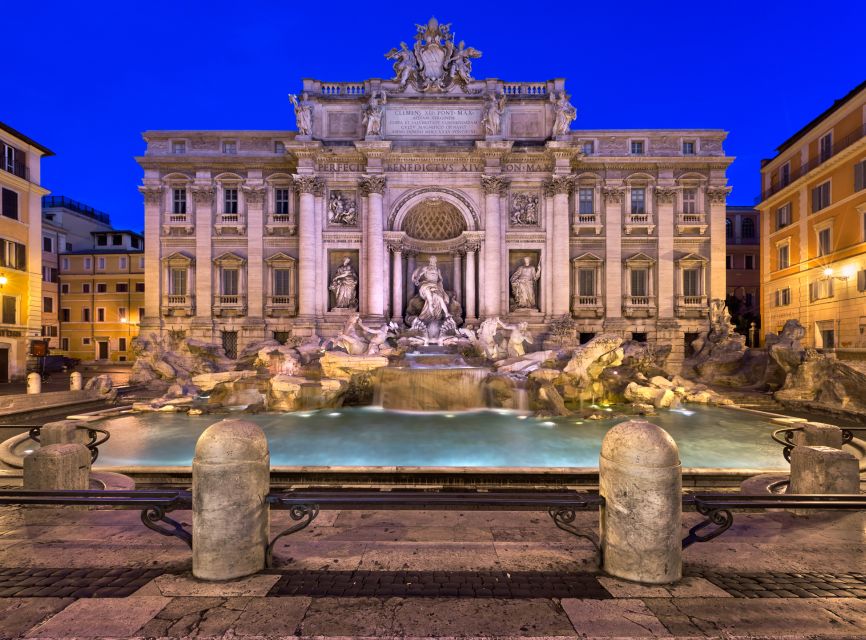
Now you’re in the cluster that most people come to Rome for. The tour includes a stop at Trevi Fountain, where you’ll throw a coin into the fountain. The traditional legend is that the coin helps ensure your return to Rome.
Next is the Pantheon, but in this itinerary you’ll visit from the exterior. Even outside, it’s a striking building—one of those structures that instantly looks intentional and permanent. You don’t need to be an architecture expert to appreciate it.
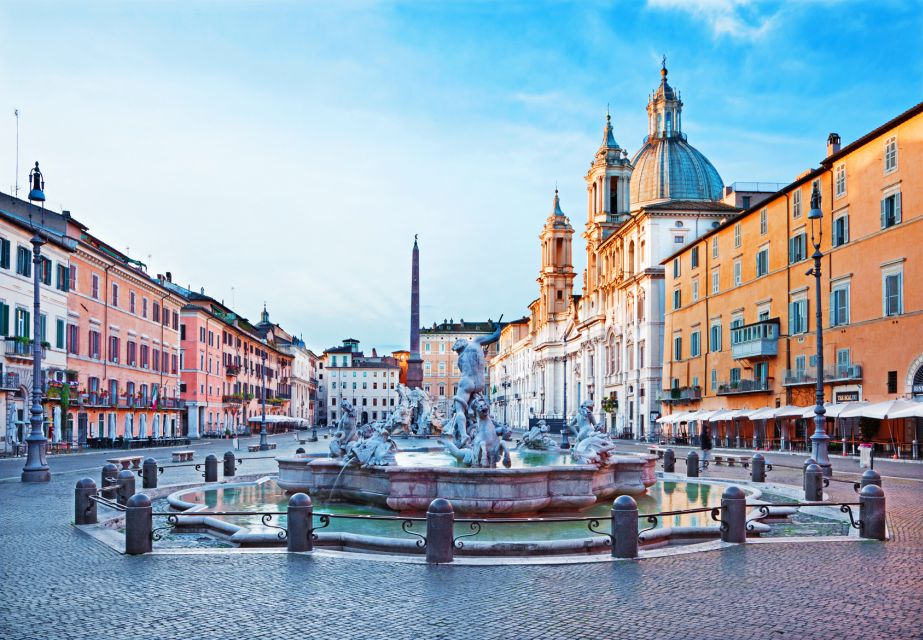
Then the walk continues to Piazza Navona and Bernini’s Four Rivers Fountain in the center. Navona works because it feels like a live stage: open space, movement around the edges, and that central monument that gives you a clear focal point.
If you want to get the most out of this part of the tour, treat it like a sequence of different “types” of beauty:
- Trevi for drama and myth
- Pantheon exterior for scale and design
- Navona for space and performance-like atmosphere
Campo de’ Fiori: finish point with good night energy
The evening walk ends at Campo de’ Fiori. This is a strong way to close because it’s one of those squares where you can keep the night going on your own. You’re not dropped in a random parking-lot feeling end point; you finish in a place where it’s natural to wander, grab a drink, or simply watch the city move.
Also, ending here helps because it gives you options. If you’re craving a calmer vibe, you can drift away from the square. If you want busier energy, you can stay nearby.
Guides matter: what Andrada and Valentina-style storytelling can feel like
Small-group tours rise or fall on the guide. In the case of this experience, the guidance style seems to be a big part of the satisfaction.
Some guides, like Andrada, are praised for explaining connections—not just listing facts. That style is valuable because it helps you remember what you saw after you leave. Instead of thinking, I saw the Colosseum, you start thinking, This is why the Colosseum mattered to Roman life.
Other guides, such as Valentina, are noted for blending broad Colosseum history with everyday Roman details, and for being patient and flexible, including when weather changes. That patience matters more than it sounds. Rome is unpredictable—rain happens, crowds swell, and plans sometimes need a little adjustment. A guide who can keep the day calm makes the whole experience feel smoother.
Price and value check: what you’re really paying for
You’re paying for a mix of three things that are hard to recreate alone:
- Skip-the-line access for the Colosseum and Roman Forum. That alone saves you time and stress at two of the biggest bottlenecks.
- Guided interpretation of what you see. Ancient ruins are easier to enjoy when someone gives them structure.
- A two-part day plan that uses both afternoon and evening light and reduces the need to organize separate tours back-to-back.
Even without seeing exact numbers, you can think of value like this: the tour compresses planning into one schedule and gives you context so you don’t waste your limited hours on confusing wandering.
If you already know your way around and only want quick photos, you might feel this is too structured. But if you want the story and efficiency, it’s a solid use of time.
Who should book this Colosseum and evening combo (and who shouldn’t)
This is a good match if:
- you want the Colosseum + Roman Forum + Palatine Hill with guided context
- you enjoy a romantic evening walk that includes Trevi, Pantheon exterior, Navona, and Campo de’ Fiori
- you like small groups (up to 18) and you want a guide you can ask questions to
It may not be a great fit if:
- you have mobility limits. The tour is not wheelchair accessible, and it’s clearly not set up for that kind of movement
- you hate standing and walking for long stretches. The itinerary is packed with stops and viewpoints
Practical tips that make the day smoother
Dress matters here. The tour notes that shoulders and knees must be covered for the Pantheon, and shorts or sleeveless shirts aren’t allowed. If your wardrobe is more summer-casual, pick a light layer you can wear quickly. The last thing you want is to scramble for compliance while everyone else is moving.
Bring passport or ID card—it’s required. Also, wear shoes that can handle uneven ancient surfaces during the afternoon and city pavement during the evening.
Finally, because you’re meeting twice, keep your schedule clean. If you’re trying to squeeze in another appointment right before 1:30 PM or before 6:45 PM, you’ll feel stressed. Build a little breathing room.
Should you book this tour?
Book it if you want a day that actually teaches you Rome, not just drops you at monuments. The skip-the-line setup plus the two-part itinerary means you get both context (Colosseum and Forum) and the Roman “feel” (sunset viewpoints and the classic squares).
Skip it if you’re after a loose self-guided roam, or if your mobility needs mean long standing and walking won’t work. In that case, you’ll enjoy Rome more with a plan designed around comfort rather than pace.
If your goal is to leave Rome with the Colosseum, Forum, and central landmarks tied together in your head, this combo is a smart way to do it.
FAQ
How long is the Colosseum, Ancient Rome and Evening Combo Tour?
The tour lasts about 6.5 hours.
What are the meeting points for the two parts of the tour?
For the first part, meet at 1:30 PM outside Colosseo metro station on the upper level in front of Caffè Roma (Via del Colosseo 31). For the second part, meet at 6:45 PM at Piazza del Popolo in front of the church Santa Maria del Popolo.
Does the tour include skip-the-line entry?
Yes. It’s designed to help you jump the long lines at the Colosseum and the Roman Forum.
What language is the live guide?
The live guide is available in English.
Is there a dress code?
Yes. For the Pantheon, shoulders and knees must be covered. The tour also notes that shorts and sleeveless shirts aren’t allowed.
Is the tour wheelchair accessible?
No. The tour is not wheelchair accessible.
What should I bring?
Bring a passport or ID card.