REVIEW · CATACOMBS & CRYPTS TOURS
Rome: Catacombs of Domitilla Entry Ticket & Guided Tour
Book on GetYourGuide →Operated by OPERA ROMANA PELLEGRINAGGI · Bookable on GetYourGuide
Rome goes underground at Domitilla. You trade noisy streets for cold stone walls and a guided look at one of Rome’s biggest underground cemeteries, the kind of place where history feels physical. This Catacombs of Domitilla tour is short, focused, and small-group, so you actually hear what you’re looking at while you descend.
I especially like the mix of pagan and Christian art, with frescoes that make the shift in belief feel human, not abstract. I also like how the guide explains the fragile restoration work, which helps you understand why these spaces are protected and handled with care.
One heads-up: photography is not allowed inside, so you’ll need to rely on your eyes, a few quick notes, and whatever sketching skills you may (or may not) have.
In This Review
- Key things to look for
- Catacombs of Domitilla: why this one is worth your time
- Your 30-minute guided route: pace, group size, and what you’ll actually see
- Where to meet and how to avoid missing your slot
- Descending into Via delle Sette Chiese: the Flavian story comes alive
- Hypogeum of the Flavians: the two-level design and the big timeline shift
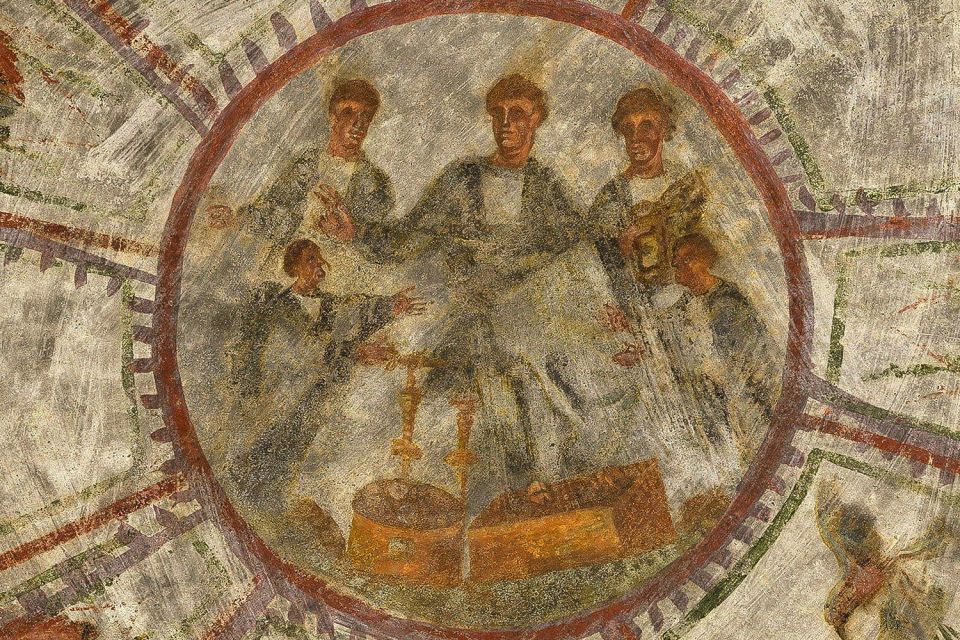
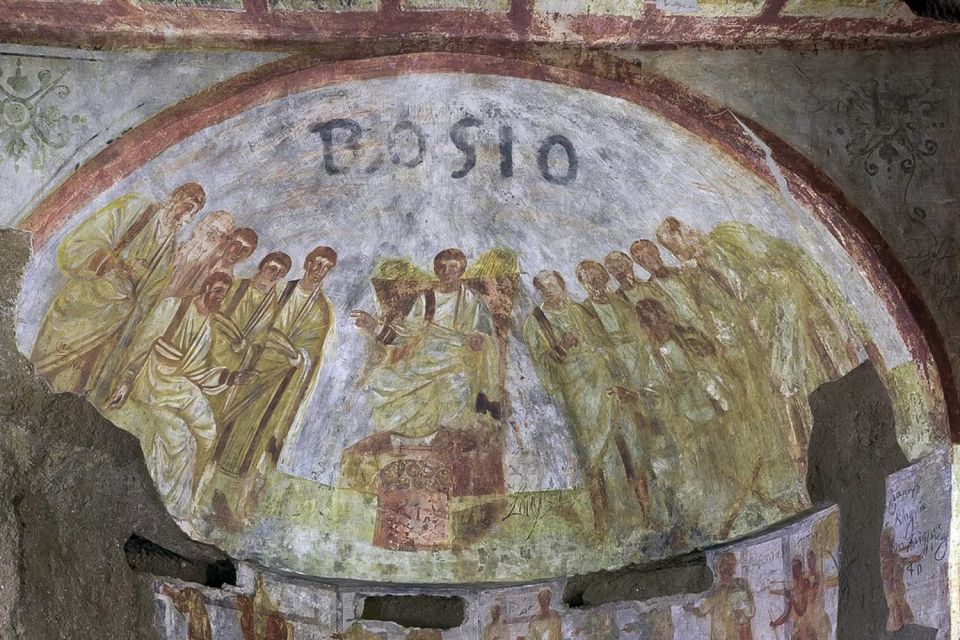
- Frescoes that mix beliefs: pagan imagery meets Christian meaning
- The underground basilica: why it changes the whole mood
- Restoration talk you’ll appreciate more than you expect
- Practical details: clothes, stairs, and the no-photo reality
- Who this tour suits best (and who might want another option)
- Price and value: is $16 for 30 minutes a fair deal?
- Booking smart: small-group reality and guide quality
- Should you book the Catacombs of Domitilla tour?
- FAQ
- Where is the Catacombs of Domitilla located?
- How long is the guided tour?
- How much does it cost?
- What languages are available?
- How big is the group?
- Where do I meet the tour?
- How early should I arrive before the tour?
- Can I take photos inside?
- Is it wheelchair accessible or suitable for mobility impairments?
- What is the cancellation policy?
Key things to look for
- Pagan-to-Christian layers you can follow through different levels and spaces
- The Flavians’ Hypogeum and the story tied to Flavia Domitilla
- Frescoes that reflect changing beliefs over time
- A basilica carved into the catacomb complex, connected to later Christian burials
- Small group size (up to 10), which keeps the pace sensible
- No photos inside, so go in with a plan to remember what you see
Catacombs of Domitilla: why this one is worth your time
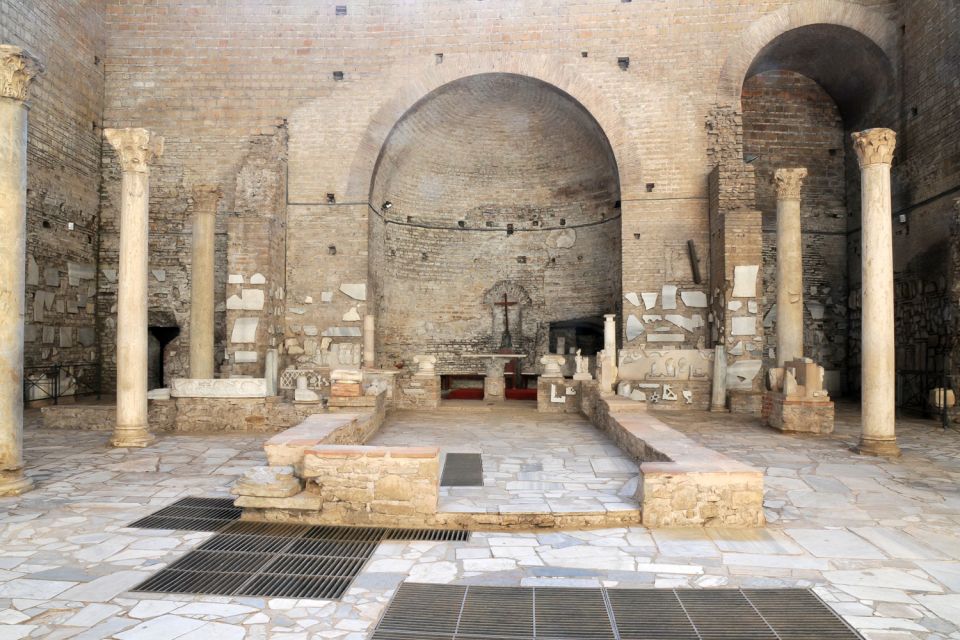
If you only do one catacomb site in Rome, Domitilla is a strong pick. It’s known as one of the largest underground cemeteries, and it tells a story that runs across centuries—pagan burial spaces that later became Christian, then expanded again as the community grew.
What makes it click is the mix of “who’s buried here” and “why the walls look the way they do.” You’re not just walking through tunnels. You’re seeing how burial grounds for early Christian martyrs were treated with real sanctity, and how art and architecture were shaped around that meaning.
And yes, it’s a cool break from above-ground sightseeing. The air is cooler, the surfaces are rougher, and the setting makes the historical details feel less like a lecture and more like a place you could almost imagine someone moving through.
You can also read our reviews of more tours and experiences in Rome

Your 30-minute guided route: pace, group size, and what you’ll actually see
This is a 30-minute guided tour, limited to a small group of up to 10 participants. That matters because the catacombs are not about speed. You want time to look closely at the art and listen to the guide’s explanations, not just shuffle forward in a big group.
Most of the visit focuses on the most accessible parts of the complex. You’ll likely notice that you don’t see every chamber, since only sections are open to visitors. Still, the route is designed to show the core “why this place matters” points: the burial levels, key spaces, and the architectural and artistic transitions.
In guided tours, the biggest payoff is context. A catacomb can look like stone corridors until you know what you’re standing near—who was associated with the space, when the Christian expansion happened, and why restoration choices protect fragile surfaces.
Where to meet and how to avoid missing your slot
The meeting instruction is simple: go directly to the ticket office of the Catacomb and show your reservation at least 10 minutes before your scheduled tour. That early buffer helps if you’re figuring out public transport, a quick ticket line, or the short walk from where you park or drop off.
This site is underground, so your schedule is real. If you’re late, you’re not likely to be magically added to the group. So build in time to get there calmly, not at the last possible minute.
If you’re going by bus or train, plan for the practical reality that Rome can run differently than a spreadsheet. One less-than-ideal experience reported was simply not being able to reach the tour time with public transit—so I’d treat timing as part of the tour, not something outside it.
Descending into Via delle Sette Chiese: the Flavian story comes alive
The Catacombs of Domitilla are located on via delle Sette Chiese, and the tour connects the place to a specific historical thread: the burial land linked to Flavia Domitilla.
According to the site’s background, Domitilla was tied to the imperial world through family connections and was also connected to early Christian history. As a Christian, she was exiled by Domitian to the island of Ponza, where she later died. That family story matters because the catacomb begins on land associated with her freedmen and burial arrangements, then changes as Christianity grows.
A key way to understand the site is to think of it in layers—because the catacombs don’t stay one thing for one time period. They evolve. The tour helps you notice those shifts rather than treating everything as one uniform “ancient Rome” scene.
Hypogeum of the Flavians: the two-level design and the big timeline shift
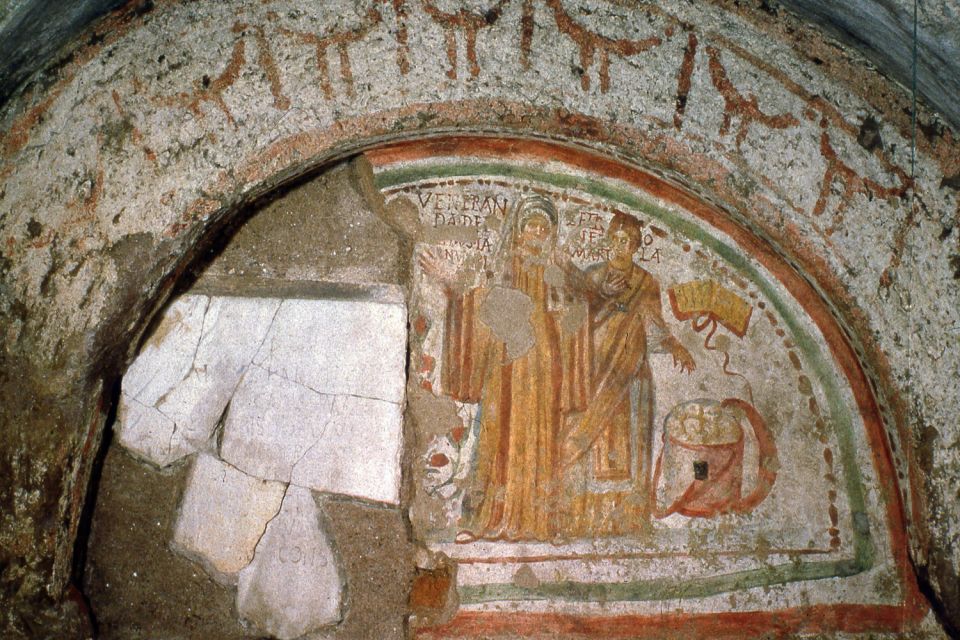
A standout piece of this tour is the way it frames the complex as a two-level catacomb. You’ll hear about the Hypogeum of the Flavians, tied to burial spaces linked to the Flavia family line.
Here’s the timeline the tour context points you toward: there was an earlier pagan hypogeum area dating roughly to the late 2nd and early 3rd century. Over time it became Christian and was enlarged in the mid 3rd century.
Then, as the late 3rd century arrives, Christian martyr traditions become part of the story in a very specific way. The bodies of Nereus and Achilleus were placed in a crypt on the second floor, and that space was transformed into a small basilica. Later, Pope Damasus (366–384) shaped it into a more basilica-like setting, and Pope Siricius enlarged it between 390 and 395 into something closer to the size you can recognize during a visit.
That’s a lot of names and dates for a 30-minute experience. The point isn’t memorizing everything. The point is learning how to read the place as a historical document: pagan burial space, Christian repurposing, then expansion tied to reverence and community identity.
You can also read our reviews of more guided tours in Rome

Frescoes that mix beliefs: pagan imagery meets Christian meaning
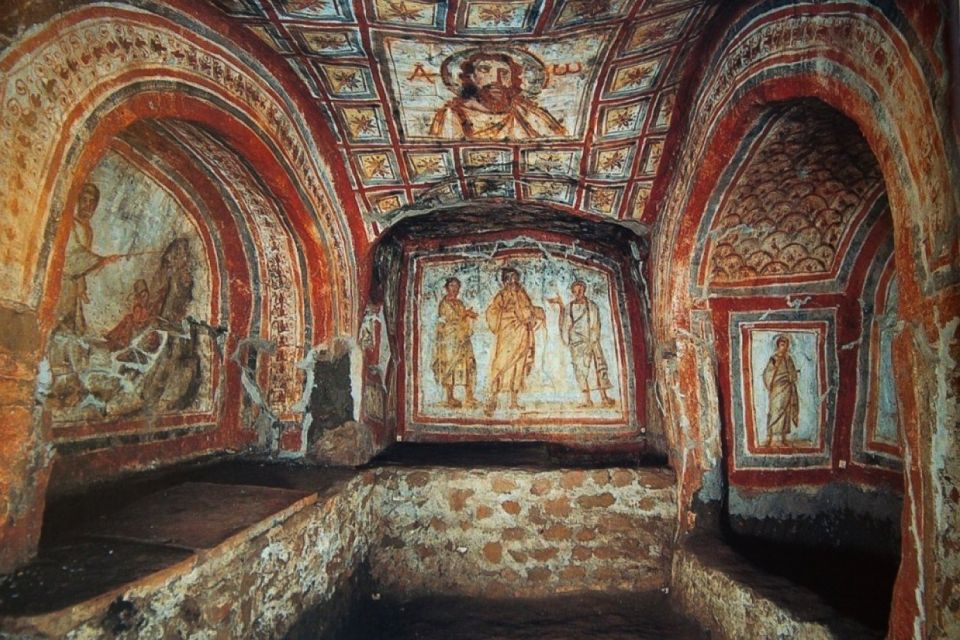
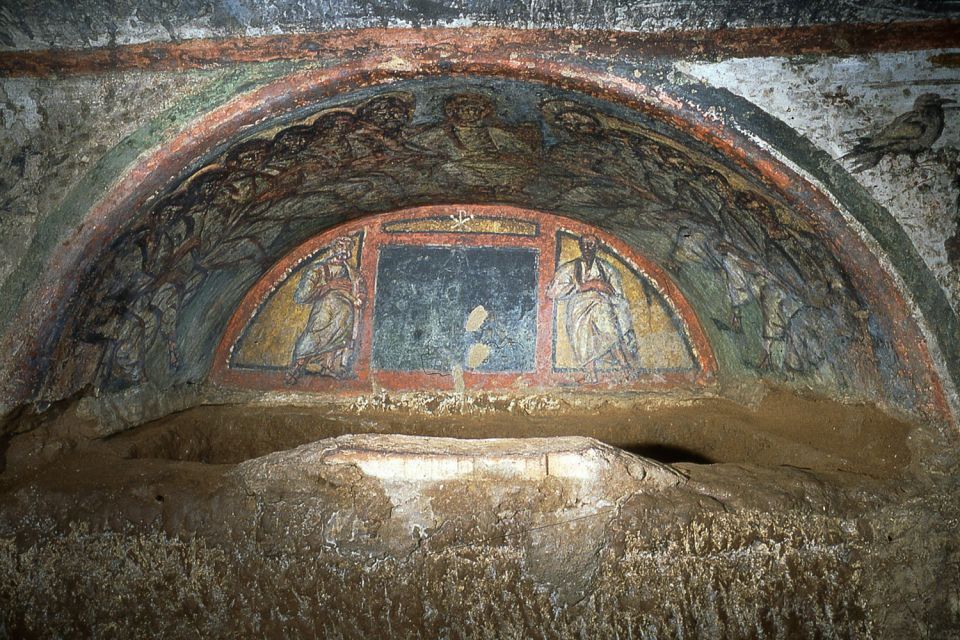
One of the highlights you should expect is the unique mixture of pagan and Christian frescoes. If you’ve ever seen a single-room museum and thought it felt disconnected from real life, catacombs do the opposite. They show people reusing spaces and reinterpretating meaning as faith and community needs changed.
When you see frescoes in an underground setting, they don’t feel decorative. They feel like messages—visual statements meant for people who would return, visit, and remember. And if your guide explains the restoration process clearly, you’ll understand why parts may look muted or protected. The art isn’t just “old.” It’s fragile, and it’s been handled with the kind of attention that comes from knowing it can’t be replaced.
Also, don’t expect every wall to be covered. Some surfaces can feel sparse. That’s part of the experience here. You’re learning how small artistic choices and sacred spaces helped people mark burial sanctity—especially for Christian martyrs.
The underground basilica: why it changes the whole mood
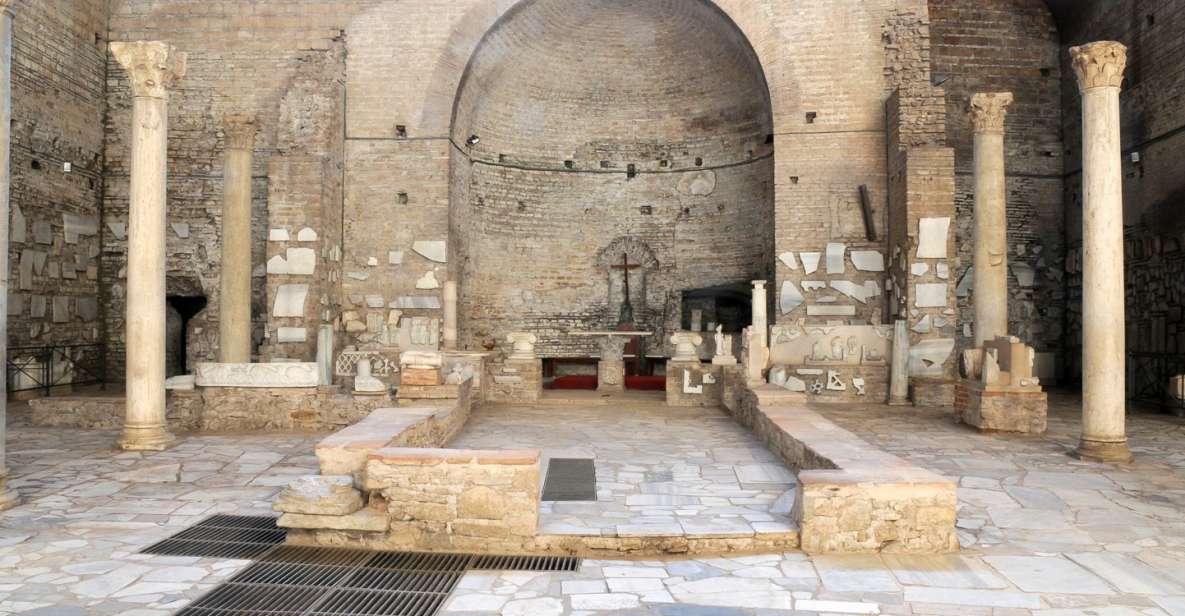
The most emotionally memorable part for many people is the presence of a basilica inside the catacomb complex. You’re not just walking through passages and chambers. You’re stepping into a transformed space with the feel of worship geometry.
The story connected to that basilica is tied to martyr burials and later papal involvement. When Nereus and Achilleus were placed in the crypt and the area was developed into a basilica, it helped shift the catacombs from being only burial grounds to becoming pilgrimage points of devotion and memory.
Even in a short tour, that design change does something to your sense of scale. Stone corridors can feel endless. The basilica makes it feel intentional—like someone planned for gatherings and reverence, not just interment.
Restoration talk you’ll appreciate more than you expect
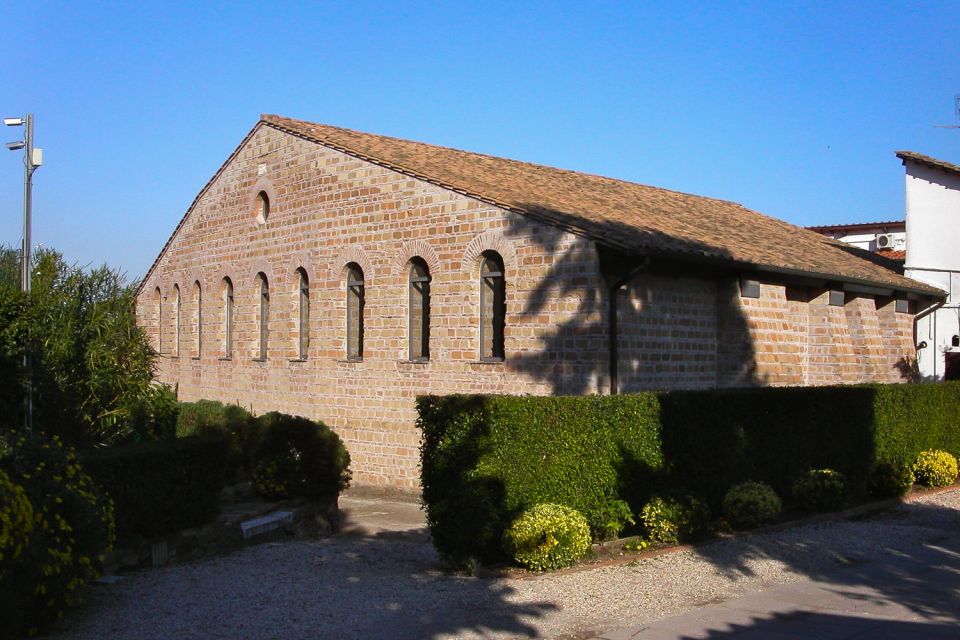
Guides often mention restoration here because it’s not just academic background. Restoration affects what you can safely see, and it shapes what’s preserved for future visitors.
In this tour, the guide explains the delicate restoration process, which gives you a better relationship to what you’re viewing. You stop treating it as a backdrop and start treating it like a living conservation challenge. That means you’ll likely understand why certain areas are off-limits or why preservation rules matter.
It also changes the way you look at the frescoes. Instead of thinking, “Is this worn?” you can think, “Is this protected?” That’s an important mental shift in catacomb spaces.
Practical details: clothes, stairs, and the no-photo reality
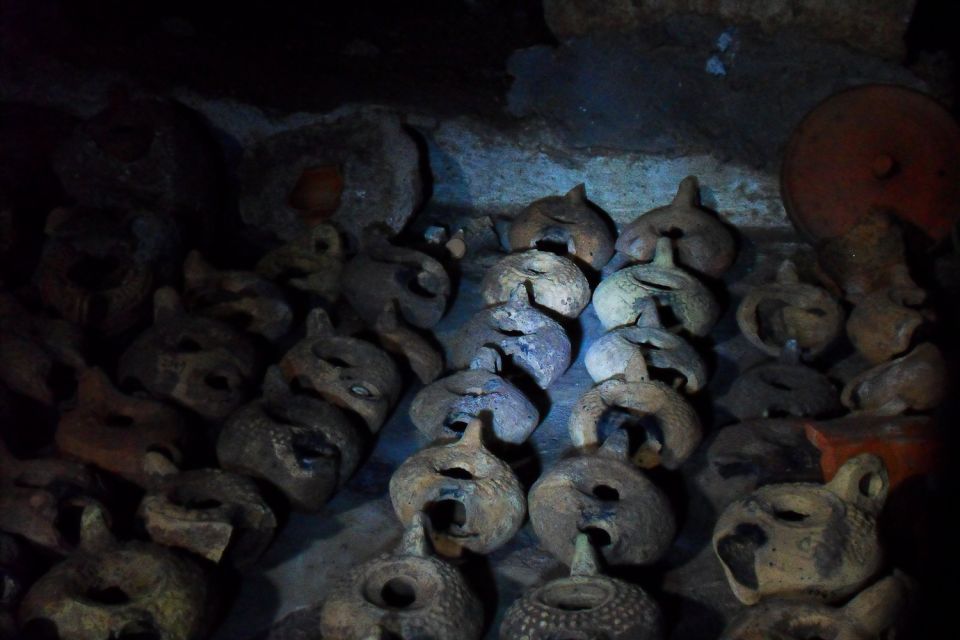
Bring comfortable clothes. You’ll be underground, walking on uneven surfaces typical of historic sites, and spending a concentrated period inside a cool environment.
Also plan for no photography inside. This is the biggest “culture mismatch” for people who like to collect visual proof of every stop. Since you can’t take photos, I recommend doing two things before you go:
- skim the key story points you want to remember (Flavia Domitilla, the two levels, Nereus and Achilleus, the popes), and
- take a couple of quick notes during the guided segments so you can actually recall details later.
Finally, this tour is not suitable for people with mobility impairments or wheelchair users. The underground environment and the structure of catacomb spaces mean you should not plan on step-free access.
Who this tour suits best (and who might want another option)
This tour is ideal if you want:
- a short, guided look at one of Rome’s major underground cemeteries
- strong context for the art and the burial traditions
- a small group setting where your questions can land
It’s also a good choice if you care about the “how” behind what you see. The restoration angle turns the visit into more than a spooky-photo outing.
If you’re the type who needs constant visual documentation, the no photography inside rule will feel limiting. And if you rely on step-free access, you’ll need a different plan since this one isn’t built for wheelchair use.
Price and value: is $16 for 30 minutes a fair deal?
At $16 per person, with entrance fees and a live guide included, this tour can be good value for what you get. You’re paying for two things: access to a protected underground site and an explanation that helps you read what’s otherwise easy to misunderstand.
Thirty minutes sounds short, but in a complex like Domitilla, a short tour can be smarter than a long one. It keeps the pace manageable and prevents the visit from turning into sensory overload. You’ll walk away with a clear narrative: how the site started, how it changed, and why the Christian martyr story mattered enough to reshape spaces.
Language is another value point. Tours run in Italian and English, and the guide quality has been praised in multiple departures. Some groups have also reported guides who spoke German or were led by people with Polish-language skills, which suggests you may have a better chance of matching your language comfort than you’d expect.
For $16, you’re not just buying entry. You’re buying interpretation.
Booking smart: small-group reality and guide quality
This small group structure matters. With a cap of 10 participants, you get more time for questions and more chance to hear the guide clearly. That’s especially useful in underground sites where sound can carry strangely and you’re trying to connect names and dates to physical locations.
Guide praise in past groups points to two themes: friendliness and careful answering. One commonly praised guide, Andrea, was described as very friendly, professional, and passionate about history and art, with a real willingness to answer questions. German-speaking groups also praised a guide style described as calm and thorough.
One more practical booking tip: because transport timing can be tricky in Rome, aim to be early for the ticket office. The site’s underground timing is not forgiving.
Should you book the Catacombs of Domitilla tour?
Yes, you should book if you like guided context and want a clear story in a short time. Domitilla is especially strong if you’re curious about the way early Christians repurposed existing burial spaces and turned them into sacred locations tied to specific martyrs and church leaders.
Skip it (or plan something else) if the idea of no photos will frustrate you, or if you need wheelchair-friendly access. And if you hate time pressure, build in extra buffer on the way there so you don’t end up stressed before you even descend.
If you want one catacomb experience that blends art, belief changes, and a basilica moment, this is a solid pick.
FAQ
Where is the Catacombs of Domitilla located?
The catacombs are located on via delle Sette Chiese in Rome.
How long is the guided tour?
The tour duration is 30 minutes.
How much does it cost?
The price is $16 per person.
What languages are available?
The tour is offered with a live guide in Italian and English.
How big is the group?
It’s a small group, limited to 10 participants.
Where do I meet the tour?
Go directly to the ticket office of the catacomb and show your reservation.
How early should I arrive before the tour?
Show your reservation at least 10 minutes before your scheduled tour time.
Can I take photos inside?
No, photography is not allowed inside.
Is it wheelchair accessible or suitable for mobility impairments?
No. It is not suitable for people with mobility impairments or wheelchair users.
What is the cancellation policy?
You can cancel up to 24 hours in advance for a full refund.