REVIEW · APPIAN WAY BIKE & E-BIKE TOURS
Rome: Appian Way and Roman Countryside Electric Bike Tour
Book on GetYourGuide →Operated by Rome for You - RM - 1436156 · Bookable on GetYourGuide
Appian Way on e-bike feels like time travel. You leave the rush of central Rome and roll out on the Appian Way (Regina Viarum), a road built in the 4th century BC and still carrying much of its original paving, with an expert guide steering you through power, faith, and ancient logistics.
I especially love two things: the e-bike comfort on cobblestones and countryside hills, and the storytelling from real Roman guides. In reviews, guides like Emiliano and Libero get singled out for warm, humorous explanations and for keeping the pace attentive—so you spend your energy watching history, not fighting your bike.
One consideration: stops and bike performance can vary. One rider reported an electrical assist issue mid-tour and no real aftercare when they got back, and another noted that they passed by the catacomb area without getting inside even though it’s mentioned in the description—so go in expecting a great day, but not absolute guarantees on every internal visit.
In This Review
- Key Highlights You’ll Feel on This Tour
- Why the Appian Way Is More Than Just a Roman Road
- Meeting at Via di S. Calisto: The Simple Start That Sets the Tone
- The Appian Way Segment: Regina Viarum, Ruins, and Real Road Logic
- Saint Callixtus and Saint Sebastian: Where Christianity and Power Meet the Road
- Imperial Spaces and Pagan Mausoleums: The Road as a Status Signal
- Aqueducts Park: The Two-Aqueduct Clue You’ll Remember
- Caffarella Park on the Return: Ruins, a Working Farm, and Breathing Room
- E-Bikes, Cobblestones, and the Comfort Checks That Matter
- Price and Value: Why $88 Can Make Sense for This Route
- Who This Tour Fits Best (And Who Might Want Another Option)
- Possible Snags: Catacomb Stops and Bike Assist (Know Before You Go)
- Should You Book This Appian Way E-Bike Tour?
- FAQ
- What’s included in the Rome Appian Way e-bike tour?
- How long is the tour, and what’s the price?
- Where do I meet, and when should I arrive?
- Which languages are available for the tour guide?
- What do I need to bring for the tour?
- Is this tour suitable if I can’t ride a bike?
Key Highlights You’ll Feel on This Tour
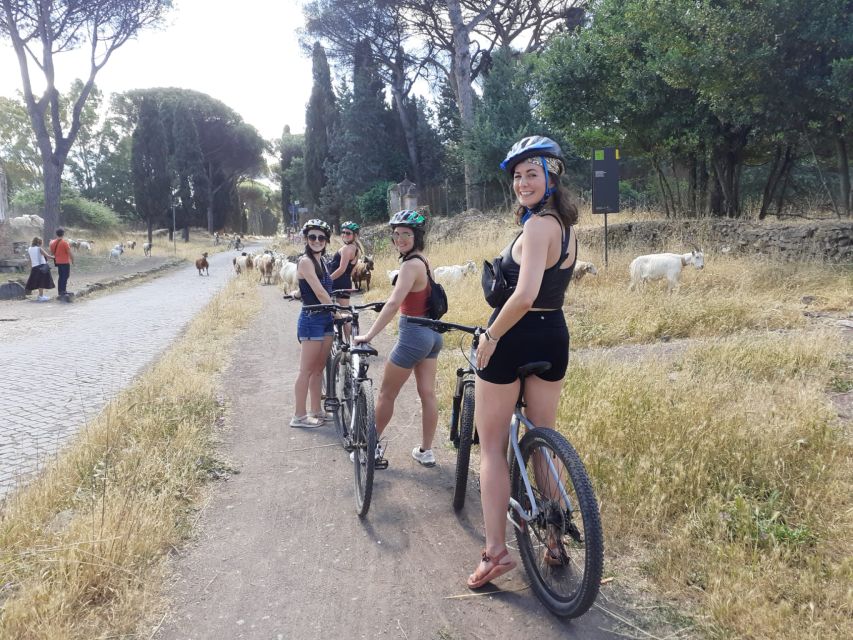
- Ride the Regina Viarum on original paving from the 4th century BC
- Catacombs and tombs in one route, linking Christian sites and pagan mausoleums
- Aqueducts Park with two major aqueducts preserved in excellent condition
- Caffarella Park on the return, with ruins plus a working farm
- Guides who explain the why, connecting political, military, and religious power
- E-bike support that makes hills and rough surfaces far more manageable
Why the Appian Way Is More Than Just a Roman Road
The Appian Way is often called Rome’s oldest road, and this tour uses that fact in the best way: not as trivia, but as the whole point of the ride. This was the Romans’ first major highway mindset—a practical system for moving military supplies and important families, and later a stage for tomb-building and religious life.
When you ride it on an e-bike, the experience becomes physical. Your wheels roll across ancient pavement and you get a real sense of how a road like this could shape centuries of travel, status, and belief. And because the route connects political, military, and religious power, the tour doesn’t treat history like isolated monuments. You see how Rome’s different forces shared the same roads.
You can also read our reviews of more cycling tours in Rome



Meeting at Via di S. Calisto: The Simple Start That Sets the Tone
You meet at Via di S. Calisto, 9, and you’ll want to arrive 15 minutes early. This is not a long, staged transfer from a hotel—so if you like keeping your day tight and focused, that matters.
The tour runs about 4 hours, and the pace is designed for e-bikes, meaning you get moving fast without having to “earn” every kilometer the hard way. One rider specifically warned to expect around 20 miles during the tour, which is a helpful reality check: plan your posture, water, and energy like you’ll be riding farther than a casual stroll.
No food or drinks are included, so I’d treat the day like a bike outing: plan to grab something before or after, and bring what you like for a break if there’s time to stop.
The Appian Way Segment: Regina Viarum, Ruins, and Real Road Logic
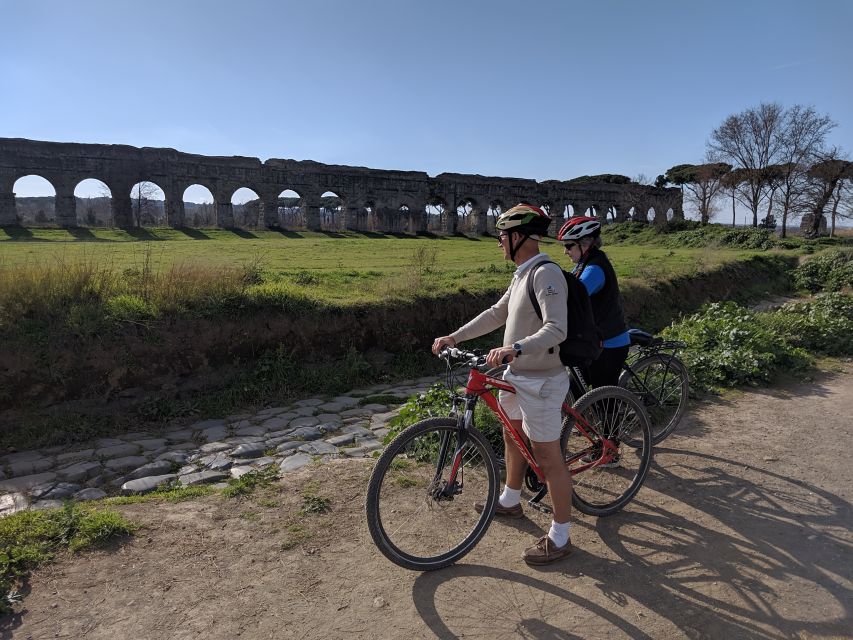
This is the heart of the experience. You ride along the Appian Way to see Roman ruins, statues, and tomb-focused architecture tied to how the road worked. The description frames it well: the Appian Way wasn’t only for movement—it was also for display. Powerful families used the road’s prominence to build tombs and mausoleums along it, turning a transportation route into a kind of outdoor history wall.
You’ll also hear how the road’s design helped create a union between different forms of authority. That’s not just a lecture line. It explains why catacombs, imperial-era spaces, and pagan monuments can feel so close together along the same corridor.
And because the road retains most of its paving, the ride has texture. You’re not cruising on smooth bike lanes the whole time. That roughness is part of the appeal. It’s also why the e-bike matters.
Saint Callixtus and Saint Sebastian: Where Christianity and Power Meet the Road
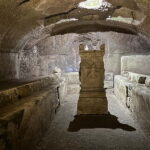
Christian Rome shows up through the catacombs at Saint Callixtus and Saint Sebastian. This is where the tour becomes more than sightseeing, because it’s about understanding burial practices and sacred geography—how underground spaces shaped religious identity, and why they mattered to people living in the city above.
The best way to think about catacombs on a bike tour is that you’re not just getting an additional stop. You’re stepping into a different layer of Roman life. One review experience did mention that they didn’t get inside the catacombs even though the plan refers to them, so here’s my practical advice: if you care deeply about going inside, ask early with your guide how much time you’ll spend at each catacomb stop. Guides control the flow of a day, and small time shifts can change what you actually access.
Still, even if you’re mostly viewing certain areas from the route, the tour’s overall theme holds: the Appian Way links eras, faiths, and political importance through the same physical path.
Imperial Spaces and Pagan Mausoleums: The Road as a Status Signal
Between the Christian sites, you’ll encounter imperial palace elements and pagan mausoleums—a mix that can feel surprising until it clicks.
On this tour, the point isn’t to rank which era is more important. It’s to show how Rome kept reinventing itself while reusing the same structures and routes. Tombs and mausoleums along the Appian Way aren’t random; they’re statements. And seeing them in context—after you’ve already been riding the road—helps you understand why the road mattered to the people who built them.
If you like a clear storyline, this segment gives you one: the road carried armies and supplies, but it also carried social meaning. It became a corridor where status and belief could be visible to anyone moving through the city’s orbit.
You can also read our reviews of more tours and experiences in Rome




Aqueducts Park: The Two-Aqueduct Clue You’ll Remember
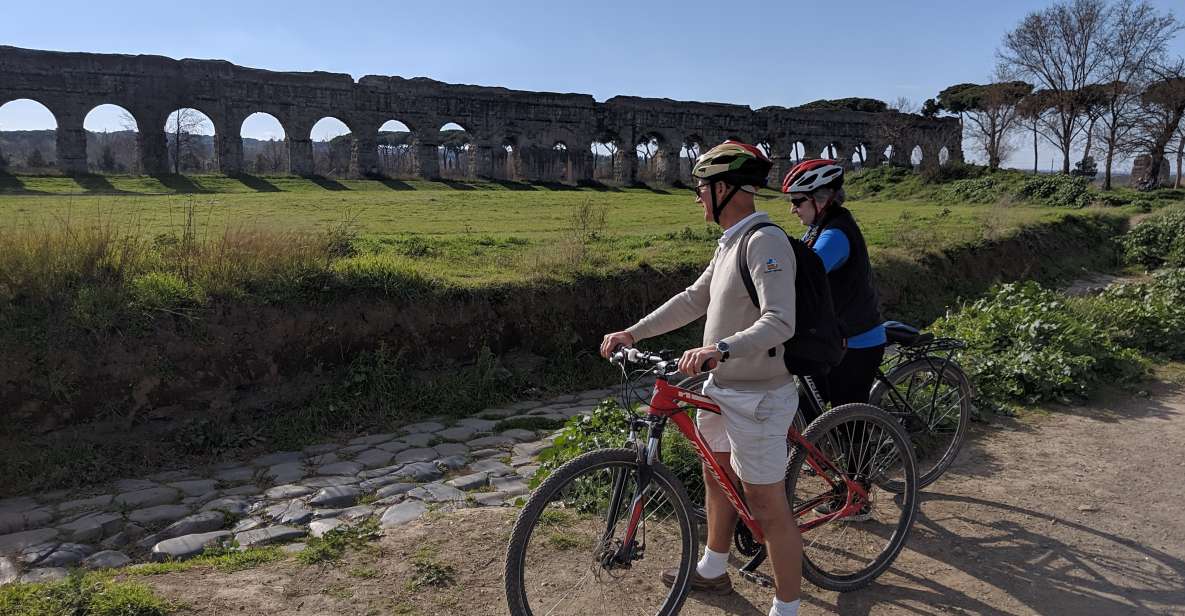
After the main Appian Way portion, you head toward the Aqueducts park (Parco degli Acquedotti). The description calls it out as special: it preserves 2 Roman aqueducts that are still in excellent condition, and it’s presented as the only park in the world that preserves two major aqueducts this way.
Whether you’re a history nerd or just someone who enjoys dramatic stonework, this is a powerful break in the day. Aqueducts are Rome’s answer to distance and water—and on a bike tour, you get the best kind of comparison: you’re moving through a landscape shaped by engineering, just as you’re moving through a landscape shaped by roads.
This is also a good moment for photos, because you’re not trying to shoot in the cramped city streets. The views tend to open up, and the aqueduct lines read clearly from the ride.
Caffarella Park on the Return: Ruins, a Working Farm, and Breathing Room
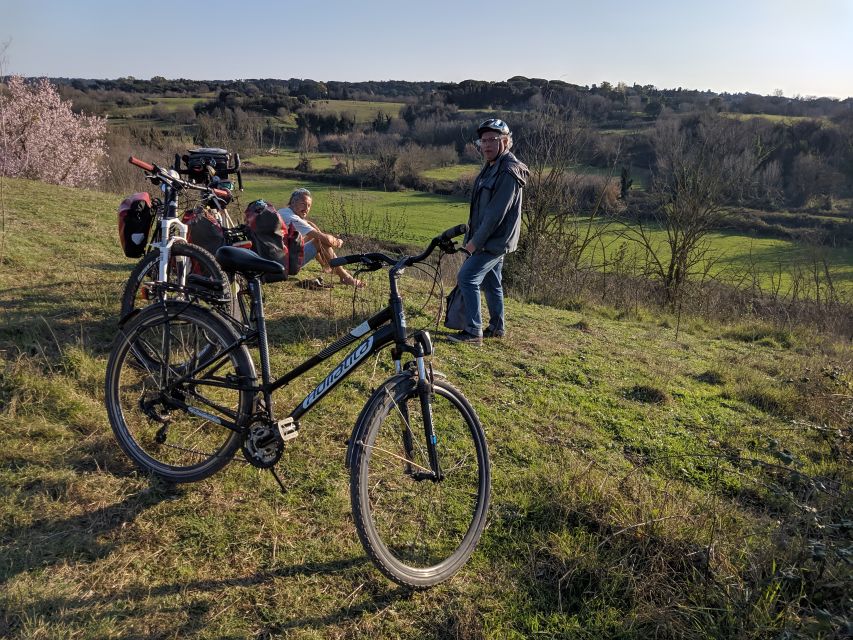
In the second half, you go back through Caffarella Park. This return route adds a different flavor than the straight, tomb-and-ruin feel of the Appian Way. Caffarella Park includes several archaeological sites and a working farm, and it’s described as having significant ecological value.
To me, that matters because it keeps the tour from feeling like a single-note museum walk. You get an open-air reset. You also get a sense that this area isn’t only about “ancient Rome.” It’s about what Rome looks like when daily life and historical remnants share the same space.
If you’re the type who likes a breather between big landmarks, Caffarella is your reward.
E-Bikes, Cobblestones, and the Comfort Checks That Matter
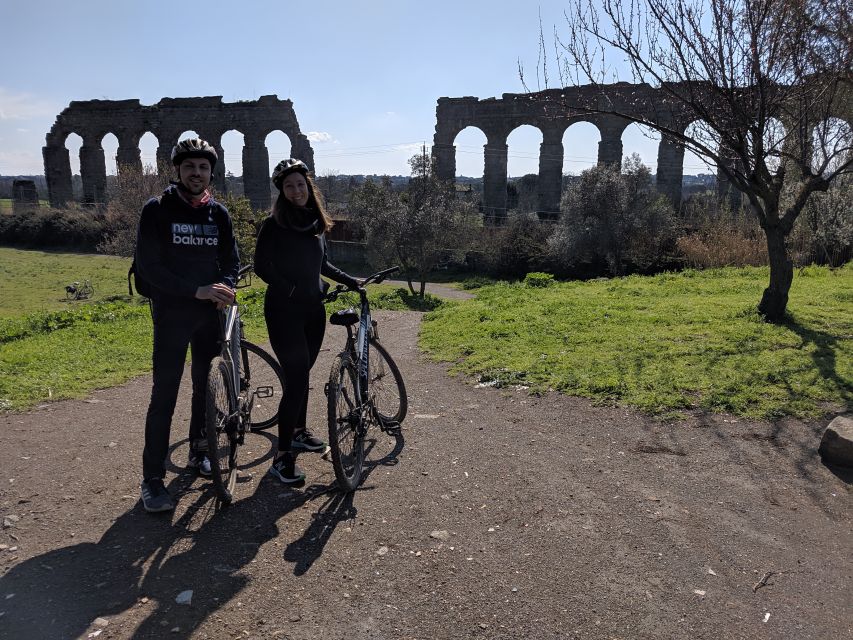
The description emphasizes comfortable e-bikes, and the reviews back that up—one rider said the support made hills and cobblestone streets enjoyable. That’s the difference between an Appian Way day being “a challenge” and being a day you can actually savor.
Still, a couple practical points:
- Wear shoes you trust on uneven surfaces. Cobblestones can be slippery when you’re focused on photos.
- Dress for riding. One reviewer suggested comfortable riding shorts and no need for strict cover-ups, since you don’t enter places that require pants or covered shoulders. (That doesn’t mean every stop is the same everywhere, but it’s a useful reality check.)
- If your e-bike assist feels weak early on, tell your guide right away. One review described an assist issue that became a bigger problem mid-tour.
The tour includes helmets, which is great. You’ll be glad for them once you’re on the older pavement.
Price and Value: Why $88 Can Make Sense for This Route
This tour runs $88 per person for about 4 hours, with e-bikes and helmets included, and a live guide who speaks English, French, Italian, or Spanish.
Here’s how I’d judge value:
- You’re paying for more than bike rental. You’re paying for a guide who connects the dots between ancient infrastructure, tomb culture, and religious history.
- The Appian Way is not a “hop on a train and casually see it” kind of outing if you want depth. Getting outside the city core on a bike, with interpretation, is the value engine here.
- The e-bike support stretches your range. One review estimated about 20 miles, which is the kind of distance you’d struggle to do comfortably on a standard bike in half a day.
So yes, it’s not a cheap Roman souvenir. But if you want an experience that feels physical, guided, and genuinely different from the Colosseum-Vatican circuit, the price is easier to justify.
Who This Tour Fits Best (And Who Might Want Another Option)
This is a good fit if you:
- can ride a bike confidently (the tour is not suitable if you can’t ride)
- want a history-forward day without doing nonstop walking
- like countryside views and the Roman outskirts vibe
- enjoy guides who explain how places connect, not just names and dates
It may be less ideal if:
- you expect guaranteed inside access to every mentioned catacomb site
- you get anxious about bike reliability (one review described an electrical assist issue)
- you want a very slow, minimal-effort outing
For many people, the sweet spot is that you get the Appian Way story without needing serious athletic stamina.
Possible Snags: Catacomb Stops and Bike Assist (Know Before You Go)
Two issues came up in the feedback you were given:
- Catacomb access may not happen as described. One rider said they were taken past the catacomb area without entering, even though catacombs were part of the written description.
- E-bike assist can fail. One rider reported the electric support cutting out partway through, and they experienced problems getting help when returning.
These aren’t deal-breakers for most people, but they are worth planning for. My advice: when you meet your guide, ask plainly what stops are planned and whether catacomb entries are included in your specific time slot. Also, confirm that you understand how to get the guide’s attention if the bike support acts up.
Should You Book This Appian Way E-Bike Tour?
I’d book this if you want a Roman day that feels like a real journey, not a crowded checklist. The combination of the Appian Way’s ancient paving, catacomb and mausoleum history, and the open-air breaks at Aqueducts park and Caffarella gives you variety in one smooth 4-hour loop.
You should also book it with eyes open: catacomb entry can be timing-dependent, and like any bike day, a mechanical hiccup is possible. If you’re comfortable rolling with minor changes—and you’re excited to ride through the countryside—you’ll likely love how this tour ties together Rome’s road, power, and belief system.
If you want, tell me your travel month and your biking comfort level, and I’ll help you decide whether this is the best day for you (and what to wear).
FAQ
What’s included in the Rome Appian Way e-bike tour?
You get the e-bike and a helmet. A live guide is included, but food and drinks are not.
How long is the tour, and what’s the price?
The experience lasts 4 hours and costs $88 per person.
Where do I meet, and when should I arrive?
The meeting point is Via di S. Calisto, 9, and you should arrive 15 minutes before the activity starts.
Which languages are available for the tour guide?
The guide can lead in English, French, Italian, or Spanish.
What do I need to bring for the tour?
Bring your passport or ID card. A copy is accepted.
Is this tour suitable if I can’t ride a bike?
No. The tour is not suitable for people who can’t ride a bike.