REVIEW · DAY TRIPS FROM ROME
From Rome: Orvieto and Civita di Bagnoregio Private Day Trip
Book on GetYourGuide →Operated by Shore Excursions in Italy · Bookable on GetYourGuide
A crumbling hill town and a gothic town in one day. I love the big shift from Roman streets to Civita di Bagnoregio’s medieval atmosphere, and I love Orvieto’s gothic cathedral plus the built-in time for wine and ceramics. One thing to plan for: you’ll walk the steep pedestrian bridge to reach Civita, and there are extra entrance fees along the way.
You’ll start early with hotel or Fiumicino Airport pickup at 09:00, then ride in a private van with an English live guide who gives the kind of “what you’re looking at” context that makes stops feel more than just photos. The day is paced for a private group, so you’re not stuck in a slow-moving crowd loop.
The main drawback is also the main character of the day: Civita is not a quick stop. You’ll have a short walk and some strolling time, but it’s still a disappearing town experience, not a drive-by.
In This Review
- Key highlights you’ll actually feel during the day
- Why Civita di Bagnoregio and Orvieto work so well together
- Getting there from Rome: private van timing you can plan around
- Civita di Bagnoregio: the steep bridge, the views, and the clock
- Orvieto after lunch: cathedral time, underground options, and real strolling
- Wine tasting and ceramics: how to shop without rushing
- The driver-guide factor: why the day feels smoother
- Price and value: $846.92 for up to 3 people, and what you’re paying for
- What you should budget for: the entrance fees and meals reality
- Who this private day trip is best for (and who might want something else)
- A few smart planning tips before you go
- Should you book this Rome-to-Umbria private day trip?
- FAQ
- What time is pickup from Rome or Fiumicino?
- How long is the day trip?
- Is this tour private, and what size is the group?
- What’s included in the price?
- What isn’t included?
- How much walking is involved at Civita di Bagnoregio?
- What entrance fees should I plan for?
- Is the tour wheelchair accessible?
- What are the cancellation and payment options?
Key highlights you’ll actually feel during the day
- Civita di Bagnoregio’s disappearing-town setting: a dramatic hill town experience that feels like a throwback
- Orvieto’s gothic sights: cathedral time plus the option to explore underground Etruscan spaces
- Wine tasting and ceramic shopping: time built in so you’re not rushing your purchases
- Private van with a live English guide: smoother logistics and clearer explanations on the road
- A guide like Frederico: when he’s driving, guests note an engaging, informative style
Why Civita di Bagnoregio and Orvieto work so well together
This tour strings together two Umbrian stops that feel almost like different eras. Civita di Bagnoregio gives you that medieval “small town on top of the world” feeling, with views that make you understand why people call it a disappearing place. Orvieto then resets the vibe with a larger, older town energy, anchored by its gothic cathedral and layered through Etruscan remains.
I like how the day trip avoids the typical Rome day-trip trap of trying to cram five major sights. Here you get two main towns and enough time in each to actually look around. That matters, because both Orvieto and Civita are made for slow wandering: narrow lanes, viewpoints, and details you’ll miss if you’re herded.
The pacing is also realistic. You’re not just hopping out for 20 minutes and running back to the van. Civita gets time to walk, pause for photos, and shop. Orvieto gets time to handle a proper lunch window, then add cathedral and underground visits.
You can also read our reviews of more private tours in Rome

Getting there from Rome: private van timing you can plan around
You’ll be picked up at your Rome hotel or Fiumicino Airport around 09:00. Then you head out toward Umbria in a private van with a driver, with about 1.5 hours of travel time built in before Civita.
That drive time is useful, not wasted. You’ll get historical info and tips while you ride, which helps you arrive understanding what you’re about to see. When you land in a place like Civita, the setting is the story—without context it can feel like just another hilltop village. With a guide’s framing, it clicks faster.
At the end of the day, you return to Rome around 17:00. For a full day, it’s a smart schedule: you leave before the heavier daytime crowds and you’re back before dinner plans fall apart.
Civita di Bagnoregio: the steep bridge, the views, and the clock
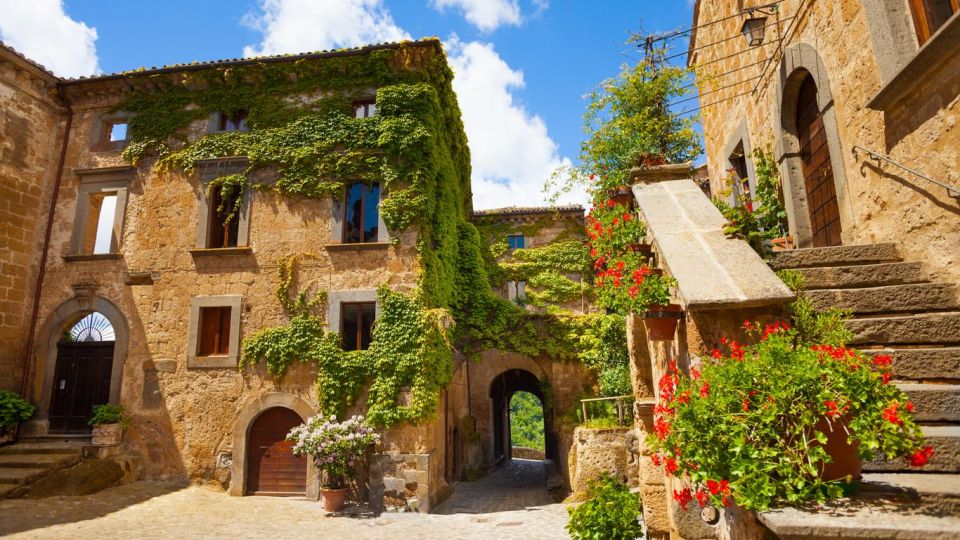
Civita di Bagnoregio is the star stop. The approach is part of the experience: once you arrive, you walk about 7–8 minutes on a steep pedestrian bridge to reach the town. There’s a €5 entrance fee per person to access the bridge/town route, and that cost is separate from other sightseeing fees later in the day.
Here’s the practical truth: if you’re expecting a flat, easy walk, this is not it. Comfortable shoes are essential. If your legs are fine with short climbs, this is worth every step, because the moment you crest the walkway you get a clear, dramatic sense of place—houses perched on a volcanic hill, with the surrounding landscape making the “disappearing” idea feel real.
Once you’re inside, you’ll have about 1.5 hours for a mix of break time, photo stops, self-guided wandering, and shopping. I like that the plan gives you breathing room rather than forcing you into a strict route. Civita is small, so you can adapt: linger at viewpoints, pop into ceramic shops, or take the slower path for photos.
One more tip: build in extra minutes at the start if you want photos right away. The early moments are when you’ll get the best sense of scale, especially before your brain gets busy with the streets.
Orvieto after lunch: cathedral time, underground options, and real strolling
After Civita, you drive about 30 minutes to Orvieto. Orvieto feels more like a working town—bigger lanes, more shops, and a stronger street rhythm. You’ll have about 3 hours here, with lunch time built into the visit (lunch isn’t included, but the schedule leaves room for it).
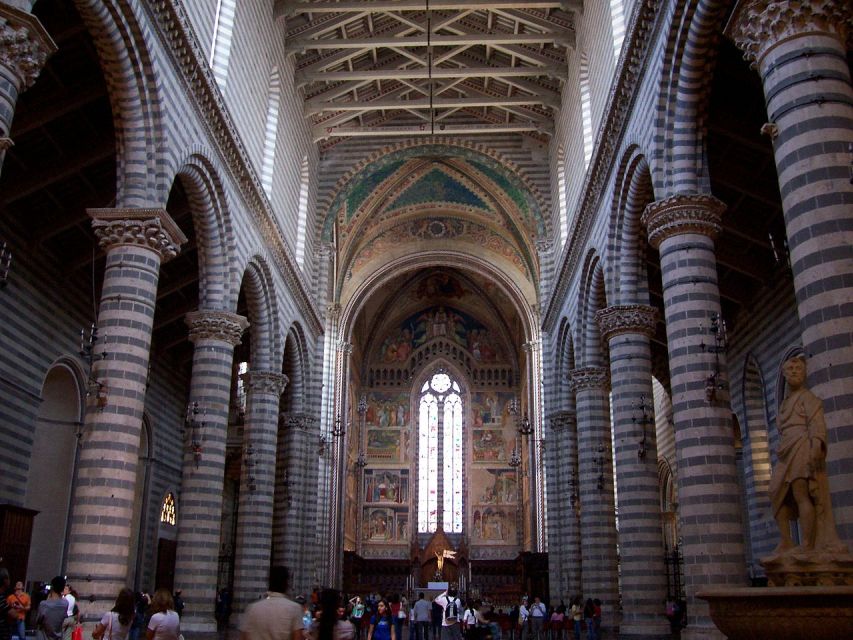
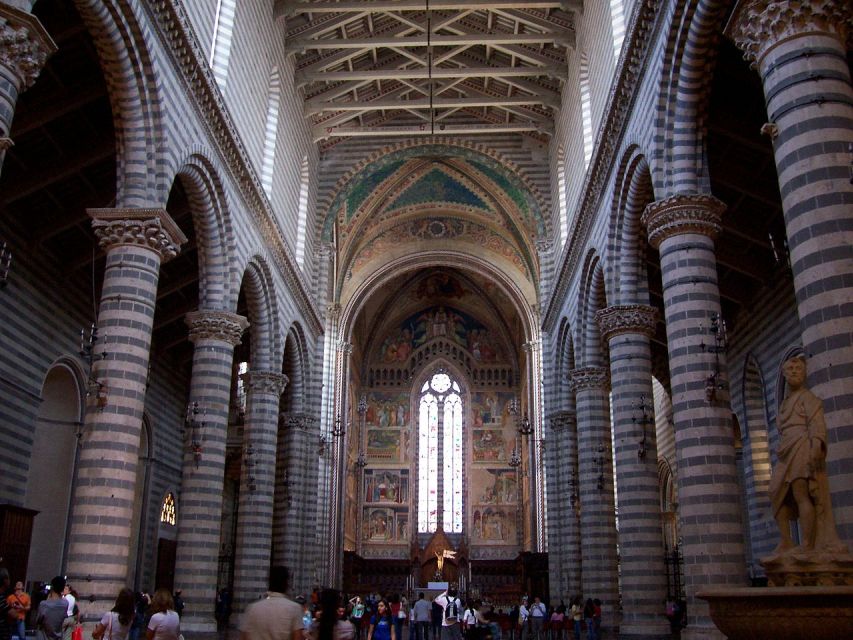
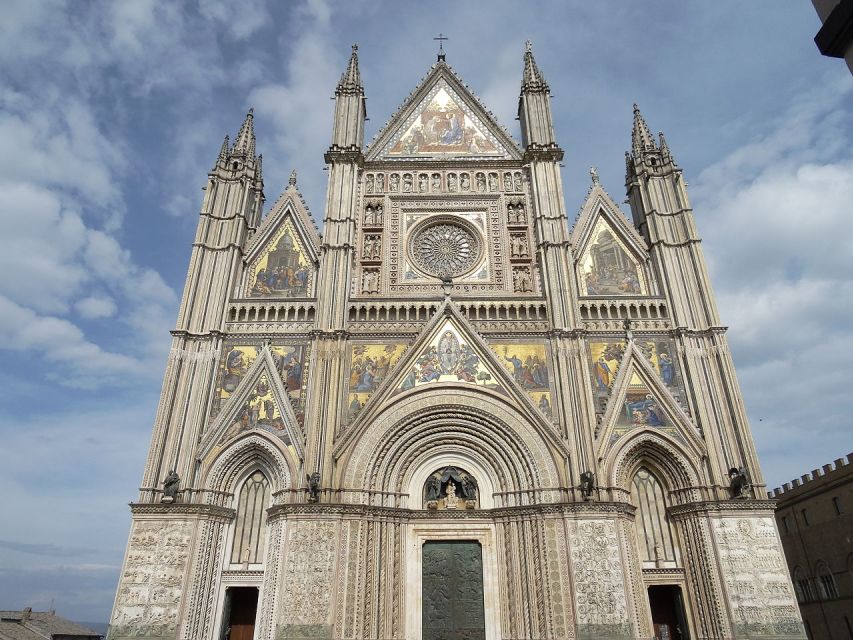
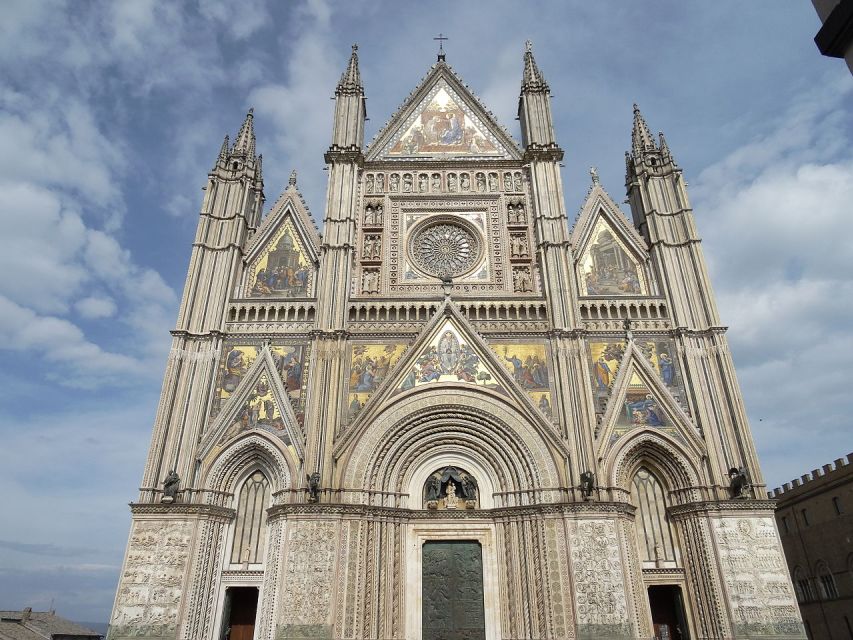
The big visual anchor is Orvieto’s gothic cathedral. You can visit with an entrance fee of €5. The cathedral time is where the day shifts from “medieval village” to “major architectural statement.” If you enjoy seeing how towns express themselves through big religious buildings, this stop will land hard.
Next is the underground piece: there’s an option for an underground Etruscan city experience with an €8 fee per person. This is a great choice if you like layered archaeology—Orvieto isn’t only about what you see on the surface. The fact that the underground visit is an optional add helps you match your interest level without losing the rest of your day.
Orvieto is also where the tour becomes practical for shopping. You’ll have time for wine tasting and ceramic shopping, plus general sightseeing and walking around. I like this combination because it’s not “buy a souvenir at speed.” You get enough time to browse, compare, and choose what you actually want to bring home.
Wine tasting and ceramics: how to shop without rushing
This is one of the most enjoyable parts of the day because it’s scheduled as a real activity, not a forced stop. In Orvieto you’ll have time for wine tasting and ceramic purchases. The “shop for ceramics and white wine” theme matters because it ties into what the region is known for and it gives you something tactile to remember the trip by.
Practical advice: go into the ceramic shops with an idea of what you’ll use at home. A small item is easier to transport and less risky if you’re traveling with limited luggage space. If you’re buying a larger piece, check packing options where you shop.
For wine, think about how you’ll handle it physically. You’ll likely be traveling on the same day back to Rome, so choose something you can pack securely. The tour’s timing helps, because you’re not waiting at the end of the day to decide what to buy.
Also, don’t feel pressure to buy at the first place. Orvieto has plenty of shop options, and with your guide’s local tips you can make smarter choices quickly.
You can also read our reviews of more tours and experiences in Rome


The driver-guide factor: why the day feels smoother
The private format matters most on long drives between towns. You’re not coordinating with multiple drop-offs, and you get a consistent guide experience from start to finish.
English is provided via a live tour guide, and that’s especially helpful because the value here is interpretation. Civita di Bagnoregio is scenic, sure, but you’ll enjoy it more when you understand what makes it so unusual and why Orvieto’s details matter.
One detail that really stands out from past experiences: guests have highlighted Frederico for being engaging and informative, sharing lots of context about the areas along the route. That kind of guidance is what turns a scenic day into a memorable one.
Price and value: $846.92 for up to 3 people, and what you’re paying for
The price is $846.92 per group up to 3 for an 8-hour day trip. That sounds like a lot at first glance, but here’s what you’re actually getting:
- A private van and driver at disposal for the full day
- Guided historical info and tips while you travel and at stops
- Gasoline, tolls, parking, and VAT
- Entrance fees and food are not included, but the sightseeing plan is built with those costs in mind
If you compare this to a standard group tour, the biggest difference is time and friction. You’re paying for a schedule that moves with you, pickup that matches your location (hotel or airport), and a guide who can tailor the pace. For a group of three, it can be a strong value—especially because the day includes multiple paid experiences (bridge access, cathedral entry, and the underground option).
Also, the tour is short enough that you’re not losing a whole day to travel inefficiency. Two towns in one day, with enough time in each, is exactly the kind of structure that can feel expensive in cost but fair in outcome.
What you should budget for: the entrance fees and meals reality
Entrance fees are separate, so you’ll want to budget in advance. Based on the tour details, plan for:
- Civita access/bridge fee: €5 each
- Orvieto cathedral entrance: €5 each
- Underground Etruscan city option: €8 each
Food is also not included. You’ll have time for lunch in Orvieto, but you’ll pay on your own.
If you’re trying to keep costs predictable, you can decide early whether you’ll do the underground visit. If you love underground/archaeology, the €8 is usually worth it. If you’d rather spend that time browsing and enjoying the town, skipping it won’t ruin the day.
Who this private day trip is best for (and who might want something else)
This tour fits best if you want a day that feels off the main tourist track but still includes major anchor sights. I think it’s great for:
- Couples or small groups who want a private pace
- People who like architecture (the gothic cathedral) and atmospheric towns (Civita’s medieval feel)
- Shoppers who enjoy regional products like ceramics and want time to choose
- Anyone who enjoys wine tastings and wants that included in the flow
It may be less suitable if you strongly dislike walking or slopes. The steep bridge walk is a short segment, but it’s still part of reaching Civita.
A few smart planning tips before you go
Bring comfortable shoes. That’s the one non-negotiable item in this itinerary.
Also, if you’re getting picked up from a hotel, send the pickup details clearly so your driver can match the address. You’ll be grateful when the day stays smooth rather than spending energy on last-minute coordination.
Finally, keep your expectations realistic about time. Civita is a short-town visit, Orvieto is the longer stop. If you’re the type who wants to see everything in one go, you’ll still appreciate the guided pacing. If you prefer a slower browse, you’ll also have enough slack.
Should you book this Rome-to-Umbria private day trip?
I’d book this tour if you want a single day that mixes atmosphere, architecture, and practical shopping time—without the chaos of a big-group bus. The private van, the live English guide, and the structured time in both Civita di Bagnoregio and Orvieto are the main reasons it works so well.
Skip or consider a different option if your legs don’t handle steep climbs, because Civita’s approach includes the 7–8 minute steep bridge walk. And if you hate entrance fees, remember that several sights have them and food isn’t included.
If you can handle a short walk and you’re excited by disappearing towns, gothic cathedral scenes, wine tasting, and ceramics, this is a strong pick.
FAQ
What time is pickup from Rome or Fiumicino?
Pickup is at 09:00 from your hotel in Rome or from Fiumicino Airport.
How long is the day trip?
The duration is 8 hours.
Is this tour private, and what size is the group?
It’s a private group. The price is listed per group up to 3.
What’s included in the price?
Included items are a private car/van and driver at disposal, main historical info and tips, gasoline, tolls, parking, and VAT.
What isn’t included?
Food and entrance fees aren’t included.
How much walking is involved at Civita di Bagnoregio?
You must walk about 7–8 minutes on a steep pedestrian bridge to reach Civita di Bagnoregio.
What entrance fees should I plan for?
There is a €5 fee to enter/access the Civita bridge/town route, €5 for the Orvieto cathedral, and €8 for the underground Etruscan city option.
Is the tour wheelchair accessible?
The tour is listed as wheelchair accessible, but it also includes a steep bridge walk of 7–8 minutes, which may be a problem for some mobility limitations.
What are the cancellation and payment options?
You can cancel up to 24 hours in advance for a full refund, and there’s a reserve now & pay later option.